Lower Than Expected November Retail Sales Shows Inflation Impact and Reduction in Consumer Spending


Posted originally on the conservative tree house on December 15, 2021 | Sundance | 77 Comments

The Commerce Department November retail sales data was release today [DATA HERE] – [DETAIL pdf HERE].  The top line issue is a shocking drop in retail sales for November in key categories that align with previous discussion of inflation spending priorities for all U.S. consumers.

Before getting to the data, one point is critical to remember.  The commerce department sales figures are based on dollars spent. This point is important, because the items being purchased have inflation within them.  When prices are higher due to inflation, sales figures should be higher due to higher prices.  Ex. If there is an 8% increase in retail price, but only a 4% increase in retail sales, that means less stuff is being sold.  [Less units sold at a higher price gives the illusion of an increase in sales.]

Despite the start of the traditional holiday sales and shopping period, the total sales growth in November was 0.3% over October [Column A].  Factoring in inflation during the same month to month comparison at 0.9%, you can tell that overall in November there was a drop in units sold across the total of retail sales outlets.
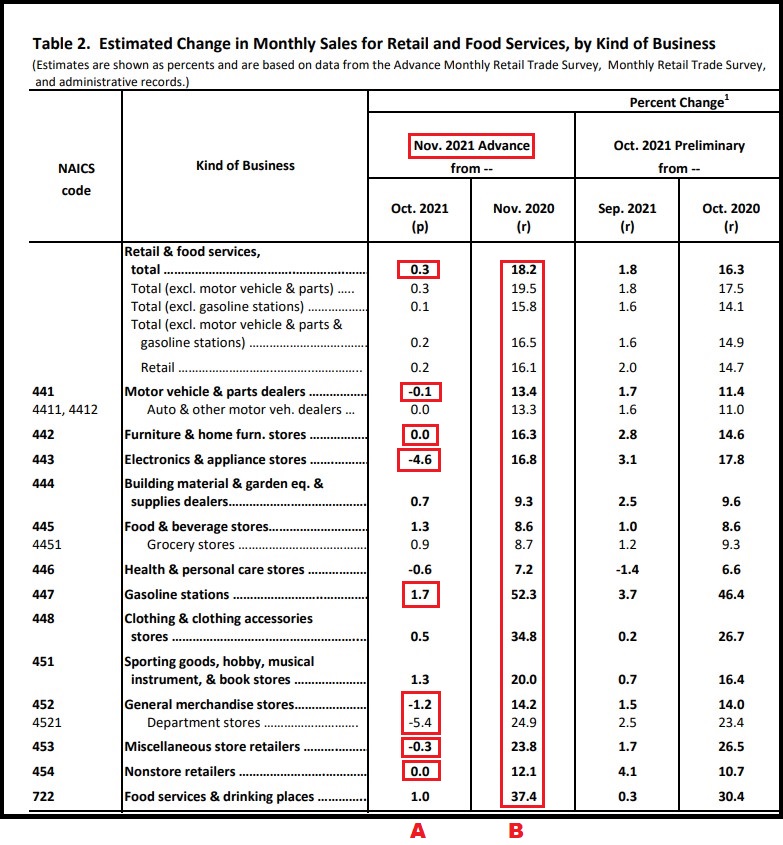
A drop in sales at a time when holiday shopping should be taking place is concerning.  However, the sales reality aligns with the employment data last week showing a drop of 20,000 workers in the retail sector for November.  Put them together, and the picture shows retailers did not need employees, because consumers are not spending.

If we look deeper into the November sales figures, we can see that a contraction in discretionary spending is the primary issue. Electronics (-4.6%), Department Stores (-5.4%) and even online sales at ZERO.  We can also see a direct correlation in comparative inflation impact within the sales data for November 2021 when compared to November 2020 [Column B].

You will note that column B is an almost identical data set to the rate of inflation in those categories.  Example: the November 2021 sales data is showing an increase in gasoline station sales of 52.3% over November 2020.  That’s because gas prices have gone up 58.1% over the same time period.  The increase in sales at gas stations is because inflation is driving sales.   [Remember, these comparisons are in dollars being spent.]

A comparison to 2020 for sales dollars in 2021 is useless when you look at the rate of inflation in those categories.

However, to see electronics, department stores, general merchandise and even online sales (Nonstore retailers) showing declines in sales over October, tells us that consumer spending is being squeezed and contracting.

In the electronic sector, sales dropped 4.6 percent versus October.   However, the issue is larger.  With inflation within the electronics sector around 8 percent (BLS Table-2),  a contraction in overall sales of items that cost more means a lot less electronic units are being sold.

(Bloomberg) “U.S. retail sales rose by less than forecast in November, suggesting that consumers are tempering purchases against a backdrop of the fastest inflation in decades” (more)

Similarly, vehicles overall (new and used) are 20% higher in price this year {BLS DATA} and only achieved a net 13% increase in consumer sales for Nov 2021 -vs- Nov 2020.   Far fewer vehicle units are selling.

This data should not be surprising to anyone who has been paying attention.  Consumers overall, specifically the middle class and working class, are being squeezed hard by food, fuel, housing and energy inflation, and are cutting back their spending this Christmas.   The media are blaming the soft sales on COVID and supply chains again, but that’s not really the issue.

WASHINGTON, Dec 15 (Reuters) – U.S. retail sales increased less than expected in November, likely payback after surging in the prior month as Americans started their holiday shopping early to avoid empty shelves.

[…] The modest retail sales gain did not change views that the economy was regaining steam after a slowdown in the third quarter that was triggered by the COVID-19 Delta variant and rampant shortages.

[…] Retail sales rose 0.3% last month after surging 1.8% in October. Sales have now risen for four straight months. They increased 18.2% year-on-year in November. Economists polled by Reuters had forecast retail sales rising 0.8%. Estimates ranged from as low as being unchanged to as high as a 1.5% increase.

[…] The moderation in retail sales, which are mostly goods, was in part due to shortages and higher prices. Receipts at auto dealerships dipped 0.1% after accelerating 1.7% in October. Automobiles remain scarce because of a global semiconductor shortage. Sales at electronics and appliance stores fell 4.6%.

But sales at service stations increased 1.7%, lifted by higher gasoline prices. Receipts at food and beverage stores rose 1.3%, also reflecting rising inflation.

“Food and gas are forcing hard choices for consumers in other areas this holiday season,” said Tim Quinlan, a senior economist at Wells Fargo in Charlotte, North Carolina. “Consumers are no longer the price-takers they were when they were flush with cash from stimulus checks.”  (read more)

US Producer Price Index Reaches 11-Year High


Armstrong Economics Blog/Inflation Re-Posted Dec 15, 2021 by Martin Armstrong

The US Producer Price Index (PPI) for November reached an 11-year high, according to the Labor Department. The PPI for final demand rose 0.8% in November, the index for final demand services increased 0.7%, and prices for final demand goods moved up 1.2%. Alarmingly, the final demand PPI soared 9.6% for the 12 months ending in November, marking the fastest 12-month advance since November 2020 when that data was first collected. Core PPI advanced 6.9%, marking the largest spike since August 2014. As a reminder, this measures the average price movement established by domestic producers for goods and services sold both domestically and internationally.

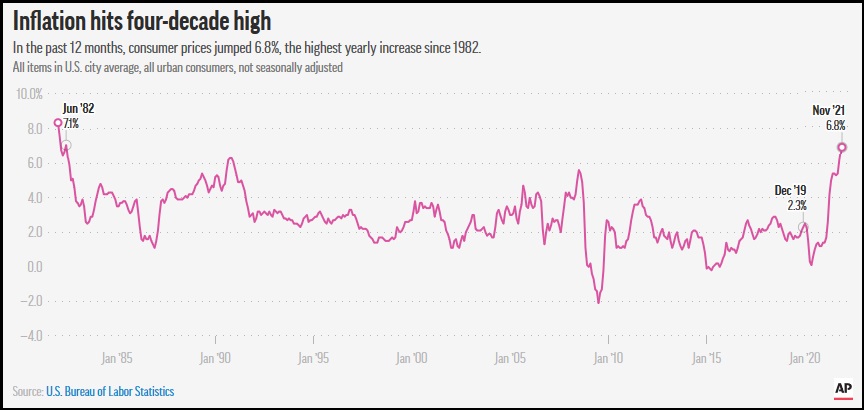
Companies are facing higher costs, and that cost is passed on to the consumer. As a result, the Consumer Price Index rose 0.8% in November, marking a 6.8% increase in inflation on an annual basis. The Labor Department noted that this was the fastest pace of inflation since June 1982.

These levels are unsustainable. The Fed’s 2% inflation target seems laughable considering prices in every area continuously rise with no end in sight. Fed Chairman Jerome Powell has stated that the central bank would step in with a more aggressive policy if they saw runaway inflation. How high do prices need to rise for the central bank to take action?

Despite High Vaccination Rate Amtrak Suspends Vaccine Mandate, The Background Tells A Story


Posted originally on the conservative tree house on December 14, 2021 | Sundance | 226 Comments

Reuters is reporting on an interesting dynamic within the vaccine mandate as it pertains to Amtrak.  Reading between the lines tells us something very specific about this vaccine mandate that we have discussed here, and it’s starting to show.

The article itself points to how Amtrak is suspending their vaccine mandate as a result of the federal courts blocking enforcement of any mandate pending litigation.  From their perspective as a federal contractor, Amtrak is now in a position to cease the vaccine requirement until the legal issues are resolved.  However, there’s an element touched upon that needs to be considered.

First the article (the emphasis is mine):

WASHINGTON, Dec 14 (Reuters) – U.S. passenger railroad Amtrak said on Tuesday it will temporarily suspend a vaccine mandate for employees and now no longer expects to be forced to cut some service in January. In a memo seen by Reuters, Amtrak Chief Executive Bill Flynn said the railroad would allow employees who were not vaccinated to get tested.

Currently, fewer than 500 active Amtrak employees are not in compliance. Last week, the railroad told Congress it anticipated “proactively needing to temporarily reduce some train frequencies across our network” because of the mandate.

Flynn said 95.7% of Amtrak’s 17,000 employees are either fully vaccinated or have an accommodation — and including employees with one dose 97.3% of employees are in compliance.

Amtrak cited a U.S. district court decision that halted the enforcement of President Joe Biden’s executive order mandating vaccines for federal contractors by January. “This caused the company to reevaluate our policy and to address the uncertainty about the federal requirements that apply to Amtrak,” the memo said. (read more)

Let’s cut through some politically correct corporate speech and media spin, and instead focus on a few key aspects:

First, the cause of the operational change, a frequency change in Amtrak service, was specifically admitted to be due to the vaccine mandate.  This is EXACTLY the opposite of the White House claim earlier today (see below).  The vaccine mandate was the cause of the operational change.  Amtrak admits this – the White House refutes this.

Second, a reduction of 500 non-vaccinated people amid a company payroll exceeding 17,000, to the extent that the reduction actually changes the operational service of the company, tells us the unvaccinated people were specifically critical to the service the company provides.

This second point gets to the heart of a thesis we have proposed before.   It’s not an issue of how many people, or what percentage, quit over a vaccine requirement.  It’s a more specific issue of WHO those people are and what they do.

In any organization, there are people critical to the operation and people not so critical.

In a cumbersome top-heavy organization, that relies upon government largess and subsidy to operate, employment is bloated beyond what is efficient.  I have long stated that the key group of most productive people, the very critical group for efficient operation, are a small subset of the total company employment.

I would bet, and it is essentially admitted by the statement from Amtrak, that a much higher percentage of the critical workers are refusing the vaccine than exist in the total employment ranks.  The most productive and critical employees within any organization are independent minded, dependable and capable of a much larger influence than the average person.  It is inside that core group of highly critical employees where effects from a vaccine mandate refusal makes the biggest impact.

As a result, the issue for any mandate is not the percentage of compliance overall, but rather how those very critical employees respond to the mandate.

There can be a specific skillset or duty needed in an organization, even a massive organization, that is only being done by a handful of specifically skilled people.  If those people stop working, the effect on the entire organization is far beyond scale.   In some instances, even in large organizations, that handful of people can shut down the entire operation if they do not perform their job(s).

500 out of 17,000 is only 3%,… yet that 3% were obviously critical enough to the operation of Amtrak in such a scale as the organization was planning to modify it’s entire operation due to their absence.   This fact points as evidence to the theory that the most critical blue-collar people inside every organization carry a tremendous amount of clout when it comes to this vaccine mandate.

It’s not a matter of how many refuse the mandate, it’s an issue of who they are.

The blue-collar effort to bolster the resistance by these brothers and sisters in freedom, does not have to be too massive to have an impact. Remember, almost all of the leftists and elite-minded communists, who now operate as Democrats, have no capacity for self-sufficiency.  If the working class stops picking up their trash, stops mowing their lawns, shopping for them, doing their cleaning and essentially facilitating their lives, this entire group of people cannot function.

If the always dependable shift-worker who never misses a day of work; the person who is always dutiful, diligent, trustworthy and can solve problems independently; the person who goes the extra mile and is proactive in planning their responsibilities, does not show up with the keys to be the switch operator, well, then the switch doesn’t get operated.  And, that person is very hard to replace.

Remember, the part where Amtrak said the change in service schedules was due to the vaccine? Well, here’s the White House denying the change in Amtrak services was caused by the vaccine.  WATCH:

From a commonsense and logistical perspective, regardless of the federal outlook, there’s no way they can pull it off.  We are the quiet, and according to those who look down their noses – the “invisible” unwashed masses.  However, when it comes to keeping the gears turning, we are the majority.

We keep their shit working and just want to be left alone.   The system will not function if tens-of-millions of American workers stand united against the vaccine mandate. It really is that simple.

EUREKA, Someone Finally Points Out The Obvious


Posted originally on the conservative tree house on December 14, 2021 | Sundance | 142 Comments

Finally!  Good grief, it’s been a long wait to see someone on the TV pointing out the obvious.

CNBC’s Steve Liesman points out what all the financial pundits keep ignoring.

The price of raw material at origination is still climbing…. which means the prices of intermediate manufacturing goods will keep climbing… which means the prices of finished goods (to wholesalers) will keep climbing…..  which means consumer prices will keep climbing.   WATCH:

♦Here’s the kicker.  The rate of raw material price increases are still higher than the rate of intermediate price increases, which are still higher than the rate of price increases in finished goods, which are still higher than the rate of price increases in consumer goods (retail).

As long as the rate of price increase for raw material, the very first step in the supply chain, remains higher than the rate of the price increase for the next step in the process, then you can guarantee future prices will go up.  It’s a simple and commonsense way to look forward when evaluating inflation.

If the stuff starts at a higher price (day one), the end product at day 90 will be at a higher price than today.  This is how you can tell that inflation is not slowing down.  The first sign of inflation easing is when the rate of inflation for raw material is lower than the rate of inflation in the next step.

November Producer Prices Rise Record Breaking 9.6 Percent Year Over Year, Biggest Single Month in History, as Massive Inflation Builds Within The Supply Chain – Again, No Signs of Slowing Down


Posted originally on the conservative tree house on December 14, 2021 | Sundance | 280 Comments

We said it was happening {Go Deep}, and it is.  Last month CTH put the preparation window at 60 days +/- depending on region.  That window is now around 30 days before the next spike in inflation shows up from cumulative costs snowballing throughout the supply chain. The “producer price index” is essentially the tracking of wholesale prices at three stages: Origination (commodity), Intermediate and Final.

The final product inflation rate in July (reported in August) was alarming at 7.8%. However, we warned it would get worse. The Bureau of Labor and Statistics (BLS) then released stunning price data for October [DATA Here], showing an even more dramatic 8.6% price increase in final demand. More intense warnings shared.

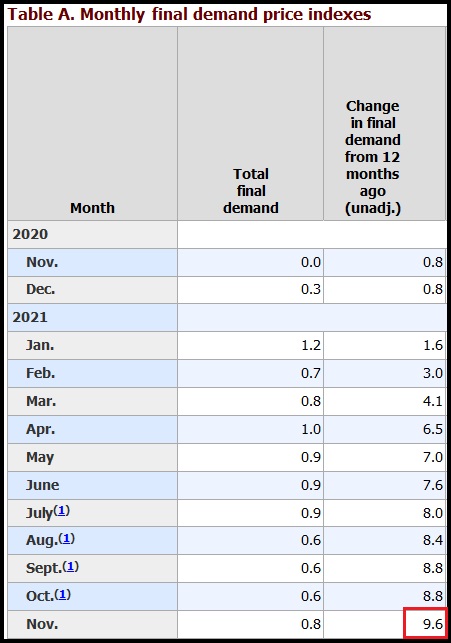
Today, we get the November BLS Result [DATA Here], and unfortunately the results are showing what was expected.  The cumulative costs of massive increases in energy prices are building into the supply at an astonishing rate.  The November data shows a rate of wholesale final goods inflation at 9.6%, the largest single month comparative rate increase in history.

The bureau even went back and revised/increased the August price index from 7.8 to 8.4 percent, and revised/increased the October figure from 8.6 to 8.8 percent.  The average monthly price increase is almost a full percent… every month.  It looks like the BLS backward revisions are an attempt to smooth down the rate of increase.

(BLS) – “The Producer Price Index for final demand increased 0.8 percent in November, seasonally adjusted, the U.S. Bureau of Labor Statistics reported today. Final demand prices moved up 0.6 percent in each of the 3 prior months. (See table A.) On an unadjusted basis, the final demand index rose 9.6 percent for the 12 months ended in November, the largest advance since 12-month data were first calculated in November 2010.” (more)

I modified Table A (final demand product pricing), taking out some of the noise to make it a little easier to see the big picture of what is happening.

When you see the wholesale level of prices almost double the increase in consumer level inflation rate, you can predict that consumer prices will likely go even higher.  Future finished goods, at a retail level, will carry the current wholesale price increase.

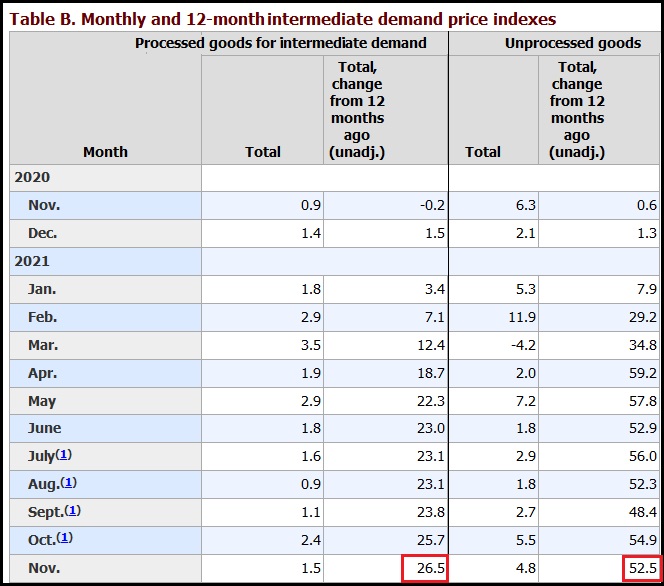
Stuff costs a lot now… and because the inbound stuff to make the finished goods is still climbing in price…. stuff is about to cost even more.   You can see this in the inflation rate of intermediate goods which I have highlighted below.

You can see from Table A (above) that finished good prices are still climbing.  That’s the higher price inflation you are feeling when you buy a product.

More alarming is to look at the “intermediate demand” products [Table B below] as they flow through the manufacturing system.  Two types of products are at the intermediate wholesale level:  Processed Goods, and Unprocessed goods.

I have again modified Table B (above) to remove the noise.  Notice two key aspects:

(1) Prices for both types of products are still climbing in the manufacturing process.  Compare August, Sept., Oct., and now November, noticing how the prices are still climbing.  Some of that has to do with energy and fuel costs still climbing.  The increasing price for gasoline is built into each part of the transportation process.

(2) Notice the scale of the increase in the prices from prior months.  The trend line is not leveling off, instead it’s doing the opposite.  The rate of inflationary climb (price increase), at the intermediate level of goods coming into the system, is getting even more steep.  The stuff coming into the manufacturing process is not only costing more, it is costing much more than before.

The wholesale prices of products into the system that end up at the retail level are still through the roof. In a major way, this is being driven by massive increases in energy costs throughout the entire supply chain.

This is going to get even uglier. Even if wages jumped in price 5% overnight (single month), which would be a large increase in wages, those wage increases are nowhere near enough to deal with this level of price increase at a consumer level. A nickel more per dollar earned is futile against a loaf of bread costing $1 more, or gasoline at $4.00/gal.

Do what you can now to start preparing your weekly budget in ways you may not have thought about before. Shop sales, use coupons, look for discounts and products that can be reformulated into multiple meals or multiple uses. Shelf-stable food products that can be muti-purposed with proteins is a good start.

Consider purchasing the raw materials for cleaning products, and reformulate them yourself to avoid these massive increases in petroleum costs.

Remember, when inflation hits like this, you can NATURALLY expect an eventual demand side response.  People will stop purchasing things, because those things are just too expensive.  When that happens, the inflationary spike can/will start to level off as the demand slows and excess inventory builds, albeit with higher prices built into the unaffordable existing inventory.

Unfortunately this drop in demand, a contraction in the economy, is what’s known as a recession. That leads to layoffs and unemployment, which only exacerbates the problems and puts downward pressure on wages – while the prices remain high.

Joe Biden spending more to try and subsidize people through this inflationary economic cycle only makes things worse for the middle class.  More spending results in more inflation, which requires more subsidy, which requires more spending, which creases more inflation.

Your goal is to prepare yourself and your family for that moment when the economy starts contracting – yet prices remain high.   If you can avoid future expenses by taking action before the highest prices hit, you will be in a better position.  Be proactive with your household maintenance, and think about things that normally hit your monthly budget unexpectedly.

Try to avoid any unexpected expenses your memory provides you, by doing what you can do now.

Act or be acted upon.

Protect your family.  Even if, heck, especially if, your kids or grandkids cannot see what is coming.  Prepare yourself to help them even if they don’t know, or won’t admit, they will need the help. Be wise in your counsel, but do not alarm.  Do not distress yourself with dark imaginings. Fellowship is not only needed, it is critical.

It is empowering to be prepared for the storms of life, just as it is to be prepared in advance of storms from weather.

The Ocean Shipping Reform Act


Armstrong Economics Blog/North America Re-Posted Dec 14, 2021 by Martin Armstrong

American farmers are struggling to send their goods overseas as the East simply does not want American exports. The Ocean Shipping Reform Act passed in the House last week due to Asian carriers “unfairly decimating against American cargo.” Five major Asian liners have been accused of offloading goods at American ports and returning empty-handed, refusing to take American cargo back with them. The US agriculture industry is highly reliant on California ports that are now described as cargo parking lots as there are not enough workers to offload boats. In addition to these supply chain delays, discrimination against American products is causing countless containers filled with agricultural goods to rot.

“Unfortunately because it’s an oligopoly…. you’ve got to take it or leave it if you’re an American shipper,” Rep. Dusty Johnson noted. “The terms often say that liquidated damages for you canceling a container is $100. Well there can be $100,000 of goods in each container.” Johnson pointed to an issue with a cheese manufacturer in South Dakota who has 2 million pounds of lactose awaiting shipment in a warehouse. That shipment sat on the dock for 75 days, spoiled, and over $25,000 was lost. Johnson also used the example of pork, which is a hot commodity in Asia. Non-frozen pork, in particular, goes for a premium. As a result, producers have been forced to freeze numerous pork shipments to Asia, diluting the profits.

The Ocean Shipping Reform Act will go to the Senate before being presented to President Joe Biden. “If you’re going to use this shared infrastructure, you’re going to play fair, and you’re not going to have unprecedented levels of rejection of American cargo – which is what we’re seeing actual rejection a refusal to take this cargo,” Johnson said.

U.S. Consumer Survey Expectations of Inflation at Least Doubling Wage Gains – Middle Class Storm Building


Posted Originally on the conservative tree house on December 13, 2021 | Sundance | 156 Comments

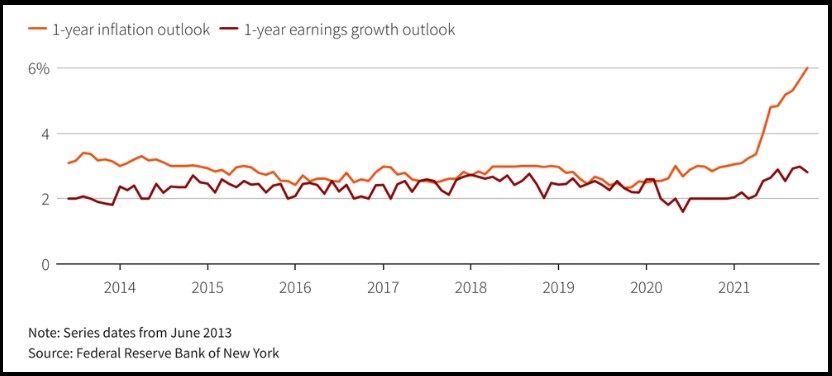
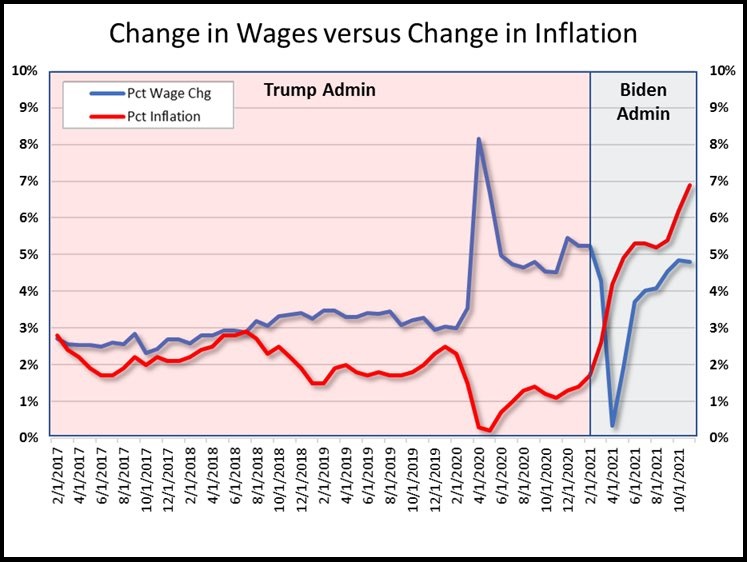
The New York Federal Reserve survey reflects the obvious.  Consumers see staple food and energy price increases far outpacing any wage gains, and the outlook moving forward does not show signs of improvement.

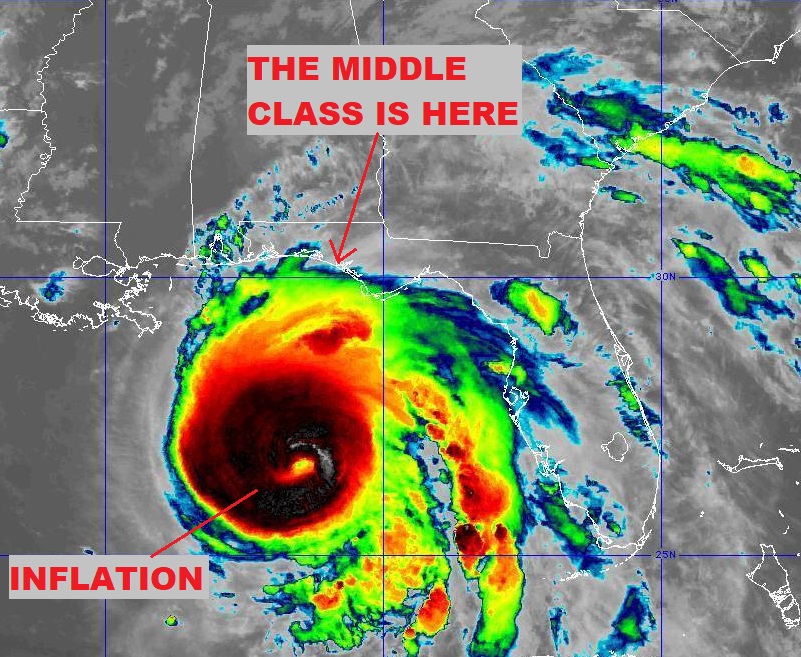
The distance between the inflation line and the wage line is the intensity of the hurricane coming our way.

We are in this very weird place where the politically motivated Fed cannot stop purchasing debt created by legislative spending.  At the same time, the political Fed is going to have to raise interest rates or we will enter an impossible spiral of policy caused inflation.  There are three options:  (1) stop buying debt; (2) increase interest rates; or (3) deploy some COVID mechanism to shut down people and hit the demand side.

Considering that Omicron didn’t work, and further panic pushing does not seem politically viable, that only leaves the two options of the Fed stops buying debt, and/or the Fed raises interest rates. Now, considering that these same political ideologues will not stop pushing the Build Back Better legislative agenda, that means the Fed cannot stop buying debt.  That leaves one option remaining, increase interest rates.

Dec 13 (Reuters) – U.S. consumers’ short-term inflation expectations pushed higher in November and expectations for future earnings growth dropped, suggesting they anticipate price increases will outpace wage gains at an even faster rate in the near term, according to a survey released on Monday by the New York Federal Reserve.

Prices for food and other goods are rising at the fastest pace since 1982, according to data released by the Labor Department last week, posing political challenges for President Joe Biden’s administration and cementing expectations the Fed will raise interest rates next year.  (read more)

Inflation Soared to 6.8% in November


Armstrong Economics Blog/Inflation Re-Posted Dec 13, 2021 by Martin Armstrong

Inflation is soaring with no end in sight. The Consumer Price Index rose 0.8% in November, marking a 6.8% increase in inflation YoY. According to the Labor Department, this is the fastest pace of inflation since June 1982. In addition, Core-CPI rose 0.5% last month, amounting to a 4.9% annual increase, the quickest advancement since 1991.

Energy prices alone have spiked 33.3% in the past year, and gasoline prices are up 58.1%. Over the past 12 months, food and energy prices rose at the most rapid pace in 13 years. Shelter costs, amounting to one-third of CPI, rose 3.8% on an annual basis. This level has not been seen since the 2007 housing crisis wreaked havoc on the US real estate market.

Despite pay increases of 4.8% this year, real hourly earnings decreased 1.9% over the past 12-months. Service costs rose at the fastest pace since 2007 as well, advancing 3.4% over the past year. Apparel costs are also up by 5% since last November. Everywhere you look, prices are drastically rising.

Overall, the cost of living is astronomical. Basic necessities such as food and shelter price increases have caused more middle-class Americans to begin living paycheck to paycheck. The Federal Reserve claimed it would step in if inflation reached an unsustainable level. A 6.8% increase is unsustainable, inflation is not transitory, and neither the government nor the Fed has made a valid effort to control this growing problem.

Semiconductor Shortage Hurting Smartphone Industry


Armstrong Economics Blog/Technology Re-Posted Dec 13, 2021 by Martin Armstrong

COMMENT: Hi Martin. Thank you for your work. The chip and supply shortage has not improved. I live in America outside a major city. My cellular device failed at the beginning of November so I ordered a replacement directly from Samsung. Best Buy and my cellular provider were both out of the phone I was seeking, and I went to around five stores. Shipping from Samsung was supposed to take a bit over a week, then two weeks, and now the ETA is in January. The stores I went into had Apple iPhones but not Androids. Frustrating.

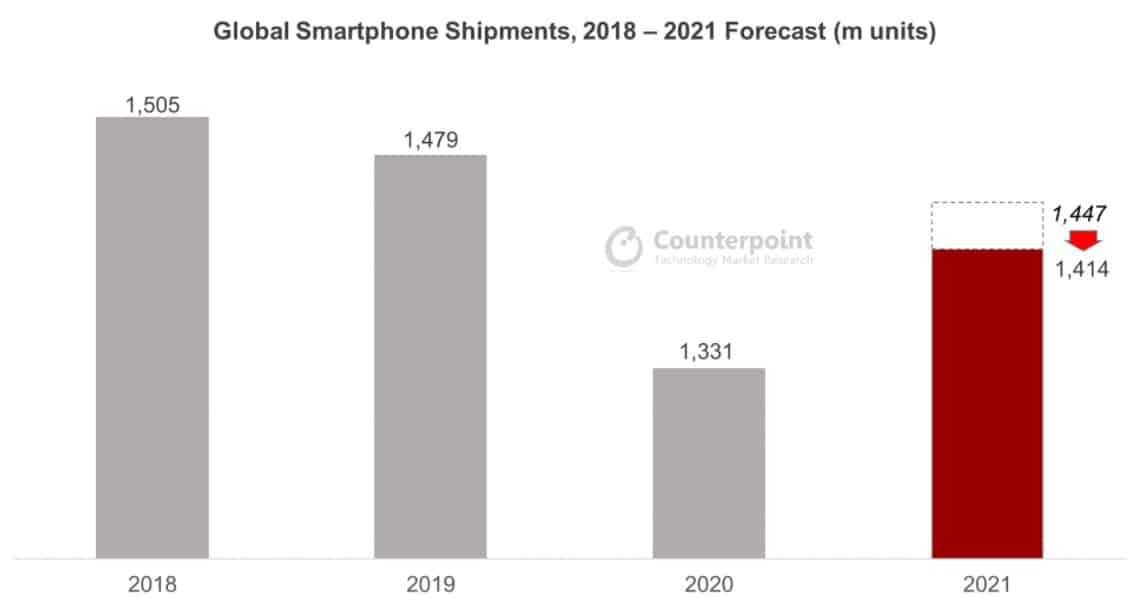
REPLY: Now is an unfortunate time to need a new phone. Numerous original equipment manufacturers (OEMs) reported failing to secure crucial parts this year due to semiconductor shortages. Counterpoint Research lowered their forecast of global smartphone shipments from 1.45 billion units to 1.41 billion. Their study further suggests that smartphone OEMs only received 80% of the crucial components they need this year to manufacture phones during the second half of the year.

Samsung completely canceled their Galaxy Note series this year as they knew they would not be able to obtain the components. “Samsung, Oppo, Xiaomi have all been affected and we are lowering our forecasts. But Apple seems to be the most resilient and least affected by the AP (application processor) shortage situation,” Tom Kang, a researcher with Counterpoint reported in October. Kang’s research did not indicate why Apple was more immune to the chip shortage. Numerous companies are racing to produce highly in-demand chips, but it will take time for manufacturing to begin.

Sunday Talk Warning, Mohamed El-Erian Concedes His Economic Views Are Now Contingent Upon Climate Change Driving Policy


Posted originally on the conservative tree house on December 12, 2021 | Sundance | 145 Comments

Well, there’s another “economist” who can be set into the folder of ‘no longer useful’.  During his appearance today on CBS Face The Nation, Mohamed El-Erian, chief economic adviser for Allianz, finishes his segment by revealing his underlying precept: Climate Change policy is now the economic policy driver of all his investment advice.

Within the interview, El-Erian said the “characterization of inflation as transitory is probably the worst inflation call in the history of the Federal Reserve.”  Additionally, El-Erian said inflation is likely to remain high into the next year and perhaps beyond.  Unfortunately, other than those two points of generally well educated accuracy, everything else is wrapped up in the political correctness of climate change…. which, you don’t really discover until the very end of the interview. WATCH:

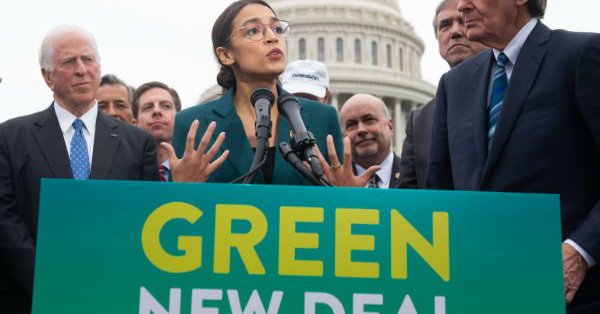
The baseline for El-Erian saying the Build Back Better spending fiasco is a good thing, is based on accepting the pretense that massive amounts of federal spending will be needed to structurally change the U.S. economy from fossil fuel use to the Green New Deal.   If you do not believe in this transformation, there is no merit to any component of the BBB spending proposal. It really is that simple.

As a consequence, El-Erian is staking the position that climate change agenda politics is now the focal point from which all other economic policy will be determined.  He has conceded in his mind and worldview, perhaps based on his associations and peer discussions, that any forward economic analysis must therefore establish itself from the alternative fuel position.

It is only from the position that climate change is baked into forward economic outlooks that El-Erian can state inflation is structurally survivable, at the current level, with additional spending by federal government.

If he’s right…if congress does pass the BBB/GND at a level they are currently debating, then inflation will rise at/near current levels through Jan, Feb, March, then plateau around March/April for a few months, and then spike again -even higher- sometime around the spring 2022.

Keep in mind, in order for inflation to spike again in 2022, it will be building upon the prior massive inflationary step of 2021, because inflation is a measure of the percent change in prices year over year.

In 2021, we experienced around a 5% jump in overall CPI prices starting in the spring.  That initial inflation jump cycles through at the same time next year, and you would expect the rate of inflation to drop or stabilize once the comparison period is passed in 2022.   If the BBB bill is passed, the rate will jump again even when it cycles through the calendar.

  • Example: December 2020 bread was $3.00
  • December 2021 bread is $4.00  (25% increase over 2020)
  • June 2022 bread at $5.00 is a 20% increase over 2021.  Price difference same, but the rate of inflation is lower.

.

Imagine the prices in the scenario above if the rate of inflation in 2022 is the same or higher than 2021.  That’s the part people need to start thinking about now.

  • Example-2:  December 2020 Gasoline was $2.00/gal
  • December 2021 Gasoline is $3/gal (50% increase)
  • June 2022 Gasoline is $4.50/gal (50% increase), $5/gal, $5.50/gal etc

.

The downstream consequences of interim energy policy shifts are major increases in current energy costs.

Few people realize how much everything jumps in price simply because oil, gas and energy costs increase.  The entire process of creating stuff (raw materials), moving stuff, processing stuff (intermediate), transporting stuff, finishing stuff, shipping stuff, storing stuff, distributing stuff and selling stuff becomes a rising cumulative cost inside the supply chain.

When energy prices go up, a snowball effect starts traveling down the mountain getting bigger and bigger as it heads towards your house.

As Obama said, “Under my administration, energy prices will necessarily skyrocket“, but he could never actually do the structural energy change because: (1) Republicans took control of the House in January 2011; and (2) the economic blast damage would have been just too catastrophic for any attempt at re-election in 2012.

Joe Biden frees the leftists from those ideological constraints.

Everything you would normally consider to be a concern, anything that would limit the extremes of any legislative effort, has been removed. They plan to lose next year, so they have nothing to lose right now.

Joe Biden is an appointed figurehead for a background agenda driven by Obama’s Chicago Marxists and the global leftists.

The Biden far-left policy agenda is strategically a massive throw everything at the legislative process, in an effort to create major change in a short period of time.  COVID is being used as the cover story, Biden is the disposable front man, and Nancy Pelosi is the facilitating legislative cohort.

Massive inflation, skyrocketing gas prices, collapsed supply chains, empty shelves or shortages in products, increased crime, devalued dollar, diminished international influence, horrible polling, predictable political consequences, none of this matters because Biden is disposable to the agenda.

Additionally, there are no limits to the obvious lies they will tell, because no one inside the administration cares about any public impact. This current effort is to drive the agenda regardless of political damage that can only catch them, or block them, in the 2022 mid-term election.

The “Green New Deal” legislation *is* the “Build Back Better” legislation.  Once they get that bill passed, it’s mission accomplished.  This is a legacy move for Nancy Pelosi, Chuck Schumer, Mitch McConnell and Joe Biden.  This is the fundamental change part.

It appears in the interview with CBS Margaret Brennan, Mohamed El-Erian is accepting this Build Back Better legislation (or something similar) will pass the Senate and be enacted into law.   At the very least, he is accepting that ‘climate change policy’ is now fundamentally accepted by U.S. voters.  That perspective forms the baseline for him saying the climate change agenda is now baked into the U.S. economy, and inflation will have to be accepted – albeit at a debatable scale.

I hope El-Erian is wrong, because he is massively underestimating the scale of what will happen with total economic inflation as a consequence.

Factually, I think his analysis is corrupted by his associations on Wall Street.  The elites (in his circle) think We The People are not smart enough to see what can happen if this complete transformation of the U.S. energy system is changed; or as healthcare policy architect Jonathan Gruber later said publicly, “We relied upon the stupidity of the American voter” to create Obamacare, the transformation in the healthcare system.

I am cautiously optimistic they are both wrong right now, although I can also see how this COVID noise is providing them a lot of cover.

.