Posted originally on Jul 24, 2025 by Martin Armstrong
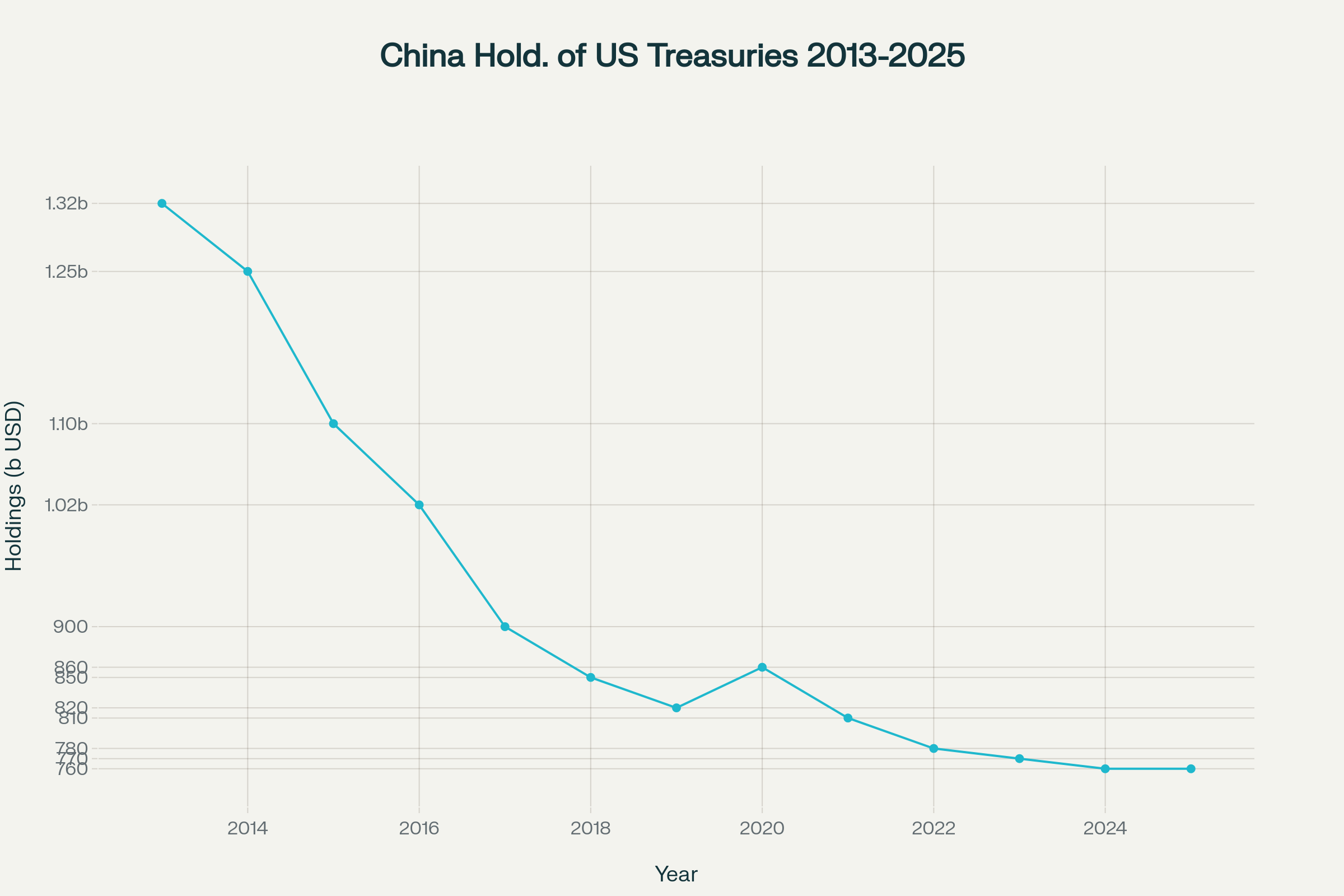
China has been offloading its US Treasury holdings for years. Once the top holder of US debt, China cut its US Treasury holdings for the third consecutive month this May. Total holdings have fallen to $756.3 billion from $757.2 billion in April, according to the US Treasury, marking the lowest debt held since May 2009.
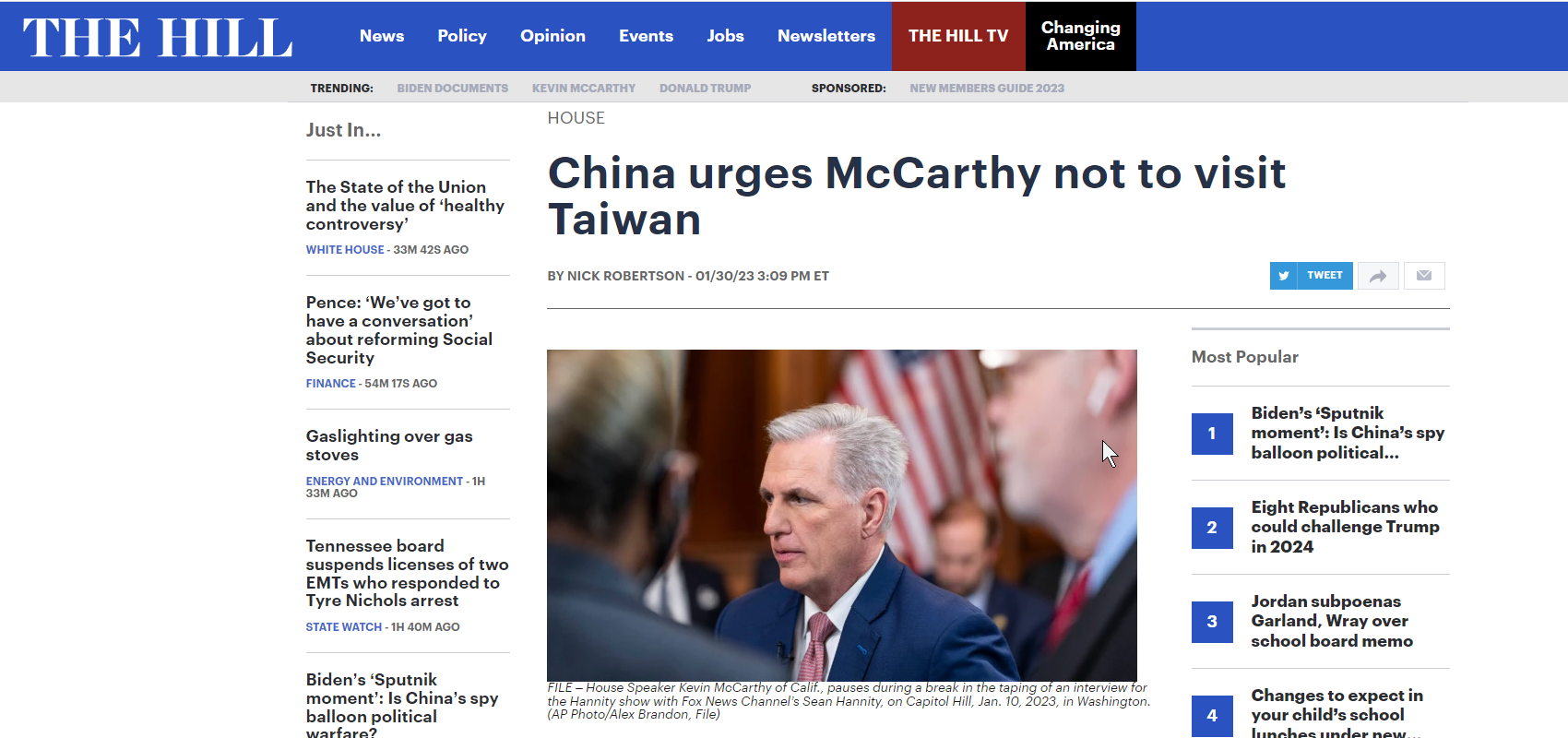
As of 2024, China has reduced its holdings by approximately 30% over a four-year period. China was able to use the exchange rate to buy yuan when the currency depreciated. China seemed to be assisting Trump years ago in lowering the dollar to ease trade frictions. That is no longer the case here as the United States began engaging in economic warfare when it pushed Russia off SWIFT, implemented sanctions, and confiscated private assets. Politicians have threatened China with economic warfare over Taiwan, and there is no incentive to hold the debt of your political enemy. It is akin to holding a gun to someone and asking them to lend you money with the promise to pay it back.
In 2013, China held $1.317 trillion in US Treasury securities at its peak holding. Geopolitical rivalry followed as China increased its military presence in the South China Sea and the US responded by forming alliances with neighboring Asian nations and conducting military operations near Taiwan. Former President Obama and Xi Jinping met in 2013 as well amid ongoing conflict regarding arms sales to Taiwan, cyber espionage accusations, and disagreements over North Korea. China offloaded $550 billion in US Treasuries by the end of 2013 and Japan became the largest holder of US debt.
Let us not forget that the Ukraine war sprang up in 2014, and the West installed its puppet government. China observed and responded accordingly. Tensions heightened in 2015 when China continued to assert its dominance in the South China Sea. The US refused to accept the One China policy, despite desperately needing China to remain an ally. Trump’s first term marked ongoing trade wars between the US and China that turned into outright hostility. The Hong Kong protests of 2019 further strengthened ties as the US aligned itself with Hong Kong and once again dismissed the One China policy.
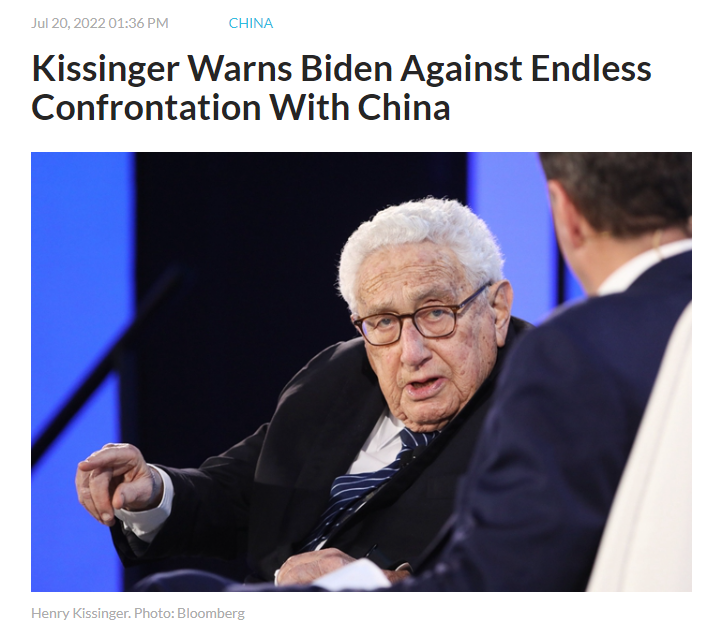
By 2020, China was akin to Russia in terms of being the “communist” enemy of the West. Mike Pompeo delivered a speech in which he declared the end of an era of engagement with China due to intellectual property theft, territorial claims, and human rights abuses. Both Trump and Biden blacklisted Chinese companies and spoke of an ongoing need to distance the US from China rather than form a concrete alliance with its top trading partner.
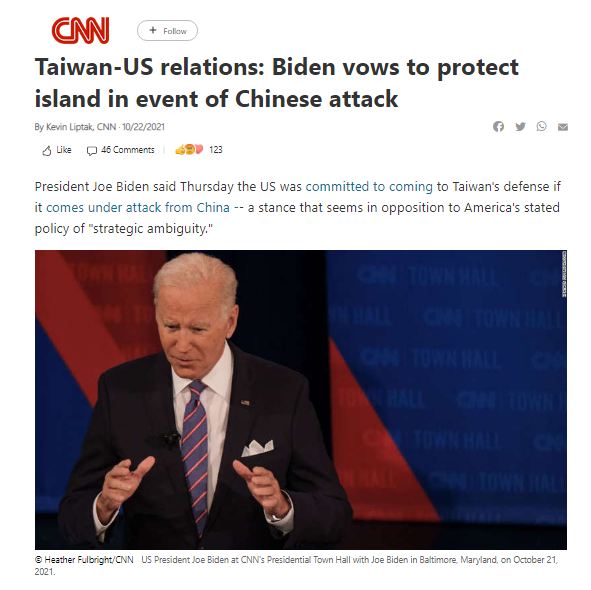
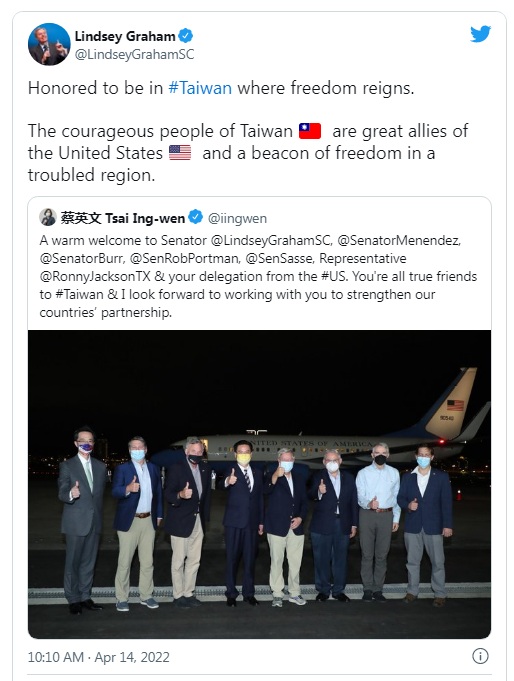
By 2022, we had Nancy Pelosi and other top politicians visiting Taiwan to show their support for sovereignty. The US vowed to intervene if China attempted to reclaim its territories. Three years ago, the Chinese government warned the provinces and private companies not to borrow dollars. The people and institutions were free to do as they pleased, despite China being deemed an evil communist nation by the West.
All of this was a political farce as the West is selective about which nations it wants to be the moral police over. China will never have the incentive to take on more debt of an enemy nation. The Fed desperately needed China’s participation as its plan was to roll over its debts perpetually, but that is now out of the question. Japan is facing a massive crisis and will be the first to default. What will the US do when no one is willing to buy its debt?
Posted originally on Jul 24, 2025 by Martin Armstrong
Over 8,000 bank branches are expected to close worldwide in 2025. Approximately 3,200 of those closures will take place in the United States. Q1 experienced 148 net branch closures in the US, with all major banks slated to close branches throughout the year.
These are merely bank closures and not bank failures, although two smaller US banks did fail this year. People simply prefer online banking as we have made the switch from relational to transactional banking.
Bankrate conducted a survey that found 77% of Americans prefer online digital banking, yet other surveys believe the figure is closer to 89%. Digital banking has been rising in popularity in recent years, up from 203 million domestic users in 2022 to the 216.8 million projected users in 2025. The survey found that 34% of consumers use online banking on a daily basis, consistently checking their account and transactions. There has even been a 19% increase in use among the 65+ crowd who is least likely to use digital services.
The total number of bank branches across the US fell below 65,000 in Q2. Texas, New York, and California saw the largest decrease in brick-and-mortar locations. Many branches that chose to remain open are only offering drive thru services. One in three banks has closed in rural areas as there is no demand, and the Federal Reserve noted in its annual Banking Access Report that the number of “banking deserts” across the Midwest is rising.
Banks have no overhead with digital banking services and they do not need to hire staff. The cost-per-transaction for in-person banking is $4.00 compared to only $0.04 for digital. AI is rapidly replacing bank tellers with a 3 to 1 ratio.
The trend is global. The United Kingdom anticipates 370 to 450 branch closures this year. Germany and France are facing 1,100 closures combined. The Asia-Pacific region of the world saw a 16% reduction in bank branches from January to May 2025. Certain nations like Malaysia and Thailand also offer branchless micro-banking kiosks to substitute relational banking.
The money in your bank account is already just an electronic book entry. Not only is there less demand for face-to-face banking, but they are also preparing for CBDCs as bank branches are unnecessary without physical paper money. You can deposit a check on your phone or at a kiosk, but e-checks are rising in popularity. The only thing left for a branch is safe deposit boxes, and the government assumes you are hiding cash there anyway. Relationship banking is becoming a thing of the past, the latest casualty in the cycle of creative destruction.
Posted originally on CTH on July 23, 2025 | Sundance
The Japanese essentially did not want to face a 25% tariff on automobiles exported to the USA. At the same time, they did not want to permit full USA access to several sectors of their market. The solution is quite remarkable.
Japan agrees to be the bank, to essentially finance any national security priority of President Trump to the tune of $55o billion. In return, Japan gets a 15% tariff on automobiles, and 10% return on the profit of the ¹business they finance in the U.S. Japan is essentially purchasing a lower tariff rate.
PRESIDENT TRUMP – “We just completed a massive Deal with Japan, perhaps the largest Deal ever made. Japan will invest, at my direction, $550 Billion Dollars into the United States, which will receive 90% of the Profits. This Deal will create Hundreds of Thousands of Jobs — There has never been anything like it. Perhaps most importantly, Japan will open their Country to Trade including Cars and Trucks, Rice and certain other Agricultural Products, and other things. Japan will pay Reciprocal Tariffs to the United States of 15%. This is a very exciting time for the United States of America, and especially for the fact that we will continue to always have a great relationship with the Country of Japan. Thank you for your attention to this matter!”
Commerce Secretary Howard Lutnick explains:
EXAMPLE: President Trump wants generic drug manufacturing in the USA. U.S. company ‘Main Street Drugs’ agrees to build a $100 billion manufacturing plant. Japan finances the building and company creation. Main Street Drugs owns and operates the business, keeps 90% of the profits, Japan gets 10%.
Trump (USA) has $450 billion in financing left to spend on the next priority, perhaps a railroad connection or transit system.
Posted originally on CTH on July 22, 2025 | Sundance
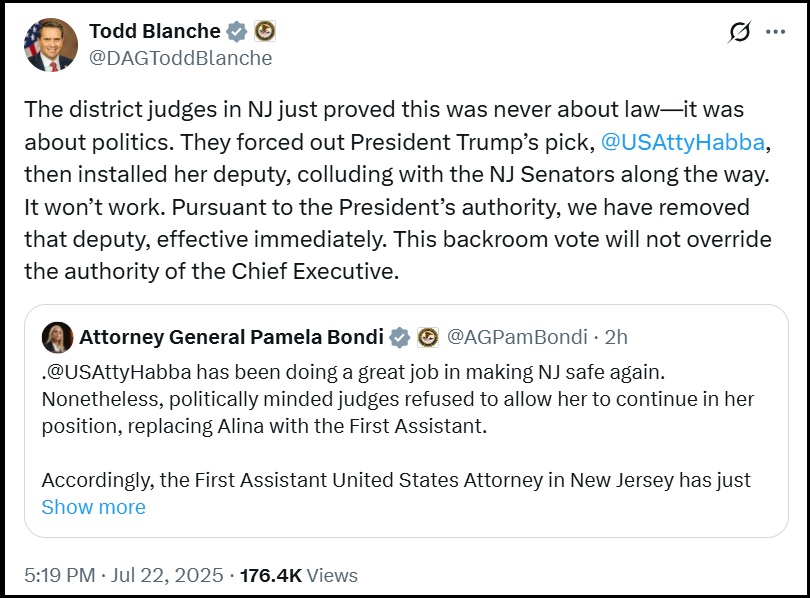
Boy howdy, this judicial activism is reaching new heights. Federal judges in New Jersey invoked a rarely used judiciary power to remove interim U.S. Attorney Alina Habba, installing her top assistant as the state’s top prosecutor. However, hours later the Trump administration responded by removing Habba’s deputy.
This is where Majority Leader John Thune can come into play and push for a faster track confirmation of Habba through the senate.
POLITICO – Federal judges declined to keep President Donald Trump’s former personal attorney as New Jersey’s top federal prosecutor, exercising an arcane statute to rebuff the Trump administration’s wishes.
New Jersey district court judges voted to not let interim U.S. Attorney Alina Habba stay on the job after her 120-day interim term expires, instead picking prosecutor Desiree Leigh Grace, according to a court order posted to the judiciary’s website.
[…] “President Trump has full confidence in Alina Habba, whose work as acting U.S. Attorney for the District of New Jersey has made the Garden State and the nation safer,” White House spokesperson Harrison Fields said in a statement. “The Trump Administration looks forward to her final confirmation in the U.S. Senate and will work tirelessly to ensure the people of New Jersey are well represented.”
[…] the Trump administration could make a countermove to remove Grace and even try to get Habba her old job back by appointing Habba to be the first assistant U.S. attorney since that official can become acting U.S. attorney if there is a vacancy. (read more)
I have created this site to help people have fun in the kitchen. I write about enjoying life both in and out of my kitchen. Life is short! Make the most of it and enjoy!
This is a library of News Events not reported by the Main Stream Media documenting & connecting the dots on How the Obama Marxist Liberal agenda is destroying America








 Centinel2012