Warner Education Network


The Warner Study Network
I would like to announce a new CSPI on-line program, the Warner Study Network.

From Centinel2012 I have most all of Dr. Warner’s books and I can state with certainty that Dr. Warner is one of the most knowledgeable people I have run into in regards to Political Islam.

KOMMONSENTSJANE – THE NEW YORK TIMES THINKS TRUMP “STOLE” A SUPREME COURT SEAT – BECAUSE THEY ARE STUPID


Anyone the reads the NYT other than to publish how devoid of mental capacity the Times is, is an idiot!

kommonsentsjane's avatarkommonsentsjane

dog2

The New York Times Thinks Trump ‘Stole’ A Supreme Court Seat. Because They’re Stupid.

By: Ben Shapiro,

December 26, 2016

One of the great benefits of Hillary Clinton’s shocking election loss is the full-scale meltdown of the American left. Leading the pack: The New York Times, which had set up a prayer shrine in the editorial board conference room. Now, they’ve been relegated to whining about how the Republican Senate wouldn’t approve Barack Obama’s Supreme Court nomination to replace the late Antonin Scalia.

Get out the world’s tiniest violin.

Shed a single tear.

The New York Times is in mourning:
No matter how it plays out, Americans must remember one thing above all: The person who gets confirmed will sit in a stolen seat. It was stolen from Barack Obama, a twice-elected president who fulfilled his constitutional duty more than nine months ago by nominating Merrick Garland, a highly qualified…

View original post 456 more words

Drug Companies Flooded W.V. with more than 780 Million Pain Pills


Source: Natural Society, by Julie Fidler The United States is embroiled in a fierce battle against opioid abuse. In 2014, there was a 3.4-fold increase in the number of opioid overdose deaths in Am…

Source: Drug Companies Flooded W.V. with more than 780 Million Pain Pills

2016-election-06711

Albuquerque Police to Start Manufacturing Crack Cocaine So They Can Arrest the People They Sell It To


Well at least its not as bad as getting a DUI for having a cup of coffee!

Fights, Shooting and Mayhem Break Out At Malls Across The U.S….


There were numerous incidents throughout the U.S. today as police responded to fights, shooting, looting, bloodshed and general mayhem in multiple States. The mall issues and/or violence was report…

Source: Fights, Shooting and Mayhem Break Out At Malls Across The U.S….

These incidents were not random but were planned … by someone!

2016-election-0671

California Really is Out of Control


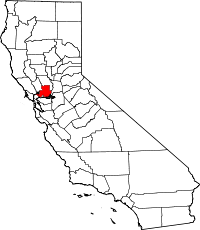
solano_county-svgSome government employees should be simply thrown in prison for abusing their position and power. A prime example of this is an agent from the California department of alcoholic beverage control, who was driving an unmarked vehicle. The agent claimed that a driver named Schwab had cut her off and was driving erratically. She pulled him over on August 5th, 2015, and charged took him to jail and charged him with a misdemeanor driving under the influence of a drug 18 months AFTER the incident. Clearly, this is an abuse of power case for the “drug” was caffeine.

The gave Schwab a breathalyzer test which showed a 0.00% blood alcohol level. He was booked any way into county jail and the agent had his blood drawn. Again the resulting toxicology report came back negative for everything from drugs to alcohol. She still was not satisfied and was abusing her power calling into question whether this was personal. The sample blood was then send for a second opinion where the sole positive result was for caffeine.

Once the government does something, they are INCAPABLE of ever backing off or simply admit an error. They charged him anyway and he is now preparing to go to trial. How in the name of reason can these state agents get away with wasting taxpayer’s money for personal disputes? This should be immediate dismissal and they should have to pay all the expenses of the state in trying to prosecute someone who driving after drinking coffee.

California is getting really out of hand. This is a state that is going off the deep end, is outright broke, and is abusing its power to prosecute citizens for insane reasons all to get money.

When Left Meet Right


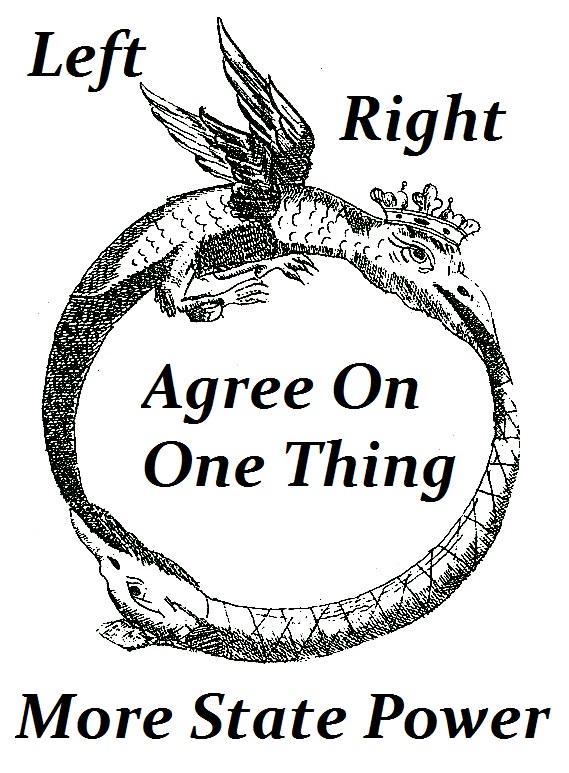
paradox-morepower

QUESTION: Salve! I speek english very bad. I speek french very well :))…but I don’t know if you too speek french. So…my question is: what is for you “the left”? Cause in Europe, I think “right” is on his way to death and “left” remains the only way for the real people :)). Salut! Ma question, en francais, fait référence au fait que dans certaines régions du monde, comme, en Romania, par exemple, le mouvement de droite est sur le chemin de la disparition et c’est le mouvement de gauche qui a vraiment quelque chose à dire pour le peuple. Qu’en pensez-vous?

REPLY: Salut! Mon français a besoin d’amélioration, mais je comprends.

Hello! My question, in French, refers to the fact that in certain regions of the world, as in Romania, for example, the right movement is on the path of disappearance and it is the left movement Which really has something to say for the people. What do you think?

(My Translation)

Left and right is a political circle. If you go extreme left or extreme right, you will quickly see that they agree on one thing – more power to the government. The extreme right such as Hitler, began not by killing Jews – but invalids who were veterans from World War I. All we hear about are the Jews and the Holocaust. However, not all German members of the military knew of the Holocaust.  The mass murder of Jews and other groups killed in the Holocaust was handled by the Schutzstaffel (SS), which was a separate military unit outside of the German army (extreme right).  People like General Johannes Blaskowitz were actually relieved of their command when he complained to the German high command about what the SS were up to.

The little known story of the Roman Catholic Church and how they protested against Action T4, the Nazi involuntary euthanasia program where the physically deformed, including the veterans of World War I, the mentally ill, and incurably sick were to be killed to save the state money. This sparked the Catholic resistance to Nazism which began in 1939 and resulted in more than 70,000 were executed. This even included not just the crippled veterans, but also children with Down’s Syndrome and senile elderly. The reasoning was to conserve assets for the state.

During the Russian Revolution, the left began a reign of Red Terror which was a campaign of mass killings, torture, and oppression carried out by the Bolsheviks (Marxists) when they rose up in the Russian Civil War of 1918. Here too we have the Cheka (the Bolshevik secret police) who carried out mass executions, which many put at over one and a half million people.

If you go extreme left or right you end up with the same action based upon two different ideas, but they reach the same conclusion. What I am saying about the left is this particular cycle remains the collapse of Marxism. Capitalism (according to Marxist theory) would no longer be sustainable. Marx believed that the living standards of the population would decline due to its need to compensate for falling rates of profit that would result in the perpetual decline in wages and in turn would reduce social benefits and pursue military aggression. The socialist system, Marx believed, would succeed capitalism as humanity’s mode of production through workers’ revolution. The problem was that Marx’s observations were seriously flawed. He lived in the early stages of the rise of industrialism. He assumed that the elite would be able to keep pushing wages lower, but could not see that if they did such a thing, then the people could not buy their production. The industrialization of society was changing the skill sets. Even in the United States, in 1850, 70% of the civil work force were employed in agriculture. That declines to 40% by 1900 and 3% by 1980. What he saw as evil orchestrated by the employers was a natural process of economic evolution just as the internet is not displacing local stores in many fields.

Marxism is on the rise once again because people do not understand how the economy functions. The masses are protesting against the 1%, yet turn a blind-eye to political corruption. This is always the self-deceiving side of Marxism. This will come to a head in 2029, but the end of Marxism may not unfold until 2072.

The left will promise the way out. The right will target immigrants taking jobs and resources. It becomes impossible to steer between the two extremes. Moving too far to the left fuels the swing to the extreme right. This is a pendulum which swings back and forth, yet never advancing to a new era.

Saddam Thought America Would Turn to Iraq for Help Against the Terrorists


debriefing-president

Former CIA Agent John Nixon, the man who interrogated Saddam Hussein and briefed Bush Jr. and Dick Chaney, reveals how intelligence got everything dead wrong in Iraq. He goes into when he was summoned to give a detailed presentation to George W. Bush at the Oval Office back in 2007. He states that Vice President Dick Cheney made a bad joke, “You sure Saddam didn’t say where he put those vials of anthrax?” It was not very appropriate given the fact that America had lost more than 4,000 troops. He goes into how Saddam thought Iraq and America would become closer because he had suppressed the terrorists, and Iraq was not run by religious zealots.

“Iraq is not a terrorist nation,” Saddam said. “We did not have a relationship with [Osama] bin Laden, and did not have weapons of mass destruction… and were not a threat to our neighbors. But the American President [George W Bush] said Iraq wanted to attack his daddy and said we had ‘weapons of mass destruction.’”

Nixon also noted that Saddam warned that revolution comes with hot summers in the Middle East:

“Next summer, when it is hot, they might revolt against you. The summer of 1958 got a little hot. In the 1960s, when it was hot, we had a revolution. You might tell that to President Bush!”

Interesting read, pulling back the curtain to catch a glimpse of reality.

U.S. Prepares To Sell Off Its Oil Reserves


Tyler Durden's picture

Submitted by Nick Cunningham via OilPrice.com,

The U.S. is beginning to wind down one of the core energy security policies of the past half century as the boom in domestic drilling eases concerns about supply.

The U.S. Department of Energy could begin to sell off some of its strategic petroleum reserve (SPR) as soon as January, the beginning of a multi-year process to shrink the nation’s stockpile of oil. Congress has authorized DOE to sell off $375.4 million worth of oil in its recent budget resolution. The DOE said that such a sale could be held in January 2017.To be sure, part of the motivation to sell crude is to finance upkeep for the SPR itself. The reserves are held in salt caverns in Louisiana and Texas, setup decades ago in the aftermath of the Arab Oil Embargo in 1973. The SPR system can hold more than 700 million barrels of oil, the largest strategic stockpile in the world. The idea is that the SPR holds 90 days’ worth of oil supplies, which could be released in the event of a global outage. A release has only occurred a handful of times, such as the Persian Gulf War, Hurricane Katrina and the Arab Spring.

Some of the storage systems are rusting and corroding after decades of use. In September, the DOE issued a report to Congress, which came to a dire conclusion about the condition of the reserve. “This equipment today is near, at, or beyond the end of its design life,” the report said. The sale “will allow the Department to take necessary steps to increase the integrity and extend the life” of the reserve, a DOE spokesperson said in December after the budget resolution was passed.

It is hard to overstate the significance of the SPR to U.S. energy policy. In fact, some analysts would argue the U.S. does not really have a comprehensive energy security policy. There is no coherent theory, policy or philosophy driving U.S. energy security concerns, other than the U.S. military policing the world to ensure the security of supply, a mission that has governed American actions abroad since the Carter administration at least.

The one cornerstone of energy security policy has been the SPR. As long as the U.S. had 3 months’ worth of supply, it could weather unexpected disruptions. The International Energy Agency was setup in the 1970s as well, and participating members – in addition to the U.S., the group includes Europe, Japan, Korea, Australia and New Zealand – also have pledged to hold a 90-day supply.

But U.S. policymakers no longer view the SPR is all that important. Even the more hawkish members of Congress have been lulled into a sense of security from the surge in U.S. oil production and the resulting crash in oil prices. The world is awash in oil, so why does the U.S. need to stockpile such a massive volume of oil at great expense? The ostensible reason of selling off oil from the SPR is to finance its maintenance to ensure its existence over the long-term, but if the Congress still truly believed in the importance of the SPR, they would have found funding elsewhere instead of reducing the stockpile.

Indeed, some of the proceeds from the sale of oil will go towards other uses beyond paying for repairs, namely, the U.S. treasury, which belies the notion that the sales are simply for upkeep. The sales are only occurring because U.S. policymakers are no longer concerned about the security of oil supply for the U.S. economy.

Various pieces of legislation have put the U.S. on a path to sell off 190 million barrels of oil from the stockpile gradually over the next decade. The sales are slated to take in $2 billion by 2020 to finance maintenance.

Beyond the question about the SPR’s relevance to U.S. energy security, a few other issues come to mind. First, the sale of oil from the SPR will occur at a moment of unusually low oil prices. The government could have taken twice as much revenue if it had sold the oil a few years ago instead of today when WTI trades for $50 per barrel. In the event that the U.S. decides to replenish the stockpile at some future moment, it will probably do so in a higher price environment. Selling low and buying high, any investor will tell you, is not a wise strategy.

A more immediate question is how the SPR sales will affect global supplies today. The release of oil will occur in already oversupplied market, and while the volumes are not huge, they will add pressure to prices. “Given stretched bullish positioning and the toppy state of inventories at Cushing, the sales of SPR oil could temporarily curb incentives for barrels in Cushing to flow to the U.S. Gulf Coast,” Barclays analysts recently said. The oil could reach the market in March or April, just “as refineries exit their turnabouts, but that could still steepen the WTI contango,” the Barclays analysts added.

“The DOE could not have picked a worse time to test the market,” said Bob van der Valk, senior editor at The Bakken Oil Business Journal, according to MarketWatch.com


Here’s How Your State Ranks On Credit Card Debt Per Household

Tyler Durden's picture

As parents all around the country wake up this morning and instantly regret adding $1,000’s of dollars to their credit cards over the holidays (at a 30% interest rate nonetheless) so that little Johnny could have the latest iPad, gaming console and sneakers, here is a list of the states where consumers have racked up the most revolving debt.

Ironically, when color coded based on political preference, with the notable exception of Alaska, Democratic-leaning states seem to carry higher credit card debt balances than conservative states.  Imagine that, conservatives expect their government to run budgets the way they run their own households.

Credit Debt by State


Meanwhile, as MarketWatch points out, in the worst states it would take the average family over a year and a half to pay off their credit debt if they contributed 15% of their median income to debt repayment.  But who wants to pay down credit card debt anyway?  We can’t very well have economic growth if people are unwilling to borrow all the way up to the point that they can no longer afford the minimum payment…right, Janet?

Credit Cards


According to ValuPenguin, millennials carry an average credit card balance of $5,800 while, shockingly, even those American’s past retirement age are carrying credit card balances over $6,000 well into their 70’s. 

Credit Debt By Age


And, of course, the more you make the more you borrow…because why not?

Credit Debt by Income


Meanwhile, Experian’s State of Credit 2016 report highlights the top/bottom 10 cities in the United States based on credit score.  Minnesota and Wisconsin absolutely dominate that the top 10 list while California, Texas and Louisiana account for 8 out of the 10 worst cities.

Credit Ratings


Oh well, at least little Johnny will love the new Xbox and sneakers for at least a week and it made for a great Facebook pic!