"Furthermore, a recent study showed that SARS-CoV-2 RNA can be reverse-transcribed and integrated into the genome of human cells. In this study, we investigated the effect of BNT162b2 on
the human liver cell line Huh7 in vitro. Huh7 cells were exposed to BNT162b2, and quantitative
PCR was performed on RNA extracted from the cells. We detected high levels of BNT162b2 in Huh7
cells and changes in gene expression of long interspersed nuclear element-1 (LINE-1), which is an
endogenous reverse transcriptase. Immunohistochemistry using antibody binding to LINE-1 open
reading frame-1 RNA-binding protein (ORFp1) on Huh7 cells treated with BNT162b2 indicated
increased nucleus distribution of LINE-1. PCR on genomic DNA of Huh7 cells exposed to BNT162b2
amplified the DNA sequence unique to BNT162b2. Our results indicate a fast up-take of BNT162b2
into human liver cell line Huh7, leading to changes in LINE-1 expression and distribution. We also
show that BNT162b2 mRNA is reverse transcribed intracellularly into DNA in as fast as 6 h upon
BNT162b2 exposure."
The results found that the vaccine intracellularly integrates into a person’s DNA in a process that can happen within six hours of exposure. Additionally, the mRNA vaccine does in fact travel to the liver and other locations such as ovaries. The messenger RNA travels outside of the nucleus to target proteins required for building cells (e.g., growing muscle tissue) in a process called transcription.
Scientists told us that the vaccine would not affect our DNA in any way. Rio Times reported, “For many years, Central Dogma of Molecular Biology stated that the “reverse transcription” — moving genetic code from RNA back into the sacred cellular nuclear and recoding the DNA — was impossible.” The compromised and biased scientific community eventually realized that reverse transcription was possible, as seen within the HIV RNA virus that does reprogram and replicate DNA.
Pfizer’s vaccine produces the LINE-1 enzyme, which is one of the enzymes required for reverse transcriptase. What does this mean for those who have taken this vaccine? There is growing concern that the vaccine is also affecting the “germ line,” which affects female eggs and male sperm cells, as well as forming fetuses. The long-term side effects of the vaccine have not been determined and the pharmaceutical companies have already lobbied governments to grant them full immunity for when those side effects are revealed.
At around the 1:50 mark in this video, Ukrainian Parliament member Kira Rudik may have secretly revealed part of the plan. “We not only fight for Ukraine we fight for this New World Order for the Democratic countries,” she admitted. How can the New World Order be a conspiracy when politicians are openly talking about the plan? Putin managed to end COVID within 48 hours after the world completely redirected their attention as the powers that be intended.
Klaus Schwab has announced “full solidarity” with Ukraine, despite previously claiming Putin was once one of his Young Global Leaders. Putin would have been above the age limit to become a Young Global Ambassador at the time Klaus stated, and this claim remains unconfirmed. What is confirmed is that Schwab is a fan of Lenin while Putin has rejected Lenin and Stalin. Putin is not a Young Global Leader as Schwab was claiming. Schwab nominated Putin as he did with Merkle but neither attended his 5-year indoctrination program into his Leninist philosophy.
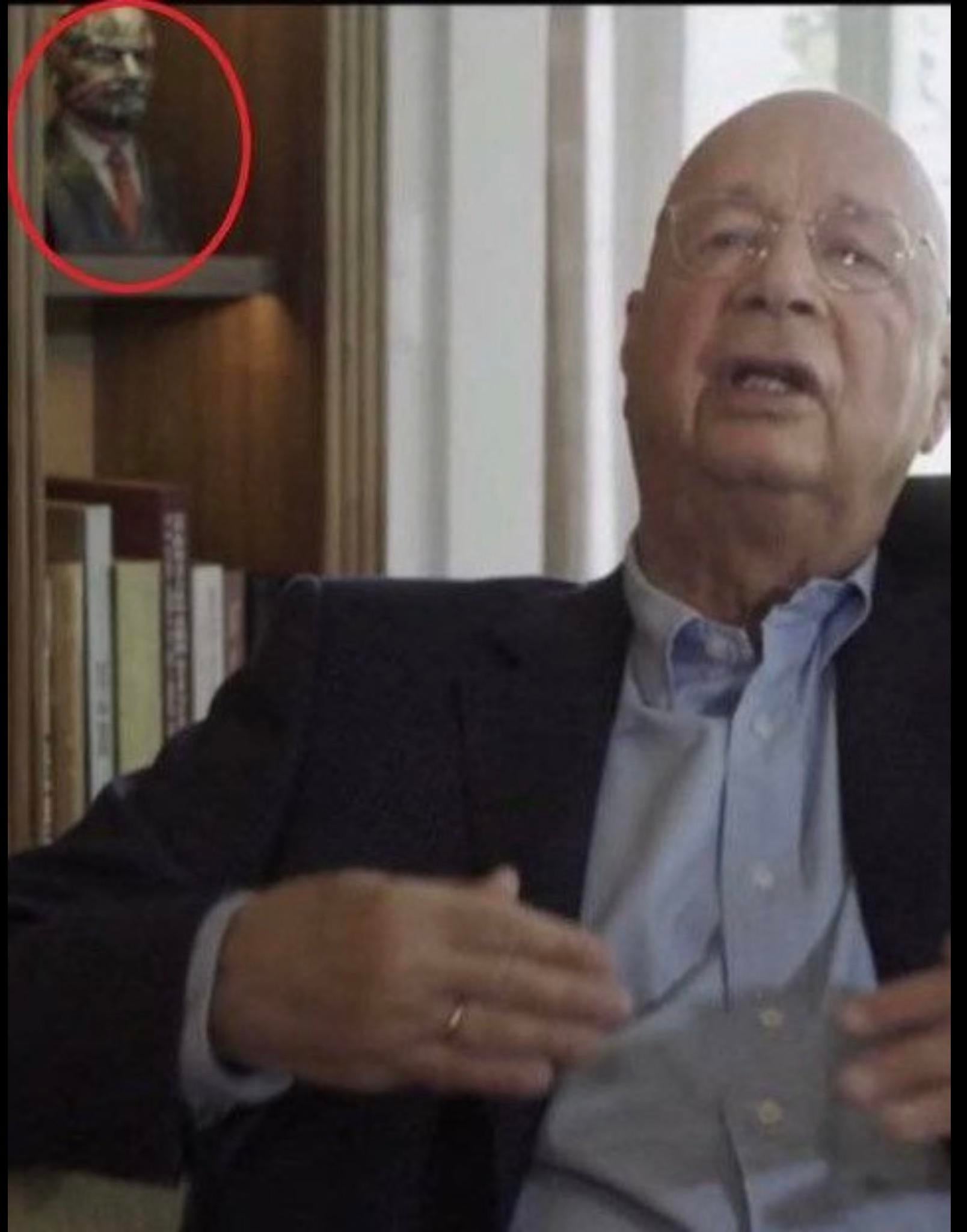
Here is a picture of Schwab with a bust of Lenin sitting on his shelf as an ode to communism. Yet, they are fighting for “Democratic countries” under Schwab’s plan of a New World Order? Something does not add up.
We have a very serious problem. I know where the advice to Biden and other world leaders is coming from, as they are telling them to seize all the assets of Putin’s “friends” to put pressure on him — their yachts, bank accounts, houses… everything. It is Bill Browder who was Safra’s partner in Hermitage Capital Management. This is because Putin seized all of the assets of Hermitage Capital Management over the blackmailing of Yeltsin. Putin wanted to question Browder – not kill because he was Safra’s partner. Browder is telling world leaders now to confiscate all Russian assets belonging to who he claims are Oligarchs.
Let me make this very clear. This is a complete abandonment of international law and the absence of any Due Process of Law, which has been the cornerstone of law globally. Due Process is based upon the Bible where the story of Cain & Able. God knows what happened; Cain killed his brother. Nonetheless, he still allows him the right to be heard and explain his side of the issue. That is not only what we have denied in this Ukrainian affair, but now the West will simply seize all the assets of Russians in the West, who are denied any right to Due Process of Law if they are not in government.
What is the Repercussion of Such Acts?
We are not simply looking at World War III beginning in the financial markets with Russian cyberattacks against US banks. This is one SERIOUS warning to Chinese investors that they too can have all their assets seized in a dispute with China. Remember how anyone of Japanese heritage was imprisoned during World War II and denied all Due Process, based solely on their nationality? It took four decades before it was admitted this violated the foundation of human rights.
This is the most DANGEROUS advice in history. It can totally destroy the world economy as we know it. Foreign investment in Russia will be seized, and the prospect of this migrating to China is extremely high. This is crossing the line. You do not go after the assets of private individuals claiming they are holding personal money for Putin. This is now about the legacy of Putin, and he will NOT suddenly stop because his personal assets are confiscated. If anything, this amounts to an act of outright war. These actions will never achieve a reasonable resolution. This I believe is the personal vengeance of Browder because of the seizure of Hermitage Capital Management and the bankers’ failed attempt to take over Russia in 2000.
This will have major implications on all markets, and you should be looking at the arrays carefully. Something was not right, and the arrays were picking this up. It is perhaps why gold failed to elect two important Monthly Bullish Reversals at the end of February when it was trading above them during the month.
Posted originally on the conservative tree house on March 2, 2022 | sundance
This DeceptiCon, this specific one, owned by the multinational corporate conglomerates, is one of the worst in office.
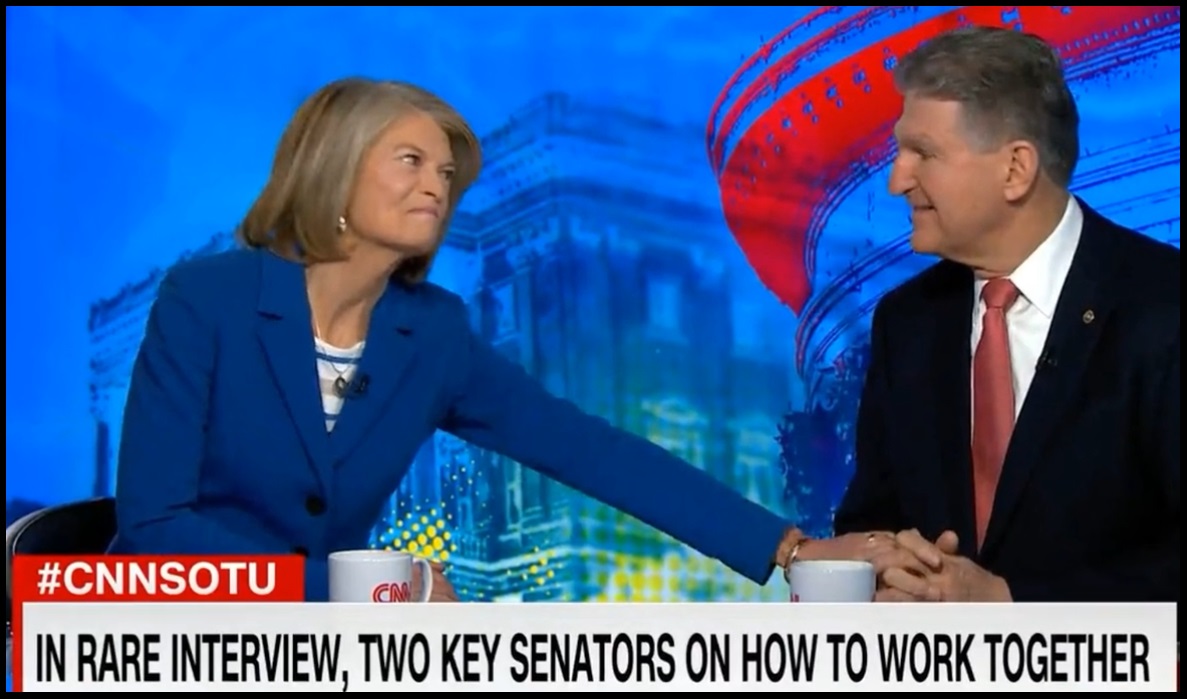
Alaska Senator Lisa Murkowski tells Politico tonight that she is in favor of higher gas prices for Americans if that’s what it takes to punish Vladimir Putin.
…”We’re going to see price increases. Nobody wants to see that. This is going to hurt. But we need to recognize Europe is in the midst of a war w/ Russia. Innocent people are dying. We have not been in as volatile as a situation as anytime in my life.“…
Here we go with the narrative of you being unpatriotic if you are not willing to financially suffer the pain inflicted intentionally by the U.S. government. Not willing to pay $7/gal for gasoline? You’re selfish. Not willing to forego a better life for your family, in order to save Ukraine? You are a horrible person.
However, this narrative is even worse, because the NATO (aligned with World Economic Forum) economic warfare is not only a combination of ideology and corporate influence, but it is also made worse by U.S. government energy policy – which is aligned with the multinational corporations demanding the confrontation. Effen’ FUBAR all the way around.
(Via Politico) – Republican Sen. Lisa Murkowski on Wednesday called for the U.S. to stop imports of Russia oil to punish Moscow for the assault against Ukraine — even if it drives domestic energy prices higher.
Targeting Russian energy is the “most significant” tool left for the U.S. to deploy, the Alaska senator said in an interview, and given President Vladimir Putin’s dependence on oil and gas revenues, it’s “the one that can do the most immediate damage to Russia in halting their efforts.”
“We are going to see price increases,” Murkowski said. “Nobody wants to see that. And this is going to hurt. But we all need to recognize Europe is in the midst of a war with Russia now. Innocent people are dying, children are dying. We have not been in as volatile as a situation as anytime in my life. And so we are looking right now from a very short window.” (read more)
This type of stuff just blows my blood pressure cuff.
Posted originally on the conservative tree house on March 2, 2022 | sundance
On the geopolitical side, the situation in Ukraine is quickly becoming BRICS -vs- NATO et al. However, on the corporatist side, the multinationals must align with their World Economic Forum masters.
This could ultimately backfire if it was real (think of where the stuff is manufactured). Alas, in this example of Nike corporate hypocrisy, it’s just a virtue-signaling position created in the branding suites of multinational PR firms.
March 1 (Reuters) – Nike Inc has made merchandise purchases on its website and app unavailable in Russia as it cannot guarantee delivery of goods to customers in the country, an update on the sportswear maker’s website showed on Tuesday.
This is the latest response by a U.S. company to Russia’s invasion of Ukraine, with Hollywood studios Disney, Warner Bros, and Sony Pictures Entertainment saying they would pause theatrical releases of upcoming films in Russia.
The update on Nike’s website, however, directed its customers to their nearest Nike stores, although it was not immediately clear when the disclosure popped up on the website. Nike is a great example of how private companies can impose sanctions against Russia, Ukrainian Member of Parliament Lesia Vasylenko tweeted. (read more)
Posted originally on the conservative tree house on March 2, 2022 | sundance
Everything including oil, natural gas, wheat, and fertilizer is skyrocketing in price right now. Ten- and twenty-year records are being eclipsed, as energy prices are soaring on the back of oil flirting with $114 a barrel. Unfortunately, here comes more inflationary pain, and everything is being blamed on the Russia-Ukraine conflict.
Toward the end of last year, we warned that fertilizer costs were going to harvest costs in 2022 (field to fork, go deep), long before Ukraine came into the picture. Unfortunately, future wheat prices reached $10.59 a bushel today, the highest since March 2008. Additionally, corn prices have passed their highest rate since December 2012.
It may seem like those crops are not that important. However, keep in mind that corn, wheat and soybeans represent the baseline for not only grain production in the U.S, but they are also the primary feed products for proteins: chicken, pork and beef. We are going to feel this second wave surge at the grocery store. Hopefully everyone has prepped.
Additionally, oil prices have jumped to near eight-year highs. Brent crude, the global oil benchmark, rose as high as $113.94 a barrel, the highest since June 2014, and has been trading around $111 for most of the day. If you were paying $4/gal for gas, these oil rates add around another .50¢ today alone. Yes, you read that correctly, inbound tankers of gasoline will offload at your convenience store at a rate ten percent higher than yesterday.
Making matters worse, the Joe Biden energy policy -focused almost exclusively on green energy- is making any investment in domestic oil production tenuous at best. The major oil companies are wary of spending money for U.S. energy development in a climate where the U.S. government is specifically against that effort.
(WASHINGTON) – […] investors seem to be reluctant to invest in fossil fuel stocks. Major US oil stocks have lagged behind the broader market for most of the last two years, teaching executives a hard lesson: Use the recent windfalls to reward investors, not sink more wells.
“Oil and gas companies do not want to drill more,” said Pavel Molchanov, an analyst at Raymond James. “They are under pressure from the financial community to pay more dividends, to do more share buybacks instead of the proverbial ‘drill baby drill,’ which is the way they would have done things 10 years ago. Corporate strategy has fundamentally changed.”
To that end, while companies like ExxonMobil, Chevron, Marathon and Phillips 66 expect to spend more on exploration and other capital spending in 2022, none of those companies expect to hit 2019 spending levels. (read more)
This economic pain is being intentionally inflicted on a national and international level. This is a feature, not a flaw, in the ideological quest for a “Build Back Better” society, or in the words of the World Economic Forum, “The Great Reset.”
The use of the Russia-Ukraine conflict is the purposeful deployment of a distraction and justification for economic hardships that have little to do with Ukraine or Russia. We were on this path long before Ukraine entered the picture. Global government, including our own, are using the Ukraine crisis as an excuse for an energy based economic outcome they created.
The multinational corporations who drive WEF financial policy, are targeting the policy of government. From their corporate perspective, this is all a simple matter of increasing income. This is a very bad scenario right now.
Fascism was traditionally defined as an authoritarian government working hand-in-glove with corporations to achieve objectives. A centralized autocratic government, headed by a dictatorial leader, using severe economic and social regimentation and forcible suppression of opposition.
The World Economic Forum (WEF) was created to use the same fundamental associations of government and corporations. Only this time, it was the multinational corporations who organized to tell the government(s) what to do. The WEF was organized for multinational corporations to assemble and tell the various governments how to cooperate with them, in order to be rewarded by them. Corporatism was/is the outcome. The government is now doing what the multinationals tell them to do, and in return, the multinationals install the compliant politicians.
Fascism, the cooperation between government and corporations, is still the underlying premise; the World Economic Forum simply flipped the internal dynamic putting the corporations in charge of handing out the instructions.
What results is a slightly modified definition of fascism:
…A massive multinational corporate conglomerate, telling a centralized autocratic government leader what to do, and using severe economic and social regimentation as a control mechanism, combined with forcible suppression of opposition by both the corporations and government.
Doesn’t that define our current reality?
The instructions from the multinational corporations to government would be called the “Great Reset“, or as commonly transposed by the government officials receiving the instructions, “Build Back Better”.
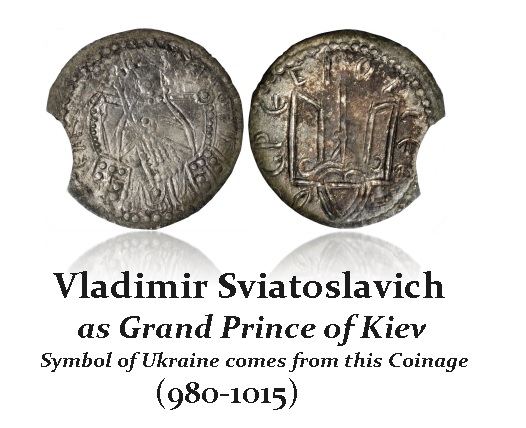
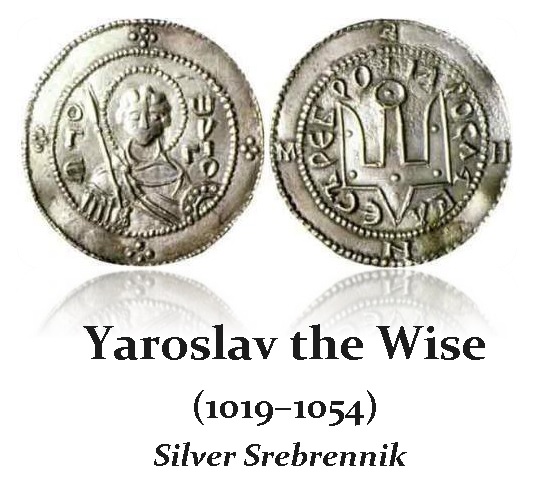
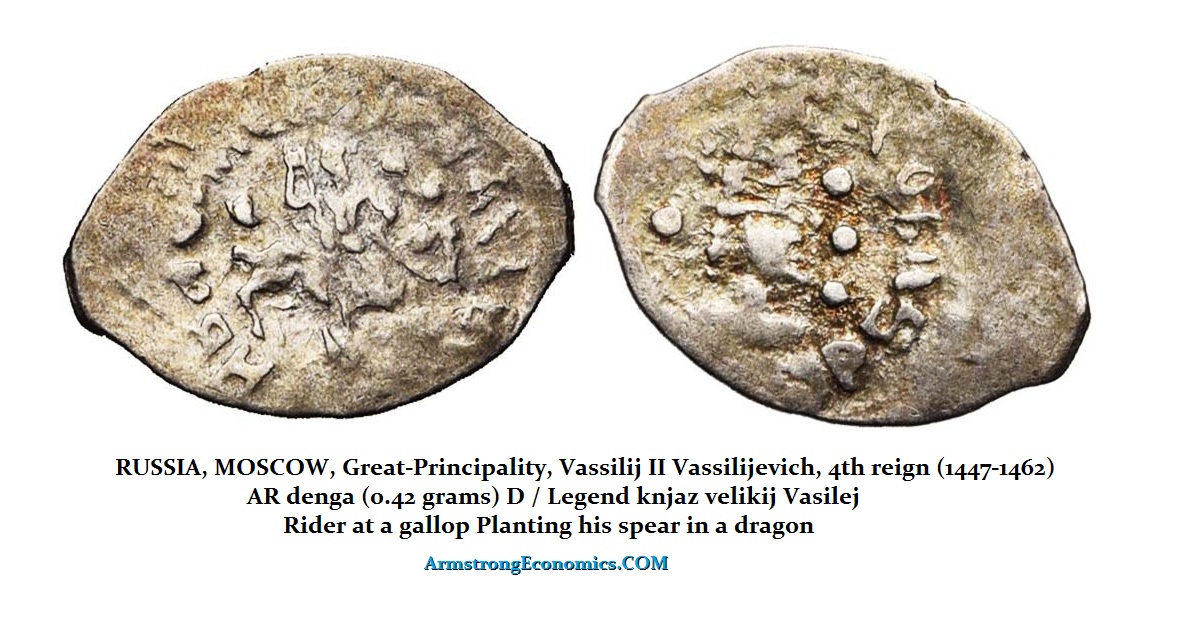
The Russian Monetary System began also with cattle (skot) during the Kievan period. Skins of small animals and precious metals were used as fixed-value exchange rate based upon barter goods. Up until the end of the 12th century, cattle was the unit of account but commerce took place with the skins of small animals. Actually, furs became the common method of payment for they were valued in terms of cattle, but were much easier for transport and divisibility for small transactions. This made small furs much more suitable for money and they were also an important item of export. Written sources began to speak of such units of payment as kuna (marten’s fur, from kunitsa, a marten), belka or veksha (squirrel), veveritsa (ermine) and nogata (fur with legs, from Arabic nagd, a good or full-value coin), and also of pieces of fur (resana), muzzle furs (mordka) and paw furs (lapka).
The word for silver was “serebro” which became more and more common to denote money as trade with the Byzantine world increased. The Old Russian words kuna and nogata, come from the old “fur money” or “leather money,” thereby retaining their meaning as metal money began to emerge. The names continued in use even though the money began to change to metals given the trade with the Byzantine world. The Rus relied upon foreign produced money. Both Byzantine silver coins and the silver dirhems of the Arab Caliphate are found in Ukraine and parts of Russia confirming trade existed.
It is clear that there was a change from “fur money” to silver and the oldest Russian unit of value was the “grivna”, which was based on the Arab coinage system. We begin to find only from the 10th century onwards that local coinage began to be struck and once this took place, then coins became the actual unit of payment in markets. This enabled the expansion of the economy and really the rise of Russia out of the barter age. The “grivna” became both a unit of account an money by weight. Its value equaled to that of 96 gold dinars (s[o]lotniki) or 144 silver dirhems (s[e]rebreniki).
The ruble has been the Russian unit of currency for about 500 years. It was The monetary reform system instituted by Peter the Great (b 1672;1682-1725) that was a century ahead of most others in that it was based on the decimal system. The basic monetary unit, first coined in 1704, was the silver ruble of 100 kopecks. Other silver coinage consisted of the poltina (one-half ruble), polupoltina (one-fourth ruble), grivennik (ten kopecks), altyn (three kopecks) and kopeck. There were two copper sub-multiples of the kopeck: den’ga (one-half kopeck) and polushka (one-fourth kopeck); and three gold multiples of the ruble: double ruble, chervonets or “ducat” (about 2 and one-half rubles), and dvoinoi chervonets (double chervonets). Unfortunately, Peter’s profligate expenditures steadily eroded most of the value of this otherwise admirable currency. Still, Peter’s reforms made a lasting impact on Russia and many institutions of Russian government traced their origins to his reign.
The amount of precious metal in a ruble varied over time. In a 1704 currency reform, Peter the Great standardized the ruble to 28 grams of silver. While ruble coins were silver, there were higher denominations minted of gold and platinum. By the end of the 18th century, the ruble was set to 4 zolotnik 21 dolya (almost exactly equal to 18 grams) of pure silver or 27 dolya (almost exactly equal to 1.2 grams) of pure gold, with a ratio of 15:1 for the values of the two metals.
In 1817, the ruble was reduced from .986 find gold to .917. This would be further reduced to .900 by Alexander III in 1886. The gold 5 ruble weighed .1929 oz. This was actually nearly the same net weight of the 1802 issue at .986 finess with a net weight of .1928 oz.
In 1825, platinum coins were introduced with 1 ruble equal to 77⅔ dolya (3.451 grams). The denominations were 3, 6, and 12 rubles.
On December 17th, 1885, a new standard was adopted which did not change the silver ruble but reduced the gold content to 1.161 grams, pegging the gold ruble to the French franc at a rate of 1 ruble = 4 francs.
This rate was revised in 1897 to 1 ruble = 2⅔ francs (0.774 grams gold). A 15 ruble gold coin was issued with a weight of .3734 oz. Effectively, this was a revaluation whereas the coin was the same weight as the 10 ruble, wihch had been issued since 1886. The 5 ruble weighing .1867 of an oz under Alexander III from 1886 had been reduced to .1244 oz.
The ruble was worth about .50 USD in 1914.
With the outbreak of World War I, the gold standard peg was dropped and the ruble fell in value, suffering from hyperinflation in the early 1920s. With the founding of the Soviet Union in 1922, the Russian ruble was replaced by the Soviet ruble. The pre-revolutionary Chervonetz was temporarily brought back into circulation from 1922-1925
Before November 1, 1990, the dollar cost 63 kopecks, but there was no opportunity to buy it at such a rate. November 1 of the year 1990 established a commercial rate of 1.8 rubles per dollar. The first trading session was opened on April 9, 1991, in one of the premises of the USSR State Bank, where a blackboard had providently been brought in order to record deals. Following the only concluded transaction (for 50 thousand cashless dollars) the ruble was for the first time ever rated commercially. The real exchange rate of the US dollar against the ruble made up 32.35 rubles per dollar. By the end of the year one dollar was estimated at 169.20 rubles under inflation of about 160% (the percentage is very approximate, as there is no accurate statistics). Prices were set free, people felt lack of products in shops, the USSR collapsed but the Russian Federation hadn’t been formed yet. This period turned to be the time of troubles for former Soviet people.
At the same time stock exchanges entered the market, though the process of their formation was quite spontaneous. The first Russian Exchange was registered in May of 1990 and was called Moscow Commodity Exchange. November 21, 1990, Moscow Central Stock Exchange was the second on the list. The first valuable securities trading session in the USSR was held only several months later.
In general by the end of 1991 Russia registered 182 commodity and stock exchanges. The RF left behind the whole planet by number of exchanges and variety of concluded transactions. That time Russian exchanges used to trade any possible commodities and security papers. When the Soviet supply system wrecked, exchanges took on a role as middlemen. The majority of goods were in deficit, even money: the president of the State Bank complained in his secret letter to M.S. Gorbachev that the Finance department failed to mint enough money to keep pace with inflation.
New Russian exchanges traded wood, sugar, paper, building materials, cars, computers and even bread! Very soon Russia numbered over 1000 exchanges, though most of them couldn’t be called traditional stock structures, as essentially they operated as trade fairs.
First rare bidders had to face an absolute lack of legislation regulating trading sessions and transactions. One of the most intrinsic legislative initiatives of 1990 happened to be the Commodity Exchange Activity Resolution of the RSFSR Cabinet Council. The resolution maintained the order of exchanges’ registration and heir functions. The distinctive feature of laws passed then is their laconism. The most significant laws regulating the stock market appeared in December of 1991.
Despite the chaos ruling the market after the USSR collapse, there had already existed companies, which later came to prominence. It’s hard to define the field of their activity then, but it is known that January 18, 1991, the today’s Russian leading investment company Troika Dialog was founded, and in 1991 the information agency AK&M was established.
Princes of Novgorod
Rurik (b ?-879; 862-879) Oleg of Novgorod (regent) (b ?-912)
Grand Princes of Kiev
Askold and Dir (non-Rurikids) (b ?-882; 842/862-882) Oleg of Novgorod (regent) (b ?-912) Igor I (b ?-945; 913-945) Saint Olga of Kiev (regent) (b ?-969) Sviatoslav I the Great (b 942–972; 962-972) Yaropolk I (b 958/960–980; 972-980) Saint Vladimir I the Great (b 958–1015; 978-1015) Sviatopolk I the Accursed (b 980–1019; 1015-1016) Yaroslav I the Wise (b 978–1054; 1016-1018) Sviatopolk I the Accursed (b 980–1019; 1018-1019) Yaroslav I the Wise (b 978–1054; 1019-1054) Iziaslav I (b 1024–1078; 1054-1068) Vseslav of Polotsk (b 1039–1101; 1068-1069) Iziaslav I (b 1024–1078; 1069-1073) Sviatoslav II (b 1027–1076; 1073-1076) Vsevolod I (b 1030–1093; 1077-1077) Iziaslav I (b 1024–1078; 1077-1078) Vsevolod I (b 1030–1093; 1078-1093) Sviatopolk II (b 1050–1113; 1093-1113) Vladimir II Monomakh (b 1053–1125; 1113-1125) Mstislav the Great (b 1076–1132; 1125-1132) Yaropolk II (b 1082–1139; 1132-1139) Viacheslav I (b 1083/2-1154; 1139-1139) Vsevolod II (b ?-1146; 1139-1146) Igor II (b ?-1146; 1146-1146) Iziaslav II Panteleimon (b 1097–1154; 1146-1149) Yuri I the Long Arms (b 1099–1157; 1149-1150) Viacheslav I (b 1083/2-1154; 1150-1150) Iziaslav II Panteleimon (b 1097–1154; 1150-1150) Yuri I the Long Arms (b 1099–1157; 1150-1151) Iziaslav II Panteleimon (b 1097–1154; 1151-1154) Viacheslav I (b 1083/2; 1151-1154) Rostislav I (b 1110–1167; 1154-1155) Iziaslav III (b ?-1162; 1155-1155) Yuri I the Long Arms (b 1099–1157; 1155-May 15, 1157) Iziaslav III (b ?-1162; May 1157-December 1158) Mstislav II (b 1125–1170; December 1158-Spring 1159) Rostislav I (b 1110–1167; April 1159-February 1161) Iziaslav III (b ?-1162; February 1161-March 1161) Rostislav I (b 1110–1167; March 1161-March 1167) Vladimir III (b 1132–1173; Spring 1167-Spring 1167) Mstislav II (b 1125–1170; May 1167-March 1169)
Grand Princes of Vladimir
Saint Andrei I Bogolyubsky (b 1110–1174; May 1157-June 1174) Mikhail I (b ?-1176; 1174 September 1174) Yaropolk (b ?-after 1196; 1174-June 1175) Mikhail I (b ?-1176; June 1175-June 1176) Vsevolod III the Big Nest (b 1154–1212; June 1176-April 1212) Yuri II (1189–1238; 1212-April 1216) Konstantin of Rostov (b 1186–1218; Spring 1216-February 1218) Yuri II (b 1189–1238; February 1218-March 1238) Yaroslav II (b 1191–1238; 1238-September 1246) Sviatoslav III (b 1196–1252; 1246 1248) Mikhail Khorobrit (b 1229–1248; 1248-January 15, 1248) Sviatoslav III (b 1196–1252; 1248-1249) Andrey II (b 1221–1264; December 1249-July 1252) Saint Alexander I Nevsky (b 1220–1263; 1252-November 1263) Yaroslav III (b 1230–1272; 1264-1271) Vasily of Kostroma (b 1241–1276; 1272-January 1277) Dmitry of Pereslavl (b 1250–1294; 1277-1281) Andrey III (b 1255–1304; 1281-December 1283) Dmitry of Pereslavl (b 1250–1294; December 1283-1293) Andrey III (b 1255–1304; 1293-1304) Saint Michael of Tver (b 1271–1318; 1304-November 1318) Yuri (III) of Moscow (b 1281–1325; 1318-November 1322) Dmitry I the Terrible Eyes (b 1299–1326; 1322-September 1326) Alexander of Tver (b 1281–1339; 1326-1327) Alexander of Suzdal (b ?–1331; 1327-1328) Ivan I of Moscow Kalita (b 1288–1340; 1328-March 1340)
Grand Princes of Moscow
Ivan I Kalita (b 1288; November 1325-March 1340)
Simeon the Proud (b 1316; 1340-1353)
Ivan II the Handsome (b 1326; April 1353-November 1359)
Saint Dmitry I Donskoy (b 1350; November 1359- May 1389)
Vasily I (b December 1371; May 1389-February 1425)
Vasily II the Blind (b 1415; February 1425-March 1462)
Ivan III the Great (b 1440; April 1462-November 1505) Vasily III (b 1479; November 1505-December 1533)
House of Rurikovich
Ivan IV the Terrible (b 1530; January 1547-March 1584)
Feodor I (b 1557; March 1584-January 1598)
House of Godunov
Irina (disputed) (b 1557?; Feodor I’s daughter January 7-15, 1598; d October 1603)
Boris I (b 1551?; February 1598-April 1605)
Feodor II (b 1589; April 1605-June 1605)
Pseudo-Rurikovich usurpers
False Dmitry I (Grigory Bogdanovich Otrepyev) (b 1581?; June 1605-May 1606)
False Dmitry II (b. 1582?; July 1607-December 1610)
False Dmitry III (Sidorka) (b ?; March 1611-May 1612)
House of Shuysky
Vasiliy IV (b 1552; May 1606-July 1610)
House of Vasa
Vladislav I (b 1595; September 1610-November 1612 (deposed))
House of Romanov
Michael I (b 1596; July 1613-July 1645)
Alexis I the Quietest (b 1629; July 1645-January 1676)
Feodor III (b 1661; January 1676-May 1682)
Sophia (regent) (b September 1657; May 1682-August 1689; d July 1704)
Ivan V jointly with Peter I (b September 1666; June 1682-February 1696)
Emperors of Russia
(Also Grand Princes of Finland from 1809 until 1917; and Kings of Poland from 1815 until 1917)
Peter I the Great (b June 1672; with Ivan V 1682–1696; June 1682-November 1721; February 1725, St. Petersburg, Russian Empire)
Catherine I (b April 1684; February 1725-May 1727)
Peter II (b 1715; May 1727-January 1730)
Anna (b 1693; February 1730-October 1740)
Ivan VI (disputed) (b 1740; October 1740-December 1741; murdered July 1764)
Shlisselburg, Russian Empire
Elizabeth (b 1709; December 1741-January 1762)
Peter III (b 1728; January 1762-July 1762 (murdered))
Catherine II the Great (b 1729; July 1762-November 1796)
Paul I (b 1754; November 1796-March 1801 (assassinated))
Alexander I the Blessed (b 1777; March 1801-December 1825)
Constantine I (disputed) (b 1779; December 1-26, 1825) d June 27, 1831)
Nicholas I (b 1796; December 1825-March 1855)
Alexander II the Liberator (b 1818; March 1855-March 1881 (assassinated))
Alexander III the Peace-Maker (b 1845; March 1881-November 1894)
Saint Nicholas II (b 1868; November 1894-March 1917; July 17, 1918 (executed))
Michael II (disputed) (b 1878; March 15-16 March 1917; June 12, 1918 (murdered))
Posted originally on the conservative tree house on February 28, 2022 | Sundance | 35 Comments
Remember that fourth quarter GDP result that seemed manipulated? Well, I suspect the record setting trade deficit now being reported for January is an outcome of those pesky fourth quarter trade results being intentionally skewed by the withholding of December 2021 import data.
Additionally, methinks we are likely to get some increased economic clarity about why the White House needed Ukraine to become the big shiny thing with such urgency.
Just like everything else, geopolitical dynamics –especially those surrounding entrenched ideology– are always about the economics. Someone, eventually, always has to pay. Follow the money; there are trillions at stake.
(REUTERS) […] The goods trade deficit jumped 7.1% to an all-time high of $107.6 billion last month. Imports of goods increased 1.7%, led by food and motor vehicles. There were also large increases in imports of industrial supplies, capital and consumer goods. Imports of other goods, however, tumbled 15.3%.
Exports dropped 1.8%, weighed down by consumer goods, motor vehicles, food and other goods. But exports of capital goods and industrial supplies increased. Trade has been a drag on gross domestic product for six straight quarters. (read more)
That missing Port of LA December import data, now being introduced into the month of January, might just be the cause of the “all time high” noted above. I will bet one sustainable rice cake on it.
Next up, inflation.
As we have outlined exhaustively, inflation comes in waves because inflationary costs flow like tides within the overall supply chain. The three stages are Origination (commodity), Intermediate (processing), and then Final (to wholesale).
Inflation on raw materials flows into the pricing, then layers of energy inflation overlap the material and labor costs, and eventually the final product exits with the full weight of higher costs embedded.
Additionally, the payment for goods has terms of 30, 60, 90 or 180 days depending on the sector. Pricing contracts are then reset with each new purchase order. Price increases can sometimes lag in this process depending on whether the retailer needs the proceeds from the ending sales to fill the banking exchange account and pay the supplier.
(Daily Mail) U.S. inflationwill be even worse this year than expected, after the Federal Reserve’s primary inflation measurement hit its highest level in 40 years, according to a new report from Goldman Sachs.
The personal consumption expenditures (PCE) price index rose 6.1 percent in January from a year ago, the largest annual gain since February 1982, as seen in federal data released Friday.
Goldman Sachs predicts that PCE inflation will remain high throughout the year before dropping to 3.7% by the end of 2022, economists for the Wall Street giant wrote in a client report Sunday (more)
CTH has continued to stick with the models that have proven accurate. We see inflation on highly consumable goods getting another wave in the spring of this year. It looks like by Memorial Day that wave will end, and food inflation will level off. There will be a period of pricing stability in the summer until the 2022 harvest season cycles. At that point, we should see the newest field costs showing up in the end harvest price.
The price of gasoline is a big variable. Current trends put the price of unleaded regular gasoline in the $6 to $7/gal range toward the end of this year. This issue makes estimations on downstream inflation more challenging.
On the durable goods side, things are less clear. A lot depends on what happens with employment and wages.
If the economy is slowing as it appears, durable goods prices may be subject to decreased demand. You guys will be able to see if prices for durable goods begin coming down long before the economists and financial analysts will be able to quantify it.
.
Of course, there will always been people who do not connect the dots between major economic damage surfacing and the need for distractions, justifications and excuses elsewhere in the world.
Armstrong Economics Blog/China Re-Posted Feb 28, 2022 by Martin Armstrong
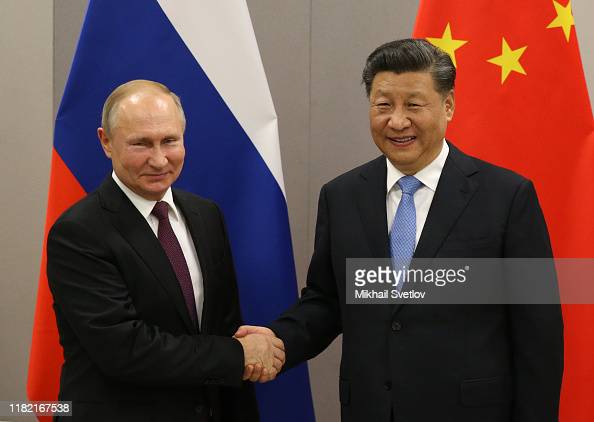
BRASILIA, BRAZIL – NOVEMBER 13: (RUSSIA OUT) Russian President Vladimir Putin (L) greets Chinese President Xi Jinping (R) during their bilateral meeting on November 13, 2019 in Brasilia, Brazil. The leaders of Russia, China, Brazil, India and South Africa have gathered in Brasilia for the BRICS leaders summit. (Photo by Mikhail Svetlov/Getty Images)
Russia and China have aligned in recent years both financially and politically. Russia recently showed support for China during the Beijing Olympics as other world leaders declined to send even their diplomats. Earlier in the month, Vladimir Putin and Xi Jinping unified in their opposition to NATO expansion and stated that there are “no limits” to the China-Russia partnership.
According to the Carnegie Moscow Center, as reported by Business Insider, trade has dramatically increased between Russia and China. In 2004, the two nations traded $10.7 billion, but now exchange $140 billion between the two. As for the leaked instructions, the Chinese Communist Party is studying Russia’s Ukraine invasion for tips. “In the future, China will also need Russia’s understanding and support when wrestling with America to solve the Taiwan issue once and for all,” the post noted. Alliances have been formed and Russia and China are now standing as a united front against the West.
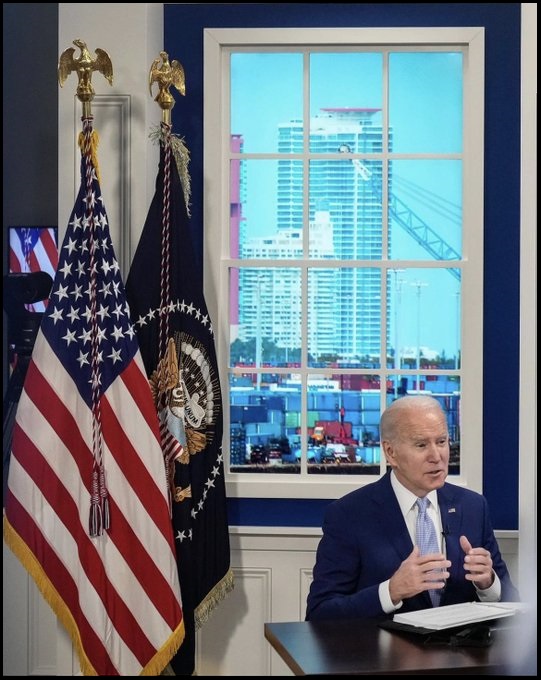
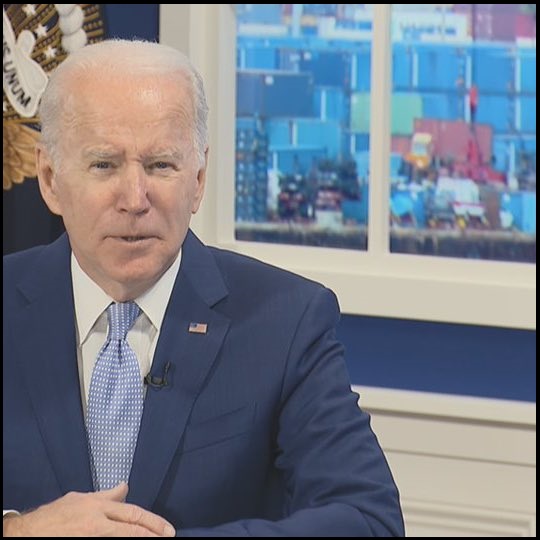
On February 10, President Joe Biden stated that he would “work like the devil to bring gas prices down.” That was short-lived. By February 22, Biden announced that gas prices will continue to rise. “Defending freedom will have costs for us as well, and here at home. We need to be honest about that,” Biden stated to deflect the blame.
Biden continued: “But as we will do — but as we do this, I’m going to take robust action to make sure the pain of our sanctions is targeted at the Russian economy not ours. We’re closely monitoring energy supplies for any disruption. We’re executing a plan in coordination with major oil producing consumers and producers toward a collective investment to secure stability and global energy supplies. This will be — this will blunt gas prices. I want to limit the pain to the American people fueling at the gas pump. This is critical to me.”
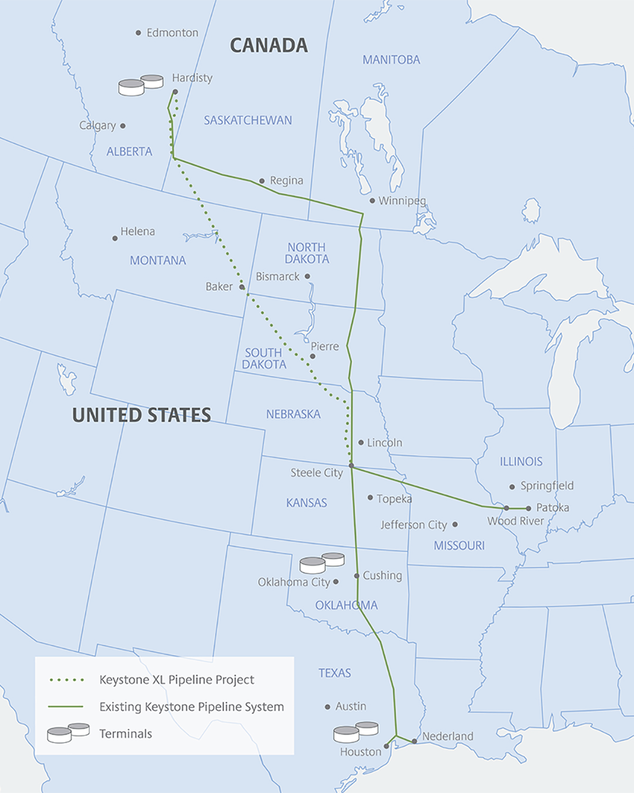
Then there is the Keystone XL Pipeline Project that was terminated in June 2021 after President Biden revoked the permit as soon as he took office. The climate change crowd declared this a major victory, blindly ignoring the consequences. The climate change advocates have also caused fracking to become a moral issue, preventing an increase in domestic production.
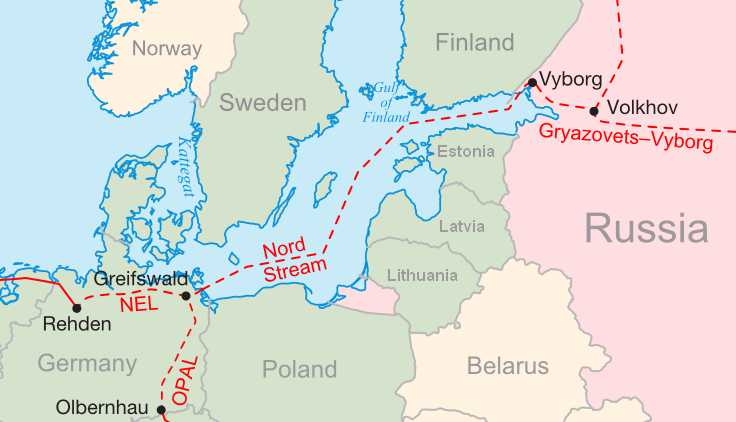
Once nations are unable to purchase gas from Russia, they will turn to the Middle East and elsewhere, which will tighten global reserves. Rising energy prices will contribute to inflation, and transportation costs will rise. The West has lost control over the energy crisis in its bid to burn down the world to Build Back Better.
I have created this site to help people have fun in the kitchen. I write about enjoying life both in and out of my kitchen. Life is short! Make the most of it and enjoy!
This is a library of News Events not reported by the Main Stream Media documenting & connecting the dots on How the Obama Marxist Liberal agenda is destroying America









 Centinel2012