McDonald’s Is Temporarily Shutting Down U.S. Corporate HQ to Announce Major Cuts and Layoffs


Posted originally on CTH on April 2, 2023 | Sundance 

Before getting to the headline, I want to remind you what CTH outlined two years ago about these massive food price increases.

You might remember me saying that processed food prices will increase at a much greater rate than fresh or lesser processed foods.  Factually, even organic products (ie. produce) could/would end up less expensive (in relative terms) to the increase in price at your supermarket, as compared to the price increases for the more processed foods.

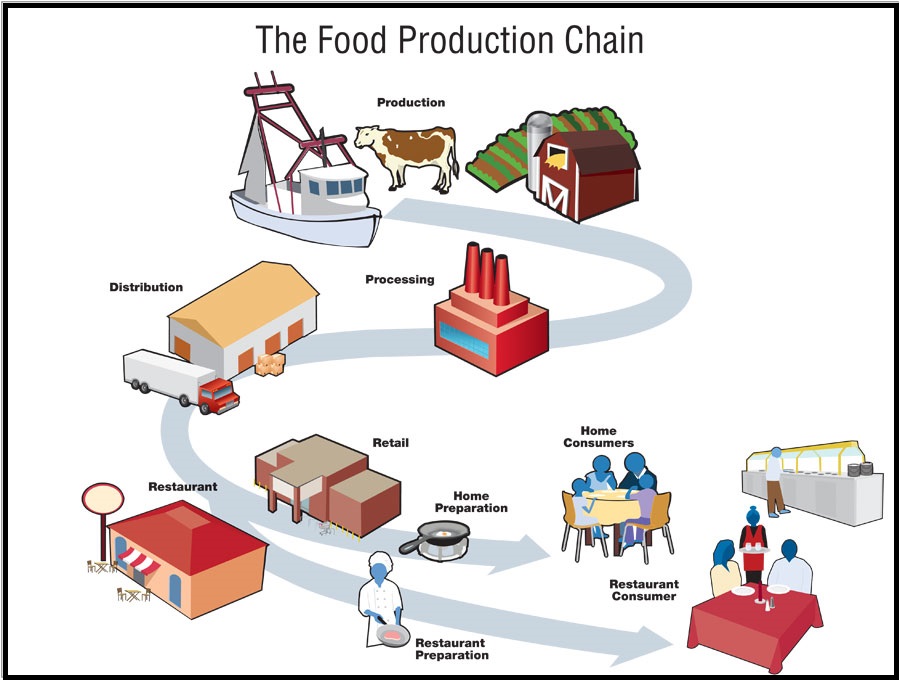
The reason is simple, processed food use more energy; energy prices are skyrocketing; the processing costs (packaging, transportation, freezing, sanitizing, storage, warehousing and distribution etc.), at each step of the processing cycle, in addition to higher labor costs, drive up the end result of the price.

In this energy driven inflationary environment, less processing and handling equals lower overall cost increases from field to fork.  More processing, handling, distribution equals higher overall costs.  This is simply a supply chain, truism.

Into this issue comes McDonald’s Corp.  Last I heard, approximately 85% of McDonald’s business was franchise.  The franchise has to purchase the product (food) from the main company.  Supply side cost increases in the food are transferred from the company to the franchisee via higher product costs.  The restaurant is then forced to raise prices to accommodate their increased costs.  A portion of the revenue from sales then flows back to the main company.

It is important to note here, there is a natural disconnect in supply side price increases within the franchise model.  The parent company must, must, negotiate the best possible contract terms with the suppliers because the increases in costs are passed directly to the franchise.  The parent company doesn’t immediately feel any problem until the revenue from the franchise drops due to the forced raising of retail prices and diminished sales.  There is a lag.

McDonald’s is extremely exposed to processed food price increases.

McDonald’s franchises were forced by supply cost increases to raise retail prices.  The retail prices were raised into a primary customer base that is already under extreme inflationary pressure. The average McDonald’s customer is exposed to inflation at almost every level of their life.

A typical family of four will now pay between $30 to $40 dollars for a single meal at a McDonald’s restaurant.  That is not practical for the customer base.  The result is lowered sales at retail, as eating a meal at home becomes the less costly option.  The downstream consequence is lower revenue returned to the parent company.

The only way the parent company can offset the supply side costs to the franchisee is to lower overall operating costs. Expenses have to be cut. Advertising budgets reduced. Administration costs reduced. Administrative staffing levels reduced. Supply contracts renegotiated. Packing, warehousing, distribution and all vendor contracts renegotiated, consistently looking for better terms.

(Wall Street Journal) McDonald’s Corp. is temporarily closing its U.S. offices this week as it prepares to inform corporate employees about layoffs undertaken by the burger giant as part of a broader company restructuring.

The Chicago-based fast-food chain said in an internal email last week to U.S. employees and some international staff that they should work from home from Monday through Wednesday so it can deliver staffing decisions virtually. The company, in the message, asked employees to cancel all in-person meetings with vendors and other outside parties at its headquarters.

“During the week of April 3, we will communicate key decisions related to roles and staffing levels across the organization,” the company said in the message viewed by The Wall Street Journal. McDonald’s declined to comment Sunday on the number of employees being laid off.

McDonald’s in January said that it planned to make “difficult” decisions about changes to its corporate staffing levels by April, as part of a broader strategic plan for the burger chain.

Chief Executive Chris Kempczinski said in an interview at the time that he expected to save money as part of the workforce assessment, but said then he didn’t have a set dollar amount or number of jobs he was looking to cut. “Some jobs that are existing today are either going to get moved or those jobs may go away,” Mr. Kempczinski said.

McDonald’s employs more than 150,000 people globally in corporate roles and its owned restaurants, with 70% of them located outside of the U.S., the chain said in February.

McDonald’s in the message acknowledged that the week of April 3 would be a busy one for personal travel, which it said contributed to the decision to deliver the news remotely. Workers who wouldn’t have access to a computer during the week should provide personal contact information to their manager, the company said. (read more)


Mike Lindell Joins Samaritans Purse During Recovery Efforts in Southwest Florida


Posted originally on the conservative tree house on October 13, 2022 | Sundance

MyPillow CEO Mike Lindell travelled to Fort Myers to join with Samaritans Purse in the Hurricane Ian recovery effort.   Mr. Lindell went door to door in various neighborhoods passing out pillows and blankets along with prayers and well wishes for the community. {Direct Rumble Link}

Mr. Lindell appeared with Steve Bannon to discuss the recovery effort.  WATCH:

.

“The damage is incredible—these people need our prayers and our support,” said Samaritan’s Purse President Franklin Graham. “We’re going to need an army of volunteers. Prayerfully consider joining us to help in Jesus’ Name.”  [ Website Here ] 

To give an idea of what happened to the coastal area, there is some pretty incredible drone footage of the damage done to Fort Myers beach and Sanibel/Captiva. Below:

Fort Myers Beach.  It looks like the aftermath of a massive Tsunami:

.

Captiva and Sanibel:

.

Massachusetts Energy Companies Announce 64% Increase in Electricity Rates Beginning November 1st


Posted originally on the conservative tree house on September 22, 2022 | Sundance 

National Grid and Eversource are the two major electricity providers for Massachusetts. Both companies have notified the Department of Public Utilities (DPU) that rates for electricity are about to skyrocket.

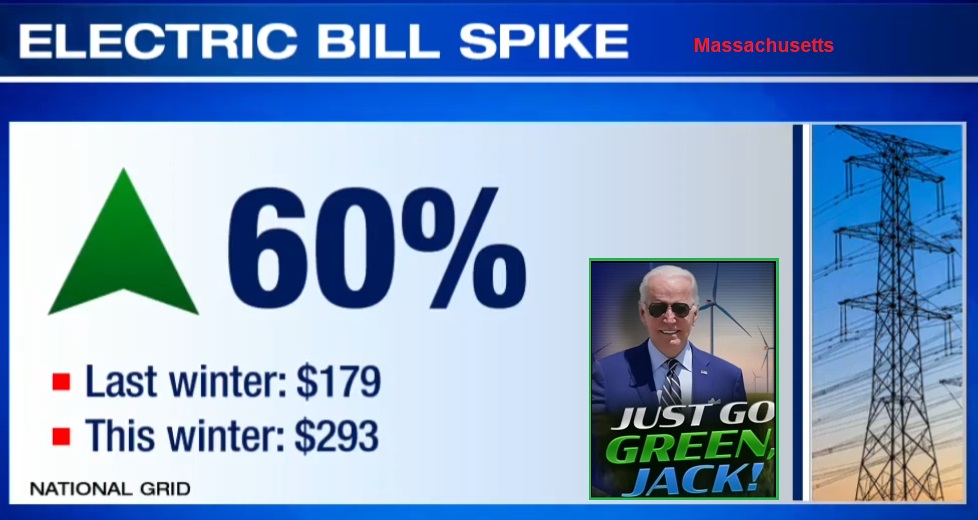
National Grid has announced a 64% increase in electricity rates effective November 1st. While Eversource is on a different schedule, they too have announced an increase in natural gas rates of 38% on November 1st and the January 1, 2023, electricity rate will be announced in the next few weeks. Eversource is anticipated to announce a similar rate increase to National Grid. WATCH:

Both major power companies rely on natural gas to create electricity.  Thanks to Joe Biden’s energy policies, which includes the massive export of natural gas in LNG form, domestic prices for natural gas have skyrocketed and will continue increasing as production is further shut down by regulation.

We are helping the EU survive their sanction driven energy crisis by sending them natural gas (LNG format), while simultaneously forcing Americans to pay more in order to maintain the EU export.   Everything about the process is FUBAR.

Massachusetts – […] National Grid said the monthly bill of a typical residential customer using 600 kilowatt-hours of electricity will increase from $179 last winter to about $293 this winter, an increase of about 64%. National Grid said the delivery portion of electric bills will basically remain flat.

“National Grid buys electricity on behalf of its customers from the wholesale power market through a regulatory approved process established 20 years ago. That process has served customers well over the years and provides flexibility for unforeseen events, like limited supplier response to solicitations. But things have fundamentally changed,” Helen Burt, the company’s chief customer officer, said in a statement. “Today, under a sustained, high market price environment, it is challenging to maintain affordable prices. Given that, we think it’s a good time to work with our regulators and other stakeholders to review the process and electricity supply dynamics in the region, with an eye toward reducing price volatility and maintaining a secure, reliable and resilient energy system for the future.”

The company also announced that its natural gas rates are expected to rise on Nov. 1. They said they have a pending proposal with the state Department of Public Utilities that would result in the monthly bill for an average Boston Gas residential heating customer using 115 therms per month of $278, an increase of $50, or 22%, compared to last winter’s rates.

Eversource, the state’s other major electric provider, said in an email that it is on a different schedule than National Grid for setting its electric rates so no increases are currently planned.

“We file electric base service rates twice per year with the DPU,” company spokesman Chris McKinnon said. “Our last change was on July 1, 2022 and our next change will be January 1, 2023, which we will be filing for in the coming months.”

Over the border in New Hampshire, Eversource announced in July that electric rates would be doubling for many residents due to higher natural gas prices fueled in part by the war in Ukraine.

Eversource did announce Wednesday that it has submitted a proposal to the Department of Public Utilities seeking to raise its natural gas rates. They said their average residential customer using 126 therms of gas a month would see an increase of about 38%, or $86 on their natural gas bill over last winter. Those rate increases would take effect Nov. 1.  (read m0re)

U.K Energy Reaches Crisis Point, Britain Announces New Oil and Gas Leases and Lifts Moratorium on Fracking


Posted originally on the conservative tree house on September 10, 2022 

There is a particular historical irony in the timing.  On the same day King Charles III ascends the throne, previously Europe’s most isolated from consequence – yet loudest voice in chasing the catastrophic climate change energy policies, the British government is forced to reverse course on years of energy regulations and restrictions.

Britain’s new Prime Minister Liz Truss announced, “a new round of oil and gas licensing will come next week with more than 100 licenses issued. A moratorium on fracking will be lifted and planning permission can be sought where there is local support,” in an urgent emergency effort to lower energy costs for British citizens.

The move comes in combination with a government plan to help citizens and businesses cope with skyrocketing prices for electricity and home heating fuel.  The climate change chickens have come home to roost throughout Europe and the British government is urgently trying to head-off the calamitous consequences.

Inside the media announcements of the Truss plan, the biggest concern expressed is how the financial and multinational banking sector (the ESG investment groups) will respond to the government position. After decades of ideological “green” outlooks flowing into the energy industry, the biggest concern expressed in the financial analysis is how a reversal by such a large economic system will reverberate.

The climate change ideology has a stranglehold on the energy sector of the economy, this move by Great Britain would be the most significant push-back in decades.  The minority green activists are apoplectic that they may lose control over the majority of opinion.  The economics of a reversal in energy policy could reverberate throughout the western alliance, particularly in Europe.  It will be interesting to see whether this shift in U.K. policy has ripple effects in the U.S.

LONDON, Sept 8 (Reuters) – Britain’s move to green-light dozens of new oil and gas fields will leave investors and banks with a tough PR job as Britain struggles to shore up its energy security whilst sticking to its climate commitments.

Starting new oil and gas projects runs counter to the world’s shift away from fossil fuels in the fight against global warming and a commitment at last November’s U.N. climate talks to phase down their use.

Yet runaway inflation amid conflict in Ukraine has forced the hand of new British prime minister Liz Truss as Russian President Putin seeks to use energy as a weapon this winter.

Britain will launch a new round of oil and gas licensing next week with more than 100 licenses issued, part of a wider package of measures to tackle the energy crisis announced by Truss on Thursday.

And Britain’s not alone in reassessing its energy strategy. Germany, for example, has been forced to turn back to even dirtier thermal coal to help fuel its power plants and keep the lights on, hampering short-term efforts to rein in climate-damaging carbon emissions.

But for energy companies and the investors, bankers and insurers that finance them, new investment in fossil fuels also presents a challenge given many have made their own pledges to reach net-zero emissions by mid-century.

“This will absolutely hinder companies’ … ability to hit their climate targets,” said Pietro Bertazzi, global director of policy engagement and external affairs at non-profit environmental disclosure platform CDP. (read more)

This is the first crack in the western alliance and the ‘climate change’ agenda of the World Economic Forum as it relates to energy policy and ultimately control over human life within the alliance.

The war in Ukraine was being used as a justification to explain the consequences of European energy policy, particularly rapidly increasing costs for energy and food, but the war in Ukraine was not the cause.  The true root cause of the exploding inflation and economic mess was the Build Back Better agenda, and the series of policies dictated from within it, that each nation willingly accepted.

President Trump MAGA Rally, Wilkes-Barre Pennsylvania, 7:00pm ET Livestream Links


Posted originally on the conservative tree house on September 3, 2022 | Sundance 

A lot has happened since President Trump last held a MAGA rally.  As noted by his account on Truth Social, the president has a lot to say about recent events involving the DC political and justice system intended to target himself and the American people who support America-First.

Tonight’s rally is in Wilkes-Barre/Scranton Pennsylvania and President Trump’s remarks are scheduled to begin at 7:00pm ET, with pre-rally speakers ongoing.  The crowd is massive, as shown earlier by RSBN, as MAGA patriots from around the region are supporting President Trump in his epic battle against a corrupt political swamp.

RSBN Livestream Link – Trump Campaign Livestream – Alternate Livestream Link

.

.

.

US Oil Reserves Nearly Depleted


Armstrong Economics Blog/Energy Re-Posted Sep 2, 2022 by Martin Armstrong

The US Strategic Petroleum Reserve (SPR) has been at its lowest level since, ironically, 1984. The reservoirs are composed of four underground sites constructed from salt domes on the Gulf Coasts of Louisiana and Texas. The White House began extracting oil from the emergency reserves to combat rising gas prices. Politicians simply hope that the problem can be patched up for as long as they can remain in power.

In August, the US extracted 18 million barrels of crude. The stockpile now sits at only 450 million, reaching a nearly 40-year low. Additionally, the White House under Biden has been selling off the remaining reserves to foreign refiners. China received nearly a million barrels of oil to a subsidiary of Sinopec, a company that previously received BILLIONS in investments from an equity firm operated by none other than Hunter Biden. In fact, Biden has sold off nearly a quarter of oil reserves this year alone. Is he deliberately trying to create a crisis to spark the Great Reset?

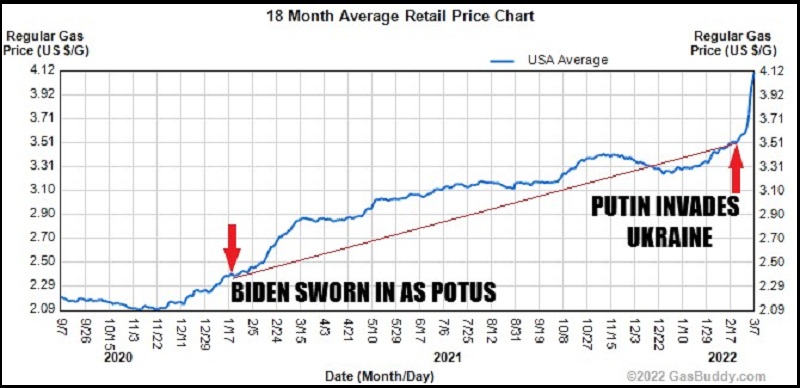
Russia is not to blame for rising gas prices, as a gallon cost a mere $2.28 in December 2020. A year later, after Biden implemented disastrous green policies, the price rose to $3.40. Biden panicked once gas hit $5 in June and began to pull from the reserves to make it seem as if he had a grip on the problem. The government has no solution for the current energy crisis. The best we can hope for is the Republicans coming to power and demanding that domestic production continue immediately.

Germans Stockpiling Firewood


Armstrong economics Blog/Energy Re-Posted Sep 2, 2022 by Martin Armstrong

We are quickly reverting back to the Dark Ages. Cooking and keeping warm with fossil fuels may become a luxury as the energy crisis spreads across the West. Reports are growing from Germany that people are stockpiling firewood before the winter season. Google search results for brennholz (firewood) peaked this August in Germany as their government announced they would continue supporting Ukraine indefinitely.

Half of German homes are heated by natural gas, while a quarter uses oil. Less than 6% reported using firewood, but that is set to change as even firewood is now in a shortage. Germany’s Federal Firewood Association announced earlier in the summer that wood was becoming scarce. People are now importing firewood from Poland, but people there are also buying up firewood as no one can afford these rising prices. Governments are offering no solutions, and people have reason to fear the future.

Versorgungssicherheit is a word describing the fear of a shortage. Due to this fear, many companies are rationing the number of firewood bundles people are allowed to buy. The Federal Network Agency expects gas prices to TRIPLE by early 2023. The energy crisis spreading across the West will result in growing civil unrest and could trigger a major geopolitical event across Europe as people will be faced with hardships this winter not seen in a lifetime.

The Energy Economy


Posted originally on the conservative tree house on August 30, 2022 | Sundance

Let’s say you are an average household with an income around $100,000/yr who has an increase in electricity rates from $300 to $500 due to Joe Biden’s new national energy policy known as the Green New Deal.  That’s $200 more per month for this initial economic/energy “transition” moment.

That extra $200/month equates to $2,400 per year.

That $2,400 per year is static economic activity.  Meaning nothing additional was created, and nothing additional was generated.  The captured $2,400 is simply an increase in the price of a preexisting expense.

Take that expense and expand it to your community of 100 friends and family households.  The $2,400 now becomes $240,000 in cost that doesn’t generate anything.  $240,000 is removed from the community economy.  $240,000 is no longer available for purchasing other goods or services within this community of 100 households.

The economic purchasing power of the 100-household community is reduced by $240,000 per year.

Take that expense and expand it to your county of 10,000 households.  Now you are reducing the county economic activity by $24 million.  In this county of 10,000 households, $24 million in economic transactions have been wiped out.  Meals at restaurants, purchases of goods and services, or any other spending of the $24 million within the county of 10,000 households (approximately 25,000 residents) has been lost.

Now expand that expense to a larger county, quantified as a mid-size county, of 50,000 households.  The mid-sized county has lost $120 million in household economic activity, simply to sustain the status quo on electricity rates.  Nothing extra has been generated. $120 million is lost.  The activity within the county of 50,000 households shrinks by $120 million.

Expand that expense to a large county of 100,000 households, and the lost economic activity is $240 million.

Expand that expense to a small state of 1 million households (2.5 million residents), and the lost economic activity is $2.4 billion.

Expand that expense to a state with 5 million households (approximately 12 million residents) and the economic cost is $12 billion in lost economic activity unrelated to the expense of maintaining the status-quo on electricity use.   This state loses $12 billion in purchases of goods and services, just to retain current energy use.

These examples only touch on household expenses.  The community, county and state business expenses for offices, supermarkets, stores, etc. are in addition to the households quoted.

Meanwhile the Gross Domestic Product (GDP) of the community, county and state, remains static because the GDP is calculated on the total value of goods and services generated in dollar terms.  The appearance of a static GDP is artificial.  In real Main Street terms, $12 billion in economic activity is lost, but the price or increased value of electricity hides the drop created by the absence of goods and services purchased.

Fewer goods and services are purchased and consumed.  However, statistically the inflated price of electricity gives the illusion of a status quo economy.

Now expand that perspective to a national level and you can see our current economic condition.