Posted originally on the CTH on September 17, 2023 | Sundance
The Senate Select Committee on Intelligence (SSCI) created the systems that permit intelligence weaponization. The SSCI is the organizational institution that supports the Fourth Branch of Government, the intelligence branch. Keep in mind, the SSCI previously created a bipartisan “Restrict Act,” to deal with what they deemed dangerous information on the internet (under auspices of TikTok ban). SSCI Chairman Mark Warner is the current enabler of the continued weaponized intel operations.
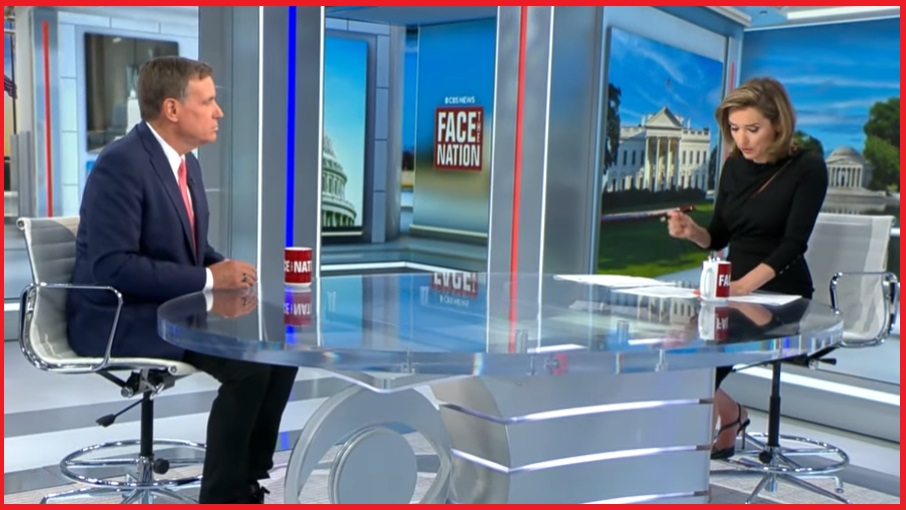
In this video segment below, notice how Chairman Warner leads off his remarks. Two flares triggered. First, you can tell by his response, that President Trump’s “classified documents” were exactly what we thought they were; evidence against those who constructed the Trump-Russia claims from inside govt. Second, notice how Warner now wants to block any President from controlling intelligence as defined by the Fourth Branch. This stuff is getting brutally obvious. WATCH:
“I’ve got bipartisan legislation that would reform the whole classification process. We way overclassify. We, frankly, should have a process in place so that no president or vice president ever takes documents after they leave office.”
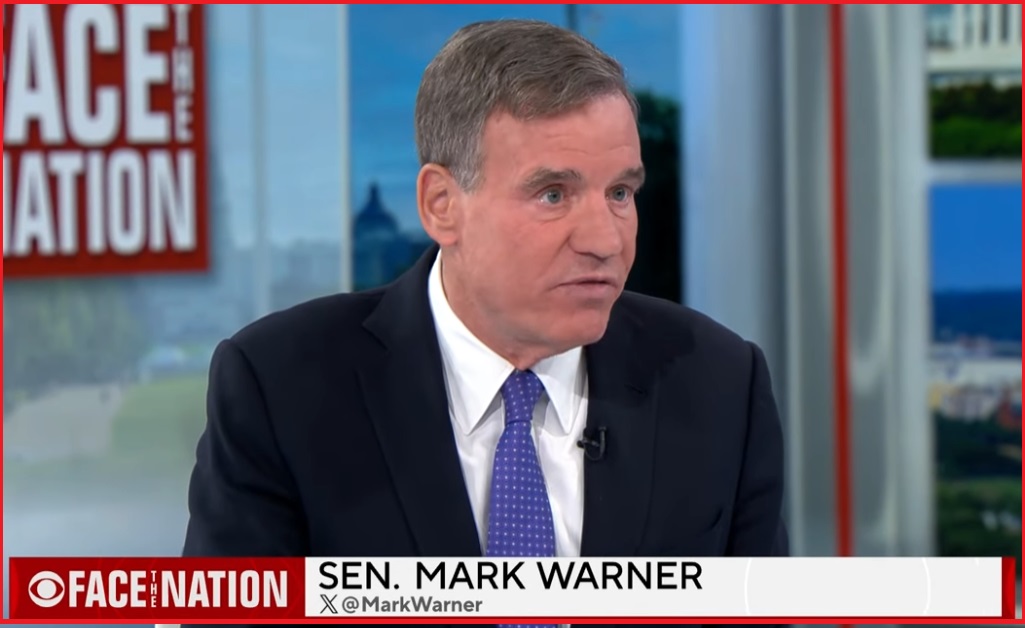
MARGARET BRENNAN: We turn now to Virginia Democrat Mark Warner. He is the chairman of the Senate Intelligence Committee.
Great to have you here.
REP. MARK WARNER (D-VA): Thank you, Margaret.
MARGARET BRENNAN: I have to pick up where your Republican colleague just left off. Are the Trump and Biden classified documents that were in their personal possession, and not in controlled areas, equally egregious?
MARK WARNER: Well, Margaret, three things quickly. One, the administration took way too long to get us these documents. Two, while Mike and I have a great working relationship, I believe, based on the documents I’ve seen, that there is a difference in terms of the potential abuse that came from the Trump documents. And, third, it’s one of the reasons why I’ve got bipartisan legislation that would reform the whole classification process. We way overclassify. We, frankly, should have a process in place so that no president or vice president ever takes documents after they leave office. That is kind of the lowest common fruit.
MARGARET BRENNAN: Yes.
MARK WARNER: We ought to get that passed. We’ve got part of that in the intel authorization bill and I hope becomes the law of the land so we can prevent this from happening going forward.
MARGARET BRENNAN: You’ve said based on documents you’ve seen, but you want to see more documents?
MARK WARNER: We have actually — I’m about at 98 percent satisfaction at this point.
MARGARET BRENNAN: OK, 98 percent satisfaction.
There’s a lot more on the national security front that we’re tracking right now, including this potential prisoner swap with Iran to bring five Americans home. Are you comfortable with the trade?
MARK WARNER: I’ve not gotten the brief. The Senate Intel Committee has not gotten the brief. We will be getting it shortly.
MARGARET BRENNAN: Wasn’t the staff briefed?
MARK WARNER: Well, I can tell you, I have not been personally briefed.
MARGARET BRENNAN: You weren’t? OK.
MARK WARNER: I think we need to start with the premise, it’s always the policy of our country to try to bring back Americans, who are held hostage. That was not only under Biden, it was Trump, it was Obama, Bush. I want to hear what kind of constraints are being put on in this exchange in terms of what has been reported of the $6 billion that was South Korean payments to Iran that would be released. I want to hear that and get those details before I weigh in further.
MARGARET BRENNAN: Because you have concern that money is fungible and there could be abuse?
MARK WARNER: I – you know, there is obviously — money is fungible. The administration has said there are guardrails. I want to get a better description of those guardrails first.
MARGARET BRENNAN: You have been very active on artificial intelligence. And we talked about this back in January.
Microsoft just announced a few days ago that China has a new capability to automatically generate images for use in influence operations to mimic American voters across the political spectrum and create controversy along racial, economic and ideological lines. How much of a risk is this to our upcoming elections?
MARK WARNER: It’s an enormous risk. And artificial intelligence, I’ve spent as much time on this I think as any member of the Senate, and I never spent something where you — the more time I spend, in certain ways the more confused I get. The whole economics around these large language models, which used to be, you know, who had the most data, who had the most compute power would win. That fundamentally changed after Facebook released its so- called llama model into the wild in the spring.
We just had a major session, Leader Schumer put together, had the kind of the who’s who in the room. And what it – what I’m concerned about is even the AI leaders who say they want rules, guardrails, I’m concerned that when you actually put words on paper will those major tech companies support that? Because you’ve seen, we in social media have done zero.
MARGARET BRENNAN: Yes.
MARK WARNER: Now, in terms of China, China is a major player in AI. And where I think we ought to start, where AI tools, whether it comes from China or domestically, could have the most immediate effect would be the public (INAUDIBLE) in our elections –
MARGARET BRENNAN: Right. And (INAUDIBLE) legislative reaction.
MARK WARNER: Which Microsoft just cited. And hear — hear me – hear me out – hear me out on this. But the other area beyond elections is faith in our public markets. These same tools could completely disrupt the confidence in our public markets by using these same deep fake tools.
MARGARET BRENNAN: Right.
MARK WARNER: So, I believe we ought to start. If we can put together an alliance between the capitalists and the small d democrats, we might at least get guardrails coming in the next year with the elections and the concerns about our markets.
MARGARET BRENNAN: So, you’re concerned not just about spooking, you know, the stock market. We’re talking about misleading people going into an election. Congress isn’t going to legislate ahead of the election, are they? I mean Leader Schumer said this is the most difficult thing we’ve ever undertaken.
MARK WARNER: I think this is – this is why the notion of trying to solve it all, the bias questions, the whole questions around deep fakes –
MARGARET BRENNAN: Yes.
MARK WARNER: The questions around what’s called hallucination, where you get answers that have no relationship to what the question was asked. But we ought to at least start with some guardrails around trust in our public election, trust in our public markets. There I think we can move before our elections. I think it will be bipartisan. Let’s start on that framing point. I think we can all agree there could be huge disruption in both of those areas. And that’s where I’m focusing my time.
MARGARET BRENNAN: You may have heard our CBS polling there at the top of the program. And one of the data points I want to show you here. It says, when people compare their finances now to how they were before the pandemic, by two to one they say they’re worse, not better. And when they feel worse, they tell us they’re voting for Donald Trump.
How can President Biden win over those voters?
MARK WARNER: Well, I think we’ve seen from President Biden’s actual record, record amounts of job growth coming again after Covid. We’ve seen major legislation. There are now laws in infrastructure, in the so-called CHIPS bill, and transition in our energy economy, and most of that has only been about 10 cents on every dollar spent out. So, I think the positive effects of that will really continue to penetrate this coming year.
MARGARET BRENNAN: Do the people in Virginia feel that, that you talk to?
MARK WARNER: I – listen, I think there is a general feeling, oh, my gosh, everybody seems to be at each other’s throats here in Washington.
MARGARET BRENNAN: Yes.
MARK WARNER: You know, the notion that we’re going to potentially go into a government shutdown. Mike Turner and I work very closely together.
But I do think – I wish the House leadership would be spending a little more time on what would happen with a government shutdown, which makes us look bad around the world, and, frankly, in a state like mine, in Virginia, where we have so many government workers, government contractors, it will be a disaster. And yet the attention coming out of the House leadership is on impeachment and putting forward things they know will not ever pass the Senate in any kind of bipartisan fashion. And I think that is part of the underlying unease that voters feel.
MARGARET BRENNAN: So, you believe we are headed for a government shutdown?
MARK WARNER: I would like to say no, but we’re eight or nine days away and we’ve not even been able to see the House pass the most basic defense appropriations bills. I hope and pray that Speaker McCarthy will say, hey, I’m going to throw over the far right, and I’m going to put together a bipartisan effort with the Democrats and mainstream Republicans to keep the government funded. I think that would get, again, 350, 400 votes.
MARGARET BRENNAN: Senator, good to have you here in person.
Posted originally on the CTH on April 19, 2023 | Sundance
Some insider threats are more equal than others; so goes the position of the nation’s biggest leaker of classified documents in modern history, and it’s not Jack Teixeira.
This story shows the importance of what was hidden by the combined efforts of the national security apparatus in 2018.
Readers here are familiar, but most Americans are not, with how Senate Intelligence Committee Chairman Mark Warner leaked a top-secret classified Title-1 FISA application in March of 2017.
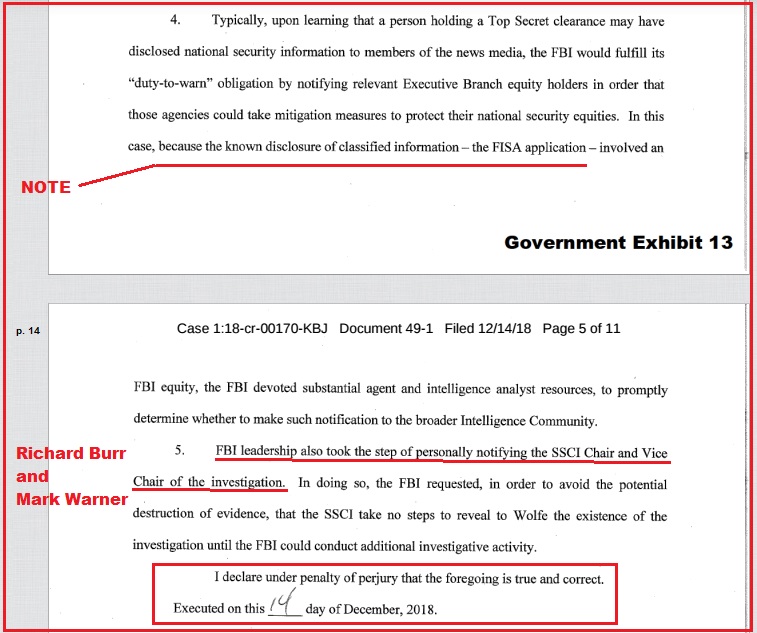
Then the Vice-Chair of the SSCI, Senator Warner instructed Senate Security Director James Wolfe to leak the 82-page FISA application assembled against Carter Page. On the afternoon of March 17, 2017, Wolfe took 82 pictures of the “Read and Return” document that was delivered to the SSCI basement SCIF by FBI Supervisory Special Agent Brian Dugan from the Washington Field Office.
Later that evening, Wolfe sent the images to journalist Ali Watkins using an encrypted messaging app. Ms. Watkins then shared the FISA content with her peers and used the information to leverage a top-tier job at the New York Times. The media were off to the races talking about FBI surveillance of the Trump campaign and using the leaked FISA as evidence of the ongoing investigation, later known as Crossfire Hurricane. Three days later, March 20, 2017, after coordinating the intent of the narrative creation with Mark Warner, FBI Director James Comey publicly admitted the Trump-Russia investigation for the first time.
After James Wolfe was arrested for the FISA application leak, his defense lawyers threatened to expose the role of the Senate Intelligence Committee in the leak and subpoena the members as witnesses. The Mueller/Weissmann team, then in charge of all DOJ operations that touched on Trump-Russia, took apart the evidence of Wolfe’s conduct, and DC Attorney Jessie Liu dropped most of the charges against Wolfe. Mueller then ran cover for Mark Warner, and eventually – out of an abundance of caution to maintain the need for the coverup operation – the Mueller/Weissmann team then made the FISA application public. The rest is history.
Keep in mind, I could be civilly sued if anything written above as an asserted truth was false. I’m not, because the truth is the defense. All of this happened.
At the time of the Mark Warner TSCI leak, no one outside the DOJ-FBI and Foreign Intelligence Surveillance Court (FISC) had ever seen a FISA application. Heck, in 2017 through early 2018, it was considered a classified intelligence breech to even discuss the FISA process, the procedures or the court itself. People forget that.
The 2017 leaking of the FISA application was the biggest national security breach in years, perhaps seconded only to the 2017 leaking of the TSCI transcript from National Security Advisor Michael Flynn’s call with Russian ambassador Sergey Kislyak, given to the Washington Post by the FBI a month earlier.
So, it’s somewhat hypocritical and ironic to see SSCI Chairman Mark Warner now railing against the Pentagon and Director of National Intelligence over not being provided the details of documents leaked by a low-level military servicemember in the Massachusetts Air National Guard.
WASHINGTON DC – The Senate Intelligence Committee is demanding the Pentagon hand over copies of all the classified documents leaked by Massachusetts Air National Guardsman Jack Teixeira.
The 21-year-old serviceman was accused by the Department of Defense of leaking “sensitive and highly-classified material” into a chat on the encrypted communications platform Discord. It then made its way onto other social media platforms. He was charged on Friday.
In a letter addressed to Defense Secretary Lloyd Austin and Director of National Intelligence Avril Haines, Senate Intelligence Committee Chairman Mark Warner, D-Va., and ranking member Sen. Marco Rubio, R-Fla., said the leak prompted concerns about “serious deficiencies” in the government’s security protocols.
“According to public reporting, A1C Teixeira began sharing classified information and classified documents within a social media platform as early as December 2022—nearly four months before the government’s discovery,” the letter, obtained by Fox News Digital, read. “These disclosures indicate serious deficiencies in the government’s insider threat and security vetting protocols.” (read more)
Posted originally on the CTH on March 26, 2023 | Sundance
Senate Select Committee on Intelligence (SSCI) Chairman Mark Warner is very concerned about the U.S. government inability to control, restrict and censor the information within the TikTok social media platform.
As outlined in this Face the Nation interview with Margaret Brennan, Chairman Warner states it is very alarming that China may permit content that is against the interests of the U.S. government to control it. Additionally, by law, the Chinese platform “has to be willing to turn over data to the Communist Party“.
Now, if you find yourself thinking, how is this different from U.S. laws that force Twitter, Facebook, Apple or Google to turn over user data to the DOJ/FBI, well, you are probably too smart for this regime narrative and should officially consider yourself a dissident American intellectual. Just sayin’.
The bottom line is very simple when you look at TikTok from the position of the U.S. surveillance state. The Dept of Homeland Security can only monitor TikTok content, they cannot do anything to modify, remove, censor or control the content, as a result TikTok exists as an existential threat. WATCH:
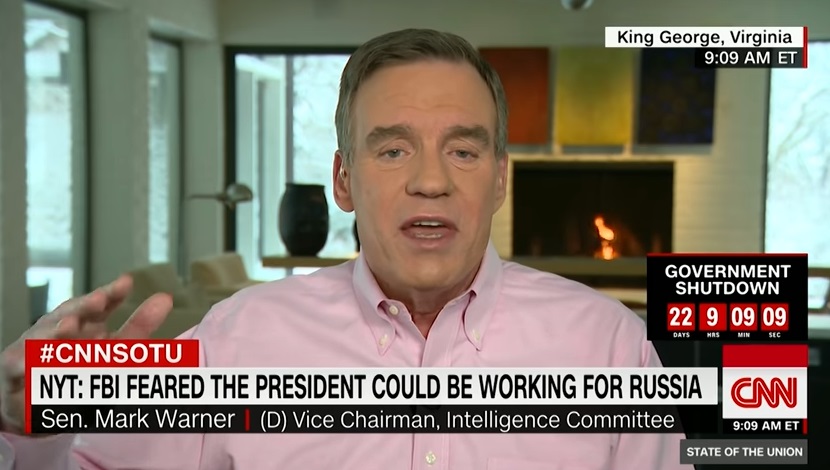
[Transcript] – MARGARET BRENNAN: We go now to Senator Mark Warner, the Democratic Chairman of the Intelligence Committee. He joins us from King George Virginia. Good morning to you, Senator.
SEN. MARK WARNER: Good morning Margaret.
MARGARET BRENNAN: It was a pretty intense five hours of questioning of Tiktok CEO this past week. Your bipartisan bill has White House support, and it would deal with Tiktok by giving the Commerce Department power to review and potentially ban technology flagged by US intelligence as a credible threat. Will it pass in a divided Congress?
SEN. WARNER: Well, Margaret, will – we’re now up to 22 Senators. 11 Democrats. 11 Republicans. We’ve had strong interest from the House. I think they wanted to get through their hearing. And clearly while I appreciated Mr. Chew’s testimony, he just couldn’t answer the basic question. At the end of the day, Tiktok is owned by a Chinese company Bytedance. And by Chinese law, that company has to be willing to turn over data to the Communist Party. Or one of my bigger fears, we got 150 million Americans on Tiktok average of about 90 minutes a day, and how that channel could be used for propaganda purposes –
MARGARET BRENNAN: Right.
SEN. WARNER: -or disinformation, advocated by the Communist Party.
MARGARET BRENNAN: But has the White House made clear to you that they want this bill to pass and do intend to ban it? Or is a forced sale more likely?
SEN. WARNER: Well, I think the White House is very in favor of this bill. And clearly this is not just a phenomenon in America. We’ve seen Canada act. We’ve seen the UK act. Matter of fact, the Dutch said, if you’re a media person, please get off TikTok, the Chinese are spying on you. India’s already banned the bill- banned it outright. We give the Secretary of Commerce the tools to ban, to force a sale, other tools. And end of the day, one of the things that may lead to a ban is the Chinese Communist Party has said they felt like the algorithm, the source code that resides in Beijing, is so important that they’d rather see a ban than give that source code up to be placed in a third country, which again, I think speaks volumes about the potential threat that this application poses.
MARGARET BRENNAN
Well, the Commerce Secretary though recently said that the politician in her thinks a ban will mean losing every voter under 35. Forever. And if you look at use of Tiktok I mean, just last week, President Biden showed up and celebrity videos on Tiktok from the White House. Plenty of lawmakers, including your Democratic colleagues, Senator Cory Booker use it. A number of House progressives use it, given how important this platform is to Democrats, can you actually get TikTok taken care of before 2024 when you might need it for political outreach?
SEN. WARNER: Margaret, I think there’s a lot of creative activity that goes on on Tiktok, but I absolutely believe that the market- if TikTok goes away, the market will provide another platform and at the end of the day, that could be an American company. It could be a Brazilian company, it could be an Indian company. All those companies–
(CROSSTALK)
MARGARET BRENNAN: Right, but the Commerce Secretary is saying there’s a political cost if it goes away–
SEN. WARNER: –operate within a set of rules that–
MARGARET BRENNAN: and that’s what she fears.
SEN. WARNER: I think –
MARGARET BRENNAN: And you’re empowering her.
SEN. WARNER: Listen, I have met- I have met with Gina Raimondo on this issue. I think she will make very clear that she believes TikTok is a threat as well. And listen, if at the end of the day, you could end up with a forced sale. And that forced sale also makes sure that the core algorithm, the source code resides someplace different than China, that could be a outcome that would be successful as well. At the end of the day, you cannot have American data collected. Nor can you have the ability for the Communist Party to use TikTok as a propaganda tool.
MARGARET BRENNAN
60% of the company is owned by other investors, including US firms. So is this a policy that you really need to address with Americans to stop them from investing in companies like this?
SEN. WARNER: Well, that’s one of the reasons why I think our approach – the RESTRICT Act says – rather than dealing with Tiktok in a one off fashion, or a few years back, it was Huawei, the Chinese telecom provider or years earlier, the Russian software company Kaspersky. We need to have a set of tools, rules-based so they can stand up in court, Tiktok would still did get his day in court, even under our law that says, if there’s a foreign technology from a place like China and Russia, and it poses a national security threat, and one of the things we also require is that the intelligence community has to declassify as much of this information as possible. So it’s not simply like, hey, trust the government, we got to make the case. And I do think at the end of the day, if it ends up with a ban, there will be other platforms for the literally millions of influencers and folks who like this kind of video platform, they’ll still be able to get it.
MARGARET BRENNAN
Very quickly. They’re a number of Republican lawmakers who plan to meet with Taiwan’s president when she is here on US soil. Are any Democrats, will you?
SEN. WARNER
You know, I I’m not sure when the president of Taiwan is coming to the United States –
(CROSSTALK)
MARGARET BRENNAN: -they announced March 30 and again in April.
SEN. WARNER: Okay, I’m not sure. Well, if there- if there’s an invitation made to me and other Democrats, listen, I would like to have that meeting as well. I think protecting and ensuring the security of Taiwan is in America’s national interest.
MARGARET BRENNAN: I want to ask you, since you sit on the Senate Banking Committee about this rolling turmoil that we are in. You are one of 16 Democrats who voted in 2018 to change those Dodd Frank banking regulations regarding the mid-size banks, which obviously has been scrutinized, because that size bank is where we have seen recent issues. I know you’ve defended the vote in recent days. Do you think there needs to be more regulation of mid-size banks, now?
SEN. WARNER: Well, Margaret, Tuesday, we’re going to start getting the facts at the Senate Banking Committee. And if it ends up that a stress test that would have been applied to these mid-size banks would have spotted this, of course, I’d add additional regulation. I think, though, what it appears to me is two things happened. One, basic banking regulation. If this has been only a $5 billion bank, not a $200 billion bank, should have spotted the fact that this management, and the regulators missed basic banking 101, the interest rate mismatch. And two: one of the things that I think we also have to look at is this was the first time we’ve had an internet-based run. There was literally $42 billion taken out of this bank in six hours. That’s the equivalent of 25 cents on the dollar. And I’d like to know why some of the venture capitalists spurred this run in the first place.
MARGARET BRENNAN: Interesting topic. I want to ask you, though, as well, about your relationship with SVB bank, and political donations. USA Today had a great big list of all of the entities SVB’s political action committee or CEO had donated to. It’s the DNC. It’s President Biden’s 2020 campaign. Senator Schumer says he’s going to give back the money he received or donate it. Representatives Maxine Waters, Ro Khanna have returned the donations. You received $21,600 from their political action committee, nearly six grand from its CEO. Do you feel any pressure to give those funds away? Is there a point to it?
SEN. WARNER: Well, first of all, Margaret, campaign contributions have never affected my policy choices. They never have, and they never will. We’re going to hear the facts on Tuesday. And if there’s malfeasance at the bank, of course, I’m gonna give the money back.
MARGARET BRENNAN: Okay. Senator, before I let you go, I want to just follow up on what you shared with us when we spoke back in January, when you were very frustrated that the administration wasn’t sharing more information about the classified materials improperly held by the current president when he was out of office and the former president. You’ve been briefed. Any more clarity on this? Any further information?
SEN. WARNER: We need more information about these documents. And more importantly, we need to make sure that what the intel community has done to mitigate the harm. And we’re still in conversations with the Justice Department, the administration’s position does not- does not pass the smell test. We’ve got a job not to go into the legal ramifications, but to make sure that the intelligence community has done what’s right. And we’ve got some additional tools, we can restrict some of the spending. We’re in active conversations with the Justice Department. But we’ve got to get those documents
MARGARET BRENNAN: Specific to what just happened this week in Syria, with the Iranian-aligned groups attack on U.S. presence there. Are you satisfied with the amount of information that’s being shared? What is going on? And should there be a more robust response from the Biden administration to stop these kind of attacks?
SEN. WARNER: Well, we’ve got a few thousand troops there in Syria and Iraq. I’ve been briefed by the intel community. Protecting, frankly, the Kurds who are finishing wiping out the remnants of the ISIS forces, and, frankly, helping guard some of the ISIS prisoners. It has been a dangerous area, but I think the administration’s response has been appropriate. So far.
MARGARET BRENNAN: Some of your Republican colleagues have publicly complained, though, that the attack that was fatal Thursday morning wasn’t briefed to Congress until Thursday night. Does that concern you? I mean, Iran was a key topic being discussed on the Senate floor that day.
SEN. WARNER: We have no illusions about the malicious nature of the Iranian regime, and how they help these groups in Syria, Iraq, and frankly, across the whole region. But in this case I do think the administration briefed us in an appropriate way. And I think the response to the missile fire, or the drone attack from one of these Iranian-sponsored groups. That’s a dangerous part of the world. But our troops are doing something that’s terribly important in terms of making sure that we eliminate the final vestiges of ISIS.
MARGARET BRENNAN: All right, Senator Warner, thank you for your time today. Face the Nation will be back in a minute. Stay with us. [Transcript End]
Senator Warner is correct, an example is World War Reddit (Ukraine). Creating the background narrative for World War Reddit is more complicated if TikTok users are showcasing the theatrics of it….
I’m case you were wondering why they wanted to ban TikTok. They can’t control the false narratives pic.twitter.com/o33bDpretk
Posted originally on the CTH on January 29, 2023 | Sundance
The Senate Select Committee on Intelligence, SSCI, is the epicenter of the larger intelligence apparatus that controls government. It was/is the SSCI who helped to create the weaponized system we call the Fourth Branch of Government. The SSCI is the institutional origin where the outcomes of the FISA courts, domestic surveillance, and downstream consequences of the Patriot Act are supported and facilitated.
Because of their unique role in creating our national security state, where U.S. citizens are regarded as the potential threat to the interests of that state, the SSCI is a unique stakeholder in retaining the corrupt systems of domestic surveillance power. No institution within the elected legislative branch of government has done more to destroy the freedom and constitutional protections within the U.S. than the Senate Select Committee on Intelligence.
The intelligence community interacts with the SSCI with that benefactor/beneficiary alignment in mind. This is why the SSCI claims such bipartisanship, and why the corporate media herald the SSCI as an important functional tool. Without the assistance of the SSCI, the U.S. domestic surveillance state could not exist. When the IC feels threatened, they run to the SSCI for protection.
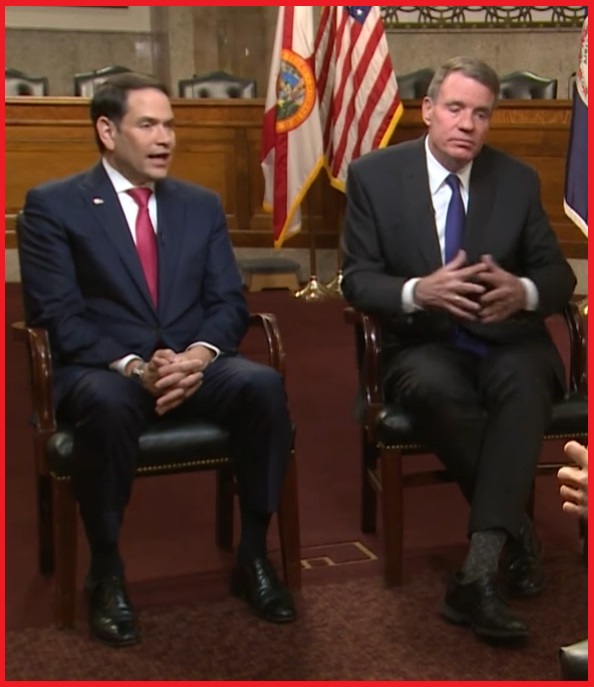
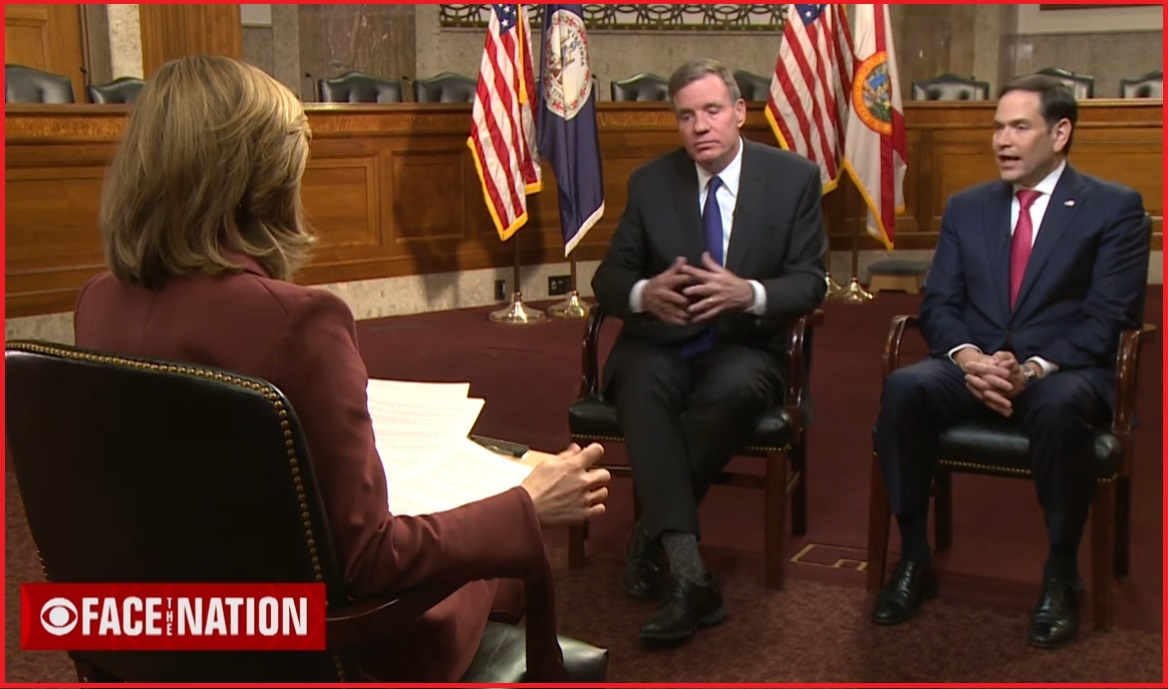
The chair (Warner) and vice-chair (Rubio) of the committee are also members of the Gang of Eight, intelligence oversight group. It is laughable to see Senator Mark Warner decry the possibility of national security leaks and compromises within the classified document issue. Warner himself was the most consequential leaker during the Trump-Russia investigation (Wolfe leak of FISA application), and the SSCI facilitated everything that happened in the Mueller investigation. [WATCH, Transcript Below]
[Transcript] – MARGARET BRENNAN: Let’s start on the news of the moment. I know the two of you were briefed by the Director of National Intelligence Avril Haines. Do you have any timeline in terms of when you will get visibility into the documents of classified material that both President Biden and President Trump had in their residences?
SEN. MARK WARNER: Margaret, unfortunately, no. And this committee has had a long bipartisan history of doing its job. And our job here is intelligence oversight. The Justice Department has had the Trump documents about six months, the Biden documents about three months, our job is not to figure out if somebody mishandled those, our job is to make sure there’s not an intelligence compromise.
And while the Director of National Intelligence had been willing to brief us earlier, now that you’ve got the special counsel, the notion that we’re going to be left in limbo, and we can’t do our job, that just cannot stand. And every member of the committee who spoke yesterday and I wanted the director to hear this, regardless of party said, we are united in we have to find a way to do our job. That means we need these documents, we need that assessment.
MARGARET BRENNAN: But the intelligence community would say their hands are tied, because this is an ongoing active Justice Department investigation. So what would meet the level of- of addressing your concerns without compromising that?
SEN. MARCO RUBIO: Well, I don’t know how congressional oversight on the documents, actually knowing what they are, in any way impedes an investigation. These are probably materials we already have access to. We just don’t know which ones they are. And it’s not about being nosy.
You know, here’s the bottom line: if in fact, those documents were very sensitive, materials were sensitive, and they pose a counterintelligence or national security threat to the United States, then the intelligence agencies are tasked with the job of coming up with ways to mitigate that. How can we judge whether their mitigation standards are appropriate, if we don’t have material to compare it against, and we can’t even make an assessment on whether they’ve properly risk assessed it?
So we’re not interested in the timeline, the tick-tock, the who got what, who did that? Those are criminal justice matters, to the extent that that’s what it is. That’s not what we’re interested in. We deserve and have a right and a duty to review what the materials were so we can have a better understanding of not just, you know, what the agency is doing about it, but whether it’s sufficient.
MARGARET BRENNAN: Does the director even know what the materials were?
SEN. WARNER: Well, we got a bit of vagueness on that because again, I believe you want to make sure the intelligence professionals and not political appointees were making some of that, that makes sense to me. But I would even think that if the- President Trump and President Biden would probably want to have this known if they say there’s no there there. Well, you know, there may still be violations on handling.
But we got to tell the American people and our colleagues, because we’re the only ones who have access to this information, that there’s not been an intelligence compromise. And again, this notion that when there was a special prosecutor appointed, they’re not exactly the same circumstances. But remember, this committee spent years doing the investigation into Russian meddling during the 2016 election, and there was a special prosecutor and Bob Mueller’s investigation going on simultaneously.
SEN. RUBIO: Let me tell you how absurd this is, there isn’t a day that goes by that there isn’t some media report about what was found where, what some sort of characterization of the material in the press. I just saw one this morning again. So somehow, the only people who are not allowed to know what was in there are congressional oversight committees.
But apparently, the media leaks out of the DOJ are unimpeded in terms of characterizing the nature of some of the materials that were found, plus whatever the individuals involved are telling the media. So it’s an untenable situation that I think has to be resolved.
MARGARET BRENNAN: But, you know, there’s an argument that there’s a diminishing value to intelligence over time, some of it’s time sensitive. The idea that some of these documents go all the way back to when President Biden was a senator, does that suggest that there’s something more than a problem in the executive branch?
SEN. WARNER: Agreed. That’s why the notion of ‘We’re not going to give the Oversight Committee the ability to do its job until the special prosecutor somehow says it’s OK,’ doesn’t- doesn’t hold water. That’s not going to stand with all the members of Congress–
MARGARET BRENNAN: So do you want to see these 300 documents from Trump?
SEN. WARNER: I think we need to see- chances are, we have a right as not only members of the Intelligence Committee, but as part of the leadership to read virtually every classified document. We’re part of the so-called Gang of Eight. We may have seen these documents, we just need to know, are these the ones that were potentially mishandled, and that mishandling is not our responsibility, our responsibility is to make sure the intelligence and the security of the United States have been compromised. And you’re absolutely right that some of these may have been years old.
So this idea that we’re not going to get that access just, again, we all agreed, and I think the director heard lot- loud and clear from all of us. It’s just not tenable. And it begs the bigger question and again, which Marco and I have agreed to jointly work on, that we got- we got a problem in terms of both classification levels, how senior elected officials, when they leave government how they handle documents. We’ve had too many examples of this. And again, I think we’ve got the bipartisan bona fides, to say, let’s put them in place on a going forward basis, a better process.
SEN. RUBIO: And let me just add on the age of the documents, it’s true, the information in and of itself may be dated and irrelevant at this point. But the- but having access to that information reveals how you gathered, whether it was a human source or–
SEN. WARNER: Sources and methods.
SEN. RUBIO: And so the- the- even though the information itself might no longer be very relevant, it does reveal how we collect information and thereby cost us those accesses and potentially cost someone you know, again, we don’t know what’s in the material, potentially put someone in harm’s way.
MARGARET BRENNAN: So you- you threatened to withhold some funding to some of the agencies yesterday.
SEN. RUBIO: Well, what I said is that, you know, I’m not in the threat business right now. But we certainly are- there are things we need to do as a committee every year to authorize the moving around of funds. I think the Director of National Intelligence and other heads of intelligence agencies are aware of that.
You know, at some point, I’d prefer for them just to call us this morning or tomorrow or whenever and say, ‘Look, this is the arrangement that we think we can reach so that the overseers can get access to this.’ I’d prefer not to go down that road. But it’s one of the pieces of leverage we have as Congress. I’m not, we’re not going to sit here and just issue press releases all day.
SEN. WARNER: And one of the things that I wanted Director Haines to hear and I think she was in a bit of an untenable position yesterday, she had been willing to brief earlier before the special prosecutor. I wanted her to hear that this was not just Senator Rubio and I, this was all of the members of the committee, on both ends of the political spectrum, saying, we’ve got a job to do, we’re going to do it, we’re going to figure out- we’re not in the threat business. But we’re going to figure out a way to make sure that we get that access so that we can not only tell the American people, but we’ve got another 85 U.S. senators who are not on the Intelligence Committee, who look to us to get those assurances.
MARGARET BRENNAN: How much are your hands tied, though, in terms of this part of government and classified- classification really being over in the executive to a large extent? Like, what is it that you as lawmakers can do? Is it new regulation when it comes to transitions–
SEN. WARNER: The Director of National Intelligence is the individual that’s the chief officer for intelligence classification. I think, and there’s been a number of other members of the Senate, both parties have been working for years, on the notion that we over classify the number of things that we read in a SCIF that somehow then appear in the newspaper begs the question, it’s kind of been an issue that’s been bubbling for a long time–
MARGARET BRENNAN: Over classification.
SEN. WARNER: –I think this, I think this series of events, pushes it to the forefront. And again, we have the power to write legislation, which then executive agencies have to follow–
MARGARET BRENNAN: In terms of record keeping.
SEN. WARNER: In terms of record keeping. In terms, literally, at least guidance on classification issues. I mean, there has been, and again, this Director of National Intelligence, I’m going to give her credit, she has been at least acknowledging and long before this issue came up, said we need to work on this issue of declassification, over classification. Every director says it, and then it kind of gets pushed- pushed back, I think. One good thing that may come out of this is that we’re going to find a way to resolve this issue on a going forward basis.
MARGARET BRENNAN: So it sounds like we found one area of bipartisan agreement already here that there needs to be some kind of legislation around classified materials–
(CROSSTALK)
SEN. WARNER: I actually think you’re gonna find a lot- on our committee –
SEN. RUBIO: On our committee–
SEN. WARNER: –you’re gonna find an awful lot more than one.
MARGARET BRENNAN: Where does this rank in terms of priority? Dealing with the classified crisis?
SEN. WARNER: Well the immediacy of it right now, and the notion and again, I would- I don’t know what President Trump and President Biden are thinking about this. But I would think they would like some recognition that these documents, hopefully and as Marco said, are not disclosing sources and methods, are not so current that there may be a- a violation of American national security. We just don’t know.
So I think we need to get this resolved sooner than later. In terms of the specific case, the Trump and Biden documents, we’ve not really focused as much on the Pence documents. But who knows what additional shoes may fall.
SEN. RUBIO: Yeah, and I don’t want to speak for Mark. Obviously, the immediacy of this moment is big. But I think we- the- on the broader set of issues, we still have this reauthorization of [Section] 702, an important authority for our government.
And then more broadly, I just think the world looks so different than it did when I started out in this committee. When I first got to the Senate, the principal focus of foreign policy and national security issues were counterterrorism. And those are still very important, but we’re now in a world increasingly revolves around great power competition: China, the Russian invasion of Ukraine, and then some of the threats posed by Iran, North Korea and other rogue states.
So whether our intelligence agencies have adjusted quickly enough to that new reality, and- and the- and the- obligations that poses I think, is from a big picture perspective, in my mind, one of the things we really have to spend time on.
SEN. WARNER: And the thing that I think we’re getting- our committee has got some- some record on. I mean, I personally believe the competition, technology competition, in particular, with China is the issue of our time. And remember, it was this committee that first spotted, pointed out, the problems with the Chinese telecommunications provider, Huawei, as a national security threat.
And we built, frankly, even under President Trump, an approach to say we need to make sure that we get it out of our networks, and then convince our allies to do that. It was our committee, again, who first pointed out the challenges that, in the semiconductor industry, which we had dominated in this country–
MARGARET BRENNAN: Computer chips–
SEN. WARNER: In the- computer chips- in the 80s, and 90s, that we were falling behind, literally to the point that no cutting edge semiconductor chip was even being made in America. And we built them, the legislation around the so-called CHIPS bill.
I think there are other technology domains: artificial intelligence, quantum computing, advanced energy, synthetic biology, where we need to do the similar kind of bipartisan deep dives, to say, how do we make sure America and our friends stay competitive with a China that is extraordinarily aggressive in these fields and making the kind of investments, frankly, that we used to make post-Sputnik?
MARGARET BRENNAN: Right, and I want to ask you about that, because President Biden is reportedly close to issuing an executive order when it comes to restrictions on U.S. investments in- in China. But there’s concern about risking further escalation. What’s your view on how far that action should go? And where do you all pick up in terms of lawmakers?
SEN. RUBIO: Well, I think there’s two things. The first is the Chinese have found a way to use capitalism against us. As- as- and what I mean by that is the ability to attract investment into entities that are deeply linked to the state. That military commercial fusion that exists in China is a concept that we don’t have in this country. We have contractors that do defense work, but there is no distinction in China between advancements in technology, biomedicine, whatever it might be, and the interest of the state.
And then the second is obviously the access to our capital markets. And the third is the risk posed, we don’t up to this point, have not had levels of transparency in terms of auditing and the like, on these investments of- the- into these companies. What- when you invest in these companies in U.S. exchanges, you don’t have nearly as much information about the- the bookkeeping of those companies as you would an American company or European company, because they’ve refused to comply with those restrictions.
So there’s systemic risk to our investments, and then there’s also the geopolitical reality that American capital flows are helping to fund activities that are ultimately designed to undermine our national security. So it’s a 21st century challenge that we really have to put our arms around.
SEN. WARNER: And again, this is something- I think and I fall under this category, beginning of the 20th century, I was a big believer that the more you bring China into the world order, the more things will all be copacetic. We were just wrong on that.
The Communist Party, under President Xi’s leadership, and my beef is, to be clear, with the Communist Party, it’s not with the Chinese people or the Chinese diaspora wherever it is in the world, but they basically changed the rules of the road. They made clear in Chinese law that every company in China’s ultimate responsibility is to the Communist Party, not to their customers, not to their shareholders. We’ve seen at- at the level of 500 billion dollars a year of intellectual property theft. We have actually in a bipartisan way- over the- didn’t get a lot of attention- over the last seven years, have been out and we’ve done 20 classified briefings for industry sector, after industry sector, about these risks. Frankly, pre-COVID, we kind of got nods, but you know, some pushback because a lot of companies are making–
MARGARET BRENNAN: Because companies just wanted access to the market regardless of the risk–
SEN. WARNER: Were making a lot of- were making a lot of money off Chinese tech companies.
MARGARET BRENNAN: Exactly. Exactly.
SEN. WARNER: Now, post-COVID, I think there is an awakening that this is a real challenge and I think the good news is that not only is there awakening, you know, in America, but a lot of our allies around the world are seeing this threat as well. So I think, you know, we need to build this kind of international coalition, because the technology- who wins these technology domains, I think will win the race in the 21st century.
SEN. RUBIO: I- I think those–
MARGARET BRENNAN: So you want restrictions on biotech, battery technology, semiconductors, artificial intelligence?
SEN. WARNER: I want to have an approach that says we need to look at foreign technology investments, foreign technology development, regardless of the country, if it poses a national security threat, and have some place that can evaluate this. We kind of do this ad hoc at this point. You know, we- we- years back, there was a Russian software company, Kaspersky. Again, Marco was one of the first ones who said, ‘My gosh, we got to get this off the GSA acquisition list.’ We worked together on Huawei, I’m sure we’re going to talk about TikTok. We need a frame to systemically look at this. And frankly, if it goes just beyond the so-called CFIUS legislation about inbound or outbound investment.
MARGARET BRENNAN: That’s a committee that looks at national security risks.
SEN. RUBIO: But understanding that for- you know, 20 years ago, everybody thought capitalism was going to change China. And we woke up to realization that capitalism didn’t change China, China changed capitalism. And they’ve used it to their advantage and to our disadvantage. And not simply from an old Soviet perspective to take us on from a geopolitical or military perspective, they’ve done so from a technological and industrial perspective. And so you have seen the largest theft and transfer of intellectual property in the history of humanity occur over the last 15 years, some of it funded by American taxpayers. That has to stop. It’s undermining our national security, and giving them an unfair advantage and these gains that they’re making.
SEN. WARNER: And let me just echo- you know- I’m old enough to remember- you know, the challenges with the Soviet Union. The Soviet Union was an ideological threat, and a military threat. It really was never a first class, economic threat. China, we have ideological differences. They have a growing military, but domain after domain, they are a- right with us in certain areas, even ahead of us, in this kind of technology, on much. And I agree with Marco again, the ability to kind of manipulate our system, the kind of combination of command and control with certain tenets of capitalism. They have an authoritarian capitalism that for awhile worked pretty well. I don’t think it works as well as our long-term system. But we have to inform all of our industry and frankly, all our allies about this challenge.
MARGARET BRENNAN: They have the biggest hacking ability program than any other nation. Intelligence community says they’re the world leader in surveillance, in censorship. How restricted should their ability to access this market be?
SEN. RUBIO: Let me put it to you this way, I think it is nearly impossible for any Chinese company to comply with both Chinese law and our expectations in this country. Chinese law is very clear. If you’re a Chinese company, and we ask you for your data, we ask you for your information, we ask you for what you have, or we ask you to do something, you either do it, or you won’t be around. (continue reading)
Posted originally on the CTH on January 14, 2023 | Sundance
Former House Intelligence Committee Chairman Devin Nunes appears on Fox News to discuss the release of Twitter File #14 which was centered around the legislative branch attempting to censor his “Nunes Memo.” {Direct Rumble Link Here}
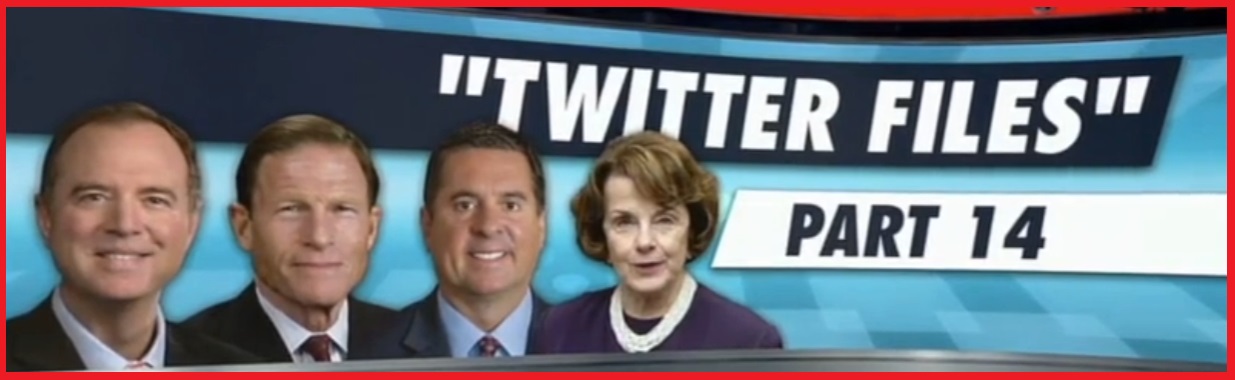
The essence of Twitter File #14 was how the Senate Intelligence Committee, senators Feinstein (D-CA) and Warner (D-VA) along with House Intel Committee Adam Schiff (D-CA) pressured Twitter to remove content that supported the assertions of HPSCI Chairman Devin Nunes. WATCH:
Essentially, as Taibbi is pointing out, various DC politicians were working feverishly in early 2018 to maintain the fraudulent narrative around the Trump-Russia investigation.
Why is this timeline important, because retention of the fraudulent Trump-Russia narrative was critical to support the predicate of the Robert Mueller (Andrew Weissmann) Special Counsel. As Taibbi notes, “On January 18th, 2018, Republican Devin Nunes submitted a classified memo to the House Intel Committee detailing abuses by the FBI in obtaining FISA surveillance authority against Trump-connected figures, including the crucial role played by the infamous “Steele Dossier.” The entire DC apparatus was going bananas about the Nunes memo because it undermined the predicate assumptions of the Trump-Russia probe.
The Senate Select Committee on Intelligence (SSCI) was the specific stakeholder institution intent on retaining the Trump-Russia fraud, because the SSCI was one of the institutions who helped construct it. Again Taibbi, “On January 23rd, 2018, Senator Dianne Feinstein (D-CA) and congressman Adam Schiff (D-CA) published an open letter saying the hashtag [#ReleaseTheMemo] “gained the immediate attention and assistance of social media accounts linked to Russian influence operations.” The intelligence community politicians were furious that various Twitter accounts were tearing apart their precious, and false, story.
Into this mix comes the work of former Dianne Feinstein staffer Dan Jones who was funding various entities like “Hamilton 68” to push propaganda. “Feinstein, Schiff, Blumenthal, and media members all pointed to the same source: the Hamilton 68 dashboard created by former FBI counterintelligence official Clint Watts, under the auspices of the Alliance for Securing Democracy (ASD)”. The goal was to pressure Twitter to remove content that could eventually take apart the Trump-Russia narrative. Teh justification they were using was that Russian groups were behind the Twitter pushback.
SIDEBAR from CTH ARCHIVES – A fantastic catch by Twitter user “15poundstogo” previously highlighted a key phrase within the Senate Select Intelligence Committee (SSCI) Russia Report Volume-5, showing how the SSCI allowed those who created the Trump-Russia narrative to avoid questioning:
This is a very important detail to underpin previous reporting we shared about former Dianne Feinstein top staffer Dan Jones attempting to avoid a subpoena from U.S. Attorney John Durham. [SEE BACKGROUND HERE] This key highlight from the SSCI is evidence of how the attempted coup against President Trump was coordinated by people outside government and inside government.
Dan Jones left the SSCI prior to the 2016 election and went to work pushing the Trump-Russia narrative through his media contacts. Jones took over funding Fusion-GPS and Chris Steele in 2017 at the same time Senator Mark Warner took over as SSCI vice-chairman. Dan Jones and Mark Warner coordinated the efforts outside and inside government on the same objective. The Senate Intel Committee was part of the effort.
As a result of their alignment and common purpose the SSCI didn’t investigate the origin of the Trump-Russia narrative; and instead positioned themselves as a shield to block any investigative inquiry into what took place.
The attempt to remove President Trump from office encompassed all three branches of the U.S. government.
Executive Branch – FBI, DOJ-NSD, CIA, State Dept., and eventually the Special Counsel Office.
Legislative Branch – SSCI in 2017 and 2018 with an assist from House Intelligence Committee and House Judiciary in 2019 and 2020.
Judicial Branch – FISA Court 2015, 2016, 2017; Federal Judges (Sullivan, Walton, Howell, Berman-Jackson) in alignment with DC intents in 2018, 2019 and 2020.
How does the office of the United States president; and more importantly a constitutional republic itself; survive a coordinated coup effort that involves all three branches of government; while simultaneously those in charge of exposing the corruption fear the scale of the effort is too damaging for the U.S. government to reveal?
[EARLIER REPORT] – […] When President Trump won the November 2016 election all of those participants involved in the use of government offices and agencies for corrupt political intent had a real problem. Immediately, a lot of strategic planning took place by a lot of desperate people.
One of the key needs of the corrupt intelligence apparatus was to find a way to stop the incoming administration from exposing their effort; that’s where the Senate Select Committee on Intelligence (SSCI) comes in.
Senator Dianne Feinstein was vice-chair of the SSCI in 2016. Feinstein’s former chief of staff was Dan Jones.
The post-election plan to protect the intel community would involve using the SSCI institution to cover for prior Obama-era operations. Senator Feinstein was not a good fit for that role, so Feinstein abdicated her position in advance of the next congress in 2017.
In January 2017 Senator Mark Warner took over as SSCI vice-chair after Dan Jones left the SSCI to continue efforts as a freelance operative. Warner was put into place to carry out the strategic objectives needed to protect the DOJ, NSD, CIA, FBI and ODNI operations against Donald Trump who was now the incoming president-elect.
Keep in mind with control of the SSCI the group inside the legislative branch could control who ran what intelligence agency because they held the power of confirmation; and they could control who would rise to be inspector general within the intelligence community, a position needed if a whistle-blower was to surface. The SSCI would only allow Michael Atkinson to act as ICIG – That’s because Atkinson was part of the 2015/2016 crew.
Additionally, the SSCI would control intelligence information and assist the Weissmann/Mueller special counsel after appointment. The SSCI could work as a sword and a shield as needed. Which is exactly what happened. That background, the motive of the SSCI, explains every point of conflict and corruption we have seen from the SSCI.
Meanwhile Dan Jones went freelance and in 2017 was given $50 million to fund an investigative outfit called the “Penn Quarter Group” and create a new organization called the Democracy Integrity Project.
“Jones told federal investigators that he had raised $50 million from “7 to 10 wealthy donors located primarily in New York and California.” (link)
Jones used both groups to continue selling and pushing the Trump-Russia narrative. Also, it was important for those at risk to find an alternate route to keep financing their defense without using Clinton’s legal team within Perkins Coie.
Essentially, in 2017 Dan Jones, through his Penn Quarter Group, took over funding for Fusion-GPS and Glenn Simpson and kept paying Christopher Steele. The payments to these entities and Steele always looked more like a pay-off to keep their mouths shut. Jones was essentially the bagman for continued Trump-Russia operations outside government. Jones’s second job was to keep pushing the Trump-Russia narrative in the media (read more).
“NBC, Politico, AP, Times, Business Insider, and other media outlets who played up the “Russian bots” story – even Rolling Stone – all declined to comment for this story. The staffs of Feinstein, Schiff, and Blumenthal also declined comment.
Who did comment? Devin Nunes. “Schiff and the Democrats falsely claimed Russians were behind the Release the Memo hashtag, all my investigative work… By spreading the Russia collusion hoax, they instigated one of the greatest outbreaks of mass delusion in U.S. history.”
This #ReleaseTheMemo episode is just one of many in the #TwitterFiles. The Russiagate scandal was built on the craven dishonesty of politicians and reporters, who for years ignored the absence of data to fictional scare headlines.” (more)
Posted originally on the CTH on December 19, 2022 | sundance
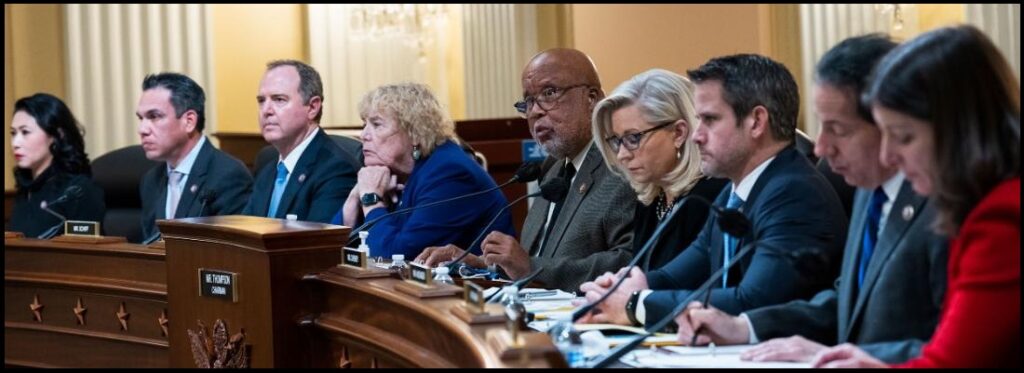
The J6 Committee has announced they have found President Trump guilty of four counts of campaigning against their Democrat candidates and attempting to disrupt the DC system of governing and financial graft. The committee formally announced their intent today for political referrals to the Biden-Obama justice department.
In addition to holding other scandalous political conversations, President Trump is accused of: (1) “aiding and comforting” disgruntled voters; (2) obstructing Congress’ Jan. 6 joint session by holding a political rally in DC; (3) conspiring with some unknown entity to make false claims to the bureaucrats in the National Archives about his private papers; and ultimately, (4) conspiring to defraud the United States and deprive Washington DC of its business model.
The J6 Committee has released a 160-page “executive summary” of a report they will release soon [READ HERE], and will now refer President Trump to Lisa Monaco, Deputy Attorney General and former White House counsel for President Obama, to be prosecuted in Washington DC for heinous crimes and insurrection.
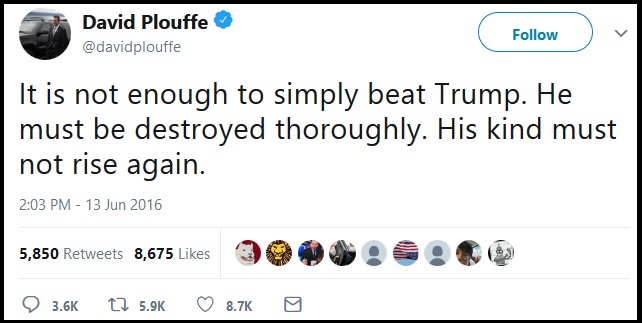
The goal is to fulfill President Obama’s former campaign manager David Plouffe’s promise to destroy President Trump and block him from holding office again.
Washington DC – […] The panel has long contended Trump broke the law. But its new report — which the committee voted to release but has yet to become public — is expected to add vivid new details of that effort, particularly about the cast of enablers who facilitated Trump’s gambit, from Republican members of Congress to a team of lawyers pushing fringe legal theories to shadowy operatives awash in conspiracies. The panel also released the 160-page executive summary of its report, capturing the contours of its case against Turmp.
“Faith in our system is the foundation of American democracy. If the faith is broken, so is our democracy,” said select panel chair Rep. Bennie Thompson (D-Miss.). “Donald Trump broke that faith. He lost the 2020 election and knew it, but he chose to try to stay in office through a multi-part scheme.”
“This can never happen again,” Thompson added.
The recommended referral for insurrection mentions U.S. District Court Judge Amit Mehta’s ruling in February, which said Trump’s language plausibly incited violence on Jan. 6 and cited the Senate’s 57 votes in last year’s impeachment trial to convict Trump on “incitement of insurrection.”
Charging decisions rest entirely with DOJ prosecutors, not Congress, but panel members have increasingly stressed the impact their transmission to the department could have on public opinion — viewing it as part of building a historical record around the attack. Special Counsel Jack Smith is currently conducting a wide-ranging investigation of Trump’s scheme to cling to power, and the select panel has also moved in parallel with DOJ’s effort to prosecute hundreds of Trump supporters who attacked the Capitol. (read more)
Everything seems to be following a flow and pattern associated with intense Democrat effort to retain their ‘fundamental change‘ objective.
If the sequencing is maintained, Hunter Biden will likely be charged with some low-level tax crime, right before President Trump is charged with attempting to destroy the universe. At this point the clown show is ridiculous and absurd. Believe me, the entire electorate can see it…. Not just MAGA supporters.
The more they do this, the more I appreciate the Rosetta Stone that President Donald J Trump represents.
Posted originally on the conservative tree house on September 26, 2022 | sundance
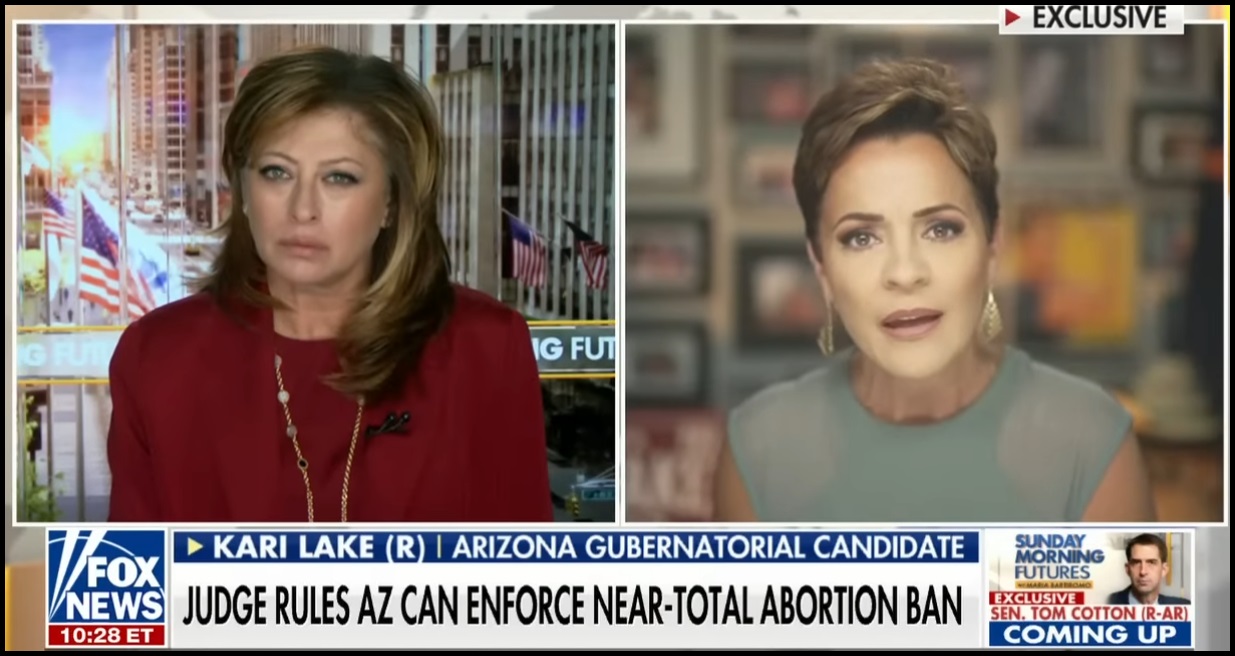
Kari Lake is running an excellent campaign for governor of Arizona in advance of the November election. In this interview with Maria Bartiromo, Ms Lake discusses her perspective on the border control collapse as well as the attacks against her from lame-duck congresswoman Liz Cheney.
After losing her Wyoming primary challenge, Liz Cheney has now promised to campaign on behalf of Democrats against Kari Lake in Arizona. WATCH:
Posted originally on the conservative tree house on September 11, 2022 | Sundance
Now you are going to see why it was necessary to write the previous article about the Trump -v- Clinton lawsuit.
We must stop pretending. Everyone, including everyone who reads here and specifically SSCI Chairman Mark Warner, already knows what is in those documents from Mar-a-Lago. Those documents contain the evidence of the collective government effort to target candidate Trump and then effectively remove President Trump. THAT effort included the Senate Select Committee on Intelligence. Stop pretending.
Senator Mark Warner was at the heart of the legislative branch effort in the aftermath of the failed attempt to stop candidate Trump from winning the 2016 election. Senator Warner specifically instructed Senate Security Director James Wolfe to leak the Carter Page FISA application, with an intent to further the effort to install a special counsel to help cover-up the pre-election activity. Warner is enmeshed in the corruption created by the false Trump-Russia collusion conspiracy nonsense.
With Warner’s instructions to Wolfe in mind, there is a specific statement in this ridiculous effort at narrative construction called an interview, that is just exponentially hubris, [@6:16] “The record of our intelligence committee of keeping secrets secret, that’s why the Intelligence Committee shares information with us,” Warner claims.
No, the direct ideological alignment between the corrupt intelligence apparatus and the SSCI that is why the Intelligence Committee coordinates with the Senate. WATCH:
[Transcript] – MARGARET BRENNAN: For a closer look now at the evolving threats to the homeland, we begin this morning with the chairman of the Senate Intelligence Committee, Mark Warner of Virginia. Good morning to you, Senator.
SEN. MARK WARNER: Good morning, Margaret.
MARGARET BRENNAN: You know, 9/11 introduced to many Americans for the very first time, this sense of vulnerability at home, and it launched the global war on terror. I wonder how vulnerable you think America is now, are we paying enough attention to the Middle East and to Afghanistan?
SEN. WARNER: Well, Margaret, I remember, as most Americans do, where they were on 9/11. I was in the middle of a political campaign and suddenly, the differences with my opponent seem very small in comparison and our country came together. And in many ways, we defeated the terrorists because of the resilience of the American public because of our intelligence community, and we are safer, better prepared. The stunning thing to me is here we are 20 years later, and the attack on the symbol of our democracy was not coming from terrorists, but it came from literally insurgents attacking the Capitol on January 6th. So I believe we are stronger. I believe our intelligence community has performed remarkably. I think the threat of terror has diminished. I think we still have new challenges in terms of nation-state challenges, Russia in longer-term, a technology competition with China. But I do worry about some of the activity in this country where the election deniers, the insurgency that took place on January 6th, that is something I hope we could see that same kind of unity of spirit.
MARGARET BRENNAN: As you’re pointing out, America came together after 9/11, and we are incredibly divided right now. One thing that is potentially quite explosive is this ongoing investigation of the justice- by the Justice Department of the former president and his handling of classified information. You’ve asked for a briefing from the intelligence community. Given how sensitive this is, why should anything be shared with Congress, given that this is an ongoing investigation?
SEN. WARNER: Because as the chairman of the Intelligence Committee, and I’m very proud of our committee, or the last functioning, bipartisan committee. I believe in- in the whole Congress. The Vice Chairman and I have asked for a briefing of the damages that could have arisen from mishandling of this information, and I believe it’s our congressional duty to have that oversight. Remember, what’s at stake here is the fact that if some of these documents involve human intelligence, and that information got out, people’s- will die–
MARGARET BRENNAN: We don’t know that yet.
SEN. WARNER: If there were penetration of signals intelligence, literally years of work could be destroyed. We talk about the enormous advances our intelligence community has made helping our Ukrainian friends, that comes about because we share intelligence. If there’s intelligence that has been shared with us by allies, and that is mishandled, all of that could be in jeopardy. Now, we don’t know what’s in those documents. But I think it is incumbent, as soon as we get approval, let me be clear, soon as we get approval, my understanding is there is some question because of the Special Master appointment by the judge in- in Florida, whether they can brief at this point, we need clarification on that from that judge as quickly as possible, because it is essential that the intelligence committee leadership at least gets a briefing of the damage assessment.
MARGARET BRENNAN: The damage assessment, it has been paused, as has the classification review, and it will take some time. So, A, I am assuming in your answer there, you’re saying there have been no promises of a briefing to be scheduled. Is that right?
SEN. WARNER: I believe we will get a briefing as soon as there is clarification whether this can be performed or not–
MARGARET BRENNAN: But why should that–
SEN. WARNER: In light of the- of the judge in Florida.
MARGARET BRENNAN: Why should that happen? Because I- I want to get to something you said which was the ‘last bipartisan committee,’ you and Marco Rubio, your partner in- in this request for a briefing put forth this letter, asking for the damage assessment. But lately, your colleague’s been making some comments that don’t sound quite as bipartisan. He’s compared the Justice Department to corrupt regimes in Latin America when it comes to this investigation. He’s accused DOJ of leaking sensitive details, and he said the only reason to leak it is to create a narrative for political purpose. When information gets shared with Congress, as you know, the accusation is it will get leaked. So, A, it looks like you’re losing that bipartisan- bipartisanship. And B, if you brief Congress, isn’t it going to leak further and worse than–
SEN. WARNER: The record of our intelligence committee of keeping secrets secret, that’s why the Intelligence Committee shares information with us. Remember this was the committee, bipartisan, that did the Russia investigation.
MARGARET BRENNAN: Because you know that your oversight capability, many would argue, including former heads of counterintelligence, FBI, that the line is drawn when it’s an active investigation. They don’t owe you a briefing.
SEN. WARNER: We- we don’t- I do not want any kind of insight into an active investigation by the Justice Department. I do want the damage assessment of what would happen to our ability to protect the nation. And here we are 21 years after 9/11, if classified secrets, top secret secrets are somehow mishandled, I pointed out earlier, people could die, sources of intelligence could disappear. The willingness of our allies to share intelligence could be undermined. And I think we need that assessment to make sure if on–
MARGARET BRENNAN: Which you will get–
SEN. WARNER: I think we need it sooner rather than later.
MARGARET BRENNAN: But to that point, because it’s so sensitive, because the country is so divided, because you already have in many ways a target being put on the back of law enforcement, isn’t it more important to get it right, to be deliberate and not to be fast here? I want the details just as much as you do.
SEN. WARNER: I do not think we should have as- as the Intelligence Committee, a briefing on the ongoing investigation. What our responsibility is, is to assess whether there has been damage done to our intelligence collection and maintenance of secrets capacity. That is a damage assessment, that frankly, even the judge in Florida has said, can continue.
MARGARET BRENNAN: Before November?
SEN. WARNER: This- once we get clarification from the judge in Florida, and again, I don’t think we can cherry pick what part of the legal system we like or dislike, I have trust in our legal system. I may not agree with the decision of the judge in Florida, but I respect our Department of Justice. I respect the FBI. I think they are trying under extraordinarily difficult circumstances to get it right and we owe them the benefit of the doubt.
MARGARET BRENNAN: Senator, thank you for coming on. And I know we’re going to continue to track this, and any potential impact to national security.
The legislative oversight group known as the “Gang of Eight” want to see the documents confiscated by the DOJ National Security Division from the FBI raid on Trump’s Mar-a-Lago estate. The reason and motives are simple.
If Donald Trump has evidence of the corruption in the Trump-Russia collusion fabrication and targeting effort, there would be evidence of the Senate Select Committee on Intelligence (SSCI) participating in joint-effort with the DOJ and FBI. When the FBI launched their 2016 targeting operation against candidate Donald Trump, it was the SSCI who coordinated with them.
When the Trump targeting operation began in 2015/2016, Dianne Feinstein was the Vice Chair of the SSCI, and her lead staffer was Dan Jones. You might remember that Jones left the committee to coordinate anti-Trump efforts outside government and work as a liaison back to the committee. The Chair of the SSCI was Richar Burr.
After Trump’s surprising 2016 victory, Feinstein stepped down to allow Senator Mark Warner to become Vice-Chair, thereby putting Warner on the Gang-of-Eight in January of 2017.
Senator Warner was then responsible for: (a) continuing the attacks and investigation of Trump; (b) covering up the prior work done by the SSCI to target Trump; and (c) working to appoint a special counsel in order to mitigate the risk, while throwing a bag over the prior activity.
When the FBI came under scrutiny (ex. FISA warrant), the corrupt actors within the DOJ and FBI collaborated *ONLY* with the Senate Select Committee on Intelligence (SSCI). The same DOJ and FBI stonewalled the House Permanent Select Committee on Intelligence (HPSCI) which was then led by Chairman Devin Nunes.
The corrupt entities in the DOJ/FBI would only work with the SSCI not the HPSCI, because it was the SSCI who was working hand in glove with them on the targeting operation. That’s why the SSCI, Mark Warner Vice-Chair with Security Director James Wolfe, was given a copy of the Carter Page FISA application on March 17, 2017. At the exact same time the DOJ and FBI were blocking the House intelligence committee from seeing it.
Senator Mark Warner wanted the FISA application as a tool to leak to the media as part of the effort to help the DOJ get Andrew Weissmann and Robert Mueller installed as the special counsel. Weissmann/Mueller would be the cover-up and continued targeting group.
Mark Warner and James Wolfe received the FISA on March 17, 2017, from the FBI (carried by agent Brian Dugan). Shortly after 4:00pm on March 17th, Warner and Wolfe then leaked the FISA application to the media (Ali Watkins). Two days later FBI Director James Comey testified before the House committee (March 20) publicly admitting for the first time that President Trump was under investigation.
These days in March 2017 became the narrative opening for the leaked FISA to support the installation of a special counsel a few weeks later. All of it carefully coordinated.
The background collusion and assist motive was also why SSCI vice-chair Mark Warner was covertly in contact with Adam Waldman (2017), the lawyer for Chris Steele, while continuing to operate the parallel Trump targeting and DOJ/FBI cover-up operation from the SSCI. Warner’s skill at this process is why Feinstein abdicated her chair to him at the beginning of Trump’s term.
If the Gang of Eight is currently trying to see what documents President Trump held in Mar-a-Lago, what they are really trying to see is what evidence President Trump has against them.
Watch carefully now….
Watch how the DOJ-NSD and FBI respond to the Gang of Eight. If they follow the pattern, then Main Justice will likely support legislative oversight onlythrough the SSCI.
The attached paper is a continuing and reasonable analysis of the events from August 30, 2022 to September 2, 2022 which is an event that will change the Republic forever. In this mad rush to save the planet from total destruction from green house gas emissions from carbon base fuels the worlds politicians are dismantling Western Civilization. Former President Trump is a major obstacle to Klaus Schwab, and his fellow radicals in the World Economic Form (WEF) e.g. George Soros, Bill Gates and Anthony Fauci have decided to take him out any way they can since he is the only one that can stop them.
The US Strategic Petroleum Reserve (SPR) has been at its lowest level since, ironically, 1984. The reservoirs are composed of four underground sites constructed from salt domes on the Gulf Coasts of Louisiana and Texas. The White House began extracting oil from the emergency reserves to combat rising gas prices. Politicians simply hope that the problem can be patched up for as long as they can remain in power.
In August, the US extracted 18 million barrels of crude. The stockpile now sits at only 450 million, reaching a nearly 40-year low. Additionally, the White House under Biden has been selling off the remaining reserves to foreign refiners. China received nearly a million barrels of oil to a subsidiary of Sinopec, a company that previously received BILLIONS in investments from an equity firm operated by none other than Hunter Biden. In fact, Biden has sold off nearly a quarter of oil reserves this year alone. Is he deliberately trying to create a crisis to spark the Great Reset?
Russia is not to blame for rising gas prices, as a gallon cost a mere $2.28 in December 2020. A year later, after Biden implemented disastrous green policies, the price rose to $3.40. Biden panicked once gas hit $5 in June and began to pull from the reserves to make it seem as if he had a grip on the problem. The government has no solution for the current energy crisis. The best we can hope for is the Republicans coming to power and demanding that domestic production continue immediately.
I have created this site to help people have fun in the kitchen. I write about enjoying life both in and out of my kitchen. Life is short! Make the most of it and enjoy!
This is a library of News Events not reported by the Main Stream Media documenting & connecting the dots on How the Obama Marxist Liberal agenda is destroying America







 Centinel2012