Chinese President Xi Jinping announced that he is preparing for war. The military budget will grow by about 7.2% this year after it has already doubled over the past decade. This is not a sudden decision. China has been quietly positioning itself for quite some time and has taken notes over Russia’s missteps with Ukraine. The People’s Liberation Army (PLA) is now drafting soldiers, and veterans and college-educated students will be at the top of the list.
Wars are now fought through intelligence and strategies rather than pure brute strength. The PLA is seeking out both women and men and is particularly interested in those with a STEM background. China’s announcement comes after Texas Republican Rep. Michael McCaul visited Taiwan to “provide deterrence to China.” Worse, McCaul told the international press that America would fight alongside Taiwan if Congress approved.
In typical political fashion, McCaul proposed a world war! “Taiwan is in a very different position from Ukraine,” McCaul said. “Number one, they’re not battle tested or ready. They are not prepared for war.” His solution? “When you look at Ukraine, they had NATO supporting them. You don’t have NATO in the Pacific,” he continued. “That’s why when looking at Japan, South Korea, Philippines, Australia, we need to start having these discussions as a deterrent for peace.”
Peace was never an option with Ukraine, and Zelensky made it known that he would not meet Moscow on any agreement. In fact, NATO and others directly helped Kiev break its promises to Moscow, such as France and Germany helping to broker the Minsk Agreement hoax to buy time for Ukraine to build up its military. China has a strategy and a mission.
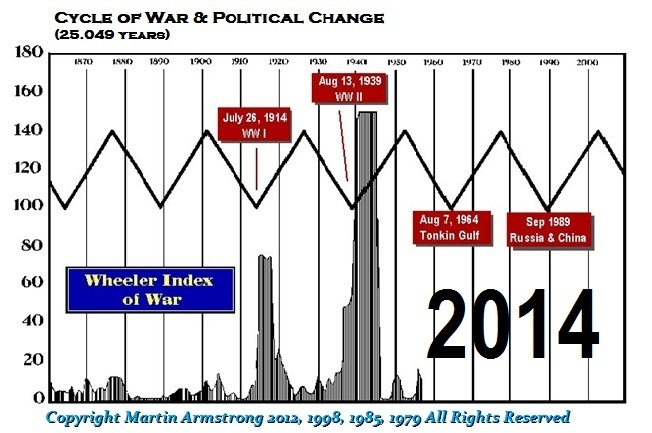
Losing Taiwan would be seen as an unfathomable loss, and they are prepared to go to war against any nation that intervenes. The West has already stretched itself thin by hyper-fixating on Ukraine as their own economies crumble. Interestingly, US intelligence services believe China will invade Taiwan in 2027. The computer also indicates that a world war could peak as early as 2027, with 2024-2027 being a period of concern.
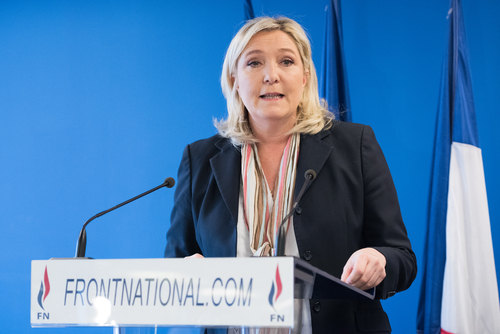
“I’m not Meloni’s twin sister, I remain faithful to Salvini,” French politician Marine Le Pen said in regard to the Italian PM. Le Pen condemned Italy’s Meloni for supporting NATO and the EU, and while she condemns Russia’s actions in Ukraine, she does not believe that the proxy war should continue. Le Pen said that European countries should remain “Eurosceptic” as there is clearly a larger agenda at play that does not consider individual nations.
She also said that she is convinced France should leave NATO immediately and cease all weapon exports to Ukraine. Why?
“I would do everything possible for France to promote a peaceful resolution of the conflict. For one simple reason: I don't see any other valid solutions.” “Or Russia – continues Le Pen – wins the war, and it would be catastrophic because all the countries that have a territorial conflict will think they can solve it with weapons. Either Ukraine wins, and this would mean that NATO has entered the conflict, and thus the beginning of the Third World War. It doesn't seem like a happy prospect to me. Or, we will continue to supply Ukraine with weapons and then we will find ourselves facing a new Hundred Years War which, given the human losses, would be a tragedy.”
This is the exact problem. No one is going to “win” this war and World War III is imminent as NATO continues to embed itself in the conflict. All NATO leaders are abandoning their domestic policies in favor of an international one that does not benefit their respective countries in any way. This entire proxy war the entire world is now fighting is merely a ploy to eliminate Russia and end fossil fuel production. I discuss these topics in depth in my book, “The Plot to Seize Russia,” which my publisher is currently working on completing. I will let everyone know once the book is available for purchase in the coming weeks.
Posted originally on the CTH on April 16, 2023 | Sundance
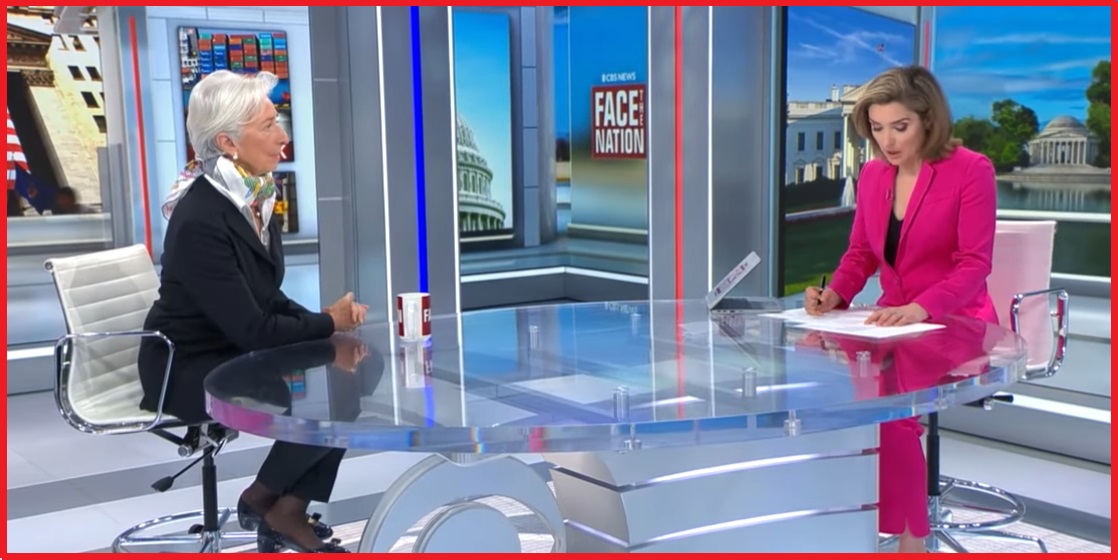
Christine Lagarde, president of the European Central Bank, appears on Face the Nation to describe the current status of EU success in shrinking the economy to achieve parity with the shrinking of energy development. Ms. Lagarde is very happy with their ‘management of the transition’ so far, and sees slow economic growth combined with a citizenry happily accepting the lower standard of living, the new normal.
As Lagarde outlines, the lowered economic activity is helping the central banks support the objectives of the government officials and corporations who are giving the instructions. Overall, she is optimistic the common man and woman will continue accepting less ability to achieve personal economic and financial success, as the bankers and politicians continue managing the western transition. Things are going swimmingly. WATCH:
MARGARET BRENNAN: We’re joined now by Christine Lagarde, former head of the IMF, now the president of the European Central Bank. Good morning.
PRESIDENT OF THE EUROPEAN CENTRAL BANK CHRISTINE LAGARDE: Good morning, Margaret. Lovely to be back.
MARGARET BRENNAN: Good to have you here, and your recovery is going all right?
MADAME LAGARDE: Yes, in a couple of days, I think I’ll be fine.
MARGARET BRENNAN: I’m glad to hear that. You have a long list of things ahead of you. And I want to ask you about the global recovery. You were speaking a few days ago and you said the recovery for the economy is fragile and uncertain in this country. The Fed thinks we’ll see a mild recession later this year. What is it that you predict?
MADAME LAGARDE: First of all, there is recovery. That’s, I think, a point that was not really firm only six months ago where we all assumed that there would be a recession, if only a technical one. If you look at all the forecasts at the moment, it’s all positive. It’s been slightly downgraded. But overall, we have a recovery and we are faced with high uncertainty because of multiple factors, you know, from all corners of the world. It’s the war in Ukraine. It’s the financial stability that clearly has been shaken up a bit by the US and Switzerland development. It’s inflation that we are fighting. It’s all that which really create a hollow of uncertainty around a recovery that we want to embed. That’s pretty much where we are.
MARGARET BRENNAN: So there were those recent bank failures here in the United States, also one in Switzerland. Given that, it sounds like you’re saying you don’t see a hard landing, you’re seeing a positive trajectory for the global economy?
MADAME LAGARDE: I think we have a narrow path to navigate, which requires that both the governments and the central banks around the world adopt the right policies.
MARGARET BRENNAN: OPEC just cut output.
MADAME LAGARDE: Hm?
MARGARET BRENNAN: OPEC just cut output, but you don’t see that as a disruption?
MADAME LAGARDE: I know. And- and we have to be very attentive. But in the meantime, if you look at- I’ll have to look at Europe at the moment. We have reduced our overall consumption of gas energy, for instance, by more than 15 percent. So it’s not as if we negotiated here or there. We just cut down our energy consumption, number one. Number two, we have renegotiated with multiple partners ranging from Norway to the United States of America, which is a big supplier of our energy. And I think that our dependency, which we learned the hard way about, has significantly declined. So I think that we moved from the illusion of plenty of energy, free money, to a time of resilience and building buffers. This is what has happened.
MARGARET BRENNAN: It’s interesting to hear that optimism. I mean, given the bank failures we just saw, you hear from bank CEOs in this country, this idea that they’re getting more cautious about lending money, largely that there’s some contraction in credit there. How concerned are you and how does that complicate your planning?
MADAME LAGARDE: It’s funny you should ask, complication because in a way it facilitates my planning and it complicates the future as far as growth.
MARGARET BRENNAN: Because it slows down business activity so you don’t have to raise rates as much or as frequently.
MADAME LAGARDE: We don’t have to reduce. We’ll see. Because we need to really measure what will come out of this- this financial events that took place recently. What impact will it have? How will banks react? How will they assess risk and how much credit will they lend? But if they don’t lend too much credit and if they manage their risk, it might reduce the work that we have to do to reduce inflation, okay? But if they reduce too much credit, then it will weigh on growth excessively. So it’s a fine balance to have between credit risk, good management on the one hand, and on the other hand, financing the economy as is expected by- by the business community. The business community wants to invest at the moment. Some of them have big buffers and they can use those buffers, others are going to need credit financing from the banking sector and the markets, both of them.
MARGARET BRENNAN: I want to ask you about the U.S.. And it’s not a political question, it’s an economic one. But there are predictions that the U.S. could default in its national debt as soon as June, some say September, and we have a political standoff in this country, virtually no negotiation happening on how to resolve this. Does that undermine your confidence in the United States? And what message does that send to the world?
MADAME LAGARDE: I have huge confidence in the United States. You know, ever since my year in this country, and this city in ’73, ’74, I have had confidence in this country and I just cannot believe that they would let such a major, major disaster happen of the United States defaulting on its debt. This is not possible. I cannot believe that it would happen. But if it did happen, it would have very, very negative impact, not just for this country where confidence would be challenged, but around the world. Let’s face it, this is the largest economy. It’s a major leader in economic growth around the world. It cannot let that happen. I understand the politics, I’ve been in politics myself. But there is a time when the higher interest of a nation has to prevail. I’m sorry.
MARGARET BRENNAN: And you think that will happen?
MADAME LAGARDE: I have huge trust in this country yet again.
MARGARET BRENNAN: You’re bringing a lot of optimism to a show where we don’t have a lot of optimism.
MADAME LAGARDE: Oh. I’m sorry (laughs)
MARGARET BRENNAN: No, I like it. It’s interesting. It’s a change. I want to ask you, though, about what you just said in terms of U.S. leadership. You look to the other side of the globe and Xi Jinping has said he wants China to be the world’s leading power by 2049. And Beijing is very interlinked into so many economies, particularly in Europe. Is the U.S. losing global influence?
MADAME LAGARDE: There is clearly a competition between these- these large economies. The U.S. is the first economy in the world. China is clearly competing, and is putting all forces in that competition. I think competition is healthy. It has to stimulate innovation. It has to stimulate productivity. But it’s inevitable that these two large economies are facing each other. What I hope very much is that they can have a dialogue because, you know, all these relationships, whether it’s trade, whether it’s politics, whether it’s economic development, whether it is financial stability, it’s a two-way street. We cannot ignore each other, and trade should not be confrontational. It has to be careful. It has to identify the areas that are strategic for one country or the other- or all the others. But it shouldn’t be confrontational. I’m on the same page as Henry Kissinger on that, or Kevin Rudd, the new Australian ambassador. Conflict is not unavoidable.
MARGARET BRENNAN: But there is, it seems, increased political pressure to choose between the United States and China in many ways in some of these political capitals. Is that even practical from an economic point of view?
MADAME LAGARDE: It would lead to economic downside, the amount of which is uncertain. Is the global economy going to be affected by one or X percent? There are multiple forecasts, all of them are negative. So the decoupling and the sort of bipolarization of the world would lead to less economic growth, less prosperity in the world, more poverty across the world. So I think that this is something that should be by all means avoided.
MARGARET BRENNAN: Madame Lagarde, it’s always wonderful to have you here. Thank you. We’ll be right back.
Posted originally on the CTH on April 14, 2023 | Sundance
There are times when CTH and the perspective of Glenn Greenwald do not align. This is not one of those times. {Direct Rumble Link Here}
In this segment with Tucker Carlson, Glenn Greenwald nails the agenda, motives and outcomes of the U.S. media as they relate to the recent classified intelligence leaks. This is a solid three-minute encapsulation of the problem. WATCH:
South Korea’s diplomatic policy dictates that it will not send ammunition to countries at war. The recently leaked documents from the Pentagon reveal that the US is bullying South Korea into breaking its policy to arm Ukraine. Worse, the documents reveal that US intelligence agencies have been spying on South Korea. This is an unfortunate start to President Yoon Suk Yeol’s meeting with President Joe Biden scheduled for April 26.
CIA personnel has been warning Washington not to speak to Seoul over the phone until they agreed to arm Ukraine. Former presidential secretary for foreign affairs Lee Moon-hee, named Yi Mun-hui in the documents, told former Director of National Security Kim Sung-han that South Korea would have two options. The first would be for the nation to change its stance. The second would be for South Korea to send weapons to Poland, using Poland as the middleman to avoid breaking policy as “getting the ammunition to Ukraine quickly was the ultimate goal of the United States.” The documents also reveal potential wiretapping against South Korea who is supposed to be an ally.
Yoon is under pressure from both the US and his own policymakers. Opposition Democratic Party of Korea (DPK) floor leader Park Hong-keun is urging Yoon to demand an apology from Biden. “If confirmed, it is an unacceptable practice that cannot be tolerated in the 70-year alliance and a clear infringement of South Korea’s sovereignty that shatters bilateral trust … The U.S. government should be faithful to its ally and apologize to the South Korean public and the government, if those reports are true,” Park stated.
Why is the US risking its international alliances to fight a foreign war? The Biden Administration has completely abandoned domestic policy in favor of fighting a war on behalf of Ukraine. Countries previously yielded to the demands of the US as its military and economic power made it the key ally. Things have changed. Nations are increasingly distancing themselves from the US as the country spirals down a dark path that has already shaken its superpower status.
The pension reform protests in France grew to new proportions. Protesters have not allowed the government to silence them. On Thursday, over 100 people stormed BlackRock’s office in Paris and nearly burned it down. “The meaning of this action is quite simple. We went to the headquarters of BlackRock to tell them: the money of workers, for our pensions, they are taking it,” a protestor told a CNN affiliate. The protest was organized and the message was clear.
We have seen a slew of failed protests in America where groups without leadership burn down the private property of their neighbors and small businesses. We’ve seen protests divided over the wrong causes, such as the nurses’ strike that failed because some felt the leadership was not diverse enough. Some protests, such as the BLM movement, became so obscure that no one even knew what they were protesting. Here, the Parisians are not allowing government mismanagement to change their retirement plans. It may seem like a small sacrifice to those without pensions, who could not dream of even retiring in their 60s, but the problem is much deeper than a change in the retirement age.
Governments historically target the people, who they see as the disposable Great Unwashed, when their plans fail. The French government believes the people should make a sacrifice due to the steep budget deficit. Across the world, governments are taking more from their citizens. People are asked to suffer to promote the climate change agenda, eat less meat, drive less, and even refrain from heating their homes. Inflation has made the cost of living unsustainable but that has not prevented governments from raising taxes and asking for more while we receive less. Give an inch, and they’ll take a mile (or a kilometer in this instance). This is why effective government opposition is essential to sustaining our fundamental rights. They will take as much as possible if we allow it to happen.
The Neocons are on both sides of the aisle. In the Republican camp, of course, we have Lindsy Graham, but there is also Marco Rubio who has the audacity to tell Europe they better pick sides. Then there is Michael McCaul of Texas. Based on reliable sources, the military has been instructed to prepare for war. This is inevitable.
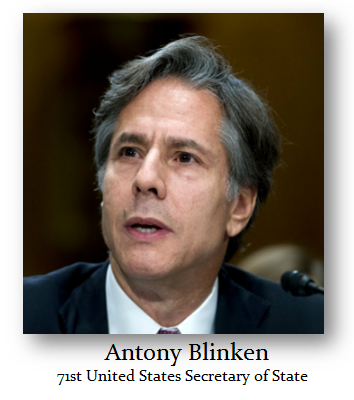
The Democrats intend to beat the war drums to make sure the Republican Neocons will vote with them. Biden intends to Run in 2024. The Neocons need him because he is senile and will say what they write on his cue cards and sign whatever they put in front of him. Blinken is the leader of the Neocons in the White House. They are pushing for war BEFORE the 2024 election for these people looks at war and that typically the president in power is always reelected in times of war. So, hunker down. Hide your kids. It’s off to war we go so Biden can be reelected. They thought Trump would be the Republican and Biden could beat him. That remains to be seen when the body bags start coming home. These people have no respect for the people or human rights. It’s all just a chess game to them.
Visit Spotifyor your podcast channel of choice for my most recent interview with TikMill.
Martin Armstrong, a true market maverick & innovator – ‘History doesn’t repeat itself, but it does rhyme’ M.Twain – a motto for the ages and closely linked to Martin Armstrong’s market and personal ethos, Martin’s Socrates platform is truly groundbreaking as is his Economic Confidence model, listen in and learn more – enjoy!
This documentary is extremely hard to watch but accurately depicts the hardships millions face in the modern industrialized world. We cannot turn a blind eye to the pain and suffering that poverty creates. This is happening today in the wealthiest country in the world.
Below is an update from the documentary that aired in 2012. There was a slight glimpse of hope when Obama left office and the economy improved under Trump. Still, the funds we send overseas are needed at home. Those with the least suffer the most when the economy turns down.
This a raw reminder to count your blessing on this Easter Monday.
I have created this site to help people have fun in the kitchen. I write about enjoying life both in and out of my kitchen. Life is short! Make the most of it and enjoy!
This is a library of News Events not reported by the Main Stream Media documenting & connecting the dots on How the Obama Marxist Liberal agenda is destroying America






 Centinel2012