EU and WHO Plan Digital Vaccine Passports


Armstrong Economics Blog/Disease Re-Posted Jun 8, 2023 by Martin Armstrong

The European Union and World Health Organization met in Geneva this week to discuss plans for “future pandemics.” Governments and global organizations still want to control the masses with forced vaccinations despite the utter failure of the mRNA vaccine that did nothing to prevent transmission or infection. Still, the EU and WHO are planning to implement a global digital vaccine passport ahead of “future pandemics.”

The European Union was the mastermind behind the digital vaccine passport. The WHO and EU signed an agreement on November 30, 2022, to ensure transparency and coordination on future health issues.

Thierry Breton, EU Commissioner for Internal Market, said:

“With 80 countries and territories connected to the EU Digital COVID-19 Certificate, the EU has set a global standard. The EU certificate has not only been an important tool in our fight against the pandemic, but has also facilitated international travel and tourism. I am pleased that the WHO will build on the privacy-preserving principles and cutting-edge technology of the EU certificate to create a global tool against future pandemics.”

The World Health Organization issued a press release explaining the future of digital passports that will “help facilitate global mobility,” or in other words, limit the freedom of movement for the masses. One of the key elements in the European Union’s work against the COVID-19 pandemic has been digital COVID-19 certificates. To facilitate free movement within its borders, the EU swiftly established interoperable COVID-19 certificates (entitled ‘EU Digital COVID-19 Certificate’ or ‘EU DCC’),” the WHO stated on the EU’s “legacy.”

The WHO wants the entire world to adopt vaccine digital passports:

“To help strengthen global health preparedness in the face of growing health threats, WHO is establishing a global digital health certification network which builds upon the solid foundations of the EU DCC framework, principles and open technologies. With this collaboration, WHO will facilitate this process globally under its own structure with the aim to allow the world to benefit from convergence of digital certificates. This includes standard-setting and validation of digital signatures to prevent fraud. In doing so, WHO will not have access to any underlying personal data, which would continue to be the exclusive domain of governments.”

The press release ends by saying they will be particularly targeting low and middle-income countries, who are always the test subjects for these plans. Are people from low-income countries really traveling the world here? Absolutely no one is concerned about the millions of migrants and refugees entering the EU and America while infected with diseases. Preventing the spread of illness is not their motive.

Canadians Not Willing to Hand Over Guns


Armstrong Economics Blog/Canada Re-Posted Oct 4, 2022 by Martin Armstrong

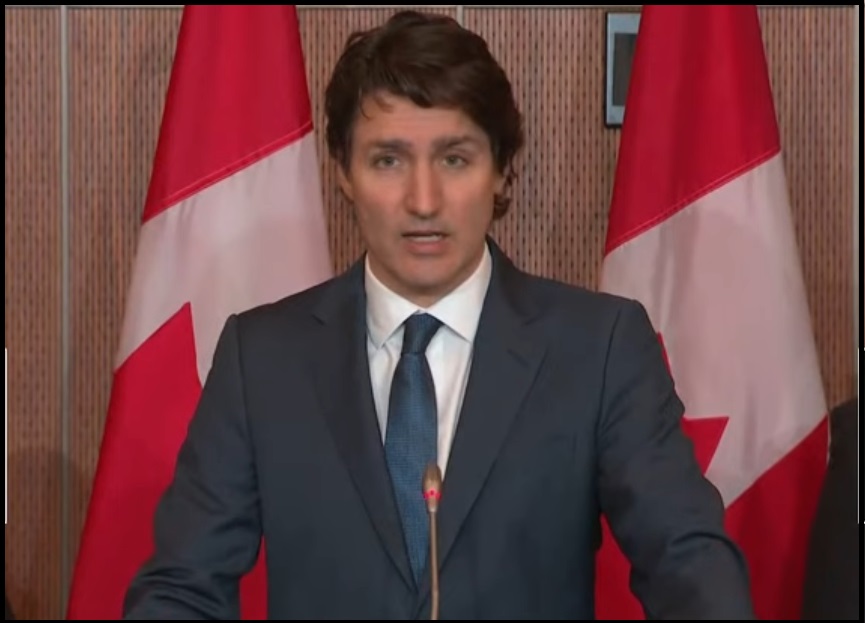
The Trudeau Administration wants to eliminate all freedoms. Provinces are fighting back at Trudeau’s gun confiscation, deemed a “mandatory gun buyback” for assault rifles. As usual, the government put this plan in place without a plan for enforcement.

Two years ago, Alberta Premier Jason Kenney, in the video above, explained that firearm ownership is already under strict regulations. Only law-abiding citizens must adhere to these regulations. He accused Ottawa of using the people as scapegoats for their gun confiscation plan instead of cracking down on gangs and criminals who actually commit gun crimes. Now, Trudeau is going after the people and pointing at events that occurred outside Canada as a reason to ban citizens from legally owning assault rifles.

Royal Canadian Mounted Police (RCMP), Alberta Justice Minister and Solicitor General Tyler Shandro reminded the Liberal Party that Alberta taxpayers pay C$750 million annually to fund the RCMP. “We expect that those dollars not be wasted to pay for a confiscation program that will not increase public safety,” Shandro said after calling the program disturbing. “We will not tolerate taking officers off the street in order to confiscate the property of law-abiding firearms owners.”

Manitoba Attorney General Kelvin Goertzen quoted from a letter that he wrote to Canadian Public Safety Minister Marco Mendicino, said the law “unnecessarily targets lawful gun owners,” as criminals are still going to be in possession of firearms – obviously. “In Manitoba’s view, any buy-back program cannot further erode precious provincial police resources, already suffering from large vacancy rates, from focusing on investigation of violent crime.”

Saskatchewan’s Minister of Corrections, Policing, and Public Safety Christine Tell also called the mandate a waste of resources that is not supported. “The Government of Saskatchewan does not support and will not [authorize] the use of provincially funded resources for any process that is connected to the federal government’s proposed ‘buyback’ of these firearms,” she declared.

Banning any form of firearms is a method to control the people. The government and criminals will be the only ones with power, with the average law-abiding citizen helpless. Gun confiscation has occurred countless times in RECENT history and has not ended well.

Canada Scheduled to End Vaccination Border Requirements October 1st


Posted originally on the conservative tree house on September 26, 2022 | sundance

New Zealand, Australia and Canada retained the most restrictive policies on vaccination the longest. However, today Canada announced they are finally loosening the totalitarian fiats and permitting travelers to enter the country without proof of vaccination.

New measures begin October 1st.

(The Hill) — Canada is lifting its testing, quarantine and vaccination requirements at the border, a step in rolling back pandemic restrictions designed to stave off the spread of COVID-19, the government announced Monday.

Starting Oct. 1, international travelers will be able to enter Canada without providing proof of vaccination, taking a pre-arrival test or undergoing quarantine, according to a government release. Compulsory masking on domestic planes and trains will also end, as will a longstanding requirement to share health information with the Canadian government via its ArriveCAN application prior to entry.

The move comes as many countries attempt to ease out of the strict restrictions put in place during the COVID-19 pandemic even as the virus continues to circulate. (read more)