Deutsche Bank – The Meltdown Crisis


db-exposure

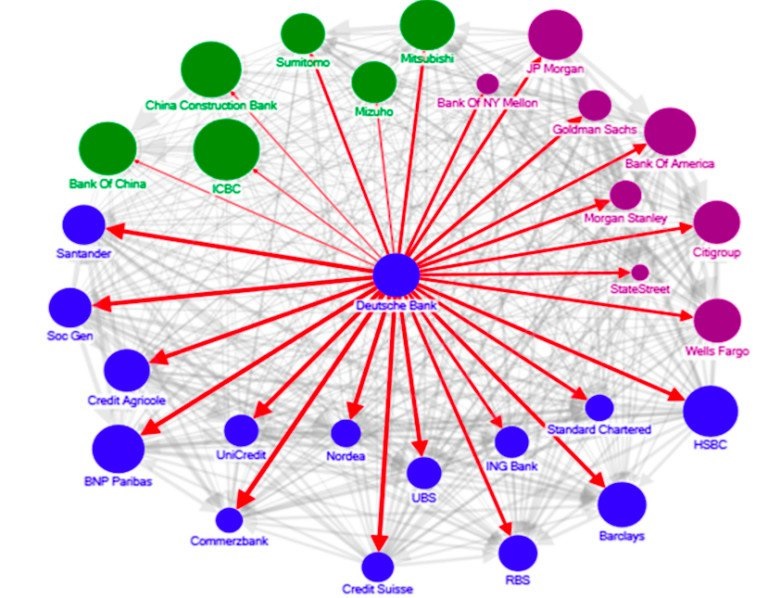
Ten of the large hedge funds are withdrawing from Deutsche Bank. What must be understood here is that Deutsche Bank is the main clearing house for trades in Europe. The problem the hedge funds have is where do they move for clearing? Short-term, they can move to New York or London. With over $60 trillion derivative book at the Deutsche Bank, the government is totally incapable of even understanding how to deal with this crisis. We are looking at a major crisis in confidence.

Merkel is simply out of her mind to adhere to this insane policy of a bail-in. How can hedge funds stay with clearing at Deutsche Bank when she takes this position that would set off a catastrophic global meltdown. It still appears that Merkel will have to blink. Once people realize this is the real crisis, then the German debt market should turn down rather hard.

The pressure is clearly building based upon how my own phone is melting down. This illustration based upon IMF data, illustrates the global contagion. I “BELIEVE” that Merkel will be compelled to blink. We may see an announcement this weekend at the latest where she must address this issue. The implications of a global contagion go far beyond Germany.

Investors in Deutsche Bank are obviously looking to Merkel and whether or not she will step up to the plate here. DB shares have plummeted more than 50 percent this year. The prospect of bailing out Deutsche Bank is particularly a problem when Merkel seeking a fourth term in an election next year. Her view is to hold to what she took as a position. Hence, must the world suffer for her personal political career once again?

The EC attack on Apple has led to a backlash where the US Justice Department in retaliation wants a multibillion-dollar fine from DB. This is also contributing to the problem of DB being in the cross-hairs of US prosecutors who also seek to further their political career not unlike Merkel.

Merkel’s spokesman said the government sees “no grounds” for talk of state funding for DB. This simply cannot stand in the face of a major global contagion. The government would have to step in if Deutsche Bank was really in major trouble and hedge funds reducing exposure are abandoning the bank. You can bet by tomorrow, every bank will be trying to reduce their exposure to DB by the weekend.

John Cryan, Deutsche Bank’s chief executive officer, has come out publicly saying that raising capital “is currently not an issue,” and as far as a bailout from government, he has stated Merkel’s position that such support is “out of the question for us.” This entire crisis is actually set in motion by Merkel who championed to keep taxpayers off the hook in a crisis. She pushed for bail-ins and not bail-outs and this has made it far more difficult for governments to support banks in Europe. The Bank Recovery and Resolution Directive, which is the cornerstone of Europe’s efforts to tackle too-big-to-fail banks, takes the position that the need any such extraordinary public financial support indicates that a firm is “failing or likely to fail,” that will trigger the resolution. Now, support for banks is highly restricted and has devastated Greece, Italy, and Portugal. Consequently, if Merkel now intervenes on Deutsche Bank’s behalf, she is basically saying the law is for everyone else but Germany. That will lead to internal protests within the EU.

Internationally, if Merkel’s governing coalition does not step up to support Deutsche Bank, the political fallout globally will in itself cause a major crisis probably by November.  Clearly, the need for some sort of state intervention would outweigh calculations about the political fallout. Merkel will cause the international chaos if DB fails and it can fail if this bank run continues. DB needs to be restructured but when it is the biggest in Europe, it cannot be merged as a shotgun wedding. Its business must reduce risk for itself and the connection of other banks. The German government could assume a stock investment. The legal restrictions prevents extraordinary support as state aid that would distort competition by favoring one company over another. Under the EU law, the German government could just take an equity stake. That would not be a bailout in the classic terms that Merkel opposed. It must be carried out at current market conditions. They cannot arbitrarily supply money at some agreed upon share price that is away from the market.

Euro HangingOne loophole under EU regulation would allow Merkel bailout DB provided it is only to “remedy a serious disturbance in the economy of a member state and preserve financial stability.” This must be only a temporary measure. This would qualify and she can claim that she is following the EU law and it is not different from country to country. However, EU state-aid rules require junior creditors and shareholders to share losses. Therein lies the problem of a global contagion.

If Merkel actually tried to inject government funds into Deutsche Bank or purchase its capital instruments, it may do so only if there is a capital shortfall identified. Still, there must be no advantage to DB from a competition perspective. The interesting problem that would emerge, highlights the clearing crisis. The European Union would then NEED British banks for clearing. In the face of BREXIT, they are not likely to concede that at any time, so there is another nail in the coffin of the euro.

Black Lives Matter Protesters Probably Never Heard of John Casor


From the Independent Sentinel

black-lives-matter-400x300

General Robert E. Lee’s statue is one of seven statues being moved off the mall at the UT-Austin campus (photo above) to an obscure location. Lee was a Confederate and, according to the complaints, he was a symbol of ‘white supremacy’. Lee, ironically, abhorred the institution of slavery. “There are few, I believe, in this enlightened age, who will not acknowledge that slavery as an institution is a moral and political evil,” he once said.

While Confederates have become the latest target of the left because they represent ‘white supremacy’, what about the blacks who owned slaves? There were many.

Some free black people in this country bought and sold other black people, and did so at least since 1654 and continued to do so right through the Civil War.

 According to federal census reports, on June 1, 1860 there were nearly 4.5 million blacks in the United States, with fewer than four million of them living in the southern slaveholding states. Of the blacks residing in the South, 261,988 were not slaves. Of this number, 10,689 lived in New Orleans. The country’s leading African American historian, Duke University professor John Hope Franklin, records that in New Orleans over 3,000 free blacks owned slaves, or 28 percent of the free blacks in that city.

The 28 percent number is impressive when compared to less than 1.4 percent of all American whites and less than 4.8 percent of southern whites. The statistics show that, when freed, blacks disproportionately became slave masters.

According to colonial records, the first slave owner in the United States was a black man. Before 1655, there were no slaves, only indentured servants who were freed when their time was up which was usually about seven years. They were then granted 50 acres of land. Blacks also received 50 acres.

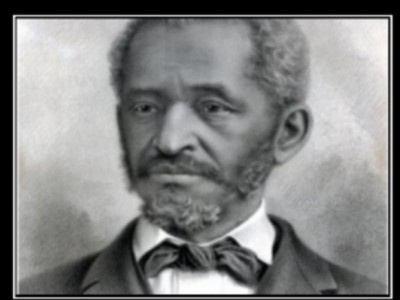
Anthony Johnson, photo below, was a black man from what is now Angola who came to the U.S. to work on a tobacco farm in 1619.

anthony-johnson-400x300

When he was freed from indentured servitude, he ran a successful farm. By 1651, he owned 250 acres and five black indentured servants. In 1654, when it was time for him to release John Casor, a black indentured servant, he told Casor he was extending his time. Casor left to work for a man by the name of Robert Parker and he lived as a free man.

Anthony Johnson sued Parker and in 1655, the court ruled Anthony could hold Casor indefinitely. The ruling allowed a black to own a slave of his own race.

This was the beginning of slavery and institutionalized racism.

John Casor

John Casor

Whites could not own slaves until 1670 when that all changed and everyone, including Indians, could own blacks as slaves.

By 1830 there were 3,775 black families living in the South who owned black slaves. By 1860 there were about 3,000 slaves owned by black households in the city of New Orleans alone.

nicolas-metoy-400x194

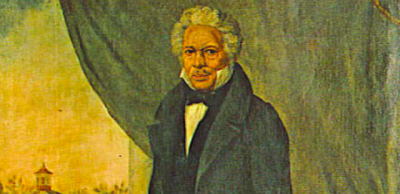
Nicolas Augustin Metoyer of Louisiana,pictured above, owned 13 slaves in 1830. He and his 12 family members collectively owned 215 slaves.

Some black slave owners purchased family members as slaves to protect them and others bought slaves to exploit them.

The great African-American historian, John Hope Franklin, states this clearly: “The majority of Negro owners of slaves had some personal interest in their property.” But, he admits, “There were instances, however, in which free Negroes had a real economic interest in the institution of slavery and held slaves in order to improve their economic status.”

The horror of slavery is still with us and the entire story needs to be told.


References: John CasorAnthony Johnson Henry Louis Gates Jr, and American Civil War

R

Saudia Arabia to Sell All US Assets as Congress Overrides Obama Veto


saudi-arabia

Congress voted to override Obama’s veto that families of those killed in the terror attacks on 9/11 would not be allowed to sue Saudi Arabia. This is the first time he has been overruled. This will open the courts in New York to some very interesting court battles, but Saudi Arabia will most likely sell off all US assets to prevent any US court from freezing their assets. If they take everything out of the USA, then they can ignore the courts and not defend at all exposing themselves to discovery rules that will be very intrusive.

Canadian v US Municipality Debt Crisis


canada-halfmast

Canada has a different legal structure compared to the United States. Canada is one of the most decentralized countries in the world where provinces are actually responsible for most major social expenditures as a whole. The Canadian provinces receive large, unconditional transfers from the federal government whereby some provinces receive transfers from the federal government that are more important sources of revenue than their own local taxes. This does set the stage for resentment between provinces, which is rather different from the United States model where the states are separate, individual, sovereign entities.

When we then look at the next tier lower, Canadian municipalities are effectively only agents of provincial governments, and in the United States, they too are stand alone entities. Therefore, in Canada, we have a hierarchical budget and debt constraints that combine to restrict the revenues of municipalities. Consequently, the province impacts the direct expenditures and controls access to capital markets for municipalities. If a local government gets into financial trouble, then the province comes to the rescue in various ways and can even change the municipal territorial boundaries, which is sort of similar to merging banks when in trouble. The province can even take over functions and has the authority to take over control of a municipality’s finances.

Municipalities cannot, therefore, actually go bankrupt in Canada since they are implicitly guaranteed by the province. This also means that in Canadian municipalities, the normal interest rate spreads or disparities are based upon various credit ratings and are not really a big factor at the municipal level, but rather at the provincial level. In Canada, local borrowing requires prior provincial approval and is severely limited. Therefore, the credit rating tends to be that of the province. Such debt constraints are a product of the implicit provincial responsibility for bailing out any municipal default, which is a legacy of the Great Depression, since in Canada, that event caused a tidal wave of local defaults amounting to about 10% of all Canadian municipal debt.

Canada has continued to expand the size of provincial transfers to municipalities as a percent of GDP, which has reached nearly the 50% level. This tends to introduce a different risk whereby if the province gets in trouble, it will directly impact all municipalities within its domain. So during the Great Depression it was one municipality against another, today in a sovereign debt crisis everyone risks going down with the ship.

In Canada, provinces have freedom to choose their own tax bases and rates. In practice, the majority of provincial income taxes are collected by the federal government under tax collection agreements. The underlying terms dictate that the same base is taxed for the federal income tax. Therefore, the Canadian federal government collects corporation income taxes and personal income taxes for several provinces under these arrangements. Therefore, in the United States, there tends to be tax competition among states where some states do not have income taxes at all, but the Canadian federal and provincial governments essentially tax the same basis. The Canadian federal government collects more from its taxes than its direct spending. The excess taxation is transferred through two large, unconditional transfer programs to the provinces.

Therefore, the risks in a sovereign debt crisis are actually higher in Canada than the United States. The Canadian structure means it is one for all and all for one, whereas in the United States there will be a disparity between states as some will survive better than others. A Detroit bankruptcy is not possible in Canada, whereas in the United States everyone stands alone and a collapse of one does not take down the whole. So a collapse in Illinois will not take down North Carolina.

The Undemocratic Nature of the Transatlantic Trade and Investment Partnership


there is only one group that makes out and that are the international conglomerates and their owners the Globalists no one else makes out!

Image

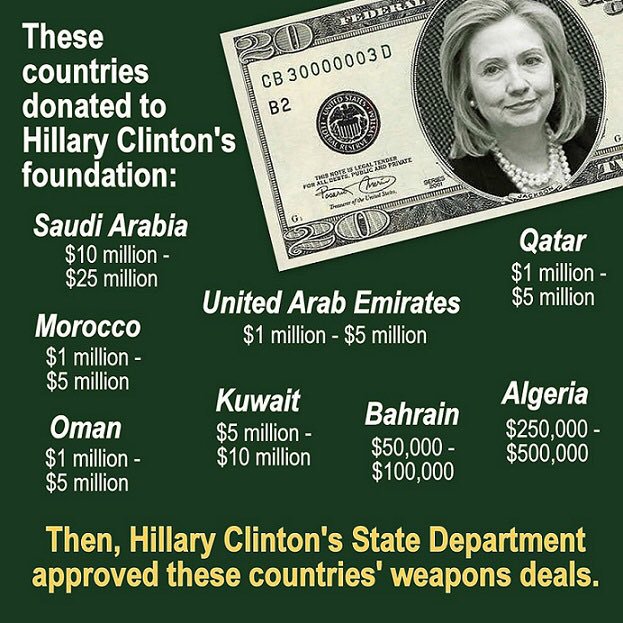
THESE COUNTRIES DONATED TO HILLARY CLINTON’S FOUNDATION:


weapons-deals

Wife of Charlotte’s Keith Scott Filed Restraining Order Citing Violence and Gun Use in 2015…


And this is the slime ball the protestors are protesting about …lol

VIDEO: LIBERALS SIGN PETITION TO JAIL DONALD TRUMP FOR “HATE CRIMES”


They have the wrong persons that should be Hillary, Bill and Obama to start!

PARENTING MAGAZINE WARNS ‘BLOND, CHEERFUL’ FAMILIES DANGEROUS, LIKELY RIGHT WING


These people really are insane, nothing else can explain this kind of really weird behavior!

VIDEO: SICK HILLARY WEARS HEAVY WINTER COAT ON WARM AFTERNOON


Whatever she has, and she does have something, it must be serious or they would be able to cover it up! Could this be a diversion, maybe, but I don’t think Hillary is a good enough actor to make it look like she is “sick” when she really isn’t.