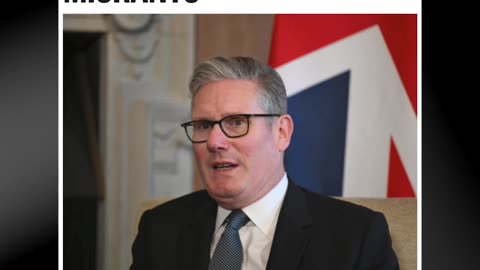
The U.K. May as Well Not Have Borders


Posted originally on Rumble on Bright Bart News Network on: August, 11, 2025

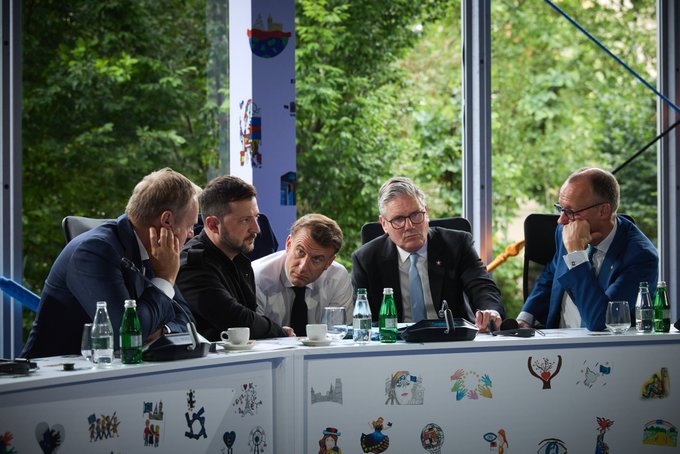
German Chancellor Merz Organizes Emergency EU Summit to Strategize How to Keep War Going if Putin/Trump Reach Peace Agreement


Posted originally on CTH on August 11, 2025 | Sundance

The intellectually honest political watcher knows that overall Ukraine represents the largest international money laundering operation to shift wealth from taxpayers to the politically connected institutions, since COVID-19.  The money is the motive to continue the conflict.

With President Donald Trump and Vladimir Putin scheduled to meet in Alaska for a summit to negotiate a ceasefire, German Chancellor Friedrich Merz quickly organizes a meeting between EU leaders and the U.K to figure out how the keep the war going.

As the industrial capital of the EU, Germany has a lot at stake given the nature of their contracting economy. The EU military industrial complex is centered around the nation Merz represents. There are trillions at stake.

BERLIN — U.S. President Donald Trump will join European leaders including Ukrainian President Volodymyr Zelenskyy for an emergency virtual summit on Wednesday.

The call, organized by German Chancellor Friedrich Merz, comes ahead of Friday’s summit in Alaska between Trump and Russian President Vladimir Putin on the war in Ukraine.

The virtual summit will focus on pressure options against Russia, questions about Ukrainian territories seized by Russia, security guarantees for Kyiv and the sequencing of potential peace talks, a German government spokesperson told POLITICO.

Merz and other European leaders demand that Putin first agrees to a ceasefire before any peace talks or land swaps between Moscow and Kyiv can take place. They have also made clear that any potential territorial exchanges must be balanced and agreed with Kyiv, and that Ukraine should receive firm security guarantees to protect it against further aggression.

Three diplomats told POLITICO that Merz’s team had been in intensive discussions with other capitals in recent days to organize the virtual meeting. (read more)

Bank of England Cuts Interest Rates


Posted originally on Aug 8, 2025 by Martin Armstrong |  

Bank of England Royal Exchange

The Bank of England has cut its base interest rate to 4%, even as it warns of rising inflation. “We’ve cut interest rates today, but it was a finely balanced decision. Interest rates are still on a downward path, but any future cuts will need to be made gradually and carefully,” Governor Andrew Bailey stated.

The nine-member panel of the Monetary Policy Committee voted to lower rates by 0.25 percentage points, but failed to reach a unanimous vote with four members wishing to pause and another voting for a cut. The committee initially began with a 0.5 percentage point vote before reducing it to 0.25, marking the first time the MPC has needed a second vote—no one knows what they are doing.

The bank lowered rates but admitted that headline inflation is expected to hit 4% in September, up from the initial 3.75% estimate. Households are already spending one-tenth of their income on food, yet the bank expects food inflation to spike to 5.5% this year.

The central bank attempted to blame grocery store employee wages for price increases. “Furthermore, overall labour costs of supermarkets are likely to have been disproportionately affected by the lower threshold at which employers start paying NICs… these material increases in labour costs are likely to have pushed up food prices.” Every nation is facing a sharp upturn in food prices and store employees are not the culprit. The bank also acknowledged that unemployment has risen for five consecutive months, with unemployment reaching a four-year high in May 2025 at 4.7%.

The central bank cannot fight inflation as consumer demand is not driving price increases. Russian sanctions, net zero insanity, regulation, taxes, and an overall decline in public confidence have led Britain to decline. Let us not forget the looming sovereign debt crisis that every central bank is attempting to ignore publicly. Starmer is steering the nation directly into war, which never benefits the people and will become the primary culprit of inflation in time. The central bank cannot control fiscal policy; it cannot control inflation—all it can do is pretend to have a grasp on the situation to quell panic.

Brazil Protest LIVE: Demonstration in Support of Former Brazilian President Bolsonaro


Posted originally on Rumble By Bannon’s War Room on: August 3, 2025

“Bolsonaro Is On Trial For His Life.” Ana Paula Henkel On Political Persecution In Brazil


Posted originally on Rumble By Bannon’s War Room on: August 1, 2025

Canadian Officials Continue Wondering Why Trump Administration Projects Ambivalence Toward U.S-Canada Trade Deal


Posted originally on CTH on July 29, 2025 | Sundance

The reality of the U.S-Canada economic relationship and the position of President Donald Trump is not that difficult to understand if you take all the disparate datapoints and quotes from Trump and put them into context.

During a White House meeting with Mark Carney, President Trump essentially told the Canadian Prime Minister why he was in no hurry to get to a deal with Canada.

The 35% tariffs on non-USMCA goods are going to trigger on August 1st, because the main priority of Trump -looking toward Canada- is to dissolve the USMCA.

During the May 6th oval office meeting with Carney, President Trump was discussing the USMCA and said:  “As you know it terminates fairly shortly. It gets renegotiated fairly shortly.” … “This was a transitional deal, and we’ll see what happens, we’re going to start renegotiating that” … “I don’t know if it serves a purpose anymore.”  …. “And the biggest purpose it served was, we got rid of NAFTA.”

To understand why President Trump wants to dissolve the USMCA {SEE HERE}.  To understand the technical value of dissolving the USMCA {SEE HERE}.  It’s not a complicated economic analysis; it’s common sense.

Currently, approximately 60% of the traded goods and services between the U.S. and Canada are covered by the USMCA; the remaining 40% will be hit by tariffs on August 1st at a 35% rate.

When the USMCA is renegotiated, predictably dissolved in favor of two bilateral trade agreements – one for Mexico and one for Canada, all of the U.S-Canada trade sectors will be part of the enlarged free trade negotiation.  As a result, there is absolutely no motive to engage in trade discussions now.

♦ President Trump’s position is essentially to talk about the details when the USMCA is dissolved; hence, the ambivalence.

Politico is noting the Canadian trade team simply doesn’t understand this. “[D]espite months of back and forth, the terms for a deal have not yet been set, a senior government source said, with the White House informing the Canadian side that Trump is more focused on securing deals with other partners like India.

(Politico cont..) […] Earlier this month, Canada conceded that any deal with Trump is likely to include tariffs.

Carney’s government wants stability around the tariffs Trump invoked using Section 232 of the Trade Expansion Act.

They are crushing Canada’s auto, steel, aluminum and forestry industries. Trump also plans to hit imported copper with 50 percent tariffs starting Aug. 1 — with semiconductor and pharmaceutical imports likely to follow.

Canada ultimately wants the tariffs eliminated or lowered to a fixed level that doesn’t fluctuate, the senior government official said. “If we know what world we’re going into, then we can have better plans and policies to attract investment.”

Canada’s premiers say the unpredictability is punishing the economy.

“Private investment is not growing because everybody’s on pause,” Quebec Premier François Legault told reporters last week. “They are waiting to see what will happen. I’ve been in business — it’s about the worst thing you can have is uncertainty.” (read more)

The certainty the Canadians are looking for can be found easily if they stop pretending.

(1) U.S. tariffs against non-USMCA products from Canada will go into effect on August 1st.  (2) As soon as the USMCA is reopened, it will be dissolved.  (3) After the USMCA dissolution, a bilateral free trade agreement between the USA and Canada will be negotiated.

Every current effort by Canada to change the nature of the trade system, between now and the reopening of the USMCA (to dissolve it), is futile.

Again, I’m not exactly sure why this reality is so challenging for the Canadian govt to understand.

“So, you’re saying there’s a chance.”

Episode 4663: Trump Meets With EU Leaders; Bringing Giuliani Era Law And Order To England


Posted originally on Rumble By Bannon’s War Room on: July 28, 2025

Canada Accepts They’re Not Going to Get a Trade Deal Before 35% Tariffs Kick In


Posted originally on CTH on July 22, 2025 | Sundance 

I’ll repeat it as much as needed, until it sinks in.

The U.S-Canada trade deal status is simply a no-brainer. President Trump will answer questions about Canada and tariffs, he’ll put people into seats to discuss trade with the Canadian delegation, and he’ll give every outward appearance of being favorable to Prime Minister Mark Carney…. BUT…

In the background, Trump is simply waiting for the USMCA timeline to trigger a renegotiation. President Donald Trump is ambivalent to the trade partnership with Canada. This moot-status reality is why there’s no substantive engagement.

‘No deal’ -until USMCA redo- is a win for President Trump.

For some bizarre reason that I simply cannot fathom, almost every Canadian politician seems entirely oblivious to this reality. Instead, Canadian Trade Minister Dominic LeBlanc and Mark Carney’s chief-of-staff, Marc-André Blanchard are once again coming to DC to ride their bicycles in slow circles at the bottom of the White House driveway while staring in the windows.

An article in Politico notes the Canadian premiers are now accepting the August 1st deadline will pass without any agreement, and the 35% reciprocal tariffs on non-USMCA products (meaning a lot of stuff) is going to trigger.

Literally, everything from Canada that has a non-USMCA component is going to be tariffed. Think about all the stuff from China, Asia (writ large) and Europe that Canada assembles for finished goods. All of that stuff will be subject to the tariffs.

That said, there’s good news coming from the recent meeting between Prime Minister Carney and the Premiers. Within their statement they use the term “developing large infrastructure projects.” That’s Canadian political codespeak for them realizing they are going to have to get back to regular energy development, raw material use/refinement and ACTUAL MANUFACTURING.

Canada is going to have to bring back their ‘dirty’ industrial jobs.

For our Treehouse friends in Canada, this is very good news. The Canadian assembly economic model has to change in order to get compliant with U.S. trade rules. THAT’S TRUMP’S ENTIRE POINT!

The environmentalists within Canada will not like this, but economically they will have no choice; it’s the only way to avoid a complete economic depression.

HUNTSVILLE, Ontario — Prime Minister Mark Carney and Canada’s premiers are tempering expectations that they’ll strike a new economic and security deal with Donald Trump by the end of the month.

“We would like to have the ideal deal, as fast as possible. But what can we get?” Quebec Premier François Legault said Tuesday. “You almost need to ask Donald Trump, and I’m not even sure he knows himself what he wants.”

It’s a shift in tone from the premiers and Carney, who ran for election on his economic record, arguing he’d be the best person to negotiate with the president. But Canada is finding it harder than it looks.

Carney met the premiers in Muskoka, cottage country north of Toronto, to update them on Canada-U.S. negotiations.

As the leaders emerged from a three-hour meeting, they downplayed hopes of an Aug. 1 deal, arguing that achieving a “good deal” is more important than hitting a deadline.

[…] As the negotiations continue, the premiers spent Tuesday carving out a strategy to offset the economic impact of Trump’s tariffs on the aluminum, steel, auto and lumber sector. They spoke about developing large infrastructure projects, breaking down trade barriers between provinces and encouraging a “buy Canadian” approach. (READ MORE)

Canada is going to go into a deep economic recession; there’s no way to avoid it.  However, if they restart their industrial base, drop the ridiculous ‘green’ energy stuff, start exploiting their own natural resources and train an apprentice generation -just like we are trying to do- then Canada can bounce back stronger than ever.

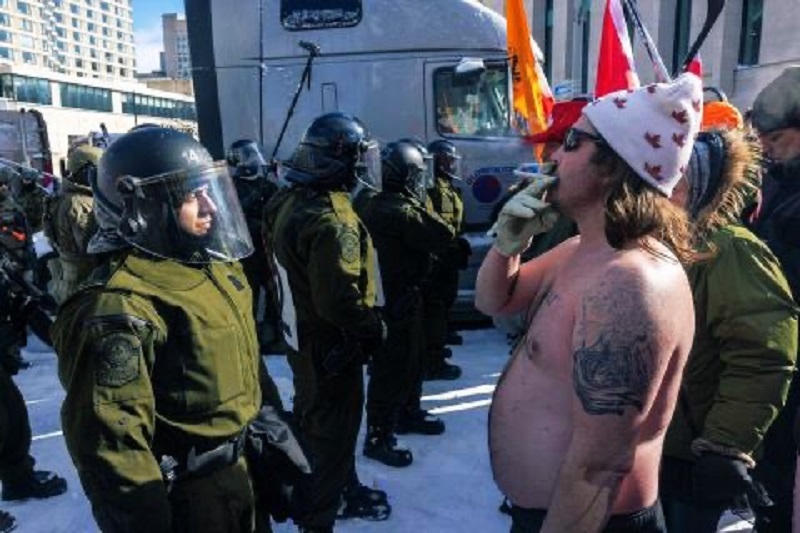
We know there are Canadian wolverines who understand this concept; we saw thousands of them in the Truckers’ vaccine strike.  Make Canada Great Again, by Making Dirty Jobs Great Again, eh?

Joe Allen On Geneva U.N. Conference: “None Of The Frontier Labs Were Represented”


Posted originally on Rumble By Bannon’s War Room on: July 21, 2025

Trudeau Redux – Canadian Prime Minister Mark Carney Huddles with U.S. Senators


Posted originally on CTH on July 21, 2025 | Sundance 

In 2018, Canadian Prime Minister Justin Trudeau relied heavily on House Speaker Nancy Pelosi for assistance when the U.S. and Mexico constructed the majority of the USMCA trade pact.  Today, Canadian Prime Minister Mark Carney takes the same approach.

[SOURCE]

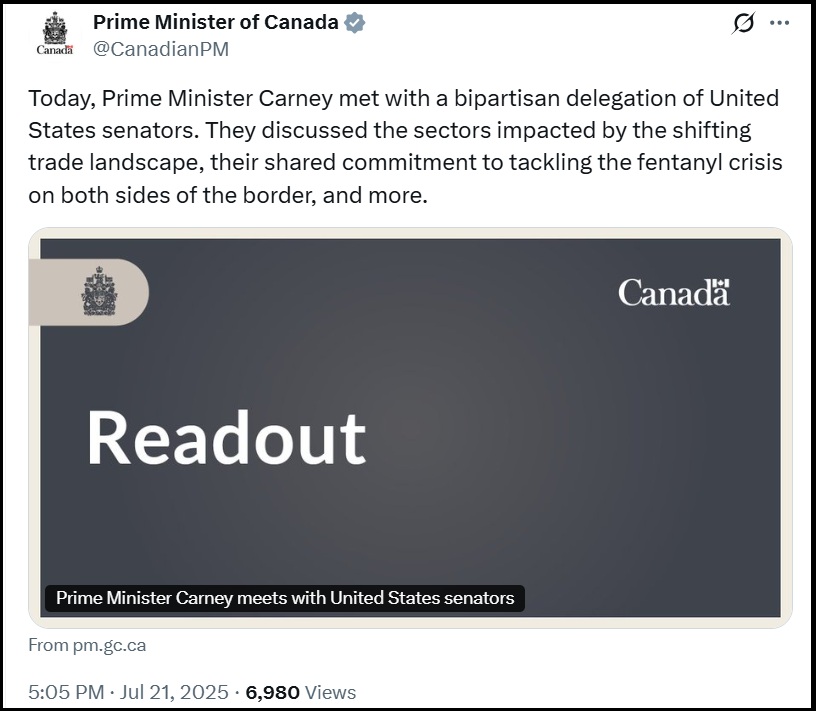
PRESS RELEASE – “Today, the Prime Minister, Mark Carney, met with a bipartisan delegation of United States senators in Ottawa. The Senator for Oregon, Ron Wyden, the Senator for Alaska, Lisa Murkowski, the Senator for New Hampshire, Maggie Hassan, and the Senator for Nevada, Catherine Cortez Masto, were present.” (more)

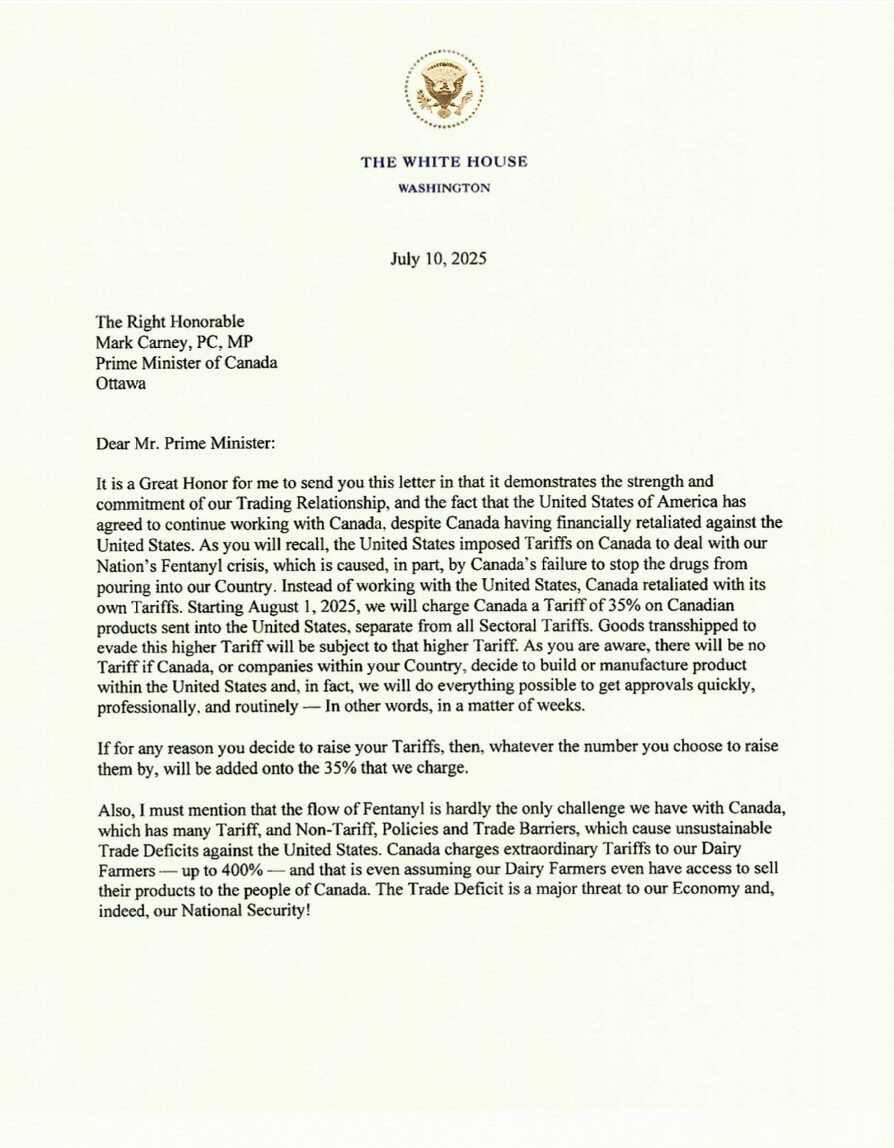
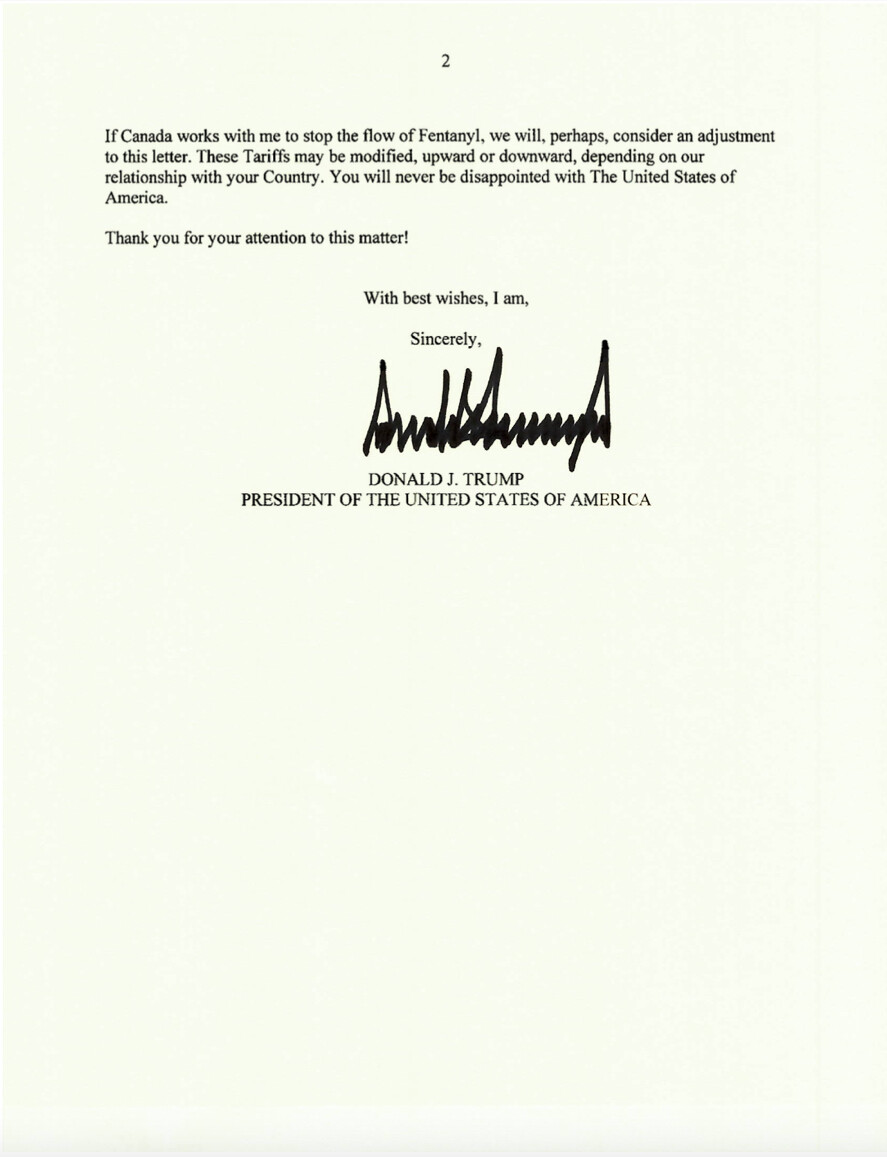
The 35% tariffs against Canada are scheduled to go into effect on August 1st.

As noted by President Trump in his remarks during Prime Minister Mark Carney’s visit to the White House, Trump plans to renegotiate the USMCA and end the trilateral agreement in favor of two bilateral trade deals.

During the Oval Office meeting President Trump said, “As you know [USMCA] terminates fairly shortly. It gets renegotiated fairly shortly.” Then the biggest statement, “This was a transitional deal, and we’ll see what happens, we’re going to start renegotiating that”… “I don’t know if it serves a purpose anymore.”  …. “And the biggest purpose it served was, we got rid of NAFTA.” 

President Trump is going to exit the trilateral USMCA in favor of two distinctly different bilateral trade agreements between the U.S and Mexico, and the U.S and Canada.  The only consideration now is the timing.  President Trump is 100% focused on the BIG ECONOMIC PICTURE; it’s not about the politics, it’s all about the economics.