Cryptocurrency Scam?


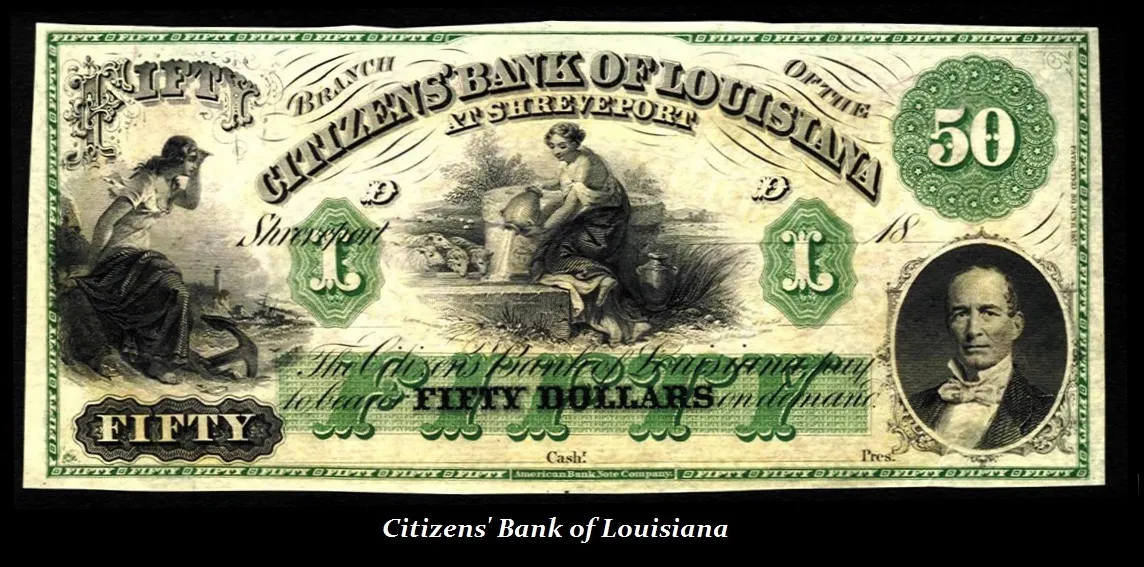
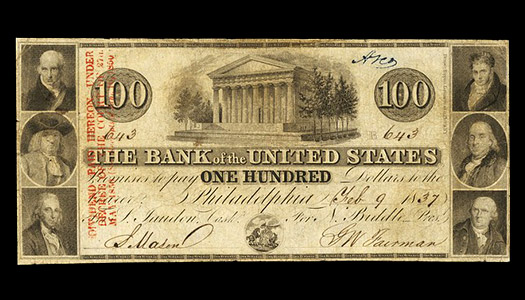
There are way too many cryptocurrencies out there and even if we accept the theory that ONE will survive and become mainstream, what happens to the rest? This is the great unanswered question. You certainly cannot replace the dollar and central banks with thousands of currencies. We tried that once when Andrew Jackson revoked the Bank of the United States charter. We ended up with EVERY bank issuing their own paper money and we ended up creating the Great Depression of the 1840s that led to violence in the streets, defaults of State debts who tried to bail out failed banks, and eventually, a civil war that was not entirely over slavery. (You can buy catalogs of Broken Bank Notes that are published per state because there are way too many to be just one book).

There certainly is no possible viable economic system where there are thousands of cryptocurrencies. For the theory to even be viable aside from technology and every person being able to use computers or smartphones, In other words, the mere existence of a product does not necessarily mean that the product is working. After all, is a there has to be just one at least per nation. A single currency for the entire world will never work because not everyone has a current account and trade surplus. Someone must have a deficit. A single currency would result in exaggerated inflation and deflation globally in different regions. This is the problem with the dollar. If the Fed raises interest rates, it impacts the world because other nations are issuing debt in dollars. This is what results in losing DOMESTIC policy objective to INTERNATIONAL policy realities.
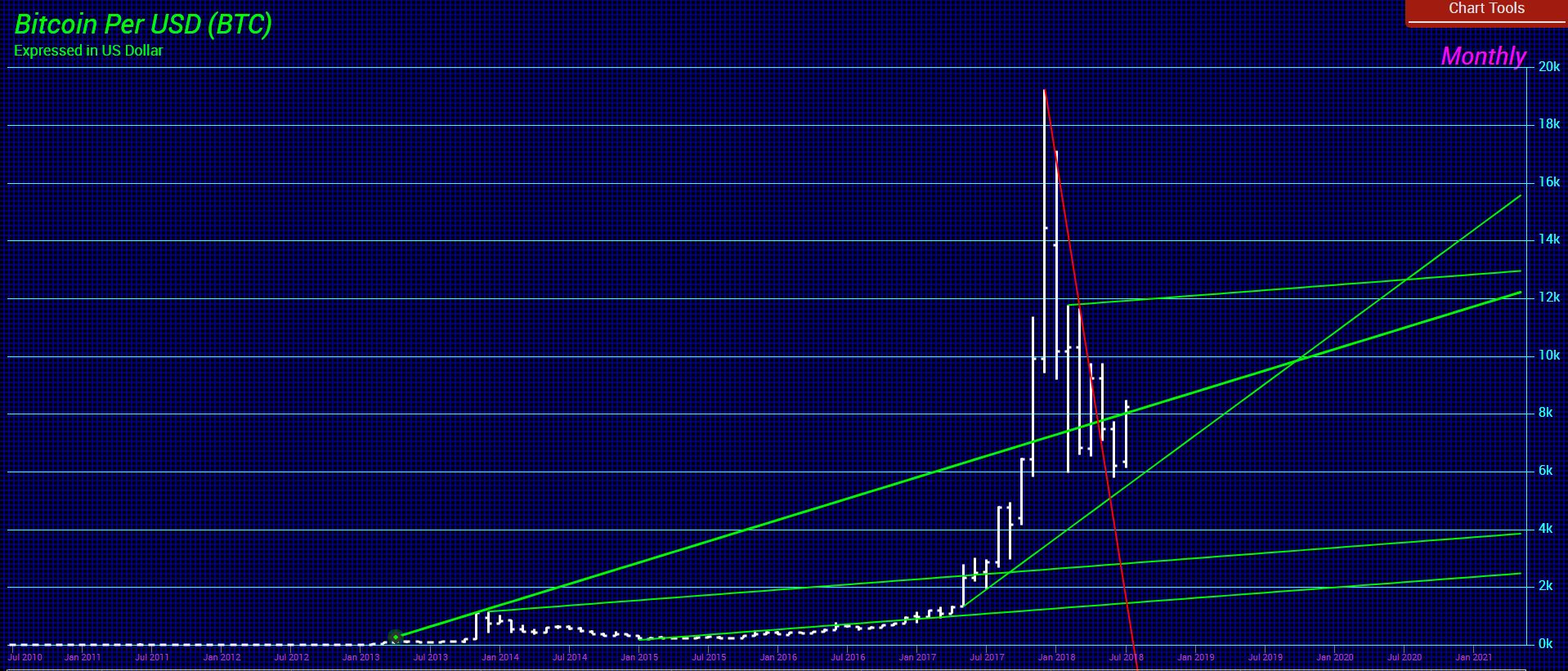
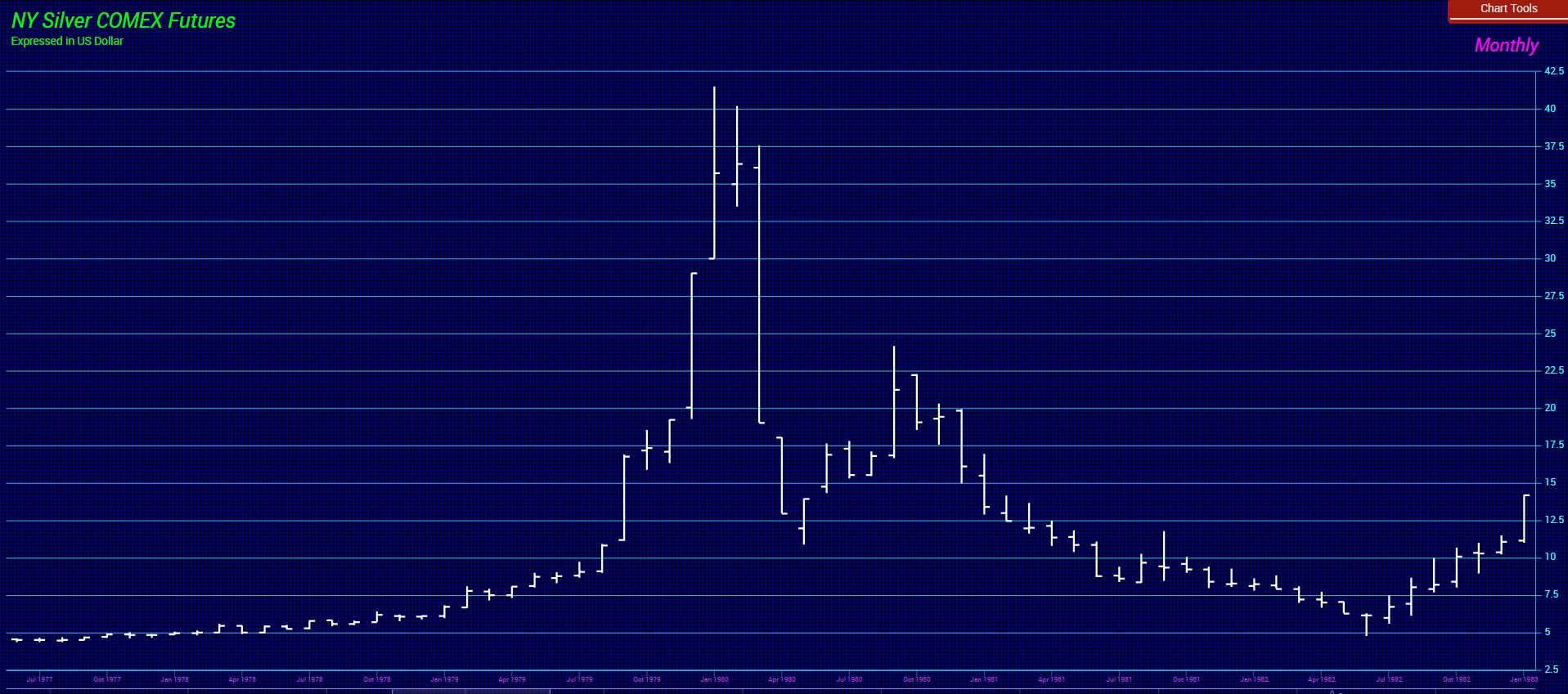
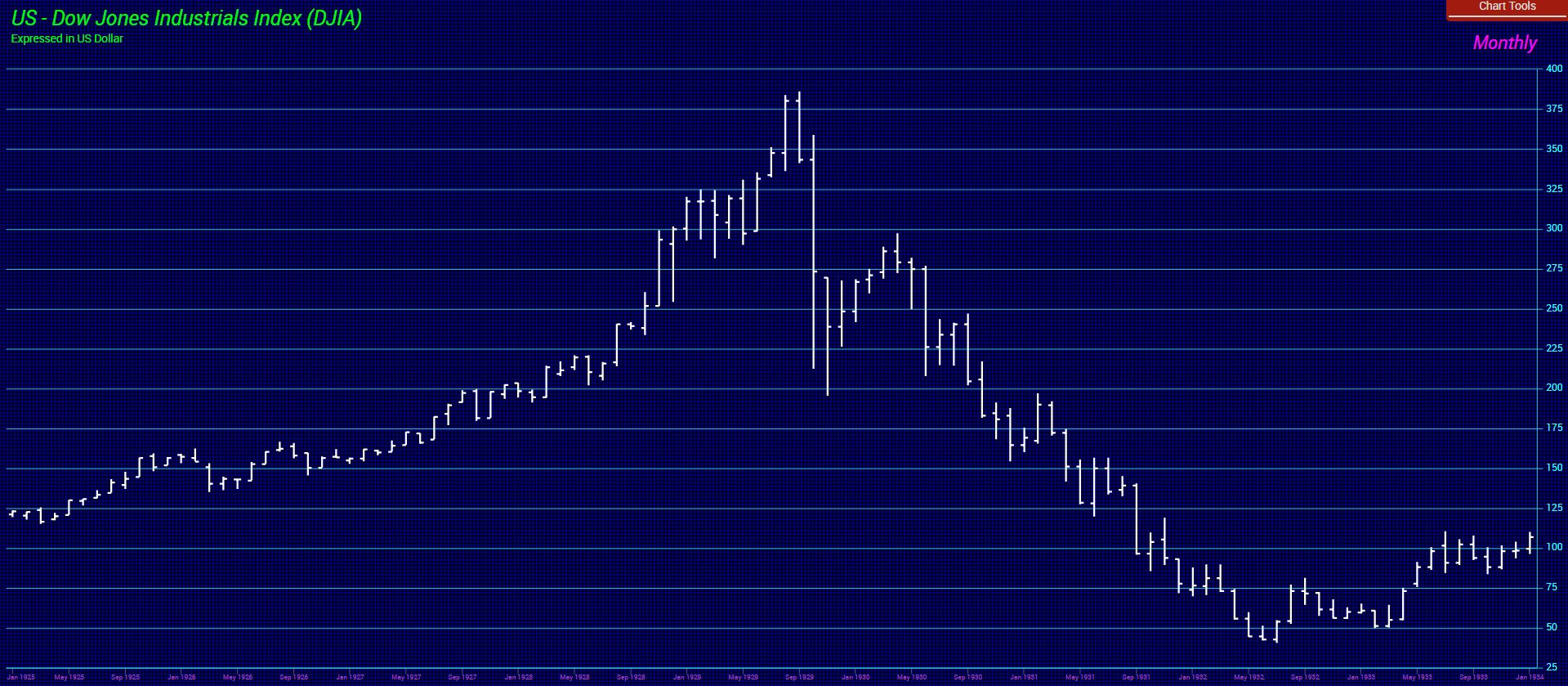
A recent study found that only 36 out of the top 100 cryptocurrencies has any working product. Most are just promises. Some people have gotten so caught up in this whole mess that they have lost a fortune. One borrowed $127,000 to invest in cryptocurrencies and lost 85%. Understanding that cryptocurrencies are no different from anything else. They are trading vehicles when you at least stick to the majors. Socrates picked the high in Bitcoin perfectly. How? Why? Very simple in fact. No matter what instrument you look at, the chart is not actually that instrument. It is a chart of HUMAN emotion relating TO THAT instrument.  The chart of silver from 1980 is similar to that of BitCoin. Back then, they were touting silver would go to $100. They swore it would do that any day for the next 19 years. We have people in Bitcoin swearing it is going to $100,000. That is such a joke for any currency to be worth that much would guarantee it cannot be used in commerce since most transactions are small.


No matter what bull market we look at, we find the same patterns. People get all emotional and rush in and buy the highs. The curious element is that they continue to believe the decline is only temporary. This seems to be standard human bias when people get caught up in the fever and lose all sight of history or reality.

This is why PROFESSIONAL traders have one PRIMARY RULE! ———–  Never marry the trade!

August Report: Chinese Manufacturing Growth Slows to a 14-month Low…


When China announced the One-Road/One-Belt initiative (now banned from discussion in Beijing); in combination with a looming trade confrontation with President Trump; CTH pointed out that sketchy pandas’ bamboo economy was very vulnerable because it was deep, but narrow – simply too dependent on manufacturing and exports.

Slow down the manufacturing sector and, well, there is no fall-back position….. Cue:

BEIJING (Reuters) – China’s manufacturing activity grew at the slowest pace in more than a year in August, with export orders shrinking for a fifth month and employers cutting more staff, a private survey showed on Monday.

The gloomy findings reinforce views that China’s economy will cool further in coming months, even as the United States ramps up tariffs on Chinese goods. That is likely to prompt more spending and other growth boosting steps from Beijing.

The Caixin/Markit Manufacturing Purchasing Managers’ Index (PMI) fell to 50.6 in August from July’s 50.8, matching economists’ forecasts.

Though the index remained above the 50-point mark that separates growth from contraction for the 15th consecutive month, it was the weakest since June 2017. While output improved modestly, most of the other readings were lackluster.

“The manufacturing sector continued to weaken amid soft demand, even though the supply side was still stable…I don’t think that stable supply can be sustained amid weak demand,” Zhengsheng Zhong, director of Macroeconomic Analysis at CEBM Group, said in a note accompanying the survey.

“In addition, the worsening employment situation is likely to have an impact on consumption growth. China’s economy is now facing relatively obvious downward pressure.” (read more)

♦The 800lb Panda in the room is that China is arguably the least balanced economy in the modern world. Hence, China has to take extraordinary measures to secure their supply chain. This economic dependency is also why China has recently spent so much on military expansion etc., they must protect their vulnerable interests.

Everything important to the Chinese Economy surrounds their critical need to secure a strong global supply chain of raw material to import, and leveraged trade agreements for export.

China’s economy is deep (manufacturing), but China’s economy is also narrow.

This economic structure, and the reality of China as a dependent economic model, also puts China at risk from the effects of global economic contraction. But more importantly it puts them at risk from President Trump’s strategic use of geopolitical economic leverage to weaken their economy.

U.S. President Donald Trump and the U.S. economic team fully understand this dynamic and fully understand the inherent needs of China.

When you are economically dependent, the ‘bully plan’ only works until you encounter a ‘stronger opponent’.

A stronger opponent is an economic opponent with a more broad-based stable economy, that’s US.

President Trump, Commerce Secretary Ross, Treasury Secretary Mnuchin and U.S. Trade Representative Lighthizer, Economic Adviser Peter Navarro and NEC Chairman Larry Kudlow represent the first broad-based national team of economic negotiators who know how to leverage the inherent Chinese economic vulnerability.

President Trump will not back down from his position; the U.S. holds all of the leverage and the issue must be addressed.  President Trump has waiting three decades for this moment.  This President and his team are entirely prepared for this.


The Olive branch and arrows denote the power of peace and war. The symbol in any figure’s right hand has more significance than one in its left hand. Also important is the direction faced by the symbols central figure. The emphasis on the eagles stare signifies the preferred disposition. An eagle holding an arrow also symbolizes the war for freedom, and its use is commonly referred to the liberation fight of righteous people from abusive influence. The eagle on the original seal created for the Office of the President showed the gaze upon the arrows.

The Eagle and the Arrow – An Aesop’s Fable

An Eagle was soaring through the air. Suddenly it heard the whizz of an Arrow, and felt the dart pierce its breast. Slowly it fluttered down to earth. Its lifeblood pouring out. Looking at the Arrow with which it had been shot, the Eagle realized that the deadly shaft had been feathered with one of its own plumes.

Moral: We often give our enemies the means for our own destruction.

Trump Tries to Deal with the Pension Crisis


Most small businesses do not offer retirement plans because the excessive regulation which drives the costs significantly higher. Trump’s new Executive Order is primarily designed to reduce those costs by streamlining the excessive regulation. The order further makes it clear: “Within 180 days of the date of this order, the Secretary of the Treasury shall consider proposing amendments to regulations or other guidance, consistent with applicable law and the policy…”

The biggest problem with retirement plans has been the pretense that they should be “conservative” and that has meant they buy government debt. As the Fed lowered rates to “stimulate” the economy, they have remained well below 8% for more than a decade which has sharply reduced the ability to plan for retirement using bonds. Unless people begin to select more private investment into equities, they stand to lose a fortune and find themselves unable to retire. The sharp decline in the birth rate has also created a dangerous situation. For centuries, you had children to ensure you would be taken care of in your old age. Socialism has destroyed the family unit and taxation with student loans has drastically reduced the earning ability of children to save no less take care of their parents. The entire historical family structure has been undermined and the pension crisis poses a huge social threat in the years ahead

President Trump Notifies House and Senate of U.S-Mexico Trade Modification…


On Friday we shared the press release from U.S. Trade Representative Robert Lightizer about his trade notification to congress. [HERE]  Here is the text of the letter from President Trump via The White House:

Dear Mr. Speaker:   (Dear Mr. President:)

On May 18, 2017, my Administration notified the Congress that I intended to initiate trade negotiations with Canada and Mexico.  Negotiations began on August 16, 2017.  Since that time, my Administration has worked hard with Mexico and Canada to reach a modern trade agreement that sets high standards for free, fair, and reciprocal trade.

I am pleased to report that in only 1 year, we have made dramatic progress toward such an agreement:

  • It will help American farmers by ensuring fairer market conditions and improved market access for United States agricultural products.
  • It will create a more level playing field for American workers — due in part to improved rules of origin for automobiles, trucks, and other products.
  • It will include the toughest and most comprehensive labor and environmental rules of any United States trade deal.  For the first time in North America, those rules will be enforceable — and they will be strictly enforced.
  • It will encourage innovation by providing new and improved protections for United States intellectual property.
  • It will contain the strongest disciplines on digital trade of any international agreement, and will provide a firm foundation for the expansion of trade in innovative products and services.
  • It will create a more level playing field for American service industries, including the critical sector of financial services.
  • It will provide the most robust protections against currency manipulation of any United States trade deal.
  • It will give United States policymakers new weapons against the harmful, market-distorting effect of state‑owned enterprises on private companies.

In short, this agreement is a great deal for the American people.  It sets a new tone for all trade agreements, proof of the high standard that my Administration will require of any country entering a new trade agreement with the United States.

I intend to enter into the agreement by the end of November 2018.  Accordingly, pursuant to section 106(a)(1)(A) of the Bipartisan Congressional Trade Priorities and Accountability Act of 2015 (**Public Law 114-26, Title I), I hereby notify the House of Representatives and the Senate that I intend to enter into a trade agreement with Mexico — and with Canada if it is willing, in a timely manner, to meet the high standards for free, fair, and reciprocal trade contained therein.

My Administration looks forward to continued collaboration with the Congress to develop legislation to approve and implement this agreement.

Sincerely,

DONALD J. TRUMP

**I embedded the pdf link to the applicable law cited in the letter.

The laws are very complex around trade.  The law cited in the letter is below in pdf form for review.  The notification section (106) cited in the letter from the President is also broken out below.

Here’s the law:  SEC. 106. IMPLEMENTATION OF TRADE AGREEMENTS. (a) IN GENERAL.— (1) NOTIFICATION AND SUBMISSION.—Any agreement entered into under section 103(b) shall enter into force with respect to the United States if (and only if)— (A) the President, at least 90 calendar days before the day on which the President enters into the trade agreement, notifies the House of Representatives and the Senate of the President’s intention to enter into the agreement, and promptly thereafter publishes notice of such intention in the Federal Register.

https://www.scribd.com/embeds/387617282/content?start_page=1&view_mode=&access_key=key-mkbSOqJfjPWlkUdLIk4Y

President Trump Notes Canadian Trade Priorities Conflict With U.S-Mexico, Here’s the Likely End Result…


U.S. Trade Representative Robert Lighthizer has submitted a regulatory 90-day notification to congress outlining the intent to modify the U.S. trade deal with Mexico according to mutually agreed terms.

However, the Canadian trade priorities; including retention of protectionist tariffs (dairy) and non-regulatory barriers (telecom/banking); in combination with subsidies (lumber/aeronautics), make Canada joining the deal almost impossible.

Canada is scheduled to meet with Lighthizer again on Wednesday, but it seems very doubtful the political needs for Justin Trudeau would allow any three-way agreement.

If you take the U.S-Mexico deal out of the U.S-Canadian discussion and just look at the fundamental baselines for the Canadian position it becomes easier to see the problem.

On the issues at the heart of the Canadian trade priorities any movement away from the current trade relationship with the U.S. is a loss.

In general terms the U.S. wants: the elimination of tariffs, the elimination of subsidies and the elimination of non-tariff barriers to trade. The Trump/Lighthizer position is to create an actual trade bloc (Canada joins),  or a bilateral agreement based on the same principles that would apply to a trade bloc.

President Trump could offer to eliminate the current Steel and Aluminum tariffs so long as Canada agrees to limits on imported Steel/Aluminum from China. However, it doesn’t look like Canada is willing to agree to terms around ‘rules of origin’ because Canada no longer has a heavy industrial base as part of their economic foundation.

Mexico, via President-elect Lopez-Obrador, wants to establish heavy industry to expand the Mexican economy and create a real manufacturing industrial base.

AMLO sees energy resource development as financial collateral toward achieving more actual heavy manufacturing investment in Mexico.  Guess what? He’s right.

Conversely, and showcasing an entirely different set of economic priorities, Canada has slowly removed its heavy industry at the behest of liberal environmental policy and shows no signs of wanting to reestablish that sector.

Without a heavy manufacturing industrial base, Canada needs to retain their import of component parts (made from heavy manufacturing) and simply assemble those parts in Canada. The U.S. and China are their main suppliers for Canadian component goods. A limited industrial base precludes Canada from agreeing to any rules of origin that could essentially limit their economy.

To form a trade relationship with the U.S., based on the same manufacturing priorities applied to the U.S-Mexico deal, Canada would have to fundamentally reverse decades of trade and internal economic/regulatory policy; -OR- Canada would have to limit their Asian purchases and use the U.S. and/or Mexico as the source of their component part origination. This is basic industrial economics.

Again, if you take the U.S-Mexico agreement away from any review of a U.S-Canada agreement, what you discover is that in a bilateral discussion of trade between the U.S. and Canada; the hungry Canadian already eats 2/3rds of the pizza (current terms).

Any move to make the pizza (trade relationship) more equitable in a bilateral deal (50/50) means Canada will have to give up some pie.  Canada doesn’t have any current internal economic policy they are willing to give up.

Canada wants to retain their lumber and aeronautics subsidies; they want to retain their protectionist dairy tariffs; they want to retain their barriers keeping their banking and telecommunications sectors protected from external competition; and they want to keep the current manufacturing and assembly processes for durable goods without the pesky industrial/environmental challenges from creating the components of those goods.

This is what Justin Trudeau and Chrystia Freeland call “protecting Canadian workers, and protecting Canadian values”.

That’s why President Trump simply looks at the challenge and says it is far easier to accept the Canadian position and make an independent move that will remove 1/4 of the pizza.  That move would be to place a 20 to 25% tariff on Canadian manufactured automobiles which will essentially mean those auto companies will relocate back into the U.S.

Beyond automobiles President Trump and Robert Lighthizer will then, inside the bilateral agreement or separately if no agreement possible, establish a duty on any imported durable good that exceeds an established percentage of North American content.  This shuts down the third-party exploitation loophole.

This is where I somewhat disagree with those who say President Trump has been setting up this auto-tariff scenario all along.  It’s not that Trump’s motive/strategy has been to remove the auto-manufacturing per se’, but rather that President Trump has long-accepted the ‘Canadian priorities’ as they exist. Trump understands the problem at its root and basic cause, and he see’s this approach as the most simple and logical solution.

Tax Canadian automobiles at 25% and one-quarter of the pie will revert back to the U.S.

Done.

Canada gets to keep its priorities intact; and Justin/Chrystia get to tell their constituents they maintained the values of the Canadian people.

See how that works?

Tampa v St. Petersburg for Migration


QUESTION: Dear Mr. Armstrong:
I have a question in regards to your recommendation from last year’s WEC. You recommend to move to Tampa, FL and I have been following your recommendation. I have been wanting to move out of Stockton, California, which a bankrupted city in the late 2008 Financial Crisis. Stockton has been a mess and it never been recovered and plus the testing site of Universal Basic Income. I believe it will never recover.

I have been in Tampa and St. Pete lately, there are lots of newly constructed high rise and building. It seems booming here in Western Florida. My question is comparing Tampa between St. Pete, which city is good to move to. I asked the local St. Pete is a bigger city, lots to do and more finance companies located there. Could you clarify and give your two-cents thought?

Will the housing price correction effect in these cities so much while we enter into 2020? Either way to me, both cities are booming and beautiful.

Thank you in advance,
JC

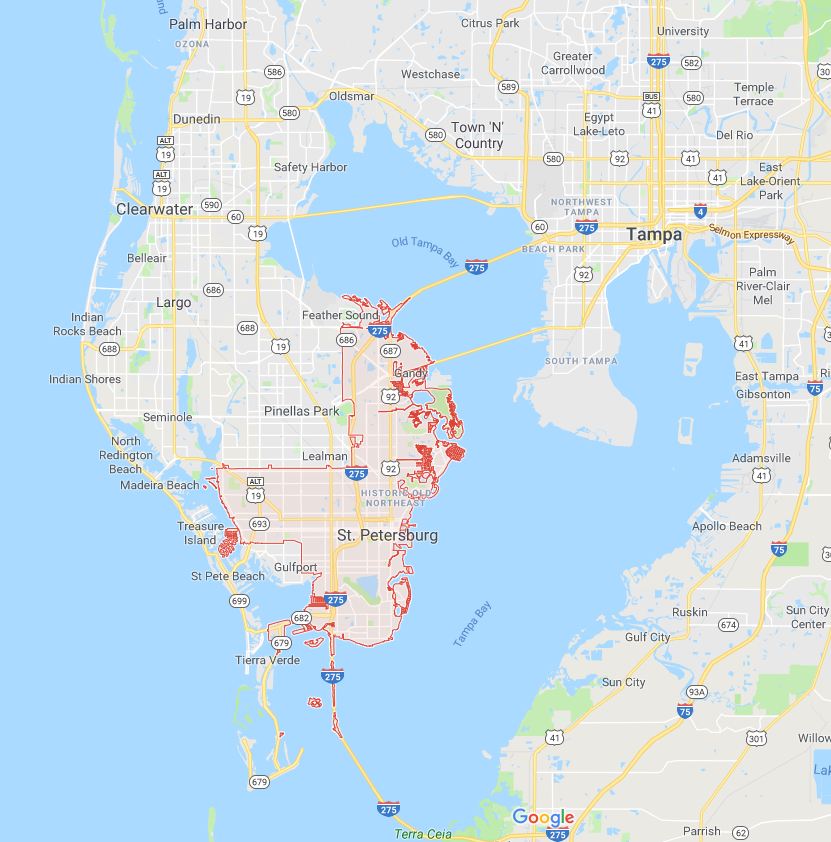
ANSWER: In my opinion, St Pete is far better than Tampa. It is a city that is more like a village with better restaurants and things to do. You can drive to Tampa to go to Starz if you like Broadway Plays, they come here from New York and rotate. It’s a much nicer venue compared to New York. St Petersburg is a more lively town and more “artsy” and if you need to run to Tampa its 30 minutes. There is a lot of new construction going on for a lot more people are just leaving the states with high taxes. California and Illinois along with New Jersey have net migration leaving to other states. The prices for this area are still half that of Miami or California. I was considering buying a second house to entice my family to migrate but I had to run off to do the Singapore conference. I told the realtor when I got back I would put in a bid. By the time I got back, the house sold.

Another unpublished tidbit is that the “bugs” in Florida people hear about are inland. You will encounter them in Tampa, but they do not seem to make it across the bay to St Pete. There are a few high-rise condo buildings under construction in St Pete. Rush hour is minimal at worst 15 minutes compared to 45+ for Tampa. It’s a younger area, not one of the real retired areas like Marco Island where you can’t go to dinner at 9 pm since everything is closed down. Additionally, it has one of the top 10 beaches in the USA if not the world. The most fantastic sand you will ever feel – far better than the coarse Atlantic or Pacific. We get the sunsets rather than the sunrise. They really make every day a new experience. I took this picture myself.

Florida housing on the West Coast will do better than the East. The New Yorkers drove prices really high to the point they are twice as high if not more on the East Coast and the South American buyers bought up Miami. Tampa is also one of the best airports. You can get direct flights to Europe. If you need a direct flight to just about anywhere, even Moscow, then you go to Orlando and that’s 1:30 away. The drive is much better than to JFK in New York or LAX not to mention Chicago.

Cyclical Synchronization & the Global Economy Make Manipulation Impossible


A metronome is an instrument to measure the time and that the musicians use for their work. One of the most curious phenomena is observed when different metronomes that have a different frequency between themselves end up synchronizing perfectly. This symbolizes what I find so fascinating in the world economy. No nation stands alone. This is why even contagions appear in the world economy. However, it also makes my point that politicians can promise whatever to get elected, but they are indeed powerless to separate a nation from a global synchronize.
Below is another fascinating experiment with wave motion and frequencies. There is just a lot more behind the curtain than people realize and despite all the conspiracy theories, it is IMPOSSIBLE to manipulate anything and alter its trend. The best someone can do is move in within the range of “noise” but it cannot adopt a counter-trend move to the synchronization. The proof of this statement is the failure of Communism as well as Keynesianism. Any attempt to return to a fixed exchange rate will always fail for the same reason. You cannot eliminate the business cycle.

President Trump Delivers Remarks During “Promote Retirement Security Event”, Charlotte North Carolina…


President Donald Trump makes remarks and signs the “Executive Order to Promote Retirement Security in America” at the Harris Conference Center in Charlotte, North Carolina. Anticipated Start time 3:00pm.

UPDATE: Video Added

WH Livestream LinkRSBN Livestream LinkFox News Livestream Link

Lighthizer Submits 90-day U.S-Mexico Trade Modification Notification to Congress…


U.S. Trade Represenative Robert Lighthizer releases a statement announcing the administration is filing a NAFTA Section 2202 trade modification “notification of intent” letter to congress:

Washington, DC – U.S. Trade Representative Robert Lighthizer today issued the following statement regarding the status of trade negotiations with Mexico and Canada:

“Today the President notified the Congress of his intent to sign a trade agreement with Mexico – and Canada, if it is willing – 90 days from now.  The agreement is the most advanced and high-standard trade agreement in the world.  Over the next few weeks, Congress and cleared advisors from civil society and the private sector will be able to examine the agreement.  They will find it has huge benefits for our workers, farmers, ranchers, and businesses.

“We have also been negotiating with Canada throughout this year-long process.  This week those meetings continued at all levels.  The talks were constructive, and we made progress.  Our officials are continuing to work toward agreement.  The USTR team will meet with Minister Freeland and her colleagues Wednesday of next week.”  (link)

Under the original 1993 terms and Chapter 22 of the Implementation Act, Lighthizer notifies congress that trade parties have modified the terms; this is the Section 2202 notification of modification. Ninety days after the date of the notification the U.S. and Mexico can sign the new terms of agreement; congressional approval is not required. [Canada can still join the U.S-Mexico agreement but they need to act fast.]

If Canada refuses to join the agreement Lighthizer will follow-up the 2202 modification notification with a Section 2205 notice dissolving the U.S. from the 1993 agreement with Canada; the dissolution is official six months from the date of notification.

During the 6 month period, before official dissolution, the U.S. and Canada can enter into new negotiations for a separate bilateral trade agreement.

If no agreement is made in the six months, prior to the dissolution date, then the terms within an older 1973 trade agreement between the U.S. and Canada take effect.  However, it is more likely a new U.S-Canada trade agreement will be made within the six month NAFTA dissolution period as Canada would not want to revert back to a trade agreement almost fifty years old.

President Trump has executed this plan brilliantly.  The U.S. and Mexico have formed a manufacturing alliance based on common sense principles that are mutually beneficial to both countries.  Incoming Mexican President Lopez-Obrador retains much of the current investment and gets a significant win for his labor policies (a promise kept).  President Trump gains increased U.S. investment and the NAFTA loophole is closed (a promise kept).

Both the U.S. and Mexico have removed trade barriers, eliminated tariffs and subsidies and established mutually beneficial terms of commerce.

However, Canada cannot -and will not- remove protectionist trade barriers (telecommunications and banking); will not eliminate protectionist tariffs (dairy); will not remove subsidies on Lumber and Aeronautics; and will not accept rules of origin in manufacturing that would remove their ability to exploit cheap Asian and Chinese parts and assemble them in Canada.

In essence Canada does not want to open their government controlled markets to competition and pesky capitalism; and they also don’t want a restart of heavy industry.

So it is likely President Trump and Robert Lighthizer will attempt a separate bilateral deal; and if not possible, Trump will place a 25% tariff on all Canadian made automobiles thereby bringing the cross-border auto manufacturing industry back to the U.S.

Oh well… we tried.  Dealing with those duplicitous Canadians gave me a heart attack.