Posted originally on CTH on July 27, 2025 | Sundance
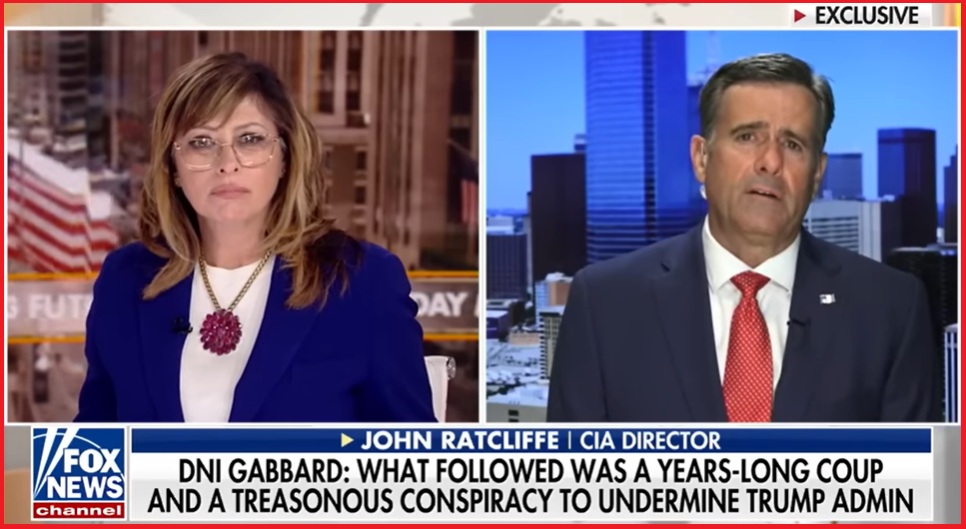
CIA Director John Ratcliffe appears on Fox News with Maria Bartiromo to discuss the recent releases from his office and from the office of DNI Tulsi Gabbard.
Within the interview Director Ratcliffe references the special counsel John Durham investigation, subsequent 306-page report, and then notes the 48-page classified appendix to the report. According to Ratcliffe he is in the process of declassifying and releasing the 48-page annex. Additionally, there are witness transcripts from Hillary Clinton, John Brennan, James Clapper and possibly Andrew McCabe that could be released.
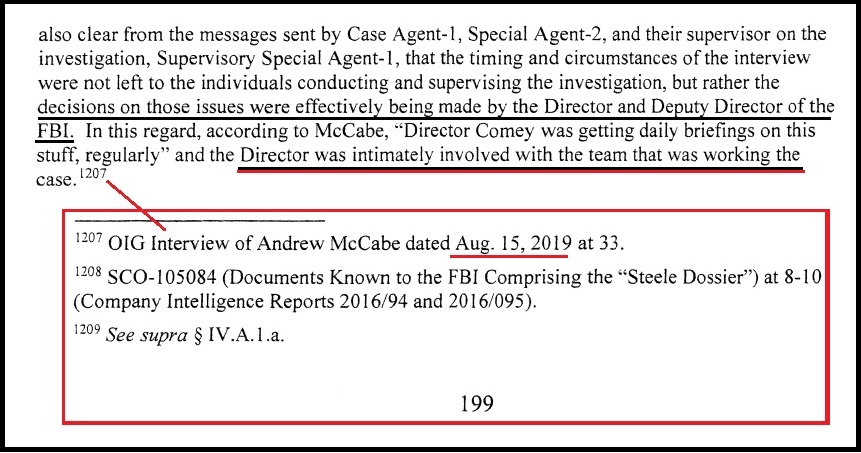
Remember, James Comey refused to be interviewed by John Durham; however, Andrew McCabe gave under oath testimony to the OIG about Comey and that transcript fingering James Comey is cited on footnote #1207 of page 199 of the Durham report. WATCH:
Special Counsel John Durham clearly showed in his 306-page report with a 48-page classified appendix, that Russia did nothing to interfere in the 2016 election. The entire Russian Interference operation was a Clinton fabrication, later enhanced by a Federal Bureau of Investigation who used the fabrication as a cover-up justification to hide their surveillance of the Trump campaign.
There were no Russian diplomats involved; there was no Russian election interference; there was no Russian hacking of the DNC; it was all a fraud created by the intelligence community (IC), FBI and Main Justice to support Hillary Clinton’s lies and then cover their own targeting tracks.
I have wanted to read that 2019 transcript of FBI Deputy Director Andrew McCabe’s testimony about James Comey for six years. All indications from John Durham were that McCabe spilled details about Comey’s involvement.
By now, people are familiar with the construct of CIA operations involving Joseph Mifsud, a Maltese professor generally identified as a western intelligence operative who was tasked by the FBI/CIA to run an operation against Trump campaign official George Papadopoulos in both Italy (Rome) and London. {Go Deep} John Durham ignored him.
In a similar fashion, the FBI tasked U.S. intelligence asset Stefan Halper to target another Trump campaign official, Carter Page. Under the auspices of being a Cambridge Professor, Stefan Halper also targeted General Michael Flynn. Additionally, using assistance from a female FBI agent, under the false name Azra Turk, Halper also targeted Papadopoulos. Again, John Durham ignored it.
The initial operations to target Flynn, Papadopoulos and Page were all based overseas. This seemingly makes the CIA exploitation of the assets and the targets legal and much easier. If Durham went into this intelligence rabbit hole, there would be a paper trail that leads back to Robert Mueller. Durham didn’t go there.
Posted originally on CTH on July 27, 2025 | Sundance
The Marshall Plan is OVER!
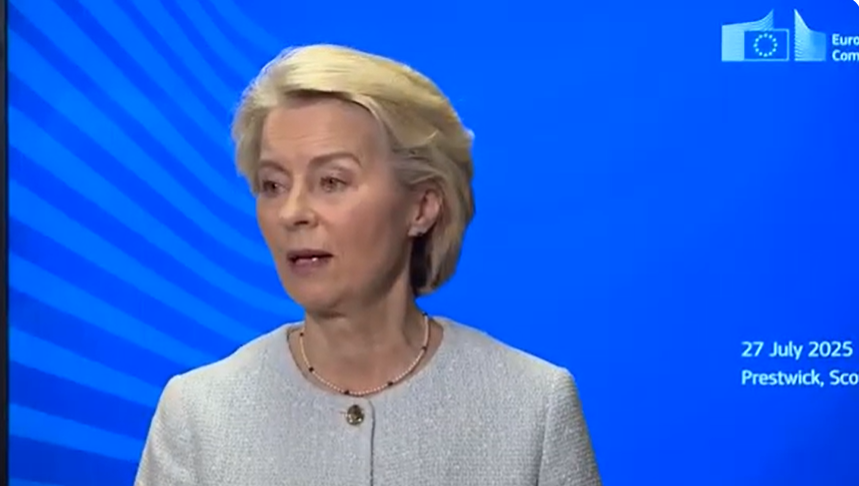
Okay, this is a very big win. EU Commission President Ursula von der Leyen outlines some more details of the U.S-EU trade agreement. The parameters fall similar to the Japanese deal, without the banking aspect.
The EU will face (and accept) a 15% tariff rate for most exports to the USA including autos, that’s huge, even with some zero-for-zero tariff sectors outlined. The primary motivating factor was to avoid the 35% tariff rate scheduled for August 1st and provide the EU corporations with certainty in their tariff rate as applied by the USA (15%). WATCH:
.
This is almost full acquiescence to President Trump. WATCH THE VIDEO
Posted originally on CTH on July 27, 2025 | Sundance
President Trump and EU Commissioner Ursula von der Leyen have apparently come to terms around the broad outlines of a U.S-EU trade agreement.
The EU will commit to purchasing $750 billion in energy products. The EU will commit to investing $600+ billion in direct U.S. industries. The EU will commit to purchasing their NATO military hardware from the USA ($500+ billion likely). The EU will open up all markets to USA products without tariffs. The EU and U.S. will both carry a 15% auto tariff for imports. WATCH:
.
I’m all about the broad outline described in the video above, but I also want to see the details. If what President Trump said about all EU markets being open is accurate, it sounds like the Marshall Plan is over
Canada will not be happy; Europe gets a deal – Canada gets a cold shoulder.
Also, with U.K, Japan, ASEAN and EU trade agreements complete, President Trump is likely to begin focusing on the USMCA (Canada and Mexico) sooner than later. Two bilateral trade agreements will likely replace the USMCA.
Posted originally on CTH on July 27, 2025 | Sundance
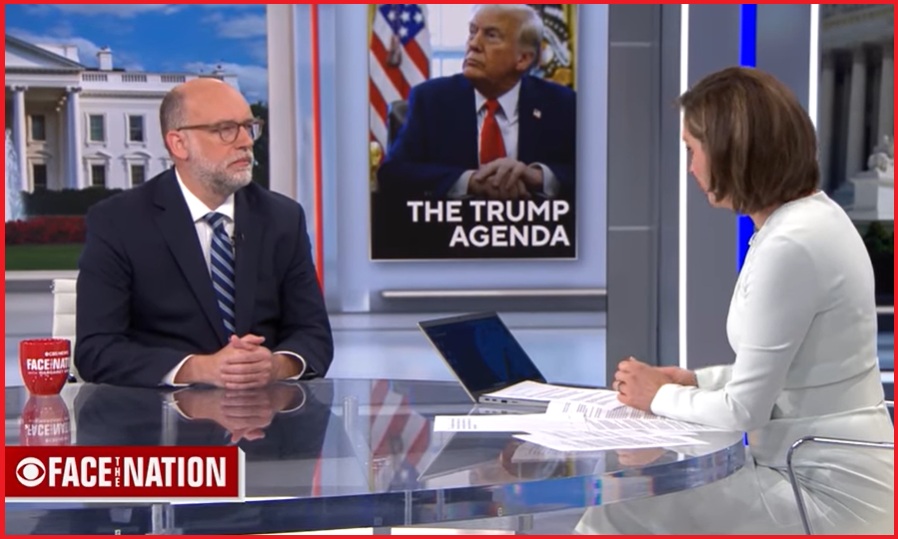
Office of Management and Budgets (OMB) Director Russ Vought appears on CNN to discuss the problems noted with the Federal Reserve (FED) as the organization viewed their ‘independent’ status as meaning beyond accountability. The FED has been operating without any oversight until President Trump and Russ Vought began a baseline review of how they spend taxpayer funds.
As noted by Director Vought, the FED can have independence and yet they must be held accountable to the American people. President Trump is that accountability piece and the FED were not familiar with scrutiny. They are now.
.
Russ Vought also appeared on Face the Nation to receive questions from the insufferable and ever-pontificating Margaret Brennan. Video and Transcript Below:
[Transcript] – MARGARET BRENNAN: We begin today with the director of the White House Office of Management and Budget, Russell Vought, welcome to ‘Face The Nation.’
DIRECTOR OF THE OFFICE OF MANAGEMENT AND BUDGET RUSSELL VOUGHT: Thanks for having me.
MARGARET BRENNAN: There’s so much to get to with you. Let’s start on what’s going on with the Federal Reserve. If you take the president at his word, he does not intend to fire the Federal Reserve Chair, Jerome Powell- though he’s still criticizing him. What is the President seeking in a successor when his term ends in May 2026?
VOUGHT: Well, I think he’s looking for a chairman that’s not continually too late to the developments in the economic marketplace. And I think what we’ve seen with Chairman Powell, he was very late in the Biden administration to raise rates, to articulate the concern with regard to the Biden administration’s spending. We all knew on the outside- even Larry Summers knew that we were going to have an issue with regard to inflation. And we saw, you know, recent, historical inflationary levels that we hadn’t seen before. And now he is too late to lower inflation rates and so that is the kind of thing that we want to see in the next chairman of the Federal Reserve. And one of the reasons why is–
MARGARET BRENNAN: –More of a focus on inflation?
VOUGHT: –want an ability to recognize the developments in the economic marketplace. In this case, we want to be able to see lower rates and to have an ability to get the economy going. And one of the things we saw with Powell is that one of the reasons he was so late was because he didn’t understand that inflation is largely a monetary phenomenon. He kept saying that inflation was transitory. He didn’t tackle the problem, and now he’s, again, too late, and you marry that with fiscal mismanagement at the Fed. It’s a huge problem that we’re trying to raise the country’s awareness level with.
MARGARET BRENNAN: But as you know, the Fed is structured in a way where he doesn’t have unilateral control. There’s a governing board. Others weigh in. You did work on Project 2025, and we went back and looked at what they said in there about the Fed. As people may know, that’s a Heritage Foundation product that got a lot of scrutiny during the campaign. the chapter on the Fed called for Congress to overhaul the Fed’s focus and powers. Is that what you’re looking to do in 2026?
VOUGHT: I don’t even know what that chapter says. All I know, in terms of the President, the President has run on an agenda. He’s been very clear about that. All that we’re doing is- in this administration is running on- is implementing his agenda.
MARGARET BRENNAN: You don’t want to overhaul the Fed?
VOUGHT: We want an economic system that works for the American people, that includes the Fed. And the President has been very clear that all he’s asking from the Fed is lower interest rates, because he thinks it’s important. When you look at across the across the globe, and you have countries lowering rates, and yet we don’t see that in this country, given all of the positive economic indicators that we’re seeing. And then we have fiscal mismanagement at the Fed with regard to this building renovation that I’m sure you will ask me about. Those are the kinds of things that we want to see from the Fed. This is not part of an existential issue with regard to the Federal Reserve.
MARGARET BRENNAN: Well, the Fed is indicating that they are trending towards a rate cut, though probably not as soon as this week. We mentioned those renovations at the top of the program, but I do want to ask about spending, or lack thereof, that the Trump administration is trying to direct. The White House said they will actually release the remaining $5 billion in education, funds that had been withheld from public schools until recently. There were 10 Republican senators very worried about this, and came out and said, your claim that the money goes to radical left wing programs was wrong. What changed your mind? What made you release this money?
VOUGHT: Well, we had been going through a programmatic review with these funds. These are programs that, as an administration, we don’t support. We’ve called for the elimination of them in the President’s budget for precisely the reasons of which they flow to often left wing organizations. Thankfully, the President came into office, put an executive order that said it can’t- these funds can’t go to these types of initiatives. I’ll just give you one example, English language acquisition was flowing to the New York school public education system to go into illegal immigration advocacy organizations. Preschool development grants doesn’t actually go to preschoolers. It goes to the curriculum for putting CRT into the school system for people as young- children as young as four years old.
MARGARET BRENNAN: Well, these senators said it goes to adult learners working to gain employment skills and after school programs.
VOUGHT: And what we–
MARGARET BRENNAN: So you deemed it is necessary?
VOUGHT: We believe that it’s important to get the money out right now, but we have taken an extended time frame to be able to make sure it doesn’t go to the types of things that we saw under the Biden administration.
MARGARET BRENNAN: Because, you know, Senator Lindsey Graham told the Washington Post, the administration is looking at considering clawbacks from the Department of Education. This, you know, rescissions process. Is that the plan? Are you seeking to claw back education funds in a rescissions package? And if so, when are you sending that up?
VOUGHT: We may be, we’re always looking at potential rescission options. This is an- this is a set of funding that we wanted to make sure it got out. We did our programmatic review. We wanted to make sure it got out before the school year, even though it’s multi-year funding. This is not funding that would expire at the end of this year. We are looking to do rescissions package. We’re always gauging the extent to which the Congress is willing to participate in that process, and we’re- be looking at a lot of different options along those lines, but certainly have nothing to announce here today. But we’re thrilled that we had the first rescissions package in decades, and we’ve got the process moving again.
MARGARET BRENNAN: So no rescissions package before September?
VOUGHT: Not here to say that. We’re looking at all of our options, we will look at it and assess where the Hill is, what are the particular funding opportunities that we have, but nothing that we’re going to announce today,
MARGARET BRENNAN: Because some of the funds that do expire in September have also been held up on the health front. Senator Katie Britt of Alabama, 13 other Republicans, came out with a letter saying that you’ve been slow in releasing funds for the National Institute of Health for research into cardiovascular disease, cancer. Are those funds going to be released?
VOUGHT: Again, we’re going through the same process with the NIH that we did with the education. I mean–
MARGARET BRENNAN: But there’s a time cost here.
VOUGHT: –$2 million for injecting dogs with cocaine that the NIH spent money on, $75,000 for Harvard to study blowing lizards off of trees with leaf blowers. That’s the kind of waste that we’ve seen at the NIH. And that’s not even getting to the extent to which the NIH was weaponized against the American people over the last several years, with regard to funding gain of function research that caused the pandemic. We have a- we have an agency that needs dramatic overhaul. Thankfully, we have a great new head of it, but we’re going to have to go line by line to make sure the NIH is funded properly.
MARGARET BRENNAN: Are you going to release the cancer funding research? And the cardiovascular disease research funding?
VOUGHT: We’re going to continue- we’re going to continue to go to the same process that we have gone through with regard to the Department of Education, that every one of these agencies–
MARGARET BRENNAN: Before September, that money will be released?
VOUGHT: –and we will release that funding when we are done with that review.
MARGARET BRENNAN: Because, as you know, there’s concern that you’re withholding the money, hoping it just won’t be spent. I mean, if you look at the White House budget, it does call for a 26% cut to HHS, $18 billion cut to NIH. Is this just a backdoor way to make those cuts happen?
VOUGHT: Well, I don’t want to speak to any specific program with regard to what we might do with regard to rescissions throughout the end of this fiscal year, but we certainly recognize that we have the ability and the executive tools to fund less than what Congress appropriated, and to use the tools that the Impoundment Control Act, a bill we’re not- a law that we’re not entirely thrilled with, gives us to- to send up rescissions towards the end of the fiscal year.
MARGARET BRENNAN: So just for our viewers, the Impoundment Control Act is the legal mechanism for the President to use to delay or avoid spending funds appropriated by Congress. You seem to want to have an argument, or Democrats think you want to have an argument, over the power of the purse and who holds it. Do you want that to go to the Supreme Court?
VOUGHT: Well, look, for 200 years, presidents have the ability to spend less than the congressional appropriations. No one would ever dispute, and our founders didn’t dispute that Congress has the ability to set the appropriation ceiling. But 200 years of presidents, up until the 1970s had the ability to spend less, if they could find efficiencies, or if they could find waste that an agency was doing.
MARGARET BRENNAN: — That sounds like a yes?–
VOUGHT:– We lost that ability in the 1970s. The president ran on restoring that funding authority to the presidency, and it’s vital. If you look at when we started to lose control fiscally, it was right around the time of the 1970s.
MARGARET BRENNAN: Well, many senators, Republican senators, are very uncomfortable with the tactics that you are using. Senator Murkowski, Senator Collins, that chair of the appropriations committee that is really running this- this funding process. And Senator Collins said you’re pushing the limits of what the executive can do without the consent of the- of the legislative branch. You need to work with her to get your budget through. And in fact, you need to also be able to get Democrats on board to get to that 60-vote threshold to pass any kind of government funding to avoid a government shutdown at the end of September.
VOUGHT: I have a great relationship with Senator Collins. I appreciate the work she does. She is the chairman of the Appropriations Committee, so obviously we’re going to have differences of opinion as to the extent to which these tools should be used. I mean, she had concerns with the rescissions package. The rescissions package was a vote that Congress had to make these cuts permanent–
MARGARET BRENNAN: — Under- on a party line vote, she says, you want to go do these clawbacks. You do it through regular order, and you can put- you can put rescissions into an appropriations bill–
VOUGHT: –But that was in fact, under regular order. That’s the challenge, is the appropriators want to use all the rescissions, they want to put them in their bills, and then they want to spend higher on other programs. We act- we’re $37 trillion in debt, Margaret. We actually need to reduce the deficit and have a dollar of cut go to $1 a deficit reduction. That’s not what the appropriators want, and it’s not news that the Trump administration is going to bring a paradigm shift to this town in terms of the business of spending.
MARGARET BRENNAN: You would acknowledge that you just added to the debt and to the deficit with this–
VOUGHT: — No, I would not acknowledge that. We reduced–
MARGARET BRENNAN: — The spending and tax bill that just passed?
VOUGHT: Correct.
MARGARET BRENNAN: Where you lifted the debt ceiling.
VOUGHT: The debt ceiling is an extension of the cap on what’s needed to pay your previous bills. In terms of the bill itself, it is $400 billion in deficit reduction, $1.5 trillion in mandatory savings reforms, the biggest we’ve seen in history.
MARGARET BRENNAN: Well, I want to make sure I get to the rest of this before I let you go here, because we’re running out of time. You said, a few weeks ago, that the appropriations process needs to be less bipartisan. You only have 53 Republicans. You do need Democrats to get on board, here. Is saying something like that intended to undermine negotiations? Do you actually want a government shutdown?
VOUGHT: No, of course not. We want to extend the funding at the end of this fiscal year. We understand, from a math perspective, we’re going to need Democrats to do that–
MARGARET BRENNAN: Well, what does less bipartisan mean?
VOUGHT: Well, Margaret, the whole week, the Democrats were making the argument that if you pass the rescission bill, that you were undermining the bipartisan appropriations process. So, if Brian Schatz and every other appropriator is making that argument for a week–
MARGARET BRENNAN: –The chair of the Senate Appropriations Committee is who said that–
VOUGHT: –you have to be able to respond and say, if you’re going to call a rescissions package that you told us during the month of January and February that we should use to do less spending, if you’re going to say that is undermining the bipartisan appropriations process, then maybe we should have a conversation about that. That is all it was meant to convey.
MARGARET BRENNAN: But, the alternative to this process is another continuing resolution, these stop-gap measures. Are you open to that, because that would lock in Biden-era funding? What is your alternative here? If you want a less bipartisan process, how do you solve for this? Because it sounds like you’re laying the predicate for a shutdown.
VOUGHT: We are not laying the predicate for a shutdown. We are laying the predicate for the fact that the only thing that has worked in this town- the bipartisan appropriations process is broken. It leads to omnibus bills. We want to prevent an omnibus bill, and all options are on the table to be able to do that.
MARGARET BRENNAN: All options are on the table?
VOUGHT: We need an appropriations process that functions. We’re going to go through the process. We’re going to work with them, and we’re going to do everything we possibly can to use that process to have cheaper results for the American taxpayer.
MARGARET BRENNAN: I’m told we’re out of time. Russell Vought, thank you for your time today.
Posted originally on CTH on July 27, 2025 | Sundance
While President Trump visits his golf courses in Scotland, he will also be conducting business on behalf of the USA by meeting with trade partners from both Great Britain and Europe.
This morning USA time, President Trump is scheduled to meet with EU Commission President Ursula von der Leyen, at approximately 11:30am ET. Livestream Links Below:
.
The EU is in a very precarious position. Currently scheduled to receive 35% reciprocal tariffs on August 1st, President Trump is in no hurry to negotiate any multilateral trade agreement. The 35% tariff essentially ends the Marshall Plan, and that is the key issue that has currently made the EU go bananas.
Without the one-way benefit of tariffs against the USA, the EU cannot continue to afford its very lucrative social subsidies. Get rid of the Marshall Plan and everything related to the economy in Europe changes. President Trump knows this as does the entire EU collective.
President Trump is not in a hurry to negotiate any trade agreement, and the baseline 10% tariff rate on all nations is a done deal. The EU, specifically under the influence of a very tenuous German economy, are now trying to negotiate avoidance of the 35% reciprocal tariffs.
Posted originally on CTH on July 27, 2025 | Sundance
Secretary of State and National Security Advisor Marco Rubio discusses foreign policy engagements with President Trump’s doctrine at the forefront. As noted by Secretary Rubio, President Trump is the ultimate closer who genuinely enjoys the art of negotiating deals on behalf of the United States.
Secretary Rubio walks through some of the global confliction points where President Trump has tasked his team to engage with foreign governments. Rubio also talks about the restructuring within the U.S. Dept of State.
.
The Secretary of State and National Security Advisor roles are perfect for the skillset of Marco Rubio. If there are some big positive surprises within the second term, the executive excellence of Marco Rubio is certainly at the top of the list.
Posted originally on CTH on July 26, 2025 | Sundance
Former House Permanent Select Committee on Intelligence Chairman Devin Nunes appears on OAN with former Congressman Matt Gaetz to discuss the information released by Director of National Intelligence Tulsi Gabbard.
As noted by Nunes, why did it take this long for the information to surface? That question showcases how corrupt the DC system -the Intelligence Community- is in its effort to protect itself from accountability.
Nunes also points to the raid on Mar-a-Lago as a possible entry point for investigative accountability. WATCH:
Let me refresh on something that could potentially be a revelation down the road.
In 2022 a Florida judge dismissed a lawsuit brought by President Trump against Hillary Clinton. [65-page Ruling Here] The media enjoyed ridiculing Trump using the words of the judge who dismissed the case. As noted by the Washington Times, “Judge Donald M. Middlebrooks, a Clinton appointee, said Mr. Trump’s filing was too lengthy, detailing events that “are implausible because they lack any specific allegations which might provide factual support for the conclusions reached.”
When I originally read the 108-page Donald Trump lawsuit filed in March 2022, it took me a few moments, and then I realized this was not a lawsuit; this was a legal transfer mechanism created by lawyers to establish a proprietary information silo.
Here’s a totally different take on the issues surrounding the Trump -v- Clinton lawsuit, which -from the outset- I always believed was going to be dismissed because suing all of those characters under the auspices of a civil RICO case was never the objective.
In the aftermath of the filing, the silo created by the lawsuit is grounded upon attorney-client privilege, a legal countermeasure to a predictable DOJ-NSD lawfare maneuver, which unfolded in the FBI Mar-a-Lago raid and the subsequent Jack Smith targeting operation.
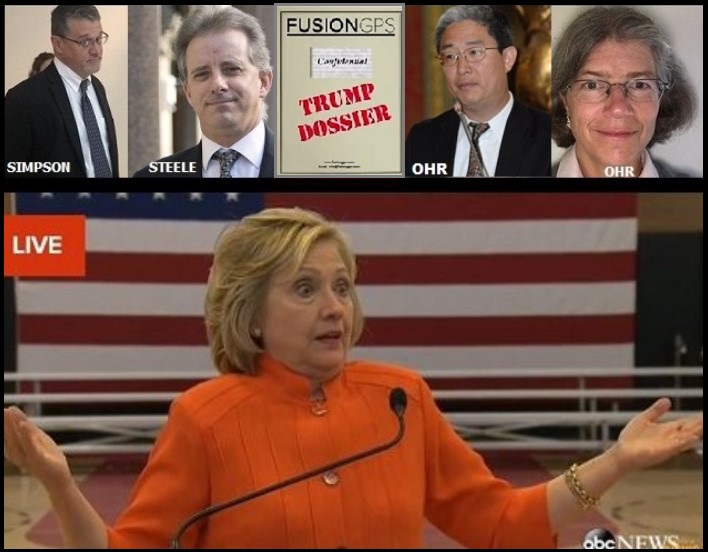
In March 2022 President Trump filed a civil lawsuit against: Hillary Clinton, Hillary for America Campaign Committee, DNC, DNC Services Corp, Perkins Coie, Michael Sussmann, Marc Elias, Debbie Wasserman Schultz, Charles Dolan, Jake Sullivan, John Podesta, Robby Mook, Phillipe Reines as well as Fusion GPS, Glenn Simpson, Peter Fritsch, Nellie Ohr, Bruce Ohr, Orbis Business Intelligence, Christopher Steele, Igor Danchenko, Neustar Inc., Rodney Joffe, James Comey Peter Strzok, Lisa Page, Kevin Clinesmith and Andrew McCabe. [108-Page Lawsuit Here]
When I was about one-third of the way through reading the lawsuit, I initially stopped and said to myself this is going to take a lot of documentary evidence to back up the claims in the assertions. Dozens of attachments would be needed and hundreds of citations to the dozens of attachments would be mandatory. Except, they were not there.
After reading further, while completely understanding the background material that was being described in the filing, I realized this wasn’t a lawsuit per se’. The 108-pages I was holding in my hands was more akin to legal transfer mechanism from President Trump to lawyers who needed it.
The lawsuit filing was contingent upon a series of documents that would be needed to support the claims within it.
Whoever wrote the lawsuit had obviously reviewed the evidence to support the filing. However, the attachments and citations were missing.
That was weird.
That’s when I realized the purpose of the lawsuit. In hindsight, things became clear when the FBI later raided the home of Donald Trump, and suddenly the motive to confiscate documents, perhaps the missing lawsuit attachments and citations, surfaced.
With the manipulative, and I said intentional, “ongoing investigation” angle created by the John Durham probe essentially blocking public release of declassified documents showing the efforts of all the lawsuit participants (Trump-Russia Collusion Hoax), in 2021 President Trump needed a legal way to secure and more importantly share evidence.
Think of it like the people around Trump wanting to show lawyers the evidence in the documents. However, because of the construct of the lawfare being deployed against Trump, any lawyer would need a *reason* to review the evidence. The Trump -v- Clinton et al lawsuit becomes that ‘reason.’
The “documents” (classified or not) were likely reviewed by lawyers in preparation for the lawsuit. This is their legal justification for reviewing the documents. In essence, the lawsuit was a transfer mechanism permitting the Trump legal team to review the evidence on behalf of their client, former President Donald Trump.
Once the formation of the lawsuit was established, the retainer and acceptance of the lawyers to represent their client cemented, the legal counsel, discussion and information within legal duties/obligations of those who represent the plaintiff (Trump) becomes an information silo. In addition to previous executive privilege established by President Trump himself; outside government there is now another silo to defend against the motives of the Lawfare crew (DOJ), the attorney-client privilege.
The lawsuit itself then becomes a transfer mechanism permitting sharing of the documents and providing legal cover for the reviewers (lawyers). The details within the 108-page filing constitute the claims of the plaintiff in the lawsuit, which were established by the evidentiary documents later seized by the DOJ and FBI raid on Mar-a-Lago.
“Judge Donald M. Middlebrooks, a Clinton appointee, said Mr. Trump’s filing was too lengthy, detailing events that “are implausible because they lack any specific allegations which might provide factual support for the conclusions reached.”
There were no attachments and/or citations to the documentary evidence in the 108-page filing, because there was a legal risk to citing evidence with a status in dispute by the corrupt people in Main Justice and the FBI.
Secondarily, there was an obstruction risk to the President in 2022, if his legal team was to publish citations that were part of an ongoing investigation (John Durham). However, this doesn’t negate the value of constructing the information silo, an attorney-client privilege.
The lawsuit was dismissed in March 2022.
In August 2022 the FBI raided Mar-a-Lago.
If the documents chased by the FBI were part of the lawsuit established by President Trump and his legal team via Trump -v- Clinton, then the material seized by the FBI would be -in part- attorney client work product. Lawfully obtained, constitutionally declassified and legally protected material.
According to later reports all of the documents were returned to President Trump at the conclusion of the Jack Smith investigation.
I think Devin Nunes is right to draw attention to the motive of the FBI to raid Mar-a-Lago.
Given the nature of the FBI working collaboratively with the Clinton crew in 2016/2017, I genuinely suspect it was the underpinning evidence to support the claims of the Trump -vs- Clinton lawsuit the FBI were looking for.
Posted originally on CTH on July 26, 2025 | Sundance
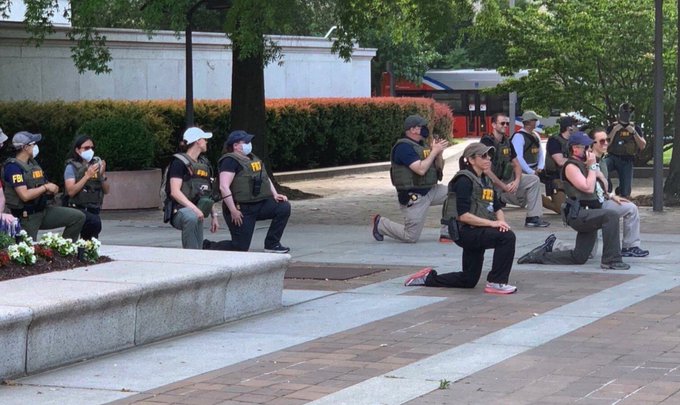
When originally nominated and appointed, the primary reason I shared a lack of confidence in both Kash Patel and Dan Bongino was my acceptance they really did not grasp the severity of the institutional corruption that exists within the agency they were tasked to lead.
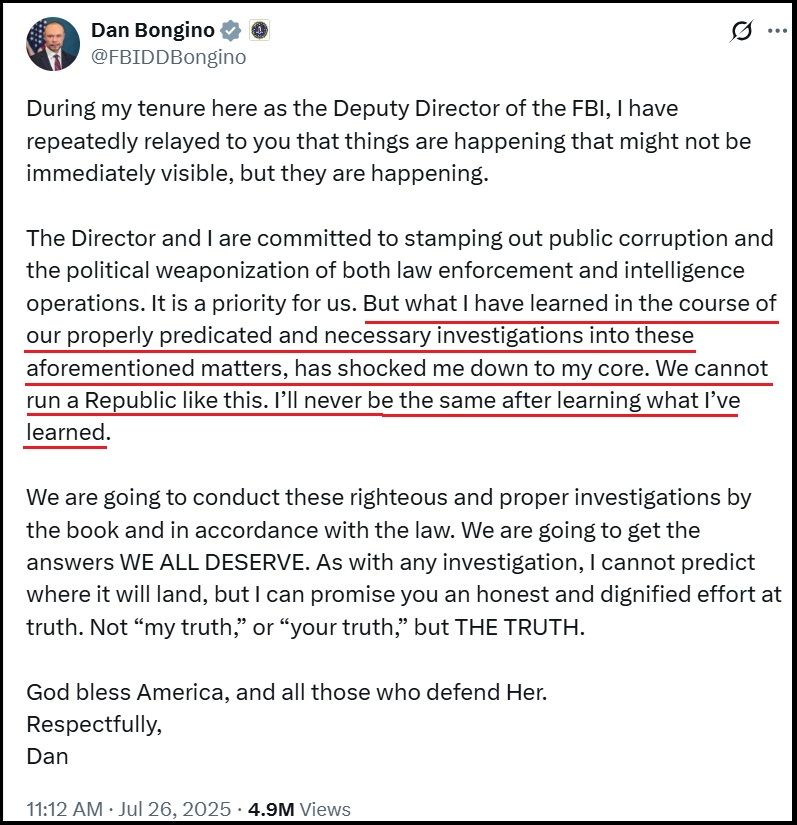
Today in a Tweet Message, Deputy Dan Bongino seems to realize things are not what he thought they were.
It’s really not that difficult an assessment to make because even though I knew the FBI was fraught with corruption, it was not until I was intercepted in Washington DC and told specific details about the agency operation that I realized this was more than just a DC or field office issue.
As it was outlined to me and evidenced clearly in the six years since that original series of conversations, the FBI has a very specific recruitment profile they follow that ensures the current legacy within it. The psychological tests, entry reviews and ongoing HR assessments continually excise any individual that does not meet a specific and corrupt profile.
DEA agents, CBP agents, former IC operatives, sketchy state police officers and other federal law enforcement agents who have engaged in bribes, kick-back schemes and outright theft are generally prioritized in the recruitment process. The INSD officials who hold sway over the internal dynamics/investigations within the FBI are the ones who guarantee the system perpetuates.
It is far worse than most would understand or believe. Factually, I had a difficult time grasping it until I was guided in what to look for. The main responsibility of the FBI as an organization is to protect the DC system from review and accountability.
The FBI is nationally in charge of National Security “clearances” and that is the primary tool used to control the associates within the organization. Put that level of power into the hands of people who are tasked with protecting the system within DC and what comes over time is exactly what exists today. There is no way to break down this level of fraud, or what Senator Chuck Grassley correctly stated was “institutional corruption.”
From the outside, in the view of ordinary Americans, the FBI is an agency who protects the country from threats. However, this is an incorrect way to look at the institutional objective. The FBI only protects threats to DC, not to the nation.
What the FSB is to Moscow, the FBI is to Washington DC. [GO DEEP]
After accepting this dynamic all of the FBI “mistakes” start to make sense.
The FBI doesn’t miss threats from terrorism; the FBI is not looking for threats from terrorism. The FBI is only radar sweeping for threats to Washington DC, and/or the participants within Washington DC that alert the FBI to their concerns.
Remember, 40 FBI agents worked for Robert Mueller on a non-existent premise of Trump-Russia collusion. Every participant in that process knew the Mueller probe was purely to protect DC and there was no evidence to support the Trump-Russia claims. Those investigators went along with it for two years. And don’t forget “Operation Arctic Frost,” the documented FBI operation to target candidate Donald Trump in 2022.
This mission objective is why the FBI targeting mechanism seems to focus on political groups and individuals who are whistleblowers or truth tellers against the DC operation.
If you have information against the interests of Washington DC, the FBI will target you because protecting DC is their primary mission. That reality is what drives the outcomes we witness on an ongoing basis.
The FBI also operates an agency to make money by opening investigations against Wall Street companies on behalf of aligned short sellers. There is an entire shadow-agency within the FBI dedicated to investigating companies entirely to drive down the stock value because the publicly traded companies must announce the investigation regardless of merit therein. The FBI operatives make money via kick-backs from the vulture capitalists (short sellers) who give them the targeting tips. This is a lucrative operation worth multi-millions each time.
Crooked DEA agents blackmail drug dealers and take bribe money from cartels. Crooked FBI agents do the same with white collar criminals and Wall Street vultures.
ANTIFA? How can a group within America openly threaten police, use violence against police, throw Molotov cocktails, bricks and explosive fireworks at police. Use batons, shields, bats and physical violence against police and federal law enforcement; destroy vehicles, set cars on fire, destroy property, trash and block the streets and create chaos…. Completely without being stopped? It doesn’t matter where it is happening, that’s irrelevant. Think plainly and simply. How does any individual or group get to do this without being arrested? The FBI supports the group, that’s how.
It is the absence of any action, by the FBI toward Antifa, that tells us the FBI is enabling that violent extremist behavior to continue. Once you accept that transparent point of truth, then you realize the FBI definition of domestic violent extremism is something else entirely.
The FBI is not a law enforcement or investigative division of the U.S. Department of Justice. The FBI is a political weapon of a larger institution that is now focused almost entirely toward supporting a radical communist agenda to destroy civil society in the United States.
The FBI set up the operation in Michigan to give the illusion that domestic threats were attempting to kidnap Governor Gretchen Whitmer, everything about the events were an FBI construct. The same thing with the January 6th events in Washington DC and the pipe bombs. These are domestic FBI operations. Think about the precarious nature of what this type of activity indicates.
♦ As we discovered in January of 2023, the FBI was fully aware of the terrorist who was planning to shoot the synagogue in Colleyville, Texas, and yet they did nothing.
The FBI knowledge of the shooter, Malik Faisal Akram, who was known as Faisal Akram, was confirmed by The Daily Mail. Akram ranted, prior to his travel to the U.S, that he wished he had died in the 9/11 terror attacks. He was a regular visitor to Pakistan, and reportedly a member of the Tablighi Jamaat group set up to ‘purify’ Islam. To say the U.S. intelligence system knew Faisal Akram would be an understatement.
The FBI was also fully aware of the Boston Marathon bombers, the Tsarnaev brothers, before they executed their plot. The FBI took no action. The Russian police twice warned the FBI that the Tsarnaev brothers were going to carry out a domestic terrorist attack on the USA, the FBI did nothing.
The FBI knew in advance of the Pulse Nightclub shooter (Omar Mateen) and were tipped off by the local sheriff. The FBI knew in advance of the San Bernardino Terrorists (Tashfeen Malik). The FBI knew in advance of the Boston Marathon Bombers (the Tsarnaev brothers) tipped off by Russians. The FBI knew in advance of the Parkland High School shooter (Nikolas Cruz). The FBI knew in advance of the Fort Hood shooter (Nidal Hasan), and the FBI knew in advance of Colorado grocery store shooter Ahmad al-Aliwi Alissa. The FBI took no action.
The case of the first recorded ISIS attack on U.S. soil was in Garland, Texas in 2015.
The FBI not only knew the shooters (Elton Simpson and Nadir Soofi) in advance, BUT the FBI ALSO took the shooters to the venue and were standing only a few yards away when Simpson and Soofi opened fire. Yes, you read that correctly – the FBI took the terrorists to the event and then watched it unfold. “An FBI trainer suggested in an interview with “60 Minutes” that, had the attack been bigger, the agency’s numerous ties to the shooter would have led to a congressional investigation.”
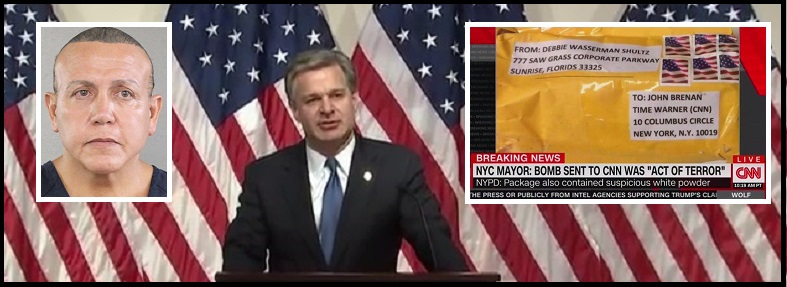
Remember, shortly before the 2018 mid-term election, when Ceasar Syoc – a man living in his van – was caught sending “energetic material that can become combustible when subjected to heat or friction”, or what FBI Director Christopher Wray called “not hoax devices”?
Remember how sketchy everything about that was, including the child-like perpetrator telling a judge later that he was trying to walk back his guilty plea, because he was tricked into signing a confession for a crime he did not create.
Or more recently, the goofball plot to kidnap Gretchen Whitmer that involved 18 suspects, twelve of them actually working for the FBI as the plot was hatched? And we cannot forget the January 6th. DC protest turned insurrection effort, which is clearly looking like an FBI inspired and coordinated effort; and unlike Syoc, despite the numerous CCTV cameras and resources in the area, they cannot find who placed the pipe-bombs?
Have we forgotten the Atlanta “Olympic Park Bombing”, and the FBI intentionally setting up transparently innocent, Richard Jewel?
What about the FBI failing to investigate the assassination of U.S. Ambassador Christopher Stevens in Benghazi. Did we forget when Robert Mueller’s FBI waited 19 days after the Benghazi attack before showing up at the compound?…. Journalists from the USA were walking around the compound after 48 hours, but it took the FBI another two weeks before the first investigator arrived…. All evidence long destroyed.
Then, there’s the entirety of the FBI conduct in “Spygate”, the demonstrably evident FBI operation to conduct political surveillance against Donald Trump using their investigative authorities; and the downstream consequences of a massive institutional effort to cover up one of the biggest justice department scandals in the history of our nation. The original effort against Donald Trump used massive resources from the DOJ and FBI. Heck, the coverup operation using the Mueller/Weissmann special counsel used more than 40 investigative FBI agents alone.
And of course, the FBI still had 13 extra agents available to rush to a NASCAR racetrack to investigate a garage door pull-down rope that might have been perceived as a noose; but the serial rape of hundreds of teenage girls, eh, not-so-much effort – even when they are standing in front of the FBI begging for help.
[At this point, I am increasingly convinced by evidence there are elements within the FBI that are enablers involved in sex trafficking, human smuggling, abduction, counterfeiting and money laundering as part of their operational mission.]
The FBI didn’t make a mistake or drop the proverbial ball in the Olympic gymnast case, they intentionally and specifically maintained the sexual exploitation of teenage girls by doing absolutely nothing with the complaints they received. This is not misconduct, this is purposeful.
Then, as if to apply salt to the open wound of severe FBI politicization, what did the FBI do with the Hunter Biden laptop?
More recently, the FBI executed a search warrant on the home and office of Project Veritas and the founder James O’Keefe. While the raid was taking place, a New York Times reporter called O’Keefe to ask him about his thoughts on getting raided. The same New York Times journalist, a few days later, then begins writing about the confidential attorney-client privileged information illegally retrieved then leaked by the FBI during their raid.
♦My point is this…
What the Federal Security Service (FSB) is to the internal security of the Russian state, so too is the FBI in performing the same function for the U.S. federal government.
The FBI is a U.S. version of the Russian “State Police”; and the FBI is deployed -almost exclusively- to attack domestic enemies of those who control government, while they protect the interests of the U.S. Fourth Branch of Government. That is the clear and accurate domestic prism to contextualize their perceived mission: “domestic violent extremists pose the greatest threat” to their objective.
Put another way, “We The People”, who fight against government abuse and usurpation, are the FBI’s actual and literal enemy…..
….. Yes, Deputy Director Dan Bongino seems to understand that now!
Posted originally on CTH on July 25, 2025 | Sundance
President Trump arrives at Prestwick Airport this evening before heading to his Turnberry golf course in South Ayrshire. President Trump is then expected to head to his Menie golf course in Aberdeenshire before opening up a new course dedicated to his Scottish mother, Mary, who grew up on the Isle of Lewis. He will depart on Tuesday.
Arriving at Prestwick Airport, President Trump took questions from the media. WATCH:
Posted originally on CTH on July 25, 2025 | Sundance
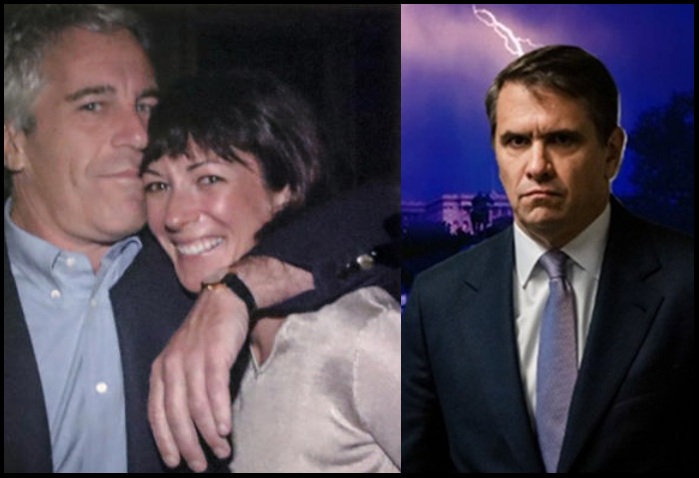
The New York Post is sharing statements from Ghislaine Maxwell’s attorney following a second day of DOJ interviews with his client.
However, I would be very cautious with anything said by Ms. Maxwell or her attorney David Oscar Markus. Both are prone to sensationalism as a legal strategy.
(NYP) – Notorious sex criminal Ghislaine Maxwell answered questions from Justice Department officials about “100 different people” linked to late pedophile Jeffrey Epstein, an attorney for the disgraced socialite claimed Friday following two days of questioning led by Deputy Attorney General Todd Blanche.
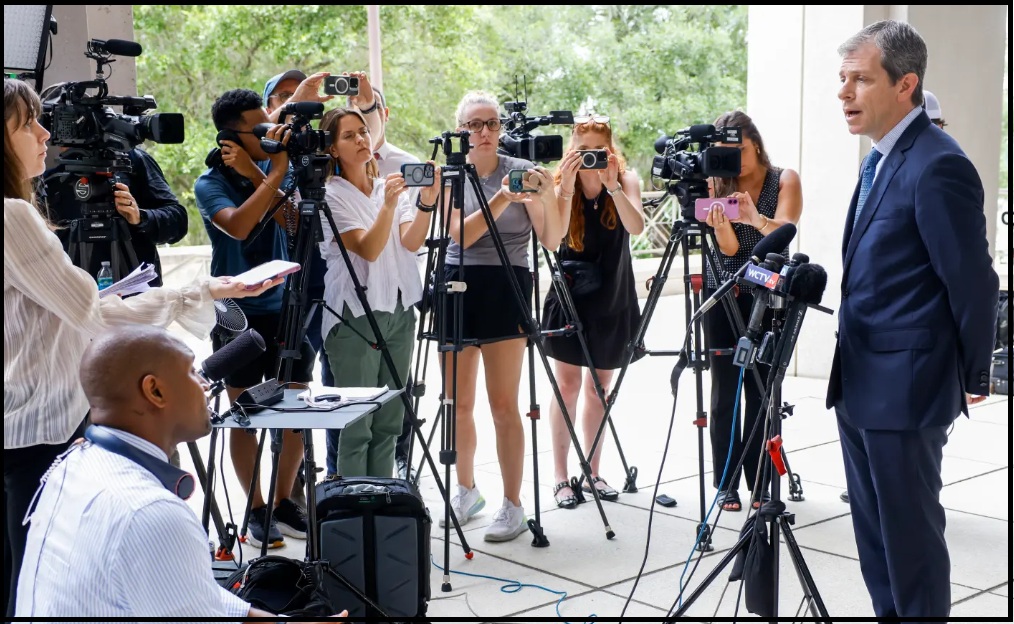
David Oscar Markus told reporters that his client, currently serving a 20-year sentence after being convicted of federal sex trafficking and conspiracy charges in December 2021, was “asked about every possible thing you could imagine – everything.”
“This was the first opportunity she’s ever been given to answer questions about what happened,” Markus added. “The truth will come out about what happened with Mr. Epstein and she’s the person who’s answering those questions.”
Blanche had “every single question” answered during the sitdown, Maxwell’s attorney also said, with the British-born convict declining to plead the Fifth Amendment. (read more)
Remember, Ms Maxwell was factually convicted for her role in sex trafficking of minors specifically for the benefit of her employer, Jeffrey Epstein. Her current incarceration applies to her criminal conduct on behalf of her boss, Mr. Epstein.
I have created this site to help people have fun in the kitchen. I write about enjoying life both in and out of my kitchen. Life is short! Make the most of it and enjoy!
This is a library of News Events not reported by the Main Stream Media documenting & connecting the dots on How the Obama Marxist Liberal agenda is destroying America






 Centinel2012