Africa’s First Test Run for a CBDC has Failed


Armstrong Economics Blog/Great Reset Re-Posted May 22, 2023 by Martin Armstrong

The transition to CBDC in Nigeria did not go as planned. The elites always seek out African nations to use as their test subjects. Nigeria attempted to slowly roll out the program dubbed eNaria built on the Hyperleger Fabric blockchain. The Central Bank of Nigeria (CBN) is solely responsible for running the nodes of this digital currency. Beginning stress tests stated this currency could execute 2,000 transactions per section.  In October 2021, the government began offering incentives to citizens who chose to CBN.

A year later, the country was still hesitant to make the switch so the central bank began implementing forceful measures. In October 2022, the CBN decided to cancel and resign the currency in a “move aimed at restoring the control of the Central Bank of Nigeria (CBN) over currency in circulation.” They stated that the original paper notes would only be legal tender until January 31, 2023, leaving the people with no alternative but to convert their cash. Nigerians were no stranger to the concept of currency cancellation as it is something the government has routinely done. The CBN openly announced that the end goal was to target a 100% cashless society replaced with eNaria. Fewer than 0.5% of Nigerians adopted the eNaria and protests erupted across the nation.
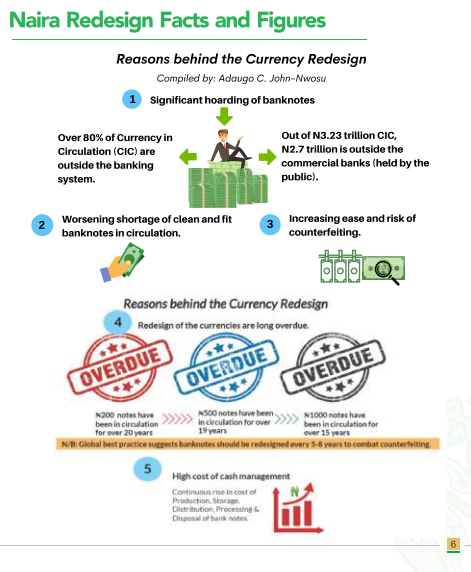
By December 2, 2022, the Central Bank of Nigeria issued a letter to all banking institutes implementing a strict ban on physical cash. The central bank set a cash withdrawal limit of ₦100,000 ($225) per week for individuals and ₦500,000 ($1,123) for businesses. Citizens wishing to take out larger sums were subject to a processing fee between 5% and 10%. ATMs were limited to ₦20,000 ($45) per day, and only ₦200 ($0.45) notes or lower denominations were available in the machines.

Bloomberg reported that 90% of the country previously used cash for transactions. They did not want to convert to CBDC but were provided with no alternative. Demonetizing the currency reduced available cash from 3.2 trillion narias to 1 trillion narias. This led to the central bank creating over 10 billion eNarias. The people are continually protesting these measures as their society which was largely dependent on cash interactions has been destabilized.

This is how it all begins. They are using Nigeria and other countries as test subjects before rolling out these programs in the West. It is hard for Americans to fathom currency cancelation, as it has never occurred here. Yet, the Federal Reserve has made it clear that they are looking into this option. Per usual, they market it as a “convenience” for the people. In truth, it is a way to ensure money stays on the grid under the thumb of government. They will not allow one cent to go untaxed, and as the program expands, they can remove individuals and organizations from participating in society entirely.
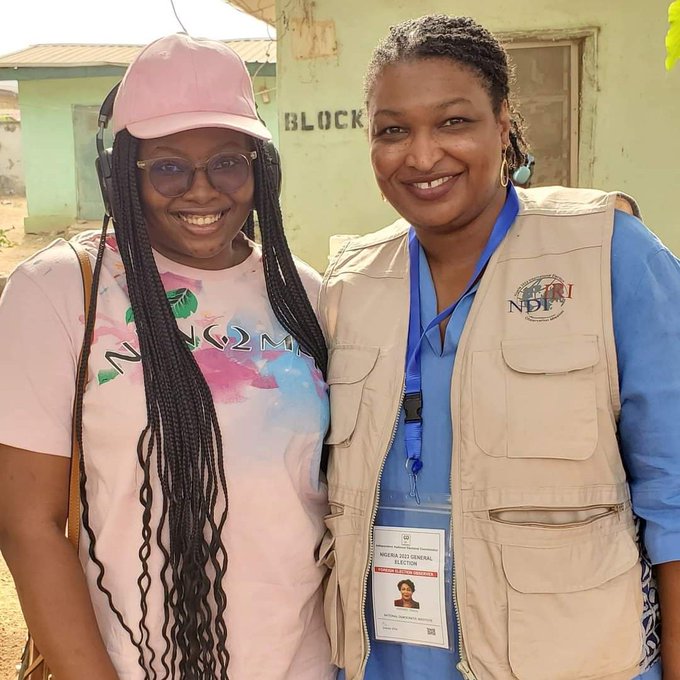
Stacy Abrams in Nigeria to Assist U.S. “Election Efforts” in Oil Rich African Country Amid Election Turmoil


Posted originally on the CTH on February 28, 2023 | Sundance

Everything about the progressive worldview of control is connected; the trick is to identify the priority that forms the motive of the connection.  In the example of U.S. involvement in assisting the control efforts of Nigerian progressives, the priority is energy and the climate change agenda.

Georgia’s twice-failed leftist gubernatorial candidate, Stacy Abrams, joins the globalist cause in seeking to “assist election efforts” in Africa’s oil rich nation of Nigeria.

If you have followed the geopolitical bouncing ball, you will likely have context for the priorities of western political leadership as it pertains to controlling African democracies.

[A cliff notes summary HERE]

The larger picture is the World Economic Forum and the Western Leadership alignment to control energy development in the African continent.  In addition to vast mineral deposits, there are oil and natural gas interests.

You might remember last year when the G7 were debating geopolitical policy. Some in the EU and western alliance said let the brown people die, climate is more important. Others were saying, if they allow mass starvation just to retain the WEF climate ideology, they may lose influence in the world.

The debate was raging, as noted by Reuters: “the European Union is divided on how to help poorer nations fight a growing food crisis and address shortages of fertilizers caused by the war in Ukraine, with some fearing a plan to invest in plants in Africa would clash with EU green goals.”  As the argument unfolded, “the EU Commission explicitly opposed” any effort to enhance African fertilizer development, “warning that supporting fertilizer production in developing nations would be inconsistent with the EU energy and environment policies.” {link}

ABUJA (Reuters) -Nigeria’s ruling party candidate Bola Tinubu has an unassailable lead in a disputed presidential election held over the weekend, a Reuters tally of provisional results from all 36 states and the federal capital Abuja showed on Tuesday.

Tinubu of the governing All Progressives Congress (APC) of outgoing president Muhammadu Buhari got about 35% of the vote, or 8.2 million votes, followed by Atiku Abubakar of the main opposition People’s Democratic Party (PDP), who took a 30% share, or 6.9 million votes.

Peter Obi of the Labour Party [the Nigerian Trump], an outsider popular with the youth and educated voters, got 26% of the vote, or about 6.1 million votes.

Nigerian electoral law says a candidate can win just by getting more votes than their rivals, provided they get 25% of the vote in at least two-thirds of the 36 states and Abuja, which Tinubu also managed to do.

Tinubu’s potential victory extends the APC’s grip on power in Africa’s top oil producer and most populous nation, though he inherits a litany of problems from Buhari.

Nigeria is struggling with Islamist insurgencies in the northeast, armed attacks, killings and kidnappings, conflict between livestock herders and farmers, cash, fuel and power shortages and perennial corruption that opponents say Buhari’s party has failed to stamp out, despite promises to do so.

Opposition parties rejected the results as the product of a flawed process, which suffered multiple technical difficulties owing to the introduction of new technology by the Independent National Electoral Commission (INEC) and on Tuesday called on its chairman Mahmood Yakubu to resign.

Tinubu asked voters to elect him on his track record during his two terms as Lagos state governor at the turn of the century, during which he managed to reduce violent crime, improve the city’s traffic jams and clean up rubbish.

The 70-year-old has, however, sometimes appeared frail in public, slurring his speech and answering questions with platitudes, and skipping several campaign events, leaving some to doubt how effective he would be.

Obi’s campaign attracted young people and urban, more educated voters fed up with corrupt politics of the past, the two parties that have represented it since the end of military rule in 1999 and old men who have tended to dominate them.

OPPOSITION CRIES FOUL

Both the PDP and the Labour Party as well as the smaller opposition ADC rejected the results.

“The results being declared at the National Collation centre have been heavily doctored and manipulated and do not reflect the wishes of Nigerians expressed at the polls,” they said in a joint statement. (read more)

Ultimately, from the position of the western alliance, it’s all about control. Domestically, or extended into U. S foreign policy, the outlook is exactly the same, “CONTROL.”  Controlling elections, ultimately controlling who is installed such that globalist policy is maintained, the western alliance and WEF priority.

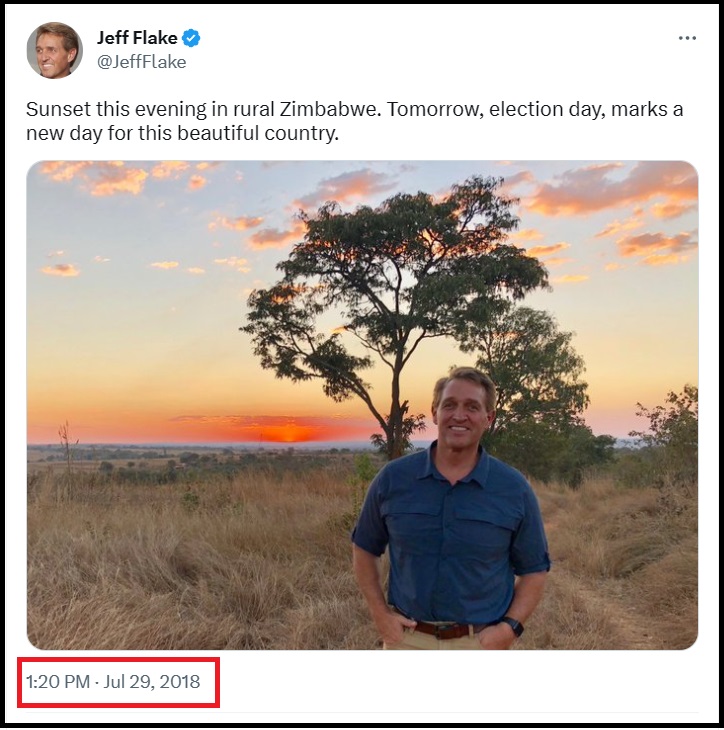
Stacy Abrams in Nigeria or Jeff Flake in Zimbabwe, the intentions are exactly the same.  Globalists must be installed, and economic nationalists must not hold power.