Arnie Mazer Writer at TrialSite News where it was originally posted on Jul. 26, 2022, 6:30 p.m.
Opinion Article
The White House hosted a “Summit on the Future of the Covid-19 Vaccine” on Tuesday featuring a combination of administration officials, scientists, and executives from the pharmaceutical industry. The summit was chaired by Dr. Ashish Jah, the White House Covid-19 Response Coordinator. Attendees included Dr. Anthony Fauci, the director of the National Institute of Allergy and Infectious Diseases (NIAID), as well as Dr. Francis Collins, the former head of the National Institutes of Health (NIH). Also in attendance were the representatives of pharmaceutical companies, including Moderna and Pfizer. There is no question the advent of vaccines blunted the complete force of the Covid-19 pandemic as Fauci pointed out in his address to the group. He said that “vaccines have saved over 2 million lives and prevented 17 million hospitalizations” even though the World Health Organization pointed out, initially, the vaccines were not distributed equitably among poor nations while the pharmaceutical companies were reaping profits. But the emphasis of the Summit was on how vaccines will be developed and distributed.
Big Pharma at the Summit
In his opening remarks, Dr. Jah extolled vaccines, saying they are “truly a miracle of human ingenuity and 70% of Americans are now vaccinated.” But Jah also said vaccines “need to be better.” Fauci talked about science and manufacturing working together to make sure vaccines are distributed equally and the private sector and science are working together to advance vaccine technology. Additionally, it was pointed out the Biden Administration is committed to the development of new vaccines. Fauci then presented slides of the projects the NIH was funding and developing with vaccine manufacturers.
Included in this was a “Mosaic Approach,” a new form of vaccine that takes on multiple parts of the virus and could help protect against future Covid variants. Participating in the summit were Paul Burton of Moderna and Angela Hwang of Pfizer. Fauci’s presentation of the future of vaccines included the idea that vaccines need to be updated because the Covid virus is continually mutating.
He emphasized the partnership between academia and the private sector. As effective as Fauci’s speech was, it also seemed as if he was giving free advertising to the drug companies with the idea of maximizing the benefits of the partnership of science and technology. The transformative power of the new generation of vaccines continued to be pointed out and regional manufacturing of vaccines was repeatedly pointed to as a way to get more shots in arms. This point came from both Ashish Jah and Angela Hwang. Regional manufacturing and licensing is a way for pharmaceutical companies to increase profit. Moderna’s Paul Burton said manufacturing is a key part of the future, and the company had recently made deals to build new plants in Australia, the United Kingdom, Canada, and Kenya. In the future, vaccines will be administered through nasal sprays and patches. Angela Hwang pointed out that “probably two and a half billion people have received the Pfizer vaccine. That’s an incredible wealth of real-world evidence that we’re sitting on… I think that we have a great opportunity to also help us to understand, how can we design new therapies.” Hwang added Pfizer is “happy to be on this journey.”
mRNA Vaccines Originated with the Department of Defense
The summit gave a history of the mRNA vaccine and said the potion originated through a part of the Department of Defense known as the Defense Advanced Research Projects Agency (DARPA). The development of the vaccine came as a result of research to help American troops if they’d been exposed to biological warfare on the battlefield. Through that program and others, DARPA had been doing the groundwork for the United States to produce a rapid cure for a pathogen like Covid-19 for years. The pharmaceutical companies capitalized on developed technology and took it further.
Transparency Emphasized
Summit panels continually talked about the fact not enough of the population has been vaccinated, and Dr. Francis Collins claimed the pandemic exposed the vulnerability of the American health care system. Collins said there was a need to build public trust even though, initially, the vaccines were not “distributed with equity.” This included the fact that the World Health Organization’s (WHO) Covid-19 Vaccines Global Access (COVAX) has to do a better job of vaccine distribution through what was termed an “allocation framework”. In closing, Dr. Ashish Jah emphasized, again, the importance of public and private partnerships. The summit was, overall, informative and a great day for the pharmaceutical companies.
The impact of such governmental backing of just a few companies most certainly reinforces the market brand. The presenters didn’t do much reflection as to what they could have done better during the pandemic. Rather, industry and government collaboration on more advanced vaccines suggests the government will increasingly be involved in helping fund the few winners of the vaccine and drug development business.
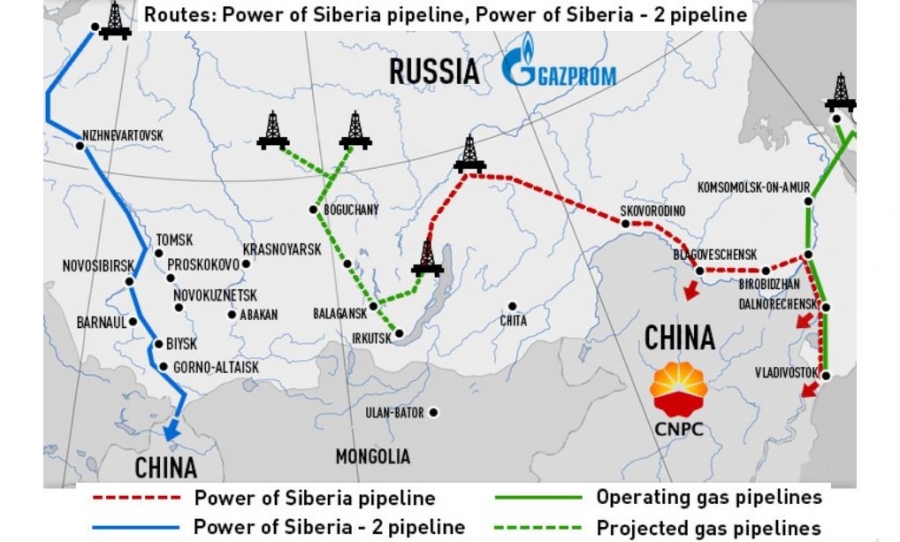
Sanctions strengthened Putin and caused “unfriendly nations” to form a closer alliance against the West. As the West suffers from an energy crisis with no solution in sight, Russia is benefitting from this in more ways than one. You may have heard of the China–Russia East-Route Natural Gas pipeline or the Yakutia–Khabarovsk–Vladivostok pipeline. Construction was approved in 2007, and in 2012, Putin ordered Gazprom to begin construction and renamed the project “Power of Siberia.” China and Russia signed a 30-year deal for $400 billion in 2014, and by December 2019, the pipeline was functional.
The mainstream media focuses on the failure of the Nord Stream 2 Pipeline at the hands of German politicians but forgets that Russia has alternative options for exporting fuel. Deliveries through the Power of Siberia have only reached $3.81 billion since December 2019, but China and Russia have plans to ramp up distribution. China received 16.5 billion cubic meters of gas from the pipeline in 2021. The deal has become so lucrative that Beijing and Moscow created a second pipeline – the Power of Siberia 2. This could double exports from Russia to China with a pipeline that would pass through Mongolia as well.
In the first six months of 2022, Gazprom exported 7.5 billion cubic meters of gas to China, marking a 63.4% uptick in volume. Prior to the invasion of Ukraine in early February, China and Russia agreed to ramp up distribution by 10 billion cubic meters. Reuters believes this could increase sales by $37.5 billion in the next 25 years, but this could increase given the high demand and low availability.
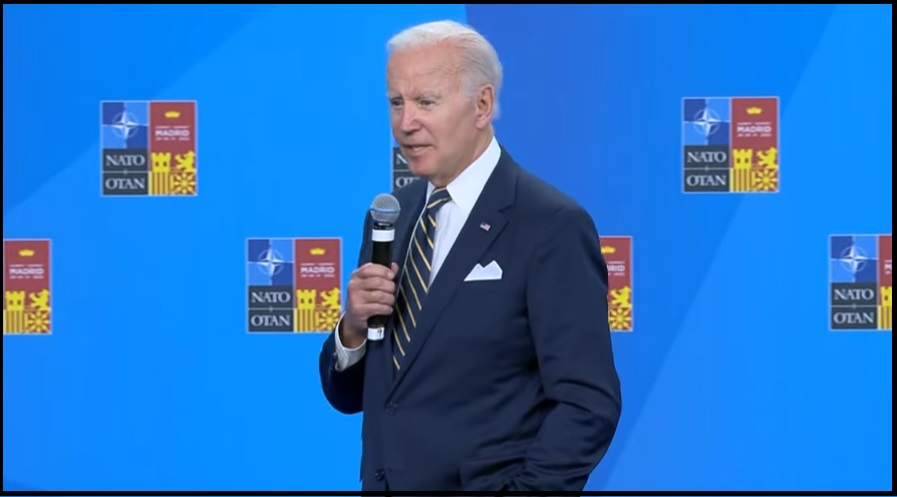
The West, namely Europe, needed Russian energy; Russia did not need Europe. President Biden admitted long ago that sanctions do not work, but in this instance, they completely backfired and have left the West with no leverage over Russian energy.
Posted originally on the conservative tree house on July 25, 2022 | Sundance
As oft repeated, in order for severe ideologues to retain their insufferably bad policy they must pretend not to know things. However, in the case of food shortages, the pretending about the origin of the problem has severe consequences.
Vladimir Putin’s military action against eastern Ukraine had nothing to do with the severe food shortages and inflation in Sri Lanka {link}. Nor does Putin have any influence over the Dutch government trying to stop food production {link}. Additionally, Putin has no control over Justin Trudeau’s decision to limit harvest yields by blocking the use of nitrogen-based fertilizer {link}. More importantly, it was not Vladimir Putin who forced all the western politicians to sign up for a new ‘climate friendly’ energy program that is destroying the ability of western farms to generate higher yield crops.
You do not need to be a farmer to understand that nitrogen/phosphorus-based industrial fertilizer has been the reason why farm yields have generated massive amounts of food on a global basis. The United States, Canada, the U.K. and places like the Netherlands have massively increased their ability to generate food for export, in large part due to the success of improved fertilizer and crop saving modern pesticides. Take those farming advancements away under the guise of climate change and you get a global Sri Lanka.
Those western climate and energy policies create downstream consequences. The decision to chase a new global energy policy under the name “Build Back Better,” in combination with short-sighted EU sanctions against Russia, and you get food shortages. And boy howdy are they trying to avoid taking responsibility for it.
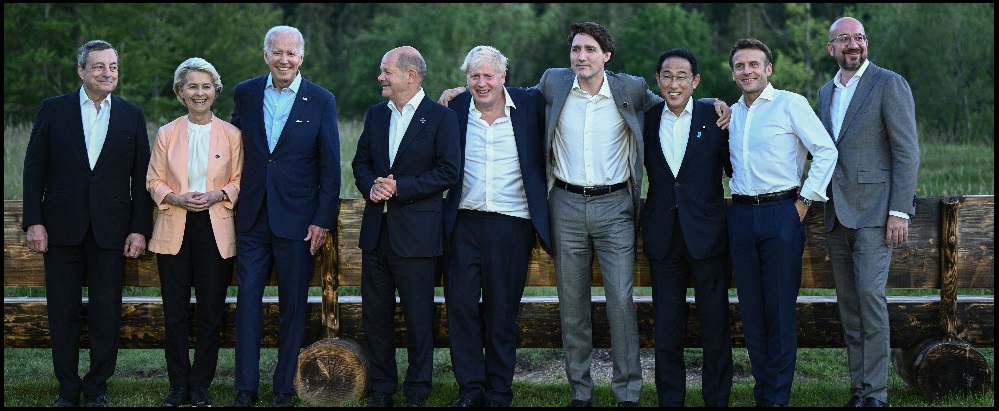
It was not Vladimir Putin who told British Prime Minister Boris Johnson and German Chancellor Olaf Scholz their proactive recommendation to switch from crop-based biofuels to human food would be blocked. That G7 decision was made by Justin Trudeau and Joe Biden. {link} Even more significantly, it was not Russia who threatened the multinational energy companies about investing in Africa for expanded natural gas supplies for their fertilizer needs. That threat came from the same western government alliance, per their instructions from the World Economic Forum group {link}.
It was predictable {JUNE 21st} {June 30th} and {July 6th} that western government leaders would seek to avoid responsibility for the food crisis they created, and now we see more western media trying, desperately, to frame the Putin is to blame for global food shortages in order to protect them.
NEW YORK, July 25 (Reuters) – Russian President Vladimir Putin’s invasion of Ukraine shocked the world, forced Western countries to respond, and is driving up the cost of energy and food across the globe. High prices in the United States may spell electoral disaster for President Joe Biden’s administration in November’s congressional elections. However, the most urgent economic, social, and human crises are unfolding in poorer countries where populations face war, spillover-driven inflation, and more expensive foreign-currency debt. (more)
Joe Biden, NATO, the G7, the European Union, the World Bank, USAID, and every western leader in the United States and Europe has stated there will be food shortages.
They are not saying there might be shortages; their statements are emphatic, there will be shortages.
Accept this basic cornerstone. Then ask why not a single proactive step has been taken by any of the aforementioned institutions or governments to alleviate what they declare is a certainty. Why?
Simple question, “why?”
If all of the western nations, non-govt organizations and heads of state, are aware of a coming food crisis, why is there no proactive response?
It is a question that even the most hardcore leftists will not answer, because there is only one answer. No action is being taken because they do not want to take action. No effort to avoid the crisis is being done, because they do not want the crisis avoided.
Peel all the layers of obfuscation and causation away, and what we find is the epicenter of the food shortage is directly the result of the Build Back Better agenda. A post-pandemic western government deliberate decision to radically change global energy development. In succinct terms, the climate change agenda.
However, regardless of how you feel about the validity of “climate change,” the cause of diminished food supplies is purposeful. It is not climate change causing food shortages. It is the purposeful action taken under the guise of mitigating climate change that is causing the shortage of food.
The collective Build Back Better energy policy of western governments’ is the reason for massive increases in energy costs, massive oil price jumps, gasoline price increases, significant increases in chemical costs, increases in diesel fuel costs, shortages of fertilizer created using natural gas, and the end result is lower crop yields, higher farming costs and eventually, food shortages. They know this.
All of the organizations and government who have been decrying the future shortage of food, know it is the radical shift in energy resource development that is creating the crisis. This acceptance of reality begins the framework to understand just how entrenched and committed these western leaders are toward their beloved climate change agenda.
We do not yet know the scale of food shortage, but we do know -and everyone admits- there will be severe shortages on a global basis.
Western leaders will not and cannot accept the blame for what they are doing. So, they will blame-cast, excuse and justify what is likely to surface. Food shortages blamed on the Ukraine conflict, Russian aggression, climate change and any various iteration of justification that does not identify the true cause, their energy ideology.
I’m not so sure that people fully understand what the entire system of western government would be willing to do to avoid being blamed for avoidable death on a potential scale that is quite alarming. All of the western leaders, institutions and governments are on the same boat. They are all in this together.
Germany and Finnish parent company Fortum signed a $15.24 billion deal to save energy company Uniper. In return, Germany will take a 30% stake in the company. Uniper reported only receiving a fraction on contracted gas from Russia’s Gazprom since mid-June, and it seems shipments may continue to slow or cease entirely. Uniper has been purchasing gas elsewhere at a premium, dampening their profits.
“We are living through an unprecedented energy crisis that requires robust measures. After intensive but constructive negotiations, we found a solution that in an acceptable way met the interest of all parties involved,” said Fortum’s President and CEO Markus Rauramo.
Chancellor Olaf Scholz said saving Uniper is of “paramount importance” for the German economy. Sholz said the “government plans to introduce mechanism to pass through 90% of replacement costs for missing Russian gas to consumers as of October 1.” The costs will be passed on to the consumers, of course.
Posted originally on the conservative tree house on July 24, 2022 | Sundance
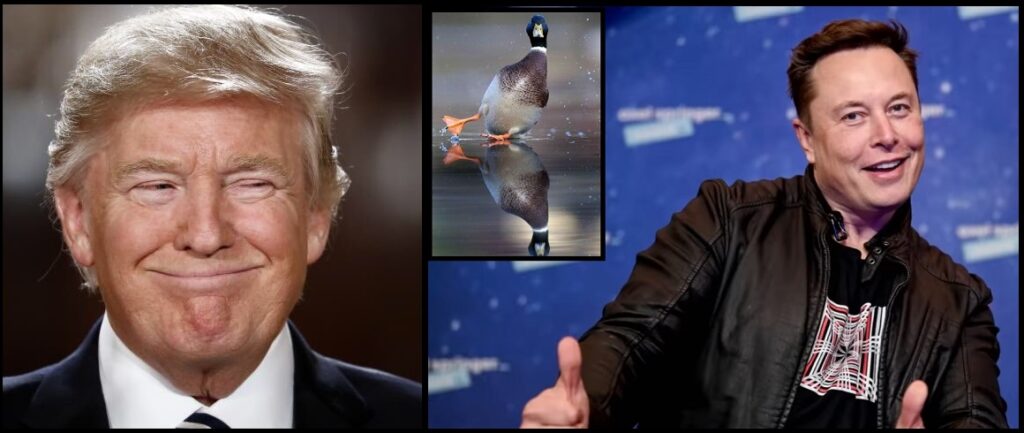
Donald Trump and Elon Musk have something in common….
“It must be remembered that there is nothing more difficult to plan, more doubtful of success, nor more dangerous to manage than a new system. For the initiator has the enmity of all who would profit by the preservation of the old institution and merely lukewarm defenders in those who gain by the new ones.”
For Elon Musk it is the organization of Twitter with 7,500 employees dedicated to ensuring he would never succeed in his takeover effort. From the board of directors to the data engineers who build the controlling algorithms, to the third-party service providers who manage the data demand, there are likely only a handful of people within the entire corporation who would welcome the type of change Elon Musk represents.
As a result of the scale of opposition, any organizational takeover would ultimately deliver a company filled with sleeper cells and activist agents who consider it their personal and ideological mission to destroy the social media platform rather than accept change. The purchase effort was doomed from the outset, considering Musk represented something akin to Rand Paul being nominated to lead the World Bank or Federal Reserve. Some stuff just isn’t possible.
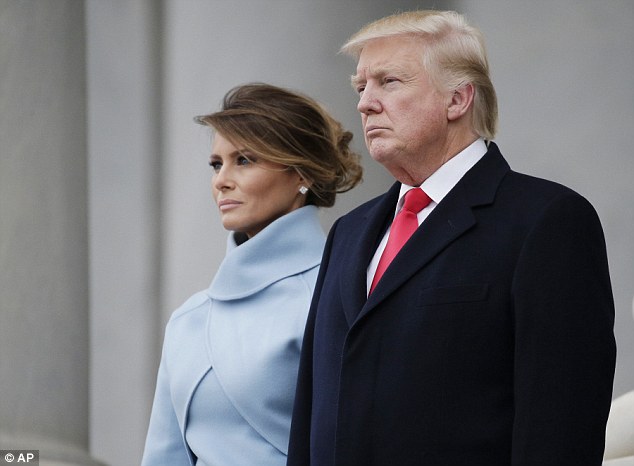
We The People attempted the Musk route when we sent President Donald Trump into Washington DC. However, instead of one institution with 7,500 people, it was dozens of institutions housing hundreds of thousands of entrenched ideologues. Most MAGA voters did not realize it at the time because grade school civics was never updated with our post-9/11 political outcome.
Imagine what the 7,500 Twitter folks would do as employees within an institution they abhorred overnight. What scale of effort would be exhausted to kill baby Elon Hitler for the greater social good? You don’t have to go too far in your imagination, because that’s exactly how Washington DC reacted to Trump’s arrival.
From day one to day one-thousand-four-hundred-sixty-one, no opposition was too much opposition by anyone, in every institution and every branch – including both wings of the UniParty congress, upper and lower chambers.
The threat that Trump represented needed to be managed, attacked and ultimately removed. There were/are trillions at stake, and keep in mind, DC is the epicenter of the global financial universe. As a result, the financial foot-soldiers of almost every western nation were aligned to assist the DC system in removing the threat.
Sometimes I laugh at the hindsight of people who say Donald Trump had terrible judgement in his appointments. I snicker because these are the same people who said General James “Mad Dog” Mattis was the greatest military leader since George Washington. How did that role as defense secretary work out?
No wait, Trump could have done a better job against the 147,000 people in the United States Dept of State, extending like metastatic cancer around the globe from their primary origination point in foggy bottom DC.
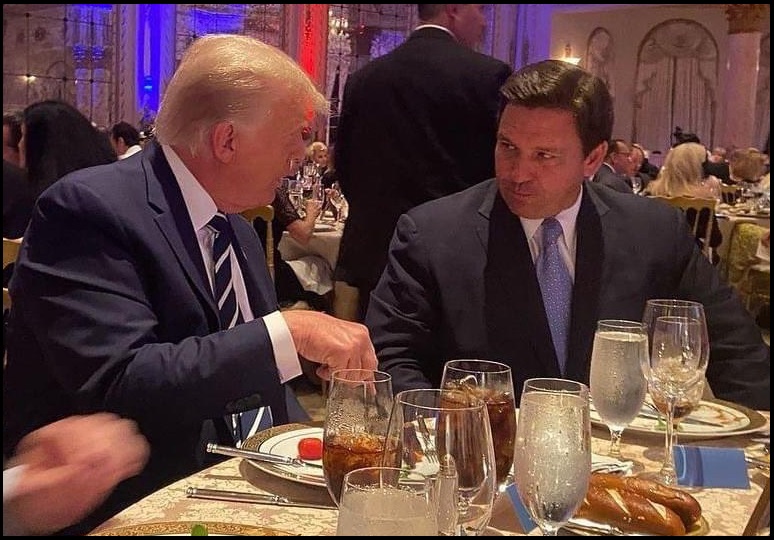
Oh, I’m sure the Ron DeSantis advocates have a plan for that, just as assuredly as they can jump to the typeset to instruct Musk how to modify the personnel outlooks of the social media network. Something that involves the multi-billion global media corporations folding up shop to shift their ideological compass headings, right?
Maybe free cookies will help the kids who work 3 hours a week, smile as they adjust to a 40-hour expectation.
I’m told that Donald Trump also planned badly to take over the 90,000 employees and $8.7 billion payroll at the U.S. Dept of Justice. Trump should have listened to the advice of the esteemed and well-regarded senior Senator from deep red Alabama, Mr. Jeff Sessions, who was also praised effusively by the same conservative crowd who praised the Mad Dog. If only Trump had installed a great stalwart for conservative principles like Sessions. Alas, we lost the opp… wait, huh, no.. wait,.. I mean, what?
Former UN official Ric Grenell was awesome as the “acting” Director of National Intelligence. If only President Trump had nominated Grenell from the outset, instead of that insufferable DC insider from the Senate Select Committee on Intelligence, Dan Coats, things would have been so much better.
With an ODNI confirmation from the same senate intelligence group that was trying to block Trump from ever reaching Washington DC, things would have been awesome. Hey, why is that “Acting” word always in front of Grenell anyway? Oh, wait, the “Republican” committee members wouldn’t what?
Alas, if Trump had only done a better job of hiring the 2,400 people who work for the White House, he would have avoided all of those horrible stealth terror cells who were in place to facilitate his removal. Surely it wouldn’t have taken him that long to go through the candidate pool and interview everyone willing to live within a 100-mile radius of the epicenter of morality and truthfulness known as Washington DC.
And boy did President Trump ever screw up with his 400+ staff National Security Council, who report to the National Security Advisor and come from every executive agency, including intelligence, to deliver wholesome and practical advice to the oval office holder they hated.
I’m sure Musk has a better plan to manage the Silicon Valley coders who design the algorithms at the Twitter. I mean, Musk and Ron DeSantis being all smarter than Trump would have a plan for stuff, right?
Speaking of “intelligence”, what was candidate Donald Trump thinking when he selected former Indiana Governor Mike Pence as his vice-presidential running mate? I mean everyone in the republican sphere of conservative politics hated Mike Pence in 2015 and 2016, knowing his conservative bona fides were a mask just waiting to drop and create havoc for the America-First agenda. I mean it’s not like everyone didn’t know Mr. Pence surrounded himself with liars, fabricators and political club staff who hated the Tea Party base. We all knew that in 2015 and 2016, right?
If only Donald Trump had hired the right kind of people within his administration, then the multinational global corporate media would not have needed to treat him like he was the walking personification of the antichrist. A few people here, and a few different people there, and everything would have gone swimmingly.
Many people know -to a demonstrable certainty- that Ron DeSantis has, right now, a list of about 200,000 people ready to move themselves directly into Washington DC and finally change the system for the better. I am certain this list exists because all the right crowd in conservative media tell me they are sure of it.
These betters are the people who would know such things because they knew Senator Ted Cruz was the reformist lightbringer in 2015. The word is that DeSantis uniquely carries the power to replace every corrupt republican member of the House and Senate simply by raising his chin a certain way when the sunlight glistens upon him.
It was the Fourth Quarter of 2019…..
….despite two years of doomsayer predictions from Wall Street’s professional punditry, saying Trump tariffs on China would create massive inflation…. It wasn’t happening!
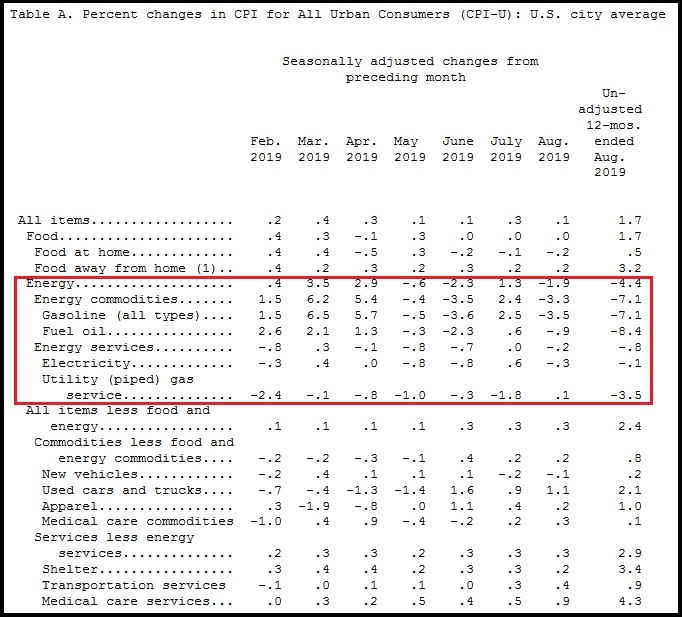
Overall year-over-year inflation was hovering around 1.7 percent [Table-A BLS]; that was our inflation rate. The rate in late 2019 was firmed up with less month-over-month fluctuation, and the rate remained consistent. [See Below]
A couple of important points. First, unleashing the energy sector to drive down overall costs to consumers and industry outputs was a key part of President Trump’s America-First MAGAnomic initiative. Lower energy prices help the worker economy, middle class and average American more than any other sector.
Which brings us to the second important point. Notice how food price had very low year-over-year inflation, 0.5 percent. That is a combination of two key issues: low energy costs, and the fracturing of Big Ag hold on the farm production and the export dynamic:
(BLS) […] The index for food at home declined for the third month in a row, falling 0.2 percent. The index for meats, poultry, fish, and eggs decreased 0.7 percent in August as the index for eggs fell 2.6 percent. The index for fruits and vegetables, which rose in July, fell 0.5 percent in August; the index for fresh fruits declined 1.4 percent, but the index for fresh vegetables rose 0.4 percent. The index for cereals and bakery products fell 0.3 percent in August after rising 0.3 percent in July. (link)
For the previous twenty years food prices had been increasingly controlled by Big Ag, and not by normal supply and demand. The commodity market became a ‘controlled market’. U.S. food outputs (farm production) was controlled and exported to keep the U.S. consumer paying optimal prices.
President Trump’s trade reset was disrupting this process. As farm products were less exported the cost of the food in our supermarket became reconnected to a ‘more normal’ supply and demand cycle. Food prices dropped and our pantry costs were lowered.
The Commerce Dept. then announced that retail sales climbed by 0.4 percent in August 2019, twice as high as the 0.2 percent analysts had predicted. The result highlighted retail sales strength of more than 4 percent year-over-year. These excellent results came on the heels of blowout data in July, when households boosted purchases of cars and clothing.
The better-than-expected number stemmed largely from a 1.8 percent jump in spending vehicles. Online sales, meanwhile, also continued to climb, rising 1.6 percent. That’s similar to July, 2019, when Amazon held its two-day, blowout Prime Day sale. (link)
Despite the efforts to remove and impeach President Trump, it did not look like middle-class America was overly concerned about the noise coming from the pundits. Likely that’s because blue-collar wages were higher, Main Street inflation was lower, and overall consumer confidence was strong. Yes, MAGAnomics was working.
Additionally, remember all those MSM hours and newspaper column inches where the professional financial pundits were claiming Trump’s tariffs were going to cause massive increases in prices of consumer goods?
Well, exactly the opposite happened [BLS report] Import prices were continuing to drop:
This was a really interesting dynamic that no-one in the professional punditry would dare explain.
Donald Trump’s tariffs were targeted to specific sectors of imported products. [Steel, Aluminum, and a host of smaller sectors etc.] However, when the EU and China respond by devaluing their currency, that approach hit all products imported, not just the tariff goods.
Because the EU and China were driving up the value of the dollar, everything we were importing became cheaper. Not just imports from Europe and China, but actually imports from everywhere. All imports were entering the U.S. at substantially lower prices.
This meant when we imported products, we were also importing deflation.
This price result is exactly the opposite of what the economic experts and Wall Street pundits predicted back in 2017 and 2018 when they were pushing the rapid price increase narrative.
Because all the export dependent economies were reacting with such urgency to retain their access to the U.S. market, aggregate import prices were actually lower than they were when the Trump tariffs began:
[…] Prices for imports from China edged down 0.1 percent in August following decreases of 0.2 percent in both July and June. Import prices from China have not advanced on a monthly basis since ticking up 0.1 percent in May 2018. The price index for imports from China fell 1.6 percent for the year ended in August.
[…] Import prices from the European Union fell 0.2 percent in August and 0.3 percent over the past 12 months.
Posted originally on the conservative tree house on July 24, 2022 | Sundance
Until people understand what is happening, we cannot correct things or even respond to them accurately. Many people don’t want to accept what is happening. Even more still believe in the Schoolhouse Rock civics they were taught in grade school and cannot accept how these ideologues operate. As long as denial remains a survival mechanism, correction is difficult.
All of the people on the monetary policy side of the economic equation are working earnestly to manage the global economy into a decline thereby slowing the need for energy production. The bankers are supporting the Build Back Better policy makers by putting the western economies into an intended contraction. Slowing the western economies helps to lower energy use and moderate/offset the extreme increases in cost (coal, oil, gas, electricity, fuel etc) the policies are creating.
Lower economic activity means less income, job security and wealth for the working class. Simultaneously, increased energy costs mean more expenses for the same workers who are losing income and wealth. This is the ‘managing’ part of their collectively “managed transition.” They are monitoring and managing the pitchforks.
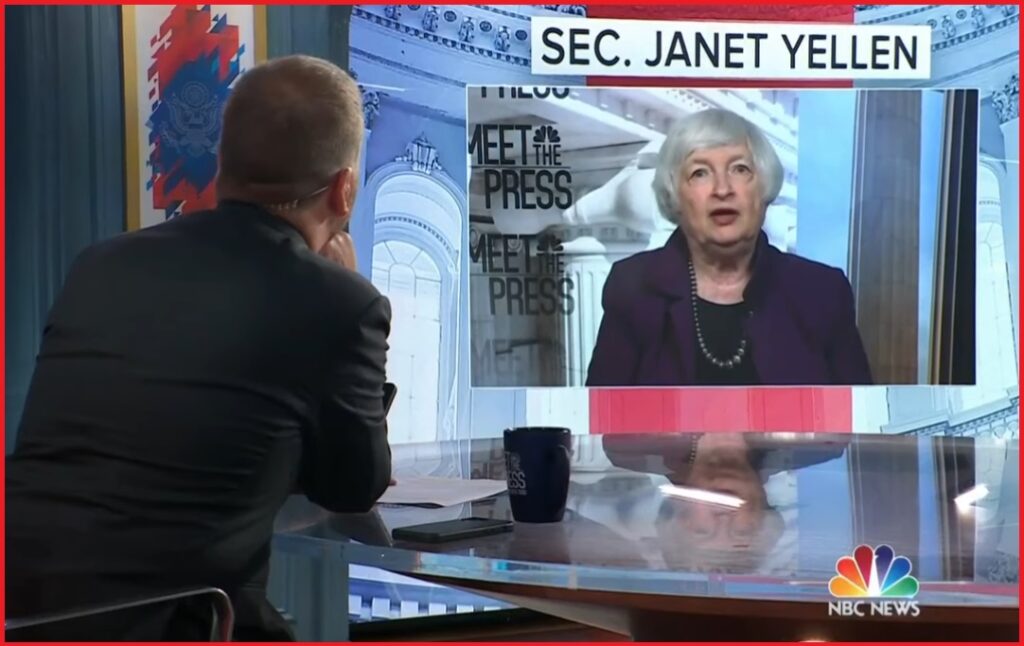
In this Meet the Press segment with Treasury Secretary Janet Yellen, you will note she says “lower economic activity during this transition” is good. She also happily says businesses are taking “appropriate” action to lower their activity, because that is exactly what the central planners want. They want businesses to do less, create less, sell less, even employ less, because ultimately, they want businesses to help advance the cause of climate change by consuming less energy resources. WATCH:
The central bankers are trying to support western government policy. Unfortunately, the government policy they are under obligation to support is the fundamental energy shift, or what the World Economic Forum (Davos Group) has called the “Build Back Better” climate change agenda.
Monetary policy can only impact one side of the inflation challenge, the demand side.
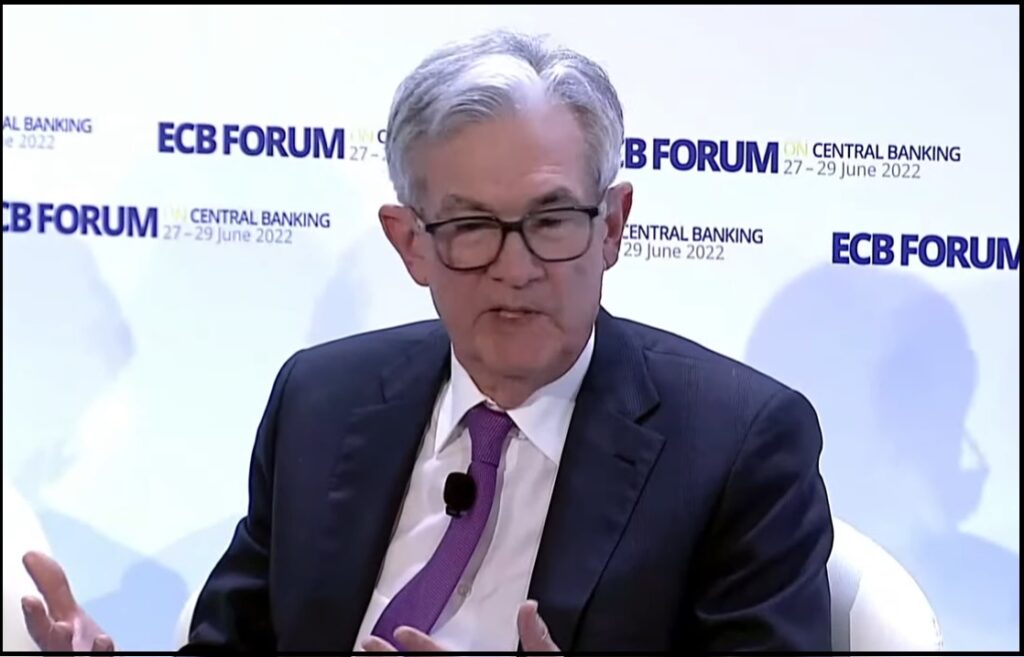
The western bankers (EU central bank, U.S. federal reserve bank, and various banking groups) are raising interest rates in order to “tame inflation” by “taming demand.” However, as you know the global economic demand has been declining for several quarters. Raising interest rates into an already contracting economy only does one thing, it speeds up the rate of economic contraction.
Economic contraction is the lowering of economic activity. Raise interest rates -in a general sense- and businesses invest less, borrowers borrow less, consumers purchase less, employers expand less, and the economy overall slows down. When the economy turns negative, meaning less products and services are produced, we enter a recession. Some businesses and employers do not survive a recession and subsequently unemployment rises.
During recessionary periods people buy less stuff, people have less income stability, and economic activity drops. When the banks raise interest rates into an economy that is already stalled or contracting, unemployment and general pain on Main Street increases. Workers are laid-off, incomes shrink, consumer spending drops and that leads to less employment. Recessions are bad for middle-class and working-class people.
However, that said, there is one benefit from a recession…. Energy use drops.
People travel less; businesses operate shorter work schedules; manufacturing stops; overall fewer goods are produced because less consumer spending is taking place. From the perspective of the groups who want to see overall energy consumption drop, a recession is a good thing.
A recession also brings along a natural drop in energy prices as less overall energy is used inside an economy that is slowing, stalled or contracting.
Oil prices drop as less oil is needed for the manufacturing of goods. Energy use in transportation also drops and generally gasoline prices drop because less transportation fuel is needed, because fewer goods are being transported. When the economy goes into a recession, energy use and prices always drop.
Put these factors together and you start to see how the transition to a new western energy policy, the Build Back Better agenda, benefits from a recession.
This is the essential understanding needed to reconcile why central banks would intentionally create an economic contraction. The bankers are supporting the governmental objective of transitioning the western economy into a new energy system away from oil, coal and natural gas. The banks are supporting the policy makers.
The central banks cannot openly admit what they are doing to support the politicians and policy makers. In this weird new era, the banks are being instructed to support the policy makers without actually admitting they have changed their monetary mission. The central bankers will continue to say their job is to manage and/or balance employment and inflation. However, what they will not admit is their unspoken agenda to support the political decisions.
Instead, almost all the central banks are saying their interest rate hikes are intended to cool inflation by lowering demand. However, it is not demand that is driving inflation; it is the policy making behind the energy transition that is driving higher costs on everything.
The supply-side of the inflation dynamic is being overwhelmed by massive increases in energy costs which are the results of intentional western policy. Extreme increases in consumer prices are the outcome of these energy price increases. The overwhelming majority of consumer price inflation is being caused by energy policy, not demand.
The various central banks and monetary policymakers know this. In fact, they are lying about their motives. They have to lie, because if they were to tell the truth there would be an uprising, and the sucess of the energy agenda would be put at risk.
In order to support the energy objectives of the various governments’, the central banks are trying -and succeeding- to lower economic activity.
Less economic activity means lower energy needs. This is what they call “managing the transition” to the new economy based on “sustainable energy.”
The banks and policy makers are ultimately managing the economic decline in order to Build Back Better in the future. This is why the originating charter of the central banks is being ignored, and the banks are raising interest rates into an already contracting economy.
None of this is being done accidentally. All of this is being done with forethought and implicit intention.
Unfortunately, for the average person this means the banks and policy makers have entered a phase where it is in their interests to shrink the global economy. They are trying to control the collapse of the various economies by working together. This means less jobs, less work, a lower standard of living, and a period of extreme financial pressure for the average person.
Eventually, we will reach a point where the government(s) will need to step in and fill the gap from the declined economic activity. Bailouts and subsidies will be needed as they were in the COVID lockdown test run. Unemployed workers and the people being impacted by a prolonged economic recession will need subsidies in order to survive.
The government policy makers are planning to do just that, spend more. They practiced during the COVID economic lockdowns, now they will execute a similar policy path as they manage the energy transition.
We have only just entered the beginning phase of this Build Back Better agenda. No one, including the banks and policy makers, have any idea how long this is going to take. We could be in this period of severe economic contraction for several years, perhaps decades, until their grand design of a new energy future is complete. This has been the discussion at the World Economic Forum (WEF), as the instructions were passed out.
The entire time the western government architects are doing this, they must keep the demand for traditional energy products like coal, oil and gas at the lowest demand possible. That is why the central banks and politicians must keep economic activity at the lowest -yet survivable- rate possible.
Prepare your informed long-term affairs accordingly.
After Skool Published originally on Rumble on April 23, 2022
This video was made in collaboration with Academy of Ideas. They create videos explaining the ideas of history’s great thinkers in order to help supply the world with more knowledge, to empower the individual, and to promote freedom. Please check out their youtube channel for more brilliant content. https://www.youtube.com/c/academyofideas or visit their website to learn more https://academyofideas.com/
This video explores some of the philosophies which examine the prioritization of safety. What happens when we value safety above all other values? I hope you all enjoy!
Geert Vanden Bossche, DVM, PhD General Manager at Voice for Science and Solidarity | The biggest challenge in vaccinology: Countering immune evasion
Posted originally on TS New on Jul. 22, 2022, 9:00 a.m.
Opinion Article
Intra-pandemic vaccination of toddlers with non-replicating antibody-based vaccines targeted at ASLVI[1]– or ASLVD[2]-enabling glycosylated viruses prevents education of innate immune effector cells (NK cells).
by Geert Vanden Bossche and Rob Rennebohm
Key message:
Antibody-based vaccines teach the immune system to produce high levels of antibodies that are directed against the surface protein that is responsible for initiation of viral infection. Due to their high specificity and strong binding capacity, these vaccinal antibodies (Abs) outcompete the child’s innate antibodies for binding to the virus[3]. This not only sidelines virus-neutralization by the natural innate immune system but also hampers the ability of innate antibodies to educate the innate immune system’s NK cells (Natural Killer cells) regarding NK cell recognition of (and appropriate response to) molecular self-mimicking patterns that are expressed on virus-infected host cells. This is particularly problematic when mass vaccination campaigns are conducted during a pandemic as those drive natural selection and dominant expansion of more infectious immune escape variants.
Strong immune priming as induced by vaccines elicits long-lived Ab titers. Even in the absence of further booster shots, repeated exposure to more infectious circulating variants will recall these vaccinal antigen (Ag)-specific Abs and thereby sustain high-titer antibody responses. When immature, low-affinity Abs become exposed to the virus, (which may occur when vaccines are administered during a pandemic), these Abs may bind to the virus without neutralizing it. This in its own right could already provoke Ab-dependent enhancement of infection (ADEI) by the target virus. Vaccinated toddlers are particularly at risk of ADEI as their innate immune system has not yet been trained. Consequently, young children who are vaccinated during a pandemic with non-replicating viral vaccines (directed at ASLVI- or ASLVD-enabling glycosylated viruses[4]) are at high risk of developing severe disease.
In addition, boosting of vaccinal Abs as a result of repeated exposure to more infectious immune escape variants will lead to prolonged suspension of NK cell education in these vaccinated toddlers. When, for a prolonged period of time, NK cells are prevented from being sensitized to pathogen-derived self-mimicking peptide patterns that are expressed on infected or otherwise pathologically altered cells, they may end up becoming tolerant to these patterns, which are typically shared among several different glycosylated pathogenic agents (G. Vanden Bossche, former provisional patent application). That is, the NK cells become hyporesponsive or desensitized to these pathogenic agents[5]. This opens the door to recognition by B and T cells of traditional antigens that are naturally expressed later on in the process of infection or pathologic alteration. Recognition by these ‘foreign-centered’ effector cells may enable abrogation but not prevention of infection (i.e., in the case of infectious pathogens) or lead to immune pathology (e.g., in the case of pathologically altered autologous host cells evolving towards expression of foreign proteins).
So, when the normal NK cell responsiveness to the patterns expressed on the surface of a specific glycosylated virus-infected cell (e.g. a SARS-CoV-2 infected cell) is downregulated, so is the NK cell response to largely homologous patterns on cells infected by other glycosylated viruses. That is how – in young children- vaccinal antibody-mediated interference with the education and response of NK cells regarding one particular ASLVI- or ASLVD-enabling glycosylated virus also interferes with the education and response of their NK cells regarding other glycosylated viruses causing ASLVI or ASLVD. This renders the vaccinated young child less able to handle not only the virus it got vaccinated against but also other glycosylated viruses (of course, unless that child got previously vaccinated with childhood vaccines comprising live attenuated glycosylated viruses such as measles, mumps, rubella, varicella, rotavirus). That is why/how vaccinated young children become more susceptible to other glycosylated viruses (besides the one they got vaccinated against).
The above-mentioned prolonged suspension of NK cell education, and the associated repetitive desensitization of NK cells, will not be ‘diluted’ by a “sporadic” sensitizing event (from an intercurrent influenza infection, e.g.).
The earlier this prolonged suspension of NK cell education occurs after the maternal Abs have waned, the more detrimental the effect will be. This is because it is during early childhood, when children have their greatest and most important capacity for education and practice of their innate immune system, that they ought to exploit this opportunity to actively kick off their own immune defense against ‘foreign’ while ensuring tolerance towards ‘self’. This opportunity occurs only once in a person’s life-time! Once the functional capacity of innate Abs wanes, the instructions conveyed to ‘self-centered’ innate immune cells (i.e., NK cells) on how to recognize self-mimicking patterns associated with ‘foreign’ as opposed to ‘self’ proteins may not be strong enough to prevent irreversible priming of ‘foreign-centered’ antigen-specific B and T cells. Once such priming has occurred, the child’s immune system will have irrevocably missed that small window of opportunity to draw the thinnest possible line between ‘self’ and ‘foreign’, enabling the immune system to discriminate ‘self’ from ‘self-mimicking’ (or ‘altered self’). If one leaves it up to the adaptive immune system, a line that thin will not be drawn as the adaptive immune system has only been conceived to distinguish ‘foreign’ from ‘self’. Deficient or insufficient education of ‘self-centered’ NK cells will therefore inevitably predispose the young child to immunopathologies (ranging from allergies over inflammatory diseases up to autoreactivity).
On the other hand, once their pre-priming has been properly established, ‘training’ of NK cells can take place at any later time. Training consists of imprinting immunological memory on pre-primed NK cells following their epigenetic reprogramming. Such functional reprogramming provides these cells with sufficient plasticity to establish an “adaptive” phenotype to meet the demands and challenges of altered environmental conditions (e.g., enhanced viral infectious pressure). However, innate immune effector cells cannot be trained unless they first got educated on how to recognize potential changes/ alterations they may need to adapt to. It goes, therefore, without saying that any intervention in this delicately evolving ecosystem cannot even be considered without an in-depth understanding of the mechanisms at play and the impact thereon of the targeted immune intervention.
[3] For the purpose of this manuscript, ‘virus’ relates to an ASLVI- or ASLVD-enabling glycosylated virus
[4] Examples of glycosylated viruses [other than SARS-CoV-2] causing ASLVI or ASLVDs: seasonal influenza, RSV, dengue virus and viruses responsible for vaccine-preventable infections: measles, mumps, rubella, varicella, rotavirus or other more virulent glycosylated viruses such as zoonotic influenza (e.g., avian influenza virus), parapox virus (e.g., smallpox virus), Ebola virus, Marburg virus
[5] The biological mechanism for this fine regulation of the NK cell response is due to downregulation of germline encoded “activating receptors” on NK cells, and/or upregulation of “inhibitory receptors” on NK cells, and/or hypo-responsiveness to “activation signaling.” More details on the underlying mechanisms of this fine regulation of NK cells can be found in the literature as , for example, published by Orr, Mark T., and Lewis L. Lanier. “Natural killer cell education and tolerance.” Cell 142.6 (2010): 847-856 and Perera Molligoda Arachchige AS. Human NK cells: From development to effector functions. Innate Immunity. 2021;27(3):212-229.
I have created this site to help people have fun in the kitchen. I write about enjoying life both in and out of my kitchen. Life is short! Make the most of it and enjoy!
This is a library of News Events not reported by the Main Stream Media documenting & connecting the dots on How the Obama Marxist Liberal agenda is destroying America







 Centinel2012