
Armstrong Economics Blog/Sovereign Debt Crisis
Re-Posted Jun 12, 2020 by Martin Armstrong

Illinois became the first entity to borrow from the Fed’s new facility known as the “Municipal Liquidity Facility” for state and local governments. The Fed’s legal authority lies in section 13(3) of the Federal Reserve Act. This authorizes the Fed to directly lend to “individuals, partnerships and corporations” in “unusual and exigent circumstances.” Section 13(3) is titled “Discounts for individuals, partnerships, and corporations,” raising questions whether the Municipal Liquidity Facility is actually authorized under Section 13(3). This has been capped at $500 billion.
To qualify they need a credit rating which is always up for sale to the highest bidder as we saw in 2007. Illinois is already insolvent and its debt is trading at junk bond status. However, as long as they pay the fee, one of the credit agencies can certify a rating which is arbitrary so they get the funds for a kick-back. Welcome to the wonderful world of corrupt credit ratings. This proves that Illinois cannot hope to raise money to borrow. Someone should just turn out the lights.
British Pound Down & Dirty?
Armstrong Economics Blog/BRITAIN
Re-Posted Jun 10, 2020 by Martin Armstrong
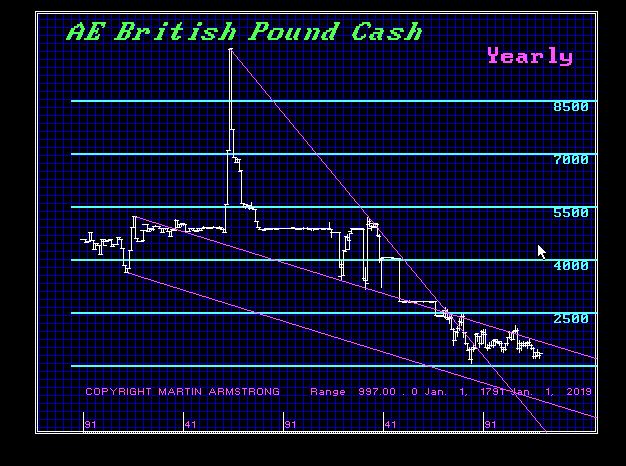
I have received a lot of emails from Britain asking if Boris is the new reason for the collapse of the pound. Fundamentals always emerge to support the projected trend. Boris is approving contract tracing which will undermine the economy dramatically. This is a plot by the socialists to realize their Marxist dreams. The press is so intensely keen on keeping COVID as a national security threat that it is really hopeless.
The British pound appears to be still destined to break the 1985 low. However, we first need the false move with the dollar down to trap everyone into short-dollars and then this will flip around. Contact tracing and certificates to prove you do not have COVID will end tourism for Europe. No Americans will be traveling there if they have their way. The stupidity of Boris and other European world leaders is beyond description. I think I have seen London for the last time already.
We are in a battle with the socialists on an unprecedented scale. They are deliberately destroying businesses under the pretense of the New Green Deal.
German Companies Plan to Reduce Investments
Armstrong Economics Blog/Germany
Re-Posted Jun 7, 2020 by Martin Armstrong
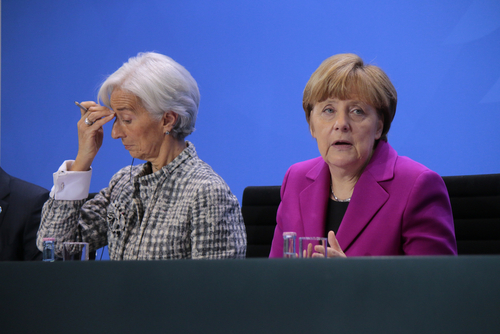
According to a recent survey conducted by the Institute for Economic Research (Ifo), German companies plan to reduce investments by 50% this year due to the lingering effects of the coronavirus. In fact, 28% of companies reportedly already canceled investments. The manufacturing sector, the heart of the German economy and therefore the entire Eurozone, purportedly plans to cut back projects and future investments by 64%, and 32% reported that they have already canceled business ventures entirely.
The coronavirus cannot account for the toll on German manufacturing, as 2019 was the worst year for that sector in a decade. In February of this year, the Financial Times reported that ECB President Christine Lagarde said low rates and inflation “significantly reduced the scope for the ECB and other central banks worldwide to ease monetary policy.” This was in February when the main concern was the US-China trade war, as Germany imports 9.4% of intermediate goods from China.
Chancellor Angela Merkel wants to pump $146 billion USD ($130 billion euros) into a stimulus package, while of course designating $56 billion USD of those funds to further the climate change agenda. The German economy already shrank by 2.2% in the first quarter. Merkel recently announced that she will “absolutely not” run for a fifth term, meaning she will leave her mess for the next person to clean up.
Sovereign Defaults Unfolding
Armstrong Economics Blog/Emerging Markets
Re-Posted Jun 3, 2020 by Martin Armstrong
In the Gulf, states are facing bankruptcy. Oman can hardly even pay his electricity bill. The IMF has been now lobbying to defer emerging-market debt for one year. We have been able to confirm from behind the curtain that more than 100 nations have asked the IMF for help. The sheer stupidity of this coronavirus lockdown is beyond belief. It seems no politician bothered to ask advice from anyone other than epidemiologists. Neil Ferguson may have resigned for bad judgment, but the politicians who failed to consult other fields including economics should resign. The lack of common sense amounts to the said fact that politicians have set off a Monetary Crisis cycle over the next two years, for they have seriously disrupted the entire world economy. These emerging markets will not be able to pay their debts any time soon, especially when European politicians are trying to convert the economy to a New Green Order.
Thatcher on the Redistribution of Wealth Rather than Creating Wealth
Armstrong Economics Blog/Economics
Re-Posted May 31, 2020 by Martin Armstrong
UPDATE – MISSION SCRUBBED – NASA SpaceX Crew Dragon – Falcon 9 Rocket Launch – 4:33pm EDT Livestreams…
May 27, 2020
 UPDATE 4:00pm Mission Scrubbed due to weather
History will unfold today as NASA and SpaceX launch astronauts Robert Behnken and Douglas Hurley to the International Space Station. This mission marks the first time since the retirement of the space shuttle in 2011 that humans will fly to the space station from U.S. soil. Targeted Launch Time 4:33pm EDT – Livestreams Ongoing
NASA and SpaceX are providing live coverage from launch to arrival at the space station. Teams are targeting 4:33 p.m. EDT for the launch of the SpaceX Crew Dragon spacecraft atop a Falcon 9 rocket from historic Launch Complex 39A at NASA’s Kennedy Space Center in Florida.
The Crew Dragon is scheduled to dock to the space station at 11:29 a.m. Thursday, May 28.
NASA Livestream Link – SpaceX Livestream Link – CSPAN Livestream Link
.
.

Secretary Wilbur Ross Discusses SpaceX Launch and U.S. Response to Increased Chinese Hostility Toward Hong Kong…
May 27, 2020
Commerce Secretary Wilbur Ross contrasts the importance of the latest U.S. SpaceX launch in an era when China is increasingly expressing communist control over Hong Kong. Within the interview Secretary Ross outlines the likelihood of an economic response toward Beijing to countermand aggressive geopolitical ambitions.
Shifting high-tech industrial manufacturing away from China, back to the United States, is an important component in the strategic U.S. economic approach.

Trump Could Launch the Receivables Liquidity Corporation
The RLC backed by the government is in a better position to wait out the economic recovery and collect at the best time and have an organized collection program

Re-posted from the Canada Free Press By Jonathon Moseley —— Bio and Archives—May 24, 2020

We are fortunate that President Donald Trump is a businessman who knows how to bounce back from difficulties. However, the United States really is already in a depression. We don’t yet have technical indicators stretching over several quarters. Yet: “Total nonfarm payroll employment fell by 20.5 million in April, and the unemployment rate rose to 14.7 percent, the U.S. Bureau of Labor Statistics” reported on May 8.
We can fix this. But it will take swift and decisive action. We’ve seen it in movies: The giant airplane is in a power dive heading down into the side of a mountain. The hero manages to restart the engines and turns the nose up just in time to clear the mountainside and head back upward.
This is a proposal based on my years as a debt-collection attorney in Virginia
President Trump could create a Receivables Liquidity Corporation. (You heard that name and idea here first.) After the Savings & Loan crisis, the government created a private corporation backed by the U.S. Treasury, called the Resolution Trust Corp. The RTC took over failing banksand slowly liquidated their assets at opportune times. During the 2008 mortgage crisis bailouts, allegedly the U.S. Treasury turned a profit eventually. The government sold the stock it acquired in the bail outs at a time of panic (low prices) and then sold them after the economy had grown healthy (high stock prices).
This is a proposal based on my years as a debt-collection attorney in Virginia. This could work for Canada, the European Union, now independent England, even the Bahamas or almost any country – not just the United States. It can even work combining several nations together. However, it does require a nation with sufficient financial credit to carry debts for a long time until the ideal time to collect on them. And it requires a mindset to think outside the box with a more business-oriented public private partnership.
The engine has seized up. When we try to start the engine again, it is going to be bad. If everyone pulls back and values plummet just because people are frightened, the damage will be far greater than if the new RLC takes payment much later, after things have rebounded.
As soon as the economy re-opens, it will end the freeze on evictions of renters behind on their rent and foreclosures on mortgages. Within two months of re-opening, many of those 20.5 million unemployed could be homeless. Those unemployed won’t be able to suddenly repay 2 to 4 months of overdue rent or mortgage payments.
President Trump hoped early on that there would be pent-up demand and the economy would snap back. But he acknowledged back then that the longer the economy stays closed the harder it would get. Now, there may be a lot of desire to buy. But will people have the money to spend?
Consider the situation for many small businesses: As a solo attorney, I am a small business. Before the pandemic, clients typically had no money to pay me. Now, no one is paying them. They have on-going expenses for food and what rent they can cover, with no income in most cases. The people who should be paying them have no money because they are not getting paid. So I’m not getting paid for past work or hired for new work. So my vendors aren’t getting paid. Etc. A negative cascade.
The stimulus checks in the United States were small and late. For many businesses, the $10,000 small business advance loan never arrived. And the Paycheck Protection Program Loan—for the very small businesses who can get one—is only 2 ½ months of a business’ payroll after cutting any salaries above $100,000. The size of the economy is enormous.
However, those programs do not have to be repaid. The only way that the U.S. Government can afford to spend a lot more is if the money is repaid—eventually.
How? The time horizon for small business is short. They can’t survive for long without getting paid by clients. By contrast, the Treasury can carry those invoices for years until the economy has rebounded and the debtor can afford to pay.
So let’s say a landlord is owed 4 months’ rent for a business or a residence. Once the economy restarts, and the ban on evictions is over, he’s got to collect that unpaid rent from people who don’t have any money after 4 months of house arrest. Or businesses have shipped products that they haven’t been paid for. Or utility companies have overdue utilities for 3 to 5 months. What are they going to do? If they try to collect, they will leave businesses in the dark without electricity or homes without water. How is the economy going to rebound like that?
Instead, the landlord or utility company sells the invoice to the Receivables Liquidity Corporation and gets paid in full. Hopefully, the invoice eventually gets paid to the RLC with interest when the economy has recovered. The debtor must agree to:
- waive rights to discharge that particular debt in any bankruptcy,
- provide the owner’s personal guarantee for a business,
- waive the statute of limitations,
- consent to deduction from tax refunds,
- certify that they do not dispute the debt or to what extent, and
- add interest if the invoice did not provide for it.
In return the debtor gets a grace period of one year or more before having to start repaying the invoice(s) (with a possible hardship extension if circumstances warrant on application). The debtor would get an installment plan to pay back over time. If the debtor does not agree they are subject to immediate collection action. So they have motivation to agree to the terms. If they cooperate, they get a breather of at least a year before they have to pay.
The RLC backed by the government is in a better position to wait out the economic recovery and collect at the best time and have an organized collection program. While some invoices will not get paid, hopefully enough will be paid with interest and collection fees – eventually—to come close to breaking even.
One small problem: Who would run this program? Wink. Call me….
When Will a Light Go Off?
Armstrong Economics Blog/Economics
Re-Posted Apr 23, 2020 by Martin Armstrong

COMMENT: Mr. Armstrong; Your letter has circulated here in the _________________ Parliament. I must say, it is brilliant. The problem is most people see just writing checks is easier to understand than actually suspending expenses. I fully understand whilst you cannot terminate the income side of their balance sheet without also suspending the expenses, it is a concept that is not easily seen as a solution. I believe the pain has to get worse before they will listen.
Cheers
Anonymous
REPLY: I find it just astonishing that there is a complete lack of common sense in representative government. They cannot continue to just subsidize people with no comprehension of where this ends. The deleveraging in the global economy is more than $100 trillion dollars. You cannot create enough money to even soften the blow. You would think that after the failure of Quantitative Easing since 2008 its utter failure to rekindle the economy, that a light would at least go off in someone’s head and they would ask: Why has this never worked?
Will the Dow Make New Highs?
Armstrong Economics Blog/Sovereign Debt Crisis
Re-Posted Apr 20, 2020 by Martin Armstrong
QUESTION: Mr. Armstrong; I am a new reader. I was wondering if you agree with Trump that the stock market will make new highs.
Thank you for your time
JA

ANSWER: The market will make new highs, just not this instant. However, it will not make new highs because the economy will be strong. It will make new highs because governments have abused their power and their debts are far too excessive. Europe will be the first to default on its debt in a clever manner of transformation. The European Central Bank is dead in the water. They can offer no solution and have turned to ask for the cancelation of all paper money and the issue of federal coronabonds.
Capital will flee from government debt into equity when the people begin to realize we have reached the end game.
 Centinel2012