Armstrong Economics Blog/Armstrong in the Media Re-Posted Feb 4, 2022 by Martin Armstrong
Click to watch Martin Armstrong’s latest interview with the Financial Survival Network.

Click to watch Martin Armstrong’s latest interview with the Financial Survival Network.


Tax havens are in short supply. The United Arab Emirates (UAE) recently announced that it will implement a new federal corporate tax on business profits. Part of what attracted business to the UAE was its tax-free status and the move could hurt new money from migrating to the UAE. The new tax will go into effect on June 1, 2023.
“The UAE corporate tax regime will be amongst the most competitive in the world,” the Finance Ministry stated on Monday. The tax rate will stand at 9% for profits exceeding 375,000 United Arab Emirates dirhams ($102,000), while businesses earning under that amount will not be taxed “to support small businesses and startups.” A 9% rate is still certainly competitive compared to other nations.
The UAE will not implement a tax on personal income or capital gains from real estate and equities. Free zone businesses will be permitted to exist in the country, so long as they meet all the necessary requirements. Some say the move will help the UAE move away from its reliance on oil exportation as it diversifies into trade, business, and tourism. Countries that solely rely on their natural resources have trouble maintaining long-term economic growth. However, reliance on taxation is never sustainable as governments continue to spend and whatever tax is in place will eventually rise.
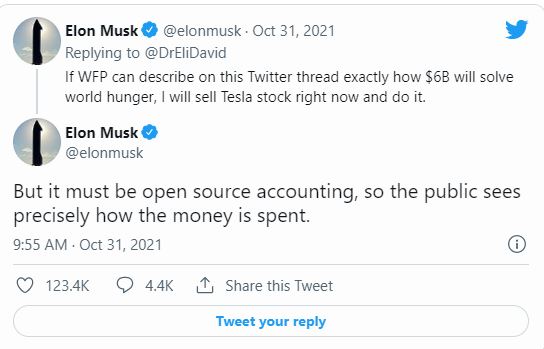
If billionaires paid their fair share, we could allegedly solve world hunger. How?
David Beasley, director of the UN’s World Food Programme (WFP), called out billionaires such as Elon Musk and Jeff Bezos for not donating funds to solve world hunger. “Just $6 billion could keep 42 million people from dying,” Beasley claimed. Musk took to Twitter with a bold offer — he would personally donate $6 billion if the WFP could explain precisely how they would spend the funds. Furthermore, the richest man in the world is asking the WFP to provide a public record of exactly how the money will be spent.
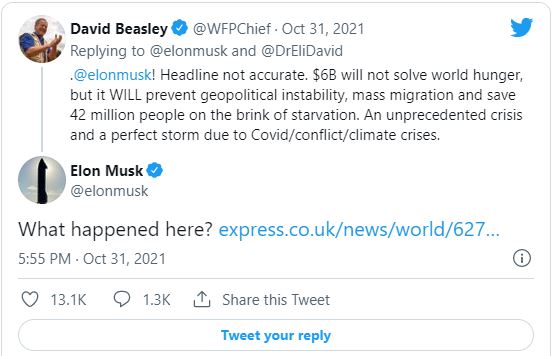
David Beasley replied to Musk, “Headline not accurate. $6B will not solve world hunger, but it WILL prevent geopolitical instability, mass migration and save 42 million people on the brink of starvation. An unprecedented crisis and a perfect storm due to Covid/conflict/climate crises.” In other words, $6 billion will not solve world hunger as the people managing that sum of money could never keep it out of their pockets. Musk replied to Beasley with a link to an ongoing, unpunished, child sex abuse scandal where UN “peacekeepers” abused hungry children. The details are too grotesque to publish here, but make no mistake about it — the UN is not an entity intent on saving the world. They had to turn down a generous donation of $6 billion because they knew that they could never report the paper trail, and the results would likely be a request for more money.
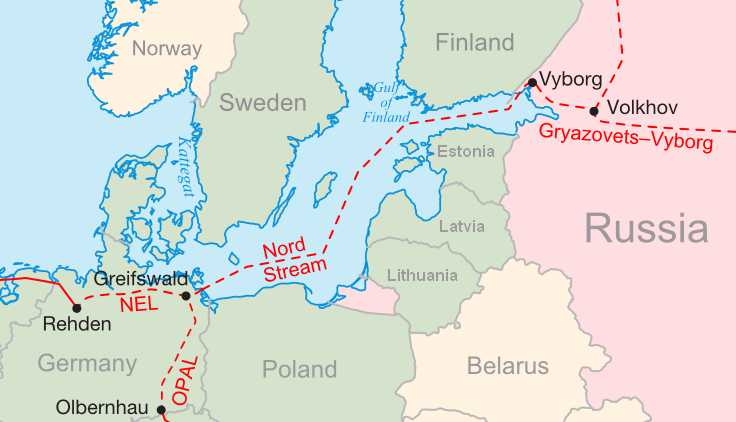
(Nord Stream Pipeline)
European Union leaders are scrambling for solutions to the energy crisis, but their feared friend from the East has reminded them that a solution exists. According to the Associated Press, gas prices in the EU have spiked to 95 euros from about 19 euros per megawatt-hour in the past year. Around 90% of gas is imported to the EU, and Belgian Prime Minister Alexander De Croo said that the only long-term solution is to invest in renewable energy. “And in the long term, there is only one solution — invest more in renewable energy so we are less vulnerable to price fluctuations for fossil fuels,” he said.
Hungarian Prime Minister Viktor Orban blamed the Green Deal plan for higher prices, which aims to reduce greenhouse emissions by 55% by 2030, with the goal of becoming carbon neutral by 2050. Some leaders are pointing to the use of nuclear energy, such as France, Bulgaria, Croatia, Czech Republic, Finland, Hungary, Poland, Romania, Slovakia, and Slovenia. However, the 27-nation bloc has not designated nuclear power as a sustainable investment yet.
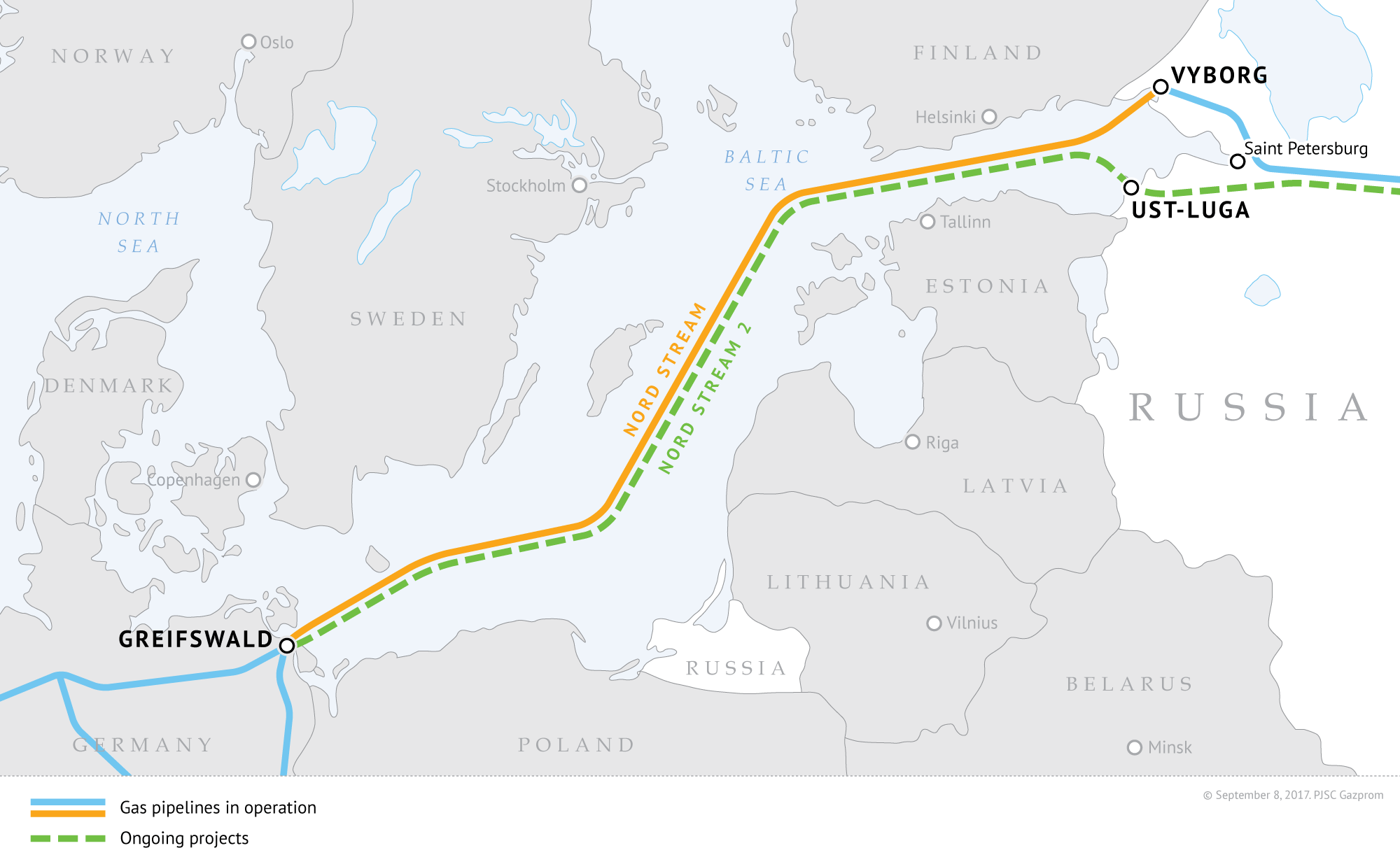
(Nord Stream 2 Pipeline)
In comes Putin and the controversial Nord Stream 2 pipeline that would carry much-needed gas from Russia to the EU beneath the Baltic Sea. “If the German regulator gives approval tomorrow, supplies of 17.5 billion cubic meters of gas will start the day after tomorrow,” Putin said. The Russian president has previously criticized the EU for not signing long-term contracts and failing to work with Russia on energy trade. European Commission President Ursula von der Leyen said that relying on gas from Russia makes the bloc “vulnerable,” but it seems that they are already vulnerable and in a worsening situation with no solution in sight. EU energy ministers are set to meet in December, where they are likely to kick around solutions while ignoring the one that is a pipeline away.

China has begun to ration fuel amid the ongoing energy crisis. As reported by the BBC, trucks in China may only fill their tanks with 100 liters (10% capacity) of diesel, with other areas reportedly only allowing 25 liters. The city of Fuyang is limiting purchases and charging drivers a surcharge of up to 300 yuan to fill up their tanks. The fuel shortage will affect both domestic and international goods as trucks simply cannot drive to their destinations. Despite surging demand, all fossil fuels are in tight supply and have seen drastic upticks in price. Jeremy Stevens, Chief China Economist at Standard Bank, told the BBC from Beijing that companies have already begun using diesel generators to maintain factory operations. World leaders are urging this instant switch to renewable energy and net-zero emissions, but the technology does not currently exist to power the world. The energy crisis will contribute to supply shortages worldwide.
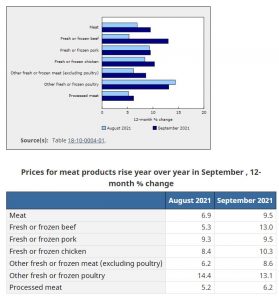
(Image from Statistics Canada: Prices for meat products rise year over year in September)
Canada’s CPI rose 4.4% YoY this September, according to Statistics Canada. Every major sector saw gains, but meat prices spiked 9.5%, marking the fastest pace of growth since April 2015. Canada’s Food Price Report for 2021, released in December 2020, predicted that meat prices would rise 4.5% to 6.5% in 2021, a drastic underestimate. Dr. Sylvain Charlebois, project lead and Director of the Agri-Food Analytics Lab at Dalhousie University warned people that they should develop “immunity” to rising prices. “Immunity to higher food prices requires more cooking, more discipline and more research. It’s as simple as that.” Gaslighting the people to believe they need to change their lives, rather than government change their policy, is at play once again.
Let me remind you that Bill Gates and others have been advocating for a move to 100% synthetic beef. But his logic only applies to the “rich” countries such as the US and Canada. “Weirdly, the US livestock, because they’re so productive, the emissions per pound of beef are dramatically less than emissions per pound in Africa,” Gates said in an interview in February 2021. “So no, I don’t think the poorest 80 countries will be eating synthetic meat. I do think all rich countries should move to 100% synthetic beef. You can get used to the taste difference, and the claim is they’re going to make it taste even better over time. Eventually, that green premium is modest enough that you can sort of change the [behavior of] people or use regulation to totally shift the demand.” This ties into the climate change agenda and the idea that starvation can help us shift to zero CO2. I should mention that the article added a disclaimer that Bill Gates is an “investor either personally or through Breakthrough Energy Ventures in several of the companies he mentions below, including Beyond Meats, Carbon Engineering, Impossible Foods, Memphis Meats, and Pivot Bio.”
Biden and Trudeau have made it known that they are on board with the climate change agenda, so that could be a preview of what is to come. Back to Statistic Canada’s December report – the forecast lists COVID-19 restrictions and the oil price war for rising food prices. Perhaps a certain pipeline could have assisted the fuel crisis. Yet, Biden rescinded the permit early in his presidency, and Trudeau feigned disappointment but did not push back on the matter. Basically, the two main components that the report notes are somewhat within government’s control.
How will this affect Canadian families? So far, the average food expenditure for a family of four is C$13,907, a 5% increase of C$695 compared to last year.
Once “we get the pandemic under control, the global economy comes back, these pressures will mitigate and I believe will go back to normal levels,” Treasury Secretary Janet Yellen stated, echoing “transitory” sentiments by Fed Chairman Jerome Powell. Powell believes supply chain bottlenecks are the main culprit for inflation. Well, the Biden Administration appointed the secretaries of Commerce, Agriculture and Transportation to create a supply chain task force to fix the influx issues.
Sameera Fazili, a deputy director of the White House National Economic Council, stated, “Our approach to supply chain resilience needs to look forward to emerging threats from cybersecurity to climate issues.” Is climate change the issue here? Is this an indication of where the government will misdirect resources once again? Fazili further displayed how out of touch the government is with the current crisis by saying inflation due to supply shortages is “kind of [a] good problem to be having,” as it indicates demand. The countless number of businesses and consumers currently paying for basic living expenses at up to 30-year highs may not see the glass half full at the moment.
Then, the Biden Administration met with the workers at the Port of Los Angeles this week, where it was agreed upon that the port would operate 24/7 to address issues. Ports in Los Angeles and Long Beach, California, account for 40% of all shipments into the US, which seems to be a good start. Even Walmart, FedEx, and UPS have agreed to unload their shipments at non-peak hours to help the process. Oh, wait, the ongoing worker shortage. Companies are begging people to apply, and it remains to be seen whether the ports will be able to maintain proper staffing to run at full capacity around the clock. Then the need for a sufficient number of truck drivers becomes an issue as well. Even if the ports do reach full capacity, what about the spike in fuel prices? Energy prices have caused the price of transportation to skyrocket, which is then passed on to the consumer. The US government is approaching this issue from a domestic standpoint as well and not factoring in the reason why inflation and supply shortages are not limited to the US.
Socrates indicated that inflation could rally into 2034, and based on the current solutions, the computer will likely be correct once again. Perhaps we should all view inflation through rose-colored glasses and view the 5.4% YoY spike in September as “kind of a good problem to be having.”
I have created this site to help people have fun in the kitchen. I write about enjoying life both in and out of my kitchen. Life is short! Make the most of it and enjoy!
De Oppresso Liber
A group of Americans united by our commitment to Freedom, Constitutional Governance, and Civic Duty.
Share the truth at whatever cost.
De Oppresso Liber
Uncensored updates on world events, economics, the environment and medicine
De Oppresso Liber
This is a library of News Events not reported by the Main Stream Media documenting & connecting the dots on How the Obama Marxist Liberal agenda is destroying America
Australia's Front Line | Since 2011
See what War is like and how it affects our Warriors
Nwo News, End Time, Deep State, World News, No Fake News
De Oppresso Liber
Politics | Talk | Opinion - Contact Info: stellasplace@wowway.com
Exposition and Encouragement
The Physician Wellness Movement and Illegitimate Authority: The Need for Revolt and Reconstruction
Real Estate Lending
 Centinel2012