Rising Rig Count Is Pushing OPEC To Breaking Point


Tyler Durden's picture

For the 9th straight week (and 35th of the last 37 weeks), the US oil rig count rose this week (surging by 14 to 631 – highest since September 2015).

The rig count continues to track the lagged WTI price


US Crude production has accelerated at a faster pace than the lagged rig count


And that is pushing OPEC to the breaking point:

  • *OPEC COMMITTEE SAID TO SEE COMPLIANCE WITH CUTS OF 106% IN FEB
  • *JOINT OPEC, NON-OPEC COMPLIANCE SEEN AT 94% IN FEB.: DELEGATES
  • *CUTS COMPLIANCE BY NON-OPEC ALONE SEEN AT 64% IN FEB.: DELEGATE

Who’s the sucker at that table?

As OilPrice.com’s Michael McDonald points out, the trend in the United States of accelerating oil production does not seem to be slowing down. Recent reports show that oil production from U.S. shale producers will increase in April, according to the Energy Information Administration. High market prices are currently being supported by OPEC cutbacks, and these higher profits are funding the growth of American drilling.

The release from the EIA predicts that net oil production will increase by 109,000 barrels per day in April. The seven major oil and gas basins that were included in the report will then have an output over nearly 5 million barrels per day collectively.

The monthly projections from the EIA have been climbing month after month since December. That month, 11 large oil exporting countries joined the supply cuts established by OPEC to control what they believed was an oversupplied market for crude oil.

In the United States, the main benefactors have been drillers at the Permian Basin, in Western Texas and southern New Mexico. The basin has been producing high volume since the end of 2016. The EIA expects the Permian drillers to see a gain of 70,000 barrels per day next month in their projections.

However, the Permian Basin is not the only United States site trying to capitalize on high prices. Drillers in southeast Texas, the Eagle Ford region, have also been ramping up production. Those drillers will amount for an increase 28,000 barrels per day in the EIA’s overall growth projections. Prior growth expectations for Eagle Ford producers was half on that number, at an increase of 14,000 barrels per day; the growth is not only steady, but is accelerating.

The EIA report for next month also shows a decline at several U.S. drilling sites. Take, for instance, the Niobrara region of Colorado and the Bakken Shale production in North Dakota. Both will experience declines of 11,000 barrels per day, and 10,000 barrels per day respectively.

The supply increases by the U.S. have capped any gains to be seen for OPEC nations from their cutbacks. This has been keeping crude futures within a tight range. On Monday, March 13th, U.S. crude ended at $48.40, a price that hasn’t been seen since before OPEC announced their cutbacks in December 2016.

These recent developments have led analysts to believe OPEC’s cutback policy is fated to end in the near future. It is clear that the United States has a sustainable means to regulate prices in the global oil market. Furthermore, the dynamics of U.S. outputs indicate that the country will not have any desire to participate in the cutbacks; U.S. law prohibits any such price controls. The United States will continue to threaten any gains to be had by OPEC.  

Saudi Arabia has been the leader in the cutbacks thus far, compensating for Russia’s hesitation with withholding supply. Historically, the kingdom has refused to participate in such cuts. However, under the tutelage of new oil minister Khalid al-Falih, they have exceeded their cuts far beyond the original OPEC deal. However, without total compliance, markets will remain unstable – regardless of how much the Saudis holdback.

These factors combined have led analysts to believe the OPEC deal will be forced to end, if only to end the profitability to U.S. growth and production.

EURUSD Tumbles As Le Pen Support Jumps


Tyler Durden's picture

Given the collapse of European VIX to record lows, one could be forgiven for thinking that there’s nothing to worry about. However, a one point jump in first-round support for French far-right presidential candidate Marine Le Pen has sparked a notable drop in EURUSD this morning.

European FX investors look anything but comfortable…


Overall however, according to the polls, Le Pen is unlikely to win…

But then again – Brexit and Trump proved that mea

President Trump Delivers His Fiscal Year 2018 Budget Outline – (Full pdf included)…


Source: President Trump Delivers His Fiscal Year 2018 Budget Outline – (Full pdf included)…

President Trump Interview With Tucker Carlson – 3/15/17…


Source: President Trump Interview With Tucker Carlson – 3/15/17…

President Trump Delivers Stunning Remarks at The Hermitage – Recognizing Andrew Jackson’s 250th Birthday…


Source: President Trump Delivers Stunning Remarks at The Hermitage – Recognizing Andrew Jackson’s 250th Birthday…

More Evidence Surfaces – NSA Director Mike Rogers Did Not Aid Obama’s Surveillance Scheme…


Source: More Evidence Surfaces – NSA Director Mike Rogers Did Not Aid Obama’s Surveillance Scheme…


Gallery

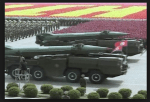
Kim Jong-un threatens ‘MERCILESS’ attack on America in retaliation for South Korea drills

This gallery contains 2 photos.


Kim Jong Un is either a total idiot or totally crazy or I guess both!.

US deploys drones in South Korea capable of striking North Korean targets


Trump is not Obama!

“The Biggest Show Of Force Since World War II”: Japan To Send Its Largest Warship To South China Sea


Tyler Durden's picture

The tension over the disputed territory in the South China Sea is about to escalate to another level: according to a Reuters report, Japan is preparing to to dispatch its largest warship on a three-month tour through the South China Sea beginning in May, in “its biggest show of naval force in the region since World War Two.”

Japan Maritime Self Defense Force’s helicopter carrier Izumo

The 249 meter-long (816.93 ft) Izumo is as large as Japan’s World War Two-era carriers and can operate up to nine helicopters. It resembles the amphibious assault carriers used by U.S. Marines, but lacks their well deck for launching landing craft and other vessels.

While China claims almost all the disputed waters despite the regular complaints of other nations in the region, and its growing military presence has fueled concern in Japan and the West, with the United States holding regular air and naval patrols to ensure freedom of navigation, so far Japan’s territorial claims have involved the Senkaku island chain in the East China Sea; that however appears to be changing as Japan seeks to stake a military presence in the contested region.

The Izumo helicopter carrier, commissioned only two years ago, will make stops in Singapore, Indonesia, the Philippines and Sri Lanka before joining the Malabar joint naval exercise with Indian and U.S. naval vessels in the Indian Ocean in July, before returning to Japan in August.

Why create another point of Chinese antagonism over the region? “The aim is to test the capability of the Izumo by sending it out on an extended mission,” said one of the sources who have knowledge of the plan. “It will train with the U.S. Navy in the South China Sea,” he added, asking not to be identified because he is not authorized to talk to the media. A spokesman for Japan’s Maritime Self Defense Force declined to comment.

  Taiwan, Malaysia, Vietnam, the Philippines and Brunei also claim parts of the sea which has rich fishing grounds, oil and gas deposits and through which around $5 trillion of global sea-borne trade passes each year. Japan does not have any claim to the waters, but has a separate maritime dispute with China in the East China Sea.

 Japan wants to invite Philippine President Rodrigo Duterte, who has pushed ties with China in recent months as he has criticized the old alliance with the United States, to visit the Izumo when it visits Subic Bay, about 100 km (62 miles) west of Manila, another of the sources said. Asked during a news conference about his view on the warship visit, Duterte said, without elaborating, “I have invited all of them.”

He added: “It is international passage, the South China Sea is not our territory, but it is part of our entitlement.” On whether he would visit the warship at Subic Bay, Duterte said: “If I have time.”

Japan’s unexpected flag-flying operation comes as the United States is conflicted between taking a tougher line with China and making concessions ahead of Xi’s visit to Trump next month. Washington has criticized China’s construction of man-made islands and a build-up of military facilities that it worries could be used to restrict free movement. Beijing responded in January said it had “irrefutable” sovereignty over the disputed islands after the White House vowed to defend “international territories”.

As Reuters notes, Japan in recent years, particularly under Prime Minister Shinzo Abe, has been stretching the limits of its post-war, pacifist constitution and has been making aggressive pushes for a return to militarism. It has designated the Izumo as a destroyer because the constitution forbids the acquisition of offensive weapons. The vessel, nonetheless, allows Japan to project military power well beyond its territory. Based in Yokosuka, near to Tokyo, which is also home to the U.S. Seventh Fleet’s carrier, the Ronald Reagan, the Izumo’s primary mission is anti-submarine warfare.

Sturgeon To Give May An “Ultimatum” As UK Preapres For Critical Vote Ahead Of Article 50


Tyler Durden's picture

Britain’s minister for leaving the European Union, David Davis, urged lawmakers not to hold back PM Theresa May’s ability to negotiate a Brexit deal in talks she could trigger as early as this week. Davis on Sunday called on lawmakers to vote to drop two amendments that were added to a bill authorizing the talks with the bloc’s other member states, saying May should be able to enter with no strings attached the WSJ reported.

On Monday the Brexit bill returns to the House of Commons, the U.K.’s lower house, for debate after the House of Lords said it wanted guarantees that EU citizens living in the U.K. could stay after Brexit and that Parliament could vote on the final terms. The final bill must be approved by both houses. Should the bill pass Monday, the government could invoke Article 50 as early as Tuesday according to weekend press reports, but negotiations in Parliament could last several days. The Brexit spokesman for the main opposition Labour Party, Keir Starmer, told Sky News he expects the government to trigger it on Wednesday or Thursday.

Even if the House of Commons votes in favor of the amendments, May is expected to keep her timetable of triggering by the end of the month. But it would underline how small her majority is in the lower house. Complicating matters is a tweet moments ago by BBG political editor Laura Kuenssberg, who reported that Scotland’s Nicola Sturgeon will give May an ultimatum: give Scotland a different Brexit deal or she’ll call for section 30, the indyref process.

On the topic of Brexit, Reuters reported on Sunday that David Davis is also drawing up “contingency plans” for Britain in the unlikely event it has to walk away from divorce talks with the European Union without a deal. Ahead of the start of Article 50 negotiations, which could be triggered as early as Tuesday, a committee of lawmakers warned it would be a serious dereliction of duty if the government failed to plan for the possibility of not reaching an exit deal. “I don’t think, firstly, that is remotely likely,” Davis told the BBC’s Andrew Marr Show, responding to the report. “It’s in absolutely everybody’s interest that we get a good outcome.”

Parliament’s Foreign Affairs committee warned that a breakdown in negotiations would be a “very destructive outcome,” causing economic harm to both sides as well as creating uncertainty and legal confusion for individuals and businesses.

 “The simple truth is we have been planning for the contingency – all the various outcomes, all the possible outcomes of the negotiations,” Davis said. “One of the reasons we don’t talk about the contingency plan too much is that we don’t want people to think ‘Oh, this is what we’re trying to do.'”

Asked when May would trigger talks, Davis declined to name a specific date. “Each date has different implications in terms of when it could be responded to by the (European) council … I’m not going to get into the details why, but there’s politics in terms of achieving success.”

Finally, for a frank, “on the ground” take on the current state of Brexit, here is an excerpt from Bill Blain’s latest Morning Porridge edition: