Could the Fed Ever Exit the Repo Market?


It is stunning how after more than three months, the analysis on the repo market is still nowhere close to reality. I believe that those in the trenches are, like me, afraid to really explain what is taking place for fear they will be blamed for creating a financial panic.

The popular explanation in September was repeated by the Wall Street Journal: “For one, Monday marked the deadline for companies to submit their quarterly federal tax payments.” This was standard analysis put out by the countless pundits the press rely upon and they have to come up with some explanation and quick. When analysts spout out their explanations to mainstream media it is because they are trying to get business. People have often asked me why I do not do mainstream media interviews. First, I do not need the business. Secondly, when you have real clients, they prefer to pay for information and do not want it on the front pages of newspapers for free. They appreciate analysis that is exclusive rather than as common as dirt. Hence, the analysis put out in the press about the Repo Crisis is coming from people who have no real clients in the area and lack the expertise in the field to start with.

Not even the central banks understood what was going on because even they tend to be domestically oriented. Despite the obvious fact that we live in a global economy, all the economic theories, analysis, and experience have been domestically focused. Unless someone has been in the trenches globally, they will never see the wildcard coming from external sources. Hence, we get the calls to explain things ONLY because they know all the other major institutions are also coming to us as some sort of the central point of reference.

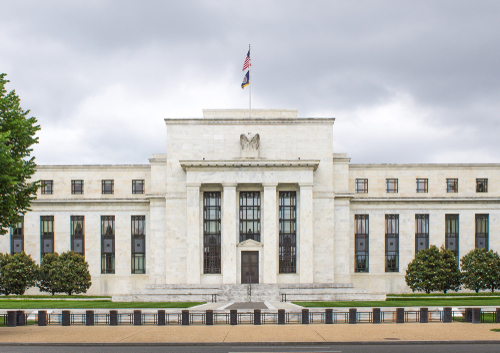
The question that is now dominating everyone’s inquiries, can the Fed exit the repo market after being the dominant source of liquidity for more than three months? What will it take for the Federal Reserve to withdraw from its daily liquidity operations in this $2.2 trillion market for repurchase agreements (repos)?

All I am prepared to say publicly is that the solution is beyond the powers of all the central banks combined. The solution is not attainable without political concessions, which politically are just off the table. This is going to require a major reform that is unlikely to take place and will not even be recognized until the crisis erupts on a much larger scale

Pension Crisis – Congress is Unable to Act Because of Gridlock


Trump has called the Democrats the do-nothings. All they have been focused on is impeaching Trump for the polls they are looking at behind the curtain all show Trump will beat whoever they put up as their candidate. the motto has been – if you can’t beat him, impeach him. There is no other area where the Democrats have just failed to act with a major crisis looming in 2021 than the spreading of the Pension Crisis.

There are pensions that are multi-employer funds which are perhaps the first to fall in the private sector. The Republicans did slip a rescue package into the massive $1.4 trillion spending bill passed last month. That was all because the United Mine Workers of America pensions would have failed completely and the push from environmentalists against mining and energy only puts pensions in those areas at serious risk after 2020.

The Republicans, interestingly enough, have no problem with the bailout but want to raise premiums that employers must contribute. Conversely, the Democrats who have been backed by such unions have argued for low-interest loans and not to force higher premiums on employees or employers.

The Republicans and Democrats are so deeply divided on how to solve the broader pension crisis problem, that this immediate impasse illustrates what I have been warning about that government is just collapsing incapable of bipartisan solutions. The Democrats simply refuse to act for they fear that Trump would get the credit for solving the pension crisis among unions that traditionally have backed the Democrats.

This entire issue has become not about solving any crisis but who gets credit and thus we have a government incapable of acting for the benefit of the people. As I have said, this is how governments eventually collapse. They become so corrupt and divided, they are incapable of managing the state.


FOREX & the Wild West Days of the ’80s


QUESTION: Mr. Armstrong; I was told that you were indeed the largest forecaster in foreign exchange. The story in London is you advised nearly all the Middle East and were the most important adviser on currency to BCCI, the bank the governments took down back in 1991 along with Salomon Brothers. They made a movie about BCCI. Is it true that you were an adviser to BCCI?

HS

ANSWER: The ’80s were the wild west in finance. I have told the story of how many banks operated back then. I would be called in and told someone wanted to give me $1 billion to manage back then when $1 billion was a lot of money (now it’s trillions). I would go to various banks and there would be a curtain between me and the potential client. I was not allowed to know who they were. I was turning down that business because it was just too wild for me.

Yes, we were advising BCCI on foreign exchange. They were passing it on to specific clients who at the time I did not know. I became concerned when I accepted an account for who I believed was a Saudi individual. The account was opened at Rudolf Wolf in London and after a few months of tracing all the various layers of corporations, it turned out I was managing money for none other than Muammar Mohammed Abu Minyar al-Gaddafi. I closed the account and within a matter of weeks, he was back through a completely different channel.

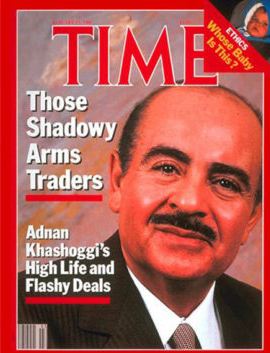
Perhaps one day I will write a book about those days. I ended up managing money for even Mr. Khashoggi once owned one of the world’s largest yachts, the 86-meter Nabila, which appeared in the James Bond film “Never Say Never Again,” which was later bought by Donald Trump. On top of that, what I thought was a company turned out to be a secret partnership between Gaddafi, Khashoggi, and Ferdinand Marcus of the Philippines.

The Floating Foreign Exchange Rate system had just begun in 1971. This was not a subject you could go get a degree in. This was a field built from scratch and it took a trader’s understanding of the world economy to cope with the events of the 70s and 80s. I was the leading adviser in FX because there really were no others with any track record. When I say I was called into just about every crisis from 1973 onward, it is not an exaggeration.

I was advising BCCI on currency globally. I was advising a company called GRANEDEX which turned out to be a front for Russia. I could never tell who was who. I had even the counter-revolutionary army in Iran coming to me for they were trading to make money to overthrow the religious government in Iran. I would be on a phone call with a client from Saudi Arabia who asked about gold and I said it depended on what OPEC would say that day. He put me on hold and dialed into the OPEC meeting and they put me on speakerphone. Those days taught me about war and how capital flows could be used to forecast war and geopolitical events. It cut my teeth of those wild west days.

I have handled some of the biggest projects ever and advised globally. To this day, we have people attending the World Economic Conference from 137 different countries. Because the world was such a crazy wild west sort of atmosphere, I turned to be just an institutional adviser of public corporations because I gave up on trying to figure out who the clients really were at times.


Can Central Banks Ever Control Long-Term Rates?


QUESTION: Marty, you said that central banks can only control short-term rates not long-term. Do you see a scenario where they could control the long-term rates?

Thank you for your insight

DH

ANSWER: If you ASSUME that there is a free market, then the answer is no possible way. Under a hybrid market, a central bank can split between public and private debt as is taking place in Japan. The Bank of Japan has announced it will buy unlimited amounts of government bonds to prevent interest rates from rising.

Under this hybrid market, a central bank can simply buy all government debt but this results in the total destruction of any free market in government debt. The government should at that point just print money and not even bother to issue any debt.

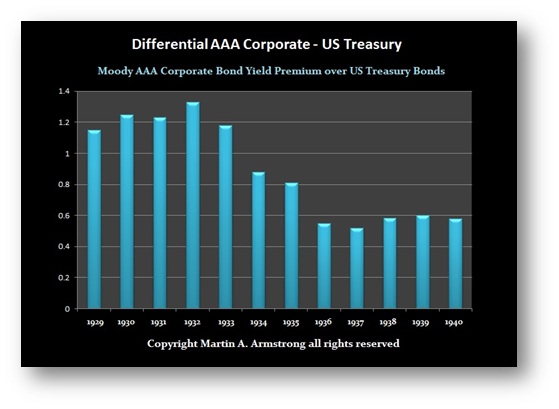
This results in a divergence between the fake government bond rates and the free market private interest rates. The spread will widen dramatically. Even during the Great Depression the spread between AAA corporate debt and government debt fluctuated according to where the confidence resided. As the sovereign debt crisis took place in 1931 with governments defaulting on their debts, the spread diminished as people began to trust corporate debt more so than government debt.

The third possibility is a closed market which means that the government can fix long-term rates that were done with usury laws. Even in Roman times,  Cicero tells us how the cap on interest rates existed only in Italy. This led to excessive interest rates being charged by Brutus in Cappadocia of 40% compared to 10% in Rome.

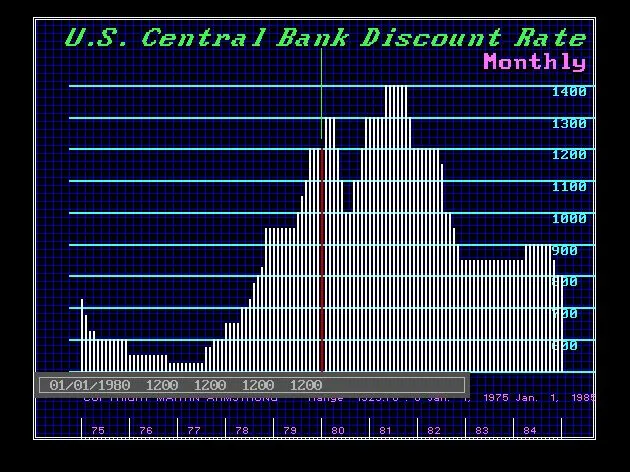
Paul Volcker had to have the usury rates raised in order to raise interest rates to 14% to fight inflation back in 1981. It was also illegal for a Catholic to charge interest in loans so the Jews were the first bankers coming out of the Dark Ages. The Catholics got around that by stacking the interest costs into the price.

The final type of system that would control long-term rates would be Communism where everything is just outlawed and the economy is entirely closed.

Under a free market, the central bank sets the wholesale short-term rates which is why it has been focused in the repo market. If it attempts to just buy in all government debt, then private rates will rise and that is what is taking place right now. The Fed can peg long-term rates as they did during World War II, but that applied only to government debt. To prevent prices from rising the political legislature imposed wage and price controls.

So there are ways to fix the long-term, but at the cost of a free market.

The Fate of Europe


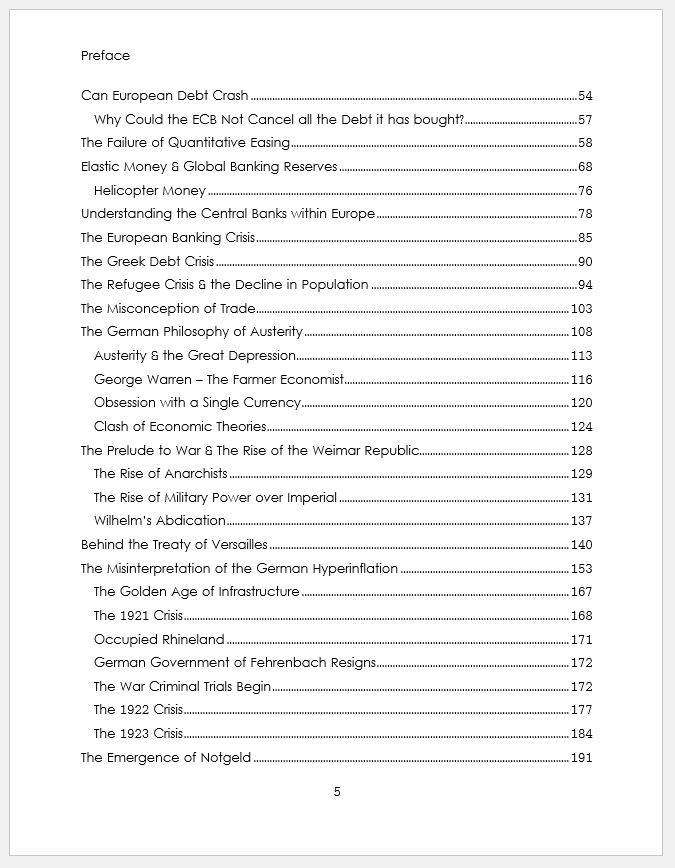
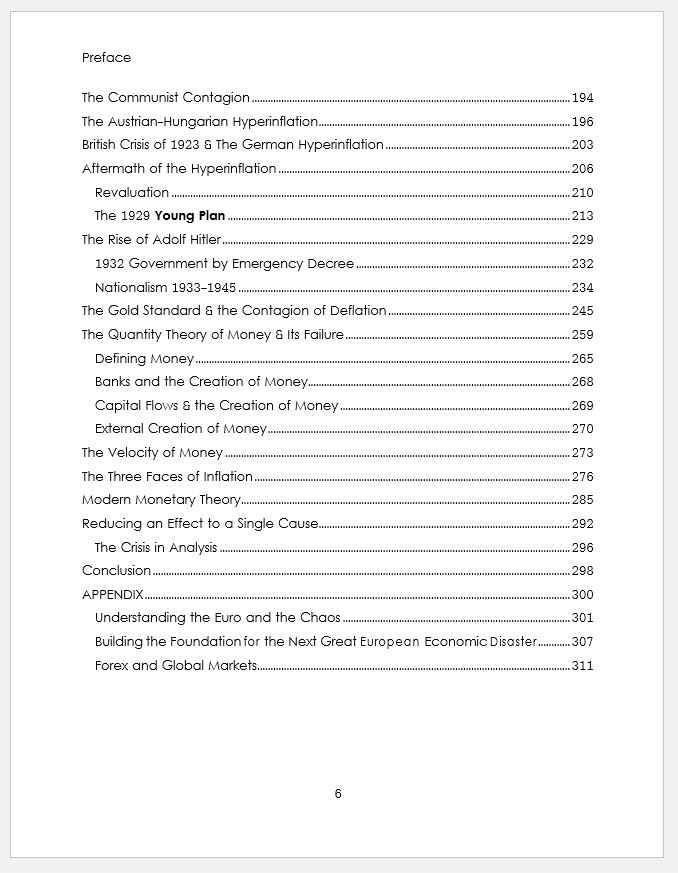
This is a special report entitled “The Fate of Europe” which dives into the shocking reality behind the curtain of the Euro and why it has failed to become a major reserve currency. The Fate of Europe is a very important report to understand the backdrop to what we face going forward and the risks both for European readers as well as for the rest of the world in light of the risks of global contagions. Like the Great Depression, the crisis we face will begin in Europe once again and spread like a contagion eventually engulfing the world economy.

Nigel Farage delivered the keynote speech at the Rome WEC. He called the World Economic Conferences we have been holding since 1985 – the “alternative to Davos.” This report is unique for two reasons. First, when the Euro was being formed, the commission attended our WEC in London in 1997. I discussed directly on how the create the euro from scratch. We published detailed recommendations back then.


This report exposes the reality behind the curtain. The entire design of the EU is to deliberately deny any right of the people to ever vote on their own future. The politicians have assumed that the people are TOO STUPID to know what is best for them. In fact, Germany, the foundation of the entire European economy, was NEVER given the right to vote to join the Euro. Chancellor Kohl admitted that he acted as a dictator because he said if he ever allowed the German people to vote, he would have lost 7 to 3.

This report is essential to understand the risks in Europe. Most people have no clue because the second reason this report is unique is that no European analyst working in any of big financial institutions are ever allowed to criticize the EU or speak negatively about the Euro.

The Fate of Europe … $295


Understanding the Global Economy from the Dollar to the Euro


Many people continually talk about the dollar crashing. They say the dollar is supposed to crumble to dust and be dispersed into the wind. The bias against the dollar has been turned into a religion primarily propagated by the gold promoters. Unfortunately, they fail to understand the relationship of the dollar to the world economy. Additionally, they only look at the United States and ignore the economic trends outside the USA.


This report deals with the next monetary reform that many will call Bretton Woods II. What is the future for the dollar? Contrary to what many have been preaching since 1971, the dollar has survived. Right now there remains a dollar shortage, which is one reason the dollar has been rising since 2008 when the euro once stood at $1.60. The report also discusses the transition to digital currencies.

Hoarding Dollars ….. $295

How Will Europe Respond to Being the Source of the Crisis?


QUESTION: Dear Martin,
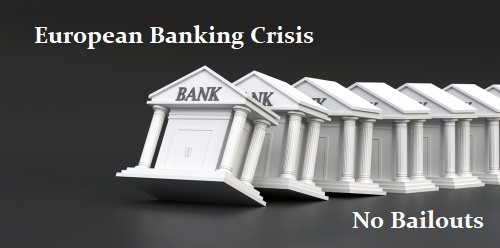
You have discussed the structural design flaw in the euro being due to the lack of consolidation of EU countries’ debt, as well as, EU policies that prohibit bank bailouts. Why could EU policies regarding the prohibition of bank bailouts just not be changed to allow for bailouts? If I understand correctly, wasn’t it also the case that the ECB was not legally allowed to buy EU country sovereign debt? That law was either changed or ignored (I’m not sure which) during the European sovereign debt crisis earlier this decade to allow for the ECB to buy sovereign bonds, which then brought down sovereign debt yields.

Correct?
Thank you for helping us all to grow in our understanding of what confronts us.
Sincerely,
WJ

ANSWER: Everything would function so much better if we had rational leadership. The problem is simply that government will NEVER avert a crisis. They must first experience the crisis before they will ever consider changing the policy. Yes, it seems easy to just fix the problem now. However, I can talk face-to-face until my face turns blue. They will NEVER prevent a crisis. Politicians know that they ONLY look authoritative when they respond to a crisis. Nobody will listen if they say they just prevent a crisis. People assume it is just BS.

Add to this reality the problem between domestic and international policy objectives. Politicians run for election, promising to do this or that, which all seems nice for it is presented to be within their power. That is what is under siege. The Federal Reserve has suddenly realized that it has become the central bank of the world. They were intending to lower rates to help emerging markets, Europe, and Japan. Then the Repo Crisis hit and the Fed was compelled to address the liquidity crisis. This was not about “stimulating” the economy, it was about preventing short-term interest rates from rising. In other words, the QE of 2008-2009 was about buying in long-term debt to try to lower long-term interest rates. Here the short-term rates were rising. Traditionally, the only thing a central bank can control is the short-term. The Repo Crisis exposed the fact that central banks are losing control of even the short-term.


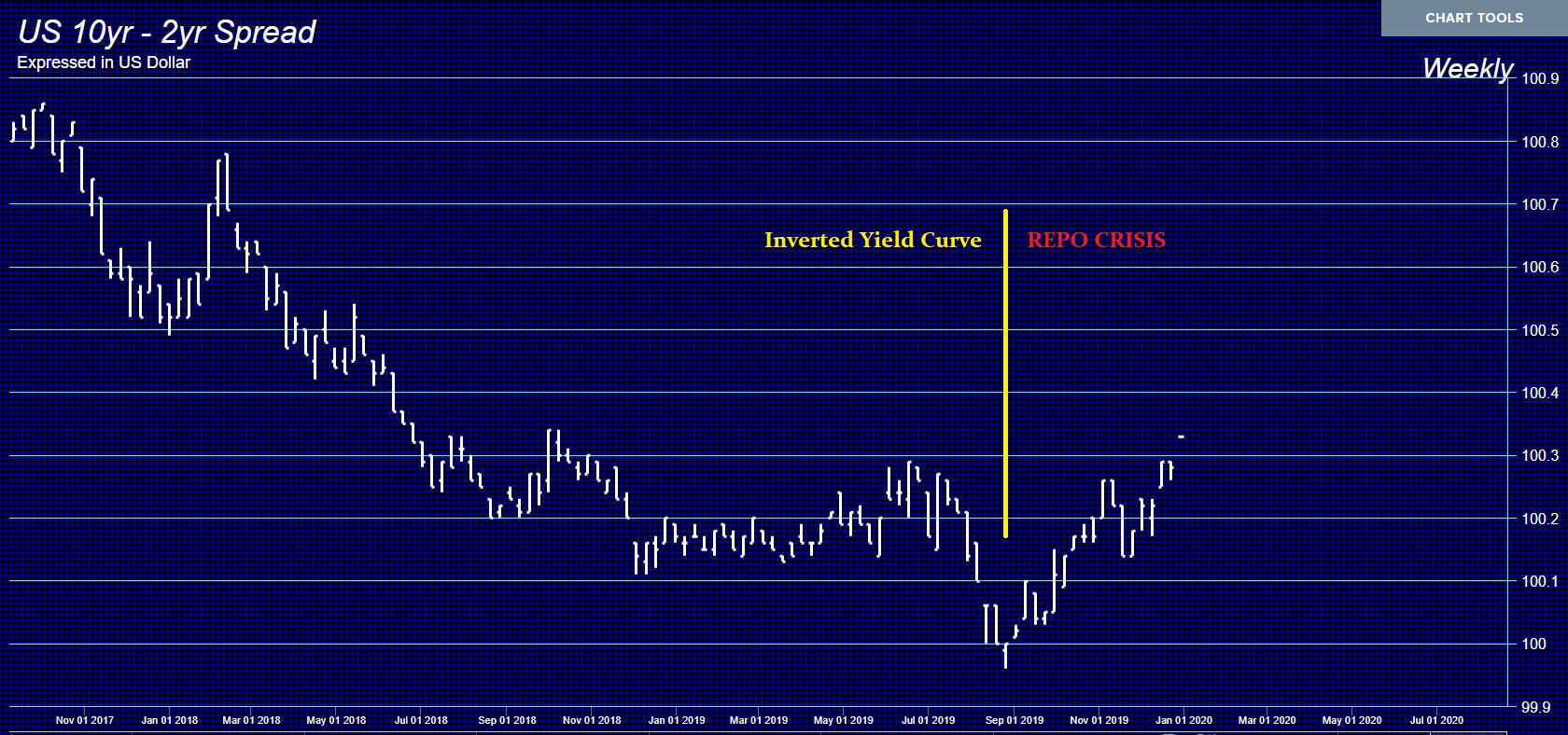
Remember the inverted yield curve in the summer of 2019 that everyone said was a precursor to a recession? Ever since the Repo Crisis, the yield curve has steepened dramatically. This is confirming what I have been saying. This was never about stimulation, it was an attempt to prevent short-term rates from rising.

Therefore, the questions become: (1) Will Europe respond and realize that their no-bailout policy will create a worldwide banking contagion and crisis? (2) If they do recognize that they are the source of a worldwide crisis, how long will it take them to respond and reverse their policy? (3) Will they accept responsibility or blame the rest of the world?

Rational people respond completely differently than politicians who cannot publicly admit they were wrong.

The Decline & Fall of Religion?


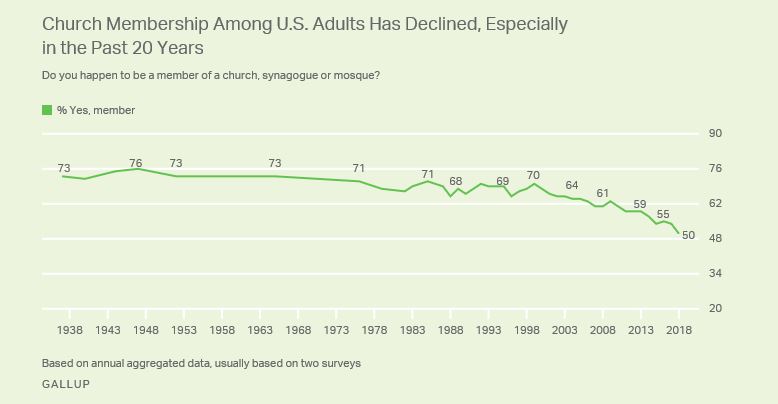
In truth, everything has its cycle. There is no escaping this reality upon which the entire universe was created. There has been a steady decline in church membership which has been consistent with perhaps the politically correct movement with the broader societal trends that also manifest in the declining church attendance. There appears to be a rising trend of an increasing proportion of Americans with no religious preference which is strikingly similar to the decline in religion which took place within the Roman Empire.
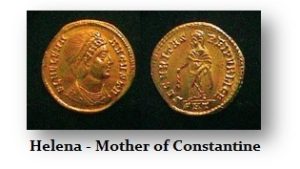
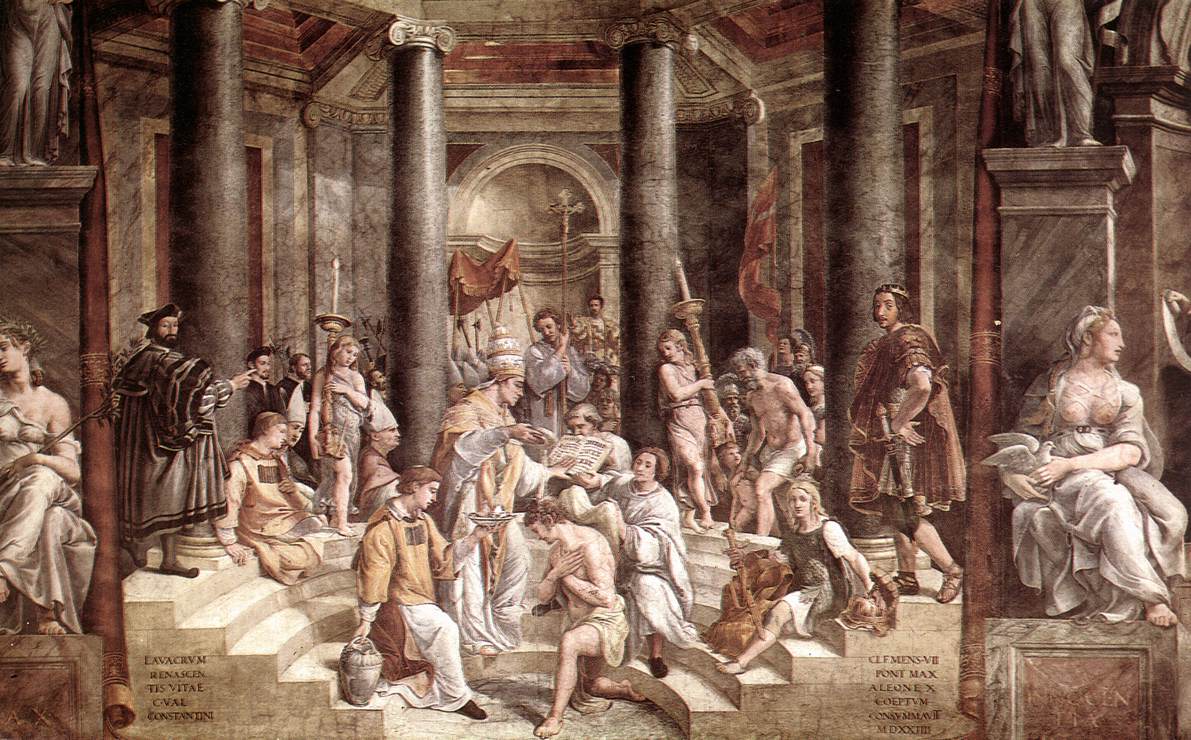
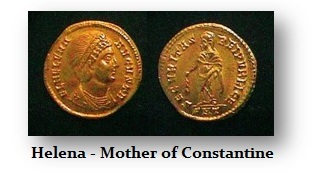
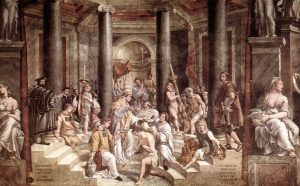
Indeed, Constantine’s (309-337AD) decision to decriminalize Christianity within the Roman Empire was a turning point for religious change cyclically. It was the year 313AD, when Constantine and Licinius issued the Edict of Milan decriminalizing Christian worship. Constantine thus became a great patron of Christianity but keep in mind his mother, Helena, was a devout Christian.  She searched all the holy places and constructed churches over them from where Christ was born to where he was crucified.

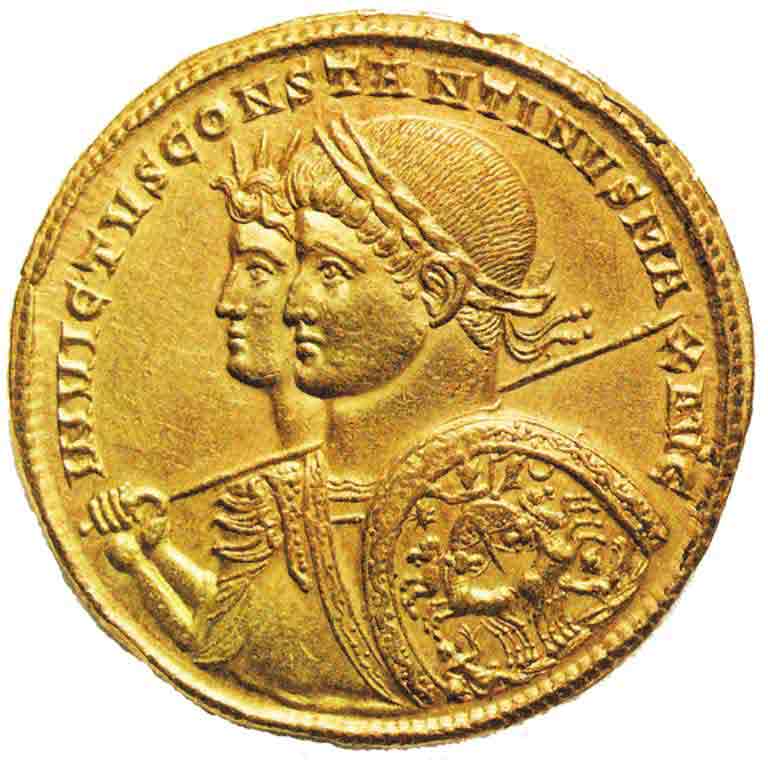
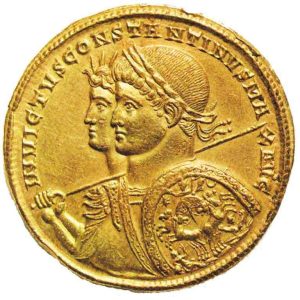
Note that the medallion pictured here showed Constantine with Sol, the sun god. The cult of Sol was becoming the supreme god even among the pagans – Sol Invictus (invincible sun because it roise every day no matter what). Constantine had set a precedent for the position of the Christian emperor within the Church and raised the notions of orthodoxy, Christendom, ecumenical councils, and the state church of the Roman Empire was officially declared by edict in 380AD. However, Constantine was not really such a devout believer. He adopted Christianity because the movement was rising substantially when people prayed to the pagan golds and nothing happened. The Christians exploited that and argued that the reason their pagan protectors failed was because they did not exist. The pagans, on the other hand, persecuted Christians because the barbarian invasions and the fall of the Roman Empire was taking place because the gods were angry at the Christians.
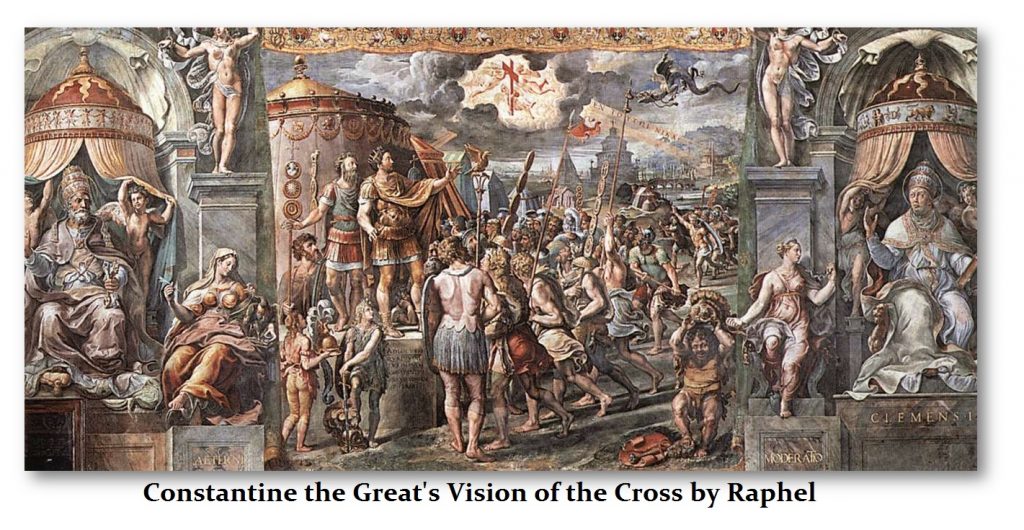
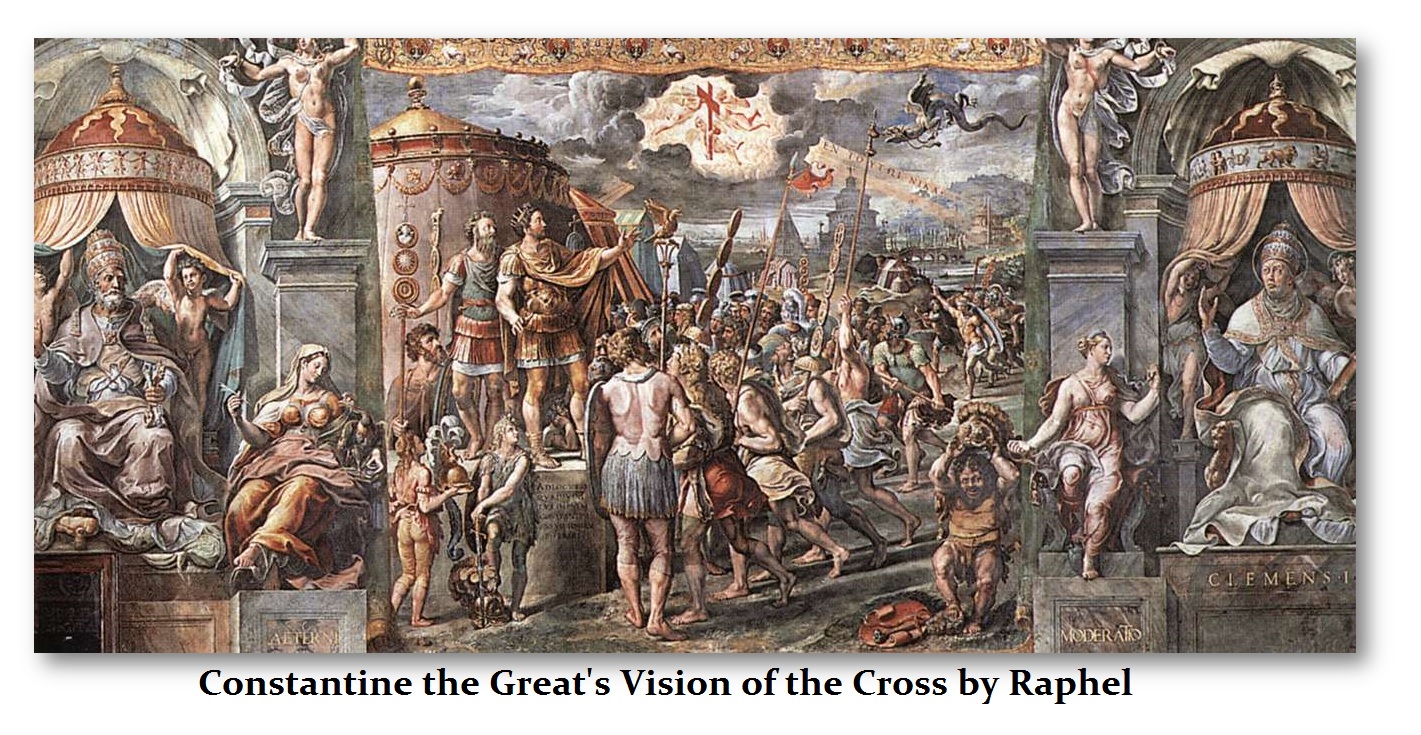
Constantine sought to be the sole emperor. He really wages civil war. He took a risk to move against Maxentius’ forces which greatly outnumbered his own. Constantine descended through the Genevre Pass and entered Italy. Several battles were fought as Constantine neared Rome itself. The final battle came on October 28th, 312 AD at Milvian Bridge. It was this battle where Constantine I claimed to have had a vision of Christ and marched against Maxentius under the Christian symbol of the cross. Despite the biased historical accounts, the Battle of Milvian Bridge was less of a battle between Christianity and paganism as it was a battle for power and control. While Maxentius may have been a pagan, he did not persecute the Christians and in fact built the first Christian church in Rome. Many of his own troops were Christians. No doubt, Constantine realized that placing the cross on the shield of his army would disrupt his opposing force. Many were Christian and were reluctant to kill a fellow Christian. It was a brilliant move.

Maxentius-Basilica

Historians have written much of the Battle of Milvian Bridge. It has been characterized as the battle between Christianity and Paganism. As Maxentius’ troops began to retreat across a temporary bridge constructed upon boats, Maxentius fell into the water when the bridge collapsed along with thousands of his troops. His armor proved too heavy and thus he drowned in the waters of the Tiber. That ended the battle.

It is not certain when Jesus Christ was actually born. The census that is the story of having to travel to Bethlehem was actually the Census of Quirinius which took place in 6AD after Herod I the Great had died and the Romans were dividing Judaea into thirds among Herod’s sons. There is no actual evidence of Herod issuing an order to kill the firstborn males when in fact he clearly died about 10 years before. Such an order would have to have been issued by one of his sons, yet there is no surviving evidence to support that as fact.

Nevertheless, our model does place a turning point about late 3AD when most scholars agree that Jesus was born based primarily upon the Census of Quirinius. We then have in 312AD the victory of Milvian Bridge by Constantine the Great who then decrees that Christianity will be the state religion primarily so he got to plunder all the wealth of pagan temples. It is rather stunning how we come to major religious events every 309.6 years. This appears to be a change in beliefs that do not necessarily suggest complete changes in religions. Often these are shifts that become more fundamentalist in their beliefs or a turn toward liberalism.

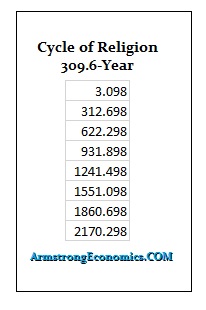
There are two primary cycles. First we can look at the cycle of change in religion which seems to follow the 309.6 year cycle which is, of course, the 8.6-year frequency. The second is to look at the derivative of the 8.6-year which produces a target for a major collapse in religion, which is underway at this time, by 2033.

From the Battle of the Milvian Bridge which took place between the Roman Emperors Constantine I and Maxentius on the 28th day of October 312AD (312.824), it was 309.6 years until the rise of Islam. At the age of 40 in 610AD, Muhammad is said to have received his first verbal revelation in the cave called Hira.

This was the beginning of the writing of the Quran that continued up to the end of his life. There was also the persecution of the newly converted Muslims like there had been among the Christians. Muhammad and his followers migrated to Medina in 622AD, an event known as the Hegira and the birth of the Islam calendar (622.298).

The next cycle produced the target where we see the beginning of pilgrimages to the Middle East during the 10th century. The belief that the world would end come the year 1,000 was very prominent, so much so that the English King Aethelred II (978-1016AD) replaced his image on the coinage with the symbol of Christianity – the lamb. We seem to fear whole even numbers like the 2000 Y2K bug which was going to destroy all computers.

The next target was 1241 which was the year of the Great Mongol Invasion. Poland fell to the Mongols that year who are eventually beaten back. We also see in this cycle was a new trend of Antipopes when France seized the Catholic Church and installed French popes as puppets of the French king that became known as the Avignon Papacy. This was the period from 1309 to 1376 during which seven successive popes resided in Avignon. The Seventh Crusade was a crusade led by Louis IX of France from 1248 to 1254. This was the cycle that we see Constantinople fall to the Turks in 1453.
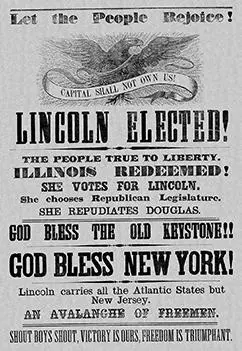
The next cycle turning point began in 1551 when the Council of Trent reconvened to deal with the Protestant Reformation. This cycle also marks the attempt of Islam to conquer Europe and impose Islam as the state religion. The invading army was the new Ottoman Empire, which was defeated at the Battle of Vienna which took place on the 12th of September 1683 after the imperial city had been besieged by the Ottoman Empire for two months. The peak of that cycle arrives 212 years from the beginning. That was 1763 and the start of George II restrictions placed upon Americans which led to the American Revolution, which was also about the freedom of religion.
This brings us to 1860 and this is the beginning of the American Civil War, which was rooted in a religious question concerning slavery. This current cycle will reach its peak in 2072 and the next will begin in 2170. We are clearly moving toward a clash of philosophies both within Christianity as well as among different religious foundations. As we move into that major turning point, we will see rising discontent and religious confrontation engulf the world. In the USA, we have the liberal v conservative confrontation which is also incorporating the religious right and anti-abortion movements v women’s liberation factions. They see this as plain and simple – thous shalt not kill. Yet this is inconsistent with the idea of war itself. Perhaps it is ok to kill someone if the government tells you to do it?

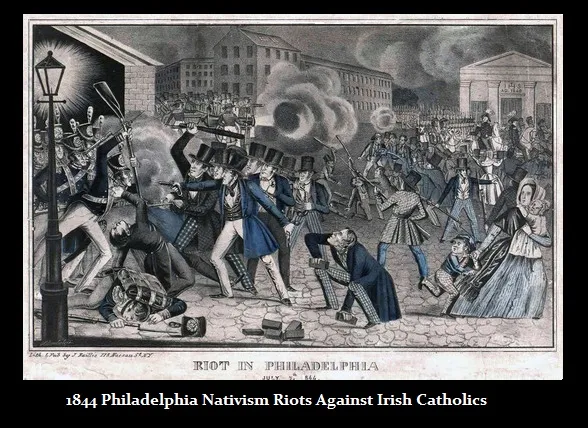
This is part of the religious cycle as well. We will also see the conflict between Christianity and Islam build in Europe. This will be no different from the anti-immigration movement that surged into gun battles on the streets of Philadelphia during the economic depression that followed the Sovereign Debt Defaults by states during the 1840s. As the economic decline picks up speed from 2018 into 2020, the tensions against immigration will only rise. This is also behind the separatist movements in Europe.
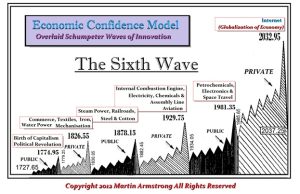


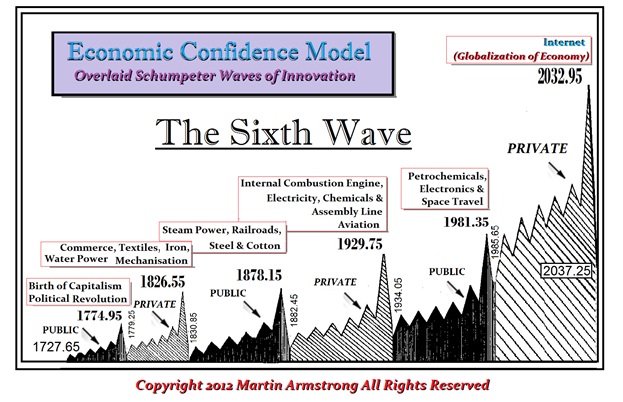
While we are currently in the Seventh Wave 309.6-year cycle following the birth of Christ, from a pure cyclical perspective, the next turning point in 2072 may be a significant religious change. What comes, can only be subject to speculation. We have completed six waves of 309.6 years. The Seventh is where major change and conflict will be unleashed. However, if we just look at Christianity, from the Edit of 313AD decriminalizing this religion, then 2 x 8.6 = 17.2. Therefore, 1720 years from 313AD brings us to 2033 which aligns with the Sixth Wave of the ECM – 2032.
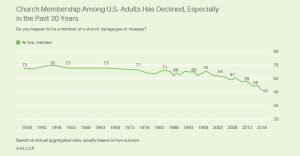
Further confirmation that we are in a major Private Wave is that the belief systems also shifts not merely away from government (Public v Private) but also from formalized religion and even sports. The evidence is very clear that church memberships have been declining. The various church membership data reflected the steady decline from the 76% level to the 50% level. There has been rising discontent even within the Catholic Church over the left-wing statement of Pope Francis. He has been alienating many Catholics. He has adopted the climate change agenda and supported the United Nations in this anti-industrialization movement. He has also adopted the Piketty argument against capitalism supporting the Marxist view of economic inequality. Many feel he has abandoned the faith since one of the Ten Commandments is thou shall not covert what other people have. This has led many to question if he is not just expressing his personal beliefs disguised as religion.
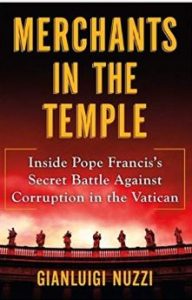
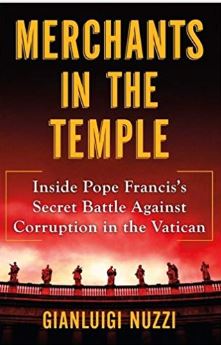
What is clear is that under Pope Francis, the finances of the Church has been declining significantly. Some argue it is due to his political statements that are not grounded in religion. There is a rather famous Italian investigative journalist, Gianluigi Nuzzi, whose new book, Universal Judgmentis the latest in a string of reveling dispatches on financial crises which he has helped to uncover within the church. In his latest book, he warns that the Vatican will run out of funds by 2023. Certainly, the attendance is declining sharply. His previous book, Merchants in the Temple, focused on the internal corruption in the Vatican bank.


Is World War III on the Horizon?


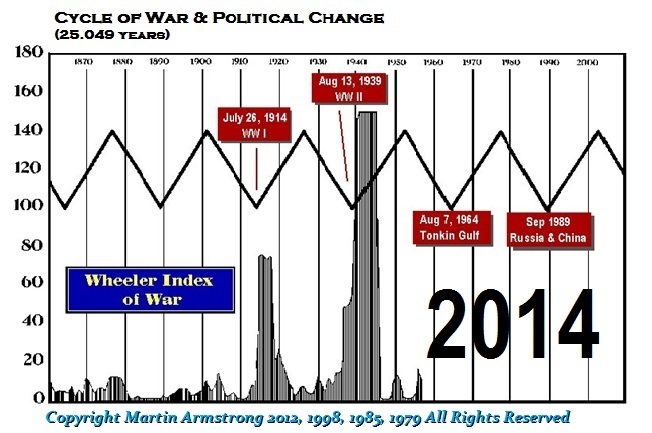
QUESTION:  Martin, I have been following your blog for several months and have begun to start reading older posts because it is all amazing work. When looking at your war cycle with Russia that started in 2014 and supposedly cycles roughly 25 years, I noticed that correlates nicely with your ECM on Russia peaking around 2039. Coincidence? Is it becoming pretty clear World War 3 between east and west seems just over the horizon past 2032?
Thanks,
CC

ANSWER: Socialism is dying and in the process, we are witnessing the rise in even domestic violence. In the United States, this hatred of Trump-inspired by the Democrats has unleashed the destruction of the United States as we have known it. The United States will most likely cease to exist after 2034 and the same result will impact Russia by 2038.

The crisis we face is that governments have made so many worthless promises that cannot be funded. When that takes place historically, the political states collapse internally. However, before that happens, they will turn to international war as a means to retain power and distract the people from the real economic crisis which is befalling civilization.

Gold, War, & the ECM


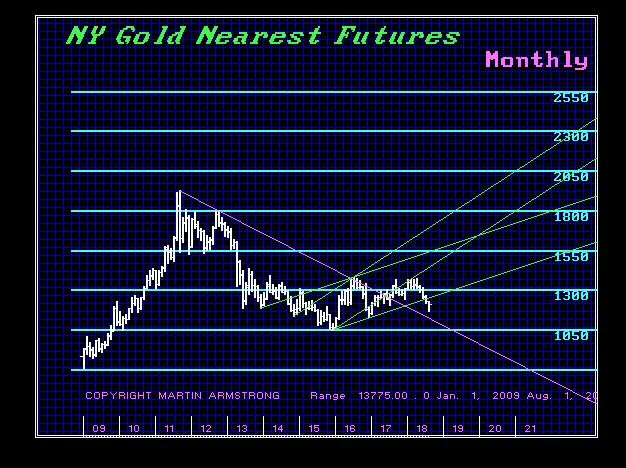
QUESTION: Marty, Do you think it will be time to short the bonds with the ECM? Gold had bounced off the Downtrend line instead of electing the bearish reversals and it rallied after the Pi turning point. You said if gold peaked with the bottom of the ECM it could then fall back to retest support. It looks as if that happens, the Fed will lose the battle and interest rates will rise after the ECM. Is this all a set up like the gold rally back in 1979 following the Afghan invasion? It looks too familiar.

HB

ANSWER: Ah, you have a good memory. It would have been much better had gold made a new low, held the 1980 high, and then rallied with the ECM turn in 2020. That would have clearly been a long-term sustainable trend. Bouncing off of the Bear Reversals & Downtrend Line and then rallying with the Pi turning point 2018.89, pointed to a rally into the next ECM (2020.05). I warned that given that pattern we would rally to test the Yearly Bullish at 1432 and at the WEC I warned that a close above that pointed to a rally into the January 18th turning point with the next resistance at the 1585 level.

The spike up in gold is clearly reminiscent of the Russian invasion of Afghanistan on December 24, 1979. That was under the pretext of upholding the Soviet-Afghan Friendship Treaty of 1978. As midnight approached, the Soviets organized a massive military airlift into Kabul, involving an estimated 280 transport aircraft and three divisions of almost 8,500 men each.

Currently, our system resistance has stood at 1585 followed by 1620 with technical resistance in the 1575-1595 level. We most certainly have to be concerned if gold peaks with the ECM. This will not be a good omen and I agree it is reminiscent of the pattern of 1980. The interest rates the exploded and peaked in May 1981 with the top of the ECM back then.

With the Repo Crisis and the Fed desperately trying to prevent interest rates from rising, which was opposite back in 1979-1981, we still have to be very cautious about how all the markets line up on our model for this turning point. Back then, gold peaked on its own cycle on January 21, 1980, while the interest rates rallied further peaking with the top of the ECM precisely – 1981.35.

We will do the gold report after the ECM turn.