BITCOIN – The Reality Check


Armstrong Economics Blog/Cryptocurrency Re-Posted Mar 21, 2023 by Martin Armstrong

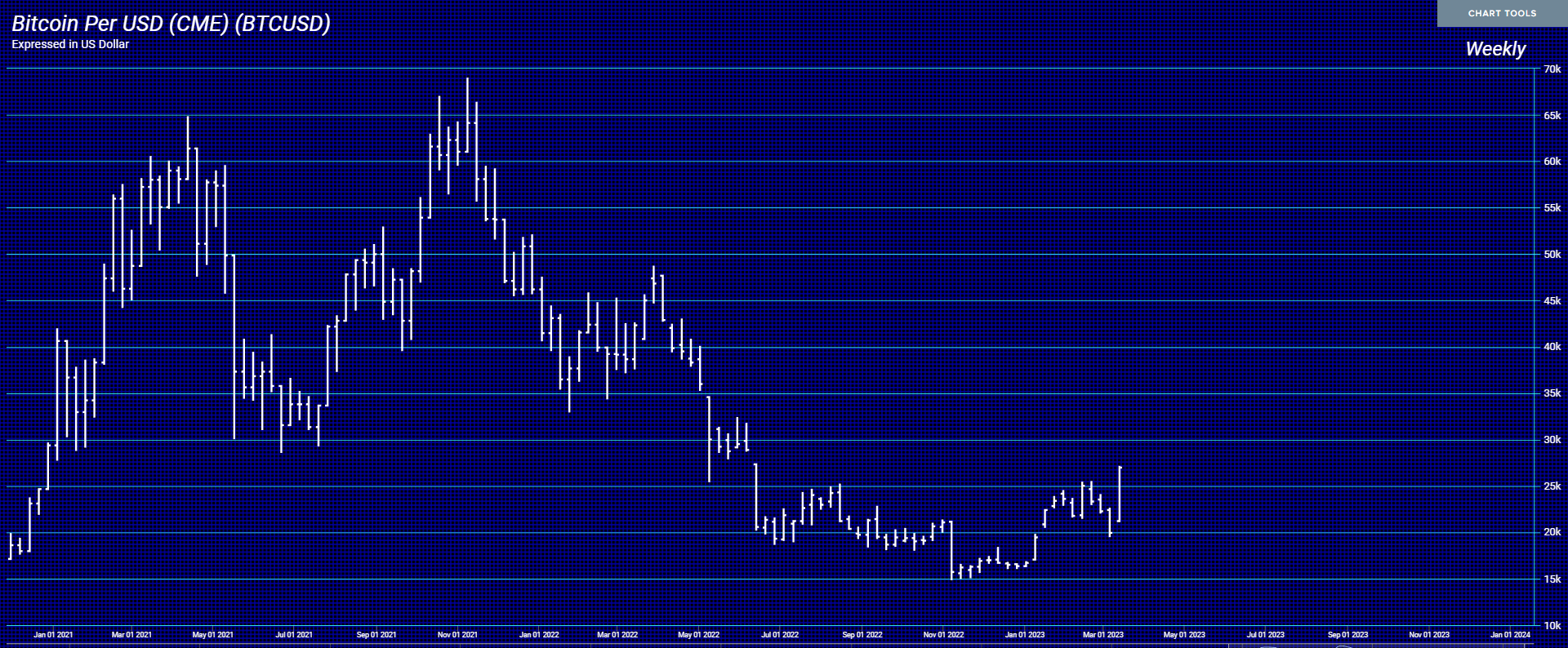
COMMENT: Mr. Armstrong, I just wanted to thank you for the education. When you explained that Bitcoin was not some hedge against central banks or an exception to everything out there but was just another trading vehicle, you saved my life for sure my wife would have killed me during the crash. The November turning point proved correct. Now we head into some very interesting times with Directional Changes ahead. The bounce now is the same pattern you see in gold. It is just a trading vehicle and not a store of wealth. Thank you for that reality check.

Sam

REPLY: Yes, spousal abuse can be a major deterrent. Merrill Lynch paid me to teach a client how to trade who had created the biggest one-day loss perhaps in trading history and wrote a check and kept trading. I got him to pay more attention, but when he was winning, he was too busy to watch. He seemed to love to lose money for that got him all geared up. It was his wife that made him stop trading.

Look, Bitcoin is NOT some store of wealth. You will lose your shirt, pants, and spouse if you buy into that. It is a trading vehicle – nothing more. Just follow Socrates. That gives at least an unbiased viewpoint. What goes up, comes down and what goes down eventually goes up. That is just the law of the market.

Cash Not Accepted


Armstrong Economics Blog/The Hunt for Taxes Re-Posted Mar 16, 2023 by Martin Armstrong

There once was a time when cash was the undisputed king. Merchants preferred cash payments over credit, and there were often incentives for paying with paper. I recall receiving lower gas prices when paying with cash, for example. It is increasingly common to see “no cash accepted” signs at establishments as the world moves toward a cashless society. At the Federal level, there are no laws protecting consumers who wish to pay in cash. The Federal Reserve stated on its website:

There is no federal statute mandating that a private business, a person, or an organization must accept currency or coins as payment for goods or services. Private businesses are free to develop their own policies on whether to accept cash unless there is a state law that says otherwise.

"Section 31 U.S.C. 5103, entitled "Legal tender," states: "United States coins and currency [including Federal Reserve notes and circulating notes of Federal Reserve Banks and national banks] are legal tender for all debts, public charges, taxes, and dues." This statute means that all U.S. money as identified above is a valid and legal offer of payment for debts when tendered to a creditor."

Yet, the Federal Reserve also recognizes that as of 2021, 4.5% of US households were “unbanked.” This means that 5.9 million households are unable to pay by card. This is the lowest unbanked rate since the Fed began keeping track in 2009. The most common reason for not having an account, reported by 21.7% of unbanked households, is that they do not meet minimum balance requirements. The second most reported reason (13.2%) is that people simply do not trust banks, while the third most cited reason (8.4%) was the desire for privacy.

If merchants refuse to accept cash, these people cannot participate in consumerism. Their legal tender is simply not accepted. Unbanked households are more likely to contain persons with lower levels of education, lower incomes, disabilities, single mothers, and minorities. As the Fed reported:

“Differences in unbanked rates between Black and White households and between Hispanic and White households in 2021 were present at every income level. For example, among households with income between $30,000 and $50,000, 8.0 percent of Black households and 8.4 percent of Hispanic households were unbanked, compared with 1.7 percent of White households.”

If cash is legal tender, then it should be accepted everywhere. Numerous merchants not only refuse cash but they charge an additional fee for using credit. Tennessee, Arizona, Delaware, District of Columbia, Idaho, Maine, Massachusetts, Michigan, Mississippi, New York, North Dakota, Oklahoma and Pennsylvania, New Jersey, Rhode, Colorado, and Connecticut have laws at the state level protecting cash payments. Some cities such as Washington D.C., Berkley, Chicago, New York City, Philadelphia, and San Francisco also have laws in place. However, I can assure you that many retailers in these areas still do not accept cash.

Washington wants to move us toward a cashless society to tax everyone, even those with the least to give, on every transaction we make.

C-Level Executives Sold Shares Weeks Before SVB Failed


Armstrong Economics Blog/Corruption Re-Posted Mar 13, 2023 by Martin Armstrong

A bank failure of this proportion has not been seen since 2008 when Washington Mutual failed. The majority of deposits in Silicon Valley Bank (SVB) are uninsured, meaning the FDIC’s $250,000 protection does not apply. Uninsured depositors will be provided receivership certificates and should receive an advanced dividend this week. The FDIC must sell off the remaining assets of SVC to determine how much it can provide to those uninsured depositors. The FDIC is encouraging borrowers to continue paying their existing loans. The bank was said to host $209 billion in assets and $175.4 billion in deposits as of December 2022. Washington Mutual held around $307 billion in assets when it went down.

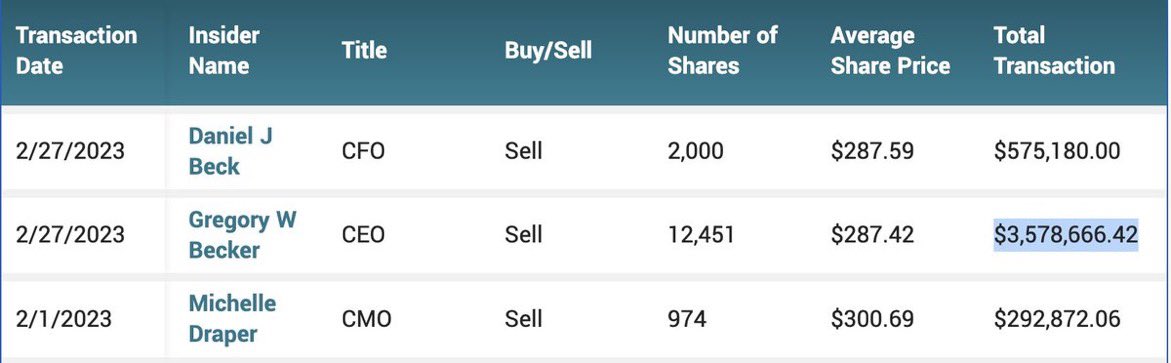
Tons of people and businesses will be completely screwed over. Who could have seen it coming? Silicon Valley Bank CEO, CFO, and CMO sold off millions in stock over the past two weeks. President and CEO Greg Becker sold 12,451 shares on February 27 for $3.6 million at $287.42 per share. Later that day, he purchased options for the same amount of shares at $105.18 a piece. He did the same thing in December 2021, as this is not an uncommon albeit unethical practice. Banks commonly trade against their own clients. Becker sold about $3.57 million worth of SVB stock over the past two weeks and is now making TV appearances saying he did not see this coming.

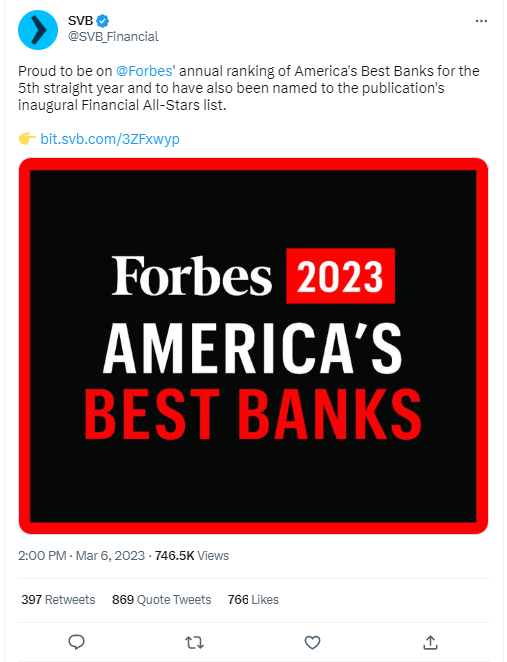
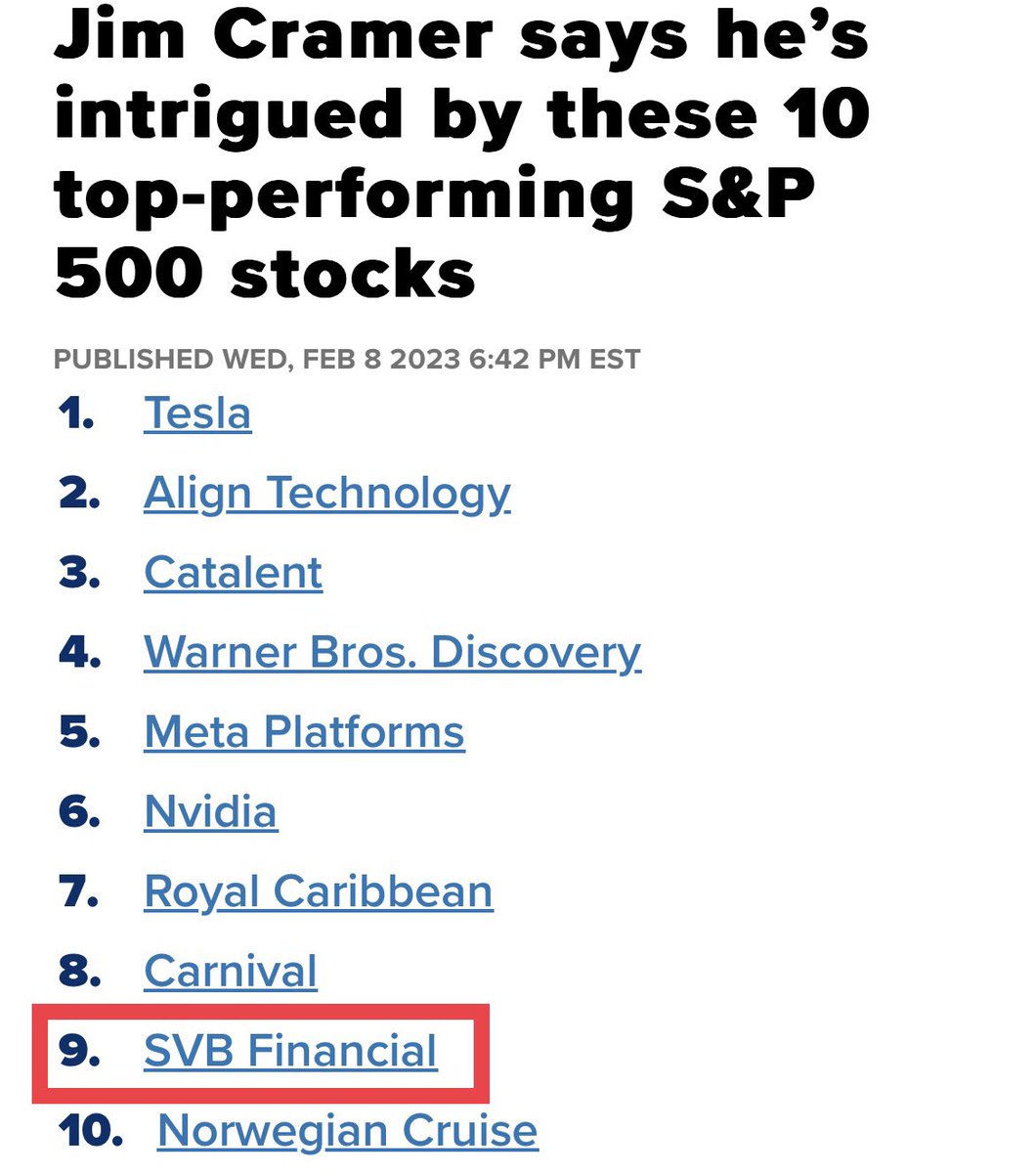
There were signs of trouble, but the talking heads said otherwise. Forbes even listed SVB Financial Group as #20 on its list of America’s Best Banks in an article published on February 14, 2023. Talking/screaming head Jim Cramer came out last month to say that SVB Financial would become one of the top performers on the S&P. This is why you cannot listen to information based on biased opinions. I hesitate to call this negligence technical analysis.

Companies are now at a complete loss, many cannot make payroll, and this situation will only worsen once the uninsured depositors realize their IOUs are worthless.

Kristi Noem Sends Warning About State Level Effort to Redefine Currency, Same Legislation Currently Hitting 20 States


Posted originally on the CTH on March 11, 2023 | Sundance

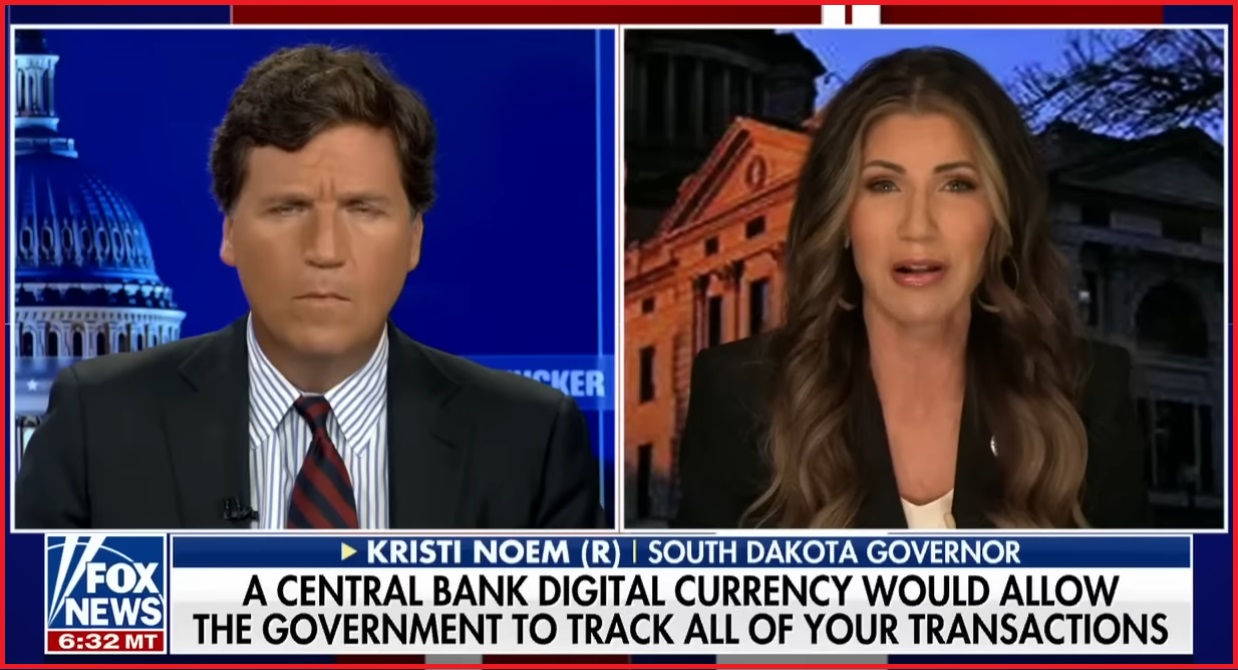
South Dakota Governor Krisi Noem appeared on Tucker Carlson’s television broadcast last night to send a warning to fellow governors.  According to the background story, the South Dakota legislature passed a bill redefining currency and creating rules for a Central Bank Digital Currency (CBDC) that would block all other digital currencies from being used in the state.  Governor Noem vetoed the bill.

When asked why her legislature would do this, Noem responded the state politicians likely did not read the bill as it was constructed by lobbyists.  Noem is exactly correct and hits on a subject we have discussed here frequently {GO DEEP}.  However, one of the more alarming aspects to Noem’s discussion of the issue is that around 20 other states are considering similar legislation.  WATCH:

.

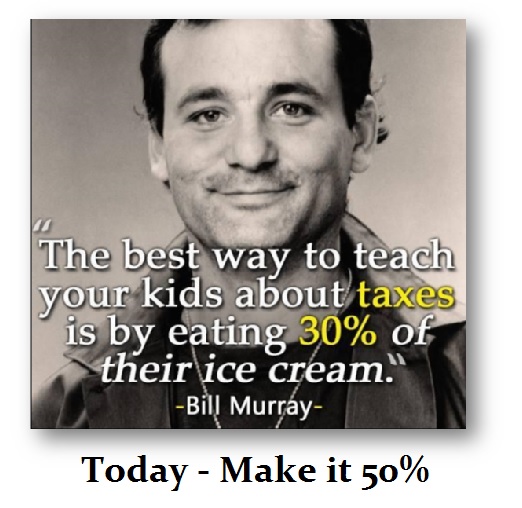
How to Teach Your Kids About Taxes


Armstrong Economics Blog/The Hunt for Taxes Re-Posted Feb 28, 2023 by Martin Armstrong

COMMENT: Marty, you are 100% spot on about governments only ever being capable of lying and mismanaging money and raising taxes.
The Australian Labor party that ran on a mandate to not change superannuation are now proposing to change superannuation.
Their plan is the abolish tax benefits for accounts with balances above $3M, using the usual argument of targeting only the rich.
That is always the selling pitch isn’t it? Only the rich and of course the majority take the bait.
I have desperately tried to inform people that it is NEVER just the rich that re impacted. I have can not for the. life of me get people to understand that the so called rich, will be required to sell assets to meet tax commitments and have less money to buy assets into the future, and that, that in turn will impact asset prices and thus affect everyone. Rich and poor.
And then there is the obvious. Thresholds never remain where they begin and are always lowered.
Government is on the hunt for money in every country.
Cheers

AQ

REPLY: That is the problem. Most people do not want to believe that the government only looks out for its own power. It is so critical to prohibit career politicians no matter which direction they lean. For in the end, they will always lean in their own favor.

Perhaps you might remind them of the “Luxury Tax” that the sales pitch was they were going to tax their Ferarries, Fur Coats, & their French Wines. I was there in Australia back then. Maybe I saw two Ferraries because they were already 100% taxed to import. Some perhaps wore a fur coat down in Melbin, and nobody ever served me French wine – its was always Australian. People cheered then too – get those evil rich people. Then they woke up and ALL electrical products were suddenly a luxury.

The bulk of all taxes is always from the common people simply because we outnumber the billionaires. There are less than 500 such people in the USA. Confiscate all their wealth and you will not balance the budget even for one year.