French Pensioners Earn More than Working Adults


Posted originally on Sep 18, 2025 by Martin Armstrong |  

Pension Crisis

The average French pensioner receives a larger payout than working-aged adults. France has one of the highest replacement rate packages of any OECD nation at around 74% of average earnings. The French government spends an astounding 14% of GDP on the unsustainable pension system.

The average pension in France is around €1,626 gross per month, and pensioners earn around 2% more than the working adults propping up those pensions. The average American pensioner earns about a sixth less than working adults, UK retirees earn about a fifth less, while Australians earn around a third less than their working counterparts, according to Fortune. The amount demanded by retirees has increased proportionally over recent years, as have taxes on the working public, who now pay 8.55% of their income into the pension system.

Widespread pension reform protests took place in 2023 when we saw protesters attempt to burn down the BlackRock office in Paris after the retirement age was raised from 62 to 64. “The meaning of this action is quite simple. We went to the headquarters of BlackRock to tell them: the money of workers, for our pensions, they are taking it,” a protestor told a CNN affiliate. The protest was organized and the message was clear. The Parisians are not allowing government mismanagement to change their retirement plans. They have been promised an easy retirement and paid into the system. The government has been unable to fulfill its promises and the people perceive any reforms as an unfair betrayal.

The deficit for pensions is estimated to grow to €15 billion by 2035 and then to around €30 billion a couple of years later. The European Union requires member states to maintain a budget deficit below 3% but only 17 of the 27 members have met that target. French Economy Minister Eric Lombard is eager to lower the public deficit, aiming for 5.4% of GDP in 2025, followed by 3% in 2029.

France is facing a fiscal crisis of its own making. The government has consistently failed to address the core structural issues, instead relying on higher taxes and superficial spending cuts, which only serve to undermine economic growth. The public deficit, now surpassing 5.6% of GDP, is spiraling out of control, and the government’s projections to bring it under the EU’s arbitrary 3% threshold by 2029 are nothing more than wishful thinking. History has shown that governments never truly cut spending—they merely shift the burden through taxation, stifling private sector expansion.
Cover Pension Crisis

This is why politicians want war with Russia as a diversion. They desperately need an excuse in the face of a crumbling monetary system. No one is buying government debt. The solution is to rob the pension funds to eliminate the need to issue bonds to cover expenses. That move will only undermine confidence in the EU and result in further civil unrest. Negative interest rates have robbed savers of income since 2014, but the world refuses to move away from Keynesian economics.

France and the rest of the Western world have a growing aging population paired with a massive decline in birth rates. These nations attempted to open borders to compensate for the lack of workers, but instead, the public became saddled with more debt as they were forced to pay for the newcomers.

Nothing is more inflationary than war, and Macron is eager to send off French troops to Ukraine as he closely aligns with Brussels to spur on the next major war. Confidence will decline, capital will flee, and interest expenditures will continue to rise. France risks a debt crisis that will only accelerate the collapse of the EU’s financial system. As I’ve warned before, the trend is clear: governments refuse to reform until they are left with no choice. The question is not if, but when, France will face the reckoning of its fiscal mismanagement.
Thailand Thinking About Taxing Gold?


Posted originally on Sep 17, 2025 by Martin Armstrong |  

Thai_Baht M Tech 9 16 25

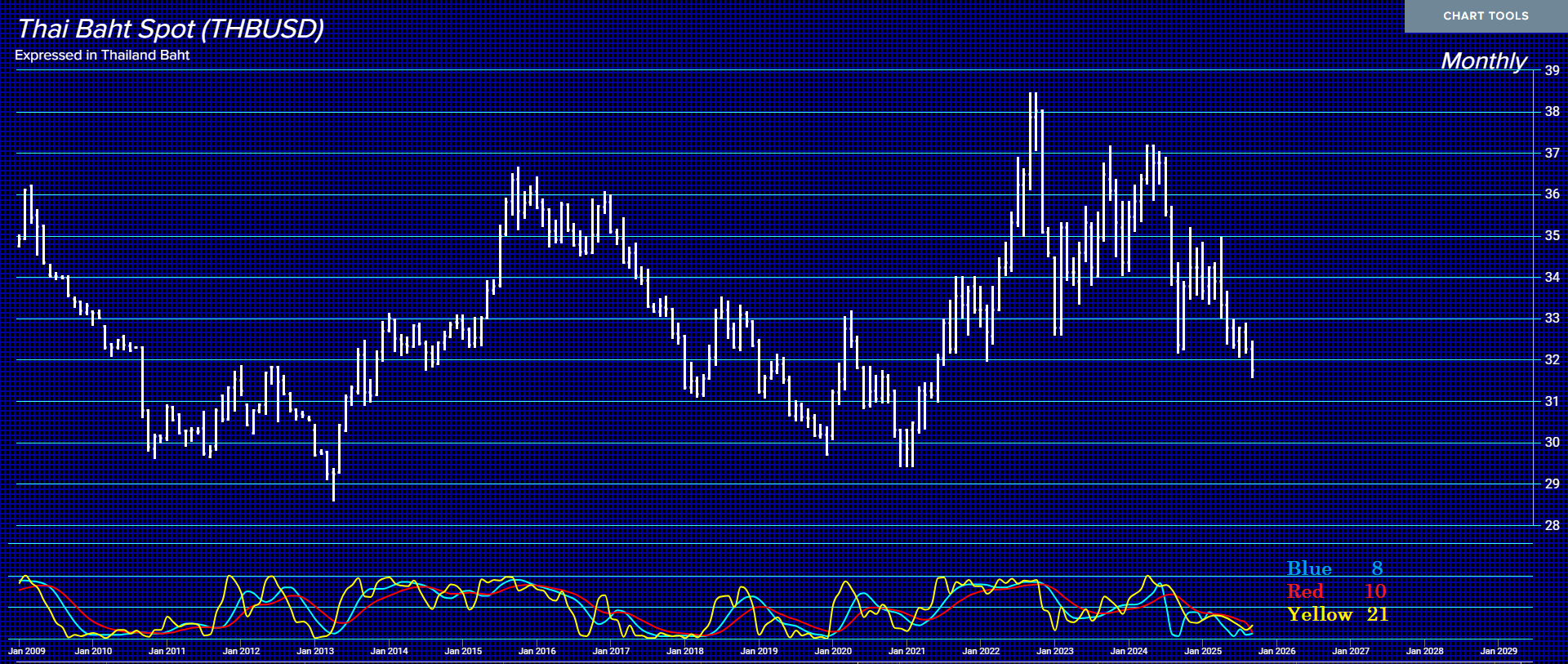
QUESTION: Marty, here in Thailand, aside from freezing 3 million people’s accounts and bending to the OECD to hunt taxes for the Europeans, now we have the central bank is talking about imposing a tax on trading gold because of the right in the baht. Is Thailand committing economic suicide?

FJ

Thailand Central Bank

ANSWER: It appears that the Baht will peak against the dollar, perhaps here in September. Arguing to tax gold because of the rise in the currency is on par with the markets. We still show a Panic Cycle in 2026 for Thailand. The combination of these decisions and the tensions with Cambodia does not project peace and harmony for Thailand into 2026.

Albania Appoints AI Minister


Posted originally on Sep 15, 2025 by Martin Armstrong |  

Albania has adopted the world’s first AI “minister” in an attempt to combat corruption. Diella, the female-voiced AI entity, will be a “member of the Cabinet who is not present physically but has been created virtually,” Prime Minister Edi Rama stated, adding that the robot would ensure that “public tenders will be 100% free of corruption” since current government employees cannot be trusted.

Microsoft helped to assemble Dinella—red flag number one. The robot will receive access to 1 million digital documents, including sensitive government information. The advancements in AI are ingenious but not sentient. Dinella has been programmed and, therefore, is prone to biases.

The irony is that in turning to artificial intelligence, the people are acknowledging that human government has completely failed. I have said before that many have proposed replacing judges, regulators, and even politicians with AI, as if a machine will somehow be impartial. The problem, of course, is not the hardware but the software. Who writes the code? Who programs the “ethics”? If government controls the AI, then it is nothing more than an automated extension of the same corruption. AI becomes a weaponized bureaucracy, enforcing whatever the ruling elite rules.

Rama’s Socialist Party has its eyes set on European Union membership, believing it can rid its nation of corruption ahead of negotiations in 2027. It is unclear if lawmakers will have the ability to vote on Diella’s post as minister, or whether the public will have an opportunity to vote for AI-driven politicians.

Society has fallen to the point that robots are trusted more than human beings. Do people believe that a robot can properly represent them or lead? “[The] Prime Minister’s buffoonery cannot be turned into legal acts of the Albanian state,” said Gazmend Bardhi, parliamentary group leader of the Democrats.

AI is only as honest as its programmer, and if Microsoft is involved, I have little hope of Dinella’s moral coding. Appointing a robot as minister is an extremely desperate move by the Albanian government to restore public trust. This is not a technological milestone but a glaring warning of lost confidence in a failing political system.

Drugmaker Calls Britain “Uninvestable”


Posted originally on Sep 15, 2025 by Martin Armstrong |  

pills scaled

Business flees when it feels it is unwanted, and the Labour Party has created an environment that repels capital. A wave of pharmaceutical companies are pulling out of the United Kingdom due to a climate that has become “uninvestable.”

AstraZeneca has become one of the latest companies to pull back on investments due to excessive regulation and taxation. “We constantly reassess the investment needs of our company and can confirm our expansion in Cambridge is paused. We have no further comment to make,” a spokesperson said. The company decided to pause a 200 million pound ($271.26 million) investment in Cambridge that was slated to created 1,000 new jobs. The company first terminated a 450 million pound investment in northern England back in January, citing a lack of support from the UK government.

Merck Pharmaceuticals terminated a £1bn (US$1.35bn) research and development project in London and called the UK “uninvestable.” The drugmaker plans to abandon its London Bioscience Innovation Centre and the Francis Crick Institute by the end of the year due to the lack of investment in the life science industry and the overall undervaluation of innovative medicines and vaccines by successive UK governments.”

“Simply put, the UK is not internationally competitive,” a Merck spokesperson stated.

The NHS tightly regulates drug prices, yet spends only 9% of its budget on medicines compared to other OECD nations that spend between 14-20%. Only 37% of new drugs are fully reimbursed for their licensed use, whereas the figure is 90% in Germany and likely higher in the US. The government expects businesses to pay them a large portion of their revenue. Drugmakers face a 23.5% levy on new drugs as of 2025. Why would a pharmaceutical company research and develop new products in a nation that demands nearly a quarter of the profits?

Foreign investment in life sciences is down 58% since 2017 across the UK. Comparatively, investment in research and development (R&D) fell 1.9% on a global basis. Tight price controls, high government levies, and regulatory red tape have caused multi-billion-dollar investments to flee. Drugmakers are beginning to pour investments into the US instead, where they receive generous incentives and lower taxes.

Massive Crowds of British Citizens Converge on London in Support of Tommy Robinson’s “Unite The Kingdom Rally”


Posted originally on CTH on September 13, 2025 | Sundance

As much as things change, for some reason they stay the same.

The British media, including the Daily Mail [SEE HERE] deny the crowds attending the Tommy Robinson “Unite The Kingdom” rally today in London, England.  From transparently observable videos, the scale of the crowd is easily over a million, yet the media claim only 110,000 attended.  The gaslighting is extreme. WATCH:

The U.K. media focus on what was apparently a predetermined skirmish as the authorities permitted the massive crowd to end up facing a group of around 5,000 counter-protesters. [SEE HERE]  Once again using the label “far right” and “extremist” to define any group of British citizens who stand in opposition to the globalist immigration influx.

It really is amazing how the media in Great Britain refuse to acknowledge the scale of nationalist sentiment that has been growing for the past decade.  Instead, both the British government and the British media collaborate to dismiss the majority as a fringe element of racist far-right nationalists.

.

Anti-immigration and/or demanding sovereign control over the country, is equivocated with racism and extremist viewpoints.  It is quite remarkable to watch unfold, and simultaneously it is something the majority of Americans can well relate to.

Tommy Robinson is leading a demand for a complete change in British government and there are many who support him despite the divisive labels applied by those who control government and media.

The nationalist group is organizing and fighting hard to regain control; however, the opposition elements control all of the power points within the government and media apparatus.  This has created a powder-keg inside the country that continues to destabilize as immigrant groups carry out horrendous crimes against the British people.

Today was an effort similar to the Polish Solidarity Movement, simply to get the nation to realize the scope of the citizens who hold similar views.  The first element in changing direction is to get British citizens to recognize the scale of their unified assembly.   As this is ongoing, the government and media are determined to stop it.

Britain’s Free Speech Crisis: Comedian Arrested For Daring to Speak Out Against Transgenderism


Posted originally on Rumble By Charlie Kirk show on: September, 5, 2025

Is Lithuania Better in the EU?


Posted Sep 5, 2025 by Martin Armstrong | 
Lithuania

Deputy Minister Agila Barzdienė believes that joining the European Union was the economic “reset” the nation needed. On the surface, Lithuania’s GDP has risen since joining the EU in 2004, but this is not the product of some magical European design.

“Economically, it’s an obvious leap. Lithuania’s GDP has almost doubled, foreign direct investment has increased eightfold, exports have increased sixfold. Wages have increased sixfold, and inflation has been kept at 2%,” Barzdienė stated. “For example, in 2004 the average Lithuanian could not afford a good cup of coffee in Milan, but today he does not feel the difference between Vilnius, London or Lisbon, and this is an important indicator. Now the average pre-tax salary is about 2000 euros, after that it is 1300-1400 euros. By 2030 we hope to reach 90% of the EU average salary.”

The growth was largely the result of capital inflows, cheap credit, and foreign investment chasing “new” markets after the fall of the Soviet Union. The EU absorbed these nations, promising prosperity if they would only surrender their sovereignty. Lithuania has benefited in the short run, but it is now just as handcuffed to Brussels’ mandates. Net Zero policies, sanctions, and globalist directives all come with hidden costs. The Baltic states are exposed to energy insecurity after Brussels cut off Russian supplies, and yet their leaders cheer for policies that undermine their own industries. They are also on the frontlines for NATO expansion as the bloc attempts to corner Russia.

Lithuania has drastically increased defense spending in recent years as the nation braces for an alleged Russian invasion. “The government is striving to keep at least 1.3 billion euros from the defense budget (in 2026 it will be 5-6% of GDP) in the national economy. Investments are being made in startups in the defense sector, and the DEVITUS program has been created with a budget of 300 million euros,” the deputy minister commented.

Yet, the nation believes it is closer to war than ever before as a result of its alliance with the EU. Lithuania has implemented a new defense mechanism to prevent a land invasion—dragon teeth. These “dragon teeth” are large triangular concrete blocks that are intended to block the path of war tanks. “We are starting from the tactical level — specific obstacles on the border — and later we will combine the entire engineering plan into one conceptual system,” said Raimundas Vaiksnoras, commander of the Lithuanian army.

Lithuania will hold the rotating presidency of the EU Council in 2027. By 2027, according to the computer models, the world will begin to feel the full impact of war, and discontent will rise into 2028. Moldova was sold the globalist dream of Brussels. The short-term pay off is not expected to last.

Xi Questions Whether the West Will Choose Peace or War


Posted originally on Sep 4, 2025 by Martin Armstrong |

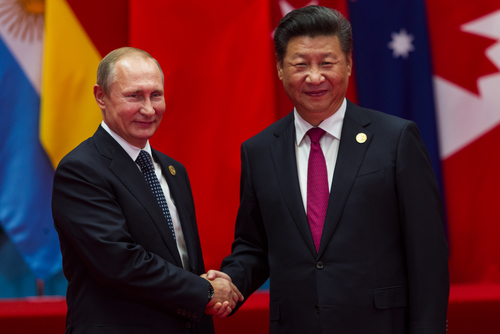
Beijing’s historic military parade brought the new axis powers together in a show of alliance. China’s Xi Jinping hosted Russia’s Vladimir Putin and North Korea’s Kim Jong-Un during the largest military parade in Chinese history. Xi summarized China’s display of military excellence by questioning whether the West will choose “peace or war.”

“Today, humanity is again faced with the choice of peace or war, dialogue or confrontation, win-win or zero-sum,” Xi told the crowd of more than 50,000 spectators, adding that the Chinese people “firmly stand on the right side of history.” Every nation believes its involvement in conflict will place it on “the right side of history,” but it is the victors who write history.

Putin Xi

“May President Xi and the wonderful people of China have a great and lasting day of celebration. Please give my warmest regards to Vladimir Putin, and Kim Jong Un, as you conspire against The United States of America,” Trump wrote on Truth Social during the parade. Trump asked China to remember the American troops who fought to expel invaders during World War II. “The big question to be answered is whether or not President Xi of China will mention the massive amount of support and ‘blood’ that The United States of America gave to China in order to help it to secure its FREEDOM from a very unfriendly foreign invader.”

Trump has managed diplomatic ties with Putin and Kim, but his relationship with Xi has never been amicable. Xi said that his nation “is never intimidated by any bullies,” while others believed that Trump’s comments highlighted America’s growing concern of Chinese dominance.

Yuri Ushakov, a top aide to Putin, insisted that the three nations were not conspiring against the US. “I want to say that no one organized any conspiracies, no one was weaving anything, no conspiracies,” Ushakov told Russian journalist Pavel Zarubin, who is close to the Kremlin and has previously interviewed Putin. “Moreover, no one even had that in their minds, none of these three leaders had that,” Ushakov said.

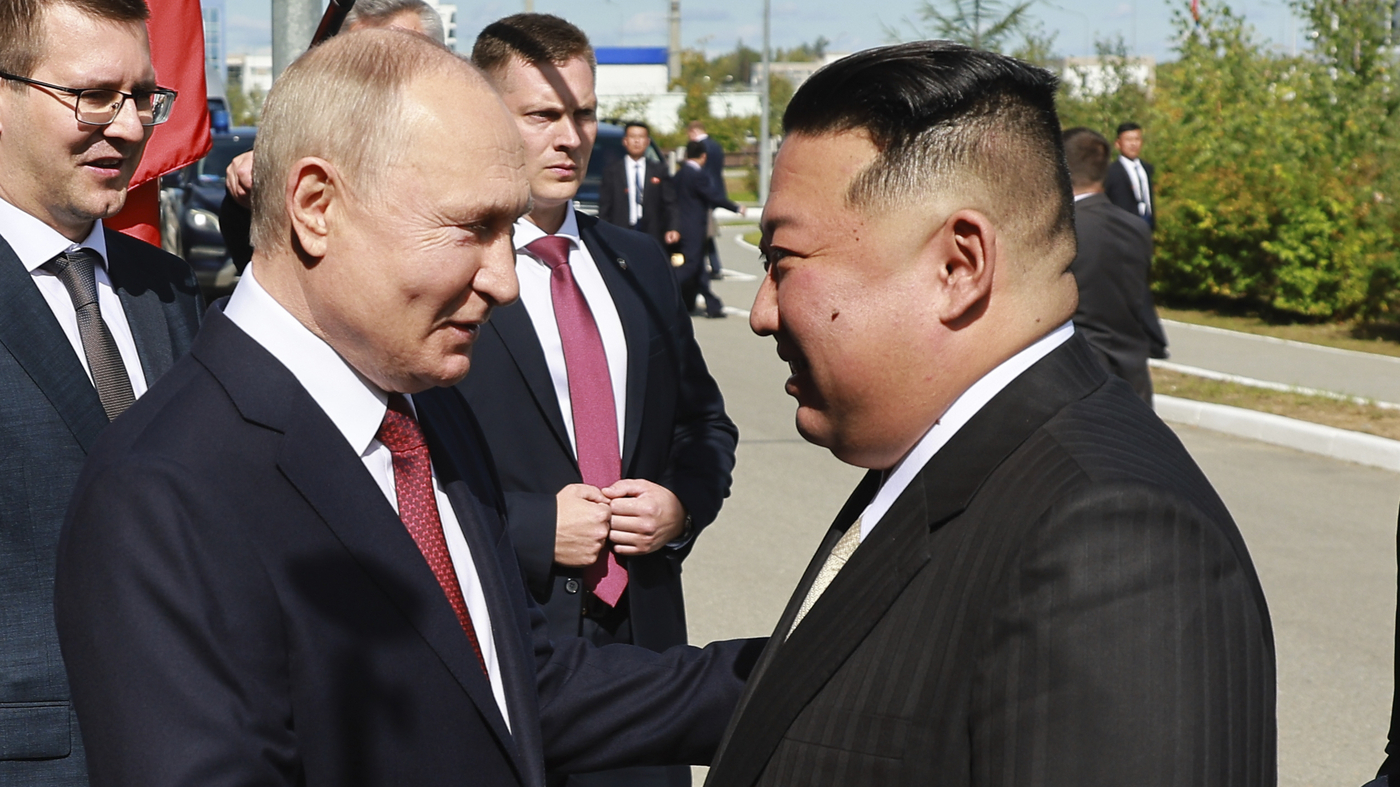
NorthKorea.Russia

Kim accepted Putin’s praise of North Korean troops and promised to honor their pact. “As I said during our previous meeting, if there is anything we can do to help Russia, we will certainly do that, and we will regard this as our fraternal duty. We will do everything in our power to assist Russia.”

China has remained nearly neutral over the past three years as the world became deeply embedded in the Russia-Ukraine conflict. Europe is on the precipice of deploying troops to Ukraine and solidifying the start of World War III. This historic military parade was not merely about the 80th anniversary of Japanese troops leaving China after World War II. The massive event was a message to the West that China has firmly aligned with Russia, and if the West does not choose peace, China is willing to join the war.

NATO to Spend $1.5 Trillion in 2025


Posted originally on Sep 3, 2025 by Martin Armstrong |  

NATO

NATO is not at war, and yet, the alliance has spent more on funding Ukraine than on any other conflict. The Defence Expenditure of NATO Countries (2014-2025) determined that the alliance is expected to spend $1.59 trillion USD in 2025, up from $1.5 trillion in 2024.

The United States continues to uphold the alliance financially, with an estimated annual payout of $980 billion. Canada and Europe are predicted to spend a combined $608 billion on NATO expenses or an average of 2.76% of their GDP. Poland spent more per GDP than any European member at 4.48%, followed by Lithuania at 4% and Latvia at 3.73%. Nordic alliances such as Norway and Denmark are expected to spend at least 3% of GDP on NATO this year.

Before the Russia-Ukraine war, members were spending around 1.8% of GDP. That figure shot up to 2.6% in 2024, now sitting at 2.76%, and WILL increase as a result of the 5% of GDP pledge by 2035 that was agreed upon at the June 2025 Hague Summit.

There is an uneven response to the escalating conflict as certain nations are accelerating toward confrontation while others remain wary of becoming involved financially. The concept of creating a unified Europe to end all wars was a moot point. European leaders heed different risks concerning the war. This is not just about weapons and soldiers. It is about capital flow reallocation.

Trillions will be pulled out of productive use and sunk into defense. That creates fiscal strain, inflationary pressure, and accelerates the collapse of social programs. Defense budgets soared across Europe ahead of World Wars I and II. War produces absolutely nothing but inflation and destruction.

Ahead of the First World War, defense expenditures across Europe began to surge in the decade before 1914. Governments shifted capital from social programs into armaments. Britain expanded its navy to counter Germany, while Germany doubled down on land armies. The press sold it as “deterrence.” In reality, it was preparation for the inevitable confrontation that the cycle dictated. This is precisely how they are deflecting current NATO spending, as if the allied members must multiply their contributions to deter Russia.

The same pattern unfolded before World War II. During the Great Depression, military spending in Germany, Italy, and Japan accelerated while their economies stagnated. By 1935, Germany had already abandoned Versailles restrictions, pouring money into weapons while ordinary Germans endured wage controls and shortages. The rhetoric was that this spending would “create jobs,” but it created war.

Rome followed this path as well. By the third century AD, the military consumed the treasury. Coinage was debased, taxes rose, and confidence collapsed. It was the cost of endless frontier wars that eroded the economic foundation of the empire. Once capital fled, the empire was finished. The same capital flow shift is what we see today with trillions diverted from productive enterprise into defense, financed by debt, which will only accelerate inflation and contribute to the sovereign debt crisis.

NATO’s report outlines more than mere budgets, as it shows where each nation is aligned on the Panic Cycle, propelling warfare. Socrates is projecting the rise in volatility into 2026, and the Panic Cycles align. The West has chosen the path of militarization, and that is precisely what history warns precedes systemic breakdown.

Hospitals in France to Prepare for War by March 2026


Posted Sep 3, 2025 by Martin Armstrong |  

Lose the War

France’s Ministry of Health has urged all hospitals to prepare for war by March 2026. President Emmanuel Macron repeatedly stated that he is ready to deploy French troops to Ukraine’s front lines, and now, the entire nation must prepare for the inevitable.

Hospitals throughout the nation have been urged to prepare for a “major military engagement” in Europe, according to a leaked memo first published by Le Canard Enchaîné. The memo, dated July 18, 2025, instructs hospitals to brief staff on “wartime constraints.” Staff must learn how to survive the psychological and physical pressures of wartime trauma.

Plans are in the works to accommodate patients returning from combat zones, with emergency centers slated to open near airports and train stations to “enable the rerouting of foreign soldiers to their home country.”

The Ministry of Health is preparing for a dire situation—hospitals should expect to receive between 10,000 and 50,000 wounded personnel over a 10 to 180-day window, depending on France’s involvement in the war.

Health Minister Catherine Vautrin attempted to downplay the leaked memo, but did not deny its existence. “Hospitals are always preparing – for epidemics, for surges. It’s normal for a country to anticipate crises and their consequences,” she claimed. Yet, the language used in the letter clearly details that hospitals must prepare for wounded soldiers arriving from a foreign battleground.

Socrates has indicated a shift from localized conflict to widespread warfare by 2026. I’ve warned all who have asked to high-tail it out of Europe before it is too late because once all hell breaks loose, this conflict will spread like a contagion that engulfs the entire continent.