German Real Estate – the Peripheral Market Rally


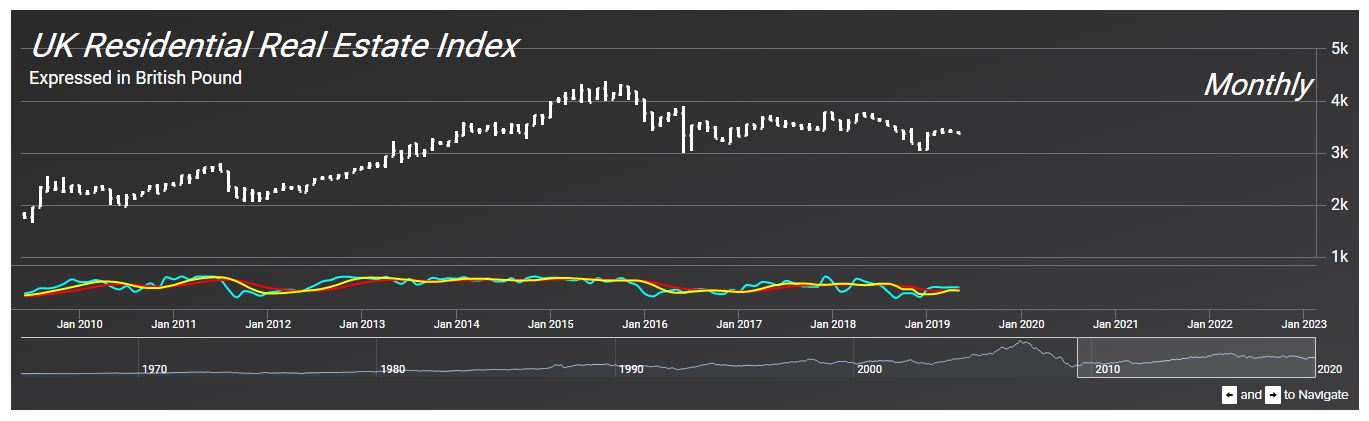
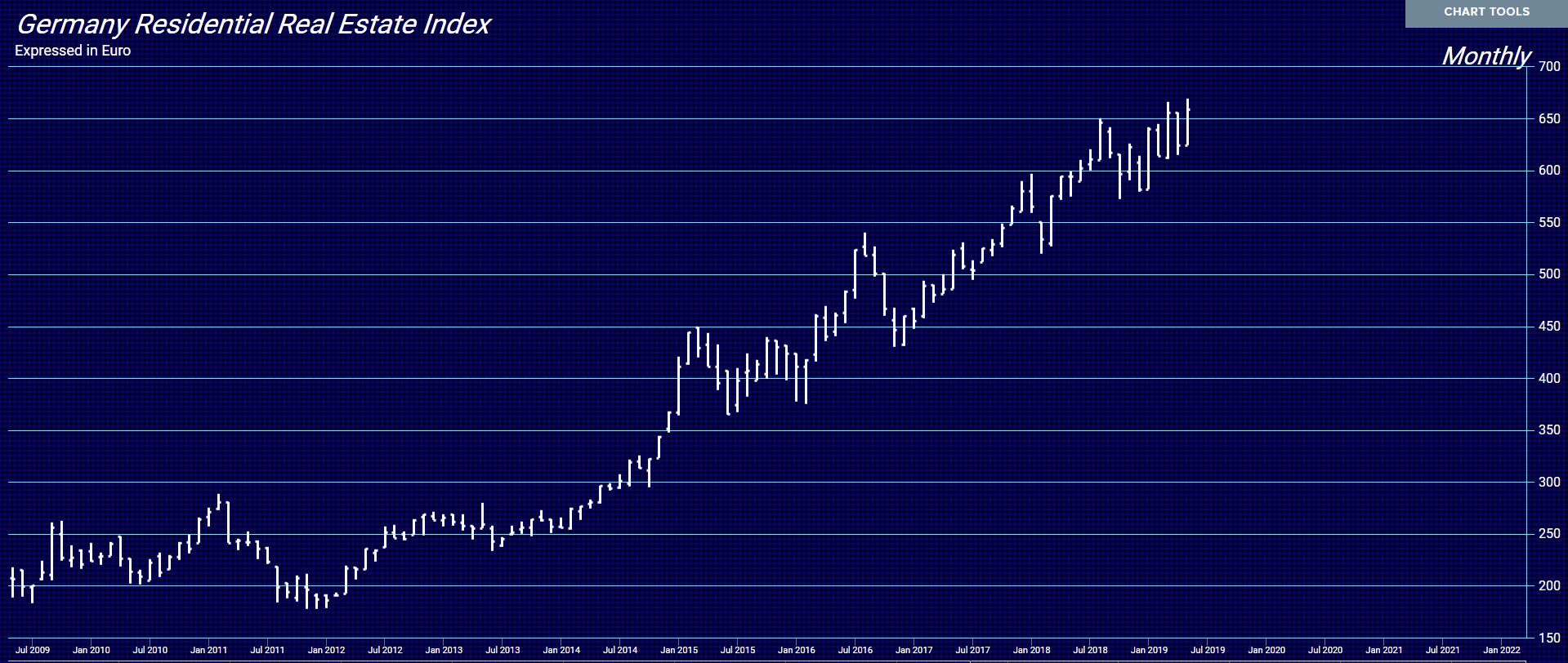
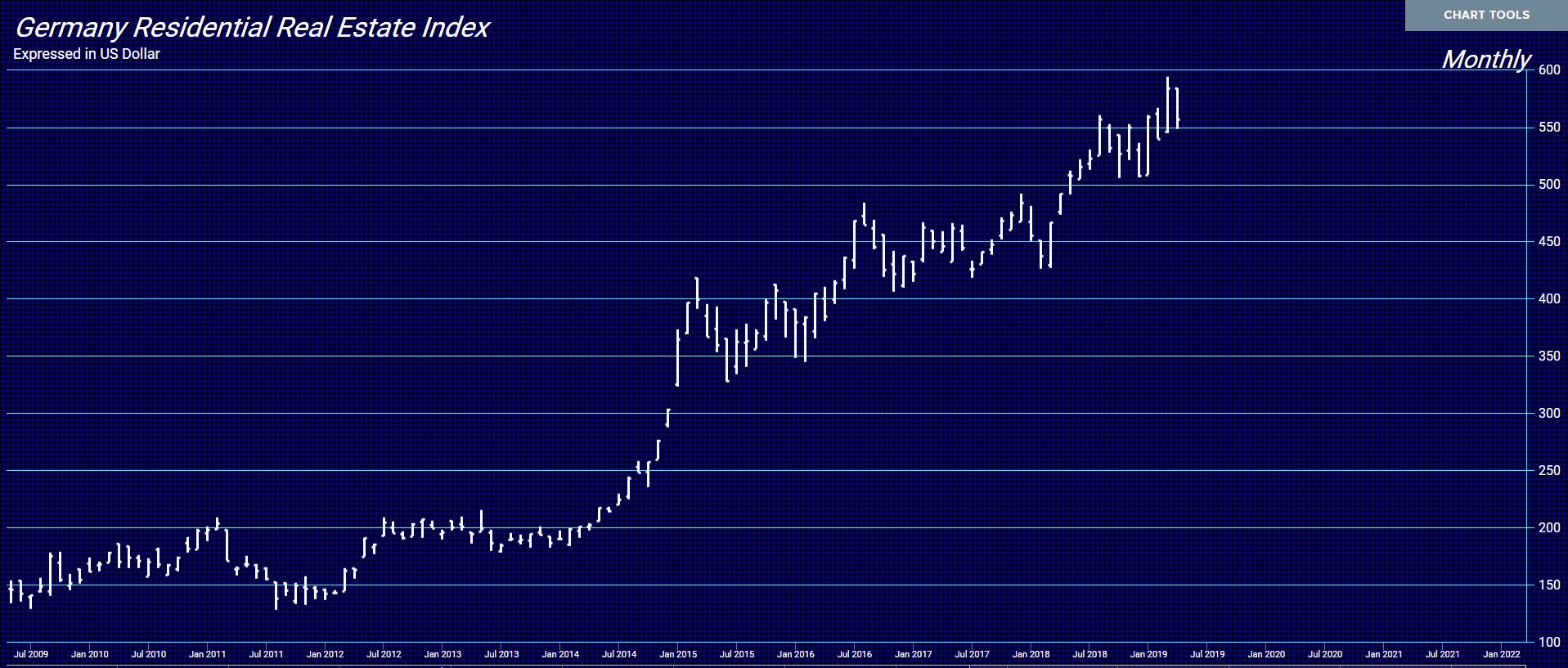
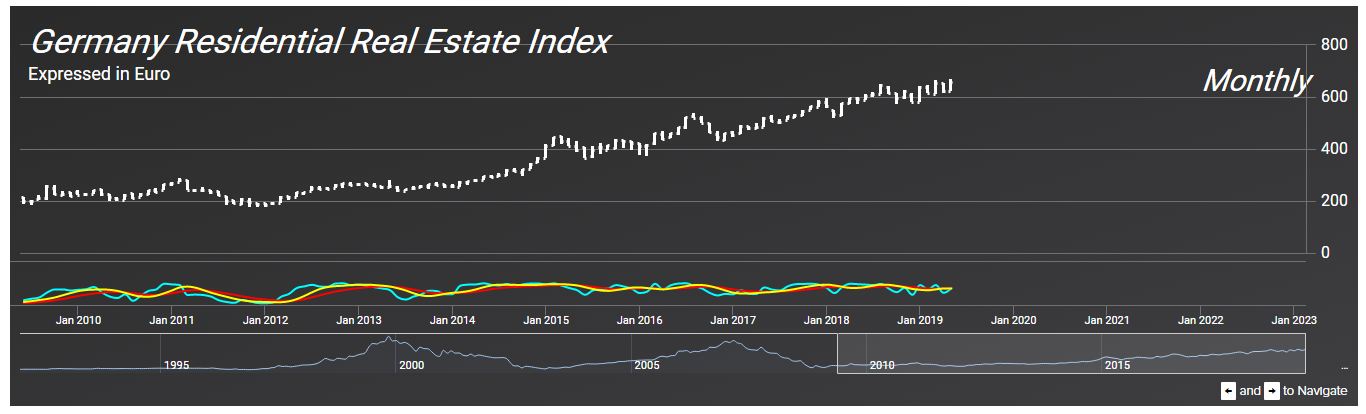
QUESTION: During the WEC I came to understand Real Estate will crash. Then when looking at Socrates, it shows real estate indices, however I do not recognise these trends. First I thought they were in $, I need to translate them to euro base to recognise the trend. But no, the real estate indices in Socrates are in terms of euro already and going down, while currently prices are again going thru the roof. Can you please explain what I am missing here?

M

ANSWER: It all depends upon which market you are looking at. The core markets where there was a lot of speculation like Britain saw a peak in 2015 and has been declining. London is far worse. The German market was not the object of massive foreign capital inflows. They were primarily internal shifts within the Eurozone. I was in Bavaria recently and looked at houses and I thought they were cheap in comparison to the United States.

Nevertheless, the rise in the German market has been about 50% since 2015. When we look at it in dollars, the gain is about 10% less. Insofar as German real estate, it has been a peripheral market to the speculation. That means it will rise after others decline.

Keep in mind that as the currency weakens, tangible assets become the haven.


Portugal’s Miracle?


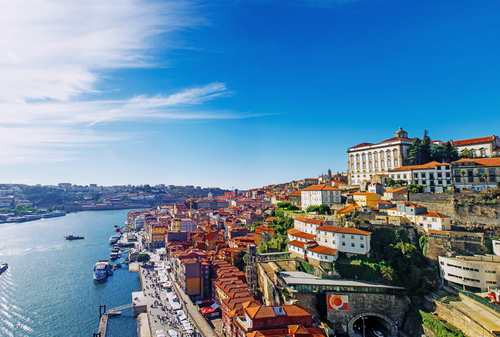
The Portuguese economy was bailed out by the European Union eight years ago. It is now booming, also in part for its aggressive attraction of courting foreign investors. If you want to live in Portugal long-term or permanently, you will need to apply for Portuguese citizenship or Portuguese permanent residency. Portuguese permanent residency is available after five years of residence, while Portuguese citizenship is available after six years, or three years if claiming Portuguese citizenship by marriage. Both Portuguese citizenship and permanent residency allows you to remain in Portugal indefinitely and access similar benefits, although there are some differences between the two. While residents can stay in Portugal indefinitely by continually renewing their permanent residency, there are certain added Portuguese citizenship benefits to entice foreigners to take on the Portuguese citizenship application process.

This movement has been a major factor behind Portugal enjoying its highest economic growth in nearly two decades, with the major trend fueled by record tourism, an upswing in the housing market from foreign investors, a growing tech sector, and strong exports. Private investment has returned to 2009 levels, helped by foreign investors including Chinese companies who have focused on Portugal.

But for every glitzy new hotel and fancy restaurant in Lisbon, there is growing concern that the infrastructure is aging. This was illustrated by the locomotive that fell apart in late February, which was rented from Spain as a stopgap measure. There has been a lack of public investment which is beginning to become obvious. Its total debt is close to 120% GDP, which is one of Europe’s highest. The ruling socialists have limited room to finance their dreams under the EU rules and at the current artificially low interest rates maintained by the ECB. The budget deficit of the 2010 era of 11% of GDP has been reduced by attracting foreign capital and cutting spending on public infrastructure. The problem that Portugal faces is that its success of late has been constructed on the immediate results, not long-term.

How the World Economy Works without Government


Myths v Reality – Milton Friedman


Universal Basic Income


The idea of some Universal Basic Income has been around for a long time. Here is Milton Friedman on his proposal of a Negative Income Tax. There will always be welfare for there are people who cannot work for some disability and others who prefer not to work and game the system. Even programs where the state directly pays for the food rather than food stamps or restricts the food stamps to certain products, the ingenuity of some people cannot be underestimated. They will sell the products they get for cash. There are signs on the streets buying needles and strips from people who are diabetic and get them for free from the state. There are instances where a woman has a child and tells the state she has no idea who the father is yet a night he shows up and leaves when a case worker is due to arrive. These are abuses of the system that no matter what we try to do, there will be people who figure out how to work the system. So there will NEVER be 100% compliance no matter what system we devise.

The Forecast of 1997 Calling for the Inverse Relationship between Bonds & Shares Remains on Target


QUESTION: Mr. Armstrong; I attended your WEC in London back in 1997 when the Euro Commission took the entire back row. I remember your forecast that we would begin a period of a dramatic shift in the bond-equity correlation I believe you said would last for at least 23 years. That is nearly due. You were obviously correct and that did begin with the introduction of the euro in 1998. You were dead center between Barton Biggs and Steve Roach. Do you still see this inverse relationship flipping in 2021 as you forecast back then?

JK

PS I left the bank….. and am now retired.

ANSWER: A lot of people I knew in the various banks back in the 1990s have left before the cards start to fall. I remember well. They were at Morgan Stanley back then and the two were polar opposites on their forecasts if I remember correctly. Barton Biggs argued that the world would be flooded by a glut of cheap Asian labor and Steve Roach was pointing to the Philips Curve warning that public deficits in the west would lead to a massive inflationary bonfire.

The Stock-Bond Correlation was the real debate. Our model was warning that stocks and bonds would indeed behave very differently which has materialized. Since 1998, stock prices and bond prices have been negatively correlated. In other words, when stock prices go up, bond prices go down and vice versa. Overall, stocks and bonds are indeed currently acting in opposition to each other on the macro-trend level. There has been a negative correction which some call the “flight to quality” when confidence collapses in the private sector, capital fled to the public sector. The broader 250-year relationship would argue that this is highly unusual. It is true that stocks and bonds moved up and down together throughout the 250 years prior to the 21st century.

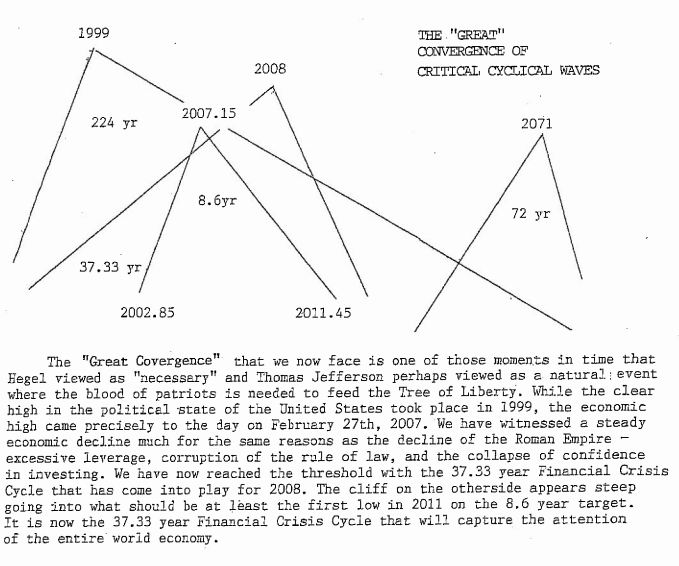
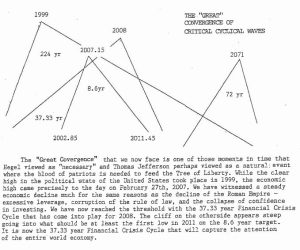
The reason I delivered that forecast back then was the realization that government debt had entered a perpetual borrowing cycle ever since World War II. Moreover, the 224-year cycle of political change was due in 1999. That meant the political peak in government would take place at that time. The economic peak would by 2007. Both of those forecasts have been absolutely correct. Politics has declined steadily and ever since the 2007-2009 crash, interest rates have dropped sharply and there has been a contraction in inflation with a decline in economic growth.

In Its Just Time, I wrote: “While the clear high in the political state of the United States took place in 1999, the economic high came precisely to the day on February 27th, 2007. “

The flip in this relationship is still on target. Nothing requires any change to that forecast I delivered back in 1997. This is all being driven by the Sovereign Debt Crisis.

The Next 8.6-Year Wave will be Inflationary


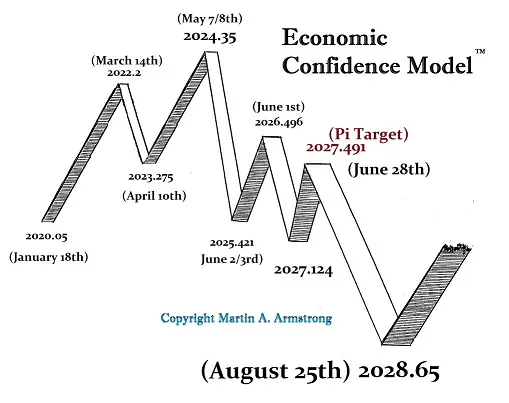
All the real science is warning that there is a reasonable chance that we are headed into a much colder period ahead. This will have an impact on food prices and out computer models have been warning that the next wave of the Economic Confidence Model should be an inflationary wave. Even a new study from  nature.com said: “The recent prolonged solar minimum and subsequent weak solar cycle 24 have led to suggestions that the grand solar maximum may be at an end.”

The next 8.6-year wave beginning in January should produce a collapse in confidence in governments which will result in a shift from Public to Private assets, but then on top of this, we see a shortage in agricultural markets adding to the inflationary wave coming. Then add the Monetary Crisis and Sovereign Debt Crisis cycles and we end up with some very interesting impacts during the next wave.

Socrates & Gold


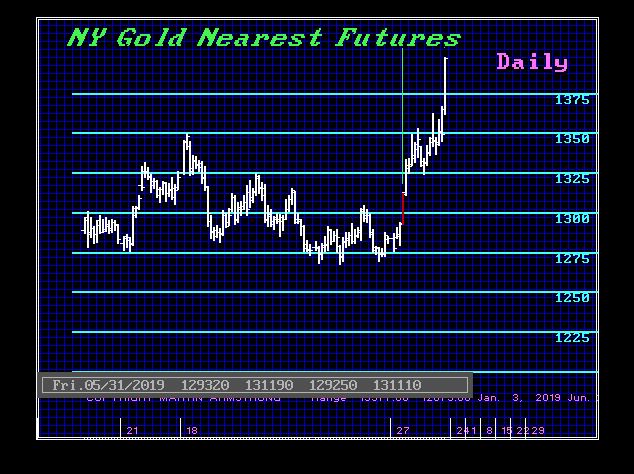
COMMENT: Mr. Armstrong; I want to salute you on creating Socrates. Its forecast on gold was remarkable. When gold was starting to breakout on May 31, Socrates wrote concerning your breakout points:

We did close below the previous session’s Intraday Projected Breakout Resistance indicator which was 129370 settling at 129240 gesturing that the market is not in a breakout mode at that precise moment. The current Projected Breakout Resistance for this session was 129740 which we have now closed above suggesting the market is starting to possibly breakout to the upside if it can be maintain in the next trading session. The Projected Breakout Resistance indicator for the next session will be 132023.

The next day closed at 1327 and off it ran. It is amazing how the computer explains these moves in advance.

See you in Orlando

HP

REPLY: This is my objective. To have a computer write the analysis and you know there is no human bias involved one way or another. Just call it by the numbers without all the nonsense. Socrates now covers more than 1,000 instruments around the world every day. There are not enough analysis in the world to write so many reports every day. This is the way to the future. Objective analysis without the human bias.


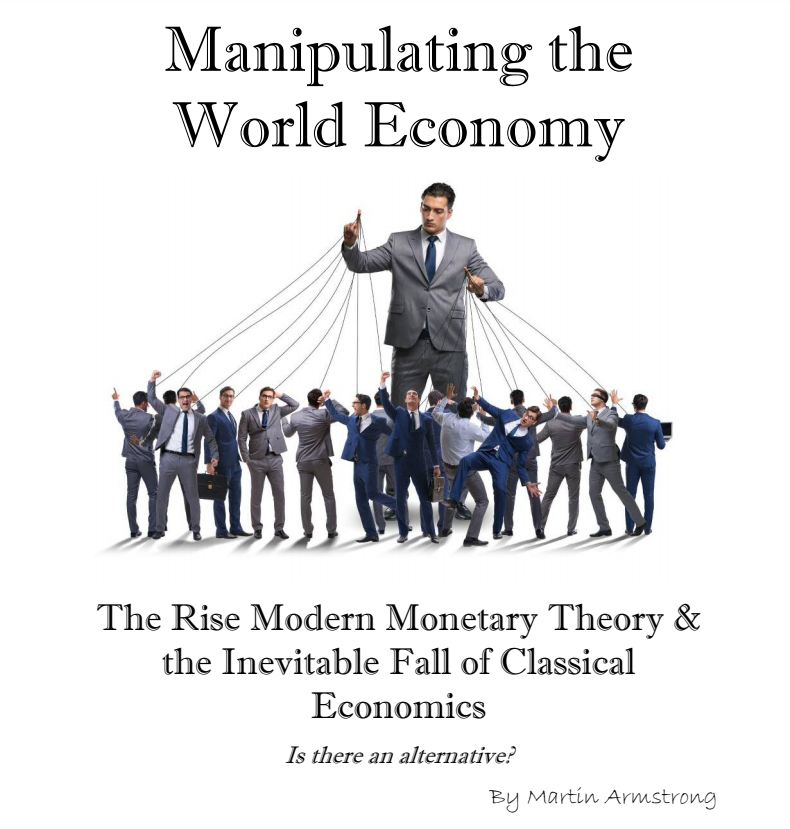
Manipulating the World Economy will be also available in Russian, German, and Chinese


We are looking at having it Translated into several languages. We hope this English version will be available by October in hardbound. I really hope this will help change the debate for what lies at stake is the future for us, but more so our posterity.

Russian

манипулируя мировой экономикой

German

Manipulation der Weltwirtschaft

Chinese

操縱世界經濟

Manipulating the World Economy


A lot of questions have been pouring in from how much to will there be a kindle version. I am not sure of the cost yet. That depends on the printer. It will be full color and extensively illustrated. It covers everything you wanted to know about what is going on with the central banks. There will be a documentary film next year on this subject matter.

The price will be for general circulation worldwide. As soon as it is available, we will let everyone know.