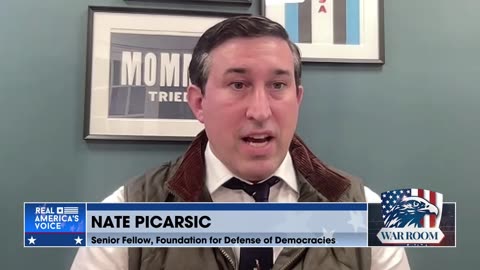
All Minerals Are Local: China’s Man in Lima, Nate Picarsic Reports


Posted originally on Rumble By Bannon’s War Room on: June 6, 2025, at 7:00 pm EST

“Xi Won the South Korean Election: The Implications for Taiwan, the Pacific and America”


Posted originally on Rumble By Bannon’s War Room on: June 6, 2025, at 3:00 pm EST

Natalie Winters On The US/CCP Trade War: China Has A Stranglehold Over Critical Minerals


Posted originally on Rumble By Bannon’s War Room on: June 4, 2025, at 7:00 pm EST

NARRATIVE WARFARE: NFSC Reveals The Takedown Of The Nationalist Party In China By CCP


Posted originally on Rumble By Bannon’s War Room on: June 4, 2025, at 1:00 pm EST

“We Don’t Depict China The Way It Is In Reality.” Chris Fenton On CCP Propaganda War


Posted originally on Rumble By Bannon’s War Room on: June 4, 2025, at 1:00 pm EST

Vietnam is in the Same Tough Trade Spot as Canada – It’s Not an Issue of Unwillingness, it’s Inability


Posted originally on CTH on June 4, 2025 | Sundance

President Trump and the trade team have made specific requests of Vietnam in order to negotiate a trade agreement.  Unfortunately, just like Canada, Vietnam’s problem is not an unwillingness to comply, it’s their inability.

CTH was in the manufacturing base of Vietnam in January; their factories are loaded with component parts from China used to produce finished goods sent to the USA (and globally).  President Trump is telling Vietnam they need to reduce their reliance on Chinese imported component goods, but China has spent billions in advanced positioning and contracts, influencing Vietnam.

Vietnam is a very poor country, and their population cannot afford to purchase the products they manufacture.  They do not have a domestic consumption base. They are reliant on exports to more wealthy nations to keep their manufacturing base afloat.  Practically, it is easy to have sympathy for Vietnam due to their economic dependence on both China (for imported raw materials) and the USA (for exported finished goods).

VIETNAM – The US has sent a “long” list of “tough” requests to Vietnam in its tariff negotiations, including demands that could force the country to cut its reliance on Chinese industrial goods imports, two people briefed about the matter told Reuters.

Washington wants Vietnam-based factories to reduce their use of materials and components from China and is asking the country to control more carefully its production and supply chains, one of the people briefed on the talks said, without elaborating on whether quantitative targets were included.

The list is part of an “annex” to a framework text prepared by US negotiators, according to four people familiar with the matter.

One of them, who had direct access to the document, said the list was sent to Hanoi at the end of May after the conclusion of a second round of talks with Washington aimed at avoiding 46% “reciprocal” tariffs on imports from Vietnam.

The sources declined to be named because those discussions were not public.

Reuters reported on Monday that the Trump administration wants countries to provide their best offers on trade negotiations by Wednesday, citing a draft letter to negotiating partners.

It was unclear which countries would receive the letter, but it was directed at those with active negotiations that included meetings and exchanges of documents. Washington has been engaged in such talks with countries including Vietnam, the European Union, Japan and India.

The sources described the US requests to Vietnam as “tough” and “difficult”. It is unclear how Hanoi will respond to Washington’s requests and whether it will send its own proposal by Wednesday.

The US Trade Representative did not respond to a request for comment outside US business hours.

Vietnam’s trade ministry did not reply to a request for comment.

A source briefed on the matter said if US requests to effectively cut Vietnam’s reliance on China were met, they could pose a serious challenge to the Southeast Asian country’s economy. Its sprawling manufacturing industry, which produces consumer goods including Apple devices and Nike shoes, is closely integrated into its much bigger neighbor’s supply chains.

It might also complicate Vietnam’s long-standing policy of maintaining good relations with China, a major foreign investor but also a source of security concerns due to conflicting claims in the South China Sea.

Vietnam has nearly tripled its exports to the United States since the start of the US-China trade war in 2018, when the first Trump administration imposed wide-ranging tariffs on Beijing, pushing some manufacturers to move production south.

But as exports to the US boomed, Vietnam also vastly expanded imports from China, with their inflow almost exactly matching the value and swings of exports to the United States over the years, each totaling around $140 billion in 2024, data from the US and Vietnam show. (read more)

As an outcome of the 2018 tariffs against China, which coincided with a President Trump visit to southeast Asia, multiple companies shifted manufacturing operations from China to Vietnam.

Beijing saw the move and slowly increased their own strategic footprint.

In the subsequent years as COVID-19 took attention from all other matters, and with Trump removed from the equation in 2020, China increased the scale of their investment and the outcomes in 2025 are very visible.

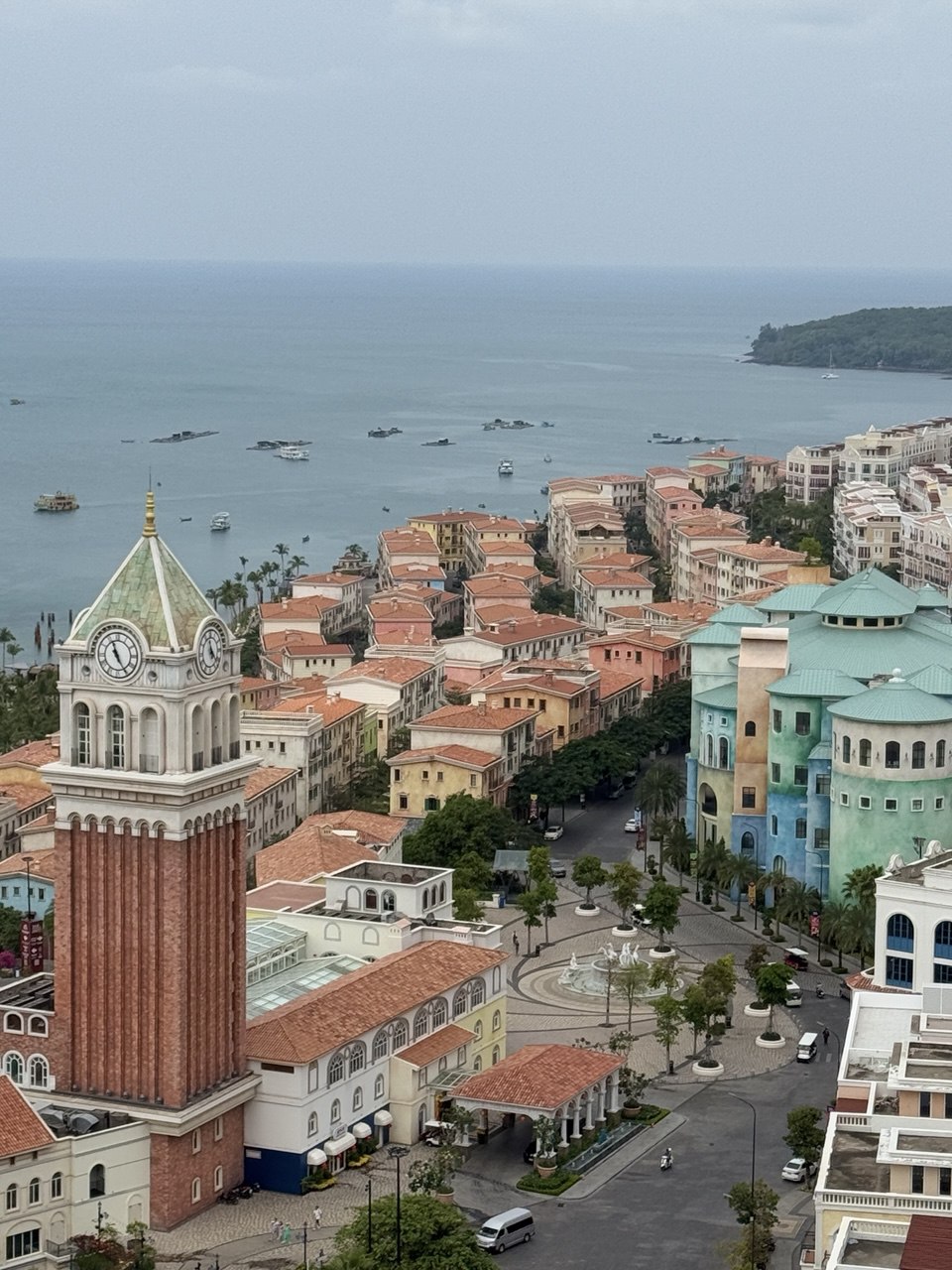
China even built this massive Disney type village in Phu Quõc (it’s nearly empty).

The people who live in Vietnam do not have money; they are a very poor nation.  The baseline poverty level in combination with their communist regime politics essentially eliminates their consumer power to purchase western goods and makes trade agreements between the U.S and Vietnam somewhat moot.

However, as a proxy manufacturing nation Vietnam is a valuable resource for China.

Essentially what can be seen in Vietnam is how Beijing spends money there for influence.  The U.S footprint is negligible in comparison to the visible influence of China.

Following the 2024 presidential election, Prime Minister Justin Trudeau traveled to Mar-a-Lago and said if President Trump was to make the Canadian government face reciprocal tariffs, open the USMCA trade agreements to force reciprocity, and/or balance economic relations on non-tariff issues, then Canada would collapse upon itself economically and cease to exist.  In essence, in addition to the NATO defense shortfall, Canada cannot survive as a free and independent north American nation, without receiving all the one-way benefits from the U.S. economy.

Representing Canada, Justin Trudeau was not expressing an unwillingness to comply with fairness and reciprocity in trade with the USA, what Trudeau was expressing was an inability to comply.  Quite simply, after decades of shifting priorities, Canada no longer has the internal economic capability to comply with a fair-trade agreement (FTA).  Trudeau was not lying, and President Trump understood the argument; hence his 51st state remarks. {Go Deep}

Like Canada, Vietnam has the problem of ability to comply with President Trump demands.  However, unlike Canada, a wealthy nation who did this entirely to themselves as they chased leftist “green” dreams, Vietnam’s inability is an outcome of the financial windfall that came from President Trump’s first term targeting of China.

A free trade agreement with Vietnam is going to be tricky because Vietnam will need to find an alternate source of component material.

Canada Has no Gold Reserves – They Sold Them.


Posted originally on Jun 4, 2025 by Martin Armstrong 

MAA 400 Ounce C

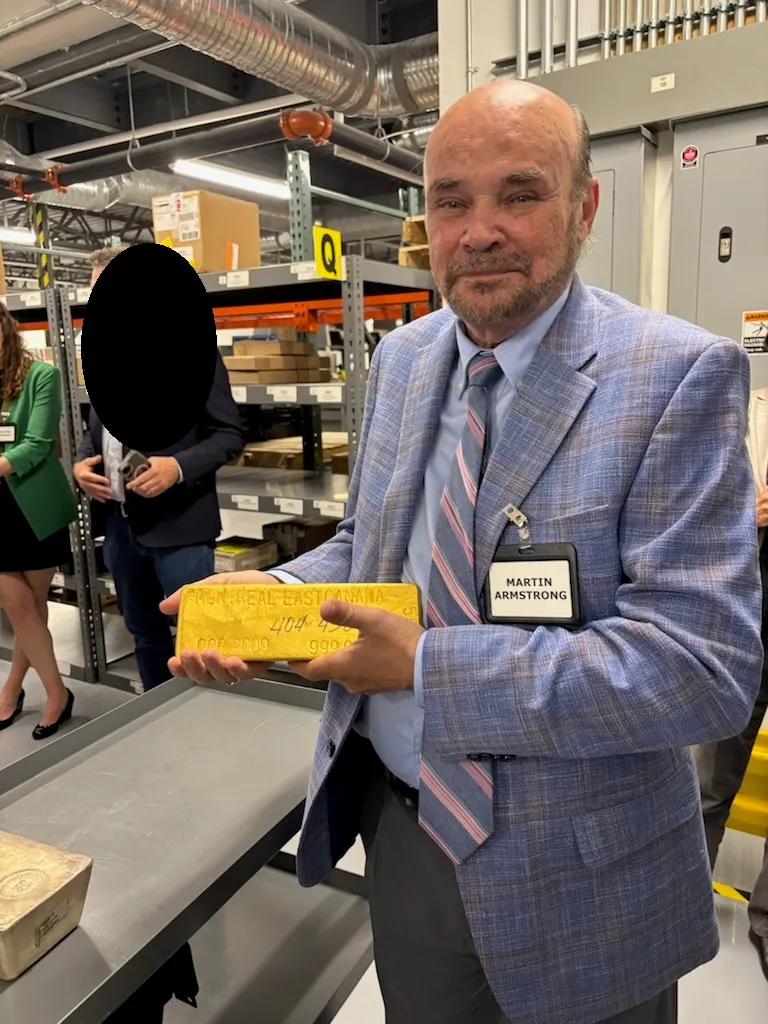
Holding a 400 oz Gold Bar – Central Bank Standard

QUESTION: Hello Martin – Here in Canada, we have a vexing question – why no Gold Reserves at BofC? USA has a date with destiny aka Ft Knox Audit that Trump and Bessent
seemed engaged on this file but are preoccupied lately with a litany of distractions, I’m 74 with health issues surfacing, which rearrange one’s priorities – many millions of Boomers
in same boat – but that’s the price you knew was coming

jw

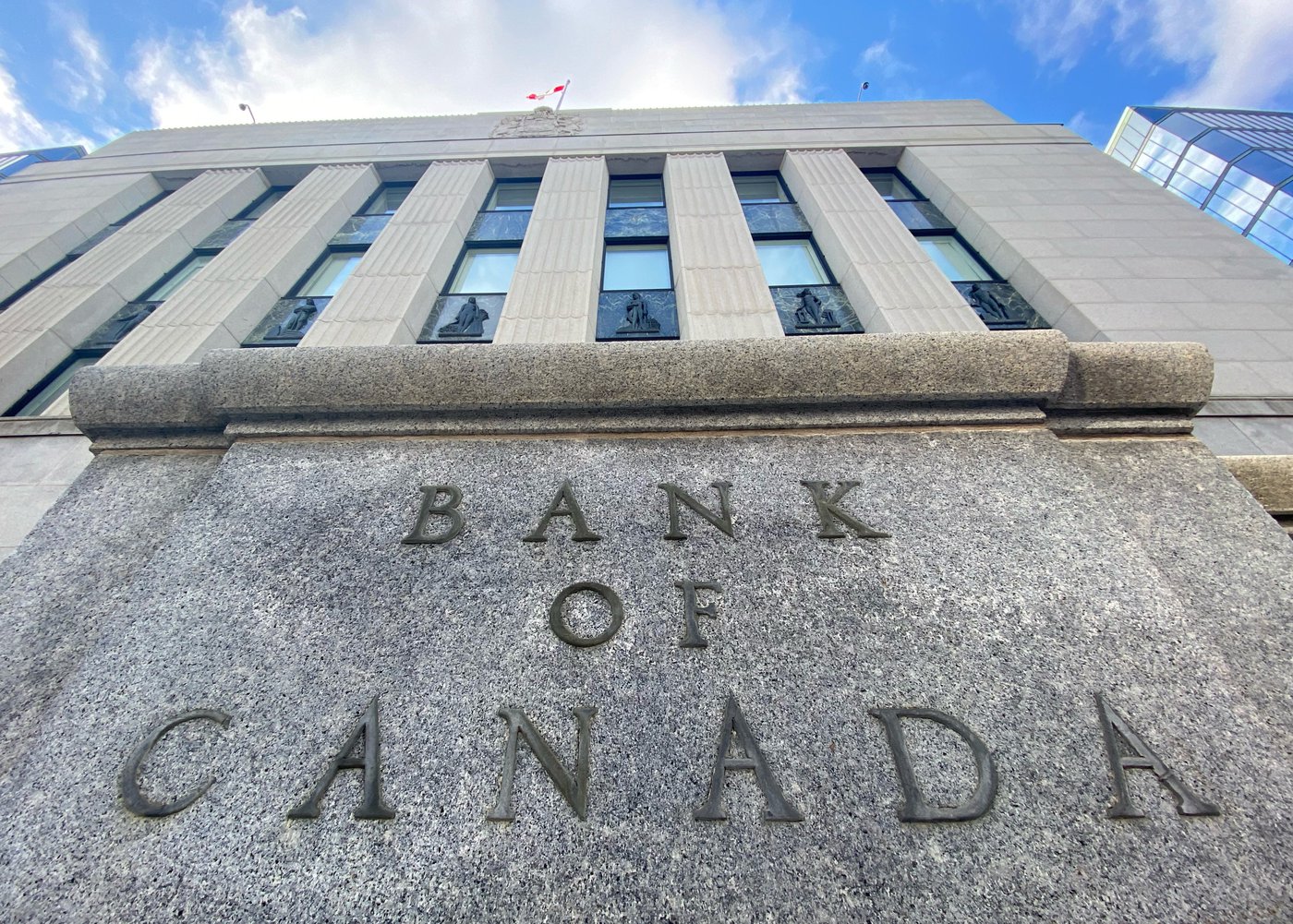
The Bank of Canada building

ANSWER: Canada’s lack of significant gold reserves is the result of a deliberate policy decision spanning several decades, primarily driven by the following reasons:

Storage & Security Costs: Holding physical gold requires secure vaults and insurance, incurring ongoing expenses.

Opportunity Cost: Gold pays no interest or dividends. The Bank of Canada (BoC) decided it could achieve better returns by holding interest-bearing assets like foreign government bonds (US Treasuries, German Bunds, etc.) and deposits.

The Shift to More Liquid Assets: The BoC prioritized holding foreign exchange reserves (primarily US dollars, euros, yen, etc.), which are highly liquid and easily used for direct intervention in currency markets to stabilize the Canadian dollar (CAD).


Canada began the process of gradually selling off its gold in the 1980s, when gold rallied to $875 on January 21, 1980, and then began a 19-year decline to $250. Canada significantly accelerated its gold sales during the 1990s and early 2000s under the leadership of Finance Minister Paul Martin and Governor Gordon Thiessen, aiming to optimize reserve asset management. By 2016, Canada sold its last significant holdings. As of today, Canada’s official gold reserves are reported as zero tonnes (or negligible amounts – e.g., 77 ounces reported in 2022, worth a trivial sum relative to total reserves). In essence, Canada decided that the costs and lack of yield associated with holding large gold reserves outweighed the traditional benefits. They opted instead to hold foreign currencies and bonds that are easier to use for market intervention and generate income, relying on the strength of the Canadian economy itself to support the value of its currency.

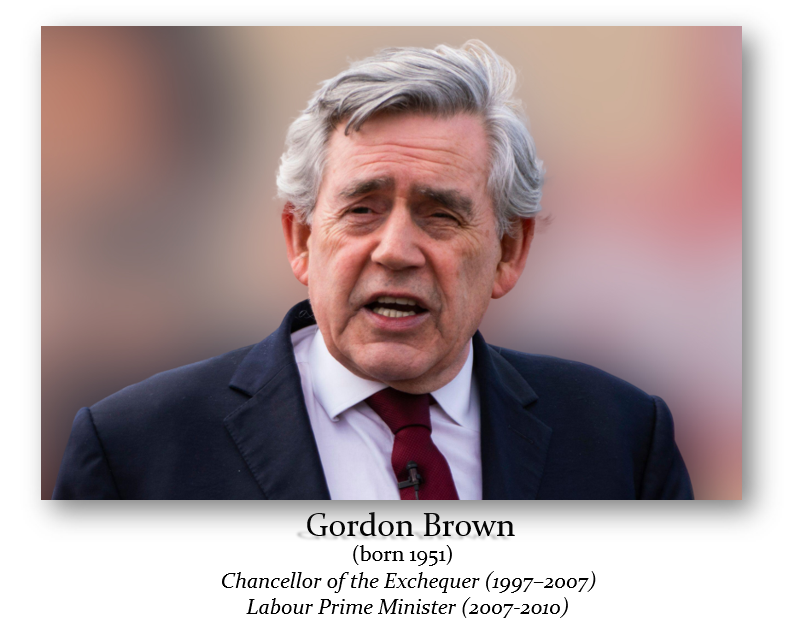
Brown Gordom PM 2007 2010

Gordon Brown, as Labour Chancellor of the Exchequer (1997-2007), authorized the sale of a very significant portion (roughly half) of the UK’s gold reserves. He was a member of the Labour Party, which viewed gold as a rich man’s toy. He sold approximately 395 tonnes of gold. The sales took place between July 1999 and March 2002. This represented about 58% of the UK’s total gold reserves at the time (which were around 715 tonnes before the sales). After the sales, the UK’s reserves stood at about 310 tonnes, where they remain today. The sales occurred during a period when the gold price was near a 20-year low, averaging around $275 per ounce. Shortly after the sales concluded, the gold price began a historic bull run, rising dramatically over the next decade to peak over $1,900 per ounce in 2011. This timing led to massive criticism that the UK sold at the absolute bottom of the market, potentially losing billions of pounds in potential value. The period is often referred to as the “Brown Bottom” in financial circles. Brown was ignorant of how markets function. He announced in advance the strategy to sell its gold reserves, so the market held back, anticipating a greater supply. The proceeds were invested in foreign currency and government bonds. While these assets generated interest income, the capital appreciation of gold vastly outstripped the returns on those bonds over the following years.

The head of the Bank of Canada during the main phase of Canada’s gold reserve sell-off (mid-to-late 1990s) was Gordon Thiessen (born 1938). He served as Governor from February 1, 1994, to January 31, 2001. Thiessen spent his entire career within the Bank of Canada, joining in 1963.  However, it was his predecessor, John Crow (1987-1994), who began reducing its gold reserves significantly in the 1980s. While the Bank of Canada managed the sales operationally, the ultimate decision to sell the gold rested with the Government of Canada (specifically, the Minister of Finance and the Department of Finance). The Bank acted as the government’s agent in this matter.

Two Chinese Nationals Charged with Smuggling ‘Agroterrorism” Fungus into The United States


Posted originally on CTH on June 3, 2025 | Sundance

The sense that this is not good expands when you consider the origin of the SARS-CoV-2 virus and the current conflict between the United States and China.  Two Chinese researchers in Michigan have been charged with smuggling into the U.S. a fungus that devastates agricultural crops.

Was this an ‘agroterrorism’ operation intended to unleash a serious problem in the U.S. farming system?  That intent cannot be dismissed easily.

MICHIGAN – Two Chinese nationals have been charged with allegedly smuggling into the U.S. a fungus called “Fusarium graminearum, which scientific literature classifies as a potential agroterrorism weapon,” the Justice Department said Tuesday.

Yunqing Jian, 33, and Zunyong Liu, 34, citizens of the People’s Republic of China, were allegedly receiving Chinese government funding for their research, some of it at the University of Michigan, officials said.

“The complaint also alleges that Jian’s electronics contain information describing her membership in and loyalty to the Chinese Communist Party,” a DOJ press release said.

“It is further alleged that Jian’s boyfriend, Liu, works at a Chinese university where he conducts research on the same pathogen and that he first lied but then admitted to smuggling Fusarium graminearum into America — through the Detroit Metropolitan Airport — so that he could conduct research on it at the laboratory at the University of Michigan where his girlfriend, Jian, worked,” according to the press release.

Attorney General Pam Bondi said in a statement that the Justice Department ““has no higher mission than keeping the American people safe and protecting our nation from hostile foreign actors who would do us harm.”

The FBI says it causes “head blight,” a disease of wheat, barley, maize, and rice, and is responsible for billions of dollars in economic losses worldwide each year.

“The alleged actions of these Chinese nationals — including a loyal member of the Chinese Communist Party — are of the gravest national security concerns. These two aliens have been charged with smuggling a fungus that has been described as a ‘potential agroterrorism weapon’ into in the heartland of America, where they apparently intended to use a University of Michigan laboratory to further their scheme,” U.S. Attorney Jerome Gorgan said. (read more)

Taiwan and the Coming Yearly Panic Cycle


Posted originally on Jun 1, 2025 by Martin Armstrong 

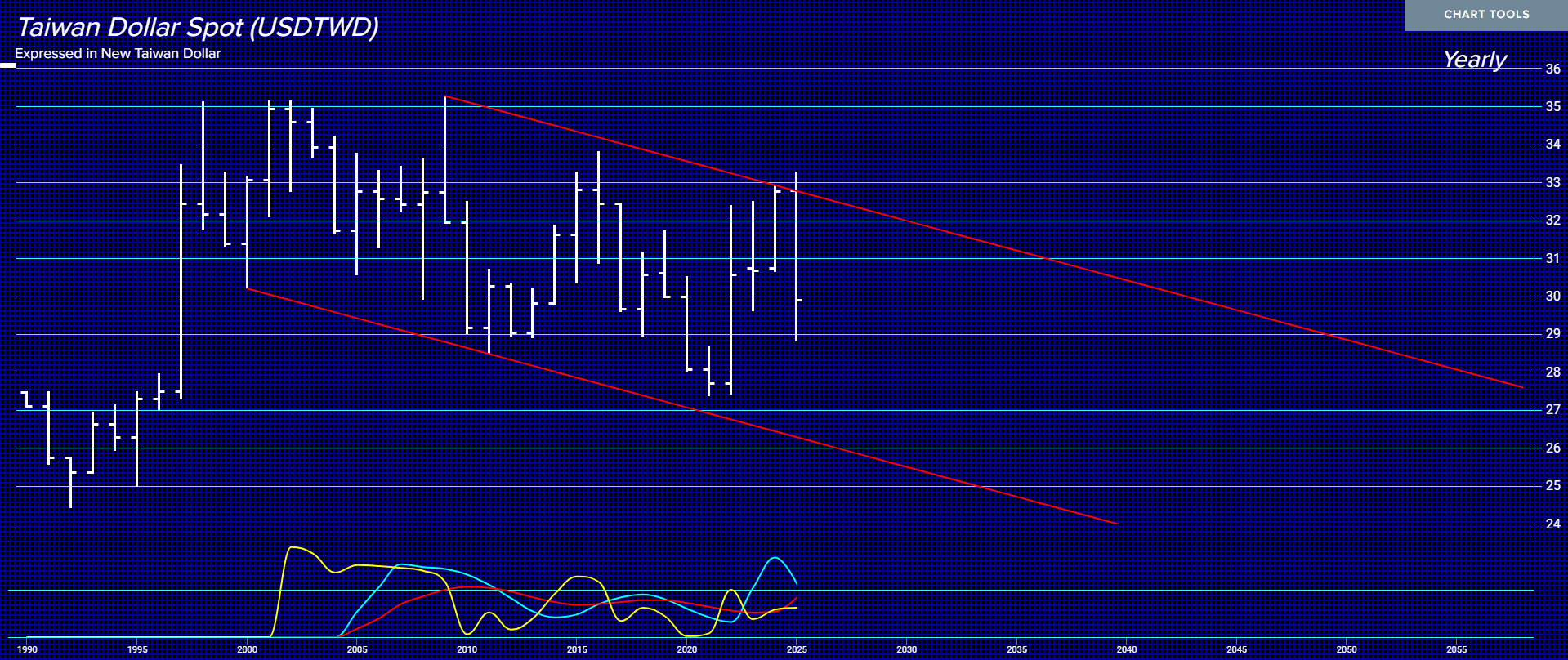
Taiwan_Dollar_Spot M TECH 6 1 25

QUESTION: Marty, Socrates is also looking like a major war in Asia is unfolding. Just to make sure we are really talking about WWIII, China has warned the US that it has accused it of “fear-mongering” and “playing with fire” after Donald Trump’s defence secretary Pete Hegseth said a Chinese invasion of Taiwan could be imminent. China’s foreign ministry objected to Mr Hegseth calling it a threat in the Indo-Pacific, describing his comments as “deplorable” and “intended to sow division”.

Would you comment on Taiwan?

Bret

ANSWER: Here, too, the computer shows a Directional Change in 2024 and a Panic Cycle for 2026 with escalating volatility into 2032. I really wish I could write positive things. But my job is to say what the computer is forecasting, not my personal opinion, wishes, or even expectations. We have pushed China and Russia together, and it will be those two, with others, that confront NATO, the EU, and the USA.

Episode 4527: The War With The CCP Cont.


Posted originally on Rumble By Bannon’s War Room on: May 31, 2025, at 1:00 pm EST