Canadians Boycott US Travel


Posted originally on Mar 17, 2025 by Martin Armstrong 

airplan air travel airtravel

Canadians are outraged at US President Donald Trump’s repeated threats to annex Canada. Canadian consumers began boycotting American products and are now boycotting America in general as tourism sank by nearly a quarter this February. Statistics Canada reported a 23% decline in trips via car from the US this February, marking the second consecutive monthly decline, while trips to the US by air declined 2.4%.

Based on personal conversations with Canadian friends, I do not believe this decline is simply correlated with the falling Canadian dollar or unfavorable exchange rate. The US was the top travel destination for Canadian tourists, and many state and local economies depend on those tourism dollars. Canadian license tags nearly equate to US tags in the spring and summer months down here in Florida. Yet, Canadians are genuinely outraged by Trump’s comments on their nation becoming a US state and want to boycott the US and anything manufactured here. I have even heard of companies canceling conferences in the US due to tensions.

Hotel reservations near the Canadian border have seen notable decreases as well. Niagara Falls, New York, reported a 8.1% decline in Saturday night bookings and Bellingham, Washinton, recently saw a 10.8% dip. Canadian travel agency Flight Centre rang the alarm that booking to the US in February plummeted an alarming 40% YoY.

There were over 20.4 million visits to the US from Canada in 2024, aiding in $20.5 billion in spending. The US Travel Association believes a 10% decline in Canadian tourism could shed $2.1 billion from the US economy and cost up to 14,000 jobs. The association noted that if the current trend continues, the US economy will lose at least $4 billion in tourism. Tourism states like Florida, New York, Nevada, Texas, and California will experience the worst repercussions of this travel boycott.

Canada is a sovereign nation, and the people wish to keep it that way. We had an excellent relationship with our neighbors to the north despite political warfare. Now, it seems as if anti-American sentiments are growing across Canada since President Trump has been keen on potentially annexing it.

For our Canadian readers— as you know with Trudeau and now Carney, our leaders do not always speak on behalf of those they claim to represent. Americans have no desire to annex Canada. In fact, the majority on both sides of the political spectrum thought Trump was simply mocking Trudeau when he proposed making Canada a state. The majority of Americans respect Canada’s sovereignty and wish we could lay this topic to rest already.

US Household Debt Surpassed $18 Trillion


Posted originally on Mar 17, 2025 by Martin Armstrong 

Debt Hole Cannor Climb Out

American households have been unable to pay off their debts. The Federal Reserve Bank of New York recently reported that household debt has reached a new all-time high at $18.04 TRILLION.

Americans acquired an additional $93 billion in outstanding payments during Q4 of 2024, with half of this debt finding its way onto high interest credit cards. Credit card debt has also reached a record high at $1.21 trillion. I reported in January that credit card defaults his a 14-year high after skyrocketing by 50% in a one-year period.

Donald Trump said during his campaign that he would like to cap credit card interest fees at 10%, perhaps for a temporary period. There are now bipartisan calls for companies to lower fees, with Congresswomen like AOC and Anna Paulina Luna both championing a 10% credit card cap.

Prior to the pandemic, Americans paid $120 billion annually in credit card interest fees from 2018 to 2020, amounting to $1,000 annually per household. In 2022, consumers were paying $105 billion in interest as it has become the main cost behind having a credit card. Rates on credit cards have doubled in a mere decade from 12.9% in 2013 to 22.8% in 2023.

US Household Debt

The Federal Reserve Bank of New York’s February 2025 Survey of Consumer Expectations also found that Americans are highly concerned about missing payments, falling into delinquency, or losing their livelihoods. Consumers foresee inflation spreading across the board. In February 2026, the general public believes gas will rise by 3.7%, food by 5.1%, rentals by 6.7%, and medical costs by 7.2%.

Then, around 14.6% of Americans said they believed they would miss a minimum debt payment over the next three months. Americans have not expressed this much concern about missing payments since the early pandemic days of April 2020, when the mainstream media insisted the world was coming to an end.

Aggregate delinquency rates rose 0.1% over a one-quarter period. Mortgage balances increased by $11 billion, hitting $12.6 trillion by December 2024. When choosing between home or auto payments, consumers are prioritizing shelter. Auto loan balances also experienced an $11 billion increase, rising to $1.66 trillion in Q4 2024, but serious delinquencies on auto payments have risen substantially.

Student loan balances increased by $9 billion, and now sit at $1.62 trillion. Students who once thought their loan debt would be forgiven have been notified that their future social security payments will be garnished by the government if they fail to pay.

Most households are a few missed payments away from financial ruin. In fact, 47%, nearly half, of American households currently live paycheck to paycheck. Americans are in an extremely delicate financial situation right now, and this looming debt crisis will not disappear.

DOWD: For The Past Two Years Government Spending Has Been Fueling Our Economy


Posted originally on Rumble By Bannon’s War Room on: Mar 15 2025, at 6:00 pm EST

MASSIVE RALLY in Belgrade Demanding Leadership Step Down – 100,000 Estimate


Interview: War: US and China, Ukr, Rus, Gold Flows, Market Impacts


Posted Mar 15, 2025 by Martin Armstrong 

US Deficit Surpassed $1 Trillion in February


Posted originally on Mar 14, 2025 by Martin Armstrong 

US Treasury Bldg

According to the Treasury Department, America’s deficit surpassed the $1 trillion mark this February. The deficit reached $307 billion for the month, marking a 2.5X increase on a monthly basis and 3.7% higher on an annual basis.

The deficit for the first five months of FY25 hit $1.15 trillion, a $318 billion increase (+38%) from the same period last year. America is paying $74 billion simply to finance this debt, with interest payments over the FY rising to $396 billion.

The deficit under the last three years of Biden-Harris grew from $1.38 trillion to $1.83 trillion as the public sector and government spending multiplied. Trump is attempting to make a dent in government spending through DOGE, but he is hitting America’s revenue with these tariffs. Both measures have only just begun and have not made a major impact on the economy yet.

Deficits no longer create economic growth; instead, they now consume it. Each additional dollar of debt generates diminishing returns, meaning the cost of servicing this debt will soon exceed the nation’s ability to function without radical restructuring.

Investors and global capital are beginning to take notice. Foreign demand for US debt has waned, with China and Japan significantly reducing their Treasury holdings. Meanwhile, the Federal Reserve is trapped. If it raises rates to combat inflation, it exacerbates the debt crisis. If it lowers rates, it risks unleashing another speculative bubble, but central banks tend to lower rates when they see a recession looming. There is no way out without structural reform.

Monetary History ofCanada


Posted originally by Martin Armstrong on March 12


Early 1600s: Beaver pelts are the one universally accepted medium of exchange, though wheat and moose skins are also legal tender

Mid 1600s: Wampum, or strings and belts made from shell beads, becomes legal tender in colonial New England. Eight white beads or four purple beads buy one penny.

Canada Playcard Money - 3

June 8, 1685: The first issue of card money occurs, which is printed on playing cards. The practice is criticized because it’s easy to counterfeit.

1722: Copper coins are introduced, though merchants didn’t like them; they continued to let people buy goods based on their own credit standing.

Eighteenth century: The lack of a standard currency and the differences in ratings given to the many coins in circulation in the colonies, “undoubtedly hindered trade and was a major source of economic inefficiency.”

Canada 1819 First Bank Note

1817: The Montreal Bank (subsequently the Bank of Montreal) issued the first bank notes in Canada after its establishment in 1817. Other banks soon followed suit. The notes were well received and became the main means of payment in British North America.

Canada 1911 $500

1854 – 1914: The Dominion of Canada is under the gold standard. The value of the Canadian dollar was fixed in terms of gold and valued at par with the U.S. currency. Both U.S. and British gold coins are legal tender in Canada.

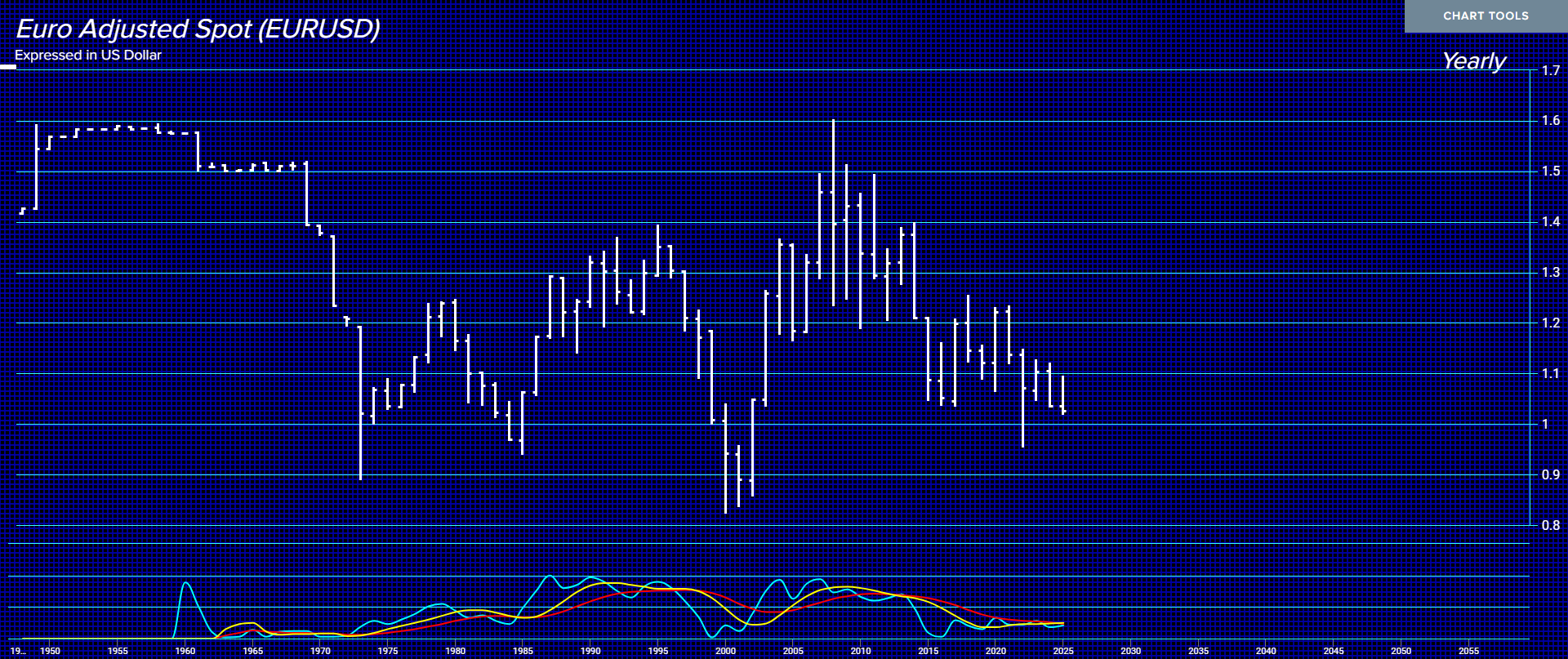
July 11, 1864: The greenback sinks to less than 36 cents (Canadian), an all-time peak for the Canadian dollar, from close to parity in early 1862. It subsequently recovers through the decade and the currencies trade around par until the outbreak of the First World War.

Canada 1954 $1000

Mid-1950: Canadian dollar depreciates. The federal government cancels fixed parity, putting it at odds with the International Monetary Fund, and the Canadian currency appreciates.

Aug. 20, 1957: The Canadian dollar hits a peak of $1.06 (U.S.).

May 2, 1962: The government establishes a new par for the Canadian dollar, fixing it at 92.50 cents (U.S.) with a fluctuation band of 1 per cent.

May 31, 1970: The government floats the Canadian dollar amid a growing budget surplus and rising inflation.

April 25, 1974: The dollar hits a high of $1.04 (U.S.) against the greenback as global demand boosts the price of raw materials. The strength sparked fear about Canada’s export industries at a time when the unemployment rate was already high.

Nov. 15, 1976: The Parti Québécois is elected, causing markets to “make a major reassessment of the Canadian dollar’s prospects.” At the same time, commodity prices start to soften, inflation picks up. By 1979, the currency slides to 84 cents (U.S.).

August, 1981: The Bank of Canada’s key rate hits 21.2 per cent. By 1982, the dollar traded below 77 cents (U.S.).

Feb. 4, 1986: The Canadian dollar hits a record low of 69.13 cents (U.S.) as falling commodity prices hurt the economy.

1988-1989: The currency rebounds somewhat to close the decade at 86 cents (U.S.).

1990s: The currency weakens again, closing the decade at 69.29 cents (U.S.). Inflation and interest rates fall and commodity prices soften.

1998: The international crisis in emerging markets such as Russia and Latin America causes the dollar to slide as low as 63.11 cents (U.S.).

2002: The currency hits a record low of 61.98 cents (U.S.) on Jan. 18, 2002.

2006: The loonie tops 90 cents (U.S.), prompting calls for parity. It then weakens for much of the balance of the year.

2007: The loonie takes flight again. On May 31, it topped 94 cents (U.S.) – the highest level in 30 years. Later that year it hit parity in September. That fall the loonie hit its modern-day intra-day high of $1.10 (U.S.), and hit its highest closing price of $1.08 (U.S.) on Nov. 6, 2007.

2008: The loonie continued to trade near parity until it dipped below that level on July 21, 2008.

2009: The Canadian dollar closed at a recent low of 76 cents U.S. on March 9, 2009, before restarting a rapid ascent higher against a basket of international currencies.

2010: The loonie touches parity for the first time in 20 months on April 6, 2010.

Brazil Clears Section of the Amazon Ahead of the COP30


Posted originally on Mar 13, 2025 by Martin Armstrong 

Climate Change Tree

Over 50,000 people are expected to attend the COP30 climate summit this November in Belém, Brazil, where world leaders will concoct new ways to weaponize carbon usage against the people. Brazil’s president touted that it is historical since it is “a COP in the Amazon, not a COP about the Amazon.” Not only will the event be held in the Amazon, but the government has begun clearing tens of thousands of preserved acres within the Amazon ahead of the event.

The government states it needs to clear a section of the forest to build a new road to accommodate the expected 50,000 attendees. “Everything was destroyed,” one farmer told BBC. “Our harvest has already been cut down. We no longer have that income to support our family.” He is currently living off savings as the government has not compensated him for the loss.

Scientists have voiced concerns that the measure will disrupt the ecosystem and lead to a loss of wildlife. “Land animals will no longer be able to cross to the other side too, reducing the areas where they can live and breed,” one scientist stated.

Adler Silveira, the state government’s infrastructure secretary, admitted the measure is not about providing infrastructure to locals, as “more importantly, serve people for COP30 in the best possible way.”

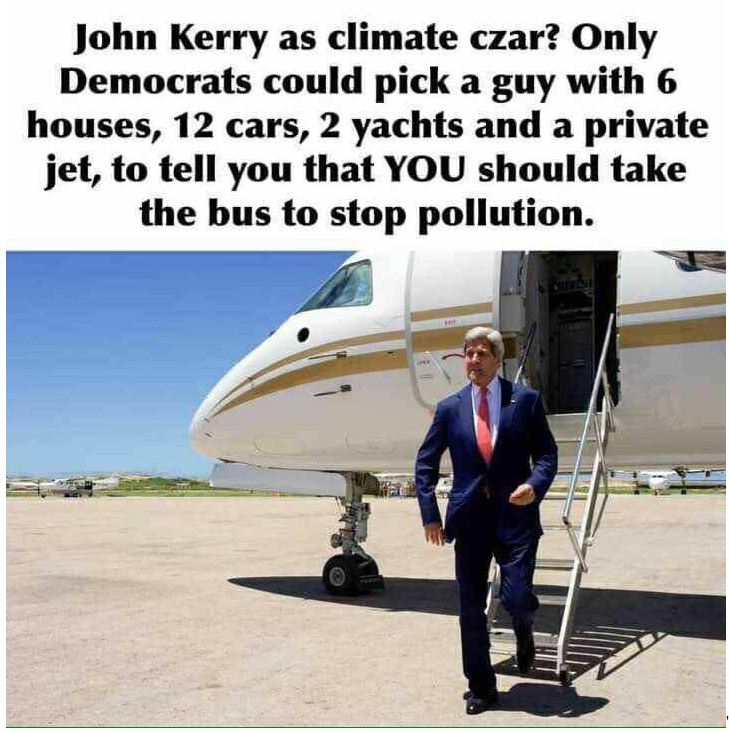
Kerry Climate Czar

The federal government will invest over $81 million to expand the nearby airport from “seven to 14 million passengers.” As we know, the climate elite prefer to fly privately, although they believe you should drive an EV or take public transportation. The globalists are the “polluter elites” who want to implement prohibitions on consumption for the masses. The Guardian reported that the top 1% produce more carbon emissions than the poorest 66%. The climate change agenda is purely a control tactic, control over our tax spending, energy and food consumption, and freedom of movement. The very people preaching that we must abandon our way of life to save the world KNOW that it is a hoax.

The conference will mark the 10th anniversary of the Paris Agreement that put nations on a path of economic suicide by suffocating the entire energy sector. It is hard to understand how anyone supports these climate zealots who NEVER follow the rules they impose on the public.

How Can We Apply the Teachings of Winston Churchill to America’s Approach to the Russia/Ukraine War?


Posted originally on Rumble By Charlie Kirk show on: Mar 11, 2025 at 2:00 pm EST

Former Philippine President Rodrigo Duterte Arrested on ICC Warrant for Alleged Crimes Against Humanity Related to His Anti-Drug Campaign


Published originally on Rumble By The Gateway Pundit on Mar 11, 2025 at 6:00 am EST