The Banking Crisis of All Times


Reposed from Armstrong Economics Blog Posted Apr 25, 2023 by Martin Armstrong
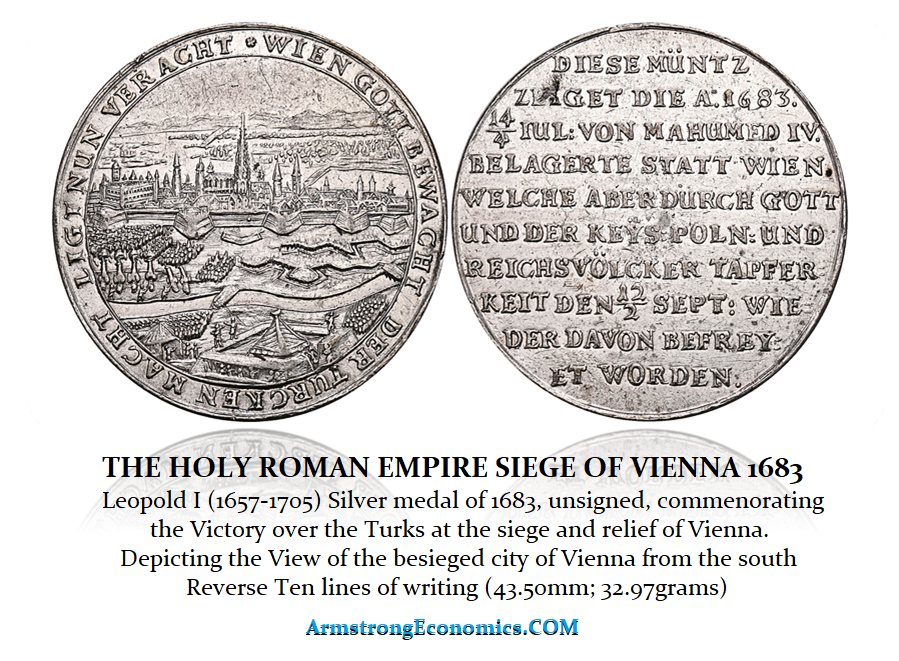
QUESTION: Mr. Armstrong, Your knowledge and database on financial crises is really unprecedented. I googled the first banking crisis and it brought up only the Crisis of 1763, which started in Amsterdam. Yet that list published in the WSJ which showed 1683 as the first panic and the siege of Vienna was most interesting. I know you have written about the sovereign defaults on the ancient central bank in Delos. My question is, was there any major financial banking crisis between antiquity and 1683? I figured if anyone would know, he had to be you.

PF
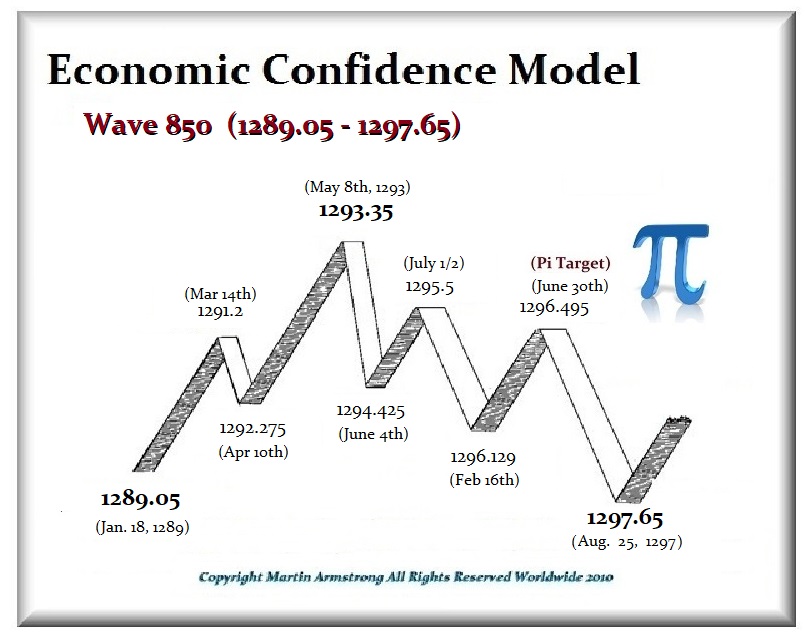
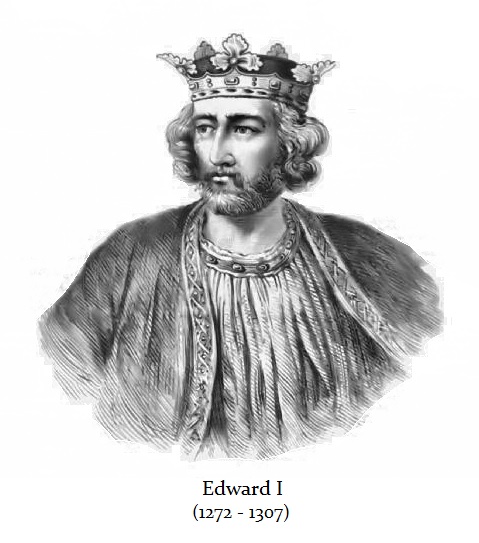
ANSWER: As the 13th century unfolded, the cost of endless Crusades burdened both the crowns of England and France. Throughout the remainder of the 13th century, a variety of Crusades were aimed not so much at toppling Muslim forces in the Holy Land but to combat any and all groups seen as enemies of the Christian faith. Edward began his reign in 1275 with heavy debts incurred from the Crusades.
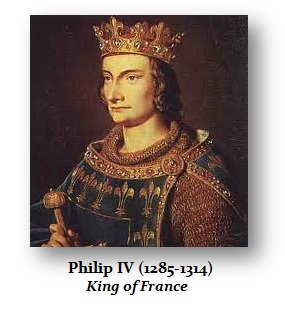
These endless wars resulted in the time of major sovereign defaults by Edward I of England and Philip IV of France. In 1275, Edward secured a financial monopoly and negotiated a grant of export duties on wool, woolfells, and hides that brought in an average of £10,000 a year. He then used this as collateral to borrow substantially from Italian bankers granting them the security of these customs revenues to fund his endless wars of aggression.

Edward imposed heavy taxes on the value of movable goods. At the beginning of this Wave 850, Edward defaulted on his loans from the English Jewish bankers, and then as 1290 began, to cover that default he expelled all of the Jews from England and confiscate all their property.

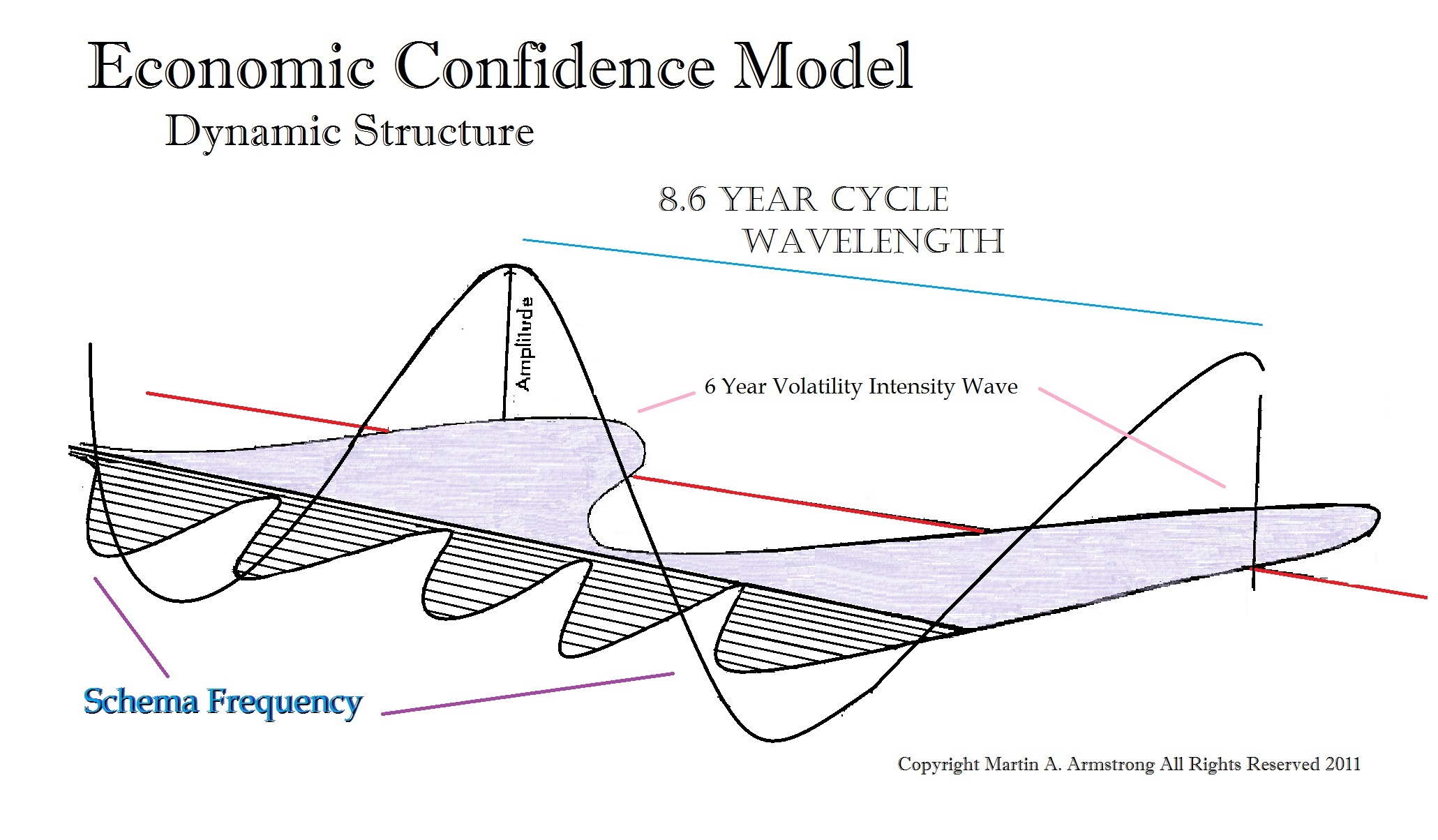
Moreover, this was the Edward Langshakes of the movie “Brave Heart” when in 1291 he attacked Scotland. As this 8.6-year Wave 850 peaked, Edward launched his very costly war against Philip IV (1295-1314) of France which lasted until the end of this 8.6-year wave came to an end in 1297.
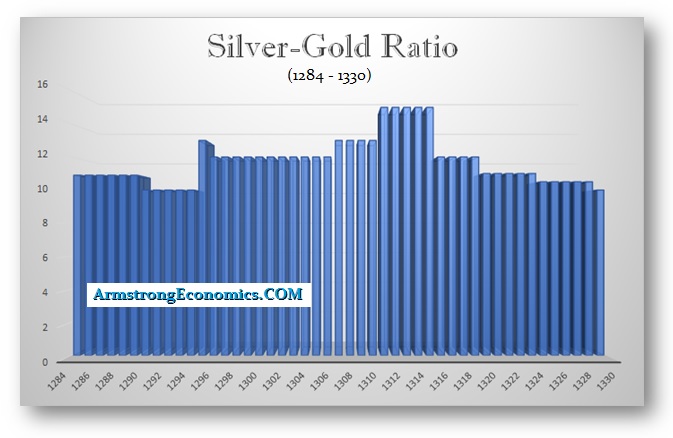
The Riccardi of Lucca was perhaps one of the major international merchant banking houses to emerge during the 13th century. The Riccardi established branches in Rome, Bordeaux, Paris, Flanders, London, York, and Dublin, Ireland. They engaged in trade with Edward I of England. Prior to 1272, the English kings were customers of the Italian merchant who had exotic imports as they were purchasing luxury goods and would use them to transfer money to Rome. With the outbreak of war against Philip IV in 1294, a major credit crunch and inflation erupted which impacted the entire international money markets throughout Europe at the time. The value of gold rose against silver from 10:1 to virtually 15:1, which was a monumental distortion of the European monetary system as a consequence of these endless wars.

Cash-strapped, Edward sought financial support from the Riccardi establishment but they refused to lend him any funds. In response, Edward seized all of Riccardi’s assets in England, effectively bankrupting them. The Riccardi had derived significant benefits in dealing with the English monarchy. They held contracts with special access to the English wool market. The Riccardi banking establishment was involved in about 50% of all the forward contracts with English wool producers, which were in effect futures contracts in the cash market. When Edward confiscated all the assets of the Riccardi, his action backfired. Nobody else would then deal with England in international money markets. This led Edward I to impose heavy levels of domestic taxation, which led to civil unrest. This led to a constitutional crisis of 1297.
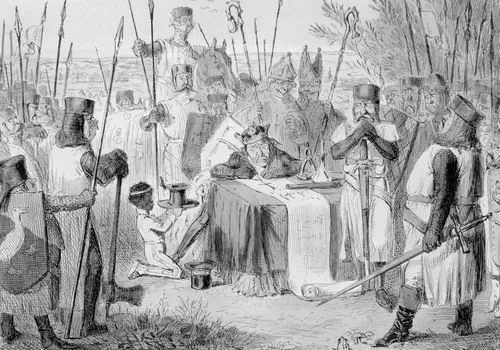
We all may know that Magna Carta established rights that were forced on King John on June 15th, 1215. After John’s death, the regency government of his young son, Henry III, reissued the document in 1216, but it removed some of its more radical content. This led to civil unrest and at the end of the war in 1217, it became part of the peace treaty when it acquired the name “Magna Carta.” Henry III was compelled to reissue the charter again in 1225 in exchange for a grant of new taxes. Edward I was his son who was then once more compelled to reaffirm the Magna Carta in 1297 at the end of the 8.6-year Wave 850. That is when Edward I was forced to confirm that the Magna Carta was England’s statute law. That is when it actually became England’s rule of law.
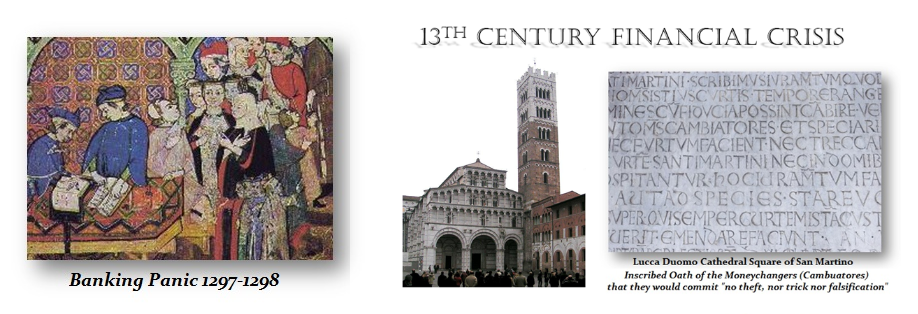
The Bonsignori bank was known as the Gran Tavola, which had become the most powerful of the Italian merchant banking firms throughout Europe between 1255 and 1298. The Gran Tavola was indeed the greatest bank of the 13th century with branches in Paris, Marseille, Genoa, Bologna, and Pisa in addition to the main office in Siena.
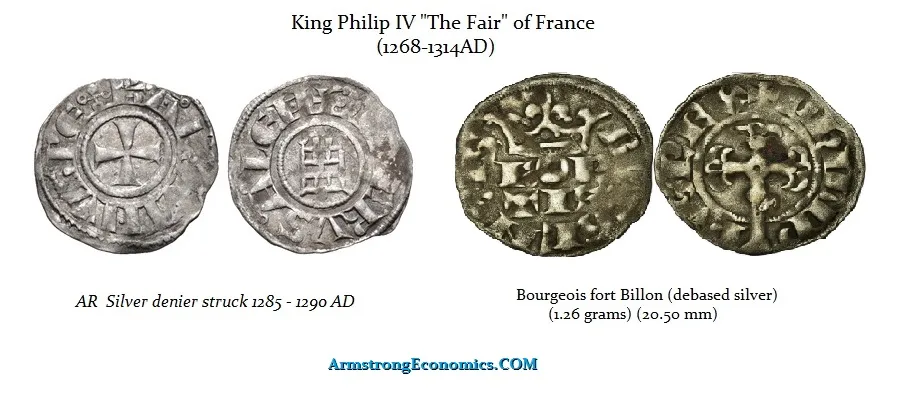
Philip IV of France was also strapped for funds. He chose the debasement of the coinage which was massive. Philip had no other course of action to meet the expenses of the war. He began as a massive debasement of the coinage. Silver began to migrate out of France.  This debasement only accelerated after 1298 when Philip IV confiscated all the assets Italian bank known as the Gran Tavola in France on claims that they owed him money, without netting anything with respect to his loans owed to them. This caused a major banking crisis in 1298 with the collapse of the institution which also held funds for the Papacy resulting in their loss of 80,000 gold florins. This was the first Banking Panic post-Dark Age. This confiscation of assets wiped out Siena and the city never again rose to the forefront of European commerce. By 1320, Siena was no longer a significant city in international commerce whatsoever which was a direct attack on the Papacy by Philip IV. This resulted in shifting the banking power to Florence.
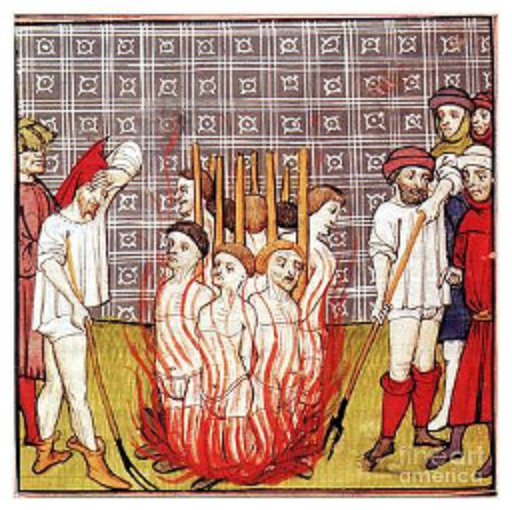
A full-blown financial panic unfolded as silver migrated overseas. People hoarded the old currency and by 1301 there was virtually no silver remaining in the open market in France. Currency depreciation let Philip cover the cost of the war but it destroyed the credit of France and that ultimately led to France seizing the Papacy and strip-mining all its assets moving the Church to Avignon where a French Pope was installed. They then seized all the assets of the  Knights Templar and burned all resistance alive. The Knights Templar were effectively an international transfer agent. If you were in France and needed to pay someone in Italy, you gave the money to the local office in France and they instructed the brank in Italy to pay. It was a 13th-century version of a wire transfer service. That is why the French crown seized the Knights and strip-mined all their wealth as well.

Obviously, this banking crisis of 1298 was far beyond anything most people would have read about in a financial crisis. This is what I mean when I warn that those in power will do WHATEVER it takes to retain power, and religion never means anything at the end of the day.

Categories: Banking Crisis
Tags: 12901301Banking CrisisCrusadesdebasementEdward IMagna CartaPhilip IVsilversovereign defaultswave 850

« Is Your Money Safe in a Regional Bank?

REGISTER FOR BLOG UPDATE ALERTS

Sending
BLOG CATEGORIES
PROMOTIONS

Institutional Service for Small Business

Instructional Videos

Socrates

Models and Methodologies

2019 World Economic Conferences

BLOG ARCHIVES

View All

©2023

Is Your Money Safe in a Regional Bank?


Armstrong Economics Blog/Banking Crisis Re-Posted Apr 25, 2023 by Martin Armstrong

People often ask if their money is safe in a regional bank. Yes—if you keep it under $250,000 to guarantee the FDIC insures those funds. Some clueless minds brainwashed into fighting the class warfare thought, “Oh well!” for people who had more than them in the bank and did not care if the Silicon Valley Bank or Signature Bank failed.

My phone did not stop ringing and the bankers wanted to know if they should cover ALL the deposits. I actually lost my voice, screaming, “YES YOU MUST COVER ALL THE DEPOSITS! ALL OF THEM!!!” Aside from the fact that no one deserves to lose their hard-earned money, the primary issue here is that failing to cover the deposits would have completely wiped out small businesses.

Small businesses comprise 70% of GDP and must be protected at all costs. They must park large sums in the bank to cover payroll to pay their employees and operational costs. Small businesses would come to a standstill and banks would fall like dominoes. Unemployment would spike and the entire economy would plummet. We would see a massive banking crisis if all small businesses went under. More banks will go broke, it is only a matter of time, but it is crucial that deposits are covered

About The New “Affordable Housing” Fees on Mortgages that Punish High Credit Borrowers


Posted originally on the CTH on April 20, 2023 | Sundance 

Stop looking at the Washington DC Potemkin village; start looking at the financial system behind it that controls it.

You may recently have seen this story:

WASHINGTON DC – Homebuyers with good credit scores will soon encounter a costly surprise: a new federal rule forcing them to pay higher mortgage rates and fees to subsidize people with riskier credit ratings who are also in the market to buy houses.

The fee changes will go into effect May 1 as part of the Federal Housing Finance Agency’s push for affordable housing, and they will affect mortgages originating at private banks across the country. The federally backed home mortgage companies Fannie Mae and Freddie Mac will enact the loan-level price adjustments, or LLPAs.

Mortgage industry specialists say homebuyers with credit scores of 680 or higher will pay, for example, about $40 per month more on a home loan of $400,000. Homebuyers who make down payments of 15% to 20% will get socked with the largest fees. (read more)

If you focus on the DC Potemkin Village, you view this move through the prism of Biden’s FHFA creating a policy to favor low-income (nonwhite) voters by punishing stable credit worthy borrowers.  That’s what the powers who control the levers, and create policy, want us to focus on.  That’s not what is going on.

Biden doesn’t control anything.  Biden is a puppet to the multinationals that control DC policy.  When Biden was installed, the people who control the money and wealth (Blackrock, WEF assembly etc.), the people behind the Potemkin Village, knew what the larger economic agenda would create.

{GO DEEP}. 

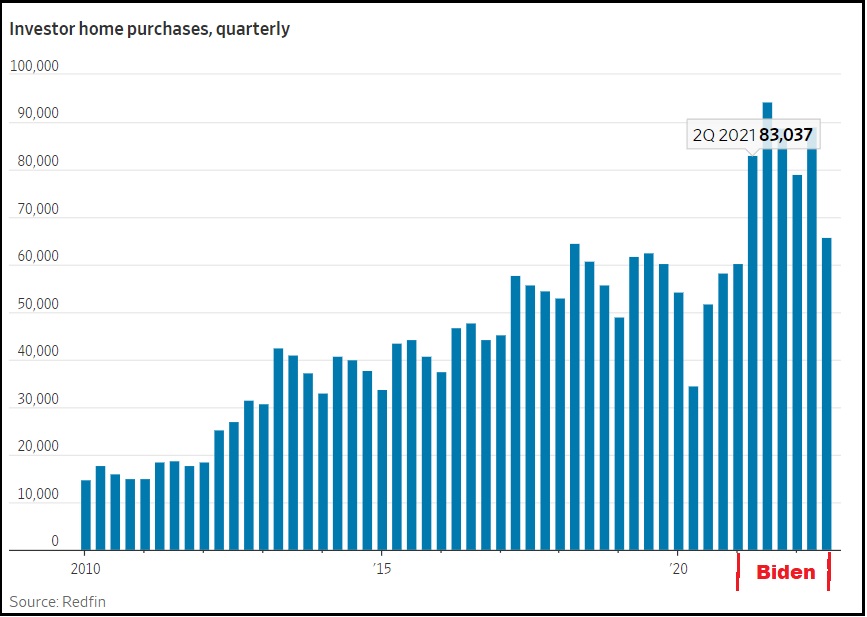
They knew BBB, or Green New Deal policy, combined with excessive govt spending would generate inflation.  They moved their money from inflation sensitive liquid and paper assets, into real estate.  Inflation raged, liquid assets depreciated, real assets (real estate) surged.   25% of housing was bought with investment dollars by institutional investors, housing prices skyrocketed – their investments increased accordingly.

The financial control operators avoided the consequences of the government policy they controlled.

Now, those same institutions need to turn those appreciated real estate assets into capital outcomes.  They need to sell the real estate.  However, the assets are now at maximum appreciation and dropping as a result of the central banking moves to raise borrowing rates.

How do they exit the investment?  They need a mechanism – a new policy to create the financial instrument that transfers the increased investment wealth back into their hands.

They need buyers.

How do they get buyers?  They create new policy.

That’s what is behind this new FHFA rule.  Fannie Mae and Freddie Mac will create a new category of buyers that allows the investors to sell the real estate assets at higher appreciated values and exit their investment.  They will transfer the depreciating loss of the asset to the new buyers, like a game of hot potato.

Learn to look behind the Potemkin Village to the institutional financial operators who control the laws, rules and regulations.  This is all a continual game of wealth transfer and redistribution.  There are trillions at stake.

Look at who moves the money around and how they position govt policy for the shifts into and out of the financial system they control.   All of this is being controlled, and Joe Biden has no idea what is happening beyond the talking points that are put in front of him.

March Housing Sales Drop 2.4%, Year Over Year Decline of 22% From March 2022


Posted originally on the CTH on April 20, 2023 | Sundance

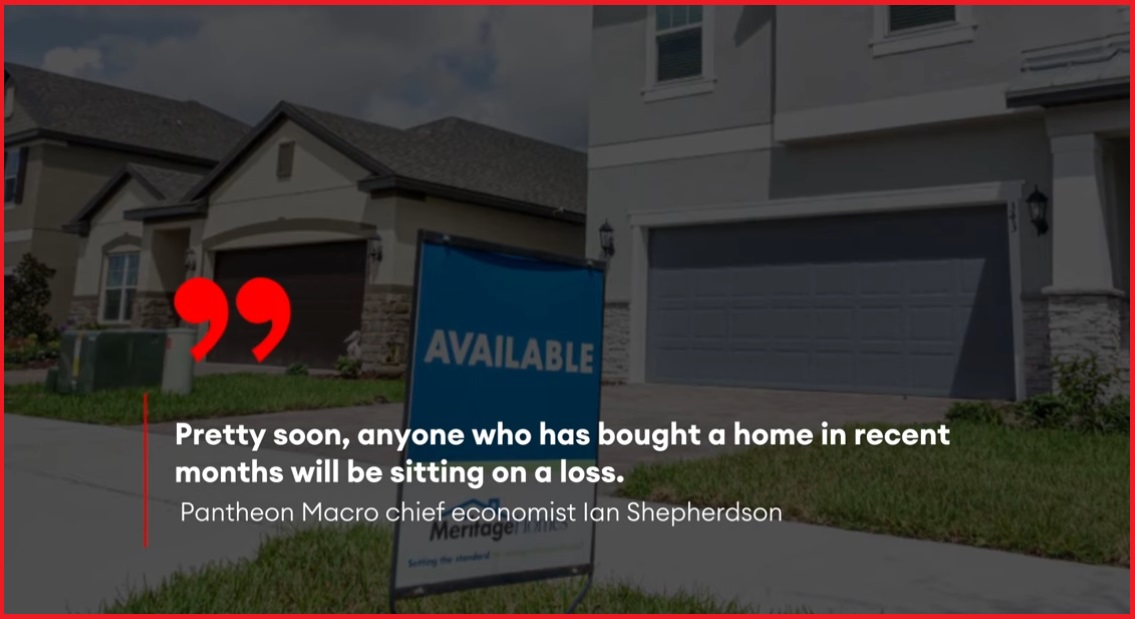
As higher interest rates continue to put pressure on borrowers, the ability of the average person to afford a mortgage diminishes.  Higher mortgage rates lead to downward pressure on residential home values as fewer borrowers can afford higher payments.  Simultaneously, commercial real estate is dropping in value as vacancies continue increasing.

Put both of these issues together and already tenuous banks holding mortgage bonds as assets can become more unstable.

This dynamic creates the continual tremors in the background of an economy already suffering from high inflation and low consumer purchasing of durable goods.

A perfect storm starts to realize.

(Wall Street Journal) U.S. existing-home sales decreased 2.4% in March from the prior month to a seasonally adjusted annual rate of 4.44 million, the National Association of Realtors said Thursday. March sales fell 22% from a year earlier.

March marked the 13th time in the previous 14 months that sales have slowed. The housing market had a surprisingly strong February, when sales rose a revised 13.75% from the previous month. But after mortgage rates ticked higher, March sales resumed the extended period of declines.

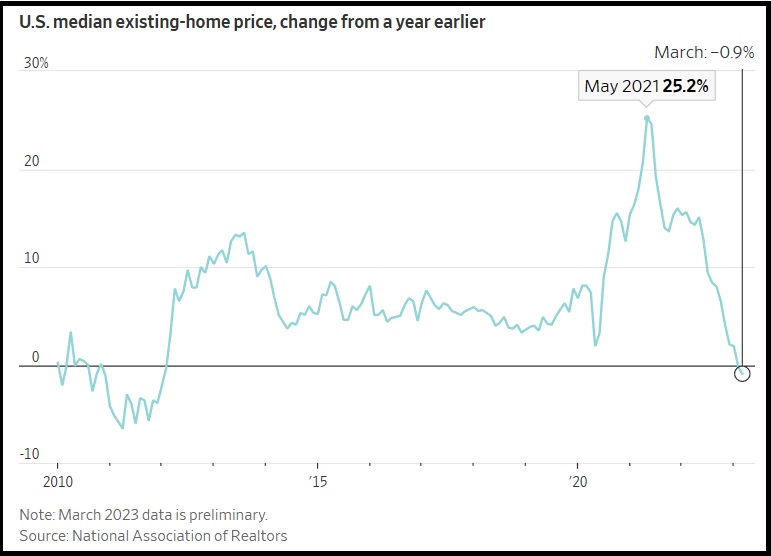
The housing market’s slowdown is now starting to weigh on prices, which have fallen on an annual basis for two consecutive months for the first time in 11 years. The national median existing-home price decline of 0.9% in March from a year earlier to $375,700 was the biggest year-over-year price drop since January 2012, NAR said.

Median prices, which aren’t seasonally adjusted, were down 9.2% from a record $413,800 in June. Home prices in the western half of the U.S. experienced some of the biggest gains for many years but are now falling the fastest.

[…] Housing starts, a measure of U.S. home-building, fell 0.8% in March from February, the Commerce Department said this week. Residential permits, which can be a bellwether for future home construction, dropped 8.8%.

The housing market slowdown shows one of the main ways that the Fed’s aggressive interest-rate increases are rippling through the economy. Housing is one of the most rate-sensitive economic sectors, and high housing costs have been a big contributor to inflation. (read more)

Before looking at today’s graph showing median existing home values, remember me saying this in 2021?:

“I said in June, at a macro level home prices had reached their peak (last two weeks of May, first two weeks of June was apex).  Obviously, there are some geographic home value increases still happening as COVID related regional issues and work opportunities are shifting populations.  There is also a lag and ripple effect that takes time to work through the economy.  The macro-apex will not be visible until next year.”

When I said that in 2021, people said I was wrong.   Well, with hindsight now visible within the data as it is reflected, look at the result:

May and June 2021 was the peak of year-over-year percent of change in median home value increases.

So, what was going on?

As CTH outlined in 2022:  If you look closely at the timing (keep in mind the data reporting lag) what you will notice is that financial institutions began a big surge in purchasing hard assets, specifically real estate, as soon as Joe Biden took office (Jan ’21), and the economic policy became evident.   Intangible financial instruments became an immediate risk as the professional financial control groups recognized energy policy would drive inflation (supply side) and devalued money would fuel it (demand side).

As an offset to predictable inflationary policy (the insiders’ game), institutional money (Blackrock, Vanguard etc) was moved into hard assets with tangible value.

This shift in asset allocation, institutional sales, helped fuel a false surge in home prices and their valuations.  CTH was writing about this in 2021, and sounding alarms as it took place.  25% of all real estate purchases were being made by institutional investors.

We The People got screwed. 

The dynamic was predictable.  The Biden administration economic policy, energy policy and monetary policy, was going to cause massive inflation.  CTH was shouting about it in early 2021 and warning everyone to prepare for waves of price increases that would naturally surface first on high-turn consumable goods, and then embed into longer-term durable goods.

Despite claims to the contrary, this 2021 inflationary explosion had nothing to do with the pandemic or supply chain shortages.  It is entirely self-created by western governmental policy; the collective ‘Build Back Better’ agenda.  You can see now from the background moves within the financial sectors, they too knew the reality and their money shifts reflected that despite their ‘transitory’ pretending they were mitigating their own exposure.

We the People were yet again going to be victims of specifically intended monetary, regulatory, energy and economic policy.

The investment class rulers of the WEF assembly shifted assets to avoid the pain that we would feel.   We “would own nothing and be happy,” and their shifts would position them to own everything and be in control.

Overall govt spending and regulatory controls drove inflation for these past two years.  The ‘demand side’ was blamed, despite the lack of demand. I will be proven right when history is concluded with this.  Interest rates were raised by central banks in an effort to support the policies that are driving ‘supply side’ inflation, not demand side.

Energy policy was/is crushing the consumer by driving up the cost of all goods and services.  To support the overall goal of changing global energy resource and development (a false and controlled global operation), central banks raised interest rates.  Various western economies, including our own, have been pushed deeper into a state of contraction by central banks crushing consumer demand, and eliminating investment via increased borrowing costs.

In short, the goal was/is to lower energy consumption by shrinking the economic activity.  This, according to the BBB plan, was needed at the same time as energy development was reduced.  These economic outcomes are not organic, they are all being controlled by collective western government agreement.

Within this control dynamic, there was always going to be a point where the reaction of the people to their economic reality means the financial control elements need to shift direction.  They will always maximize profit and minimized risk, while knowing what the larger objective remains.

Just like every other durable good, housing demand contracts as prices and costs become unaffordable.  The loss of equity within your home is damaging to your own value or ability to borrow against it.

From the perspective of an institutional asset, that same equity drop is an investment loss.  However, the investment loss is not materialized until the sale of the lower valued asset is completed.  Retaining declining real estate on investment books, creates an artificially high appearance of the investment result; unless and until the real estate is sold at a diminished value.

As mortgage rates rise, just as a consumer would pull back from the housing market, so too will institutional investment groups now control the slow dumping of the asset to remove the equity they pumped into it.  Much of the investment housing will be retained as rental housing, with the monthly rents being part of the returns on the investments.    However, as this dynamic unfolds further investment purchases of houses stop, because the asset overall is declining in value.  This halt of investment activity also worsens a steeper drop in home values.

Notice this line within today’s WSJ article: “The housing market had a surprisingly strong February, when sales rose a revised 13.75% from the previous month.

What happened in February?  The BIG CLUB [Blackrock, Vanguard, Citadel, etc.] moved liquid assets out of banks into hard assets (real estate), to avoid a predictable banking issue which surfaced a month later in March.  They knew what was going to happen in banking, they moved their own assets to avoid it.

Why Does the ECM Work On So Many Things?


Armstrong Economics Blog/Uncategorized Re-Posted Apr 17, 2023 by Martin Armstrong

COMMENT #1: Hi Martin, corn also turned nicely on the ECM:

JB

COMMENT #2: Hello Marty, I just want to point out that the Japanese yen broke really hard on the 10th. Not sure if this will prove to be a precursor of what is to come.

Thanks from Tokyo, your old home ground.

AS

COMMENT #3: Well the ECM also marked the reversal in trend in the 30-year bond. It peaked at 134 and fell to 130 by the end of the week. That was just remarkable.

Colin

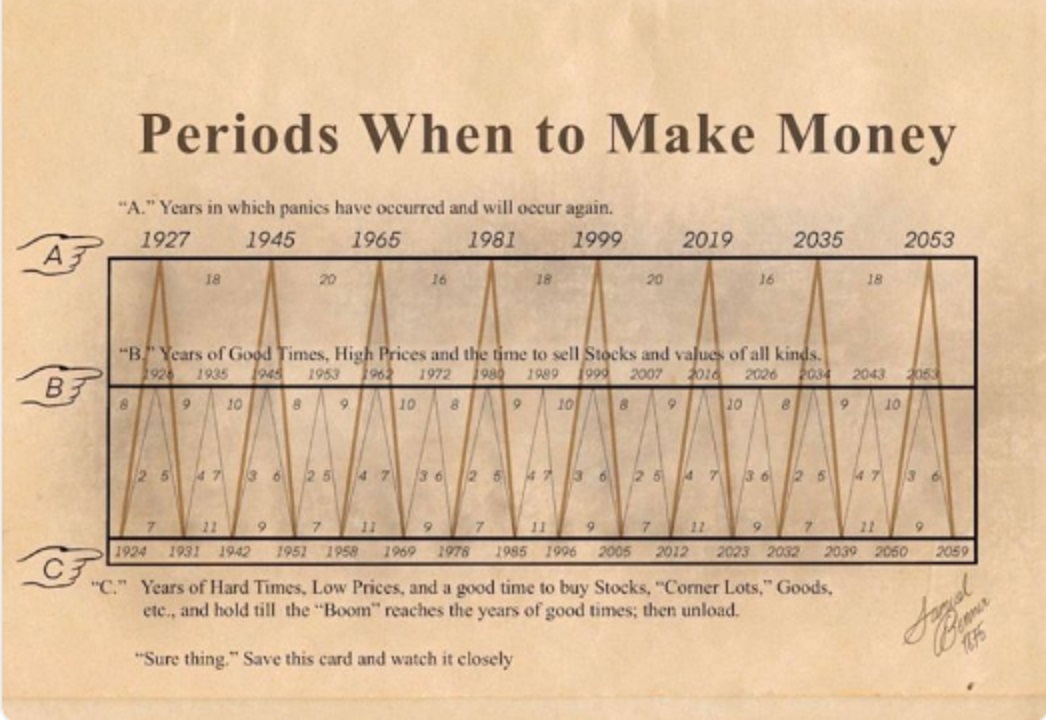
COMMENT #4: Martin; is this chart real that people are sending around claiming it was Benner’s work?

Mat

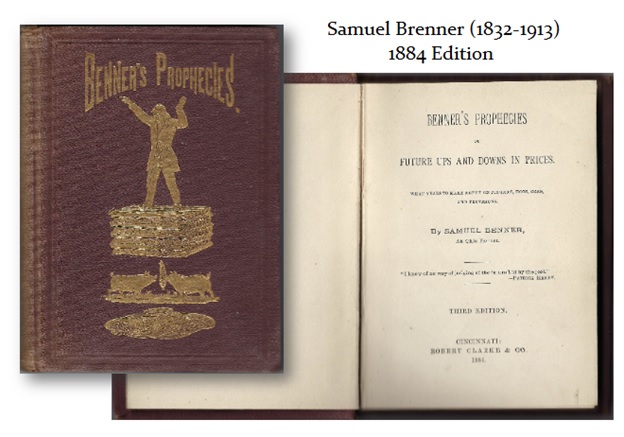
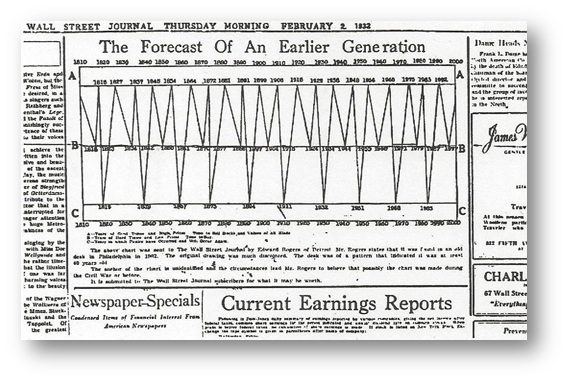
ANSWER: As far as this chart of Brenner’s Cycle being real, the answer is no Someone has made it up and signed his name. They have at least extended his cycle correctly. The last time someone tried that they skewed the cycle to make it look like it forecast the Depression 1932 low.

When the WSJ published it, it showed 1932 instead of 1931. Brenner did not extend this out in this manner. What is important to understand is that Brenner was a farmer and farmers understand the cycles in nature. Economists and governments pretend they can smooth out the cycle and eliminate the booms and busts.

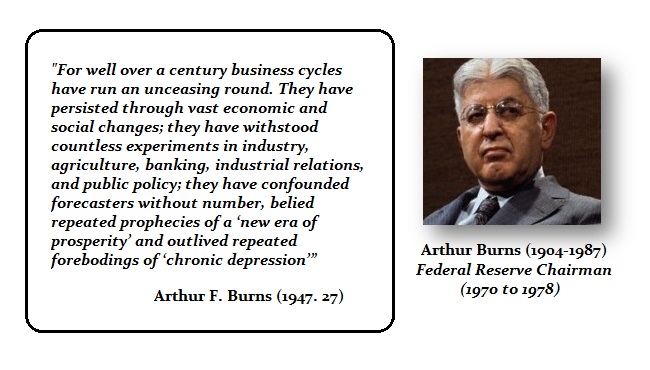
The business cycle always wins as both former chairmen of the Federal Reserve conceded – Arthur Burns and Paul Volcker.

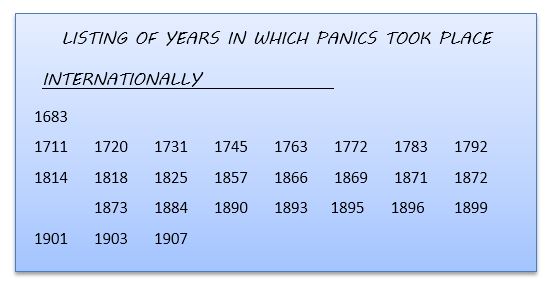
Back during the 19th century when Brenner was observing the business cycle, it was still based on commodities. Kondratieff took the same data. I believe the reason WHY the Economic Confidence Model has been so accurate is that it was based on a list of Panics – not one sector of the economy. Therefore, the ECM incorporates weather as Brenner and Kondratieff did by using the commodity sector. Yet just that the ECM was derived from financial panics, it was not based on any one specific type so it strangely seems to have incorporated the whole gambit.

Furthermore, all previous cyclical analysis was based on just a single market like stocks. They have failed because they could not account for the external influence of a contagion. The fact that this list began with the Turks’ siege of Vienna, means that the list was also influenced by war and from an international perspective.

This is a fascinating subject that I will explore in far more detail in my coming book.

Sources


Armstrong Economics Blog/Opinion Re-Posted Apr 16, 2023 by Martin Armstrong

QUESTION: Mr. Armstrong, You are renowned for your sources. You said the IMF was planning to replace the dollar with its own international digital currency. You targeted Ukraine a year before anyone heard of the country. You said Ukraine was losing the war and they had lost 100,000 troops when people said that was Russian propaganda. That turned out to be classified as Ukrainian information. These Pentagon papers confirm everything you have said a year ago. Israel was reluctant to send anything to Ukraine when everyone said Zelensky was Jewish. The list goes on and on.

My question is, why do you have information from around the world before anyone else?

HP

ANSWER: That is hard to say. I think what has emerged over the decades is that people are sharing information from all over to get a true picture of what is honestly happening. People come to me because I put out the truth. Back when they were forming the Euro, it has come out that the Bundesbank was against it. They were providing all the notes and discussions going on because they also know we have the largest institutional audience of anyone. It is never my opinion. Everyone has opinions and that means nothing. We are well read because it is not my personal opinion. I really cannot address this subject any more than that.

Gold & the Dow Rally Together? OMG


Armstrong Economics Blog/Dow Jones Re-Posted Apr 14, 2023 by Martin Armstrong

COMMENT: Well, the goldbugs are wrong again. This claim that the stock market must crash and only gold will rise is as you say sophistry. It looks like gold and the Dow are rallying together. I can see how they are just promoting a cult-like agenda.

Thanks for being objective

MH

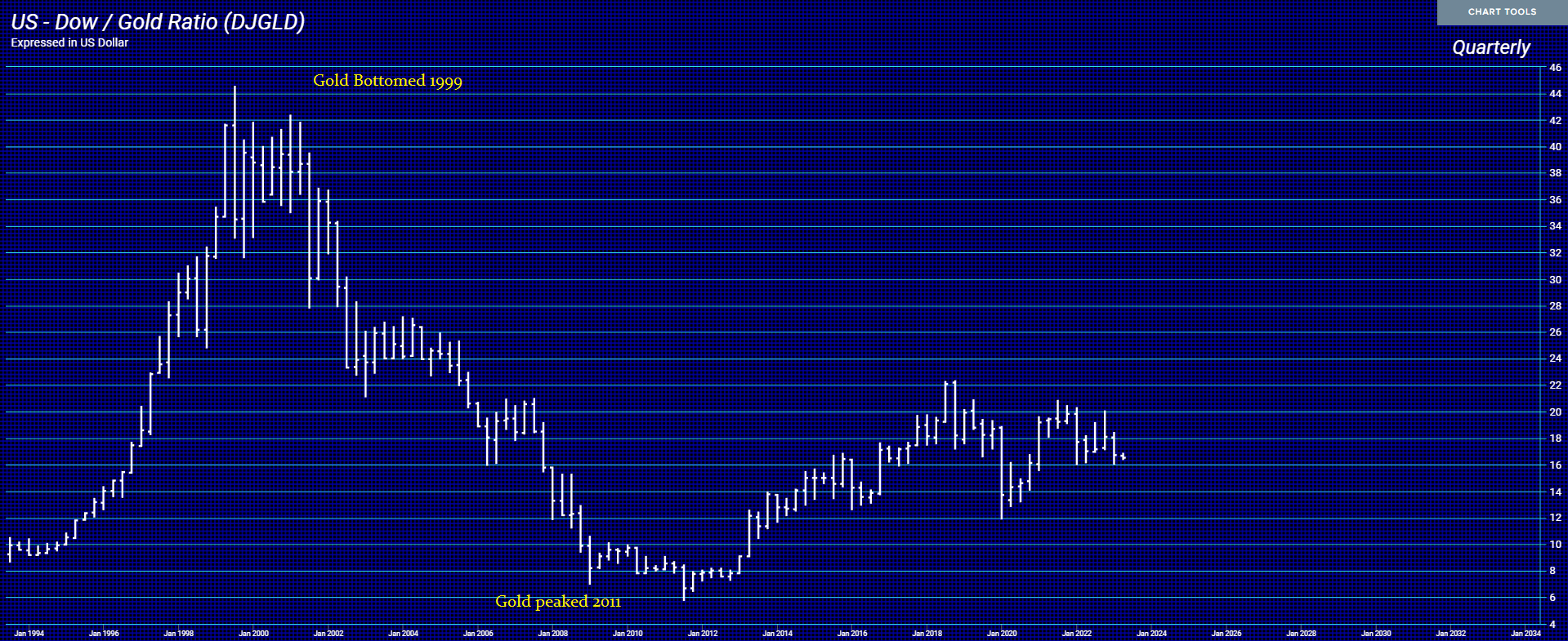
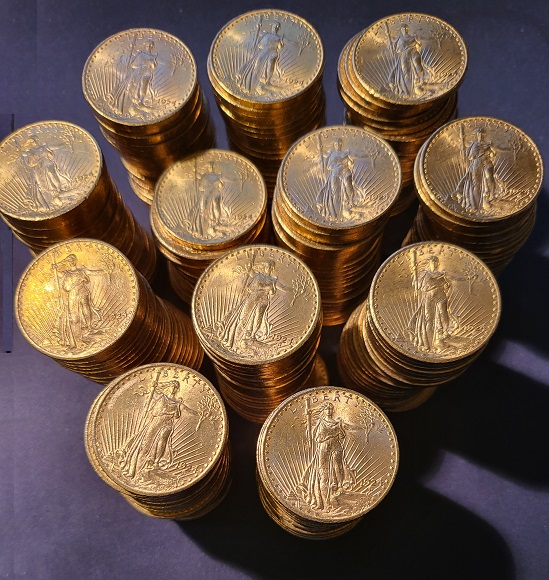
REPLY: We became the biggest institutional adviser because there was never an agenda. Everything goes up, and everything comes down. There is an old saying among actual traders – NEVER marry the trade. I buy gold personally. I just bought a hoard of $20 gold pieces all uncirculated and all dated 1924. I do not regard it as a trade, just a stash for the long-term. It will go up and go down. Do not pretend that something only goes in one direction.

Here is a chart from Socrates on the Quarterly Level of the Dow/Gold Ratio. Anyone who only forecasts a single direction is NOT an analyst – they are a promoter like a used car salesman. No matter what we look at, there is a time to buy and a time to sell. EVERY market functions that was.

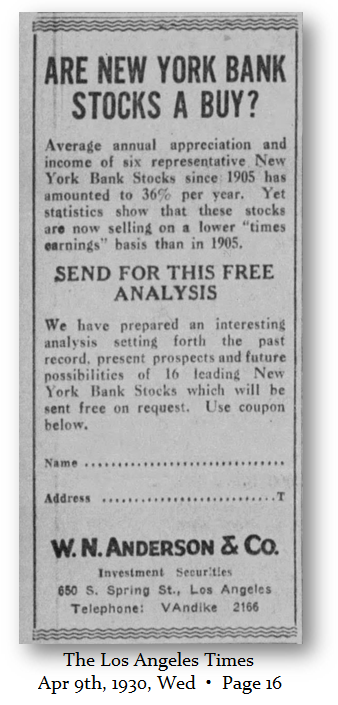
Here is an advertisement from April 9th, 1930 pitching Bank Stocks. Brokers were telling people to buy all the way down, average in, but it took 26 years for the Dow to reach the 1929 high again. Anyone selling any product will ALWAYS tell you to BUY. That is their business. It is up to you to come to terms with how ALL markets really move. Hence, there is always a TIME TO BUY just as there is a TIME TO SELL.

The 6th Wave – Do We Ever Learn?


Armstrong Economics Blog/ECM Re-Posted Apr 4, 2023 by Martin Armstrong

QUESTION:
Hi,

Have you come across a period in history that at the end of the sixth wave, after the political system dies, during the next six waves, human mankind learned from its past errors and corrected it?

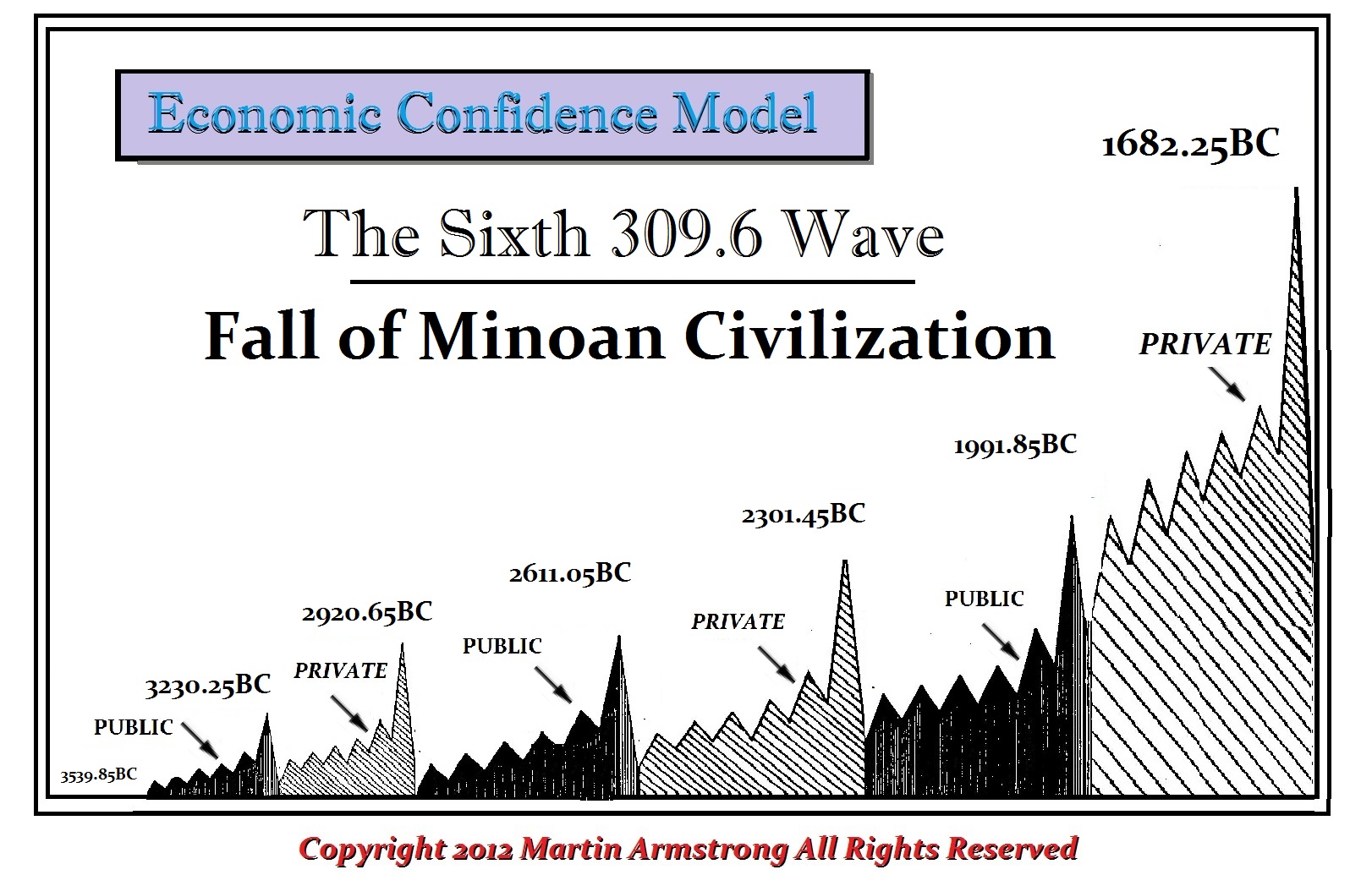
ANSWER: Actually, the answer is NO. The fall of the Minoan Civilization brought in a dark age with the invasion of the Sea Peoples from the North who were driven south by climate and conquered all the civilizations during the Bronze Age except for Egypt. Reliefs show the Egyptians in heated battles against the Sea Peoples.

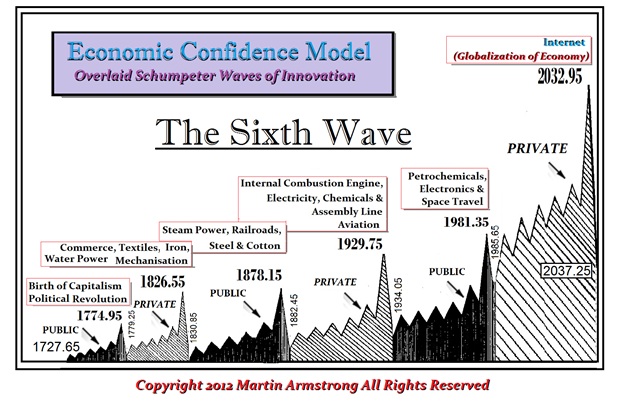
Everything in this universe is fractal. It is a repetitive pattern of self-referral. You have children and they are a blend of both parents’ DNA – self-referral. Thus, what makes 2032 extremely important, is that it is the Sixth Wave since the last upheaval of the overthrow of the Monarchy.

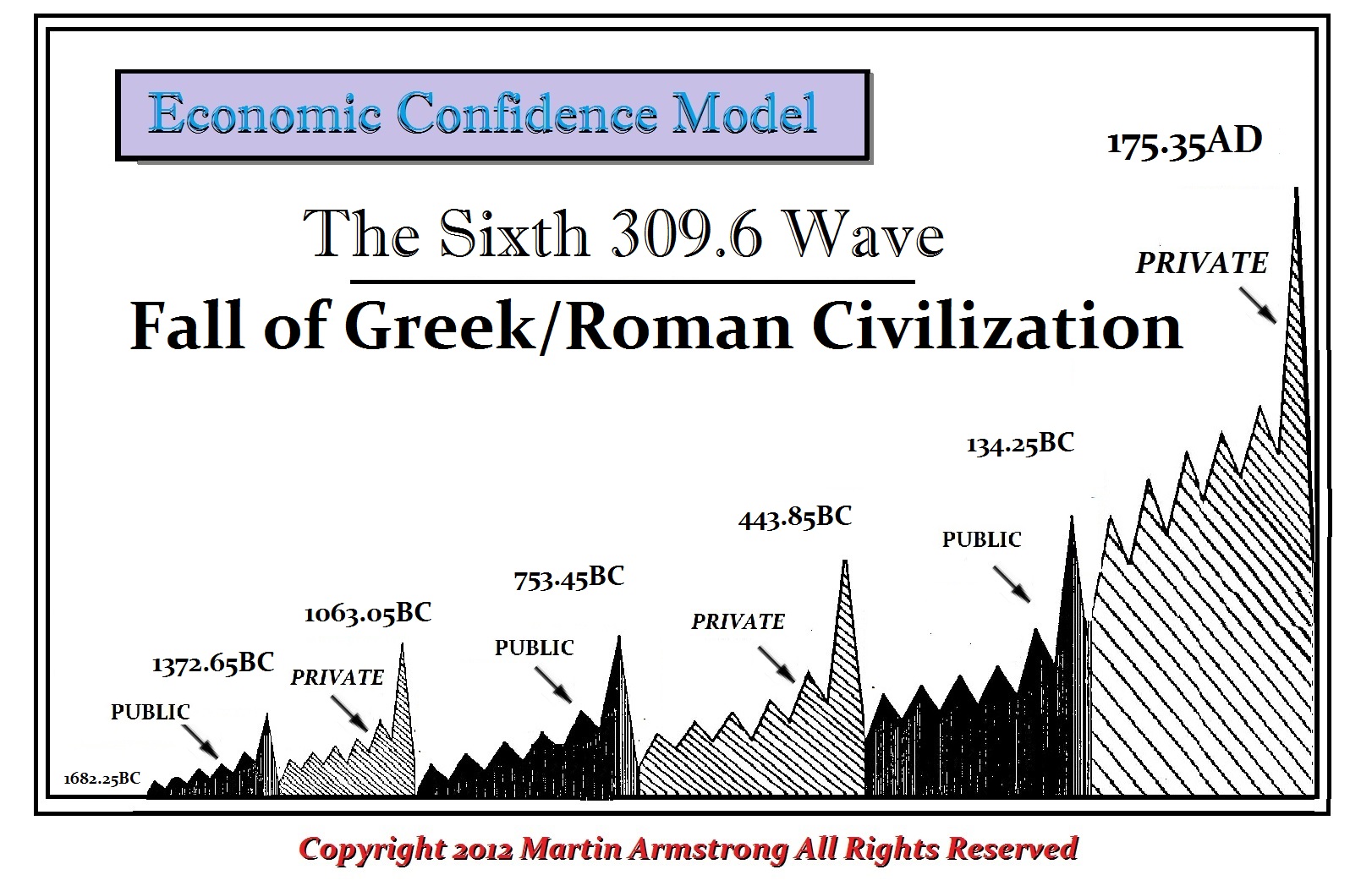
The Roman Empire peaked with the reign of Marcus Aurelius (161-180AD). We know from Chinese documents that he had even sent an ambassador to China which was the first contact.

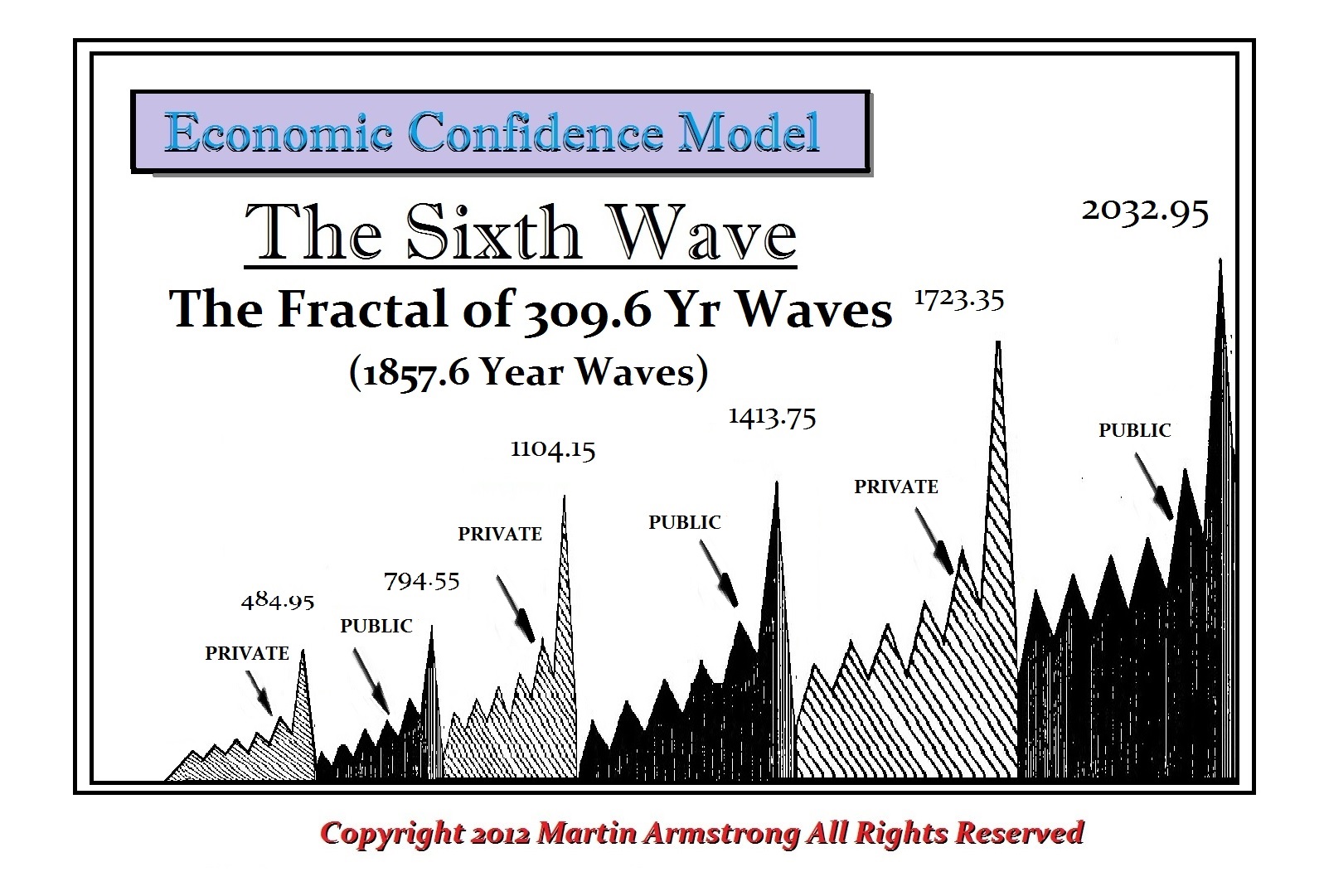
However, 6 of the 51.6 waves (which are 6 of the 8.6-year) in turn build in a fractal manner into a 309.6-year wave and then we have 6 waves of that which form 1857.6.  There are then 6 waves of that building into 11,145.6-year waves. About 11,600 years ago (9,600 BC)  was an abrupt period of global warming which accelerated the glacial retreat that was the beginning of the Holocene geological epoch. That is when we begin to find the domestication of sheep and evidence of settlements such as Jericho dating back to 9,600 BC.  That wave was the Mesolithic era which refers to the final period of hunter-gatherer cultures in Europe and Western Asia. This was between the end of the Last Glacial Maximum and the Neolithic Revolution. This is also why in back-testing the ECM, it became very clear that it incorporates nature and the swings back and forth on climate change.

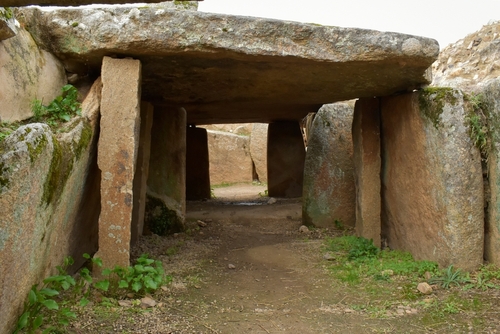
There is the period of the Megalithic Monuments in Europe. We do not know why these Neolithic and Copper Age creators were motivated to expend such energy in their creation. Some of these structures appear to have been graves. The sheer weight of the stones shows a very determined culture whose motives are lost to the haze of the period we refer to as prehistory.

Recent studies have implied that these megalithic monuments across Europe originated in northwest France, and the practice of building them spread along the continent’s coastlines in several migratory waves. They first appeared during the second half of the fifth millennium BC. That was about 4300 years before the invention of coinage.

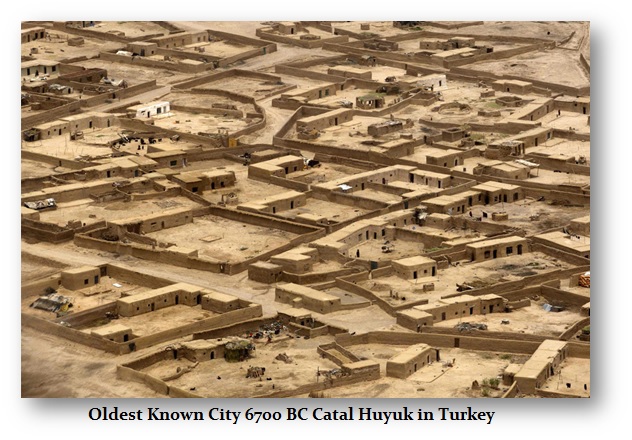
The oldest known city dates back to 6700BC, Catal Huyuk, located in modern Turkey. I have studied the economy of this period. It has all the trappings of modern-day civilization. There are houses with murals on the walls. This confirmed that there was an artist trade. There were a lot of female deities found so there was some artistic trade that carved these out of marble as well as clay. There was no indication of money being used so it was most likely a barter-based society with some people making tools and others growing crops.

Food was money in the shape of olives, dates, seeds, or animals and we also know that financing, lending for interest, dates back to c. 5000 BC, if not even earlier. The fall of Rome prompted the return of the Sin of Usury – denial of interest. Much of the blame for the fall of Rome was attributed to corruption of that sort. Capitalism is born with the Protestant Reformation which allowed Christians to earn money from interest. Martin Luther was funded by Christians who wanted to get into the banking field which had been restricted to the Jews.

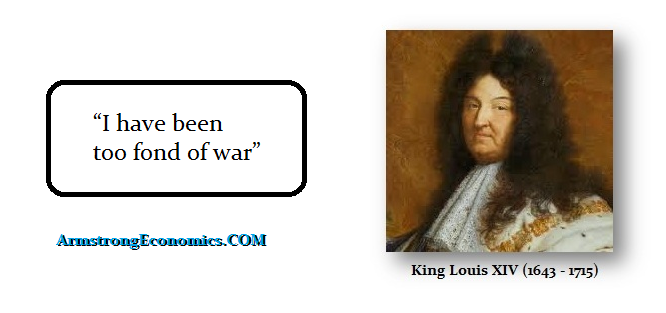
What we do see at these events is typically it is a knee-jerk reaction to whatever was in place, the reaction is in the opposite direction. We have gone through a revolution against Monarchy. That led to Republicanism. This time perhaps we move toward Democracy. We should have the right to vote  – do we go to war – Yes or No! Some Neocons should not make that decision and then we are imprisoned and called a traitor if you do not die on some battlefield that they decide should take place. This is not any different than Monarchy where King Louis XIV (1643-1715) lamented on his deathbed – “I have been too fond of war.” These people play a sport with the common people as the pawns on the chessboard.

Interview: The Perfect Storm


Armstrong Economic Blog/Armstrong in the Media Re-Posted Mar 26, 2023 by Martin Armstrong

To Check out the video click here to view my most recent interview with Outer Limits: “The Perfect Storm.”

Commentary from Ryan McCormick:

Legendary economic forecaster and pro-freedom advocate Martin Armstrong once again appears on the Outer Limits of Inner Truth Podcast to discuss: The neoconservative agenda and the likelihood for war with Russia, Political corruption in Ukraine and the impact on global perception of the United States, And why the 2023 Financial Crisis is colliding with important cyclical targets regarding war, which may result in a two-prong panic of unprecedented significance. Marin also shares his perspective on Alan Turing's groundbreaking work on the mathematical order behind Morphogenesis and offers an updated outlook on how the US will breakup.