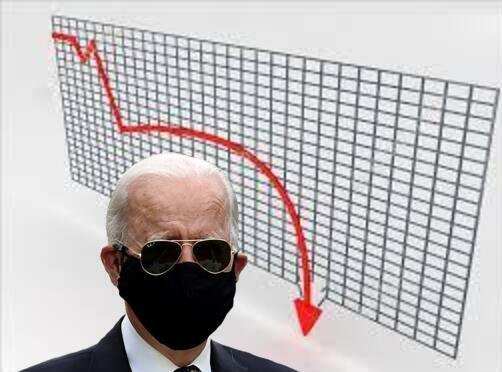
Right on Cue, World’s Second Largest Appliance Manufacturer Announces Earnings Collapse and Inventory Buildup as Consumer Sales Plummet


Posted originally on the conservative tree house on September 12, 2022 | Sundance 

Mid-August CTH noted, “amid all of the headline warnings about inflation and prices of essential products, CTH notes that if we are to continue waiting about six months, we would see a massive backlog of unsold goods and as a consequence the prices of non-essential durable goods would begin a rapid decline.  That exact scenario is about to unfold.” {link}
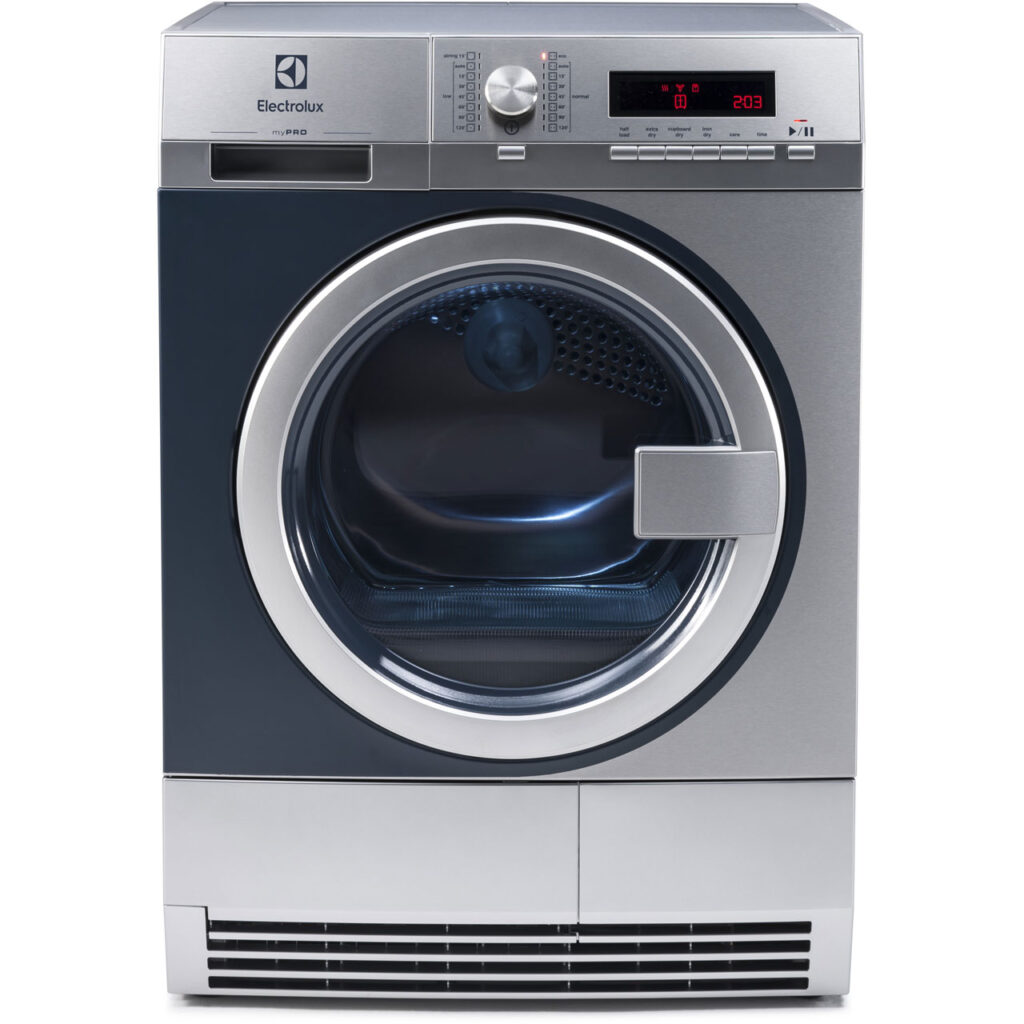
Today the world’s second largest appliance manufacturer, Electrolux, announced a collapse of corporate earnings -the result of the western alliance economic contraction- leading to major cost cutting and future incentive programs.  [Announcement Linkemphasis mine]

(Electrolux) – […] Market demand for core appliances in Europe and the US so far in the third quarter is estimated to have decreased at a significantly accelerated pace compared with the second quarter, driven by the impact of high inflation on consumer durables purchases and low consumer confidence. High retailer inventory levels have amplified the impact of the slowdown in consumer demand.

In combination with supply chain imbalances resulting in significant production inefficiencies and increased costs, the third quarter earnings for the Group are expected to decline significantly compared to the second quarter 2022 also excluding the one-time cost to exit the Russia market. This has been driven mainly by Europe and North America. Business Area North America is expected to report an operating loss in the third quarter exceeding the loss in the second quarter.

Since market demand for 2023 is expected to continue to be weak in both regions, the Board has today decided to initiate a Group-wide cost reduction program addressing both variable and structural costs. The program, which starts immediately, will focus on reducing variable costs, with special attention to eliminating cost inefficiencies in our supply chain and production. The structural cost reductions will primarily take place in Europe and North America. (more)
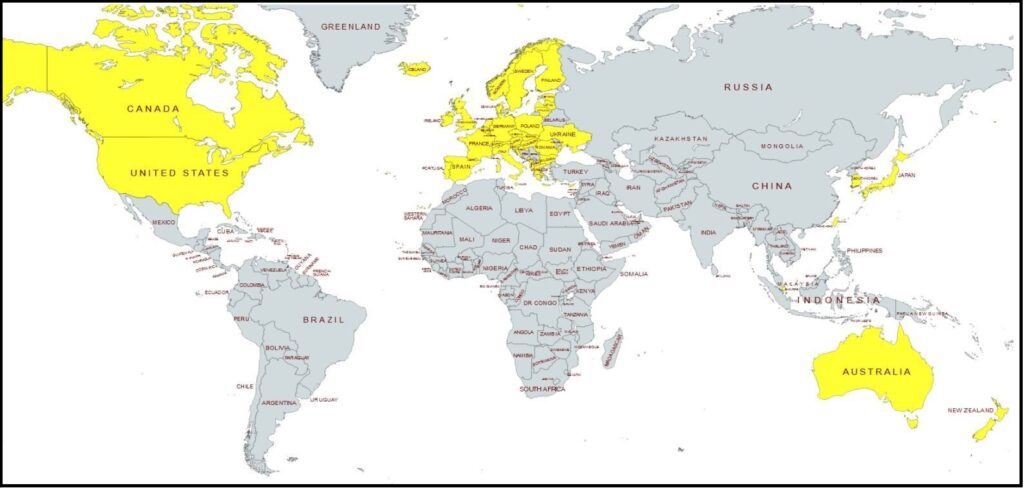
Keep in mind, this is not necessarily a collapse of total global economic activity; what we are seeing is a collapse of western nation economic activity that is impacting the rest of the world.  A great economic fracturing is taking place as the western nations intentionally shrink their economy.  The supplier nations are feeling the consequences.

Keep in mind, South Korean factory output is now negative (electronics etc). European factory output is now negative (industrial equipment).  Japanese factory output has dropped dramatically, and U.S. factory output has stalled.   All of these issues overlay the statements by Maersk that shipping is not needed.

The western economies are contracting in response to the collective energy policies of the Build Back Better climate change agenda, and the high cost of energy that comes from stopping energy production.

Energy production in western nations has been slowed or stopped (Build Back Better).  Western nation inflation is being driven by higher energy costs as a result of less energy products being produced, oil, coal, gas.  Western banking groups have raised interest rates to slow down the economic engines to meet the drop in energy production.

All of this is being done with intent, purpose and control.  This is a managed decline.
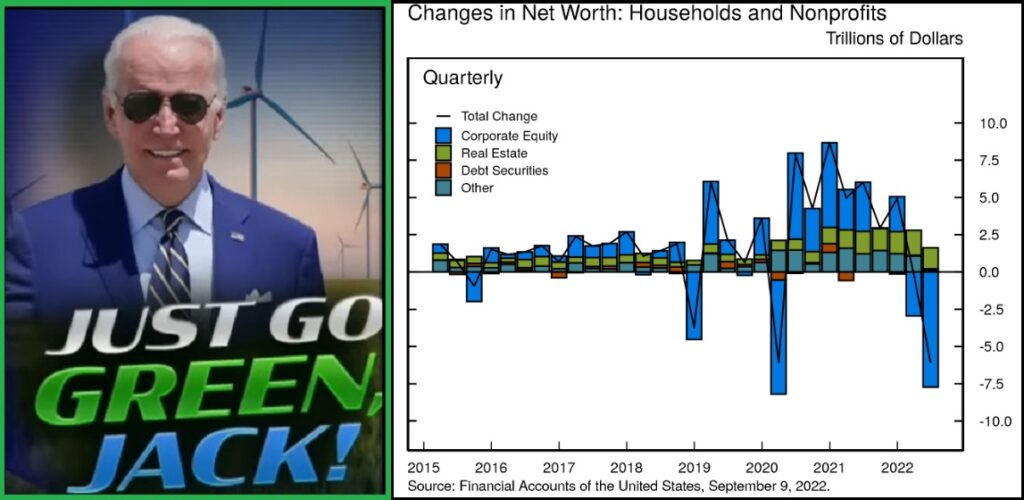
EU Central Bank Raises Interest Rate 75 Points in Further Effort to Withstand Storm of Energy Driven Inflation


Posted originally on the conservative tree house on September 8, 2022 | Sundance 

Energy inflation continues to pummel all western nations as they chase the climate change agenda. Today, the European Central Bank has raised interest rates to support the goal of lowered economic activity.   Lowering economic activity lowers energy use.

Absent of any desire to raise energy supply and/or energy production, monetary policy can support the goal of lowering energy use by driving down all economic activity.

In the big transition picture, the economies within the western alliance must be reduced until they match the energy output of windmills and solar farms.

FRANKFURT—The European Central Bank raised interest rates by the largest amount since the early days of Europe’s currency union, moving aggressively to combat record inflation even as an energy crisis puts Europe on the brink of recession.

The bank said in a statement that it would increase its key rate to 0.75% from zero—its second hike this year following a 50-basis-point rise in July—and signaled that further rises were likely over the coming months.

At a news conference, ECB President Christine Lagarde warned that inflation was spreading beyond energy to a range of products. She said the ECB was ready to increase rates aggressively over the next several meetings.

“We want all economic actors to understand that the ECB is serious” about combating high inflation, Ms. Lagarde said. (read more)

A few months ago, amid all of the headline warnings about inflation and prices of essential products, CTH noted that if we were to continue waiting about six months, we would see a massive backlog of unsold goods and as a consequence the prices of non-essential durable goods would begin a rapid decline.  That exact scenario is unfolding. Keep watching.

Keep in mind, this is not necessarily a collapse of total global economic activity; what we are seeing is a collapse of western nation economic activity that is impacting the rest of the world.  A great economic fracturing is taking place as the western nations intentionally shrink their economy.  The supplier nations are feeling the consequences.

All of this economic turmoil is running on an identical track -on a global basis- because the entire western plan was coordinated and followed.  What we are seeing right now is the outcome of the “Build Back Better” roadmap.  The “global inflation” is the outcome.

Joe Biden is blocking domestic energy production as he follows through with the agenda of the Green New Deal.  In Europe, not coincidentally demanded by Biden, a similar outcome comes from the sanctions and blocking of Russian energy resources.

One could make a reasonable argument that the team behind Joe Biden specifically wanted the EU sanctions against Russia, because the U.S. crew wanted to keep both industrial economies mirroring each other as the U.S. energy system was dismantled.  It would make sense to avoid a spotlight on the U.S. economic collapse, by forcibly pushing the EU economy into the same situation.

Taking that line of geopolitical and economic consequence one step further, and that would be part of the strategy -albeit undiscussed- behind having a consistent global cap on the price that any nation could pay for Russian oil.  That approach is not about punishing Russia, it is to make all of the economic pain and problems equal amid all western nations.  Globalists, and the central bankers, are good at creating economic systems to deliver equitable misery.

British Pound Falls to 37-Year Low


Armstrong Economics Blog/BRITAIN Re-Posted Sep 8, 2022 by Martin Armstrong

The Bank of England has admitted defeat, admitting they cannot prevent a recession. The pound fell to the lowest level against the USD on Wednesday afternoon after declining 0.64% to $1.145. When asked if the central bank could prevent the next recession, Governor Andrew Bailey was blunt in his answer. “Insofar as the war is having this huge effect, the answer to that would be no.”

I touched more on the decline and fall of Britain on the private blog last week. Socrates agrees with Bailey’s pessimistic stance. Inflation has surpassed 10% in the UK, and food and energy costs are expected to rise continually. The Bank of England now projects that the economy will shrink during Q4 2022, and the decline will continue until the end of 2023. Our models state that the decline will last longer than they expect.

If the new PM Truss is any indication of where policy is heading, Britain is in big trouble. Central banks do not like to admit defeat either. Look how Powell carefully changed his stance over the course of the year in terms of inflation. He did not want to create a panic by telling the public that they were screwed. The BoE has no other choice but to be brutally honest. The heads of central banks are now coming forward to offer their condolences for an issue they helped to create with artificially low rates. The BoE is still in better shape than the ECB, but that is not saying much.

The Real IRS Hunt


Armstrong Economics Blog/Gov’t Incompetence Re-Posted Aug 28, 2022 by Martin Armstrong

There is NOTHING that the politicians EVER say that is the truth. Hiring 87,000 new IRS agents is NOT to go after billionaires as they claim. There are ONLY 614 billionaires in the United States. Clearly, you do not need 87,000 new agents to hunt down billionaires – they are coming after you!

There is no loose change in taxes the higher you go up in income. You then need professionals to handle the taxes and they cross every “t” and dot all the “i”s. They are targeting anyone with an LLC and will challenge all expenses. Don’t forget, if you go to dinner with a client, you can only write off 50% of the expense. Of course with COVID, we have a whole new crisis in taxes. The commuting costs evaporated working from home. What about writing off a portion of the home now if you no longer go to the office? Suddenly, COVID really complicated things over the past two years. Even if your house burns down, the IRS denies a tax deduction for the loss. Protesters against the IRS are just coincidently targeted for audits – purely coincidental. Obama used the IRS to target the Tea Party. The DOJ waited two years and then quietly dismissed any criminal charges against IRS agents. This is what we will expect for now they will target also protesters in climate change.

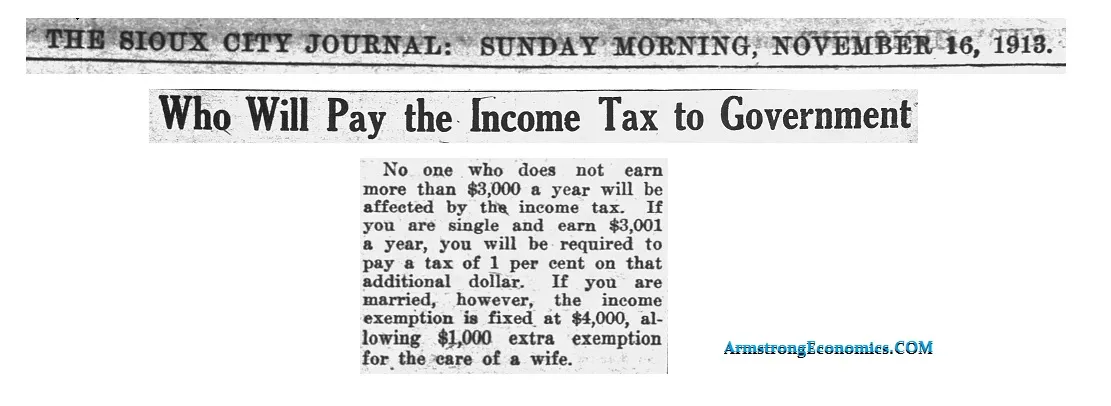
They do not need 87,000 new agents, armed to the teeth, to hunt down just 614 billionaires. It made good press, the same as when they introduced the income tax back in 1913 as SWORE on the soul of the dead mother and all their relatives, it would not apply to the rich. Small business and climate protesters will be the people targeted by the IRS.

Remember the cops raided the wrong house, killed the guy, and then they claimed he was an UNDOCUMENTED alien who had no Constitutional Rights, and thus it was OK to kill him. How about the wrong house raid where they kill the man and his dog but then kill a cop responding to a break-in – remember that one? There are so many where the cops storm the wrong house, the resident this it’s a break-in and defends himself only to be shot dead. I’m sure we will all sleep well knowing 87,000 IRS agents, armed to the teeth, are being trained to storm houses and released on society after 3 months worth of training.

In Canada, Trudeau is arming climate change police to do the same thing. Let’s face the facts. We the people are now the enemy – not Putin! This is the consequence of Marxism. We are nothing more than economic slaves.

The Solution


Armstrong Economics Blog/Economics Re-Posted Aug 24, 2022 by Martin Armstrong

Coinbase Crackdown


Armstrong Economics Blog/Cryptocurrency Re-Posted Aug 24, 2022 by Martin Armstrong

Comment: I use Coinbase to hold some crypto. They sent me an email saying that my account that I had for years would be limited to withdrawals only if I do not give them updated government ID and download the latest version of the application. I use this on my PC and do not have the application. I worry they’ll take what is left of my failing cryptos. Luckily I only put “play money” into these holdings but I imagine others will experience losses and frozen accounts in the near future. The deadline they gave me was October – not sure if that is for all. I messaged out to Coinbase for help updating my account but cannot fully verify it after many tries.

Reply: Government hates cryptocurrency. They have always been concerned about their ability to squeeze out every last penny in taxes from crypto. I am not surprised that Coinbase is emailing users for additional documentation days after the Inflation Reduction Act was passed. With nearly 88,000 new IRS agents, there will certainly be teams of hundreds or thousands of accountants who will analyze all crypto holdings.

The initial idea behind the creation of crypto has been lost. I warned in March on our private blog on Socrates that cryptocurrencies may be suspended altogether one day. Biden could sign an Executive Order to regulate cryptos because countries like Russia can use it to circumvent sanctions. Not only is Biden authorizing the regulation of digital currencies, but he is also instructing to move forward with a central bank cryptocurrency. Once that is done, all other cryptocurrencies will be seized and folded into the government’s crypto. There will be no competition.

The Outlier of the West, Japan Core Inflation Rises 2.4% Year Over Year


Posted originally on the conservative tree house on August 19, 2022 | Sundance 

If you have been following along, you might remember the note we made in July about not every country willing to go along with the western agenda on energy reduction, climate change, and raising interest rates to shrink their economy down to the scale of diminished energy development {Go Deep}.

In addition to Russia, China, Iran, Brazil, South Africa, Argentina and India vociferously retaining their own economic and monetary independence, Mexican President AMLO literally blasted the program while visiting the White House and the Bank of Japan refused to join the mantra to raise interest rates.   Essentially, all of the aforementioned nations see the collective Build Back Better program for what it is, a path to poverty.

As a result of their non-compliance with the global bankers, which, not coincidentally I would point out, coincided with the assassination of Shinzo Abe, the government of Japan has been getting blasted by the proverbial ‘west’ (U.S, Canada, U.K, Europe and Australia).

Japan is attempting to deal with inflation by focusing on increasing energy production and security (the supply side); while the rest of the western group have been chasing the false promise of decreased inflation by lowering the demand side, ie. pretending not to know their energy policy is creating the increases in costs.

As a result of the distinctly different monetary approaches, the financial system has been trying to punish Japan and the financial media have been trying to point out every flaw in the Japanese economy as a result of their noncompliance.   However, as you will see in this Reuters article, the July inflation within Japan is moderating.  Inflation in Japan is 2.4% for July (year over year).

TOKYO, Aug 19 (Reuters) – Japan’s core consumer inflation accelerated in July to its fastest in seven-and-a-half years, driven by fuel and raw material prices and adding to the costs of living for households yet to see significant wage gains.

In a sign of broadening price pressure, the so-called “core core” index that strips away not just the impact of volatile fresh food but energy prices, also rose in July at the fastest annual pace in more than six years.

While inflation exceeded its 2% target for four straight months, the Bank of Japan (BOJ) is likely to remain an outlier in keeping monetary conditions ultra-loose with price rises still modest compared with other major economies.

“Food prices and a weak yen were the main culprits behind accelerating inflation,” said Yoshimasa Maruyama, chief market economist at SMBC Nikko Securities, adding that he expects core consumer inflation to reach 3% this year. (read more)

It is funny to see Reuters put out a *shock* styled article for 2.4% core inflation.   In the U.S. Joe Biden would be celebrating 2.4% inflation right now; however, his energy policy is driving that CORE inflation number well beyond 6%.

Japan is still in a tough place with increasing prices for their citizens, but it is nowhere near the scale of Europe and North America.

While their currency is suffering from not following the western agenda, they have several upsides.  First, exports from Japan to the United States and the EU now become even cheaper. With a higher dollar value, Japanese imports into the United States come at a discount.  This will help Japan export goods and retain a strong export economy.

Second, with Japan already a massive investor inside the United States, the dollars that are generated in profit from their operations are delivered back to Japan at a higher value.  A higher dollar value, the outcome of their breaking from the western central bank decision to raise rates, does not hurt Japan.  They bring back high valued dollars from their decades in investment into North America, and they continue exporting to the U.S. at a discount.

So, the nationalist outlooks of Japan, Brazil and even our Mexican neighbors are reflecting a pragmatic self-interest that so far has withstood the pressures from the western alliance to fall into line.  This is how those three countries are positioned to push back against the insufferable BBB agenda.

We can use the example of those western industrialized nations to show that not everyone is in alignment with this globalist multinational finance and corporate takeover.

US National Debt to Surpass 185% of GDP


Armstrong Economics Blog/Sovereign Debt Crisis Re-Posted Aug 2, 2022 by Martin Armstrong

The Congressional Budget Office warned that US federal debt is expected to rise 185% within the next 30 years. Total debt holdings could double the size of US GDP by 2051. No politician or spender of this debt cares as they have no intention of paying it off. The Congressional Budget Office is calling this an optimistic forecast, given the previous estimate of debt soaring to 202% of GDP by 2051. The fact of the matter is that no one can foresee how much money politicians will continue to spend. Servicing the debt will become more expensive over time, expected to reach 10% of GDP by 2051, 7.4% in 2042, and 5.1% in 2032.

Most do not realize that the national debt is already at monumental levels. US gross federal debt to GDP reached 100% by 2012. The ratio remained somewhat stagnant until capitalism became sick with COVID in 2020, and the GDP to debt ratio rose to 128.1%. The figure stood at 137.2% by December of 2021 and has continued to increase.

China no longer wants US debt and has begun to sell off its holdings. As other currencies decline relative to the dollar, US debt, and all government debt in general, no longer seems like a smart investment. We have reached a point where Congress can continue to pass bills and bribe voters with socialistic promises from their latest puppets because no one cares about the future of America. The US will be the last to fold but expect the inevitable as countries, city-states, and governments are all temporary in the eyes of father time.

Capital Controls in Europe Have Arrived


Armstrong Economics Blog/Tyranny Re-Posted Aug 1, 2022 by Martin Armstrong

COMMENT: Dear Marty,

I was trying to wire money from my bank account in Italy to the one in the UK, just to realise that I can no longer transfer more than 6,000EUR per month.

The Soviet EUSSR is in full capital controls mode. I am missing the beauty of Italy every day, but I am so glad to live in Brexit UK.  Good luck to the old continent.

SB

REPLY: I warned that all my sources were confirming, three very high up, that Europe would quietly impose capital controls on June 30, 2020. That has now taken shape. Europeans and not allowed to send more than 6,000 euros per month to another account outside the EU. Capital has been pouring out of Europe, and they beat not just the war drums but also the Green drums that forewarn of a severe economic decline for Europe.

Even in the United States, we have capital controls in place for a different reason — taxation. You will find it limited to try to wire more than $3,000 to an individual outside the United States. As I reported before, a friend in Singapore found me a service apartment and put down the first month’s rent for me. I sent him a wire, but when I got there, he said he never got it. I called my bank to put a trace on it, and HSBC returned it, saying they would not credit it to that account because they could not verify it was not secretly for me. I had to write him a check. You can wire to a business without a problem, but not to an individual. The hunt for taxes lives.

People have argued with me that I am wrong and it is capitalism that is collapsing. Sorry – socialism has brought us to the very sad end. Politicians can only run bribing voters, saying they will rob the rich to hand it to them. They can no longer borrow endlessly with no intention of paying anything back. That said, they know they will have to default. The question has been HOW?

This is what Schwab’s entire WEF is about. His Great Reset is because socialism is collapsing. I did our Solution Conference in 2015 because I knew what he was advising to world governments. The problem was that his way is that they become dictators, and he is even ending your right to vote. While they call Putin authoritarian, the head of the EU also does not stand for election. They are appointed by EU member politicians. This is what they want — ZERO right of the people to vote. They intend to control what we buy, where we live, and what we are allowed to say. So you can see, in my Solution, we retained democracy, so they were not handed ultimate power. Capital controls are part of this plot to end our freedom.

Global Recession, South Korea Manufacturing Output Shrinks in July, First Time in Two Years


Posted originally on the conservative house on August 1, 2022 | Sundance

We are seeing the cascading impacts of the energy-driven inflation starting to ripple throughout the globe, specifically worsening economies who are dependent on the export of non-essential durable goods.  South Korea manufacturing is the latest example.

The first quarter of 2022 started with a drop in U.S. consumer spending on non-essential durable goods like electronics.  The net result of contracted consumer spending was a 1.6% negative GDP.

Inventories of goods started to build and by April/May of 2022 the Consumer Price Index (CPI) showed negative inflation in those sectors as discounts to move inventory were offered.

In June major manufacturer Samsung, headquartered in South Korea, announced they had told suppliers to stop sending component manufacturing parts for finished goods. (link)

By the end of July, the second quarter GDP in the U.S. again showed a contraction of 0.9%. Energy inflation was now creating a consumer spending recession, demand for non-essential goods dropped fast over the first half of the year.

Today, South Korea announces July manufacturing output contracted for the first time in two years, matching the prior announcement by Samsung:

SEOUL, Aug 1 (Reuters) – South Korea’s factory activity shrank in July for the first time in nearly two years, as output and new orders weakened amid continued inflation and supply chain woes, a private-sector survey showed on Monday.

The S&P Global purchasing managers’ index (PMI) fell to a seasonally-adjusted 49.8 in July from 51.3 in June, falling below 50 for the first time since September 2020. The 50-mark separates expansion from contraction in factory activity from a previous month.

Output fell for a fourth straight month and by the sharpest rate since October 2021, as new orders decreased for the first time in 22 months and those from overseas for the fifth month in a row. (read more)

All economies that are dependent on the manufacturing and export of durable goods are likely now seeing reduced factory outputs as fewer customers exist to purchase the final product.  This will lead to a predictable rise in unemployment amid those same nations.

This situation is the reason why the Bank of Japan did not raise their central bank interest rates.  They are attempting to offset the drop in global economic activity by keeping their currency value low as compared to the rest of the western countries.  This will help move their exported goods at a discount.

Inside countries with large imports, the definition of “non-essential” purchases within each household now starts to shift. Upgrading electronics, jewelry purchasing, and other non-essential goods become the first to feel the impact.  That contraction is then followed by appliances, furniture, clothing and eventually vehicles and high-cost durable goods.

As less and less disposable income is available, consumer spending gets increasingly prioritized.  The service sector is likely starting to feel the consumer belt tightening, particularly those consumer goods and services that are dependent on middle class families.

Inflation in general is a corrosive issue that eats away at the ability of consumers to purchase products and services.  Energy inflation is particularly damaging as it hits every sector of the economy with higher supply-side costs.  Food prices, fuel, transportation costs, electricity rates etc. take a larger portion of the paycheck, leaving less room (if any) for non-essential purchases.

A shrinking global economy is the outcome of an intentionally managed decline to support the Build Back Better, climate change, agenda.