Is Everyone Now Bullish in Stocks?


At last, we have entered the middle-ground of analytical thought. Between 2009 and 2017, the majority were bearish calling for the inevitable crash any day now. So after 8,6 years, they have now crossed the Rubicon and we now see there is a general expectation that stocks will keep rising, albeit at a slower pace. The reasons they now have adopted a focus on the Trump Tax Cuts and the odds seem low for a recession this year. They are also touting that economies around the world are finally in sync and starting to grow together, yet that seems to be delusional at best.

Then we have the typical fundamental arguing that should keep profits on the upswing for companies, and stock prices tend to follow the direction of profits. That too is a myth for even Shiller has admitted that since 1881, the correlation of the past decade’s real earnings growth with the price-earnings ratio is a positive 0.32. But there is zero correlation between his CAPE ratio and the next 10 years’ real earnings growth. He has even stated that real earnings growth per share for the S&P Composite Stock Price Index over the previous 10 years was negatively correlated (-17% since 1881) with real earnings growth over the subsequent 10 years. So the whole earning issue really cannot explain market performance no matter how logical it may sound. Shiller has even conceded that bond markets also fail to correlate to inflation. It is the past the rules the future. He has stated that long-term interest rates tend to be high when the last decade’s inflation was high. He has pointed out that the US long-term 10-year bond yields are highly positively correlated (70% since 1913) with the previous 10 years’ inflation. However, he notes that any correlation between the Treasury yield and the inflation rate over the next 10 years is only 28%.

Shiller has concluded that he cannot figure the market out: “The truth is that it is impossible to pin down the full cause of the high price of the US stock market. The lack of any clear justification for its high CAPE ratio should remind all investors of the importance of diversification, and that the overall US stock market should not be given too much weight in a portfolio.”

Of course, diversification is the uneducated way to invest. It is admitting you cannot forecast so the best way is to spread out your bets. You can see the results of diversification strategies at any casino’s roulette wheel.  People will bet on many numbers staggering their wagers between them hoping to catch the number with the biggest bet and hedging it with smaller bets on a variety of numbers. Investment diversification is the same. They do not know which market will perform best so they spread their bets around hoping for the best. They guarantee to take some losses in hopes of a reasonable win.

Yet, there is a growing consensus that the market is going up and they really do not know why so they are punting out theories. They still are touting risks that they see lying ahead. One concern centers on just how long and strong this bull market has been. Since the rally began from the 2009 low, they say that stocks have become more expensive than they’ve historically been, relative to corporate profits. Yet Shiller has conceded that does not produce a winning correlation. We passed the entire length of the bull market during the Roaring ’20s, which was 97 months last April 2017. This scares many as they keep talking about value.
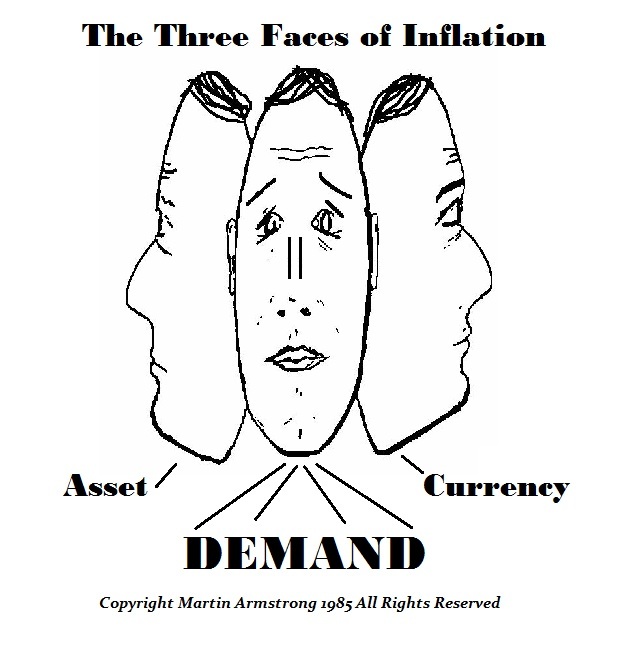
Many warn that an unexpected spike in inflation can kill the bull market, although I totally miss this logic. They obviously do not understand the three different types of inflation. They look at the past deflation and low-interest rates and then assume the market has risen with low-interest rates and low inflation. Others attribute the rise to the central banks around the world massive stimulus programs to avoid a downward spiral.

Inflation is still relatively modest, but the job market is at its healthiest in years, and the unemployment rate is at a 17-year low. All of this baffles the analysts. They think this should lead to higher wages for workers, which could push inflation higher across the economy, but then there is the technology boom replacing workers. Banks have been letting go their older more expensive staff replacing them with junior people to save money. This too is creating confusion in the analytical world.

Others fear that if inflation picks up faster than the Federal Reserve is expecting, that it will force them to raise rates more quickly than it has prepped markets for. Then they calim a crash is still possible as if then people will sell private shares and run into government bonds once again.

Then there is the growing potential for a trade war. They argue that companies in the Standard & Poor’s 500 index got 43% of their sales from outside the country in 2016, Therefore, they see a trade war will kill earning and cause the crash. On the one hand, they admit Trump’s policy is a winner, but then again, it can backfire.

Then we have those who say Trump will create a real war with Korea. That they see as a geopolitical risk that can kill the bull market. Yet stocks have tended to rally during war periods.

They some say that the expectations have become just too high. Among the analysts at least, there is more recent optimism and more complacency after being wrong for the first 8 years.

Of course, our correlation models are completely different and proprietary so we do come up with different results


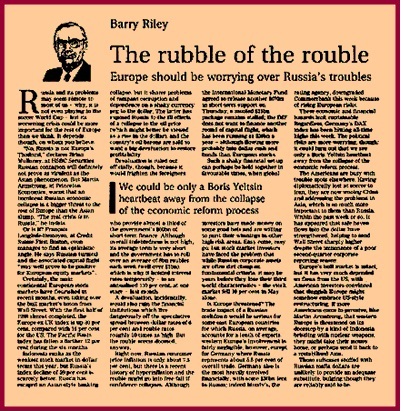
CNN Confirms Soros Lost $2 Billion on Russia


CNN-Conservative 1998-R

COMMENT: Marty; I was just surfing and discovered that CNN did quote you back in 1998. They said you beat Soros since he lost $2 billion and you correctly called the Russian collapse and the Long-Term Capital Management collapse. Maybe they will wake up and quote you again being the only one to get the Dow right since 2010.

Pete

REPLY: Interesting. I forgot about that interview. It is the computer that is tracking the world. It is impossible for one person to monitor every market around the globe constantly. I do remember some others back then saying similar things. That was when I was named Hedge Fund Manager of the year.

All the Hedge Fund punters were colluding together on Russia. They were all expecting guaranteed trades. As I have said before, Edmond Safra invited me to the IMF dinner where he rented out the entire National Gallery of Art in Washington. They were trying to get me to join them on Russia and bluntly said the IMF was in their pocket and would keep the loans going so they could get tens of percentage points in interest from Russian bonds. I told them my model said it would collapse. They disagreed because they paid off the IMF and had the “perfect trade” in play.

After the London FT put our forecast on the front page of the second section, that started the blame game where I became the target since they all lost. As I said many times, the majority must be wrong even when they have billions and the IMF in their pocket.

Number One With A Bullet With Swedish Subtitles


SOCIALISM IS FOR SUCKERS: VENEZUELA


Since socialists are unwilling or unable to look at what their philosophy does to people, Firewall host Bill Whittle shows us what it is doing to the animals, and asks how the richest person in Venezuela just happens to be the daughter of the socialist former President of that starving country.

Three Deplorables Went to Davos…


In September of 2015 we shared one of the overarching reasons why CTH would support Donald Trump for President. – SEE HERE –  This week, the sentiment behind that reasoning showed up in Davos, Switzerland for the World Economic Forum; we could not be more proud.

Commerce Secretary Wilbur Ross (Wednesday), Treasury Secretary Steven Mnuchin (Thursday) and U.S. President Donald Trump (Friday), collectively outlined how our new U.S. trade and economic policy would engage with the world.

Many media voices (narrative engineers) will, and have, continue to obfuscate, spin, and make predictive declarations about U.S. economic policies based on their ideological views of what President Trump could do, should do, or will do.  They will try to convince the  American electorate of POTUS Trump’s forward plans.  Most of what they declare is false.

In case you missed it, and if you want to know what the accurate compass heading is, skip the media and allow yourselves to rely on the direct message as delivered. You’ll avoid a great deal of heartburn.

The MAGA economic policy explanation begins with trade, Wilbur Ross:

.

The MAGA economic policy explanation is enhanced by finance, Steven Mnuchin:

.

The America-First economic policy is wrapped up by President Trump (transcript here):

.

[…] America is roaring back, and now is the time to invest in the future of America. We have dramatically cut taxes to make America competitive. We are eliminating burdensome regulations at a record pace. We are reforming the bureaucracy to make it lean, responsive, and accountable. And we are ensuring our laws are enforced fairly.

We have the best colleges and universities in the world, and we have the best workers in the world. Energy is abundant and affordable. There has never been a better time to come to America.

[…]  In rebuilding America, we are also fully committed to developing our workforce. We are lifting people from dependence to independence, because we know the single best anti-poverty program is a very simple and very beautiful paycheck.

To be successful, it is not enough to invest in our economy. We must invest in our people. When people are forgotten, the world becomes fractured. Only by hearing and responding to the voices of the forgotten can we create a bright future that is truly shared by all.

The nation’s greatness is more than the sum of its production. A nation’s greatness is the sum of its citizens: the values, pride, love, devotion, and character of the people who call that nation home.

[…] Each of you has the power to change hearts, transform lives, and shape your countries’ destinies. With this power comes an obligation, however — a duty of loyalty to the people, workers, and customers who have made you who you are.

So together, let us resolve to use our power, our resources, and our voices, not just for ourselves, but for our people — to lift their burdens, to raise their hopes, and to empower their dreams; to protect their families, their communities, their histories, and their futures.

That’s what we’re doing in America, and the results are totally unmistakable. It’s why new businesses and investment are flooding in. It’s why our unemployment rate is the lowest it’s been in so many decades. It’s why America’s future has never been brighter.

Today, I am inviting all of you to become part of this incredible future we are building together.

Thank you to our hosts, thank you to the leaders and innovators in the audience. But most importantly, thank you to all of the hardworking men and women who do their duty each and every day, making this a better world for everyone.

Together, let us send our love and our gratitude to make them, because they really make our countries run. They make our countries great.

Thank you, and God bless you all. Thank you very much. (Applause.) Thank you very much. (link)

As shared in September of 2015:  Why do I support Donald Trump…

donald trump smirk… because he says: “Make America Great Again”! And when Trump says that I hear:

Someone who gives a damn about America, without apology; which is more valuable to me than a perfected highly-rehearsed skill set of 30 second sound bites and white paper policy instructions.

From my perspective any average hard-working American could eat every one of these pinky ring candidates’ lunches, all of them; and if they want to go down the intellectual superiority path… well, that stuff is useless.

  • Florida Power and Light won the prestigious International Edward Demming award for excellence in multi-platform engineering and efficiency superiority. They didn’t blow every PhD intellectual out of the water with slide rules, CAD programs and engineering acumen. They did it with hard hats and dirty fingernails.

Because they lost the award, the Japanese spent 6 months studying FPL and later published a 1,000 page dissertation essentially saying FPL “wasn’t really good, they were just lucky”….. FPL field leadership laughed, took out markers and wrote on the back of their hard hats: “WE’RE NOT GOOD, WE’RE RUCKY”….

  • When every single Kuwaiti oil field was blown up by Saddam Hussein, they said it would take 5 years to cap them all off and restart their oil pumping industry. The Kuwaiti’s and Saudi’s called Texans, who had them all capped and back in working order in 10 months.

We are a nation that knows how to get shit done.

  • When the Northern Chile mine workers were trapped two miles underground, they said no-one could save them. Who did they call for help? A bunch of hick miners from USA coal country who went down there, worked on the fly, engineered the rescue equipment on site, and saved everyone of them….

That’s our America.

  • When a half-breed Islamic whack job, armed with an AK-47 and a goal to meet his seven virgins, began opening fire on a train in France, the Americans on board didn’t run to the nearest safe room and hide themselves amid baguettes and brie. They said “let’s go”, and beat the stuffing out of that little nut with a death wish.

Legion d’Honneur or not, that’s us. That’s just how we roll.

Lady Liberty can stroll along the Champs-Elysées with a swagger befitting Mae West because without her arrival they’d be speaking German in the Louvre. Yet for the better part of the past decade a group of intellectual something-or-others have been teaching an insufferable storyline that it’s better to be sitting around a campfire eating sustainable algae cakes and picking parasites off each other.

Enough.

When I hear Donald Trump say “Let’s Make America Great Again”, I also hear the familiar echo “cowboy up” people.

It’s high time we stop being embarrassed about our exceptional nature, and start being proud of it again. Because when it matters most, when it really counts, when it’s really needed, there’s a whole bunch of people all around this world of ours that are mighty happy when swagger walks in to solve their problems.

Yeah, “let’s make America great again”. Swagger on !

###

Trump banner 2

Argentina – The Continued Shift to Private Assets


COMMENT: Greetings from Argentina.

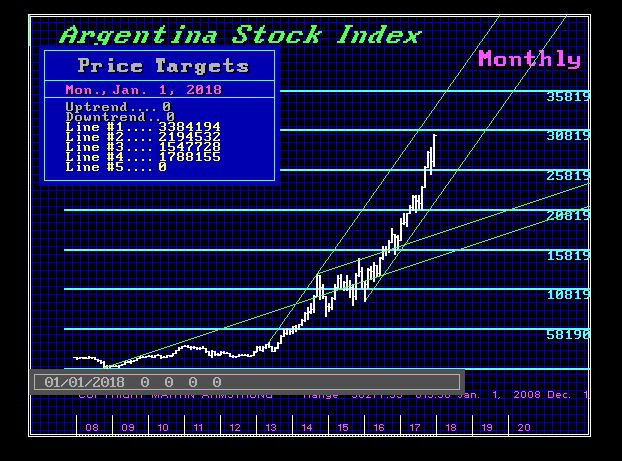
Merval Argentina indexed doubled since new president Macri started in Dic 2015. Any comments about Latin America – South Cone?
You never mention this part of the globe.
Thank you I am a long time reader.
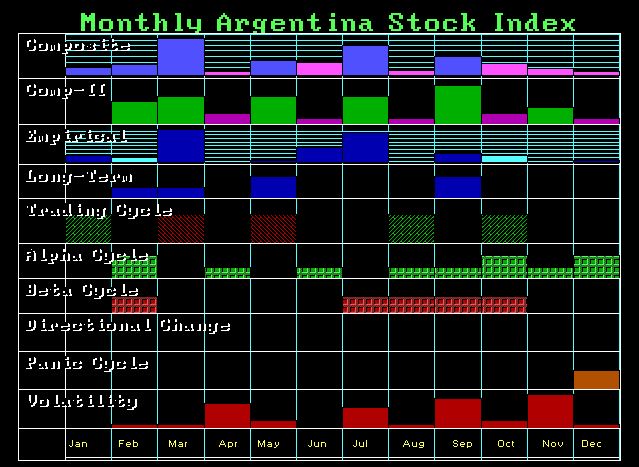
REPLY: The Merval is covered on Socrates. Nevertheless, if this market breaks through the January high, then it should run up sharply into March
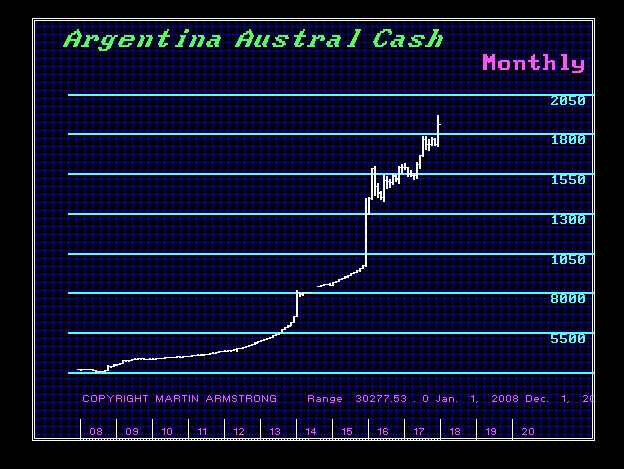
Keep in mind that this is in part currency inflation. It rises in proportion to the decline in the currency value as a hedge basis its international value.
Additionally, the entire world is gearing up for the monetary crisis cycle. This means we are witnessing the prolog and that is the shift from public to private assets on a global scale.

NAFTA Round Six Continues – Canada and Mexico Hope To Manipulate Their Way To Round Seven…


Round six of NAFTA renegotiation talks continue today as Canada and Mexico claim cautious optimism that a round seven will take place.  This round of talks is scheduled to continue through Monday and end with a much anticipated a joint press conference between Ildefonso Guajardo (Mex), Chrystia Freeland (Can) and U.S. Trade Rep. Robert Lighthizer.   There were seven rounds initially scheduled.

Canada and Mexico are trying to close less important, and less controversial, trade chapters in an effort to give the illusion of progress and frame a political narrative that lends itself toward continuing to talk; ie. round seven.

However, if there’s no significant progress on the larger issues it’s doubtful Lighthizer will find value in endless words that amount to nothing.

Canada and Mexico have been lobbying U.S. politicians hard to retain their parasitic trade positions.  Additionally, a significant number of Washington DC politicians are willing to take massive bribes from the U.S. Chamber of Commerce lobbyists and support the export of American economic jobs and wealth.   This is another key UniParty indulgence issue.

Big Corporate Agriculture (Big AG), the consortium of massive multinational agriculture companies who hold stakes in the entire continent, are pushing hard to keep their “controlled market” dominance in place, and is attempting to stoke fears using false claims about farms and negative trade impacts to farmers.  Pure nonsense.

The three major sticking points remain (there are more, but these are the best known):

1) Rules of Origin; 2) Conflict Resolution; and 3) Sunset Provisions for renegotiation.

  • Rules of Origin – Team U.S.A. wants car North American auto manufacturers to use at least 60% parts from within North America.
  • Team CanaMex wants to use fully assembled auto parts from China and Asia to assemble cars in Mexico and Canada and sell them as American made automobiles.


  • Conflict Resolution.  Team U.S.A. wants an independent panel to deal with trade disputes, comprised of officials in relationship to the size of each economy.
  • Team CanaMex (the parasites) want to be able to override any U.S. objections to their manufacturing outcomes.  They demand equality in voting. The U.S. is the host.


  • Sunset:  Team U.S.A. wants the NAFTA agreement revisited, reviewed and renegotiated if needed, every five years. Some manufacturing sectors entirely change.  [Example e-Commerce didn’t even exist when NAFTA was created, 25 years ago.]
  • Team CanaMex says no way.  Whatever final trade deal is decided, is put upon the U.S. to deal with forever regardless of any changes in any sector.

It’s all smoke and mirrors at this point.  Hopefully, Lighthizer will show up on Monday and simply say ‘enough, we’re done’.

End NAFTA and do bi-lateral trade deals where the size and scale of the U.S. market -our leverage- determines a more favorable outcome for the U.S. against both Canada and Mexico.  Enough with these silly games.

(Via Reuters) […] During the sixth round, Canada raised what it called creative ways of meeting U.S. demands for higher North American content in autos, a sunset clause that would allow one party to quit the treaty after five years, and major changes to existing conflict resolution mechanisms.

“I think we have demonstrated we have engaged on most of the big issues,” Verheul said in his remarks to Reuters. “We’ve made progress on some of the smaller ones, so I think (it was) not a bad week.”

The Mexican official said that Canada’s proposals on rules of origin for autos, the sunset clause and conflict resolution mechanism were “positive, in as much as they are an attempt to move things forward.”

Speaking separately, a second Canadian government source said Ottawa was cautiously optimistic about the round, given that the U.S. side had not summarily rejected the proposals for compromise.  (read more)

Secretary Rex Tillerson Joint Presser With Polish Foreign Minister Jacek Czaputowicz…


When President Trump left the Davos economic forum, Secretary T-Rex traveled to Poland for a bilateral meeting with Polish Foreign Minister Jacek Czaputowicz.  Many readers are aware how the U.S. and Poland have formed a very strong bond, a very strategic alliance, since the Trump administration took office.

Last year President Trump visited Warsaw to solidify a geopolitical relationship based on common interests and a desire to help Poland push back against Russian leverage based on energy dependence. Poland is a key strategic ally for the Trump administration, and more importantly a trusted ally; arguably more so than the U.K.

T-Rex held a joint press conference with his Polish counterpart Foreign Minister Jacek Czaputowicz. Video:

.

After the visit to Poland, T-Rex flew to London (there now) for the opening of the new U.S. Embassy.  While in the U.K. T-Rex will be meeting with Boris Johnson to discuss mutual interests and continue trying to determine if the U.K. is a willing trade partner.

The relationship between the U.S. and the U.K. is unfortunately defined by the downward trajectory of British politics. The level of trust between the U.S. and the U.K. is at historic lows.

Great Britain has shifted far to the ideological left in the past several years, and no longer reflects a positive outlook toward national sovereignty. There is no guarantee -despite Brexit- the U.K. has not past the point of no return.

Britannia might well be lost, and it would be a waste of political energy to keep trying to save the U.K. from herself.  Hence the EU Baltic states gain attention and value.

Did Bureau of Economic Analysis Sandbag Report on 4th Qtr U.S. GDP ?….


The U.S. Fourth Quarter GDP growth was reported two days ago at 2.6% and that stunned everyone who were expecting a much higher number. All U.S. economic indicators including U.S. Holiday consumer spending, which accounts for around two-thirds of total GDP, were off the charts in the fourth quarter growing +5.5% over the prior holiday.

The total growth in fourth quarter consumer spending was almost four percent (3.8%), that’s the highest rate of consumer spending in well over two years.  Q4 investment in new housing increased 11.6%, business spending on equipment surged 11.4% and outlays on structures edged up 1.4%.

Before the BEA (Bureau of Economic Analysis) announcement, everyone predicted 4th quarter GDP growth would easily be over 3%, and most likely in the 3.5 to 4.0% range.

So what gives.  Why did the Q4 GDP only grow at 2.6% ?

It seems a little funny to be griping about 2.6% growth because, well, that’s really good, Bigly even; so hopefully those within the Commerce Department don’t take this review personally.  But, c’mon, we expected more…  Well, the answer to the question is actually in the first few paragraphs of their release, and later in the deep weeds of the data.  I’ll explain.

First, the part of the announcement to note carefully:

[…] The Bureau emphasized that the fourth-quarter advance estimate released today is based on source data that are incomplete or subject to further revisionby the source agency (see “Source Data for the Advance Estimate” on page 3). The “second” estimate for the fourth quarter, based on more complete data, will be released on February 28, 2018.

The “source data for the advance estimate” is another set of separate analytical disclaimers (pdf here) which informs users there are economic data-sets that contain ‘less than‘ three months of information.  To see what data is missing, and what “assumptions” the BEA  recommends, you to travel to a third level of depth (LINK HERE), and then to the key source data and BEA assumptions (excel spreadsheet here).

Don’t try this at home without a pocket protector and guidebook to the fourth level of Dantes inferno. So let me try to make this easy.

You will remember from prior conversations the U.S. GDP is the combined value of all goods and services produced and sold in the U.S. *minus* the value of all imported goods and services.

The value of imported stuff is always subtracted from value of the stuff we generate because the imported stuff doesn’t provide any economic benefit to America.

U.S. GDP is what we produce, minus what we import.  That’s important to understand.

The BEA is essentially saying there were massive amounts of imports in the fourth quarter, but they are unable to determine exactly how much that was.

That makes sense because all records for American on-line sales were broken; and a lot of those purchases were probably Chinese (and Asian, or EU) sellers, selling clothes and stuff into the U.S. as you purchased Christmas presents etc.

The BEA has no way of knowing from top-line sales (financial data) how much of the small stuff (clothes, gadgets, etc.) came from outside the U.S…. to your doorstep…. Well, not yet.

Additionally, all the inventories of similar stuff, from U.S. manufacturers and retail sellers, is now wiped out (ie. “low inventory”), and as such – the value of that inventory is gone. It is now in the bank.  There is no way of knowing how much that domestic inventory was, as part of the overall record-breaking fourth quarter sales.

So the BEA essentially deduced, ie. guessed, that a massive amount of product value needed to be deducted from U.S. GDP growth.

How much did they deduct?

Try 1.96%

Without knowing exactly how much of the overall 4th quarter retail sales were from imported products and services, the BEA went with the biggest number they could estimate.   The analysis is deep in the weeds on Chart #2 Line #50 (pdf here and below).

I cut it out so you can see:

(click to enlarge)

The 4th quarter import deduction to GDP (goods -1.91%, services -.05%) is the biggest deduction EVER, and potentially, heck, likely, massively over-estimated.

Hence their disclaimer:  “The Bureau emphasized that the fourth-quarter advance estimate released today is based on source data that are incomplete or subject to further revision by the source agency.”

Specifically because the BEA made the biggest deduction in their history to the GDP growth rate; and specifically because fourth quarter sales were so historic in scope; we can expect that on February 28th, 2018, when the full rolled-up data is reviewed, there will likely be the biggest revision ever to their 2.6% GDP growth.  Initial estimate too low.

If you just use import history as a guide the actual 4th quarter GDP growth will end up at least a full one percent higher.  That would put the actual result around 3.6% which is exactly the landscape everyone thought it would be.

To answer the question: Did the BEA sandbag the number?  Well, you decide.  I think the evidence is clear they have been far too conservative with the estimate.

https://www.scribd.com/embeds/370130543/content?start_page=1&view_mode=&access_key=key-mwpnY4z9hMepB7ABZM0F

.

Addendum: To slightly defend the BEA from criticism, it should be noted that foreign manufacturers (think Samsung) fully anticipated a tough year for them in the face of President Trump’s policies to level trade imbalances.  There is actual evidence many Asian companies, specifically Samsung and LE, shipped massive amounts of parts into the U.S. in advance of this year.  Commerce Secretary Wilbur Ross spoke to this at Davos.

World Dollar Debt up 5.2% – World Euro Debt Up 10.5%


The Bank for International Settlements (BIS) has reported exactly what we have been warning about – the explosion in dollar-denominated debt outside the USA which means a rise in the dollar will see a massive debt crisis. The total volume of US dollar-denominated debt outside the US increased significantly. The BIS reported that the volume of dollar debt of sovereigns and non-financial corporations has risen by 5.2% between September 2016 and September 2017, to around $9 trillion. Euro debt increased even more by 10.5% rising to €2.9 trillion euros. Liabilities denominated in Japanese yen rose 3.3% to ¥48.3 trillion yen.