Catalonia is not Just About Spain – it is About Brussels!!


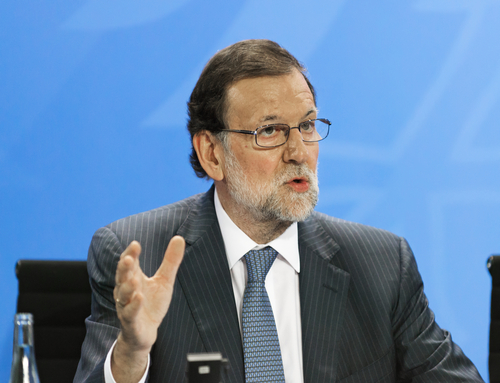
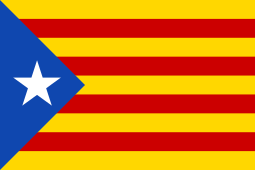
There are of course those in Spain who side against Catalonia. Others write who are in Catalonia yet disagree with the separatists. Let me make this very clear. It is the government of Rajoy who has acted abusively, and this is all about protecting Brussels and federalizing Europe behind everyone’s back.

Rajoy should have allowed a fair referendum and then negotiate if they won. Canada allowed two refferendums in Quebec and Britain allowed the Scottish referendum. This nonsense that the Constitution does not allow any democratic process is pure TYRANNY. That was the same argument in America by England and in France that led to revolution.

Had Rajoy NOT played the hardline tactics, allowed the referendum to take place, then many who voted for independence may have not done so.  This is about political power – not the dignity, right, or freedom of the people. This is basically stating the people mean nothing and you will obey or else.

This is a political power play that centers around the EU not just Spain.

If Texas or California want a referendum to separate from the USA, it is a human right to take such a vote. There can be no exceptions!!!!!

Trump to Release Secret Files on JFK?


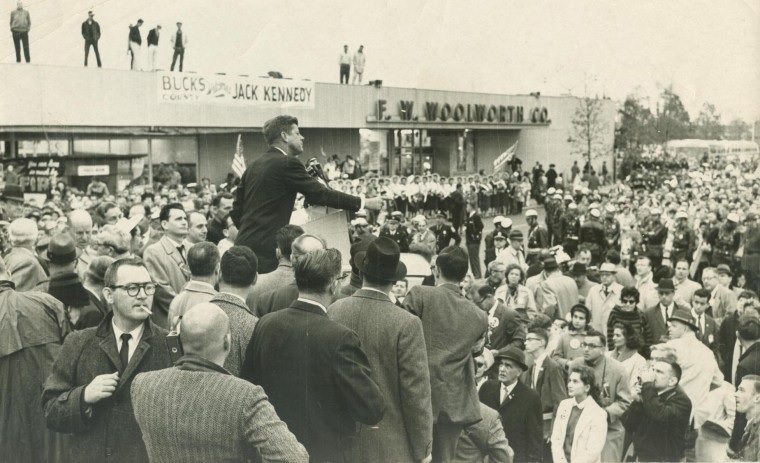
I have often been called the Forest Gump of finance. I have tended to meet so many people surrounding so many events it is often funny. I actually met President John F. Kennedy and shook his hand as a kid in Willingboro, New Jersey on Oct. 16, 1960. (I did not want to become president like Bill Clinton). Then years later, I bought a house on the beach in Loveladies, New Jersey. To the north of my beach house in Loveladies, is where Richard M. Nixon vacationed as well as Billy Joel. Nixon had rented in Loveladies a 5,000 square foot home designed by Malcolm Wells and built in 1970.  Due to its large base tapered upward to a triangular roofline, it was known simply as the Pyramid House.  It was torn down in 2009 to make room for the next generation of modern homes. To the south of me, was the house owned by none other than Senator Arlen Specter (1930–2012).

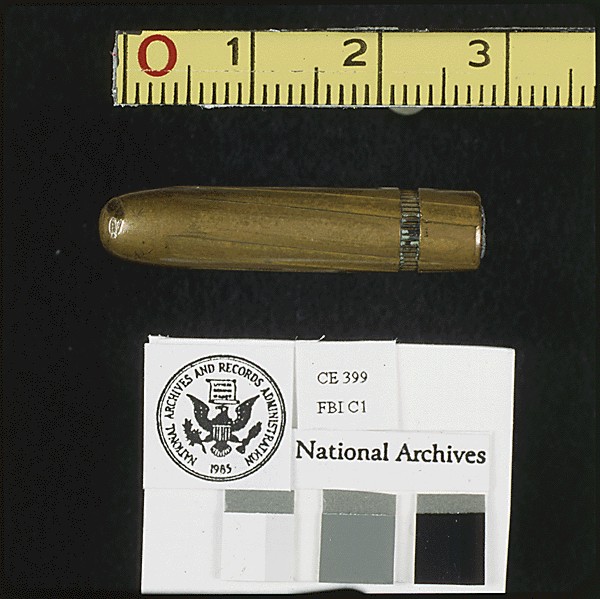
It was Arlen Specter who was a staffer (later a United States Senator from Pennsylvania), on the Warren Commission who is credited for coming up with the single bullet theory (magic bullet theory) known as “Warren Commission Exhibit 399”, that caused all the wounds to the governor and the non-fatal wounds to the president. Even his son would stop by my house. He would never admit to me personally that the theory was just an excuse.

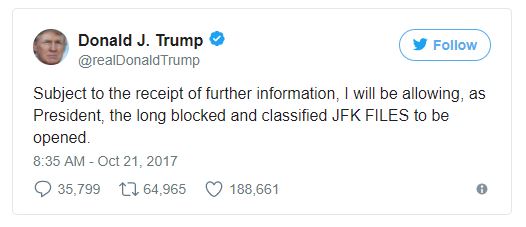
Now US President Donald Trump wants to release the long-hidden secrets of the assassination of John F. Kennedy. Trump announced his intention to disclose the more than 3000 documents on the presidential murder on Twitter. The concern deals with the assassination of November 22nd, 1963. There are some tens of thousands of other documents which have never been published. Trump wants to release them when the legal secrecy expires on October 26th, this week! The CIA is urging that Trump should not release the documents claiming they will endanger the survivors or informants of CIA and the FBI. That seems to be a real BS excuse if I ever heard one. What they may really incriminate is other people.

The official investigation came to the conclusion that JFK was shot by the (magic bullet) single-killer Lee Harvey Oswald in Dallas, who in turn was then killed two days later by the nightclub owner Jack Ruby. Then Ruby dies and nobody ever concludes just how was Oswald assassinated in the middle of the police station in front of policemen, security forces, FBI, CIA and journalists with TV cameras no less.

The official version of the assassination of Kennedy was repeatedly questioned around the world and it has never been believed in so many circles. The main “conspiracy theory” has been that it was an internal coup by the CIA. If there is no “conspiracy theory” then release the files once and for all. The argument to keep them hidden is what keeps these accusations alive.

Rajoy Continues to Act in the Spirit of Franco Warning Spain Cannot be Trusted?


Spain is showing that it truly remains a fascist state in the spirit of Franco and Rajoy plans to just seize Catalonia. Meanwhile, the Catalan citizens’ movement, Assemblea Nacional, is calling on all Catalans to withdraw all their money as much as possible from one of the five largest Spanish banks to increase pressure on Madrid, These include Caixa Bank, Bankia, Sabadell, BBVA and Santander. Americans supporting Catalonia are also urged to withdraw all funds from Santander in the USA.

Behind closed doors, many are becoming very disturbed by the action of Madrid. They fear this is spilling over as a contagion within Europe for populist movements. The election in the Czech Republic with the overwhelming vote against the EU many fear will be repeated next year in Italy and much of the finger-pointing behind the closed doors our sources are calling Rajoy a “f**king idiot” to directly quote some political sources.

Macron’s Call to Federalize Europe


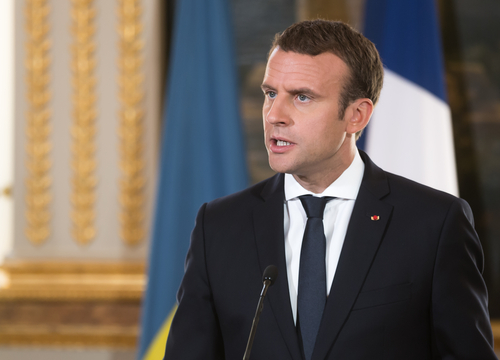
France’s President Emmanuel Macron is calling for a radical restructuring of the whole EU. Macron has presented his map for the EU into 2024. He is proposing that the Eurozone budget must include a joint force for military operations. Macron intends to finance this new budget with its tax – the “EU tax” he calls it.

Macron has looked at the numbers and see that France will go the way of Greece if something is not changed and soon. Macron hopes just to throw all the rotten eggs into one basket and hope nobody will notice. It’s the Three Musketeers – All for one; One for All just times 28.

Germany is still dominated by its misunderstanding of the Hyperinflation. Former Greek finance minister Yanis Varoufakis supports Macron’s federalist proposals on the euro single currency but believes only a real threat could make Germany budge on the issue. It has been Germany that opposed the consolidation of the debts to form the Euro. They are trying to remain isolated in their austerity posture refusing to budge on the debt consolidation, while at the same time they want the single currency to facilitate German exports eliminating foreign exchange risk among other members. They just cannot have it both ways.

The extent of Macron’s plan goes beyond just an EU Tax.  He also says that Europe is moving at “different speeds” and that those states which fall behind should not stand in the way of his proposals. He is calling for a European defense budget and a standard minimum rate for company taxes.
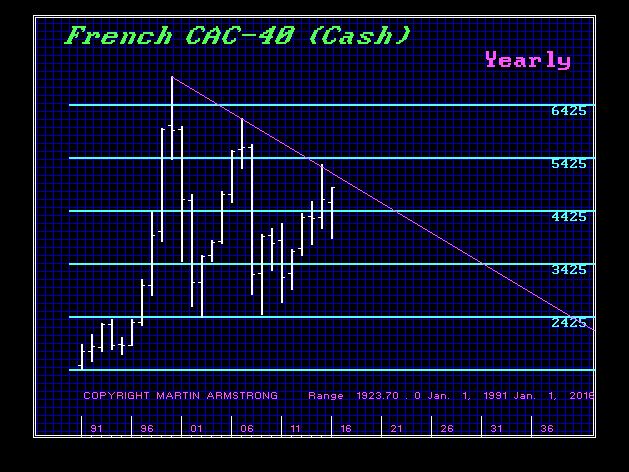
Macron has noted the high cost of taxing the rich. The Socialist agenda under Hollande imposed a wealth tax which drove 10,000 people with about 35 billion euros to flee the country. And that is just what they admit publicly. The tax was imposed on personal assets of more than 1.3 million euros is part of Macron’s reform, but the socialists are demanding they be taxes even more until they all leave one must assume.  As promised by President Emmanuel Macron in the election campaign, the tax will now only apply to real estate, meaning other forms of wealth such as shareholdings in companies will be exempted. Macron realizes that the French share market has one of the worst performance in Europe next to Greece. While the world is worried about bubble markets, Macron is concerned that new lows will unfold on the next crisis.

“When someone leaves the country because of the wealth tax… collectively all French lose.” But the Socialists just refuse to stop their hatred of the rich. Macron has abolished the wealth tax and the socialists are calling him the “President of the rich” and remain oblivious to reality.
More than fifty years ago, back in 1965, it was the French President Charles de Gaulle who withdrew his ministers from the Council of the EU, thereby constituting a de facto veto over all decisions, which became known as the “Empty Chair Crisis.” There were several issues regarding European political integration led to The Empty Chair Crisis. There was a push at that time to create the quasi-federalization of Europe. De Gaulle believed that national governments should move towards integration, but he did not agree with the Commission’s attempt to create some new super central state or a federalized Europe, extending powers of the EU beyond national borders as we have today, which Margaret Thatcher also opposed.
President Charles de Gaulle has proposed the Fouchet Plan was a plan back in 1961 to create a new grand design for Europe. Charles de Gaulle wanted to develop a three-power directorate, consisting of France, Britain and the United States. The idea was to form a new ‘Union of States’, as an alternative to the European Communities (EC). De Gaulle feared a loss of French national influence in the EC as there was a drive to federalize Europe back then.
After the failure of the Fouchet Plan and De Gaulle’s veto of the United Kingdom’s application for EC membership, the Commission attempted to move towards integration by proposing an idea that would combine the Common Agricultural Policy (CAP), the European Parliament, and Commission. De Gaulle supported the creation of the CAP and favored its enactment. However, he disagreed with the Parliament’s new role, the Commission’s strength, the shift towards federalization and a super central state, and the budget proposals for financing the CAP. De Gaulle made it a condition that majority voting with a right to veto must exist if France was to participate in the EC. When de Gaulle was denied a more intergovernmental Commission or voting and veto rights, the French representative left the Council of Ministers thereby creating the Empty Chair Crisis.
The Luxembourg Accord was an agreement reached in January 1966 to resolve the “Empty Chair Crisis” which had caused a stalemate within European Economic Community. Then on June 21, 1966, de Gaulle withdrew France in a shocking move taking its troops from the North Atlantic Treaty Organization (NATO). This decision led by French president Charles de Gaulle complicated relations between the U.S. and Europe amidst clashing American and Communist spheres of influence. Though France remained politically in NATO, its actions cast doubt on the organization’s future as a counter to Soviet military power and control back then.
Disagreement within the EU is by no means something new. We may yet see a political breakdown as the economy continues to spiral lower and the ECB bond-buying program has been transformed from an economic stimulus to simply life-support for government debts to try to keep interest rates from exploding and no bid for government debt.

Apart from the new EU tax, Macron did not make any funding proposals for his very far-reaching program. The FT reported his “wish list” and presented the most desired demands of Macron:

  • EU intervention group and budget by 2020
  • a European Intelligence Academy to train spies
  • a European civil protection group for responding to disasters
  • a European prosecutor for terrorism and organized crime
  • a European asylum seeker for the joint processing of claims, common procedures
  • a European border police
  • a carbon dioxide tax levied on imports into the EU
  • a European innovation agency for the investigation of artificial intelligence
  • EU subsidies to support the development of electric vehicles
  • Taxation of US tech companies with a tax on sales, rather than on profits
  • a larger EU budget to finance investments and dampen economic shocks
  • Review of agricultural policy and the new EU Food Authority
  • accelerated harmonization of corporation tax bases
  • gradual harmonization of corporation tax rates and social security contributions
  • a guaranteed minimum wage for each country
  • all young Europeans will be able to spend six months as a student or trainee in another EU country
  • Creation of European universities on the basis of networks of institutions
  • six-month series of national and local conventions to discuss the future of Europe
  • half of MEPs to EU Parliament is to come from EU-wide lists until 2024
  • a much smaller European commission, only 15 commissioners
  • a Europe of different speeds, to which Great Britain could also return
  • a new European prosecutor ensures that the competitors comply with the EU rules
  • a Franco-German cooperation agreement focusing on the harmonization of company regulation

450,000 March in Spain After Government Announces Dissolution of Catalonia Regional Government…


Hundreds of thousands of Spaniards took to the streets of Barcelona after the Spanish government announced they would dissolve the Catalonia Regional Government and hold new elections through an Article 155 declaration.

Article 155 allows Madrid to dissolve the Catalan regional government and force new elections, which Prime Minister Mariano Rajoy says will take place within six months. The PM insisted the move would not result in a loss of autonomy for Catalonia, but hundreds of thousands of pro-independence Catalans have taken to the streets in Barcelona in protest.

(Via UK Express) Prime Minister Mariano Rajoy’s Cabinet in Spain met this morning to agree to roll out hardline rules to penalise the breakaway region and impose direct rule.

Elections could be held in just six months as the government seeks to oust all those involved in the “illegal” referendum – including Catalan leader Carles Puigdemont who could even face jail for his role in the crisis.

But now Catalonia has hit back over his stinging rant, as calls for immediate independence erupt among fierce secessionists.  Supporters of independence had already called a demonstration in Barcelona this afternoon to protest the arrests of two Catalan activists accused of sedition.

However, the event has now changed its focus and is directing its anger at Madrid for triggering of Article 155.

Thousands of people have taken to the streets with cries of “independence” or “TV3 will always be ours” after the government took control of the Catalan broadcasting company – akin to Britain’s BBC.  (read more)

Broad Generalization Alert – The issue(s) are all internal to the specifics of Spain and the current conflict traces it’s past back to the time of General Francisco Franco and promises made thereafter.  The Catalonia secessionists are, generally speaking, left-leaning socialists and occupy an ideological space similar to the governing philosophy of the far-left-wing in California.

Simply for comparative purposes: If far-left Californians were to advance their current anti-Trump cause celéb and succeed from the U.S., the blends of secessionists and non-secessionists would break down similar to Catalonians -vs- Spaniards.

The larger Spanish electorate, the generally silent majority, is, well, silent; however, it’s generally accepted that most Spaniards want Catalonia to stay and not break-away into a fully antonymous region. (although some parts of Spain are reported to have previously held rallies in support of the region’s right to hold a referendum).

Democracy is challenged in this construct because the democrat majority of “all Spaniards” probably would not support secession; however, the democrat majority of just “Catalonians” likely support secession.  Which democractic group does the Spanish Prime Minister adhere to?

Therein lies the dilemma.

Spanish prime minister Mariano Rajoy, a 62-year-old from northern Galicia who studied law and has been in politics since his 20s, has vowed he will do everything in his power to stop Catalonia from seceding, but was previously vague on the details. Rajoy’s center-right Partido Popular has governed since 2011, when it won a landslide victory in the middle of the European debt crisis.

The current status reflects the more Prime Minister Rajoy pushes back against the secessionists, the more sympathy is generated toward their cause.

Has the OECD Been Told to Put Out Fake Opinions?


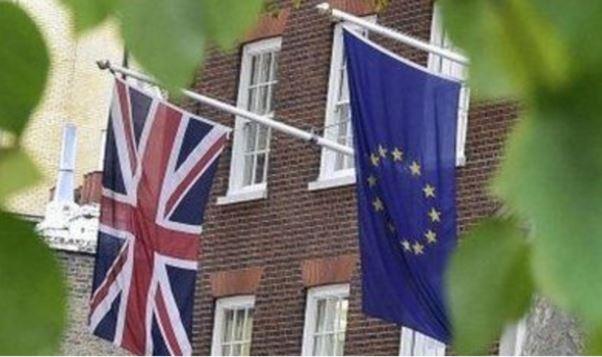
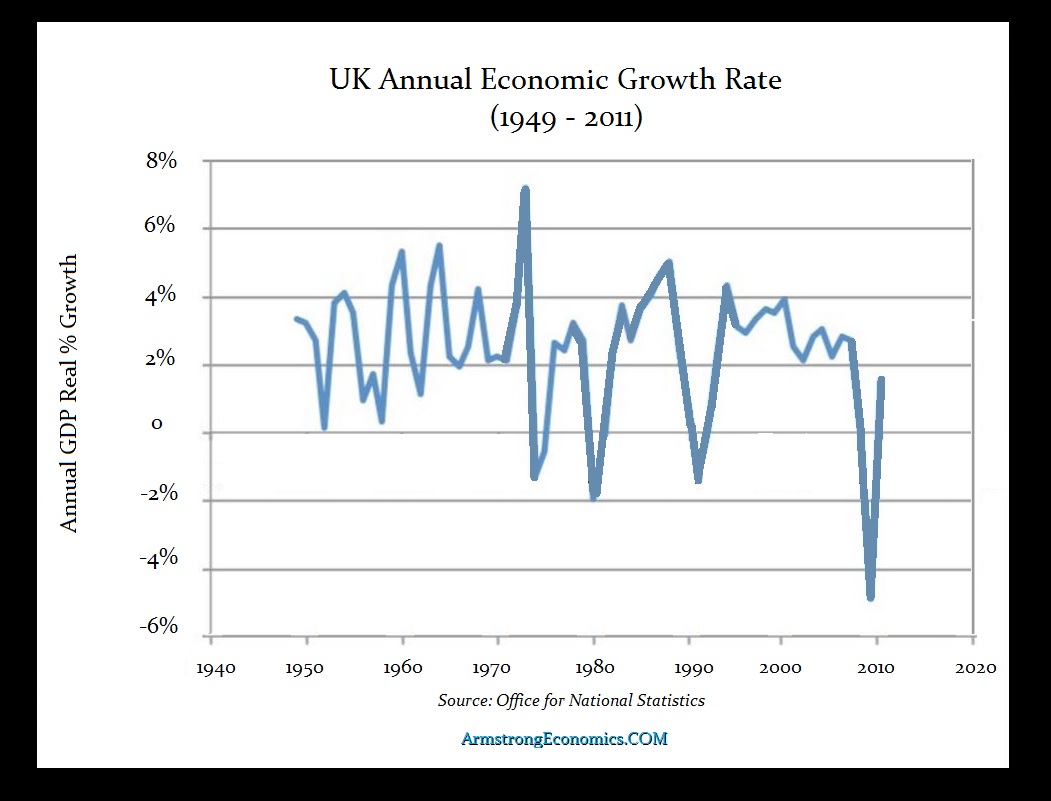
They just don’t give up. Now the OECD is coming out telling Britain to have a new referendum and stay in the EU. They claim, without any evidence to back up one work, that they “believe” it will have a positive impact on the British economy. One really has to wonder if they have not turned the charts on GDP upside down.


Sex with Robots? 49% of Men say they would Give it a Try – Women 9%


Well, there seems to be a new sex revolution emerging – sex with robots with Artificial Intelligence. It may seem completely nuts, but something is going on. A friend of mine went to a baseball game and he sat next to two young girls 21 and 23. They were curious about the good-old days and told him they had never been on an official date. They explained that boys just called and said we are all going to meet at xyz, so come along. Have the younger generation just so completely changed that relationships are gradually fading away?

When you dig a little deeper, you find that the youth are not only living with their parents into their 30s, but they are not buying into the American Dream of owning your own home. Rents are cheaper. With some, I have spoken to and they say how their parents worked hard, put everything into the home, watched taxes soar and property values crash after 2007. They seem to be taking a different path in life altogether.

About half of American adults believe having sex with robots will become common in the next 50 years. About 49% of adult males are ready to give it a try now but only 9% of women. The first time this sort of thing was portrayed in a moved was back in 1990. The girlfriend was a hologram. Well, we are not quite at the hologram level of technology just yet, but the AI sex doll revolution seems to be taking hold.

Some of the benefits – no divorce settlements and I suppose you get a window seat when you travel. The Global Warming people will be happy since that means a lower birth rate. Then again, what will the government do? The Ponzi scheme of counting on the next generation to pay for the previous will completely collapse.

A new AI sex doll revolution would also have profound economic consequences for the government.

Make Austria Great Again – Nationalism Rises Amid Europe’s Latest Election Result…


Against growing immigration policy backlash, early results in the Austria election show the center-right People’s Party (OVP), led by Sebastian Kurz, winning with around 31 percent of the vote.  The second place party, Freedom Party (FPO), with around 27% is even more euro-skeptic and nationalistic minded.  The Social Democrat Party, the former lead party, has dropped to third place with around 26%.

(Via Express UK) The People’s Party (OVP) got 30.2 per cent of the vote, according to exit polls from Austrian news channel ORF.

Mr Kurz’s party is tough on migration, easy on taxes and widely Eurosceptic after rebranding itself over the last few months to propel its popularity in the wealthy Alpine nation.

He is expected to form a coalition with the right-wing populist Freedom party (FPO), who got 26.8 per cent of the vote, according to the latest projections.

Speaking after 85 per cent of the votes were counted, he told his cheering supporters: “Today we have won a huge mandate to change this country, and I promise you I will work with all my energy for change.

“We want to establish a new culture in politics. And we want to change the country for the better.”

Meanwhile, the Social Democratic Party, the largest party in the last government, are in third place with 26.3 per cent. (link)

(Via Reuters) There was a temptation after the Dutch and French elections this year to declare an end to the nationalist/populist wave in Europe. But last month’s German election, which saw the anti-immigration Alternative for Germany (AfD) party surge into the Bundestag, and now the Austrian election, say otherwise.

Despite a hard shift right by the conservative OVP under Kurz, the FPO appeared close to the all-time high of 26.9 it won in 1999. That result paved the way for it to enter government, a move which prompted a horrified European Union to impose sanctions against Austria. If the FPO enters the government this time, expect little more than a whimper.

The Austrian result showed that the refugee crisis of 2015 has left deep scars among European voters, especially in countries that were at the center of the storm. The number of asylum seekers entering Austria has fallen sharply over the past year. But migration was the dominant theme in the election.  (read more)

Madrid Threatens Imprisonment & Death to Catalonia Leaders?


The Apanish Government is clearly fascist and cannot escape that stigma. The day before the appearance of Carles Puigdemont in front of the regional parliament of Catalonia, the Madrid government has come out and warned the head of the with serious bodily threats that one would expect only from a dictator – not an elected democratic government. Prime Minister Mariano Rajoy’s spokes person, Pablo Casado, came out and rejected all calls for any dialogue in Madrid with Catalonia. “We will not give in, and there is nothing to negotiate with the putschists,” said Casado.

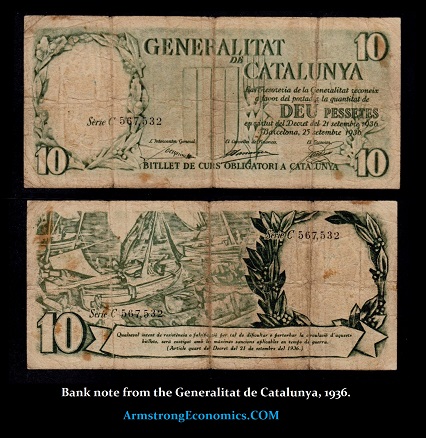
Casados boldly stated publicly: “Anyone who declares it (independence) will end up like the one who declared it 83 years ago.” In Spanish history back in 1934, Lluís Companys i Jover (1882-1940) was the head of  Catalonia’s government, which proclaimed itself as an independent state back then as well. He and the entire regional government were arrested after a few hours by the Spanish army. He was exiled to France in 1939 but would not leave because his son was seriously ill. In 1940, Companys was captured and was handed over by the Nazi Gestapo to the dictator Francisco Franco (1939-1975). He was executed in Barcelona at 6:30 a.m. on October 15, 1940 for seeking Catalonian Independence. Lluís  refused to wear a blindfold, and was taken before a firing squad of Civil Guards barefoot. When they fired, his last words were ‘Per Catalunya!’ (For Catalonia!). Keep in mind that people were imprisoned for even speaking Catalonia’s language.

More than 90% of voters in Catalonia voted for a separation from Spain BECAUSE of Rajoy’s dictatorial attitude. Here is a banknote from the last Independence movement from our collection of the World Monetary System. The opponents of Independence, who had boycotted the vote by a majority, went to the streets of Barcelona on Sunday to protest against the separation. As the EU declines in an economic death spiral, things are only going to get worse over the next two years and Rajoy will see the Spanish outside of Catalonia rise up against his dictatorial-like reign.

For the Rajoy government to threaten killing any public official who again declares independence is just beyond belief. For the EU to standby and say nothing is even more of a disgrace. The federalization of Europe to Brussels now supersede human rights. It’s all about the politicians and power now.

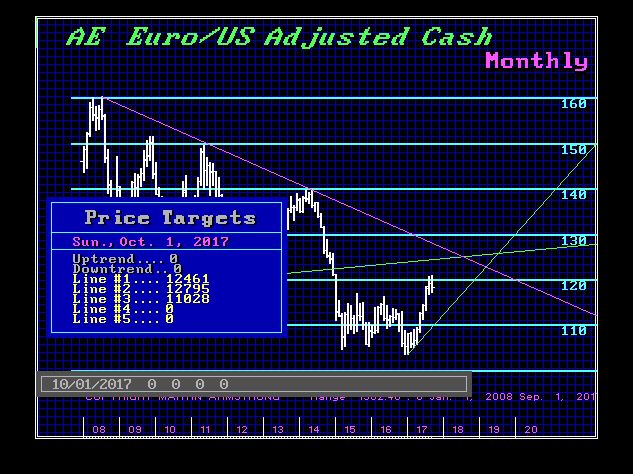
The Euro has still been unable to reach the first key area of important resistance standing at the 125 area. We still see November as the critical turning point and a Panic Cycle as well. There is no doubt that Spain will impact the Euro and indeed may help to push the Italians to also vote to separate as they witness the fascist-style response of the Rajoy government. Taking to key institutions in Europe, what many now want to see is a resignation from Rajoy. He is doing tremendous damage to the image of Europe as a whole.

Meanwhile, there appears to be a run on the European Central Bank (ECB) itself. Banks have tendered this week calling in a total of 21.3 billion euros, which is the highest amount since March. Typically, this runs between 3 to 4 billion Euros. Many see this as rising concerns in Italy of a full blown banking crisis set in motion by the new ECB guidelines. Banks will now have to gradually cover all loans that are now classified as risky. In the case of new unsecured problem loans, 100% coverage is to be achieved after two years, and for new collateralized loan loans no later than seven years.

Others see the run being sparked also by Rajoy. The threats of violence against Catalonia’s leaders brings back the days of Franco and Nazi actions. This is just not going down very well behind the curtain.

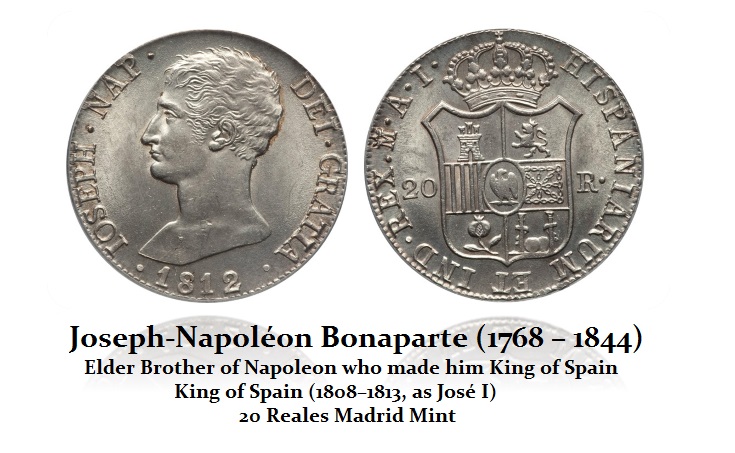
Joseph Napoleon Bonaparte & His Exile in New Jersey


QUESTION: Years ago, while visiting Salamanca, Spain, I was told that Napoleon’s brother abandoned his rule over Spain and made off with a large cache of gold. I know that he fled Spain to New Jersey. Is there any truth to this gold story? If so, what economic impact did he and the gold have in New Jersey?

 TF

ANSWER: Yes, I grew up in New Jersey with the story of Napoleon’s brother living there in exile. He fled the British to America I suppose like Snowden going to Russia. It was on March 30, 1814, when the allied troops reached Paris. Joseph Bonaparte and his family fled at first to Switzerland. He bought an estate at Prangins, between Geneva and Lausanne. However, when Napoleon escaped from Elba in 1815, Joseph returned to Paris to join him. Then after Napoleon’s second abdication, Joseph gallantly offered to change places with his brother so the latter could board the American brig the Commerce, of Charleston, to America. Joseph had chartered that ship for his own escape. Consequently, Joseph left for the United States only when he heard that Napoleon had surrendered to Britain’s Captain Maitland of HMS Bellerophon.

The rumor that Joseph sailed with tons of gold from Spain was another conspiracy theory. However, the Commerce was twice boarded and inspected by the British. Joseph was prepared with fake papers. They worked and he managed escaping detection. He arrived in New York on August 28, 1815 . His Spanish ordinance officer Unzaga, his interpreter James Carret, his cook Francois Parrot, and his secretary Louis Mailliard all accompanied him. The rumor was that Congressman Henry Clay assisted Joseph and provided him with a hotel to stay in. Joseph left his wife Julie and his daughters in Paris. They later moved to Frankfurt and then to Brussels.

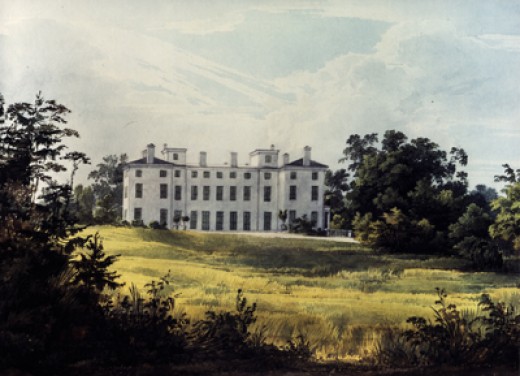
Joseph left New York City with the intention of meeting President Madison. Madison sent someone to intercept him and told that a meeting could not take place with the President. Joseph assumed the title of the Count of Survilliers, after a small property he owned near Mortefontaine. He was able to transfer a large part of his fortune to the United States, where he invested it. He rented a house in Philadelphia and bought an estate called Point Breeze in Bordentown, New Jersey. He also bought a large tract of land in upstate New York, to which he made extensive improvements. The latter contained a 1,200 acre lake which Joseph named Lake Diana, after the goddess of the hunt. It is now known as Lake Bonaparte.

Joseph’s home became gathering places for other Napoleonic exiles, including Charles and Henri Lallemand and Charles Lefebvre-Desnouettes. He contributed generously to the French exiles’ Society for the Cultivation of the Vine and the Olive. Nevertheless, Joseph also developed friendships with many prominent Americans, including Nicholas Biddle of the First Bank of the United States, as well as Charles Ingersoll, Stephen Girard, Charles Stewart, and Joseph Hopkinson. He was elected a member of the American Philosophical Society, where he met more of America’s great names.

Joseph Bonaparte’s home in Bordentown burned down though in 1820. When they excavated the site they recovered some 14,000 artifacts. He left with some gold, but there is no real record of how much he took with him into exile. As for his wealth, it was transferred by banks from Switzerland to America at the Bank of the United States as a valued customer of Nicholas Biddle.