Posted originally on Jul 29, 2025 by Martin Armstrong
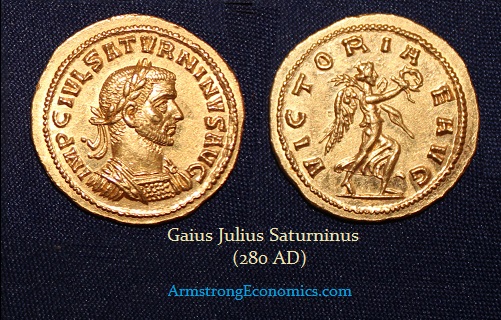
My problem with academics is that they sometimes overthink and claim that someone writing about events 200 years or more in the past cannot be considered a historian. We still write about the American and French Revolutions today. They recently made a film about Napoleon from the early 19th century. I have written before about the Historia Augusta and how academics have called it a fraud because it mentions emperors like Saturninus, for whom there is no other source, so it must be fake. They were proven wrong when coins were discovered showing all the names they rejected were real.
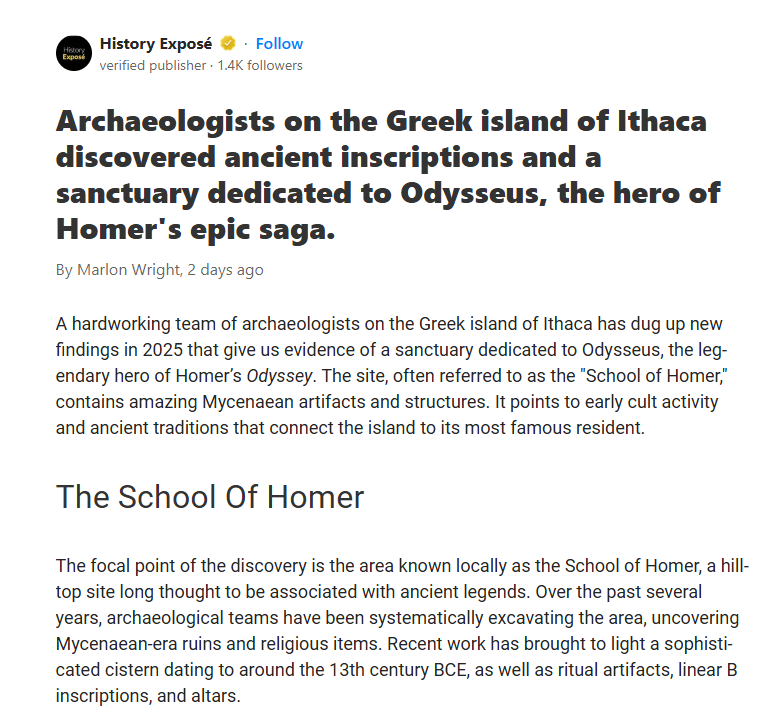
We are plagued by fake news on every front, and academics are no exception. Just recently, evidence of a sanctuary dedicated to Odysseus, the legendary hero of Homer’s Odyssey, was found. The site, often referred to as the “School of Homer,” contains amazing Mycenaean artifacts and structures. It points to early cult activity and ancient traditions that connect the island to its most famous resident. For more than a century, academics have insisted that Homer was merely a story for children and that there was no Troy or Mycenae.
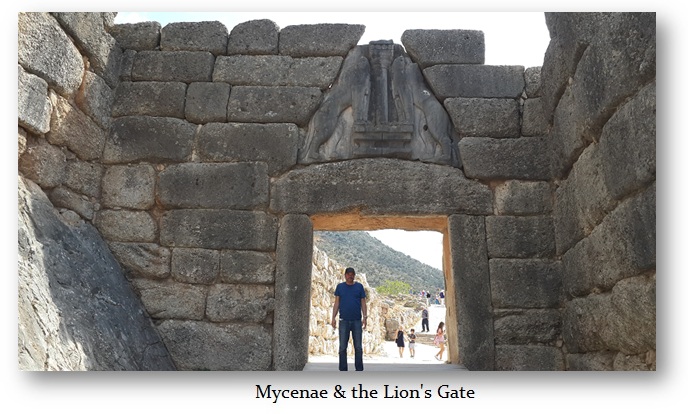
I have been to Mycenae, the city that the academics claimed never existed. When it came to Homer and his works, The Iliad and The Odyssey, academics pronounced that it was not history and was a story written for children. That was the argument of the French scholar François Hédelin, Abbé d’Aubignac (1604–1676). In his work Conjectures académiques, ou Dissertation sur l’Iliade written around 1664 but published posthumously in 1715, d’Aubignac argued that Homer never existed and that the epics were compilations of older, shorter folk tales. He declared, with NO EVIDENCE, that the Iliad and Odyssey was not historical but rather entertainment for young audiences, akin to fairy tales or children’s stories. Another academic, Friedrich August Wolf (1759–1824), in his Prolegomena ad Homerum (1795), further developed the “Homeric Question”—debating Homer’s authorship and the origin of the poems.
Today, no credible academic can argue that Homer was solely for children. Many still insist, without any evidence whatsoever, that the epics blended myth, folklore, and oral tradition rather than strict history. I suppose Paul Revere’s ride never actually took place, since all we have are accounts from people who were not eyewitnesses, and perhaps these are just folklore. The problem these academics have is that the historical basis (e.g., Troy’s existence) was debated until archaeological discoveries (like Schliemann’s excavations) suggested some factual underpinnings.
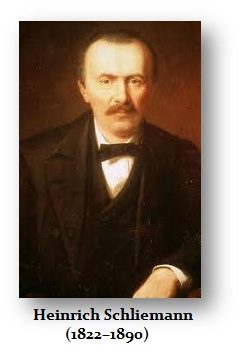
Anyone who has been to the ancient cities mentioned only by Homer will find a plaque that notes it was discovered by Heinrich, a wealthy non-academic who believed that Homer was a historian. He not only discovered Troy, but also Mycenae, mentioned by Homer.
Heinrich Schliemann, the German archaeologist, heavily relied on Homer’s Iliad as a guide to locate the ancient city of Troy. Schliemann was convinced that the epic poem contained historical truths about the Trojan War and used its descriptions to pinpoint the site. In the early 1870s, he focused on a mound at Hisarlik in northwestern Turkey, which he believed matched Homer’s depiction of Troy’s location. His excavations there, beginning in 1870, uncovered multiple layers of settlements, one of which he claimed was the Troy of Homer’s epic.
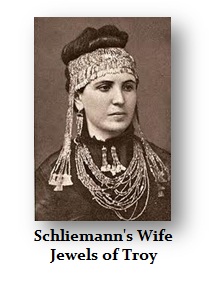
The academics NEVER sought to verify that Troy never existed. The problem was merely a story for children, and they did not conduct any investigation to substantiate their thesis. When Troy was found, the academic accused Heinrich Schliemann of fraud. They accused him of embellishing or even fabricating some of his discoveries—including the so-called “Jewels of Helen” that his wife, Sophia, was famously photographed wearing. In 1873, Schliemann claimed to have discovered a hoard of gold and silver artifacts at Troy, which he dubbed the “Treasure of Priam.” This included diadems, earrings, and other jewelry, which he later had Sophia wear in photographs, suggesting they were ancient Trojan royal treasures.
Some scholars refused to admit that they were wrong and accused Schliemann of assembling the treasure from finds made at different times or even other locations, presenting them as a single, dramatic discovery. Schliemann was accused of sensationalizing and possibly misrepresenting his finds, but the jewels themselves were likely authentic ancient artifacts—just not necessarily the “Treasure of Priam” as he described. His reputation remains a mix of groundbreaking archaeology and self-aggrandizing academics who were flat-out wrong.
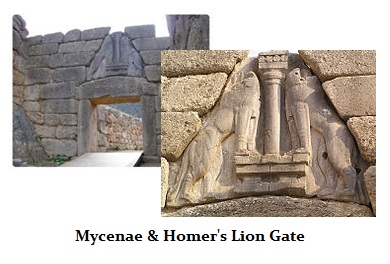
Homer does not explicitly describe the Lion Gate of Mycenae or the exact location of Agamemnon’s burial in his epic poems, the Iliad and the Odyssey. However, he does provide some indirect references to Mycenae and Agamemnon’s tomb that later inspired archaeological discoveries. In the Iliad, Mycenae is described as a mighty city ruled by Agamemnon, the leader of the Greek forces against Troy. Homer calls it “rich in gold” (πολύχρυσος, polychrysos), a phrase that aligns with the wealth found in Mycenaean tombs.
The Lion Gate, the monumental entrance to the citadel of Mycenae (built around 1250 BC), is not directly mentioned by Homer. However, the grandeur of Mycenae in his epics matches the archaeological evidence of its impressive fortifications. The gate was given its modern name due to the relief sculpture of two lions (or lionesses) above the lintel, but Homer does not reference this structure. In the Odyssey (Book 4), Menelaus mentions that Agamemnon was buried by Orestes (his son), but no specific tomb location is given.
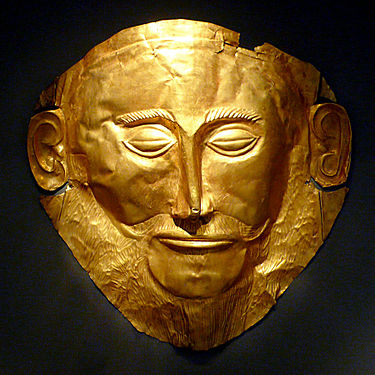
Later Greek tradition (e.g., Pausanias, 2nd century AD) claimed that Agamemnon was buried within the walls of Mycenae. In 1876, Heinrich Schliemann excavated the so-called “Grave Circle A” inside Mycenae, uncovering gold-rich shaft graves. He famously, but perhaps mistakenly, identified one mask as “Agamemnon’s Mask” (now dated to 1550–1500 BC, earlier than the Trojan War era).
Homer’s epics and the portrayal of Mycenae’s wealth and power align with the archaeological remains. The connection between Homeric legend and Mycenaean archaeology was primarily shaped by later interpretations, including Schliemann’s excavations.
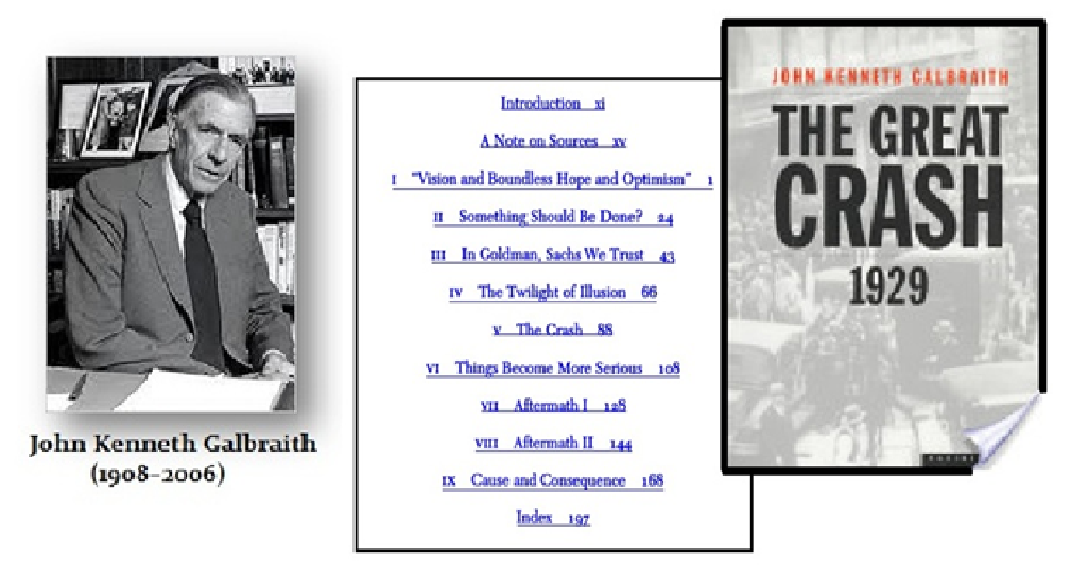
What I learned in school is that it was not honestly teaching history, but opinion. The socialist will NEVER admit they were ever wrong, any more than these so-called academics of ancient history that pronounce conclusions without ever investigating anything. As I have said, I had to read Galbraith’s Great Crash in high school. He was a socialist and omitted any discussion of the sovereign defaults of 1931. It had to be blamed on corporations, for the solution was complete power to the state.
Posted originally on Jul 24, 2025 by Martin Armstrong
Over 8,000 bank branches are expected to close worldwide in 2025. Approximately 3,200 of those closures will take place in the United States. Q1 experienced 148 net branch closures in the US, with all major banks slated to close branches throughout the year.
These are merely bank closures and not bank failures, although two smaller US banks did fail this year. People simply prefer online banking as we have made the switch from relational to transactional banking.
Bankrate conducted a survey that found 77% of Americans prefer online digital banking, yet other surveys believe the figure is closer to 89%. Digital banking has been rising in popularity in recent years, up from 203 million domestic users in 2022 to the 216.8 million projected users in 2025. The survey found that 34% of consumers use online banking on a daily basis, consistently checking their account and transactions. There has even been a 19% increase in use among the 65+ crowd who is least likely to use digital services.
The total number of bank branches across the US fell below 65,000 in Q2. Texas, New York, and California saw the largest decrease in brick-and-mortar locations. Many branches that chose to remain open are only offering drive thru services. One in three banks has closed in rural areas as there is no demand, and the Federal Reserve noted in its annual Banking Access Report that the number of “banking deserts” across the Midwest is rising.
Banks have no overhead with digital banking services and they do not need to hire staff. The cost-per-transaction for in-person banking is $4.00 compared to only $0.04 for digital. AI is rapidly replacing bank tellers with a 3 to 1 ratio.
The trend is global. The United Kingdom anticipates 370 to 450 branch closures this year. Germany and France are facing 1,100 closures combined. The Asia-Pacific region of the world saw a 16% reduction in bank branches from January to May 2025. Certain nations like Malaysia and Thailand also offer branchless micro-banking kiosks to substitute relational banking.
The money in your bank account is already just an electronic book entry. Not only is there less demand for face-to-face banking, but they are also preparing for CBDCs as bank branches are unnecessary without physical paper money. You can deposit a check on your phone or at a kiosk, but e-checks are rising in popularity. The only thing left for a branch is safe deposit boxes, and the government assumes you are hiding cash there anyway. Relationship banking is becoming a thing of the past, the latest casualty in the cycle of creative destruction.
I have created this site to help people have fun in the kitchen. I write about enjoying life both in and out of my kitchen. Life is short! Make the most of it and enjoy!
This is a library of News Events not reported by the Main Stream Media documenting & connecting the dots on How the Obama Marxist Liberal agenda is destroying America










 Centinel2012