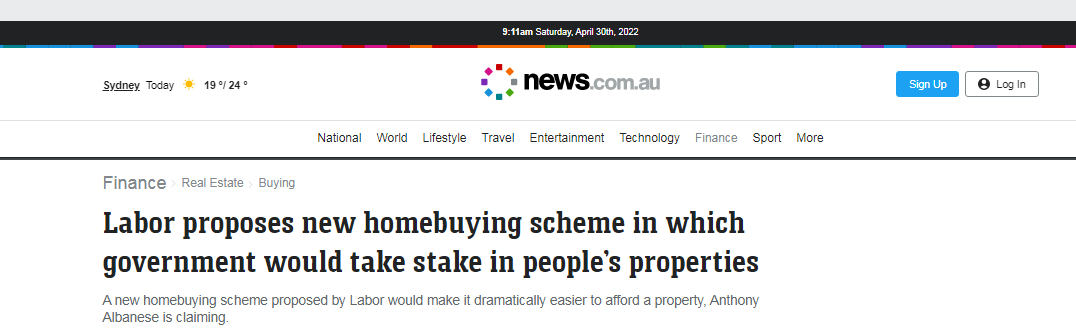
Believe it or not, Australia wants to buy your home. Under the scheme, homebuyers will no longer need to pay Lenders Mortgage Insurance (LMI), which will save the people potentially more than $30,000. The initial proposal is they will buy 40% of your home. Like the income tax was only to be for the rich, the end of the story is in fact Klaus Schwab’s Agenda 2030 – you will own nothing because all debt will be wiped out – DEFAULT.
Cillizza is referencing the cumulative effect of high inflation, high gas prices, a negative GDP outcome for the first quarter, and now the latest Gallup polling data:
In the latest Gallup poll, conducted April 1-19, four in five U.S. adults rate current economic conditions in the country as only fair (38%) or poor (42%), with few describing conditions as excellent (2%) or good (18%). Furthermore, 76% of Americans say the economy is getting worse, 20% say it is improving, and 3% think it is staying the same. (read more)
As CNN shares, “if things stay roughly where they are today — in terms of economic measures like GDP and CPI and Americans’ perceptions of the state of the economy — Democrats will experience a cataclysm at the ballot box this fall. The question won’t be whether they hold their paper-thin majorities in the House and Senate, but rather how big the electoral hole will be that they have to try to dig out from over the coming decade.” (link)
Posted originally on the conservative tree house on April 30, 2022 | Sundance
For his weekly monologue today, GBNews host Neil Oliver notes how government officials are now globally focused on stupid personality issues as a distraction from the complete mess they created. Ironically, I just watched a Canadian parliamentary session yesterday where the most urgent policy for their assembly was ‘menstrual equity.’ Yes, you read that correctly. It left me with that same bread and circuses thought as outlined by Oliver today.
Political leaders, not just in the U.K., are snipping and snarking at each other over the most ridiculous issues and personality points. Do we really care about what kind of car the energy secretary drives and the hypocrisy it may represent? Is there a purpose to the insufferable banality of it? Indeed, they want us to move along, move past the issues they created with the pandemic nonsense.
They need us to participate in the great new pretense where consequences are inconsequential, discussion is disinformation. We are to listen to their square dance music and participate gleefully, while pretending our economic barn isn’t burning down around us. As the flames spread, we are supposed to ignore and forget the gasoline drums the politicians placed in the loft and just keep dancing…. However, most of us normal folk can’t ignore that it’s getting really hot in here. WATCH:
(TRANSCRIPT) – “We need some grown-ups in the room – and pronto. As things stand in this country, right this moment, we’re being governed by what appear to be outsized school children intent only on picking fights with one another in the playground, calling each other names.
As far as anyone can tell, the party of government and those of the opposition are interested only in themselves and each other. Life in a goldfish bowl has apparently given them five-minute memory spans. Round and round they swim, seeing nothing beyond the glass and having the same tiny fights with their fellow inmates again, and again, and again.
It’s narcissistic nonsense from a political class that demonstrably feels entitled to treat us proles with out-and-out contempt while they set about the petty business of personal point-scoring. This internecine squabbling is apparently supposed to keep us happy, thrilled by their clever verbal sparring. As if. More than anything else, the carryings on of Johnson, et al take me all the way back to my own days at school – watching the members of the various self-important cliques sniping at one another in hopes of being briefly seen to have come out on top.
Partygate, Cakegate, Beergate, Raynergate, Porngate – it’s one childish tantrum and spat after another. And we’re supposed to care who’s winning. Events on the green benches of the Commons this week just past have been like an episode of 80s comprehensive school drama, Grange Hill.
Zammo got caught in class with a copy of Razzle magazine stuffed down his trousers.
Tricia Yates was in bother again, on account of her skirt not being deemed appropriate for school and serial clown Tucker Jenkins was, as per usual, caught up in one hilarious scrape after another. How we didn’t laugh.
If their antics aren’t from the school playground then it might as well be Carry On Up The Dispatch Box. It’s nothing more or less than embarrassing and to a great extent the joke really is on us – because we give these characters our votes.
Of course – none of it is really funny at all. It’s pathetic, when you get right down to it. And we’re paying for this skit-show.
Sometimes you have to wonder if what we’re seeing – what we’re being treated to as some sort of amateur dramatics slapstick comedy – isn’t deliberate distraction. Feeding us full of popcorn at the circus is hardly an original tactic from MPs who need the peasants to look the other way. History is awash with times when the rulers of this state or that found themselves so out of their depth they had to fall back on the time honoured trick of giving the plebs something else to look at while the fires burned out of control elsewhere.
This country – this world, in fact – is a damned mess now … teetering on the brink of chaos. Here at home our elected representatives have pushed us with the cattle prods of their emergency laws into a swamp of financial ruin. Two years ago they locked us down, deliberately and knowingly bringing the juggernaut of the economy to a stuttering, juddering halt. They sprayed trillions of pounds of fake money, money they didn’t and never will have, in every direction – including straight into the pockets of chums and also right down the drain. Desperate voices cried out that lockdown was madness – guaranteed to cause every kind of harm. But those voices were silenced and our leaders carried right on, ignoring their own rules while force marching the population along a trail of tears to where we are now.
Trust me when I say I know I sound like a broken record on all this – ceaselessly banging away, week after week, about the same old stuff. But the fact remains no one is being held to account for any of it. Far from it – with every day thar passes it seems like more and more people are just too worn down to care anymore. Those decision-makers, who ignored warnings and calls, like the Great Barrington Declaration, for other, better ways of handling the situation, plainly think they’re off the hook.
A court ruled last week that the decision to send elderly patients from hospital to care homes was unlawful – and yet all former Health Secretary Matt Hancock seems intent on doing in the aftermath is pushing his self-serving memoirs to anyone who’ll listen.
Without so much as an acknowledgment of error, or wrongdoing, far less any sort of apology for stubborn disregard of warnings of hellish consequences for millions of silenced, essentially invisible people, those responsible have moved on, leaving the broken unheeded in their wake. And we’re letting them away with it for no better reason but that we’re tired of it all and have been handed, by the same people, even more to worry about instead. No one is more tired of thinking about this stuff, hearing this stuff and talking about this stuff than I am.
But if they think after two years that I will just call it quits, and meekly watch the rubble swept under the carpet, they can think again. For as long as I live I will not forget, far less forgive, this disaster of our leaders’ making.
There’s certainly a palpable desperation to see us us all move on, though.
“Don’t bother about that,” they say, “that’s old news! Bother about this! Look at her legs, check out the porn site on the screen of his mobile phone! Miss, Miss – he ate a cake – and him over there … he drank a bottle of beer!”
All of it shows they felt they had nothing to fear – and just went ahead and did as they saw fit while telling us something entirely different.
You know they call England the Mother of Parliaments? This shaming debacle, this parcel of rogues, hissing and spitting at each other like cats in a sack – this is the bunch we’re supposed to trust to navigate the great ship of state through the storm ahead … and without a doubt there’s a storm coming.
They’re calling it a cost of living crisis, of course, but it sounds more like financial ruin to me. Spiking, spiralling prices for anything and everything. Rising inflation … rising interest rates. Disrupted supply chains … dependence on other people’s energy. Shortages of this, that and the other. Let’s not forget, either, the mental and physical health tsunami for young and old alike. The NHS that was the focus of all efforts – the church that was to be saved at any cost – can’t meet the needs of untold numbers of the sick and dying. Every day, more questions are asked about the safety and efficacy of the vaccines – and with good reason – and yet still they push their concoctions – boosters, jabs for children and babies.
Lockdowns compromised young immune systems, impacted early development, robbed many of their educations … and yet no one is brought to account for any of it. Before long they’ll have the temerity to say we all made our own choices, personal responsibility and all that.
Now there’s war in Europe; talk of nuclear weapons being brought to bear for the first time since Hiroshima and Nagasaki. An energy crisis – caused not by war but by the madness of Net Zero and the lack of reliable domestic energy supply – might soon see the lights going out all over that continent.
Would-be authoritarians are skuttling around laying the foundations of Digital IDs and social credit systems that might create a world of human bondage. Allied with programmable digital currencies controlled by central banks we might be en route for lives in which privacy, let alone personal freedom, are consigned to the dustbin of history.
No matter where you look there’s trouble and strife and more on the way. And what are our lot up to? What are our elected representatives focussing all their attention upon – and thereby trying to focus our attentions too?
A months-old “he said she said” still rumbling on.
Yet more rank hypocrisy from Sir Beer Starmer, who turns out to have downed a few indoors with chums while simultaneously berating the PM for not placing harsh enough restrictions on the lives and loves of the electorate.
Infantile, degrading nonsense about the crossing and uncrossing of a woman’s legs, did she or didn’t she, and whether or not the PM was distracted by the scissoring.
Time out for a tax-payer funded perusal of porn on the green benches of the Commons.
The world is in flux as never before in our lifetimes. Pestilence, War, Famine and Death. The gang’s all here and back in Westminster it’s cake and skirts and Internet porn. Someone’s fiddling, right enough, and coming from somewhere not far away, there’s a smell of smoke.” (link)
Posted originally on the conservative on April 30, 2022 | Sundance
Catherine Englebrecht appeared on The War Room with Steve Bannon {Direct Rumble Link} to outline the evidence of election fraud that took place in 2020 through the use of ballot harvesting and ballot mules. The receipts Englebrecht and True The Vote have gathered are the primary evidence in an explosive documentary that is going to be released shortly called “2000 Mules.”
The 2020 vote in key county precincts was manipulated by illegal and fraudulent ballot harvesting. Wayne county, Michigan; Philadelphia county, Pennsylvania; Maricopa county, Arizona; Clark county, Nevada; Dane county, Wisconsin; and Fulton county, Georgia. True the Vote has the documentary evidence, and video from the drop boxes, outlining how the ballot harvesting took place. However, corrupt local and state officials have refused to investigate the evidence because the political scandal is extreme in consequence.
Importantly, during the interview with Steve Bannon, Catherine Englebrecht notes the systemic corruption by Georgia Republican Governor Brian Kemp, and his entire administration, as one concrete example of the willful fraud that cuts across party lines. WATCH:
Incumbent Governor Brian Kemp is seeking reelection for the governors office. The primary is May 24, 2022. He is being challenged by David Perdue, who has been endorsed by President Trump. Unfortunately, Georgia utilizes an open primary system, in which registered voters do not have to be members of a party to vote in that party’s primary. It is highly likely, to a predictable certainty, that Democrats in Georgia will be activated to vote for Brian Kemp in May, setting up a general election contest in November between Kemp and Democrat Stacy Abrams who is running unopposed.
I hope you will invest 20 minutes of your time watching the discussion to get a more fulsome perspective on the scale of political corruption that Ms. Englebrecht and her group have been fighting for more than a year. The discussion about the GOPe corruption in Georgia is sickening.
Many people have pushed a narrative that essentially says we must move on from the 2020 fraud. However, there is no moving beyond the illegal activity that surrounds a completely fraudulent election. The issues from 2020 must be brought to the full sunlight of the American people in order to provide accurate context for all the current Biden administration activity, that, at it’s core, is intended to protect the U.S. government from what took place.
In an effort to keep the Daily Open Thread a little more open topic we are going to start a new daily thread for “Presidential Politics”. Please use this thread to post anything relating to the JoeBama Administration and Presidency.
“This is no small thing, to restore a republic after it has fallen into corruption. I have studied history for years and I cannot recall it ever happening. It may be that our task is impossible. Yet, if we do not try then how will we know it can’t be done? And if we do not try, it most certainly won’t be done. The Founders’ Republic, and the larger war for western civilization, will be lost.”
“But I tell you this: We will not go gently into that bloody collectivist good night. Indeed, we will make with our defiance such a sound as ALL history from that day forward will be forced to note, even if they despise us in the writing of it.”
Posted originally on the conservative tree houss April 29, 2022 | Sundance
The first principle in battling against the Alinsky crew is to not to accept their terminology. Controlling language is a specific tactic of the professional political left. We used to call it labeling, but modern leftists moved beyond labels into the creation of new definitions. Modern leftists now use two different strategies depending on their target: (1) create new words, the traditional labeling; and (2) redefine existing words.
In this interview Naomi Wolf is one of the few people I have seen who correctly starts her discussion by dispatching the linguistics and framing her own baseline argument. All politicians and candidates for office should watch how Wolf responds to the first question from Tucker Carlson, and then makes the better argument.
Wolf doesn’t waste time debating “misinformation”, “disinformation”, or “malinformation”, instead she accurately just says those things do not exist. Information stands undefined. From that position there are truth and lies. Her approach is exactly correct. Do not accept the insanity of the Alinsky language effort. A refreshing and really good interview, WATCH:
.
On January 13, 2022, the fraudulent and managed autocrat, the installed occupant of the White House, gave instructions to his fellow travelers in Big Tech, and I quote:
“I make a special appeal to social media companies and media outlets: Please deal with the misinformation and disinformation that’s on your shows. It has to stop.” ~ Joe Biden
It was crystal clear what Joe Biden was telling his allies in social media to do. There is information the Government wants us to hear, and everything else is disinformation or misinformation the U.S. Govt disapproves of.
Immediately CTH encountered criticism for our position on information. However, Wolf understands exactly what we have discussed:
…”There is no such thing as “disinformation” or “misinformation”. There is only information you accept and information you do not accept. You were not born with a requirement to believe everything you are told; rather, you were born with a brain that allows you to process the information you receive and make independent decisions.”… (link)
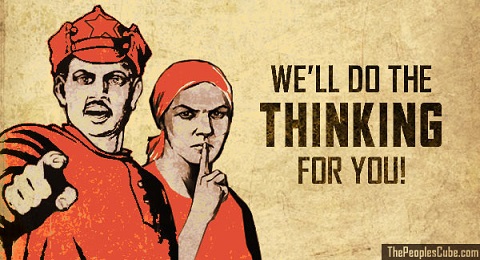
Ultimately, the government is not trying to control words, they are trying to control thoughts.
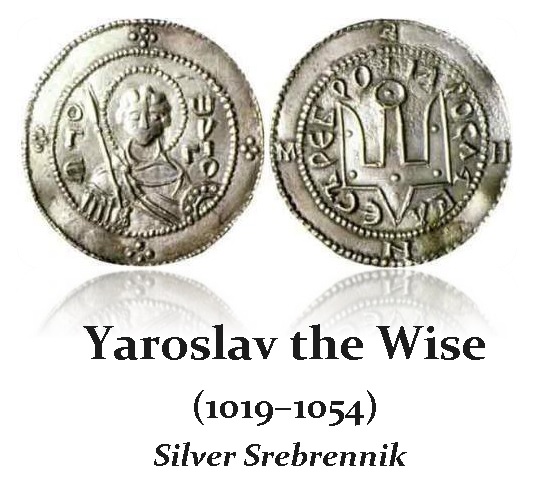
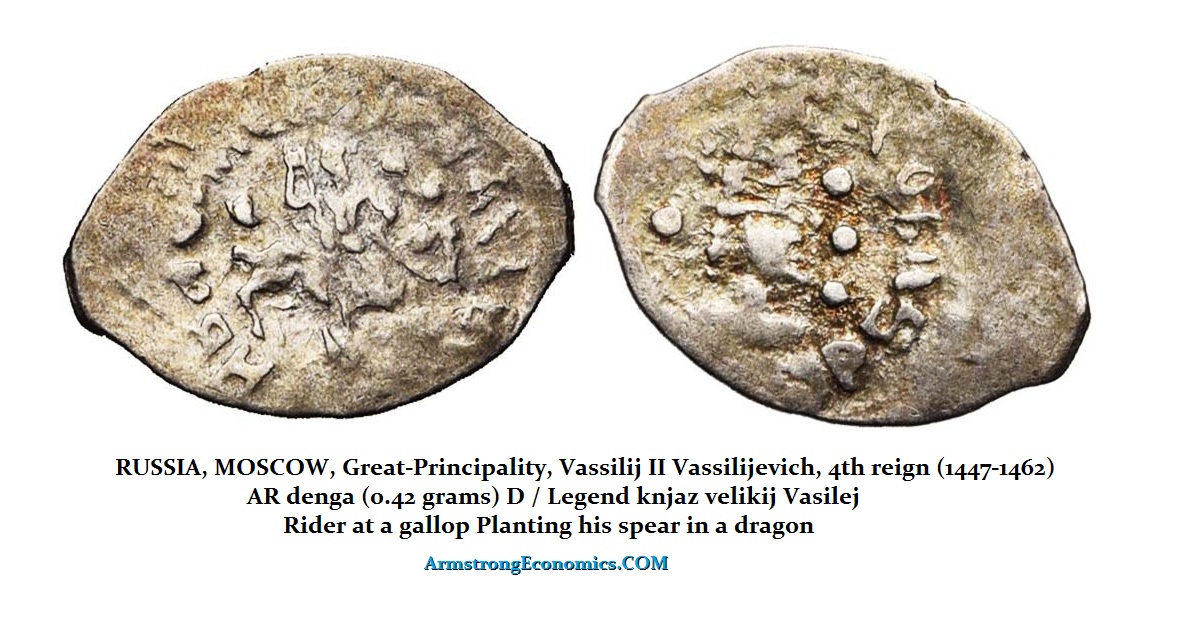
The Russian Monetary System began also with cattle (skot) during the Kievan period. Skins of small animals and precious metals were used as fixed-value exchange rate based upon barter goods. Up until the end of the 12th century, cattle was the unit of account but commerce took place with the skins of small animals. Actually, furs became the common method of payment for they were valued in terms of cattle, but were much easier for transport and divisibility for small transactions. This made small furs much more suitable for money and they were also an important item of export. Written sources began to speak of such units of payment as kuna (marten’s fur, from kunitsa, a marten), belka or veksha (squirrel), veveritsa (ermine) and nogata (fur with legs, from Arabic nagd, a good or full-value coin), and also of pieces of fur (resana), muzzle furs (mordka) and paw furs (lapka).
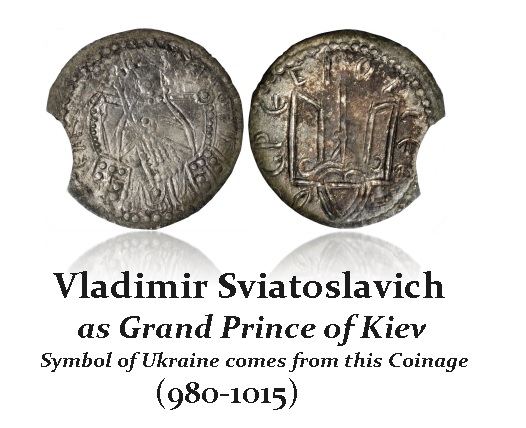
The word for silver was “serebro” which became more and more common to denote money as trade with the Byzantine world increased. The Old Russian words kuna and nogata, come from the old “fur money” or “leather money,” thereby retaining their meaning as metal money began to emerge. The names continued in use even though the money began to change to metals given the trade with the Byzantine world. The Rus relied upon foreign produced money. Both Byzantine silver coins and the silver dirhems of the Arab Caliphate are found in Ukraine and parts of Russia confirming trade existed.
It is clear that there was a change from “fur money” to silver and the oldest Russian unit of value was the “grivna”, which was based on the Arab coinage system. We begin to find only from the 10th century onwards that local coinage began to be struck and once this took place, then coins became the actual unit of payment in markets. This enabled the expansion of the economy and really the rise of Russia out of the barter age. The “grivna” became both a unit of account an money by weight. Its value equaled to that of 96 gold dinars (s[o]lotniki) or 144 silver dirhems (s[e]rebreniki).
The ruble has been the Russian unit of currency for about 500 years. It was The monetary reform system instituted by Peter the Great (b 1672;1682-1725) that was a century ahead of most others in that it was based on the decimal system. The basic monetary unit, first coined in 1704, was the silver ruble of 100 kopecks. Other silver coinage consisted of the poltina (one-half ruble), polupoltina (one-fourth ruble), grivennik (ten kopecks), altyn (three kopecks) and kopeck. There were two copper sub-multiples of the kopeck: den’ga (one-half kopeck) and polushka (one-fourth kopeck); and three gold multiples of the ruble: double ruble, chervonets or “ducat” (about 2 and one-half rubles), and dvoinoi chervonets (double chervonets). Unfortunately, Peter’s profligate expenditures steadily eroded most of the value of this otherwise admirable currency. Still, Peter’s reforms made a lasting impact on Russia and many institutions of Russian government traced their origins to his reign.
The amount of precious metal in a ruble varied over time. In a 1704 currency reform, Peter the Great standardized the ruble to 28 grams of silver. While ruble coins were silver, there were higher denominations minted of gold and platinum. By the end of the 18th century, the ruble was set to 4 zolotnik 21 dolya (almost exactly equal to 18 grams) of pure silver or 27 dolya (almost exactly equal to 1.2 grams) of pure gold, with a ratio of 15:1 for the values of the two metals.
In 1817, the ruble was reduced from .986 find gold to .917. This would be further reduced to .900 by Alexander III in 1886. The gold 5 ruble weighed .1929 oz. This was actually nearly the same net weight of the 1802 issue at .986 finess with a net weight of .1928 oz.
In 1825, platinum coins were introduced with 1 ruble equal to 77⅔ dolya (3.451 grams). The denominations were 3, 6, and 12 rubles.
On December 17th, 1885, a new standard was adopted which did not change the silver ruble but reduced the gold content to 1.161 grams, pegging the gold ruble to the French franc at a rate of 1 ruble = 4 francs.
This rate was revised in 1897 to 1 ruble = 2⅔ francs (0.774 grams gold). A 15 ruble gold coin was issued with a weight of .3734 oz. Effectively, this was a revaluation whereas the coin was the same weight as the 10 ruble, wihch had been issued since 1886. The 5 ruble weighing .1867 of an oz under Alexander III from 1886 had been reduced to .1244 oz.
The ruble was worth about .50 USD in 1914.
With the outbreak of World War I, the gold standard peg was dropped and the ruble fell in value, suffering from hyperinflation in the early 1920s. With the founding of the Soviet Union in 1922, the Russian ruble was replaced by the Soviet ruble. The pre-revolutionary Chervonetz was temporarily brought back into circulation from 1922-1925
Before November 1, 1990, the dollar cost 63 kopecks, but there was no opportunity to buy it at such a rate. November 1 of the year 1990 established a commercial rate of 1.8 rubles per dollar. The first trading session was opened on April 9, 1991, in one of the premises of the USSR State Bank, where a blackboard had providently been brought in order to record deals. Following the only concluded transaction (for 50 thousand cashless dollars) the ruble was for the first time ever rated commercially. The real exchange rate of the US dollar against the ruble made up 32.35 rubles per dollar. By the end of the year one dollar was estimated at 169.20 rubles under inflation of about 160% (the percentage is very approximate, as there is no accurate statistics). Prices were set free, people felt lack of products in shops, the USSR collapsed but the Russian Federation hadn’t been formed yet. This period turned to be the time of troubles for former Soviet people.
At the same time stock exchanges entered the market, though the process of their formation was quite spontaneous. The first Russian Exchange was registered in May of 1990 and was called Moscow Commodity Exchange. November 21, 1990, Moscow Central Stock Exchange was the second on the list. The first valuable securities trading session in the USSR was held only several months later.
In general by the end of 1991 Russia registered 182 commodity and stock exchanges. The RF left behind the whole planet by number of exchanges and variety of concluded transactions. That time Russian exchanges used to trade any possible commodities and security papers. When the Soviet supply system wrecked, exchanges took on a role as middlemen. The majority of goods were in deficit, even money: the president of the State Bank complained in his secret letter to M.S. Gorbachev that the Finance department failed to mint enough money to keep pace with inflation.
New Russian exchanges traded wood, sugar, paper, building materials, cars, computers and even bread! Very soon Russia numbered over 1000 exchanges, though most of them couldn’t be called traditional stock structures, as essentially they operated as trade fairs.
First rare bidders had to face an absolute lack of legislation regulating trading sessions and transactions. One of the most intrinsic legislative initiatives of 1990 happened to be the Commodity Exchange Activity Resolution of the RSFSR Cabinet Council. The resolution maintained the order of exchanges’ registration and heir functions. The distinctive feature of laws passed then is their laconism. The most significant laws regulating the stock market appeared in December of 1991.
Despite the chaos ruling the market after the USSR collapse, there had already existed companies, which later came to prominence. It’s hard to define the field of their activity then, but it is known that January 18, 1991, the today’s Russian leading investment company Troika Dialog was founded, and in 1991 the information agency AK&M was established.
Princes of Novgorod
Rurik (b ?-879; 862-879) Oleg of Novgorod (regent) (b ?-912)
Grand Princes of Kiev
Askold and Dir (non-Rurikids) (b ?-882; 842/862-882) Oleg of Novgorod (regent) (b ?-912) Igor I (b ?-945; 913-945) Saint Olga of Kiev (regent) (b ?-969) Sviatoslav I the Great (b 942–972; 962-972) Yaropolk I (b 958/960–980; 972-980) Saint Vladimir I the Great (b 958–1015; 978-1015) Sviatopolk I the Accursed (b 980–1019; 1015-1016) Yaroslav I the Wise (b 978–1054; 1016-1018) Sviatopolk I the Accursed (b 980–1019; 1018-1019) Yaroslav I the Wise (b 978–1054; 1019-1054) Iziaslav I (b 1024–1078; 1054-1068) Vseslav of Polotsk (b 1039–1101; 1068-1069) Iziaslav I (b 1024–1078; 1069-1073) Sviatoslav II (b 1027–1076; 1073-1076) Vsevolod I (b 1030–1093; 1077-1077) Iziaslav I (b 1024–1078; 1077-1078) Vsevolod I (b 1030–1093; 1078-1093) Sviatopolk II (b 1050–1113; 1093-1113) Vladimir II Monomakh (b 1053–1125; 1113-1125) Mstislav the Great (b 1076–1132; 1125-1132) Yaropolk II (b 1082–1139; 1132-1139) Viacheslav I (b 1083/2-1154; 1139-1139) Vsevolod II (b ?-1146; 1139-1146) Igor II (b ?-1146; 1146-1146) Iziaslav II Panteleimon (b 1097–1154; 1146-1149) Yuri I the Long Arms (b 1099–1157; 1149-1150) Viacheslav I (b 1083/2-1154; 1150-1150) Iziaslav II Panteleimon (b 1097–1154; 1150-1150) Yuri I the Long Arms (b 1099–1157; 1150-1151) Iziaslav II Panteleimon (b 1097–1154; 1151-1154) Viacheslav I (b 1083/2; 1151-1154) Rostislav I (b 1110–1167; 1154-1155) Iziaslav III (b ?-1162; 1155-1155) Yuri I the Long Arms (b 1099–1157; 1155-May 15, 1157) Iziaslav III (b ?-1162; May 1157-December 1158) Mstislav II (b 1125–1170; December 1158-Spring 1159) Rostislav I (b 1110–1167; April 1159-February 1161) Iziaslav III (b ?-1162; February 1161-March 1161) Rostislav I (b 1110–1167; March 1161-March 1167) Vladimir III (b 1132–1173; Spring 1167-Spring 1167) Mstislav II (b 1125–1170; May 1167-March 1169)
Grand Princes of Vladimir
Saint Andrei I Bogolyubsky (b 1110–1174; May 1157-June 1174) Mikhail I (b ?-1176; 1174 September 1174) Yaropolk (b ?-after 1196; 1174-June 1175) Mikhail I (b ?-1176; June 1175-June 1176) Vsevolod III the Big Nest (b 1154–1212; June 1176-April 1212) Yuri II (1189–1238; 1212-April 1216) Konstantin of Rostov (b 1186–1218; Spring 1216-February 1218) Yuri II (b 1189–1238; February 1218-March 1238) Yaroslav II (b 1191–1238; 1238-September 1246) Sviatoslav III (b 1196–1252; 1246 1248) Mikhail Khorobrit (b 1229–1248; 1248-January 15, 1248) Sviatoslav III (b 1196–1252; 1248-1249) Andrey II (b 1221–1264; December 1249-July 1252) Saint Alexander I Nevsky (b 1220–1263; 1252-November 1263) Yaroslav III (b 1230–1272; 1264-1271) Vasily of Kostroma (b 1241–1276; 1272-January 1277) Dmitry of Pereslavl (b 1250–1294; 1277-1281) Andrey III (b 1255–1304; 1281-December 1283) Dmitry of Pereslavl (b 1250–1294; December 1283-1293) Andrey III (b 1255–1304; 1293-1304) Saint Michael of Tver (b 1271–1318; 1304-November 1318) Yuri (III) of Moscow (b 1281–1325; 1318-November 1322) Dmitry I the Terrible Eyes (b 1299–1326; 1322-September 1326) Alexander of Tver (b 1281–1339; 1326-1327) Alexander of Suzdal (b ?–1331; 1327-1328) Ivan I of Moscow Kalita (b 1288–1340; 1328-March 1340)
Grand Princes of Moscow
Ivan I Kalita (b 1288; November 1325-March 1340)
Simeon the Proud (b 1316; 1340-1353)
Ivan II the Handsome (b 1326; April 1353-November 1359)
Saint Dmitry I Donskoy (b 1350; November 1359- May 1389)
Vasily I (b December 1371; May 1389-February 1425)
Vasily II the Blind (b 1415; February 1425-March 1462)
Ivan III the Great (b 1440; April 1462-November 1505) Vasily III (b 1479; November 1505-December 1533)
House of Rurikovich
Ivan IV the Terrible (b 1530; January 1547-March 1584)
Feodor I (b 1557; March 1584-January 1598)
House of Godunov
Irina (disputed) (b 1557?; Feodor I’s daughter January 7-15, 1598; d October 1603)
Boris I (b 1551?; February 1598-April 1605)
Feodor II (b 1589; April 1605-June 1605)
Pseudo-Rurikovich usurpers
False Dmitry I (Grigory Bogdanovich Otrepyev) (b 1581?; June 1605-May 1606)
False Dmitry II (b. 1582?; July 1607-December 1610)
False Dmitry III (Sidorka) (b ?; March 1611-May 1612)
House of Shuysky
Vasiliy IV (b 1552; May 1606-July 1610)
House of Vasa
Vladislav I (b 1595; September 1610-November 1612 (deposed))
House of Romanov
Michael I (b 1596; July 1613-July 1645)
Alexis I the Quietest (b 1629; July 1645-January 1676)
Feodor III (b 1661; January 1676-May 1682)
Sophia (regent) (b September 1657; May 1682-August 1689; d July 1704)
Ivan V jointly with Peter I (b September 1666; June 1682-February 1696)
Emperors of Russia
(Also Grand Princes of Finland from 1809 until 1917; and Kings of Poland from 1815 until 1917)
Peter I the Great (b June 1672; with Ivan V 1682–1696; June 1682-November 1721; February 1725, St. Petersburg, Russian Empire)
Catherine I (b April 1684; February 1725-May 1727)
Peter II (b 1715; May 1727-January 1730)
Anna (b 1693; February 1730-October 1740)
Ivan VI (disputed) (b 1740; October 1740-December 1741; murdered July 1764)
Shlisselburg, Russian Empire
Elizabeth (b 1709; December 1741-January 1762)
Peter III (b 1728; January 1762-July 1762 (murdered))
Catherine II the Great (b 1729; July 1762-November 1796)
Paul I (b 1754; November 1796-March 1801 (assassinated))
Alexander I the Blessed (b 1777; March 1801-December 1825)
Constantine I (disputed) (b 1779; December 1-26, 1825) d June 27, 1831)
Nicholas I (b 1796; December 1825-March 1855)
Alexander II the Liberator (b 1818; March 1855-March 1881 (assassinated))
Alexander III the Peace-Maker (b 1845; March 1881-November 1894)
Saint Nicholas II (b 1868; November 1894-March 1917; July 17, 1918 (executed))
Michael II (disputed) (b 1878; March 15-16 March 1917; June 12, 1918 (murdered))
I have created this site to help people have fun in the kitchen. I write about enjoying life both in and out of my kitchen. Life is short! Make the most of it and enjoy!
This is a library of News Events not reported by the Main Stream Media documenting & connecting the dots on How the Obama Marxist Liberal agenda is destroying America









 Centinel2012