Car Repos Rise 23% YoY


Posted originally on Aug 2, 2024 By Martin Armstrong 

German Cars

The private debt crisis is becoming apparent in America after car repossessions jumped 23% during the first half of 2024. Data shows that 1.6 million Americans will have their car repossessed by the bank before the end of the year, a slight increase from the 1.5 million autos repossessed in 2023 and a drastic upturn from the 1.1 million in 2021.

Obviously, the cost of purchasing a car have drastically risen with inflation, interest hikes, and supply chain shortages. Americans simply cannot afford new autos and car dealerships can do nothing to entice purchases. New car inventory in the US rose 36% this year, close to February 2021 levels before the supply chain crisis put a dent in imports. Yet, the average list price of a new car is $49,096 and far more than the average American can afford. The average new vehicle will sit in a dealer’s lot for 65 days, a 41% annual increase.

Dealerships are hardly asking for a downpayment these days unless someone has horrid credit. Even putting a few grand down will only take off about $20 per monthly payment. The average new car costs about $735 monthly based on data from Experian, and $523 monthly on used models. The average American simply is not educated in finance. Autos are behind mortgages in the largest share of personal household debt and there is a portion of the population who do not understand what they can actually afford.

The average American now borrows around $40,634 for new vehicles and $26,073 for used vehicles. About 9.2% of all consumer debt is through autos alone.

There was that viral story from April of a woman purchasing a Chevy Tahoe for $80,000 – without factoring in the interest on all household vehicles. Her husband purchased 2020 GMC Sierra 1500 AT4 for $78,000 in August 2022 and she simply could not understand why the payments on the truck were more than on the Tahoe. Well, the husband’s 14% rate on the vehicle placed their monthly payment or the truck $1,600. I recalled reading comments suggesting the family simply let the bank repo one of the cars as if that could be a valid option for personal finance.

Cox Automotive believes the trend of repossessing cars will increase into 2025 when they anticipate. 1.7 million cars being repossessed. As of Q1 2024, US household debt stood at $1.77 trillion; $12.44 trillion held in mortgage debt, $1.62 trillion in autos, $1.12 trillion in credit card debt, and $543 billion in other forms. Bank of America, Citigroup, Goldman Sachs, and others recently reported a stunning $4,139,000,000 loss in unrecoverable debt.

The banks will come after their assets if a payment is missed, with some only waiting 30 days after a missed payment to seize property. They may then ask for full payment to return the car which is simply not happening in these situations. While there are some who cannot compute their monthly payment, others are now living paycheck-to-paycheck and are one large bill or missed paycheck away from losing their shirts. Then we have agencies telling the public across Build Back Better nations that they will soon need to purchase an EV to adhere to the climate emergency. Cheaper alternatives from China have been slapped with 100% tariffs, and there are no alternatives. Governments are do nothing to assist this growing problem as the ultimate goal is to eliminate private car ownership under the premise of the Great Reset.
Fed Holds Rates – What Tools Are Left?


Posted originally on Jun 13, 2024 By Martin Armstrong

Federal Reserve Eagle

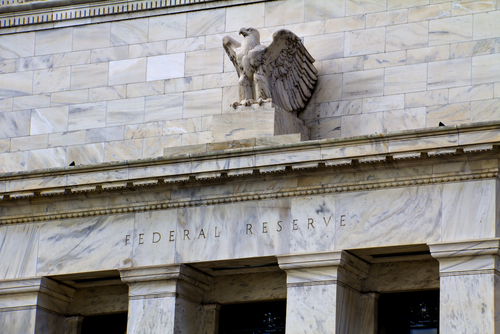
The Federal Open Market Committee unsurprisingly voted to maintain rates at 5.25% to 5.5%. The numerous cuts others were anticipating are completely off the table, as the central bank said there might be one reduction for the year compared with their optimistic tone forecast made in March of three rate reductions in 2024.

“In recent months, there has been modest further progress toward the Committee’s 2 percent inflation objective,” the voting members of the Fed said in their statement. They changed their forecast on inflation from “a lack of” to “modest” progress toward the 2% inflation objective.

Four voting members do not believe the central bank should raise rates at all this year. The central bank continues to exclude food and energy, two of the primary drivers of inflation when creating their summaries and dot plots. They certainly would never include taxation in those figures. The Fed claims there will be multiple rate cuts come next year, but they would never cut rates in the face of war which is completely inflationary and produces nothing.

Raising interest rates can have no impact on demand, as the government will simply borrow more, and the central banks simply have no say. Fed Chair Powell has repeatedly said that government spending is completely unsustainable and the Biden Administration is borrowing against future generations.

I explained in an earlier post why Keynesian Economics is collapsing. That theory was created when the US had a balanced budget and the government was actually expected to repay what they borrow. They still mistakenly believe that the business cycle can be manipulated. There is not much that the Federal Reserve can do at this point in time besides hope and pray for a miracle before that $10 trillion in debt is due to expire this year.

Fed President Says Americans Would Prefer a Recession to Inflation


Posted originally on Jun 5, 2024 By Martin Armstrong 

Fed Ship in STorm

Federal Reserve Bank of Minneapolis President Neel Kashkari has advised against anticipating near-term rate cuts. While speaking to the Financial Times, the Fed president stated that people would simply prefer a recession to continued inflation.

“I have learned that the American people—and maybe people in Europe equally—really hate high inflation. I mean, really viscerally hate high inflation,” he told the Financial Times’ The Economics Show podcast. Kashkari is speaking as if we are not already in a recession. It is not difficult to understand the “visceral” hatred people around the world feel toward rising prices. The effects of inflation are felt with every purchase, causing the average person to adjust their entire lifestyle.

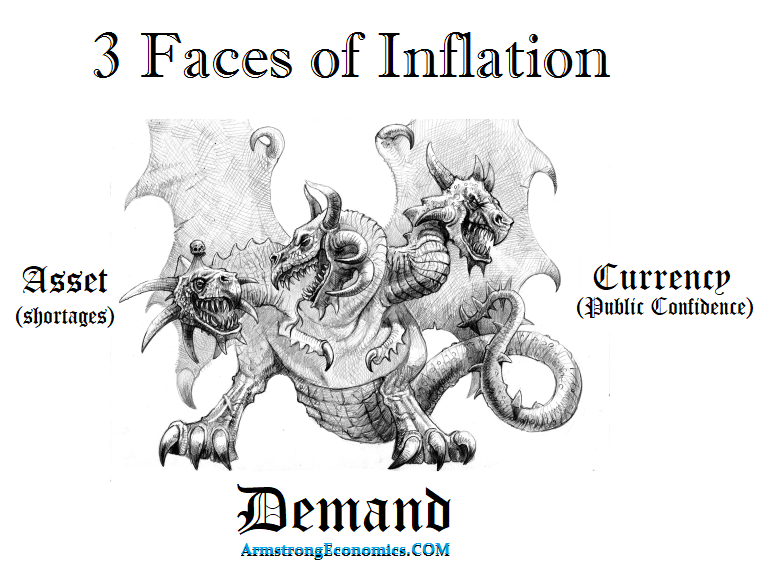
3 faces of Inflation Dragon

Vague issues such as rising unemployment or declining wages do not impact everyone. “I lose my job, I lean on my sister or my parents or my friends, and they help me through it. But high inflation affects everybody. There’s no one I can lean on for help because everyone in my network is experiencing the same thing I’m experiencing,” Kashkari explained. Mass layoffs, for example, would only impact a fragment of the overall population, and people would feel lucky simply to keep their jobs.

“In the US, GDP has been remarkably strong, very strong,” he noted. “The labor market has been resilient. Wage growth has been mostly resilient. And we’re seeing even the housing market has shown signs of resilience. So if I look at this resilience and economic activity, that does not look like an economy that is under pressure of very high, very tight monetary policy.” Yet, inflation is outpacing wage increases and people are watching their savings dwindle while spending less. The average person cares not of the health of the overall economy as they simply want to be able to continue maintaining or improving their standard of living. Most Americans, for example, do not invest and live paycheck to paycheck.

CPI Formula

Real prices have far surpassed anything they calculate in CPI. Everyone understands that prices have risen far more than the arbitrary number the Fed provides us. Taxes are continually increasing for everyone in every tax bracket. The government not only adds to inflationary issues with their spending but then expects their citizens to foot a portion of the bill with taxes, which will simply never be enough.

Then we have Washington telling the masses to blame corporations for price gouging while raising their taxes and making it increasingly difficult to conduct business and maintain a large workforce. It is not that the people would prefer to be in a recession, the real issue is that countless people are entering survival mode. People everywhere want to hold onto whatever they may have out of fear for the future, but they are unable even to hoard as real prices now demand they hand over whatever they have to maintain their lives.

The President Overtaking the Federal Reserve – BAD IDEA


Posted originally on May 1, 2024 By Martin Armstrong 

Federal Reserve Eagle

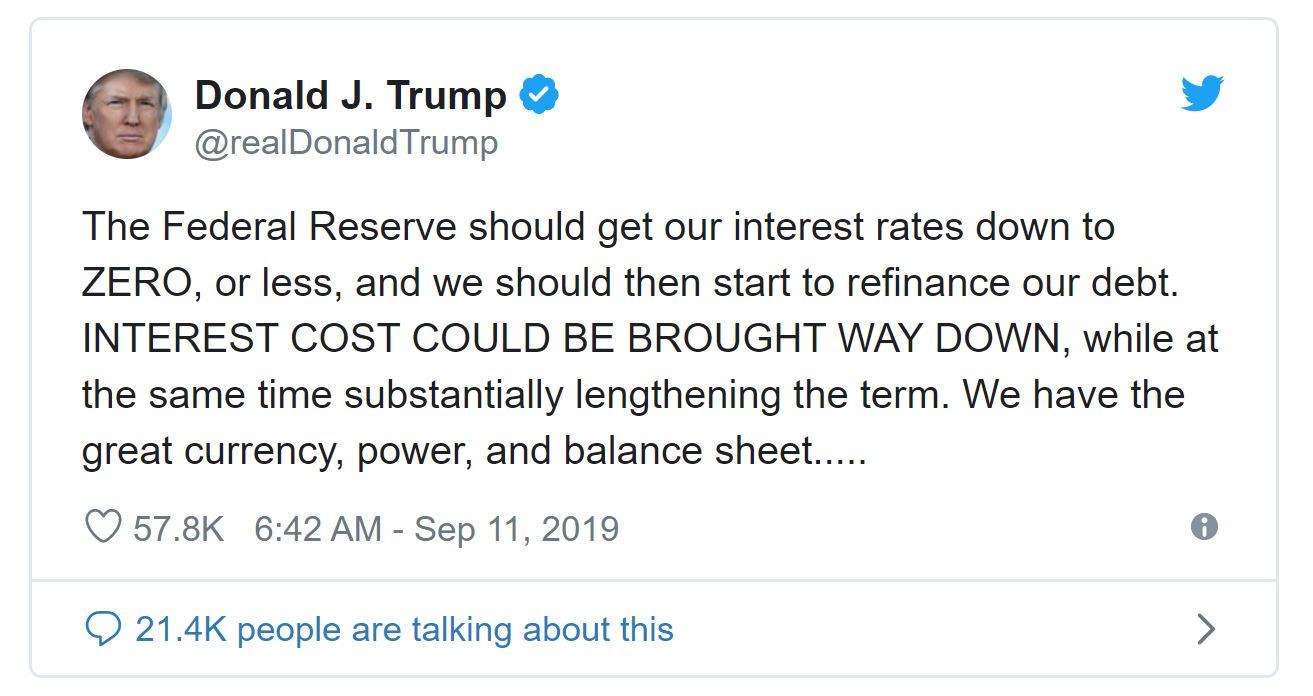
I do not agree with Donald Trump’s view of the Federal Reserve. I speak on behalf of sound economic policies that benefit the people. I do not blindly support a political candidate for the sake of being on the right side. Now, I criticized Trump during his presidency for constantly pressuring the central bank to lower interest rates. There are rumors swirling that Trump, if elected, would set the price of interest rates himself without the advice of the Federal Reserve. While this may be an extreme side of the rumor, Trump and every other president would like more power over the Federal Reserve — BAD IDEA!

What we must keep in mind is that the Federal Reserve’s original design, which lasted for about one year, was brilliant. The classic banking model involved borrowing from depositors on a demand basis and lending long-term, making a profit on the spread in interest rates, such as for business loans and mortgages. This was relationship banking, not today’s transactional banking model.

This was fractional banking insofar as about 8% of the money needed to remain free to service demand requirements. The crisis comes during an economic contraction when people run to the bank for a loss of confidence and demand to withdraw their funds. This results in the value of cash rising in purchasing power compared to assets, so asset values collapse.

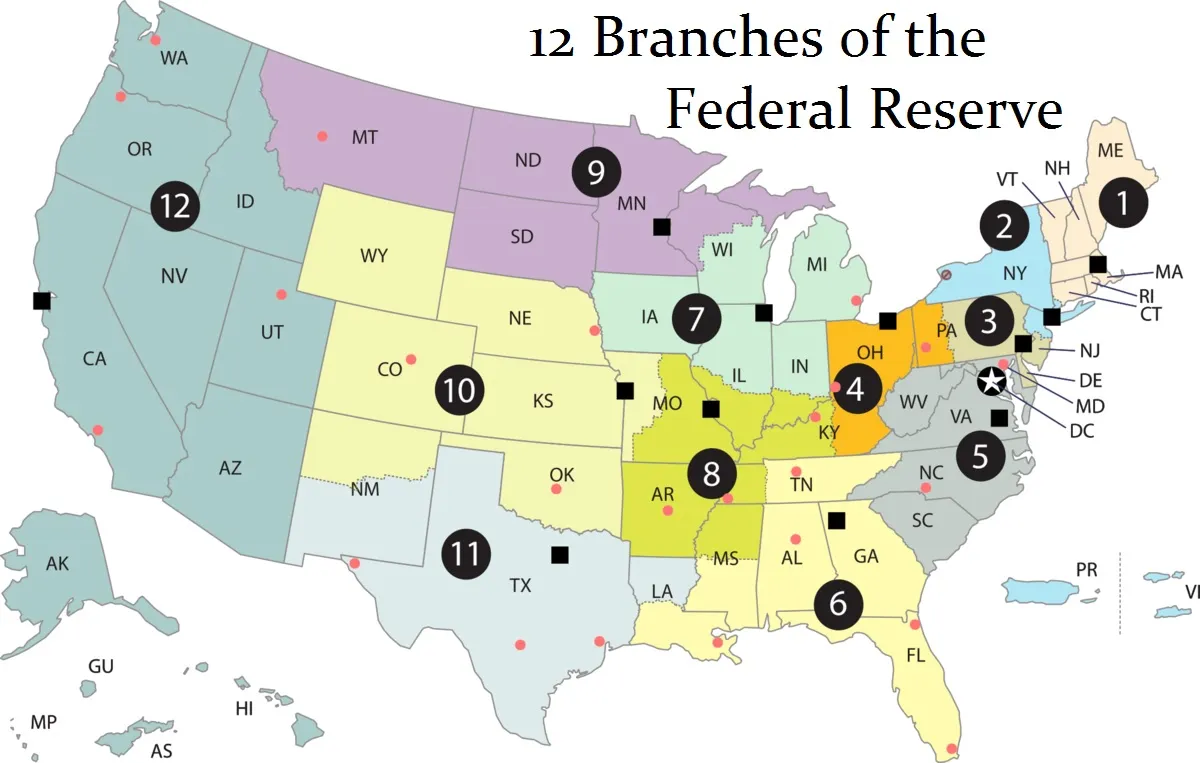
Federal Reserve 12 Branches

The idea of “elastic money” was to increase the supply of cash during such a crisis to meet the demand for withdrawals and that would offset the need to sell assets by calling in long-term debts. By increasing the money supply on a temporary basis, the Fed could offset the contraction in theory smoothing out the business cycle.

This was a brilliant scheme. However, it has been Congress, and not the Fed, that corrupted that mechanism. The banks technically owned the Fed as this was supposed to save the taxpayer money. The banks should contribute to their own bailout fund. Furthermore, the Fed’s design was also about buying in corporate paper when banks would not lend money. This was a mechanism used to offset rising unemployment if corporations could not fund their operations. They supplemented this by the management of regional interest rates to balance the domestic economy. Each branch of the Fed could raise or lower their local interest rate autonomously to attract capital when there was a local shortage or deflect capital when there was too much.

Congress began to manipulate the Federal Reserve for their own self-interest when World War I broke out on April 6, 1917. The alteration to the design of the Fed was to direct it to buy government bonds, not corporate. In this first step, they never reverse this decree after the war. They removed the brilliant design to stimulate the economy directly by purchasing corporate paper during a recession. In the last 2007-2009 crisis, the government wrote a check to TARP and hoped that the banks would lend money, but they did not. Removing this first pillar of the independent Fed distorted the entire system. It then made little sense for bankers to own shares in an entity that was no longer privately controlled.

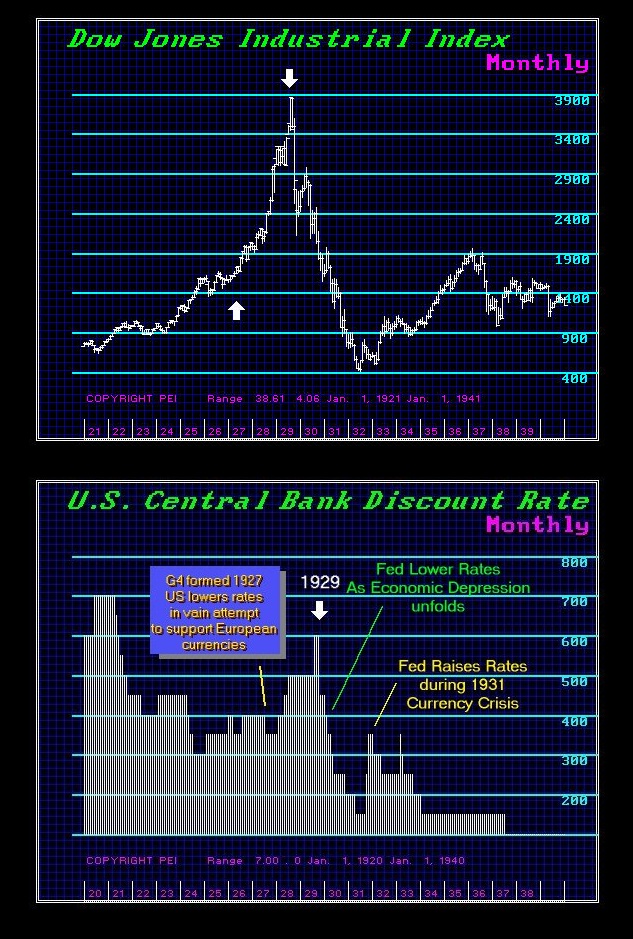
DowIntRates 1929

Banks became traders during the 1929 Boom-Bust Cycle. Goldman Sachs became deeply involved in the bull market, establishing numerous trusts and mergers. Goldman Sachs expanded the leverage going right into the eye of the storm that was about to hit starting on September 3, 1929. The crash wipes our 70% of Goldman’s entire market.

The Glass-Steagall Act, also known as the Banking Act of 1933 (48 Stat. 162), was passed by Congress in 1933 and prohibited commercial banks from engaging in the investment business. Around 5,000 banks failed during the Great Depression largely because banks sold trusts and foreign sovereign government bonds to the public in small denominations. Bill Clinton later repealed Glass-Steagall and handed the power back over to the bankers. Disaster strikes every time the government tries to manipulate the free market.

People believe the Fed has the power to create money out of thin air, yet never explain why the Fed was given that power. You cannot have a fixed money supply as the population increases, then you end up with DEFLATION, which is the rise in the value of money. You can double the money supply, but if the people hoard it, as they tend to do during private waves when the public loses all trust in government, you will never create inflation. There was a huge contraction in the velocity of money during the Great Depression for this very reason.

The Biden Administration, as has the Trump Administration, has come after the Fed. Politicians merely want the economy to appear strong under their reign and fail to see the long-term impact of policies. Politicians have no knowledge of economics or the insight to run the Fed. Not to mention that law does not permit Washington to bark orders at the Fed, although Washington does oversee the Fed and can force the central bank to change its policies to align with government spending or repel debt buyers.

Trump on Interest Rates

Trump is a borrower, not a lender. His bankruptcies were the result of the business cycle and he leverages himself to the hilt so when the recession comes, he gets in trouble and when it is booming he claims to be a fantastic investor. But he is no trader. He could have hedged the business cycle but did not.

Chairman Jerome Powell and Trump clashed repeatedly. Not so coincidentally, Powell and numerous Fed bank presidents have their terms expiring in 2028 – a key year, as indicated by our models. The Biden Administration has already driven the economy off a cliff. The central bank is merely trying to heal an already injured economy with a limited medical kit.

The Fed is INDEPENDENT and will not be bullied by Biden or Trump. The Fed understands that it has become the world’s central bank and its actions in raising rates have had a far greater impact externally particularly in emerging markets because so many other nations issue their debt in US dollars.

Why We Cannot Reach the Fed’s 2% Inflation Target


Posted originally on Apr 18, 2024 By Martin Armstrong 

Inflation

The Consumer Price Index (CPI) released on April 10 by the US Bureau of Labor Statistics reported that inflation rose by 0.4% on a monthly basis and by 3.5% on the yearly. One must only look at their bills, items in the store, or open their eyes to see that the cost of living in every area has far surpassed this figure. Federal Reserve Chairman Jerome Powell released some disparaging comments regarding the data, and we should not expect any rate declines in the near-term. The Fed’s 2% target is simply not possible due to excessive government spending. Inflation was never transitory and we have not had a soft landing. Yet, the Biden Administration insists the “economy is going in the right direction.”

Press Secretary Karine Jean-Pierre has insisted that greedy corporations are to blame for price gouging. He’s repeatedly called on large corporations, more specifically, to pass along their savings on to their customers. We’ve said that. We’ve been very consistent about that.  And that includes rip-offs such as shrinkflation,” she insists.

Treasury Secretary Janet Yellen also voices positive sentiments on inflations, citing how inflation is down two-thirds from its peak in June 2022 when it reached 9.1%. Yellen fails to voice that inflation had peaked due to the entire global economy shutting down due to the pandemic that created the most significant supply chain shortage I have witnessed in my lifetime. This is also why we see “strong” jobs reports in contrast to the lockdown that decimated small businesses and caused thousands to lose their ability to provide for their families.

Remember, inflation was only 1.4% when Joe Biden took office – far beneath the Fed’s target. Inflation has risen as a direct result of fiscal policies under Bidenomics.

Joe Biden mistakenly believes he has helped to tame inflation, and the private sector is solely responsible for the high cost of living. “Today’s report shows inflation has fallen more than 60% from its peak, but we have more to do to lower costs for hardworking families. Prices are still too high for housing and groceries, even as prices for key household items like milk and eggs are lower than a year ago,” according to a statement on the White House website.

Yellen and all those in line with the current administration want the public to believe that Russia and a slow-to-recover supply chain crisis caused inflation. “And I also want to remind you what caused inflation. We know that inflation was caused by supply chains that broke down because of the pandemic. Russia’s war in Ukraine — we know that caused oil prices to skyrocket. Our economy was disrupted by so many ways because of the pandemic.  That’s what caused inflation,” Yellen stated in March.

BlankCheck

Russia’s war in Ukraine would have had minimal effect on America. In fact, America could have profited on the issue by exporting energy and agricultural goods to Europe. The issue is that the US government has been sending blank checks to Ukraine and digging itself deeper into debt. The national debt has never been higher and shows no signs of stopping. The war shows no sign of stopping and Biden has ignored any calls to curtail funding Ukraine. Then, Biden’s largest spending packages have gone to climate change initiatives such as the Inflation Reduction Act, which Yellen herself said was intended to combat climate change.

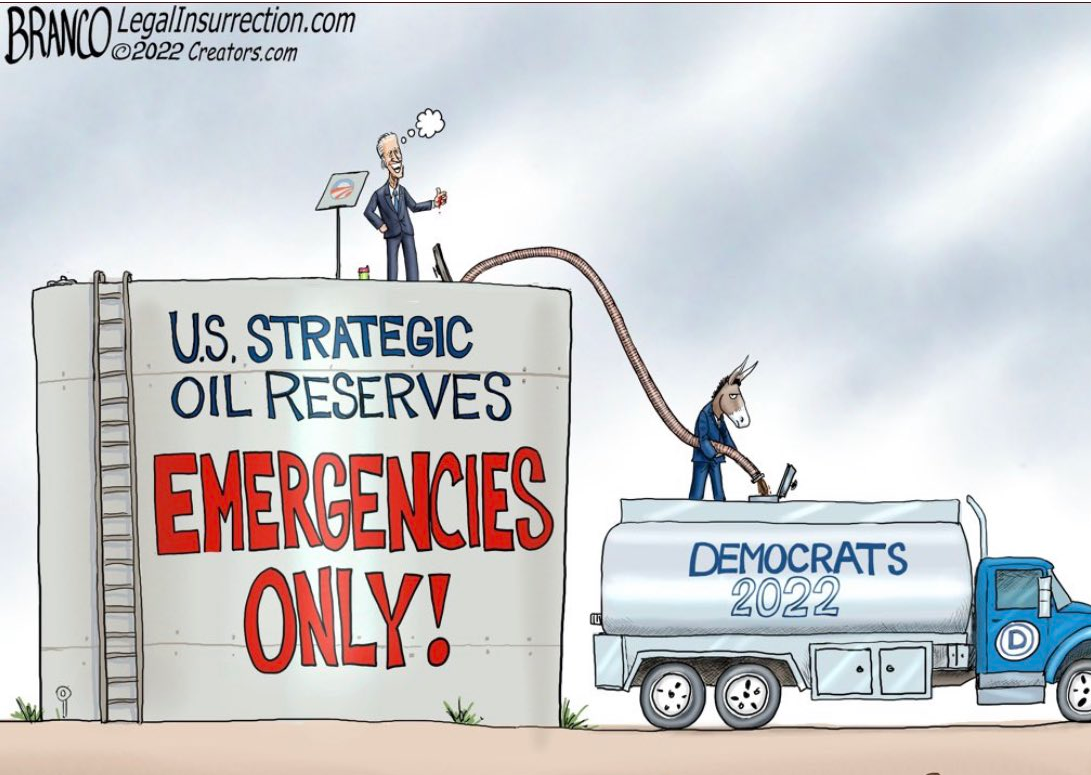
As for the supply chain crisis, primarily energy, those who read this blog understand what happened with Nordstream. Biden’s first act as president was to eliminate the Keystone Pipeline plans and place countless regulations on the energy sector that caused America to become an energy-dependent nation. The Strategic Petroleum Reserve has been used as a political tool to play with gas prices and removed America’s energy safety net.

Oil Reserves

Jerome Powell stated that the jobs report was unimpressive in comparison to rising inflation. “More recent data shows solid growth and continued strength in the labor market, but also a lack of further progress so far this year on returning to our 2% inflation goal,” the Fed chief said during a panel discussion this Tuesday. What Powell cannot voice out loud is that government policy has made the Fed’s job impossible. There is absolutely nothing that the central bank can do to curb government spending. “The recent data have clearly not given us greater confidence, and instead indicate that it’s likely to take longer than expected to achieve that confidence,” Powell said. The economy is heading in the wrong direction, yet Washington is continually gas lighting the public into believing the economy has recovered. The economy fell with COVID, but the pandemic is no longer the reason that rates are rising.

Are companies price gouging? Some certainly have been. The price of business has also drastically risen in every area. TAXES are through the roof and everyone is forced to raise prices, landlords included, to meet Biden’s tax hikes that are simply unconstitutional. Why are we paying for foreign wars and foreign nationals to live within the US?

It is ridiculous to believe that the private sector is to blame for inflation. Even the Federal Reserve has said that they are at the mercy of the government’s fiscal policy and cannot do anything to prevent excessive, dangerous government spending. Inflation will not go down so long as the government is funding wars, which produce nothing, and thoughtless non-issues such as climate change that are rooted in America Last policies.