Ancient Rome’s Migrant Crisis


Posted originally on Jul 8, 2025 by Martin Armstrong 
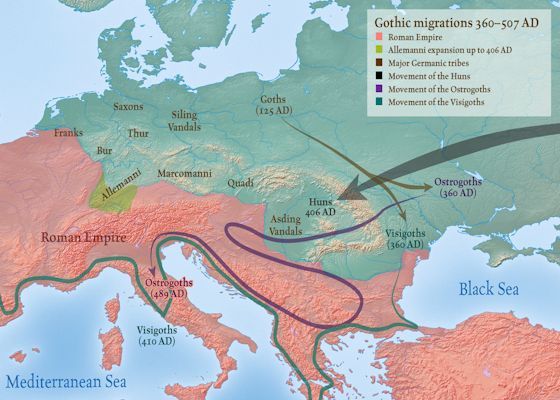
GothMigration

The globalists refuse to declare the migrant crisis an “invasion,” but we have history’s guidance to show us what happens when an unsustainable number of people enter a nation. The Goths, a non-military group considered migrants, are a perfect example. These men, women, and children sought refuge within the Roman Empire. This was not an invading army but rather a fleeing population seeking safety from the Huns. The Goths, long-time foes of the Romans, appealed to be admitted to Roman territory due to the threat they faced and needed to seek asylum. This event led to significant consequences and marked a turning point in the history of the Roman Empire.

The great Gothic migration involved hundreds of thousands of men, women, and children. While, to some degree, the growing unrest in the East pushed them southward, there is also little doubt that the border defenses of the Roman Empire had also been seriously weakened by the political instability and economic pressures that were building within Rome itself. Of course, the rumor of great plunder and riches available in Roman territory acted like a magnet much in the same way as the rumors of streets paved in gold in America prompted great European migrations during the 19th and early 20th centuries or the outdated stereotype of the American Dream.
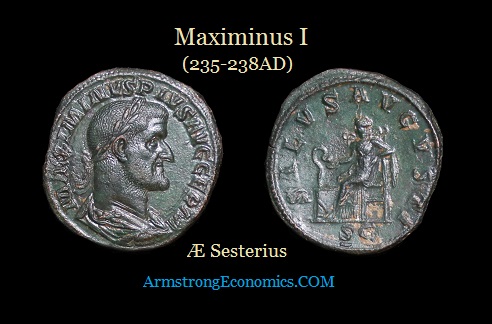
Maximinus I 235 238AD AE Sesterius R

By 238 AD, the Gothic position was so threatening to the Roman Empire that Emperor Maximinus was forced to pay them vast amounts of tribute, similar to how countries currently pay all expenses for migrants. While his aim may have been to buy time, this demonstrated weakness on the part of the Romans, who were still in the middle of internal political struggles for power. Internal imperial rivalries ultimately defeated Maximinis. Within less than four years thereafter, the Goths began a series of raids along the Danube.
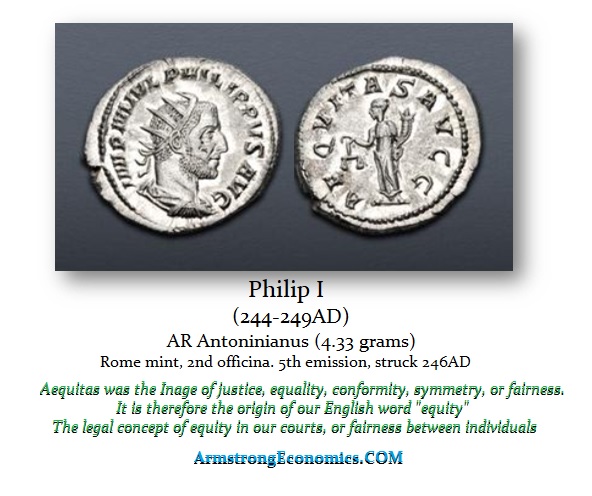
PHILIP I AR Antoniniany Aequitas

A decade later and Philip I attempted to quell the influx of migrants, but died while battling his successor, Trajan Decius. Rome was simply decaying gradually from internal struggles, which weakened the economy and constantly pitted one legion against another in a struggle for power. We see internal struggles today throughout the West as politics continue to divide the people. The Romans did not consider the Goths to be a force that would threaten the entire Empire, but rather more as a barbarian force looking for plunder rather than power.
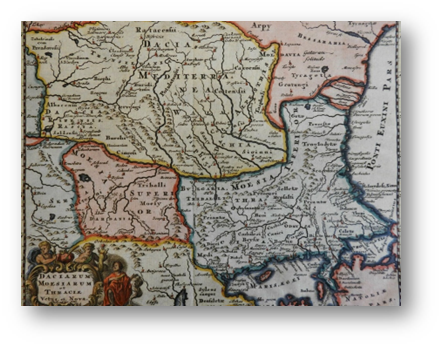
Dacia Map

Trajanus Decius declared the Goths an enemy and attempted to force them out of the empire, only for the masses to return a year later. The Goths were prepared this time and formed several strategic alliances with enemies, such as the Dacian Carpi. This led to a full-scale invasion, and the Roman Empire suddenly found itself besieged as war raged on in Moesia, Dacia, and even in Thrace, while the main body of the Gothic invasion was preparing a descent into the region of the Black Sea.

After many battles, the Goths emerged as the new masters of the entire Danube territory, all the way to the Black Sea. Trebonianus Gallus emerged as the new Emperor who could do nothing to reverse the Empire’s humiliating defeat. The Goths now turned to Illyricum and Thrace, burning and plundering their way across the region. By 253 AD, the Goths set sail along the Black Sea, headed straight for Asia Minor, which was wide open and waiting to be plundered.

Aurelian Walls 2

The Roman Empire was declining until Emperor Aurelian came to power and began restorative efforts, including anti-immigration policies. He not merely launched defensive measures, he moved on the offensive against the Goths and demolished them through a series of battles. The Goths were driven out of the Balkans and into Dacia. Aurelian also greatly restored the Black Sea defenses, which helped those regions rebuild their economies as well. However, Aurelian failed to pursue the barbarians into the Roman province of Dacia, pulling back and establishing the new border once again along the natural border as originally defined by Augustus – the Danube.

Aurelian Gold Bust

Aurelian’s decision to redraw the borders left Dacia in the hands of the Carpi and the Goths. Once the Goths were contained, they began to divide into two distinct groups – Ostrogothic and Visigothic kingdoms. These groups would evolve into powerful states that would ultimately bring down the Roman Empire in the West.

Those in favor of the Gothic migration stated that the newcomers would increase tax revenue and benefit the Roman economy. It was a humanitarian crisis and Rome’s responsibility to solve. Instead, the unsustainable influx of Gothic refugees contributed to the eventual fall of the Western Roman Empire. The event marked a turning point in Roman history and was part of a period in which the Roman Empire nearly collapsed under the combined pressures of invasion, civil war, plague, and economic depression. History always repeats.

Canadian Government Rescinds Digital Services Tax, Requests to Resume Trade Talks Again


Posted originally on CTH on June 29, 2025 | Sundance 

“Elbows up” and knees bent. As expected given the nature of their dependency, the Canadian government has rescinded the digital services tax against U.S. tech companies.

The June 30th collection is halted and the Canadian government led by Mark Carney will be bringing legislation to rescind the tax entirely.

CANADA – […] Minister of Finance and National Revenue, the Honourable François-Philippe Champagne, announced today that Canada would rescind the Digital Services Tax (DST) in anticipation of a mutually beneficial comprehensive trade arrangement with the United States. Consistent with this action, Prime Minister Carney and President Trump have agreed that parties will resume negotiations with a view towards agreeing on a deal by July 21, 2025.

The DST was announced in 2020 to address the fact that many large technology companies operating in Canada may not otherwise pay tax on revenues generated from Canadians. Canada’s preference has always been a multilateral agreement related to digital services taxation. While Canada was working with international partners, including the United States, on a multilateral agreement that would replace national digital services taxes, the DST was enacted to address the aforementioned taxation gap.

The June 30, 2025 collection will be halted, and Minister Champagne will soon bring forward legislation to rescind the Digital Services Tax Act. (LINK)

In the bigger picture Canada has a serious problem.

Canada is entirely dependent on the USA; there is no part of the Canadian economic system that can survive without total dependence on the USA.  The Canadian economy is currently stagnant and their leftist government is desperate to find a way to collect revenue somehow, any way possible.   Additionally, President Trump is going to end the USMCA trade agreement and shut down a majority of the benefits Canada has been extracting.

The most remarkable aspect to this reality is the denial within Canada.  There are maybe a handful of honest Canadian economists, financial types and/or pundits who understand economic matters that are willing to outline and explain the details of Canada’s vulnerability…..

…. The rest are in denial, shouting ‘elbows up’ as if that is going to change the inevitable.  The pretending is strong amid the snow Mexicans. Their denial is a mass formation psychosis. Stunningly so.

[Background Context]

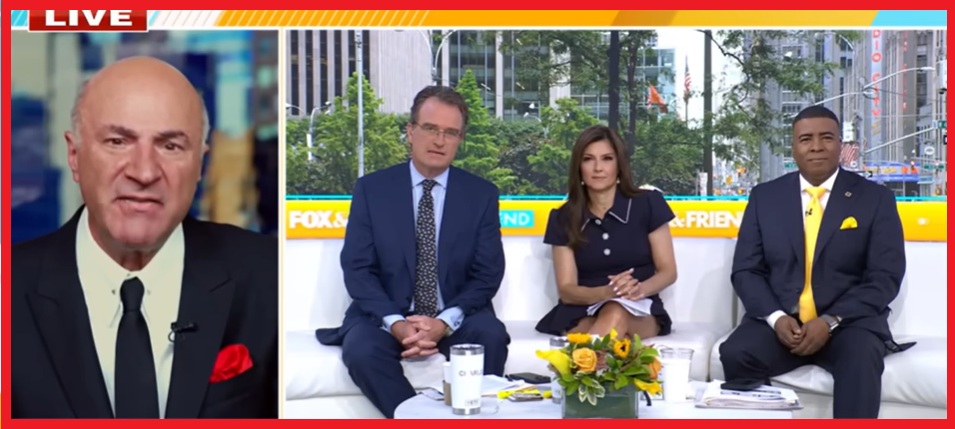
A Note of Caution – Kevin O’Leary Talks About U.S-Canada Trade With a Massive Blind Spot


Posted originally on CTH on June 28, 2025 | Sundance 

CTH has continually said that almost no one in Canada has any grasp of what is about to happen within their economy, specifically because only a handful of people realize what President Trump intends to do.

This interview with Kevin O’Leary is a case study in what I have been warning about.  If you have any financial affiliation with O’Leary Ventures or ancillary investments that touch on a dependency therein, be forewarned.

O’Leary is only a few months away from exploding against President Trump in a manner that will make the Elon Musk statements about Epstein and Trump seem small by comparison.  As yet another Canadian financial voice that just doesn’t get it, O’Leary has no idea the USMCA is about to end. And when it does, oh boy… he will go bananas.

.

[BACKGOUND STORY]

World Economic Forum Aims to Repair Relations with Schwab


Posted originally on Jun 26, 2025 by Martin Armstrong 

Schwab Klaus World Reset

World Economic Forum founder Klaus Schwab stepped down from his chairman position at the organization on April 20, 2025, amid accusations of fraud. Our computer had forecast that the WEF would enter a declining trend with the 2024 ECM turning point. This staged coup happened about 37 years after the first Davos meeting (8.6 x 4.3). From our model’s perspective, this was right on time. Now, Schwab and the WEF are working to repair ties.

An anonymous whistleblower claimed that Klaus Schwab and his wife collaborated with USAID to steal tens of millions in funding. The whistleblower has always been anonymous, and it remains very suspicious that the very organization he created would turn on him after receiving an anonymous letter that they admitted may not have been credible. Something like this would never be acceptable in any court of law, especially if it’s anonymous. It would be the worst or the worst hearsay, where you cannot even point to who made the allegation.

Back in April, the WEF said its board unanimously supported the decision to initiate an independent investigation “following a whistleblower letter containing allegations against former Chairman Klaus Schwab. This decision was made after consultation with external legal counsel.”

Now, the WEF is attempting to repair its relationship with its founder ahead of the next Davos meeting. Bloomberg reported that the WEF would like to “normalize their relationship [with Klaus Schwab] in order to safeguard the forum and the legacy of the founder.”

Peter Brabeck-Letmathe has replaced Schwab for the time being, but is less of a commanding force. Schwab’s sudden departure has caused instability in the organization and its ongoing mission. Board members are concerned that support for the organization will begin to decline as this situation remains unresolved.

Davos is the Problem

The World Economic Forum’s annual revenue in 2024 was 440 million francs ($543 million), with the majority of proceeds coming from member companies and fees. Yet, the number of people registered to attend the 2025 Davos event is on par if not slightly exceeding the number of participants from the year prior.

WEF Schwab You Will Own Nothing

Schwab’s departure has damaged the Davos brand. There is a possibility that the organization is attempted to rebrand after Agenda 2030 failed. The WEF attempted to move away from its zero tolerance stance on ESG initiatives after they became widely unpopular among the big industry players and shifting governments. The brand has attempted to integrate the importance of digital transformation and AI to remain relevant as the tech gurus grow in power and popularity. Those who are familiar with Klaus Schwab know the phrase, “You will own nothing and be happy.” These words have been widely unpopular and caused a type of sinister chaos to surround the brand that was once respected as the high-brow institution of globalist elites.

European Central Bank President Christine Lagarde was slated to replace Schwab in 2027 when her term ends, and all reports claimed that he was prepared to remain in the chairman role for an additional two years to ensure Lagarde could take his place. What changed seemingly overnight that would cause the organization to discard Schwab before he was due to retire?

Schwab denies any misconduct and filed lawsuits against the whistleblowers, calling the accusations “calumnious” and “unfounded.” He believes “character assassination” was the premise of the claims.

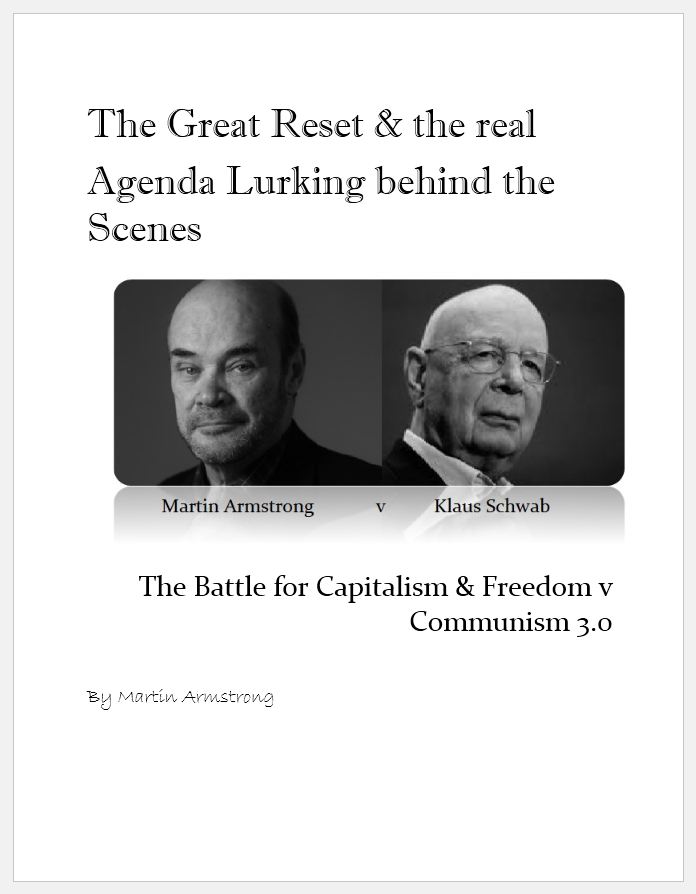
WEC 2020 Arm v Schwab

I am no fan of Klaus Schwab, as everyone knows. I disagree with his theories from start to finish. Nevertheless, something doesn’t smell right here. This appears to be an internal coup, perhaps to distract attention from the question of alleged funds for the WEF from USAID, or to try to salvage the failed Agenda 2030. Perhaps they will claim that no misconduct had occurred since DOGE did not raise concerns or there is a possibility that those behind the internal coup are concerned that Schwab’s counter lawsuit could uncover new corruption. The investigation into Schwab has not concluded, but after only three months, the WEF would like to wrap it up. It appears that the WEF does not want to welcome Schwab back; rather, they would like to ensure an amicable resolution to maintain both the brand’s reputation as well as the founder’s.

Luddite Cowboys and Transhuman Indians — Joe Allen interviews Payal Arora at World Summit AI


Posted originally on Rumble By Bannon’s War Room on: June 20, 2025, at 8:00 pm EST

Sam Faddis: “We Can’t Be In The Position Of Having A Foreign Country Telling Us What Has To Be Done”


Posted originally on Rumble By Bannon’s War Room on: June 18, 2025, at 1:30 pm EST

FBI Spied on Catholics Under Biden


Posted originally on Jun 10, 2025 by Martin Armstrong 

FBI DOJ

Traditional Catholics were deemed domestic terrorists under the Biden Administration. Newly released Federal Bureau of Investigation (FBI) records reveal the true extent of the surveillance measures.

In 2023, a whistleblower notified the public that the government was spying on Catholic Churches and patrons who held pro-life views. The whistleblower provided an internal document now known as the Richmond memo, officially titled   “Interest of Racially or Ethnically Motivated Violent Extremists in Radical-Traditionalist Catholic Ideology Almost Certainly Presents New Mitigation Opportunities.” The internal memo that was distributed to 1,000 FBI agents across the nation deemed “radical-traditionalist Catholics” (RTCs) racially or ethnically motivated extremists.

Then-Attorney General Merrick Garland and FBI Director Christopher Wray attempted to retract the memo. Wray claimed that the slander was limited to one memo. As Wray said under oath: The only involvement of the two other field offices was the Richmond authors of the product included two sentences or something thereabouts referencing each of these other offices’ cases, and they sent those sentences about the other offices’ cases to them, not the whole product, and asked them, ‘hey, did we describe your case right?’ That’s all the other offices had. So it was a single field office’s product, and I stand by that. The Department of Justice’s Inspector General reviewed the letter when it was first leaked and determined that there was no religious bias or malicious intent.”

Sen. Chuck Grassley, R-IA, continued to look into the matter. On June 2, 2025, he sent a seven-page letter to FBI Director Kash Patel to say that his letters to former FBI Director Wray went unanswered and new findings warranted reopening the investigation. Furthermore, Grassley found that intelligence agencies “produced at least 13 additional documents and five attachments that used anti-Catholic terminology and relied on information from the radical far-left Southern Poverty Law Center.” The extent of spying and internal dialogue regarding Catholics as extremists was far deeper than “two sentences” in one memo. The second of 13 memos was released to the entire FBI department, urging them to continue monitoring Catholics.

Vi

00:00

03:00

The FBI tracked increases and decreases in mass attendance at traditionalist Catholic churches. They were instructed to monitor the social media accounts of Catholics as a form of “threat mitigation.” The parishioner sitting beside you in the pew could have been a Biden FBI agent in disguise. This was an agency-wide effort that the past administration attempted to hide. The FBI interviewed parishioners and clergy members to instill suspicion and fear in the community.

The First Amendment of the US Constitution grants Americans the right to exercise their religious beliefs. It is hard to believe that the Department of Justice’s Inspector General failed to find evidence of malicious intent when a specific religious group was clearly discriminated against and targeted for their faith. Wray lied under oath and Biden turned on his own faux faith to target anyone who could potentially stand in the way of his pro-abortion stance.

Tucker Carlson Interviews Telegram Founder Pavel Durov During Ongoing Confinement in France


Posted originally on CTH on June 9, 2025 | Sundance

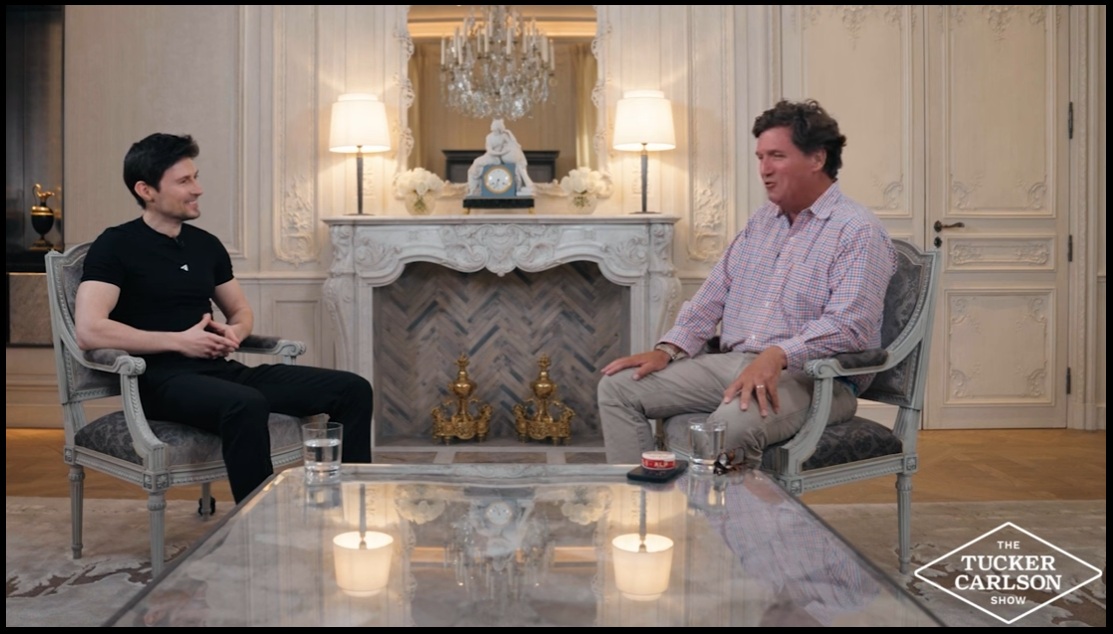
Tucker Carlson traveled to France in order to interview Telegram Founder and CEO Pavel Durov who remains in French detention as he awaits the judicial system to release him.  Telegram is used as a messaging ap by over a billion users worldwide.  Pavel Durov was accused of noncompliance with EU judicial demands and arrested during a holiday last year.  He remains under quasi-detention confinement.

Many people have increasingly expressed annoyance at the change in Tucker Carlson’s interview style.  The increased interruptions, wandering rambling that takes the point off subject, inappropriate -borderline annoying- laughter at the wrong moments, and increasing Hannityesque behavior has been a sidebar topic of conversation. However, this is the first interview in which I can say these distracting interview traits have become unbearable.

I really wanted to hear from Durov, but I could not survive the inappropriate timing of the interruptions, and increasingly odd mannerisms from Mr Carlson.  From a mental strength, stability and intellectual perspective, Carlson is way over his head trying to interview Durov. Perhaps that explains the performative and seemingly odd behavior of Tucker in this interview.  It gets worse as it progresses.  See for yourself.  WATCH:

.

Pavel Durov is a very deliberate man with an exceptionally stable disposition.  He is one of the most important people in the world of information, communication and the free exchange of ideas.  Yeah, I’m a little frustrated with this missed opportunity to go into important considerations in the world of information sharing.

Chapters:
0:00 Being Arrested in France
10:57 France’s Attempt to Humiliate and Tarnish Durov
15:54 Did the Russian Government Ever Try to Arrest Durov?
17:21 How Telegram Makes Money
20:04 Are They Attacking Durov Because He’s Russian?
21:19 Did Anyone Defend Durov?
24:23 What Did Durov Do in Jail?
25:17 Is Durov Allowed to Leave France?
30:37 The Real Reason They’re Attacking Durov
31:56 Europe’s Mission to Make Privacy Illegal
39:20 France’s Confiscation of Durov’s Phone
40:47 The Investigation Into Durov
56:52 How Telegram Stays Neutral in Global Politics
58:44 The Advancements of Encryption Technology
1:00:47 Is There Anything That Can Prevent a Government From Spying on You?
1:02:42 The Importance of Disconnecting
1:04:40 Durov’s Thoughts on Ross Ulbricht
1:06:54 Will Durov Stay in France After the Investigation?

Sacrebleu! Macron Has the Worst Denial Imaginable for His Wife Hitting Him in the Face


Posted originally on Rumble on Bright Bart News Network on: June 8, at 1:40 pm EST

Canada Has no Gold Reserves – They Sold Them.


Posted originally on Jun 4, 2025 by Martin Armstrong 

MAA 400 Ounce C

Holding a 400 oz Gold Bar – Central Bank Standard

QUESTION: Hello Martin – Here in Canada, we have a vexing question – why no Gold Reserves at BofC? USA has a date with destiny aka Ft Knox Audit that Trump and Bessent
seemed engaged on this file but are preoccupied lately with a litany of distractions, I’m 74 with health issues surfacing, which rearrange one’s priorities – many millions of Boomers
in same boat – but that’s the price you knew was coming

jw

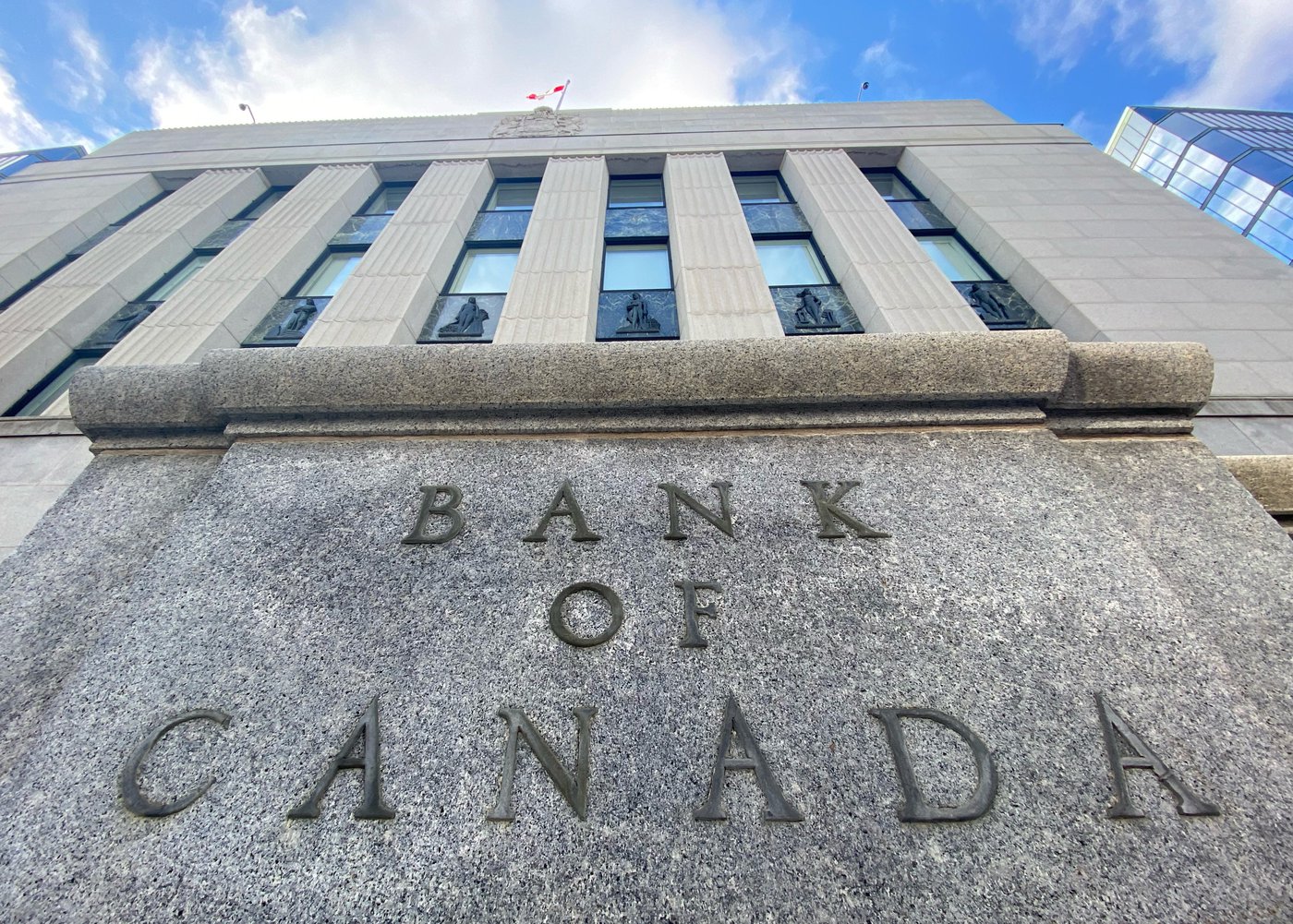
The Bank of Canada building

ANSWER: Canada’s lack of significant gold reserves is the result of a deliberate policy decision spanning several decades, primarily driven by the following reasons:

Storage & Security Costs: Holding physical gold requires secure vaults and insurance, incurring ongoing expenses.

Opportunity Cost: Gold pays no interest or dividends. The Bank of Canada (BoC) decided it could achieve better returns by holding interest-bearing assets like foreign government bonds (US Treasuries, German Bunds, etc.) and deposits.

The Shift to More Liquid Assets: The BoC prioritized holding foreign exchange reserves (primarily US dollars, euros, yen, etc.), which are highly liquid and easily used for direct intervention in currency markets to stabilize the Canadian dollar (CAD).


Canada began the process of gradually selling off its gold in the 1980s, when gold rallied to $875 on January 21, 1980, and then began a 19-year decline to $250. Canada significantly accelerated its gold sales during the 1990s and early 2000s under the leadership of Finance Minister Paul Martin and Governor Gordon Thiessen, aiming to optimize reserve asset management. By 2016, Canada sold its last significant holdings. As of today, Canada’s official gold reserves are reported as zero tonnes (or negligible amounts – e.g., 77 ounces reported in 2022, worth a trivial sum relative to total reserves). In essence, Canada decided that the costs and lack of yield associated with holding large gold reserves outweighed the traditional benefits. They opted instead to hold foreign currencies and bonds that are easier to use for market intervention and generate income, relying on the strength of the Canadian economy itself to support the value of its currency.

Brown Gordom PM 2007 2010

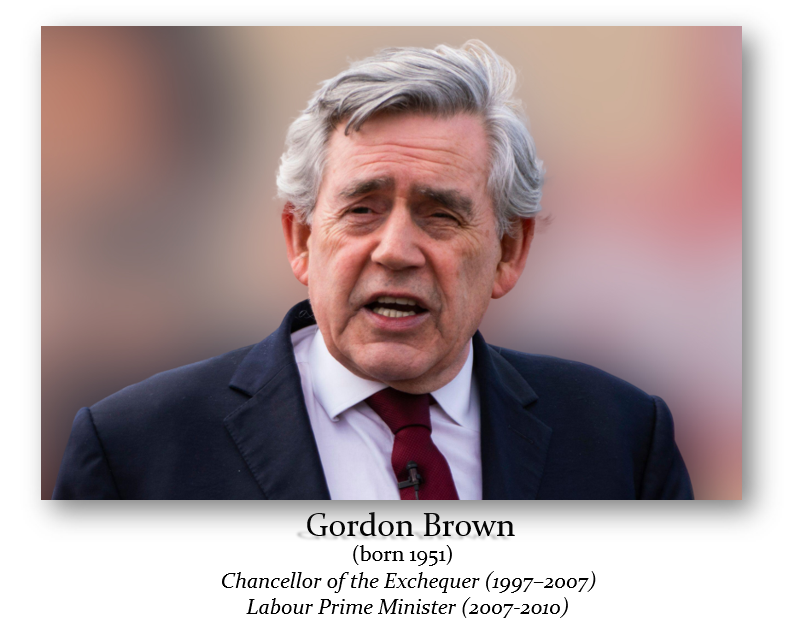
Gordon Brown, as Labour Chancellor of the Exchequer (1997-2007), authorized the sale of a very significant portion (roughly half) of the UK’s gold reserves. He was a member of the Labour Party, which viewed gold as a rich man’s toy. He sold approximately 395 tonnes of gold. The sales took place between July 1999 and March 2002. This represented about 58% of the UK’s total gold reserves at the time (which were around 715 tonnes before the sales). After the sales, the UK’s reserves stood at about 310 tonnes, where they remain today. The sales occurred during a period when the gold price was near a 20-year low, averaging around $275 per ounce. Shortly after the sales concluded, the gold price began a historic bull run, rising dramatically over the next decade to peak over $1,900 per ounce in 2011. This timing led to massive criticism that the UK sold at the absolute bottom of the market, potentially losing billions of pounds in potential value. The period is often referred to as the “Brown Bottom” in financial circles. Brown was ignorant of how markets function. He announced in advance the strategy to sell its gold reserves, so the market held back, anticipating a greater supply. The proceeds were invested in foreign currency and government bonds. While these assets generated interest income, the capital appreciation of gold vastly outstripped the returns on those bonds over the following years.

The head of the Bank of Canada during the main phase of Canada’s gold reserve sell-off (mid-to-late 1990s) was Gordon Thiessen (born 1938). He served as Governor from February 1, 1994, to January 31, 2001. Thiessen spent his entire career within the Bank of Canada, joining in 1963.  However, it was his predecessor, John Crow (1987-1994), who began reducing its gold reserves significantly in the 1980s. While the Bank of Canada managed the sales operationally, the ultimate decision to sell the gold rested with the Government of Canada (specifically, the Minister of Finance and the Department of Finance). The Bank acted as the government’s agent in this matter.