Russian Oil Boycott Fails


Armstring Economics Blog/Energy Re-Posted Jun 15, 2022 by Martin Armstrong

The West thought they’d cripple Russia’s economy when they stopped buying Russian oil. Gas prices in the West are on the rise and at unsustainable levels. Meanwhile, Putin is having the last laugh as he is now selling more oil at a higher price point.

In April, Russian oil exports rose by 620,000 b/d to 8.1 million b/d. India (+730,000 b/d) and Turkey (+180,000 b/d) helped to offset the international embargo, while the EU remained the largest importer despite a sharp reduction in shipments. The IEA reported that Russian oil exports rose over 50% YoY during the first four months of the year.

Oil jumped in price last week from $92 per barrel to $122. Gas in the US was $2.10 under Trump. Biden took office and prices rose to $2.37 within the first two months due to a series of decisions that prevented America from remaining energy independent. Before Russia even invaded, gas reached $3.51 per gallon, and now the national average is surpassing $5.00. The boycott has completely backfired on the West and has helped strengthen the Russian economy.

Economic Security is National Security, and the Foundation of Economic and National Security is Energy Policy, Biden is a Threat to National Security


Posted originally on the Conservative house on June 14, 2022 | Sundance

Economic security is the foundation of national security.  When the government takes action that destabilizes our economy, every element of national security is put at risk.  We are experiencing that right now as we suffer through Joe Biden’s intentionally flawed energy policy that is destroying the U.S. economy and everyone within it.

“It must be remembered that there is nothing more difficult to plan, more doubtful of success, nor more dangerous to manage than a new system. For the initiator has the enmity of all who would profit by the preservation of the old institution and merely lukewarm defenders in those who gain by the new ones.”

~ Niccolo Machiavelli

Never has that Machiavelli quote been more apropos than when considering the MAGA movement and the rise of Donald Trump.

Thankfully, we are now in an era when the largest coalition of American voters have awakened to the reality that, to quote the former president: “Economic Security is National Security.”

As we live through the economic mess of a Biden administration hell bent on eroding the middle class of the United States, there are numerous pundits contemplating 2024 Republican presidential candidates other than Donald Trump; consider this group the lukewarm defenders Machiavelli noted.

At the same time the leftist coalition, writ large, are apoplectic about the base of the Republican Party now belonging to Donald Trump.  This group consists of those affluent Wall Street agents and politicians set on retaining the profits derived from decades of institutional objectives.

Institutional Democrats hate Trump, and institutional Republicans are lukewarm, at best, in defending Trump.  Both wings of the DC UniParty fear Trump.  Extreme efforts at control are a reaction to fear.  In this outline, I rise to explain why Donald Trump is the only option for the America First MAGA coalition; and I make my case not on supposition, but on empirical reference points that most should understand.

Everything, is about the economics of it.

If you accept that at its essential core elements the phrase “economic security is national security” is true – meaning the lives of the American citizen, person, worker, individual or family are best when their economic position is secure – then any potential leader for our nation must be able to initiate policies that directly touch the economics of a person’s life, liberty and the pursuit of happiness.  As a result, economic security and economic policy must be the fulcrum of their platform.

Now, look around and ask yourself this question: “What separated Donald J. Trump from the remaining field of 17 GOP candidates in 2016?”   An honest top-line answer would be immigration (border control), and his views on American economic policy.   In essence, what set Donald Trump apart from all other candidates was his view on the U.S. economy, and that was the driving factor behind ‘Make America Great Again’, MAGA.

Now, look around.  Look at every other potential candidate for political office. Is there another person in the field of your political view who comes from the starting point that economic security is national security?

Put aside all other issues and shiny things that may change from moment to moment as the political winds swirl and settle, and ask yourself that question.  Who can deliver MAGA, if not the central person who lives, eats, sleeps and thinks about U.S. economic security from every angle at every second of every hour of every day.  That’s Donald J. Trump.

Trump knows the extremely consequential sequence of BIG things that lead to a structurally strong American economic foundation.

We don’t have to guess at whether Trump can deliver on that policy sequence, we have reference points.

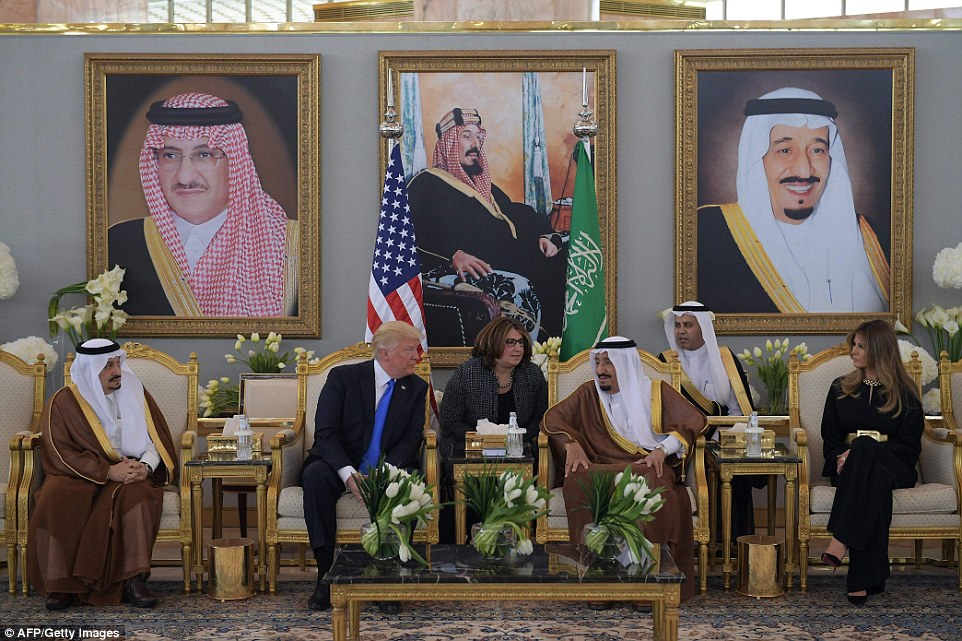
♦ Donald Trump knew that independent U.S. energy policy was a condition for a strong U.S. economy. He also knew there would be negative consequences to allies and partners if the U.S. energy policy was independent.  Trump knew that OPEC nations in general would be negatively impacted, and he knew that Saudi Arabia specifically would be weakened geopolitically.   That is why the very first foreign trip by Donald Trump was to Saudi Arabia and the Gulf States that make up the majority of OPEC.

Look at what President Trump did on that trip.  First, he assured Saudi Arabia that the United States would stand with the Gulf Cooperation Council and Mid-East nations as it pertained to their security.  Trump knew making the largest energy consuming nation independent from foreign oil would be adverse to the economic stability of the Mid-East, and as an outcome, could open a door to destabilization from extremist or ideological groups therein.

Take away top-line economic revenue from Saudi et al, and the leaders of those oil economies have a more difficult time remaining stable and controlling unrest and extremism.  Generations of Arab citizens know nothing other than the trickle down benefits of oil exports.  President Trump knew this, and he approached our need for energy independence by first assuring the Arab states of his commitment to their stability and safety.

President Trump delivered to those states a list of approved arms and defense agreements during that trip.  In essence, what he was doing was putting the promise of security into actual delivery of tools to retain that security.  Actions speak louder than words.  President Trump also promised to work diligently on peace in the region; a real substantive and genuine peace that would provide security in the big picture.

Over the course of the next few years, Trump delivered on that set of promises with the Abraham Accords.   Yes, economic security as national security applies to our allies as well as ourselves.  Again, actions speak louder than words.

With the U.S. energy independence program in place, President Trump then moved in sequence to the next big thing.

♦ Donald Trump moved to face the challenge of China.   A major shift in U.S. policy that is likely considered the biggest geopolitical shift in the last 75 years.  Trump strategically began with Trade Authority 302 national security Steel and Aluminum tariffs at 25% and 10% not only toward China but targeted globally.

The entire multinational system was stunned at the bold step with tariffs.   But remember, before Trump went to Saudi Arabia, he held a meeting with Chairman Xi Jinping in Mar-a-Lago.  The global trade world was shocked by the tariff announcement, but I’ll bet you a doughnut Chairman Xi was not.

That February 2017 meeting, only one month after his inauguration, was President Trump graciously informing Chairman Xi, in the polite manner that respectful business people do, that a new era in the U.S-China relationship was about to begin.  New trade agreements, new terms and conditions were to be expected in the future.  The tariff announcement hit Wall Street hard, but not Beijing – who knew it was likely.

U.S. financial pundits proclaimed the sky was surely falling.  These tariffs would cause prices to skyrocket, the global order of all things around trade was under attack by Trump.  They waxed and shouted about supply chains being complicated and intertwined amid the modern manufacturing era that was too complex for President Trump to understand with such a heavy handed tariff hammer.   Remember all of that?  Remember how cars were going to cost thousands more, and beer kegs would forever be lost because the orange man had just triggered steel and aluminum tariffs?

Did any of that happen?  No. Of course it didn’t. Actually, the opposite was true and no one could even fathom it.  Communist China first responded by subsidizing all of their industries targeted by the tariffs with free energy and raw materials, etc.  China triggered an immediate reaction to lower their own prices to offset tariffs.  Beijing did not want the heavy industries and factories to start back up again in the U.S, so they reacted with measures to negate the tariff impact.

China’s economy started to feel the pressure and panda was not happy.  Eventually, as the tariffs expanded beyond Steel and Aluminum to other specific segments and categories, China devalued their currency to lower costs even further for U.S. importers.  The net result was something no one could have imagined.  With lower prices, and increased dollar strength, we began importing all Chinese products at cheaper rates than before the tariffs were triggered.  Yes, we began importing deflation.  No one saw that coming…. but Trump did.

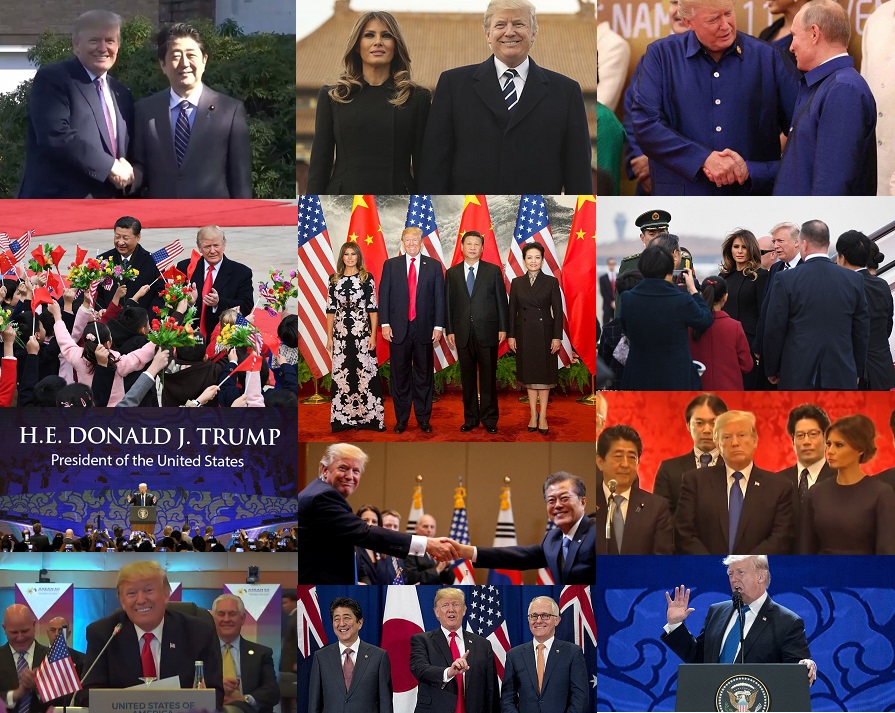
While all that initial U.S-China trade shock was taking place, Donald Trump took his next foreign trip to… wait for it…. Southeast Asia.

Just like in the example of the trip to Saudi Arabia, economically-minded Trump told partners and leaders in the export producing countries of Japan, Malaysia, South Korea, Vietnam, Philippines, Singapore, Thailand and ASEAN nations to prepare for additional business and new trade agreements with the U.S., as factories inside China might start to decouple.   Look at how they responded, they did exactly what Trump said would be in their best interests.

To seriously gather the focus of this SE Asia group, President Trump started direct talks with North Korea and Chairman Kim Jong-un for peace and regional stability.  It’s easy to forget just how stunning this was at the time, but generations of people in Asia were jaw-agape at the U.S. President confronting China, engaging with North Korea, and opening his arms to new trade deals with ASEAN partners.

On the world stage of geopolitics and global trade, any one of these moves would be a monumental legacy initiative all by itself.  But together, simultaneously, you can see how the entire continent physically stopped midstride and stood staring at this, this man, this American President, who was just about to step across the Demilitarized Zone in North Korea and shake hands with Chairman Kim…. and, wait for it…. they are smiling.

√ Energy security triggered and friends in Mid-East supported.

√ Mid-East peace initiatives triggered.

√ A return of heavy industry and manufacturing security triggered.

√ A confrontation of Chinese economic influence triggered.

√ Stability between South Korea and North Korea, triggered.

√ New trade deals and economic partnerships with Japan and South Korea, triggered.

And then, as if that was not enough… just as multinational investment groups started realizing they needed to change their outlooks and drop the decades long view of the U.S. as a “service driven economy”… just as they realized they needed to start investing domestically inside the United States for their own growth and financial security… as if all that wasn’t enough… President Trump kicks off an entirely new trade deal and renegotiated standard for all North American trade via NAFTA.

We don’t have to guess at whether Donald Trump can put together a program to ensure Economic Security is National Security.  We don’t have to guess at whether Donald Trump can deliver on economic policy.  We don’t have guess if Trump’s policy platform, proposals and initiatives would be successful.  We have the experience of it.  We have the results of it.  We have felt the success of it.

We also don’t need to guess at who is the best candidate to lead Making America Great Again, we already know who that is.

There is no other 2024 Presidential Candidate, who I am aware of, who could possibly achieve what Donald John Trump has achieved, or who could even fathom contemplating how to achieve a quarter of what President Trump achieved.

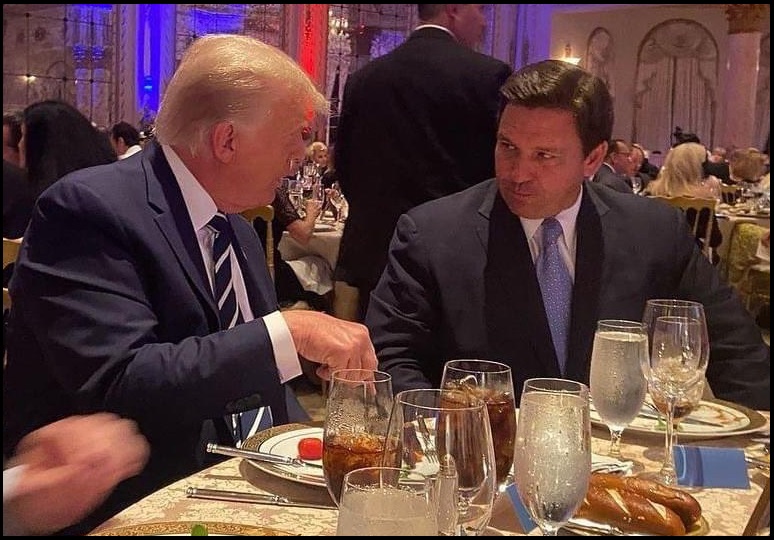
Governor Ron DeSantis has a lot of really good skills and policies on the domestic front unique to his position in Florida; however, it is not a slight toward him to point out he has never expressed any larger economic proposal that would give any confidence in a national economic policy.

Look at the sum total of it, and there’s so much more that could be outlined to what Donald Trump achieved and could yet still achieve, it’s not even a close question.

And that my friends is exactly why Donald Trump is under relentless attack from both wings of the UniParty in DC.  Additionally, it is clear the Wall Street Republicans are trying to position Ron DeSantis as an alternative to another Trump term.  Look carefully at the current advocates for DeSantis, Nikki Haley and/or Kristi Noem, and you will note every one of those early voices are attached to favorable Wall Street politics and multinational corporate advocacy.

Look at what Donald J. Trump was able to achieve while he was under constant political attack.  Just imagine what Trump 2.0 would deliver.

They, the leftist Democrats and Wall Street Republicans, are yet again absolutely petrified of that.


Biden Heading to Israel and Saudi Arabia July 13th through 16th, Will Meet With Gulf Cooperation Council During Trip


Posted originally on the conservative tree house on June 14, 2022 | Sundance

The people who control Joe Biden held a background call today announcing details of the upcoming trip by Joe Biden to the middle-east.   The trip will start in Israel where Biden will meet Israeli leaders and Palestinian Authority leader Abbas.

White House – […] In meetings with Israeli leaders, the President will reaffirm the ironclad U.S. commitment to Israel’s security and new areas of deepening cooperation in technology, climate, commerce, trade, and other sectors.

[…] The President will also visit the West Bank to meet with President Mahmoud Abbas and other Palestinian leaders.  The President, of course, has known Abbas for decades, and he looks forward to reaffirming his lifelong commitment to a two-state solution and to discuss the ways in which we might rekindle a new political horizon that can ensure equal measures of freedom, security, prosperity, and dignity to Israelis and Palestinians alike. 

[…] Following the visits to Israel and the West Bank, the President will fly directly from Israel to Jeddah, Saudi Arabia, where he will participate in a summit of the Gulf Cooperation — GCC+3 — the GCC+3 — so the leaders of Saudi Arabia, Kuwait, Oman, UAE, Bahrain, and Qatar, plus Iraq, Jordan, and Egypt. The President will also hold bilateral meetings with the Saudi hosts and other counterparts. 

We are grateful that Saudi Arabia, which holds the rotating presidency of the GCC in 2022, will host this important summit bringing together nine heads of state from across the region to meet the President at the invitation of King Salman. 

[…] From the earliest days of our administration, we made clear that U.S. policy demanded recalibration in relations with this important country but not a rupture.  And that is because we have important interests interwoven with Saudi Arabia, and engagement is essential to protecting and advancing those interests on behalf of the American people. 

Saudi Arabia has been a strategic partner of the United States for nearly 80 years, and the President considers Riyadh an important partner on a host of regional and global priorities that we are working on.   (read more)

Production Prices Continue Exceeding Current Consumer Prices, Meaning Higher Prices Still Coming


Posted originally on the conservative tree house on June 14, 2022 | Sundance 

The “Producer Price Index” (PPI) is essentially the tracking of wholesale prices at three stages: Origination (commodity), Intermediate (processing), and then Final (to wholesale). Today, the Bureau of Labor and Statistics (BLS) released the May 2022 price data [Available Here] showing another 10.8% increase year-over-year in Final Demand products at the wholesale level.

The inflation within the total goods supply chain continues to accumulate at a more significant rate than the finished goods on the store shelves.  This means replacement goods will continue arriving with higher prices than current.   Final demand goods in May were 1.4% higher than April (16.8% annualized).  And the May year-over-year prices show a 10.8% increase [See Table A].  However, there’s more trouble ahead:

More troubling than the final demand price increases (wholesale finished goods), are the price increases in the intermediate goods and unprocessed raw materials.

Intermediate processed goods increased 2.3% in May (27.6% annualized).  The intermediate unprocessed goods, raw materials, jumped even higher in price at 6.3% for May (that’s a whopping 75.6% annualized increase).   It would appear the raw materials coming into the goods sector are coming in with even higher built-in energy costs than most people anticipated.

Once those intermediate products reach the final demand stage (wholesale), the cumulative price increase will mean even higher consumer prices.

(VIA ABC) – WASHINGTON — U.S. producer prices surged 10.8% in May from a year earlier, underscoring the ongoing threat to the economy from inflation that shows no sign of slowing.

Tuesday’s report from the Labor Department showed that the producer price index — which measures inflation before it reaches consumers — rose at slightly slower pace last month than in April, when it jumped 10.9% from a year earlier, and is down from an 11.5% yearly gain in March.

On a monthly basis, producer prices climbed 0.8% in May from April, above the previous month, when they increased 0.4%.

Energy prices, led by gas, rose 5% just in May from April. Another big driver of the price gains last month was a sharp 2.9% increase in the cost of truck freight hauling, a sign that supply chain problems still aren’t fully resolved. Food costs were unchanged.

The figures indicate that rising prices will continue to erode Americans’ paychecks and wreak havoc on household budgets in the coming months. Inflation has created major political headaches for President Joe Biden and congressional Democrats and has forced the Federal Reserve into a series of rapid interest rate hikes intended to slow the economy and cool price increases. (read more)

Another Strike Against Cryptos


Armstrong Economics Blog/Corruption Re- Posted Jun 14, 2022 by Martin Armstrong

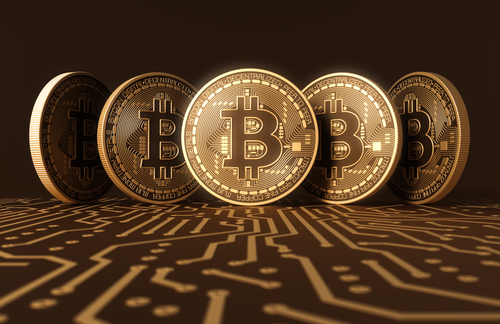
I’ve said it before and will say it again – cryptocurrencies are not a safe investment. I know it is not a popular opinion; people have had success with trading. The problems with cryptocurrencies: (1) they depend entirely upon the government; with the stroke of a pen, they can all be seized; (2) they depend upon a power grid; (3) they also become dependent upon others accepting them.

A fourth all too common issue is that crypto trading platforms can prevent people from trading with little or no explanation. Binance recently announced that users are not permitted at this time “due to a stuck transaction causing a backlog.” CEO Changpeng Zhao stated on Twitter that the issue would be fixed in under 30 minutes. Later in the day, he said the issue would “take a bit longer to fix than my initial estimate,” but would only impact the Bitcoin network. Uncoincidentally, this sudden system glitch occurred after bitcoin fell by 10% beneath the $24,000 level.

This happens more than they would like people to believe. A few years back, a friend of mine was blocked out of their Bittrex account as soon as one of their cryptos began crashing. At one point, Bittrex suspended and eliminated numerous accounts in 2017, and it took them days to respond. They claimed the issue was a “compliance review,” as these platforms can seemingly make up any excuse they please. During that instance, they did not even inform users before they were locked out of their accounts. Unpopular opinion but the fact of the matter is that cryptos are seriously flawed.

Credit Card Debt on the Rise


Armstrong Economics Blog/USA Current Events Re-Posted Jun 14, 2022 by Martin Armstrong

The various handouts and moratoriums during the pandemic drove the personal savings rate down to World War II levels. Everything was closed – there weren’t many opportunities to spend. US consumers paid off a record $83 billion in credit card debt during the pandemic, but that has all come crashing down.

The Federal Reserve reported that revolving credit card debt in April reached $1.103 trillion, surpassing pre-pandemic levels and spiking 20% from the year prior. Credit card balances reached an alarming $841 billion in the first three months of this year alone, and the Fed expects that figure to continue rising due to the unsustainable price of living. In addition, household debt is now close to $16 trillion after consumer debt spiked 1.7% in Q1.

Unfortunately for those already behind, the rising interest rates will only cause them to carry a higher balance of debt. Once the prime rate rises, credit card companies will follow. The APR on credit cards is already 16.61%, nearing the high of 17.87%, on average, but is expected to rise. Debt can easily become a vicious cycle from which there is little escape for the average person. Those who budgeted in the belief that Biden would actually cancel their student debt were misled if not gullible. As housing, food, gas, and other necessities rise, those who are already void of liquid assets will find themselves in a dire situation.

The Dollar Crisis is Far Greater than Anyone Imagines


Armstrong Economics Blog/USD $ Re-Posted Jun 14, 2022 by Martin Armstrong

QUESTION: Marty, Socrates is worth its weight in something far more valuable than gold. I want to congratulate you for you are the ONLY adviser who nailed not just the cryptocurrency bloodbath, but that the dollar would rise when everyone else kept predicting it would crumble to dust. Then you warned that emerging markets would move into crisis defaulting on their debt. You said even China was in the same crisis because many borrowed in dollars since the interest rates were cheaper.

Is the dollar behind the banking crisis in China and with all the AI systems claiming a new world order, why are they failing when Socrates succeeds?

I am so grateful. I cannot tell you how much.

BME

ANSWER: I will answer the AI issue tomorrow. The dollar crisis is emerging because people do not understand capital flow analysis. They keep harping on the quantity theory of money. They assert that the more money the Fed creates, the more the dollar bust decline, and typically gold must rise. They do not understand that capital flows like water. It will always move to the lowest risk.

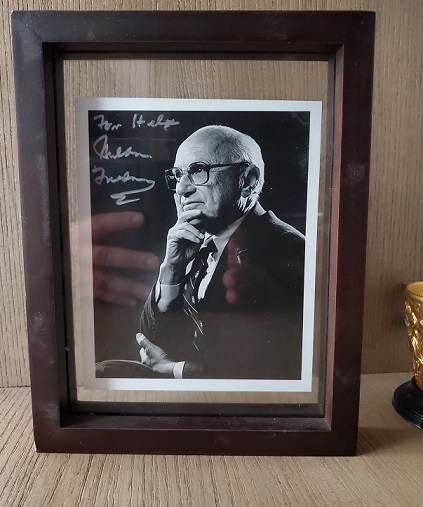
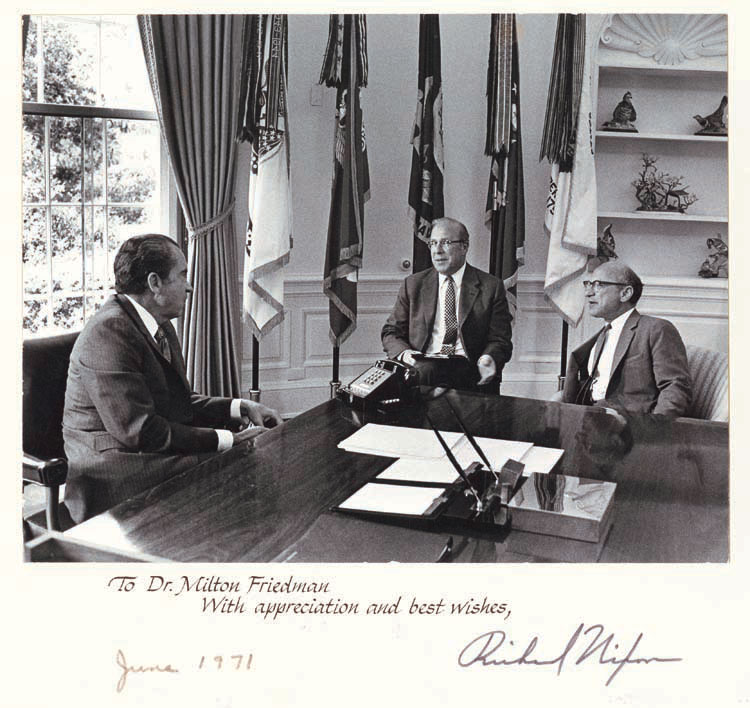
Milton Friedman came to listen to my lecture on foreign exchange in Chicago. We became friends and he explained to me that I was doing what he had only dreamed about. Yes, it was Milton who had advised Nixon on shutting down Bretton Woods and adopting a floating exchange rate system.

While many criticize Milton, they did not really understand what he saw. In 1953, he saw that a floating exchange rates system would provide a natural check and balance against the government policies. That is why he came to listen to me. I had developed capital flow analysis which was what he envisioned would happen under a floating exchange rates system. He theorized that in 1953.

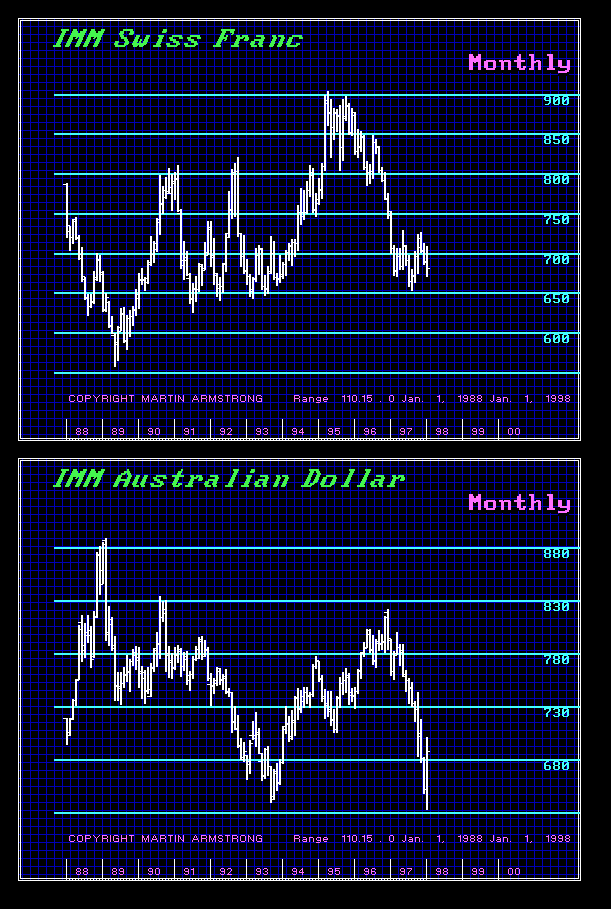
I have been called in on so many FX crises it is amazing. They were selling Swiss loans to Australians in the 1980s to save on interest rates. They never considered what would happen if the exchange rate changed and the Swiss franc rose against the A$.

Just look at these two charts. The A$ was crashing and the Swiss franc rose. The default rate on mortgages exploded and small businesses who listen to bankers pitching Swiss loans to save money lost a fortune. The same crisis took place following the Swiss/Euro Peg when that broke.

Once again, the bankers were selling mortgages in the Swiss franc in Europe to lower interest rates. I cannot tell you how many times were have been called in on major financial crises around the world all for the very same reason. People make a loan in a foreign currency to save money on the interest rate. They have NO CONCEPT that the currency can swing even 40% in a short period of time.

The Chinese Central Bank warned its provinces and corporations NOT to borrow in dollars. They understood our model and understood what happens under such a currency crisis. Nevertheless, provinces and private corporations did not listen. They succumbed to the lure of the cheap interest rate.

I had even spoken with a major company and warned them the dollar would rise and there was a serious risk in emerging markets. They were new and as you say, they listened to the majority of opinions that took the opposite forecast. Now we see bank runs in China and serious problems in emerging markets.

Biden Senior Climate and Energy Policy Advisor Demands Social Media Companies Immediately Block Content Identifying Biden Policy as Source of Energy Inflation


Posted originally on the conservative tree house on June 13, 2022 

There is one big problem for the people inside the Biden administration executing the Green New Deal energy policy, the massive increases in energy cost including gasoline.

You see, everything is an academic estimate until the actual Green New Deal is transferred from theoretical policy into a set of actions that creates a major disruption in the economy.  As things in society start to collapse; and as people begin to really feel the inflationary consequences of the Biden energy policy in action; suddenly all of those ‘talking points’ about shutting down the fossil fuel industry take on a new meaning.   People didn’t realize the Green New Deal was going to mean $10/doz eggs, $15/gal milk, $20 happy meals at McDonalds, or $150/tank of gasoline…. Now they are paying attention.

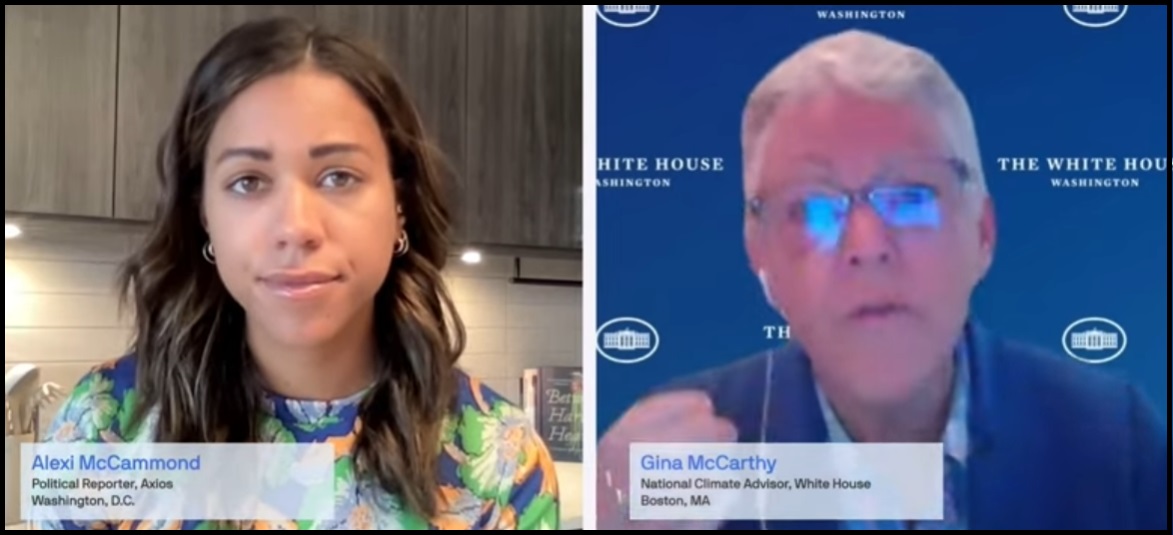
For former EPA Administrator Gina McCarthy, the current senior climate and energy policy advisor within the White House, all of these ‘in your face‘ surfacing Green New Deal consequences have become problematic for the Biden administration.  Her proposed solution, however, is rather remarkable.

In this interview discussing the skyrocketing inflation and consequences created by the Green New Deal policies, Gina McCarthy urgently begs all of the social media companies to start removing the content from American people who are giving real world examples of the pain and economic hardship they are feeling.  McCarthy says that if social media do not start to help Joe Biden hide the pain, the climate change agenda might be at risk.  WATCH [11:00 prompted]:

.

S&P 500 Closes Down 20 Percent from High, Officially a Bear Market


Posted originally on the conservative tree house on June 13, 2022 | Sundance 

The S&P 500 fell 151.23 points, or 3.9%, to 3749.63. The Dow Jones Industrial Average dropped 876.05 points, or 2.8%, to 30516.74. The tech-heavy Nasdaq Composite declined 530.80 points, or 4.7%, to 10809.23 (33% lower that the November record).

CNBC – […] U.S. stocks on Monday entered a bear market because the S&P 500 closed more than 21% below its all-time record close reached as recently as last January, S&P Global Dow Jones Indices senior index analyst Howard Silverblatt wrote.

Stocks had been flirting with a bear market for the past several weeks on an intraday basis, but had never actually closed below 3837, the level S&P Global needed to see in order to officially declare one.

S&P Global says a 20% decline in the S&P 500 on a closing basis from its previous peak is all it takes to define a bear market. Which means that this bear market is already more than five months old, since the S&P 500 all-time high came on January 3. (read more)

China ‘wants quick resolution’ to Ukraine conflict


By Reuters  Published originally on Rumble on June 11, 2022 

Singapore’s defense minister Ng Eng Hen, speaking on the sidelines of the Shangri-La Dialogue on Saturday (June 11), told media that China wants a quick and peaceful resolution to Russia’s ongoing military conflict in Ukraine.