Xi Questions Whether the West Will Choose Peace or War


Posted originally on Sep 4, 2025 by Martin Armstrong |

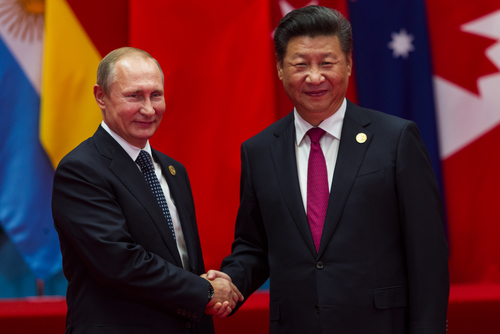
Beijing’s historic military parade brought the new axis powers together in a show of alliance. China’s Xi Jinping hosted Russia’s Vladimir Putin and North Korea’s Kim Jong-Un during the largest military parade in Chinese history. Xi summarized China’s display of military excellence by questioning whether the West will choose “peace or war.”

“Today, humanity is again faced with the choice of peace or war, dialogue or confrontation, win-win or zero-sum,” Xi told the crowd of more than 50,000 spectators, adding that the Chinese people “firmly stand on the right side of history.” Every nation believes its involvement in conflict will place it on “the right side of history,” but it is the victors who write history.
Putin Xi

“May President Xi and the wonderful people of China have a great and lasting day of celebration. Please give my warmest regards to Vladimir Putin, and Kim Jong Un, as you conspire against The United States of America,” Trump wrote on Truth Social during the parade. Trump asked China to remember the American troops who fought to expel invaders during World War II. “The big question to be answered is whether or not President Xi of China will mention the massive amount of support and ‘blood’ that The United States of America gave to China in order to help it to secure its FREEDOM from a very unfriendly foreign invader.”

Trump has managed diplomatic ties with Putin and Kim, but his relationship with Xi has never been amicable. Xi said that his nation “is never intimidated by any bullies,” while others believed that Trump’s comments highlighted America’s growing concern of Chinese dominance.

Yuri Ushakov, a top aide to Putin, insisted that the three nations were not conspiring against the US. “I want to say that no one organized any conspiracies, no one was weaving anything, no conspiracies,” Ushakov told Russian journalist Pavel Zarubin, who is close to the Kremlin and has previously interviewed Putin. “Moreover, no one even had that in their minds, none of these three leaders had that,” Ushakov said.
NorthKorea.Russia

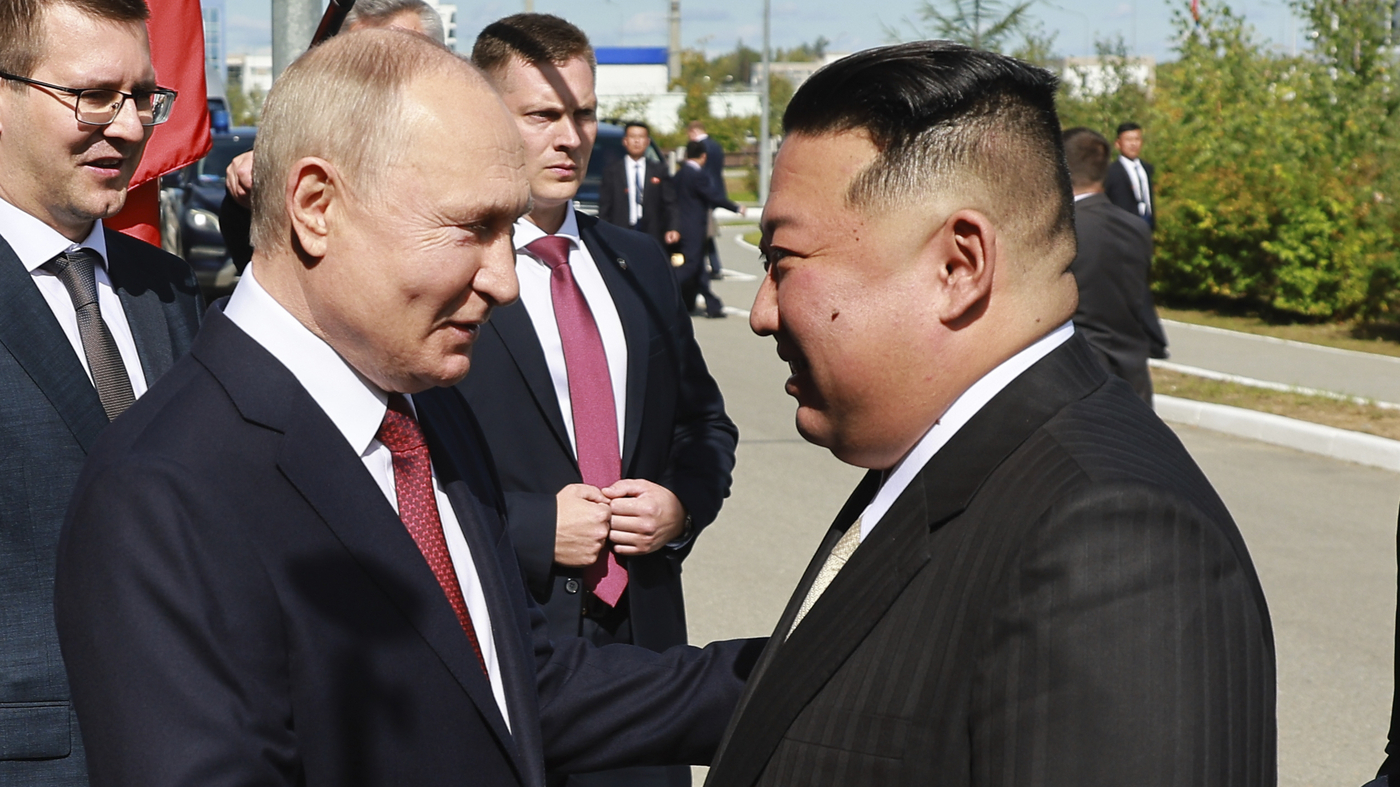
Kim accepted Putin’s praise of North Korean troops and promised to honor their pact. “As I said during our previous meeting, if there is anything we can do to help Russia, we will certainly do that, and we will regard this as our fraternal duty. We will do everything in our power to assist Russia.”

China has remained nearly neutral over the past three years as the world became deeply embedded in the Russia-Ukraine conflict. Europe is on the precipice of deploying troops to Ukraine and solidifying the start of World War III. This historic military parade was not merely about the 80th anniversary of Japanese troops leaving China after World War II. The massive event was a message to the West that China has firmly aligned with Russia, and if the West does not choose peace, China is willing to join the war.
NATO to Spend $1.5 Trillion in 2025


Posted originally on Sep 3, 2025 by Martin Armstrong |  

NATO

NATO is not at war, and yet, the alliance has spent more on funding Ukraine than on any other conflict. The Defence Expenditure of NATO Countries (2014-2025) determined that the alliance is expected to spend $1.59 trillion USD in 2025, up from $1.5 trillion in 2024.

The United States continues to uphold the alliance financially, with an estimated annual payout of $980 billion. Canada and Europe are predicted to spend a combined $608 billion on NATO expenses or an average of 2.76% of their GDP. Poland spent more per GDP than any European member at 4.48%, followed by Lithuania at 4% and Latvia at 3.73%. Nordic alliances such as Norway and Denmark are expected to spend at least 3% of GDP on NATO this year.

Before the Russia-Ukraine war, members were spending around 1.8% of GDP. That figure shot up to 2.6% in 2024, now sitting at 2.76%, and WILL increase as a result of the 5% of GDP pledge by 2035 that was agreed upon at the June 2025 Hague Summit.

There is an uneven response to the escalating conflict as certain nations are accelerating toward confrontation while others remain wary of becoming involved financially. The concept of creating a unified Europe to end all wars was a moot point. European leaders heed different risks concerning the war. This is not just about weapons and soldiers. It is about capital flow reallocation.

Trillions will be pulled out of productive use and sunk into defense. That creates fiscal strain, inflationary pressure, and accelerates the collapse of social programs. Defense budgets soared across Europe ahead of World Wars I and II. War produces absolutely nothing but inflation and destruction.

Ahead of the First World War, defense expenditures across Europe began to surge in the decade before 1914. Governments shifted capital from social programs into armaments. Britain expanded its navy to counter Germany, while Germany doubled down on land armies. The press sold it as “deterrence.” In reality, it was preparation for the inevitable confrontation that the cycle dictated. This is precisely how they are deflecting current NATO spending, as if the allied members must multiply their contributions to deter Russia.

The same pattern unfolded before World War II. During the Great Depression, military spending in Germany, Italy, and Japan accelerated while their economies stagnated. By 1935, Germany had already abandoned Versailles restrictions, pouring money into weapons while ordinary Germans endured wage controls and shortages. The rhetoric was that this spending would “create jobs,” but it created war.

Rome followed this path as well. By the third century AD, the military consumed the treasury. Coinage was debased, taxes rose, and confidence collapsed. It was the cost of endless frontier wars that eroded the economic foundation of the empire. Once capital fled, the empire was finished. The same capital flow shift is what we see today with trillions diverted from productive enterprise into defense, financed by debt, which will only accelerate inflation and contribute to the sovereign debt crisis.

NATO’s report outlines more than mere budgets, as it shows where each nation is aligned on the Panic Cycle, propelling warfare. Socrates is projecting the rise in volatility into 2026, and the Panic Cycles align. The West has chosen the path of militarization, and that is precisely what history warns precedes systemic breakdown.

Hospitals in France to Prepare for War by March 2026


Posted Sep 3, 2025 by Martin Armstrong |  

Lose the War

France’s Ministry of Health has urged all hospitals to prepare for war by March 2026. President Emmanuel Macron repeatedly stated that he is ready to deploy French troops to Ukraine’s front lines, and now, the entire nation must prepare for the inevitable.

Hospitals throughout the nation have been urged to prepare for a “major military engagement” in Europe, according to a leaked memo first published by Le Canard Enchaîné. The memo, dated July 18, 2025, instructs hospitals to brief staff on “wartime constraints.” Staff must learn how to survive the psychological and physical pressures of wartime trauma.

Plans are in the works to accommodate patients returning from combat zones, with emergency centers slated to open near airports and train stations to “enable the rerouting of foreign soldiers to their home country.”

The Ministry of Health is preparing for a dire situation—hospitals should expect to receive between 10,000 and 50,000 wounded personnel over a 10 to 180-day window, depending on France’s involvement in the war.

Health Minister Catherine Vautrin attempted to downplay the leaked memo, but did not deny its existence. “Hospitals are always preparing – for epidemics, for surges. It’s normal for a country to anticipate crises and their consequences,” she claimed. Yet, the language used in the letter clearly details that hospitals must prepare for wounded soldiers arriving from a foreign battleground.

Socrates has indicated a shift from localized conflict to widespread warfare by 2026. I’ve warned all who have asked to high-tail it out of Europe before it is too late because once all hell breaks loose, this conflict will spread like a contagion that engulfs the entire continent.

European Commission President Ursula von der Leyen Blames Russia for EU Immigration Crisis


Posted originally on CTH on August 29, 2025 | Sundance

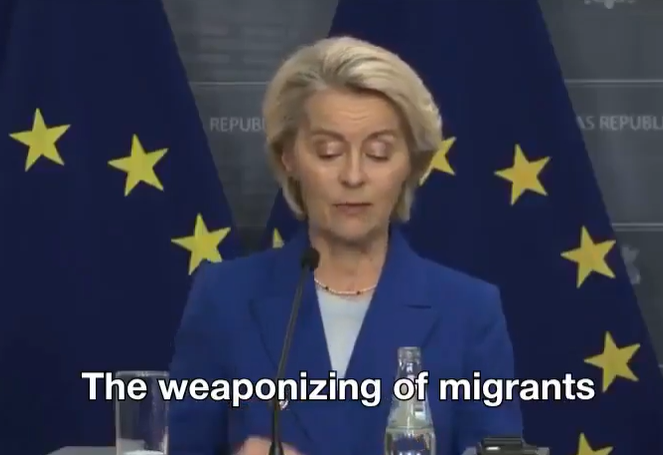
During a meeting in Latvia to organize EU defenses, European Commision President Ursula von der Leyen outlines how Russian President Vladimir Putin is to blame for the EU importing millions of Mideast and African immigrants.

It’s not the fault of the European nations their states are riddled with criminal conduct at the hands of migrants. No, it is Vladimir Putin who is to blame.  This is the mindset of the European leadership.  WATCH:

.

Leaders of France, Germany and Poland Converge on Moldova to Support EU Against Russia


Posted originally on CTH on August 28, 2025 | Sundance

Moldova was always important for the goals of the EU elites against the influence of Russia. However, after Georgia rejected the EU manipulation, Moldova became even more important; very, very important.

Moldova is now the frontline battle of the EU Central Bank against pesky Russian ideological intransigence.  All your democracies are belong to us, comrade.  In the background the EU economies are beginning to quiver, led by Germany.

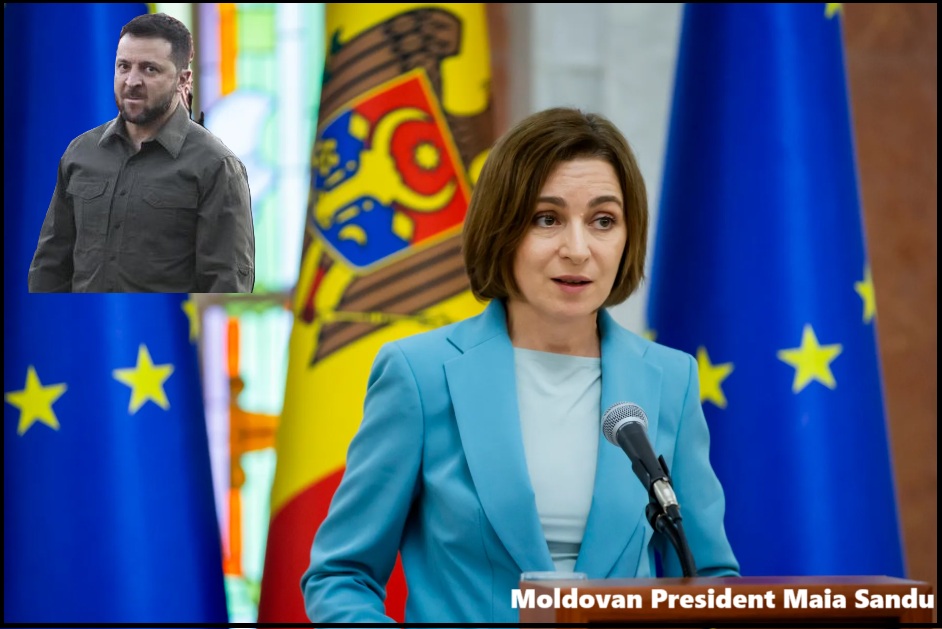
Meanwhile, Volodymyr Zelenskyy is worried that if Moldova gains EU membership before Ukraine, his battleground position could be compromised. ‘Hey, wait a minute, we’re no more corrupt than they are.’ Ukraine wants simultaneous attention, priority and ascension.

Moldovan President Saia Sandu squeaked a win in her election with the use of overseas ballots. The highly divided Moldovans living in Moldova didn’t support Sandu, but the mysterious Moldovans who do not live in Moldova supported her. The EU leadership doesn’t want too many people to notice that.

BRUSSELS ― The leaders of France, Germany and Poland are converging Wednesday on tiny Moldova to urge voters to keep turning away from Russia and support their country’s pro-EU government.

The Moldovan president, Maia Sandu, and her governing Party of Action and Solidarity (PAS) face a critical Sept. 28 parliamentary election amid warnings that the Kremlin is working to influence the result and derail the country’s efforts to join the EU.

“There are those who will try to lead us astray. They have tried before … But the Moldovan people know what is best for them,” Sandu is expected to say Wednesday at a rally marking the country’s Independence Day.

A country of 2.4 million people sandwiched between Romania and Ukraine, Moldova has become a target for Russian President Vladimir Putin. While Moscow fights a physical war to subjugate Ukraine, it is using using hybrid tactics to try to control Moldova, including large-scale election manipulation of voters.

This week’s visit by French President Emmanuel Macron, German Chancellor Friedrich Merz and Polish Prime Minister Donald Tusk is designed to help keep Moldova on a path toward EU membership, and to remind voters there’s an alternative to Russia.

[…] Last year, Sandu secured a second term in office in a nail-biting election marred by vote-rigging, including a scheme that saw voters paid to back her Kremlin-friendly opponents. A simultaneous referendum on EU membership passed by a margin of 50.4 percent to 49.6 percent.

In both cases, the votes of the 250,000 Moldovans who live abroad, many in EU countries, formed a key pillar of the liberal government’s support. Earlier this month, Moldova’s National Security Adviser Stanislav Secrieru warned fears were growing over disinformation aimed at the diaspora and even of possible disruptions at polling stations abroad. (read more)

USAID (Samantha Power) under the Joe Biden regime was a key player in the organization of the mail-in ballots for Moldova. Imagine that.  Now there’s a little problem….

…. USAID and Samantha Power are no longer around to assist with the mid-term parliamentarian elections.  I mean, what would it look like if the President was elected, albeit barely, as the Moldovan citizens looked with suspicious cat glances, and then suddenly, the next election didn’t highlight the same result for Parliament?   Almost as if something was afoot before.

Hence, Emmanuel Macron, Fredrich Merz and Donald Tusk, three of the consequential USAID beneficiaries, are heading to Moldova to support Saia Sandu.   We’ll keep watching.

Merkel Shows NO Remorse for Refugee Crisis


Posted originally on Aug 27, 2025 by Martin Armstrong |  

Merkel Welcome

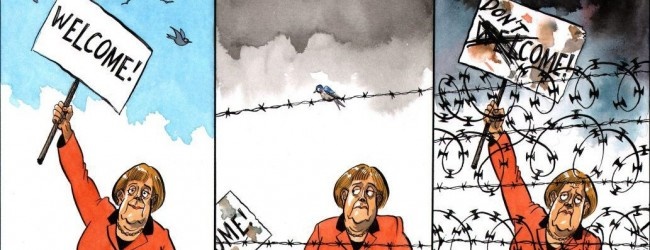
Ten years ago, former German Chancellor Angela Merkel began the migrant crisis after uttering, “Wir schaffen das” (“We can do this”) and declaring that Germany was a safe haven for all refugees. In a recent interview with ARD, Merkel was asked to reflect on her 2015 decision that permanently altered the European landscape. To the surprise of no one, she feels no remorse.

“It was clear to me that this would be something truly challenging,” Merkel said. She congratulated herself for not using force to prevent refugees from entering. Over 800,000 Syrian refugees entered Germany in 2015 alone. The cultural landscape of Europe is unrecognizable today and budgets have imploded in an effort to maintain the migrant population.

Merkel does have one regret—strengthening the Alternative for Germany (AfD) Party. The AfD campaigns on the promise of securing domestic interests first and foremost, which no other political party is willing to do. The people of Germany have turned to the AfD Party at a record pace because they have witnessed the failed policies of recent history, with the migrant crisis being only one of countless variables ailing Deutschland.

Mother Merkel

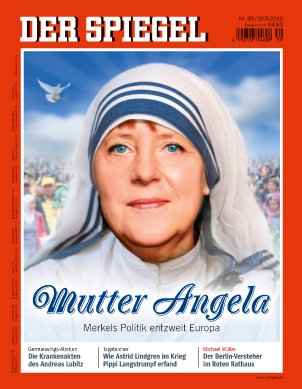
Merkel only received 16,233,642 votes during the 2013 election, which was 37.2% of the popular vote of Germany. So the majority of Germans never wanted these policies to start. She assumed she could revitalize the German economy to shift from export-dominated to domestic consumption. That was another failed fantasy, similar to the EU’s attempt to end wars by creating a single unified government. The immigrants, whom she thought would boost the German economy, added to the deficit. She declared that there would be no limit to the number of Syrian refugees accepted, and expected to be honored like a pious deity for her actions. She had no plan or budget for how to accommodate such a large influx of newcomers.

People, mostly unaccompanied males, from throughout the undeveloped world flocked to Germany and spread out around Europe. The majority have never left. Brussels, at the guidance of globalist entities, later forced all of Europe to open their borders. This is a crisis that the continent will be grappling with for years to come, but make no mistake about it—Angela Merkel alone is directly responsible for starting the migrant crisis and permanently altering European civilization.

Polish President Vetoes Extended Ukrainian Refugee Aid Package


Posted originally on Aug 26, 2025 by Martin Armstrong |  

Nawrocki.Poland

Poland’s president has vetoed a bill that would extend aid to Ukrainian refugees. Karol Nawrocki, a nationalist conservative, commented that Ukrainians “make the effort to work in Poland” and pay taxes in the country in order to be eligible for support. Nawrocki, whose own party approved of the initial aid to Ukrainians, stated that the current financial package “places us in a situation where citizens of Poland are treated worse in their own country than our guests.”

Over 1.5 million Ukrainians have fled to Poland since the beginning of the Russia-Ukraine war. Poland has offered every single refugee a taxpayer-subsidized life. Ukrainians living in Poland are eligible for free housing, food benefits, health care, education, child allowances, and more.  Ukrainian refugees were often favored for subsidized housing over nationals who may have been waiting years for council housing. Nawrocki stated he was concerned with the 800+ program that provided families with children an 800 zloty monthly payment per child, regardless of income. The president felt that only those working should receive this benefit, but why should the public be paying out this fund at all?

The head of the president’s chancellery, Zbigniew Bogucki, commented that “for Ukrainians who legally work in Poland, reside, run their own business, and pay taxes, there is nothing to worry about.” Despite the similarities in culture, there is a growing discontent for Ukrainian refugees in Poland due to the government prioritizing newcomers. That is how xenophobia traditionally comes about—the last one “off the boat” is seen as the outsider.

Poland created an Aid Fund operated by Bank Gospodarstwa Krajowego (BGK) funded partially by the European Investment Bank and the EU, which finances local governments and organizations to support Ukrainian refugees. A  €2 billion loan was approved for 2025 through the Aid Fund, including €600 million disbursed by the European Investment Bank (EIB). Assistance for Ukrainian refugees in Poland is estimated to have reached around 15.9 billion zlotys (roughly €3.5 billion) this year.

Perhaps Polish leaders underestimated the duration of the war. The Polish government spent 1% of GDP on Ukraine during the first three months of the war in 2022. Poland has continued to raise military spending and direct aid for Ukraine year after year. Yet, the president has been condemned for taking a “Poles first” stance and tightening its social program. The true nationalists do not believe he is doing enough for his nation, while the others see him as cruel. In the EU, anything aside from unconditional blind support from Ukraine is seen as a selfish act. There is no room for nationalism in Brussels.

Categories:Europe

Polish President Vetoes Extended Ukrainian Refugee Aid Package


Posted originally on Aug 26, 2025 by Martin Armstrong |  

Nawrocki.Poland

Poland’s president has vetoed a bill that would extend aid to Ukrainian refugees. Karol Nawrocki, a nationalist conservative, commented that Ukrainians “make the effort to work in Poland” and pay taxes in the country in order to be eligible for support. Nawrocki, whose own party approved of the initial aid to Ukrainians, stated that the current financial package “places us in a situation where citizens of Poland are treated worse in their own country than our guests.”

Over 1.5 million Ukrainians have fled to Poland since the beginning of the Russia-Ukraine war. Poland has offered every single refugee a taxpayer-subsidized life. Ukrainians living in Poland are eligible for free housing, food benefits, health care, education, child allowances, and more.  Ukrainian refugees were often favored for subsidized housing over nationals who may have been waiting years for council housing. Nawrocki stated he was concerned with the 800+ program that provided families with children an 800 zloty monthly payment per child, regardless of income. The president felt that only those working should receive this benefit, but why should the public be paying out this fund at all?

The head of the president’s chancellery, Zbigniew Bogucki, commented that “for Ukrainians who legally work in Poland, reside, run their own business, and pay taxes, there is nothing to worry about.” Despite the similarities in culture, there is a growing discontent for Ukrainian refugees in Poland due to the government prioritizing newcomers. That is how xenophobia traditionally comes about—the last one “off the boat” is seen as the outsider.

Poland created an Aid Fund operated by Bank Gospodarstwa Krajowego (BGK) funded partially by the European Investment Bank and the EU, which finances local governments and organizations to support Ukrainian refugees. A  €2 billion loan was approved for 2025 through the Aid Fund, including €600 million disbursed by the European Investment Bank (EIB). Assistance for Ukrainian refugees in Poland is estimated to have reached around 15.9 billion zlotys (roughly €3.5 billion) this year.

Perhaps Polish leaders underestimated the duration of the war. The Polish government spent 1% of GDP on Ukraine during the first three months of the war in 2022. Poland has continued to raise military spending and direct aid for Ukraine year after year. Yet, the president has been condemned for taking a “Poles first” stance and tightening its social program. The true nationalists do not believe he is doing enough for his nation, while the others see him as cruel. In the EU, anything aside from unconditional blind support from Ukraine is seen as a selfish act. There is no room for nationalism in Brussels.

Germany Reconsiders Welfare State to Fund Ukraine


Posted originally on Aug 26, 2025 by Martin Armstrong |  

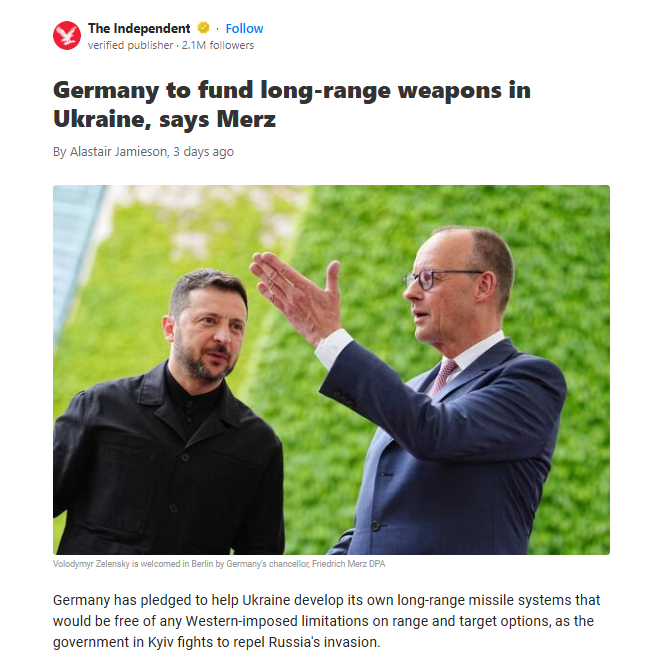
Germany_to_fund_long_range_weapons_in_Ukraine_says_Merz 5 31 25

German Chancellor Friedrich Merz does not have the ability to manage Europe’s top economy. “The welfare state that we have today can no longer be financed with what we produce in the economy,” Merz said in a recent meeting. At the same time, Merz agreed to begin sending Ukraine 9 billion euros annually in addition to all other aid.

Merz tried to claim there would “not be any increase in income tax on medium-sized companies in Germany with this federal government under my leadership.” SPD Vice Chancellor Lars Klingbeil disagrees, and said that middle and high-income citizens could race an increased tax burden. “I’m not satisfied with what we have achieved thus far,” the chancellor said. “It has to be more.”

Merz campaigned on a platform of fiscal responsibility. Then he left Germany’s borders open and worked to find a loophole in the Constitution to fund Ukraine endlessly without any caps. The German welfare state cost taxpayers €20.2 billion ($23.6 billion) in 2024. Public spending accounted for 49.5% of all economic output in 2024.

Lars Klingbeil stated that Germany’s federal budget will face a €30 billion shortfall by 2027. His solution is clearly to increase taxes. “Especially people with high income and high net worth have to ask themselves: What am I contributing to make this country fairer?” He added: “Most of the time, I see people with very high incomes and very large fortunes making a strong appeal to the whole country that everyone should work harder and longer. But I don’t think that does justice to the pension debate that we really need to be having in Germany.”

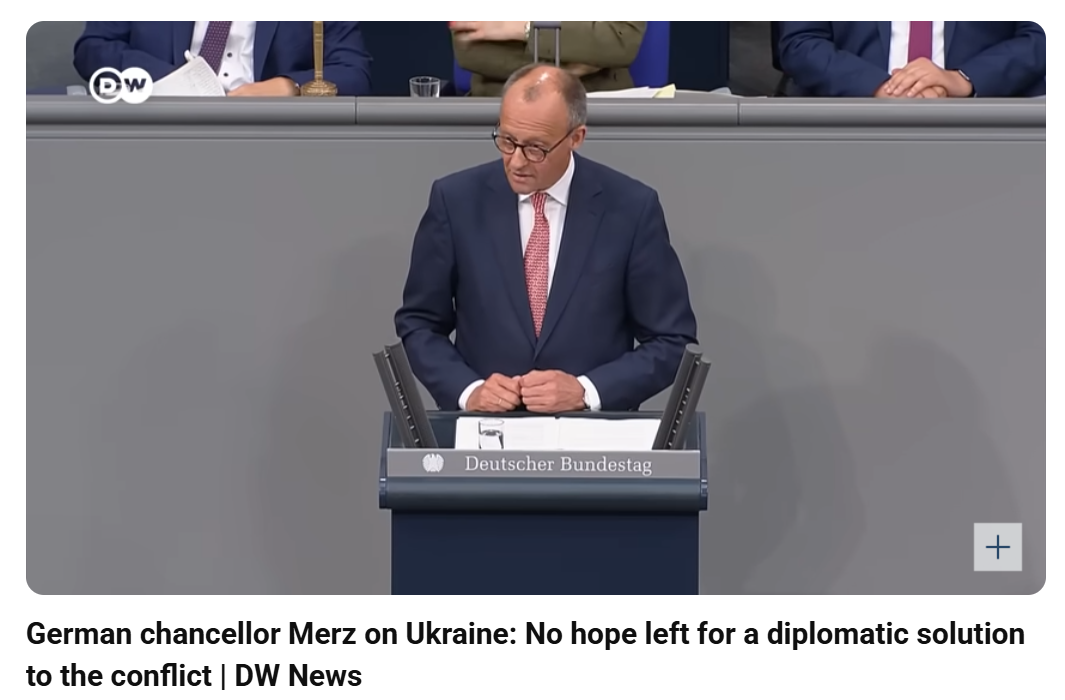
Diplomacy Merz_on_Ukraine_No_hope_left_for_a_diplomatic_solution_t

Germans have one of the highest tax burdens in Europe. Yet, by 2029, Germany is expecting to take on €851 billion worth of new debt. The war on the energy sector, perpetual spending on Ukraine, and open borders are crippling the German economy. German lawmakers would like to cut back on payments for citizens who spend a lifetime paying into the system. Germany spent 14.8% more in 2024 on an annualized basis on basic income support and nursing health care to the tune of €20.2 billion. Around €11.4 billion of those funds were spent on pensioners and those unwilling to work. In 2025, the nation will spend €43 billion on the citizens’ stipend or Bürgergeld scheme that provides basic income for the unemployed (not including pensioners or those with disabilities).

Merz plans to cut spending for the Bürgergeld scheme. He plans to increase taxation on pensions, although over half of German pensioners currently receive payouts below the poverty line. Merz will place a cap on the amount welfare recipients can use toward housing. While some of these cuts are necessary, Merz fails to acknowledge the elephant in the room—YOU’RE SENDING BILLIONS PER YEAR TO A FOREIGN GOVERNMENT!

Why should the German people be forced to send 9 billion euros to a foreign government annually? The people have been forced to send public funds and soon the people will be forced to send their sons and daughters to fight a unwinnable war. Germany’s leaders have put domestic policies last in favor of globalist neocon ambitions. The nation is already in a recession and the government continues to implement policies that are pushing the nation further into ruin.

Ukrainian Man Arrested for Nord Stream Pipeline Attack


Posted originally on Aug 25, 2025 by Martin Armstrong |  

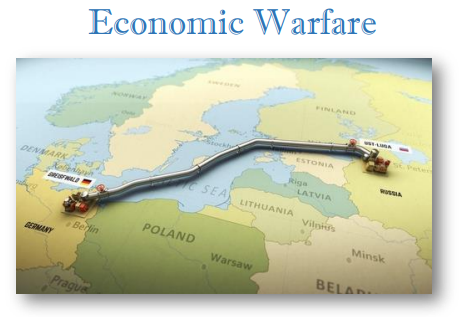
Nordstream Pipeline Russia

A 49-year-old Ukrainian man was arrested in Italy after authorities linked him to the Nord Stream pipeline attack. Authorities believe the man and his accomplices rented a sailing yacht from a German company in September 2022 and managed to detonate a portion of the pipeline. No one has ever taken responsibility for the attack. Sweden closed its investigation in February 2024 after determining “insufficient grounds to pursue a criminal case,” and Danish prosecutors also ended their investigations that same month, although they acknowledged there was “deliberate sabotage of the gas pipelines.” Germany is the last remaining European nation continuing the investigation.

The world initially blamed Russia for the attack, believing Moscow would actively detonate its own pipeline to prevent its top buyer from accessing oil. The motive never added up.  Gerhard Schindler, former head of Germany’s Federal Intelligence Service (BND), suggested that Russia sabotaged the pipeline to halt gas exports. President Zelensky’s advisor Mykhailo Podolyak said that Russia wanted “to destabilize economic situation in Europe and cause pre-winter panic.”

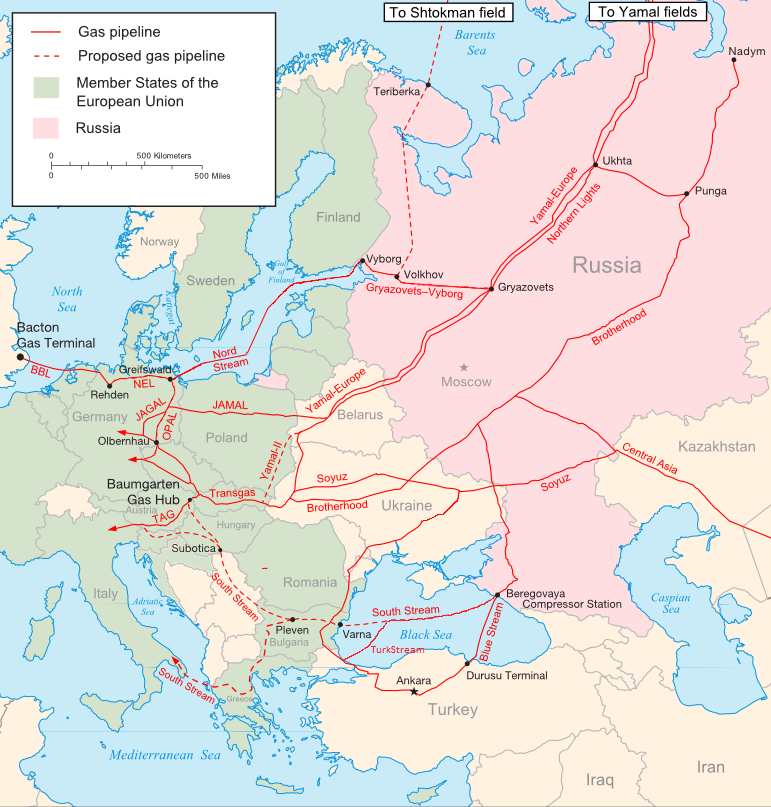
Russia Pipelines

Russia accused Western actors of destroying the pipeline. “It is evident that executing such a terrorist act required a directive from the highest levels…for the West, that highest level is undoubtedly Washington,” Russian Foreign Minister Sergey Lavrov stated. Russia’s defense ministry accused the British navy of orchestrating the attack with the support of its US ally.

Putin called the idea of a pro-Ukrainian group orchestrating the attach “nonsense.” “An explosion of this kind, with such power, at such depth, can only be carried out by specialists, and supported by the entire power of the state, which has certain technologies. … The fact that this is a terrorist attack is no longer a secret to anyone, I think everyone has already recognized it. Moreover, the terrorist attack, quite obviously, was committed at the state level, because no amateurs can commit such actions,” Putin stated.

Former President Biden plainly stated that the US “would bring an end” to the Nord Stream pipeline if Russia invaded Ukraine.

The pipeline was Putin’s last and strongest bargaining chip with Europe. In fact, he agreed to lift sanctions ahead of the explosion. The sabotage of the Nord Stream Pipelines was most likely accomplished with US intelligence. There is no possibility that Russia would have destroyed its final lifeline to the European economy. There is a possibility, however, that Europe would have caved and continued purchasing Russian energy. Neocons like National Security Adviser Jake Sullivan, Victoria Nuland, the Undersecretary of State for Policy, and Secretary of State Tony Blinken openly stated that they did not approve of the pipelines and wanted them gone. The Biden Administration was also keen to carry out the net-zero program and eliminate the world’s dependence on fossil fuels.

Germany consumed just under 20% of all Russian gas exports in 2020. About 50% of all of its gas was coming from Russia. Germany was clearly Russia’s #1 customer. That was why the United States may have taken the initiative to simply blow up the Nord Stream Pipeline without consulting Germany.

NordStreamExplosionSept2022

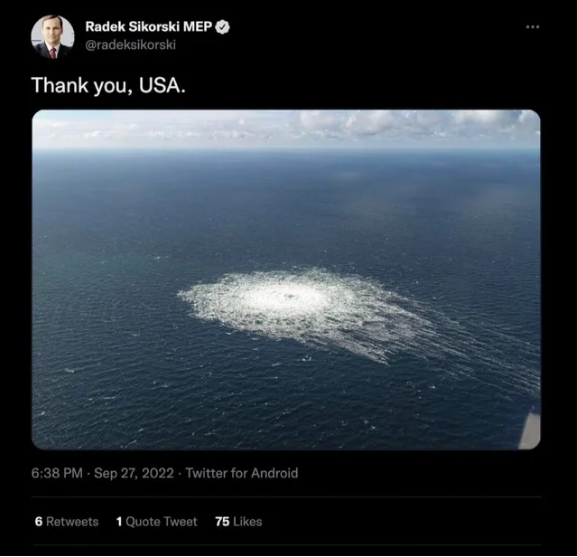
“If Russia invades, that means tanks and troops crossing the border of Ukraine again, then there will be, there will be no longer a Nord Stream 2,” Biden stated in February 2022 during a joint press conference with former German Chancellor Olaf Scholz. “I promise you, we will be able to do it.” Radek Sikorski, Poland’s former minister of national defense and EU Parliament member, posted an image on Twitter of the leak with the caption, “Thank you, USA.”

The destruction of Nord Stream came 51.6 years on target with the frequency of the Economic Confidence Model. Could a group of men create an explosion so powerful that it registered as a 2.3 magnitude earthquake? Evidently, this Ukrainian man was selected as the unfortunate scapegoat. It is overtly apparent who had the motive and incentive to eliminate Russia’s top export and bargaining chip.