Bill Gates says his foundation is funding the construction of factories for seven coronavirusvaccine candidates. Europe is embracing his agenda where people will not be able to even leave their house without a digital certificate from Gates to prove they were vaccinated. Former Prime Minister Tony Blair is on board with the Gates agenda. Europe is isolating itself from the world for if their own citizens will be restricted in their movement, what hope will there be for a tourist. In Britain, you can leave your house and take a drive, but you must return and are prohibited from staying anywhere else. All of this for a virus they make out to be the Black Death when the death rate is 0.0003% of the population. This is all about redesigning the world economy by deliberately crashing it to destroy all businesses they deem unwanted for the zero CO2 world.
In his opening monologue today Fox host Tucker Carlson took on the subject of Google and their control over 70% of all on-line advertising revenue. Within the very accurate segment, Carlson noted that Utah Senator Mike Lee is in charge of the antitrust subcommittee and yet does nothing, absolutely nothing, to stop the authoritarian demonetization and deplatforming action carried out through the monopoly Google holds.
No single issue will do more damage to the reelection efforts of President Trump than allowing Google to carry out their political agenda. However, that accepted, that’s also the motive for the Senate and DOJ to do nothing. This is a good, honest and painful segment:
Obama, Soros, Brennan, James Comey, Rosenstein, Democrat Party, McCabe, Peter Strzok, Bill Clinton, Hillary Clinton, James Clapper, Lisa Page, Schumer,Adam Schiff, Nancy Pelosi, Cohen, Eric Swalwell, Zuckerberg, Google, Don Lemon, Dianne Feinstein, Rachel Maddow.
Reminder, the Swamp is trying to distract you with the scamdemic and planned riots…
Lost amid the ongoing protests and riots was former assistant attorney general Rod Rosenstein’s testimony. He signed off on the FISA warrant that led to Mueller’s Russia witch hunt, but he never bothered to read the warrant—he merely rubber stamped it! This is typical of the politicization of our security agencies and justice system under Obama. He used his partisan operatives to help him illegally spy on Trump before and after Trump’s election.
This is treason and there should be consequences.
The lying fake news media did not and will not report on this. They remain focused on taking down Trump, whom they constantly smear as a ‘racist’ while extolling the (non existent) virtues of Obama.
Obama’s shadow government remains in place. The swamp fights to remain deep and powerful. It’s time to drain the swamp. LOCK THEM UP!
We are in an unbelievable season where our nation’s cities are being attacked and held hostage by shipped-in, paid rioters and protesters. We are under siege with anarchists hiding behind George Floyd, a few bad cops and the endless sea of acting out leftists who hate Trump simply because he breathes air.
We are seeing some burning flags in protests and the infamous ‘take a knee’ movement is growing with taking a knee cropping up at public spaces, thanks to the NFL and other leagues at more sporting events. Just last week, Roger Goodell reversed his position about not supporting NFL players ‘taking a knee’ during the traditional singing of the Star-Spangled Banner. Nascar did the same, allowing drivers and teams to ‘take a knee’ during the national anthem.
Now, rather than show a moment of respect during the performance of the Star-Spangled Banner and traditionally standing with your hand over your heart, the players and drivers now have the right to ‘take a knee’ if they want to and protest against the Star-Spangled Banner and Flag.
Not only did the NFL and NASCAR not lead with this horrible and un-American decision, but they have betrayed hundreds of thousands of service men and women who have given their lives for our freedom. They have stirred the fire of even more disrespect and hatred against our flag and country that will cascade down through all our schools and other public events.
Barack Obama should be thrilled about more NFL players and NASCAR drivers taking a knee during the national anthem. It is just one more ‘apology tour’ that Obama (thankfully) wasn’t able to finish doing. Shame, embarrassment and disrespect for the flag, God and freedom is what the wet knee on the grass is saying. Those knees are pressing on the necks of our fallen heroes and the countless people of all colors who made it possible for the NFL superstars to make millions of dollars and say what they please. All the knee on the grass will do is give a player grass stains and reveal his arrogance, lack of understanding and treachery for what is real and great.
George Floyd was horribly killed by a knee to the neck causing him to suffocate and die. Countless leftists, and America haters are now taking a knee to the neck of our freedom, our heritage, our flag and sacred traditions by acting out.
It was just ‘Flag Day’ and I sang ‘The Star-Spangled Banner’ in church with my music friend Cy. I did this after sharing the miraculous story that led up to the penning of ‘The Star-Spangled Banner’ by Francis Scott Key.” What the ‘Take a Knee’ folks don’t seem to understand is that a young America was fighting for freedom against the monster of Great Britain who out gunned us at every turn. After the signing of America into existence in 1776, Britain started losing ground in the years that followed but they still attacked everywhere they could. In August 1814, they took vengeance on Washington DC and viciously bombed the White House and many federal buildings. President James Madison and his wife had to flee the city.
A group of 19 British warships loaded with cannons and the best weapons available at the time planned another major attack on the military base protecting Baltimore, Fort McHenry. They had collected many American prisoners who were held on their ships during the previous months. One of the prisoners asked a Baltimore attorney, Francis Scott Key to negotiate their release. He was able to do this over a week’s time. However, the British said before they released the prisoners, they were going to attack Fort McHenry.
As the attack started in September 1814, bombs all aimed at the fort, lit up the night sky from 19 British ships. The fort flew a large 32 by 42-foot flag out in front. The prisoners on board and Francis Scott key could only pray and watch the bombs exploding on the fort all night long. As the sun rose, they were shocked and tearfully excited that the massive flag still waved proudly in the wind and all the Fort walls were still up. Out of 1,000 soldiers in the fort, only 4 were killed.
The Fort had no comparable firepower to defend themselves. They could only wait and pray. Once the British saw that they hadn’t destroyed the coveted fort and flag, they released the prisoners and left. In the months that followed they signed a treaty with the new America and went home. Francis Scott Key, in the days that followed penned ‘The Star-Spangled Banner’ as a testament of that miraculous night and the flag that still stood. God Almighty obviously intervened.
It is high time to stop ‘taking a knee’ and time to ‘take a stand.’ Join me and take a stand for our God, our Constitution, our freedoms, our real history, our flag and legacy. Be not ashamed but be thankful and proud, acknowledging God’s hand in our making and survival.
No more caution and hidden carefulness about praying…. pray boldly and without shame. Stand with respect and attention when the Star-Spangled Banner is sung. Don’t wither to a knee.
No more 50-yard line, compromised apologies. Stand and worship. Stand and pray. Stand and make a real difference and stand for your country.
Throughout history, prosperity has been built upon individual freedom and limited government. And now, the global economy has suffered the fastest setback – ever – the first caused by monstrous bureaucratic intrusions. The record includes many economic busts, but the only comparable collapse occurred in London in 1665. Shockingly, the important trade center suffered the Bubonic Plague with some 25 percent of the population dying. Naturally, finance and business collapsed, but not by destructive government restrictions. Diarist Samuel Pepys, recorded on October 16, 1665:
“But Lord, how empty the streets are, and melancholy, so many poor sick people in the streets, full of sores and so many sad stories overheard as I walk…And they tell me in Westminster there is never a physician, and but one apothecary left, all being dead – But that there are great hopes of a great decrease this week. God send it.”
Today’s economic world is upside down
The ultimate in ironies is that the path to freedom began in towns in the 1200s and became one of the keys to ending the serfdom of feudalism. But through the last century, cities have been corrupted into destroying not just prosperity but the abilities to create it. Resulting in the modern welfare state, with both reluctant funders and recipients becoming serfs.
Today’s economic world is upside down.
Cities have changed from creating prosperity through competence to confiscating the other guy’s prosperity through political power. And recently mobs have physically destroyed businesses and buildings; the means of making a living.
The world is now facing the equivalent of a real Plague lockdown for a death rate similar to the Hong Kong Flu in 1968. Such disproportion is due to control freaks using any crisis to impose authority.
A long-running government promotion has been the notion that the Fed can prevent recessions. There have been 18 since it started in 1914. Another pitch has been that without taxes going to the United Nations, for the very first time in our planet’s history, warming is harmful to life. The latest control gambit has been to use an influenza to shut down the world’s economy, region by region.
Obviously, with the economy so plagued, the cure has been worse than the disease. And in New York and other cities, the panic was that there would not be enough hospitable beds, so COVID cases were sent to nursing homes. A mindless tragedy. But lockdowns have curtailed regular traffic to general hospitals such that doctors and nurses have been laid off.
Small towns or remote communities did not suffer the worst of the disease but suffered the almost full infliction of authoritarian remedies
Military medical ships and field hospitals were provided but not needed. In a hysterical rush, politicians made one impractical decision after another. Soon to be widely condemned. In the early 1600s, bureaucratic errors were condemned as Tyrannical Duncery.
Small towns or remote communities did not suffer the worst of the disease but suffered the almost full infliction of authoritarian remedies.
And this illustrates the danger of upside-down politics. No longer governable, too many cities are troubled. Elsewhere—as in “Fly-Over Country”—folk are still competently self-governing, but seriously unemployed by intrusion coming from the cities.
Beginning in the 1200s, cities offered the escape from Medieval Marxism, otherwise known as feudalism. Thus, the renaissance of prosperity, which was enhanced by the Medieval Warm Period. Leaving the manor and going to town was the path to freedom. Getting there was one thing, but a serf had to be competent enough to earn a living. For a year.
And over centuries such meritocracy worked, resulting in magnificent cities and individual prosperity, each according to his ability.
Perhaps Rome anticipated today’s corruption. Free trade in the forum was symbolically offset by political atrocities committed for mobs in the Colosseum. Eventually the ungovernable governing classes trashed the economy. Not being in a natural trading location, when tribute stopped flowing the city’s population collapsed. Rather impressively from a million in 300 AD to 30,000 in 550.
Florence arose at a natural trading point and determined to be free became wealthy. And ordinary citizens did well. While Florence enjoyed magnificent buildings, there was no colosseum for authoritarian ritual.
By the 1500s, Antwerp had become the financial center. Again, voluntary and what was it like to live there in 1570? Letters by merchants tell us. No mention of stadiums.
Young men in advancing in business, would take up golf and get involved in charities. A French merchant wrote that individuals could safely walk the streets at night. The moment he arrived his serfs became free. You could criticize the government. And what’s more—you could take all your money with you when you left!
Sovereignty of the individual and limited government has been corrupted by today’s “liberals”
Today’s dictates of the politically correct have forced tiresome restrictions upon free speech.
As with today, freedom was deplored by authoritarians who controlled the Spanish Netherlands. Infamously called the “Spanish Fury”, troops massacred some 7,000 Antwerp citizens in 1576.
Eventually and voluntarily, London became the next financial and commercial center of the world. Science and engineering flourished. Stadiums were built for football.
And prosperity grew. Becoming practically and philosophically its finest into the late 1800s and described as Nineteenth-Century Liberalism.
Regrettably, sovereignty of the individual and limited government has been corrupted by today’s “liberals” to the opposite. The state and its ambitious custodians have abused the profound concept of an independent press into a colosseum run by the MSM. As unrelenting promoters of intrusive government.
Some consider that having the seat of government close to the center of finance is practical. Business sense would guide political ambition. In America it was “government by the people”, but it was Alexander Hamilton who arbitrarily placed the seat of government in the then demographic center of the country. Sadly, those bucolic fields have become a corrupt swamp. Which is confirmed. While hosting very little business or investment acumen, D.C. is America’s wealthiest region.
Obviously with political leaders in cities using hysterical threats to dominate ordinary folk as well as productive businesses, it really is a political economy that is upside down. In the past, change was forced by popular uprisings, responding to too much in-your-face and in-your-wallet bureaucrats.
The last successful one was in 1989 when tearing down the Berlin Wall anticipated the collapse of murderous Communist governments.
What’s needed in the Trump battle plan is accelerated reform of the K-12 public school system, the universities and the media to ensure more balance and the upholding all the protections associated with the First Amendment.
President Trump just delivered the 2020 convocation speech at West Point, congratulating the cadet graduates and reminding the world that the U.S. has rebuilt its military forces with such high-tech capability as to have unchallenged superiority in any theatre. While the President’s speech was entirely appropriate, it is ironic that it comes at a time when it’s wholly apparent to most observers that America’s greatest threat now is not external, but internal. And while the response to the recent urban chaos and violence requires more effective National Guard, police action and law enforcement tactics, strategically what is most important are soft power initiatives that invalidate false narratives and reduce misunderstanding and division in the country, which would in turn diminish issues and opportunities for exploitation by bad actors.
In addition to Antifa, Black Lives Matter (BLM), and the “swarms” of lesser known leftist and anarchist militants, many of the crazies in the streets are ignorant opportunistic hoodlums. The elected officials who have enabled the chaos created by the aforementioned in various municipalities are the product of higher education institutions that have failed to inculcate a basic appreciation of the American system and an understanding of the responsibilities required to protect freedom and rights in ways that maintain order, protect property and keep things working. Their views are reinforced and sustained by most of the media—in both traditional channels and the social media outlets—in ways that perpetuate politically correct narratives being accepted by a large portion of our population.
The chief problem in need of a solution is succinctly stated by Kyle Shideler, the director for homeland security and counterterrorism at the Center for Security Policy: “With the successful promulgation of the radical message [the narrative] of America as bastion of white supremacy by presidential candidates, cable news anchors, and generations of tenured professors, Antifa is unlikely to lack for recruits and support—rhetorical or otherwise—any time in the near future.”
One of the important goals of these narratives is to reinforce white-guilt and self-doubt, resulting in large sectors of society becoming demoralized and paralyzed. And this has serious consequences when in many urban localities, hostility and disrespect toward police undermines their morale and determination to do their job to enforce the law. And when police can’t do their job, they too get demoralized, and resignations and early retirements go up. The outcome of all this is invariably diminished public safety and increased lawlessness, which is the radical left’s goal.
As it stands, leniency—after successfully neutralizing the police and committing horrendous destruction of property, ransacking big box retailers, upscale shopping districts, and looting the very stores and brands that symbolize the fruit of what law and order and capitalist success bring—empowers the left to do more and bigger things that advance their long-term goal, which is the total transformation of America.
Compounding the problem of bringing about a corrective and restoring balance is the fact that competing views and alternative narratives are being increasingly marginalized, censured and blocked. And we are now at a point when Americans who exercise their first amendment rights to express views that go against the dominant politically correct narratives are not just silenced through shaming and bullying, but increasingly they are being fired from corporate jobs, professional sports teams and other employers and venues. The First Amendment that is at the heart of our Constitutional freedom and differentiates America from almost every other county is being progressively diminished. And when that freedom is gone, surely others will soon follow.
Is it a coincidence that theCOVID-19 shutdown and attendant nullification of Americans’ Constitutional rights have been followed by an outbreak of urban warfare and assault on police and authority? We can’t know, but it’s clear that the leaders of Antifa and BLM didn’t miss a beat in organizing immediately after the death of George Floyd, and in subsequent days, continued to work in a well-funded and highly coordinated fashion. They targeted cities, carried out the logistics of transporting people, arranging for the delivery of pallets of bricks, bats and gasoline to break windows and start fires, knowing that the energy levels of non-affiliated urban hoodlums and opportunists after nearly three months of pent-up frustration from sheltering and being cooped up would likely result in extreme violence, destruction and looting. It succeeded.
What this period of urban chaos and destruction has revealed is that the narratives that have turned Americans against America have worked to increase both the number of street revolutionaries and the numbers who are passive in the face of the anti-law and order, anti-business and anti-American violence. And we should assume that leaders of Antifa, BLM and other radical groups see this success as confirmation to move forward with next steps to seed the collapse of America and gain more power.
Washington’s Penetrating articulation of three threats to freedom and the republican form of American democracy
While they applaud concessions like shifting public spending and defunding the police, the radical left finds its greatest motivation in actions that move the country closer to the end game. A central part of that is to delegitimize American institutions of authority by erasing and deconstructing history, so as to further disorient and disconnect Americans from their heritage. That’s why targeting the desecration, tearing down and removal of national monuments is an important next objective.
In Wilmington, Delaware city officials took the statue of Columbus down before anyone could dismember or destroy it. In St. Paul, Minnesota and Richmond, Virginia statues of Columbus were toppled by radical activists. In Boston, the statue of Columbus was beheaded, jihadi-style. It matters not that Columbus was an evangelist and strong advocate of Christian kindness. Neither does it matter that he never saw nor set foot on the North American continent, and therefore never enslaved or abused any indigenous native Americans. With the white supremacist colonial narrative having long been established, Columbus is an easy target. But make no mistake: toppling Columbus is just a stepping stone to desecrating and removal of even more high value targets such as the memorials and statues of founders George Washington and Thomas Jefferson, who were slave-holders.
At his West Point address, President Trump paid tribute to George Washington, whose statue can be found on the campus, noting that Washington called West Point “the most important post in America.” After serving two terms as the nation’s first president, Washington renounced serving a third term and left office with a “Farewell Address,” in which he stated his belief that the greatest threat to America would be internal and not a military threat from overseas. President Trump would do well to develop a battle plan for victory against internal enemies around that Farewell Address—what Washington called “a warning from a departing friend.”
While prophetic in nature and reprinted more than the Declaration of Independence, the Farewell Address, was a penetrating articulation of three threats to freedom and the republican form of American democracy:
the failure of institutions to keep people informed and enlightened;
the problems of factions and hyper-partisanship;
and the decline of religious obligation and national morality.
Applied to today, what’s needed in the Trump battle plan is accelerated reform of the K-12 public school system, the universities and the media to ensure more balance and the upholding all the protections associated with the First Amendment. Obviously, this means individuals cannot be fired for exercising their free speech rights, but equally important it would help citizens and aspiring politicians develop critical faculties and become better informed and enlightened. Second, more can be done outside public policy initiatives to elevate the value of religious obligation and practice, which strengthen families, mitigate juvenile delinquency and crime, and provide a higher purpose and meaning in life where bigotry has no place and tolerance is more abundant. All of this over time would provide a more enlightened population from which leaders would arise and get elected better informed and equipped for bipartisan cooperation around policies that actually solve problems.
Earlier today President Donald Trump participated in a roundtable discussion with various Administration officials to highlight their respective efforts to safeguard America’s senior citizens. Attendees include: Attorney General Bill Barr, HHS Secretary Alex Azar, HUD Secretary Ben Carson, VA Secretary Robert Wilkie, HHS Administrator Seema Verma, Centers for Medicare & Medicaid Services (CMS), and Chief Gary Barksdale, U.S. Postal Inspection Service (USPIS).
AG Barr noted seniors are being targeted by internet scammers and gave examples of DOJ intervention. USPS Chief Barksdale noted similar activity using the postal service and highlighted USPS intervention and arrests. VA Secretary Wilkie noted efforts to combat COVID-19 amid senior veterans. There was also an extensive press availability.
[Video and Transcript Added]
[Transcript] – THE PRESIDENT: Okay, thank you very much. Today is World Elder Abuse Awareness Day, and we’re here to discuss our ironclad commitment to protecting and caring for America’s seniors.
We’re joined by Vice President Mike Pence, Attorney General William Barr, Secretary of Health and Human Services Alex Azar, Secretary of Housing and Urban Development Ben Carson — who, by the way, was fantastic over the weekend in various interviews you did, Ben. Really good job, I appreciate it. Secretary of Veterans Affairs Robert Wilkie, Administrator Seema Verma, Chief Postal Inspector of the United States Postal Inspection Service Gary Barksdale. And Gary has done a great job, especially with spotting drugs coming into our country. He’s done a fantastic job.
My administration is working tirelessly to stop the depraved criminals who seek to defraud American seniors, of which there are many. But we are doing a very strong number on a lot of them, and nobody has ever done what we’ve done.
Three months ago, we launched the National Elder Fraud Hotline, which has already received over 1,800 calls. In three years, we’ve charged nearly 1,000 defendants involving over $2.2 billion in fraud against our seniors.
This afternoon, the DOJ is announcing a 2-million-dollar grant to help new law enforcement identify victims and bring law breakers to justice.
These actions are just one part of our unwavering devotion to our senior citizens.
Last month, I announced the deal to slash out-of-pocket costs — you have the out-of-pocket costs of insulin, and insulin is such a big deal and such a big factor of importance for our senior citizens. And we slashed costs for hundreds of thousands of Medicare beneficiaries. Impacted seniors will pay just $35 a month — an average saving of 66 to 100 percent. It was the biggest slashing of insulin. Nobody has ever done it before, and we think we can even go further. We’re working on one — you call it a “trap,” because you have a lot of different traps that get put in your way so that you can’t do these things, but we did it. And we think we’re even going to be able to go further. So we have $35 a month.
We vastly expanded Medicare telehealth services. That’s gone up probably more than any other thing. That’s the only thing — it’s probably the only thing you can say about COVID: Because of COVID, telehealth has been used at levels that nobody ever thought even possible. And it’s been fantastic. And I think a lot of people are going to continue to use it.
Average basic Part D premiums have dropped 13.5 percent, and average Medicare Advantage premiums have dropped 27 percent. And, as you know, last year was the first year where drug prices, in 52 years — where drug prices have actually gone down, the cost of prescription drugs.
We’re strongly defending Medicare and Social Security, and we always will. We’ll always protect our senior citizens and everybody against preexisting conditions.
My administration is also taking vital action to protect seniors in nursing homes. We delivered $81 million for increased inspections and provided every Medicare-certified nursing home with shipments of personal protective equipment.
We are working very, very hard with the governors of the states on their nursing homes because, obviously, that was a very sad situation what happened to some of the states where they didn’t do a good job with respect to nursing homes. They were caught unaware. They were caught unaware, unfortunately. So we’re working very hard with the governors and with everybody, having to do with nursing homes, because that’s a vulnerability; it’s a real soft spot, in terms of the COVID or any one of the 15 names you want to call it. There are plenty of them out there. All we know is it came from China. That’s all we know.
We now require nursing homes to report the coronavirus cases directly to CDC — residents and family members. All family members. We’re working with extreme vigilance to protect nursing home residents from the virus. And as I said, that’s been a very important thing for us to be doing. Everybody — working with the governors on that.
My administration will never waver in our relentless commitment to keep America’s seniors safe. We have to keep all of our seniors safe. And this is a very perilous time, and I think we’re going to be finishing up. I think we’re going to — Mike has some very good numbers to tell you about, having to do with the cases.
Again, our testing is so far advanced. It’s so much bigger and better than any other country, that we’re going to have more cases. We’re always going to have more cases. And as I said this morning, that’s probably the downside of having good testing is you find a lot of cases that other countries, who don’t even test, don’t have. If you don’t test, you don’t have any cases. If we stopped testing right now, we’d have very few cases, if any.
But we do: We’re at a level that — Mike is going to talk about — that’s so high. But we will show more — more cases when other countries have far more cases than we do; they just don’t talk about it. But the testing, on the other hand, is very good because we find out where it’s going, how it’s going, who it’s going to, and we take care of it.
So with that, I’ll just say that we are fighting for America’s seniors like no administration has ever fought. We’re doing a great job in bringing down costs. We have other things like transparency that are going to be coming online in January, February, which will be an incredible thing. Nobody thought we could even get that approved, but we think we will see numbers there that will be incredible, in terms of cost reduction for our seniors. So that’s very good.
And, Mike Pence, if you would, please.
THE VICE PRESIDENT: Thank you, Mr. President. And it’s a privilege to sit with you and be able to reflect on this day, on the efforts this administration has made over the last three and a half years to protect our seniors, to make sure they’re financially secure, and also see to the health and wellbeing of our senior citizens.
From the time you tapped me to lead the White House Coronavirus Task Force, we knew that seniors with serious underlying health conditions represented the most vulnerable to serious outcomes from coronavirus. It was the reason why, early on, at your direction, Mr. President, we raised the infectious disease standards at every nursing home in America. We deployed all 8,000 of our inspectors across the country to focus exclusively on infectious diseases.
And, in addition to all the measures that you just reflected on — delivering personal protective equipment to the more than 15,000 nursing homes, dramatically expanding telehealth — we have continued to work closely with governors to focus on long-term care in nursing homes and our seniors.
People across the country have looked after family members or senior citizens with vulnerable conditions, and we urge them to continue to do that, even as we have made steady progress each and every day toward putting the coronavirus farther and farther in the past.
Mr. President, there’s been — there’s been much reported in the news, as you reflected, about increased cases in some states. Our team has been working with governors over the past week. We’re carefully analyzing those new cases, and we really believe that the vast majority of new cases is a reflection, as you said, of a dramatic increase in testing.
Governor Newsom, in California, told me that, on Saturday alone, California performed 78,000 tests all across the state. And yet, in the state of California, their hospitalization numbers remain flat, their positivity numbers remain flat. And in those areas where — just a few states — where we’re seeing positive rates go up, we’ll be talking to governors today, in states like Georgia and Arizona and Texas, about deploying additional CDC personnel to help them identify where those outbreaks are occurring and how we can mitigate those efforts.
But because of what the American people did over those “45 Days to Slow the Spread,” Mr. President, each and every day we are demonstrating that we can safely reopen. All 50 states and our territories are now opening up America again. But as the theme of this conversation is, it’s important that we continue to focus resources on those that are vulnerable, even while we see overall, across the country, cases going down, hospitalizations going down, and most importantly, our mortality rate is going down all across America.
Now we’re going to continue to focus with our governors on making sure that we deploy testing to our long-term care facilities and to our nursing homes. We’ll be speaking with all the nation’s governors in just a short while today, Mr. President, to continue that effort because we’re going to put the interests of all of America first, but as we move into this next stage and through the summer, putting the coronavirus in the past each and every day, we’re going to focus on ensuring that our seniors and all those most vulnerable are protected.
THE PRESIDENT: Thank you, Mike, very much. Great job.
Bill, please.
ATTORNEY GENERAL BARR: Thank you, Mr. President, for convening this session and for your commitment to protecting America’s elder citizens. We have made combatting fraud against elders one of the department’s highest priorities. And that’s partly because we’ve seen a skyrocketing in fraud against elders, as we’ve seen a conjunction of a growing older population, coupled with new technology, particularly the Internet, which has given fraudsters new opportunities for their schemes.
And it’s a priority also because this — the elder population are particularly vulnerable, because if they lose their savings, they don’t have much time to regain their footing. So it’s frequently a permanent loss for them.
And so we have appointed a senior department official to be a full-time coordinator across the entire department. This has been going on for the last couple of years. And we have, in every single one of our 93 U.S. Attorney’s Offices, a coordinator focused exclusively on rooting out fraud against elders.
Senior citizens lose billions of dollars each year. It averages, for an individual, $34,000 when they fall victim to a fraudulent scheme. And we have found that many of the perpetrators — and, in fact, frequently, the brains behind these schemes — are actually outside the United States and part of transnational criminal organizations.
There are three things I’d like to highlight today. The first is: This month marks the one-year anniversary of our Transnational Elder Fraud Strike Force. When we started seeing the size of the international organizations involved in this, we decided we had to run up the chain and try to go to the source of this fraud, as well as combatting it at the local level. And we set up this group to do that.
And over the past year, we’ve made a lot of progress in dismantling the infrastructure of these organizations, much of it involving the use of fraudulent robo calling. In January, we brought landmark civil actions to shut down some of the largest carriers of fraudulent robo calls. In fact, we were able to shut down two of the five entities that are responsible for the robo calls in the United States. Just one of these, to give you an example of the scale of these companies, carried 720 million calls during a 23-day period, reaching every state in the union. After these cases, we saw a sharp decline in robo calls to consumers.
So, stopping this wave of robo calls by going after these international organizations is a key part of our strategy, and it’s — we’re also gaining some success.
At the same time, we’ve cracked down on the network of financial operatives that are frequently called “money mules,” who take money from seniors and send it back to their bosses overseas. The Postal Service has been instrumental in this success, and Chief Postal Inspector Gary Barksdale is here to describe its efforts in more detail. But we’re proud of all the Strike Force has accomplished in the first year, but we are, in a sense, just getting started.
Second, I’ve asked the FBI in every U.S. Attorney’s Office in the United States to prioritize elder fraud cases. And each year for the past three years, we’ve had a sweep across the nation targeting these fraudsters. This year, we indicted 400 fraudsters for causing over $1 billion in losses to elders.
And we’re not letting up. We know that the fraudsters have gained new opportunities with COVID-19, and so we have — also bearing down on COVID-19 fraud schemes.
The third thing is, as the President mentioned, that we’ve set up a dedicated elder fraud hotline. It’s like a 911 call for elder fraud. It’s staffed seven days a week, and we help the victims, when they call, get the resources they need to deal with the fraud.
One of the things we found is that, frequently, our senior citizens are afraid to report or hesitant to report fraud because they feel that they have failed and they’re embarrassed that they were taken advantage of. So everything we can do to encourage them to report is very important in getting after these criminals.
And finally, as the President mentioned, we are making grants to the National White Collar Crime Center, which will enable that group to work with local police departments, local law enforcement to develop training and tools to combat elder fraud. So this is the day-to-day work that’s being done at the local level.
You know, I was once used as a lure. Shortly before the President appointed me as Attorney General, my official government image, from the last time I was Attorney General, was being used to attract elders to a website: If they sent money in, then I would help them get grants.
And I’d get these very pathetic calls into my office — with people who had lost everything. And they said, you know, “I feel so stupid. We’ve lost everything.” And they just didn’t know how to call.
And, you know, I called the sheriff, and he wasn’t sure what to do. These are frequently people living in rural areas. And so, at the local level, it’s important to train local law enforcement as to how to respond to these kinds of sophisticated frauds that are coming in from these foreign organizations.
So, with that, Mr. President, once again, thanks for convening this session and all you do to keep America’s seniors safe.
THE PRESIDENT: Good. Thank you, Bill. Great job. Appreciate it.
Hey, Gary. Go ahead, please.
CHIEF BARKSDALE: Thank you, Mr. President, Vice President Pence. It’s a pleasure to be here today to speak about some of the work that we’re doing at the Postal Inspection Service to address transnational elder fraud. Protecting our elders and our veterans is one of the highest priorities of our mail fraud program, especially now, as we’re starting to see fraudsters take advantage of the coronavirus (inaudible) to incorporate that into some of their schemes.
As Attorney General Barr mentioned, one of our key strategies is to attack the money mules, as he said. The money mules is really how the fraudsters get the money from the U.S. to their overseas accounts. Victims typically send money through the mail. Other assignment carriers, like FedEx or UPS, sometimes they ask the victims to wire-transfer the money, and oftentimes, we see them asking them to buy gift cards and send it to the money mules. The money mules, in turn, then send the money overseas. So we see the money mules as a crucial link to disrupt if we want to be effective in this type of fraud.
We’ve had some significant enforcement efforts. We also have some prevention efforts and some private sector engagement. One of our primary strategies — the center of our primary strategy is we partner with the Department of Justice, as Attorney General Barr mentioned, the Transnational Elder Fraud Strike Force. We’ve embedded postal inspectors at the department to work hand in hand with trial attorneys to bring some of these cases to justice.
We have 17 field divisions who I’ve asked to collaborate with the 93 U.S. Attorney’s Offices and their Elder Justice coordinators on elder fraud investigations. And we’ve conducted significant enforcement efforts this past year dealing with the money mules.
Just some of the stats: We’ve initiated, this year, over 100 investigations. These cases are associated with nearly $450 million in victim losses. We’ve also served over 2,000 unlicensed money transmitter warning letters to suspects, and, working with the Department of Justice, issued 34 civil injunctions. Seventeen arrests from those cases. We’ve also seized over $650,000.
Also, as the Attorney General mentioned, the annual money mule initiative that we work in coordination with the FBI, HSI, and Secret Service, and some of our other financial partners — in addition to the 400 indictments he mentioned, law enforcement halted the conduct of more than 600 money mules. So in cases where we didn’t arrest, we served them letters and put them on notice to stop the bad action.
Another example of recent success: In November of this past year, a Jamaican national was sentenced to over four years of federal prison and ordered to pay over a half-million dollars in restitution to elderly lottery scam victims.
We’re also holding accountable the money service providers for their role in helping send fraud victims’ funds overseas. Companies like Western Union and MoneyGram, working with the Department of Justice, received — had actions for settlements well over $100 million.
Our goal here, Mr. President, is really to try to get some of the money back to the victims. Since March of 2020, working with DOJ and our other federal partners, we’ve returned over $150 million to victims, which was over 109 fraud victims.
Prevention is a big part of our strategy. And, honestly, we’d rather educate, prevent a crime, before actually a crime occurs. So we’ve put a lot resources into coming up with a platform. We built our website. We have printed material. And we’re starting to utilize social media, working with the Department of Justice.
And I’d just mention briefly — the last thing I’ll just mention, Mr. President, is: Also, we’re engaging the large banks to update their practices and to do their part in preventing the elder fraud.
I’d like to thank you for broadening the awareness and making this one of the priorities of the administration. Thank you.
THE PRESIDENT: Thank you very much. Appreciate it. Thank you.
Robert, please.
SECRETARY WILKIE: Oh, yes, sir. Thank you, Mr. President. You know, this is an important — an important meeting for us at VA, but it comes on the heels of almost two years of constant reform that we’ve had at the department. We serve a unique — a unique population that has performed unique services to America. And I’m happy to report to the President that our approval ratings at VA are almost 40 points higher than they were in 2014 and 2016.
As a result of that —
THE PRESIDENT: Did you hear that number, everybody?
SECRETARY WILKIE: — we have seen —
THE PRESIDENT: That’s a big — that’s a big difference.
SECRETARY WILKIE: It’s at 90.1 percent.
THE PRESIDENT: Very good. Yep.
SECRETARY WILKIE: We have seen millions of Americans flock to VA. Last year, we set a record for the number of internal appointments at VA: 59.9 million. That is an all-time high.
The reason that is important is that so many veterans have entrusted us with their lives and also with the wellbeing of their families. We have 134 nursing homes in the Department of Veterans Affairs, 7,500 patients. Over half of those come from World War Two and Korea. We have, as we speak, only four of those 7,500 who have tested positive for the COVID virus.
One of the reasons those numbers are so low is that decision that the President made when we discussed what to do that first week of March. We had to make a drastic decision to cut off these deserving veterans, primarily from Korea and World War Two, from the sustenance of their families in order to protect them. We tested them. We tested our employees. And we were able to cut them off from the most baleful effects of this virus.
But in addition to those preventive measures, we were able to produce for the entire country, on March 17th, guidance on how to protect America’s most vulnerable citizens.
But that’s only part of what the President has entrusted us with doing. I am the son of a grievously wounded combat soldier from Vietnam. The President gave me instructions to make sure that the last of the circles left over from that conflict closed. And this fall, we will finally start providing sustenance — financial and material — to the families of those veterans from Vietnam who care for those veterans. So all of the mistakes made 50, 40 years ago, we will finally rectify.
And the last thing I will say is that VA has reached a milestone not only in terms of trust, but also in providing the country with assistance, in terms of helping our most vulnerable citizens. As we speak, we are in 48 states right now, in hundreds of nursing homes, providing nurses, gerontologists. We’ve taken over the management of several state veterans homes in order to protect our most vulnerable veterans, and we’ve done it with our employees who have gone in harm’s way without any question when it comes to their own safety, helping the most deserving of Americans.
And to finally say our numbers: We serve nine and a half million veterans in VA. We have 14,000 veterans who have come down with the virus. But of those 14,000, 12,000 — almost 12,000 are fully recovered. And in our nursing homes, again, of the 7,500, only 4 tested pos- — or, tested positive for the virus.
I cannot thank the President for his support. I cannot thank our employees at VA for their heroic action. We are on the frontlines when it comes to bolstering the lives of the most deserving Americans — those who have carried our freedom on their shoulders.
So, Mr. President, I thank you for everything you’ve done for America’s veterans.
THE PRESIDENT: Thank you. Thank you very much. Appreciate it.
Alex, please.
SECRETARY AZAR: Well, Mr. President, thank you for what you’ve done throughout your administration to protect older Americans and to help them live longer, healthier, more active lives.
Before the COVID-19 pandemic struck, your administration had already put a major focus on keeping our older Americans healthy and safe, and that focus has continued during the current pandemic. During this crisis, thanks to new funding secured by the President, HHS’s Administration for Community Living has pushed out more than a billion dollars for services for our older Americans that they need to stay comfortably in their homes. That’s more than a 50 percent boost in the annual support that we provide for community organizations that provide services like delivered meals; help with trips to the grocery store, to the doctor; and assistance with chores at home.
We’re also making it a top priority to protect older Americans, from a public health perspective. We’ve required states to put a significant focus on older Americans and nursing homes and all of their COVID-19 work, especially the state testing plans that they’ve now submitted. And we’re working very closely with the states to make sure that that’s the case.
We’ve deployed CDC experts and members of the Public Health Service Commission Corps to prevent and respond to outbreaks in our nursing homes. We also know that isolation due to extended stay-at-home orders can make some older Americans more susceptible to the types of abuse, neglect, and financial exploitation that we’re talking about today.
This past week, I addressed that topic as part of a meeting of the Elder Justice Coordinating Council, which I chair as HHS Secretary. Last week, we added the Department of Homeland Security to the EJCC as the 15th member agency, reflecting the President’s commitment to protecting our seniors from abuse.
In 2018, we made a focused effort to expand the work of the EJCC and dedicate funding to prevent and combat abuse of our older Americans that results from our country’s opioid crisis. Through the work of agencies across the Trump administration, we’ve made great progress in strengthening and improving our federal response to older American maltreatment in recent years.
Under President Trump, in 2018, all 50 states began participating for the first time in the National Adult Maltreatment Reporting System, which produces data that’s been widely acknowledged as necessary to drive action and implement reforms.
In March, when the Justice Department announced its National Nursing Home Initiative, Attorney General Barr was joined by our Assistant Secretary for Aging, Lance Robertson.
We haven’t pulled back on our efforts to protect older Americans during the COVID-19 crisis, despite the additional challenges. For instance, we support state long-term care ombudsmen to help older Americans who encounter issues in nursing homes and assisted living facilities, resolving more than 138,000 issues just last year.
During the pandemic, ombudsmen had been adding virtual walkthroughs, where nursing home staff walk through the — room to room, throughout the facility, with a tablet and allow residents the opportunity to meet virtually with their ombudsman.
Finally, I want to emphasize the overall success we’ve seen with increased access and lower costs for older Americans who need prescription drugs. According to data from Labor Department’s Bureau of Labor Statistics, prescription drug price inflation has essentially been flat since President Trump announced his drug-pricing blueprint from June 2018 to April 2020, after averaging 4 percent growth per year for the previous five years. That’s a tribute to efforts across the administration, including record-breaking generic drug approvals in each of the last three years at FDA.
Lower prescription drug costs, more support for older Americans in the community, better protection in nursing homes and assisted living facilities — all of these steps mean more healthy, prosperous years for older Americans to spend with their loved ones. And that’s what President Trump has promised older Americans, and that’s what he’s delivering.
Thank you, Mr. President.
THE PRESIDENT: Thank you, Alex, very much. Good job.
Ben?
SECRETARY CARSON: All right. Well, thank you, Mr. President, for all the work you’ve been doing to get our country back on track. And, you know, America owes a lot to our seniors. They’re the ones who really built this country up. They’re the ones who have made this nation a destination for people from around the world. And they’re wonderful fountains of knowledge that live among us. And I’m proud to be a part of an administration that really values our elderly citizens.
You know, Mr. President, you promised not to forget the forgotten men and women of our nation, to put special emphasis on them. And that’s been the case for a lot of the elderly over the course of time.
And, at HUD, our Housing Choice Voucher Program provides rental subsidies for 4.7 million families — low-income families, including elderly and disabled, who make up more than 50 percent of the voucher holders. The CARES Act has provided an additional $3 billion for this program so that we can assure any senior who needs help, that they will receive assistance.
Our Section 202 program is another area that prioritizes the elderly in housing, providing low-income elders with options, which allow them to continue to live independently. And supportive services such as cooking and cleaning, transportation — all of these things, we’re making sure to provide quality of life for these individuals.
The CARES Act provided $50 million in additional funding for this program to cover a lot of the expenses that were unforeseen before the COVID-19 crisis hit us. Some of HUD’s other programs include Home Equity Conversion Mortgage program, which, over the last three years, has undergone substantial improvements, particularly under the guidance of our now Deputy Secretary, Brian Montgomery. And this really allows seniors to age in place and utilize the equity that they’ve accumulated over the years.
And since its inception, FHA has ensured more than a million reverse mortgages. Our public housing authorities assist our low-income Americans, including seniors, in finding quality, affordable housing. And HUD also has a portfolio of hospitals that we ensure that obviously provide significant services to seniors across the country.
Those are just a few of the efforts that we’ve taken to help those who have given so much over the years to this nation. As a compassionate society, we have an obligation to take care of the most vulnerable citizens. And they’re also very valuable citizens. Without them, this nation would not be where it is today.
And I’m proud to work alongside you, Mr. President, and others sitting here and this whole administration, which really does value our senior citizens. And we’re grateful for the wisdom that our seniors share with us every day.
THE PRESIDENT: Thank you, Ben, very much. Thanks.
Seema? Please.
ADMINISTRATOR VERMA: Thank you. Well, from day one, the President has made his commitment to the Medicare program absolutely clear. And like few Presidents before him, he’s always understood the pressing need to modernize the program and also make it more affordable for seniors.
He just talked about how premiums are lower in the Medicare Advantage Program — we’re at a 13-year low. And in the Part D program, which is prescription drug coverage, that’s at a seven-year low, which is absolutely historical, putting dollars back in the pockets of our seniors.
We also talked about not only the fact that we’re lowering prices, but we’re actually adding more benefits to our Medicare Advantage plans. We changed the regulations to give our plans more flexibility to provide services that will keep seniors in their homes and more independent and healthy. So that could be something like just putting a handlebar in their home to help them get up the stairs. It could be meal services after surgery. It could be pest eradication services. But giving our seniors more services at a lower cost.
You also heard the President talk about the insulin program: $35 for insulin, going forward. I had an opportunity to travel with the Vice President last — last week, and we ran into a gentleman at Dave’s Diner in Pennsylvania, and he came up to us and he showed us his insulin and he said, “You know, I need this for my survival.” And because of the President’s leadership, he said, “I’m going to save $5,000 a year.” So he was really excited, and I think that shows how much the President has delivered to our seniors.
But our work also goes beyond just the Medicare program, and we are working to ensure that our seniors are safe in nursing homes. Because of the President’s early action with nursing homes, in terms of restricting visitors and also making sure that our nursing homes were supported with recommendations around infection control, 80 percent of our nursing homes across the country have actually done pretty well. They haven’t seen any cases of coronavirus or any deaths.
That being said, we are focused on the 20 percent of nursing homes. We’ve been working with governors, asking them to test nursing home residents and their staff and to do that routinely so we can ensure that our nursing home residents are safe.
And we’re encouraging governors to go out to these nursing homes and perform inspections — boots on the ground — so that we can ensure that those nursing homes are taking the proper precautions.
And then finally, the President has also convened a commission on coronavirus for nursing homes to ensure that we are delivering quality and safety to our nursing home residents.
So, thank you, Mr. President, for your leadership.
THE PRESIDENT: Thank you. Thank you, Seema, very much. Thank you. Great job.
Kellyanne? Please.
MS. CONWAY: Thank you, Mr. President and Mr. Vice President.
Mr. President, we heard you many times, four or five years ago, saying that if we don’t take care of our veterans, if we don’t take care of our seniors, who are we as a nation? And you promised then and have delivered now, many times, to protect their entitlements, to preserve and to protect Social Security and Medicare. But our seniors are also entitled to dignity, to safety, to the presence of mind and the peace of mind of knowing that their financial assets are protected from money mules and from those who would lure and lurk among them.
All of the great work that’s been done in trying to solve this global pandemic, including for our seniors, has also left them vulnerable in a different way. They’re away from family members. Many of them are in their homes, taken advantage of the great work that our health and economic teams have been doing for them, and our justice teams.
But they also are bigger, greater prey for many of these predators. And so we want to make sure that the physical abuse we saw on videotape a couple of weeks ago — person or persons being abused in a nursing home by an errant individual, a criminal individual — that that is — that we all know that, we shine a light on that, but also, these financial crimes are very serious. So thank you for all you’re doing in that regard.
I just — since so much has been said by the august members around the table, I’ll end with this: It’s really a message for the media. I know many of you don’t like being told that you are guilty of biased coverage, but don’t be guilty of incomplete coverage.
Today is World Elder Abuse Awareness Day. There’s a board behind me and one over there. You choose every single day, every single moment what message to tweet, what news to report, what story to tell. Please include this in your reporting. It is important. It is World Elder Abuse Awareness Day for a reason. And you can help us with that awareness. Be a resource, be a friend to America’s seniors today, if not seniors internationally, by letting them know there are tools at your disposal and we are here to help solve these problems.
Thank you.
THE PRESIDENT: Thank you very much. Good job. So we’re taking care of our senior citizens better than ever before. There’s never been this much effort; there’s never been this much money spent. We’re taking good care of them. And thank you all very much. Thank you.
Q A little on your executive order tomorrow: Can you tell us, sort of, the broad brushstrokes of police use of force reform, as well as enhancing opportunity in communities across the country?
THE PRESIDENT: Well, I’d rather save it for tomorrow, John, but basically we’re going to be talking about things that we’ve been watching and seeing for the last month. And we’re going to have some solutions — I think some good solutions. And some of it, as you know, it’s about great people. We need great people in our police departments, and we have mostly great people. I would say that. I would say that with certainty: We have mostly great people. I know so many of them — law enforcement. But we — we will do better. Even better. And we’re going to try and do it fast.
So we’re going to have a meeting tomorrow. We’re going to have a news conference tomorrow. We have a lot of law enforcement coming in and others. And they have seen what we’re doing. I’ve sent it around. I’ve asked for suggestions from different groups, in particular the sheriffs. And I’ve sent it to our Attorney General. And I think, Bill, you’ve gone to some of your people with it and shown it. I think it’s pretty comprehensive.
As you know, Congress is also working on it, the Senate is working on something, and the House is working on — two elements of the House. You have the Republicans and the Democrats. And they’re each working on their own. But we can get it done and we’ll get it done. And certainly we can add on to what we do, by the work that’s being done in the House and in the Senate, if we think it’s appropriate. Maybe they can get something passed, and maybe they can’t. But we will get it passed, and it’s got to be passed by one person, and the person is me.
So we’re going to be signing it tomorrow. And we’ll have a news conference at some point in the day, at the Rose Garden or maybe in front of the White House at a different location that you know very well — the steps. And we’ll see you tomorrow.
John?
Q What’s the overall goal of the executive order and all of these reforms?
THE PRESIDENT: So the overall goal is we want law and order, and we want it done fairly, justly. We want it done safely. But we want law and order. This is about law and order, but it’s about — it’s about justice also. And it’s about safety. So I think we’re going to do a good job tomorrow. I think you’re going to see some things that a lot of people thought would not happen. You wouldn’t be able to get them done, but we’ll get them done.
Again, though, I want to emphasize it’s possible — the House has been also on top of this — I spoke to the various leaders — on top of this, can get something. But I think this will be very comprehensive tomorrow. So you’ll see something.
Yeah.
Q What do you think of the Atlanta shooting video that you’ve seen versus George Floyd?
THE PRESIDENT: I thought it was a terrible — I’m not going to compare things, but I thought it was a terrible situation. I studied it closely. I’m going to get some reports done today — very strong reports. And we’ll have a little more to say about it tomorrow. But certainly, it was very — to me, it was very disturbing.
Q Mr. President —
Q Disturbing how, sir?
THE PRESIDENT: Go ahead, please.
Q Do you have any reaction to the Supreme Court decisions earlier today about LGBT discrimination — saying that is protected under the Civil Rights Act?
THE PRESIDENT: No, they’ve ruled. I read the decision, and some people were surprised. But they’ve ruled, and we live with their decision. That’s what it’s all about. We live with the decision of the Supreme Court. Very powerful — a very powerful decision, actually. But they have so ruled.
Please, go ahead.
Q Mr. President, could you react to the FDA’s decision today to withdraw his recommendation for hydrochloroquine and another malaria drug, saying it’s no longer considered reasonable as a useful treatment for COVID?
THE PRESIDENT: I’d like to ask Alex, maybe, to discuss that.
SECRETARY AZAR: Sure. So just to clarify: Your statement there, I don’t think, was quite accurate in what the FDA’s action was. The FDA, at the request of BARDA, which is an agency within HHS, withdrew an Emergency Use Authorization for a product that we had acquired into the National Stockpile by donation from Bayer of hydroxy- — of chloroquine that was manufactured in Pakistan. And the EUA — the Emergency Use Authorization — was restricted for hospital use — in-patient hospital use of the product, with the FDA finding that they don’t see enough data to support hospital-based use for those who are the most extreme cases of patients who have been hospitalized. They took that restriction off. They took the Emergency Use Authorization off.
At this point, hydroxychloroquine and chloroquine are just like any other approved drug in the United States. They may be used in hospital, they may be used in out-patient, they may be used at home — all subject to a doctor’s prescription. In fact, the FDA’s removal of the EUA takes away what had been a significant misunderstanding by many that had made people think that somehow it could only be used in a hospital setting. And we’ve tried to make that clear throughout.
It’s a drug. It’s approved in the United States. Has been for decades. If a doctor wishes to prescribe it, working with a patient, they may prescribe it for any purpose that they wish to do so. And this actually removes a potential barrier to that.
THE PRESIDENT: So it actually un-complicates it —
SECRETARY AZAR: It does.
THE PRESIDENT: — in a way. And I think that’s probably — your question was a very inaccurately stated question.
Q No, I didn’t mean to — I didn’t mean to pose it inaccurately. I believe what it said specifically was that it’s no longer reasonable to consider it an appropriate treatment.
SECRETARY AZAR: Only in the hospital. It said the data in the hospital setting was not supported. We continue to study in out-patient settings, as well as preventive. That data is not yet in.
Q Are you suggesting that data in the hospital setting is not something you would take seriously?
SECRETARY AZAR: No, that’s why the FDA acted. It was that they looked at the data and they removed the Emergency Use Authorization for hospital-setting use of the chloroquine that was the Bayer product that had been donated from Pakistan.
Q Mr. President, earlier today, you tweeted that you believed that you were being COVID-shamed because of your decision to go ahead with the Tulsa rally on Saturday night. The director of the health department in the county and in the city has encouraged you to postpone that, saying they still think that they’ve got too big a COVID problem for you to pull off a rally like that. Your thoughts on all of that?
THE PRESIDENT: Well, Oklahoma has done very well. I just spoke to the governor. He’s very excited about it. Governor Stitt, who has done a terrific job. Mike, I think you can maybe speak to this. He’s done a great job. Oklahoma is at a very low number. They’ve done really fantastic work. They have a new — a pretty new, magnificent arena, as you probably have heard.
And we’re getting exact numbers out, but we’re either close to or over one million people wanting to go. We have a 22,000-seat arena, but I think we’re going to also take the convention hall next door, and that’s going to hold 40,000. So we’ll have 22,000 plus 40,000, which would mean they would have over 900,000 people that won’t be able to go. But hopefully, they’ll be watching.
But it’s a — it’s an amazing — nobody has ever heard numbers like this. I think we’re going to have a — we’re going to have a great time. We’re going to talk about our nation. We’re going to talk about where we’re going, where we’ve come from. And I can tell you, on COVID or coronavirus or whatever you want to call it — plenty of names. Tremendous progress is being made.
I spoke with the governor of Texas, where they’ve done a fantastic job. But he said they have had some outbreaks in prisons. And that’s where their numbers went out and the numbers changed a little bit because of the prison population. But he’s got it in great shape, Texas. Florida is doing very well. And Georgia is doing very well. We have tremendous numbers. We have hotspots, as I said you might, and we take care of the hotspots.
But many of the governors have done a very good job — some not as good as others, some very good. But Oklahoma has been a place that, I think — one of the reasons we chose it is because of how well they’ve — because it’s early. It’s very early. And because of what a great job they governor and everybody else has done in Oklahoma. And we expect to have, you know, it’s like a record-setting crowd. We’ve never had an empty seat. And we certainly won’t in Oklahoma.
Mike, do you want to talk about how well Oklahoma has done, relative to other places?
THE VICE PRESIDENT: Certainly, Mr. President. We — the President and I have both spoken to Governor Kevin Stitt in the last several days and even earlier today. And Oklahoma has really been in the forefront of our efforts to slow the spread. And in a very real sense, they’ve flattened the curve. And today, their hospital capacity is — is abundant. The number of cases in Oklahoma — it’s declined precipitously, and we feel very confident going forward with the rally this coming weekend.
We’ll be working closely with the governor. We’ll have — we’ll have measures in place to be screening people coming into the facilities. And — but Oklahoma has really led the way in demonstrating that we can safely reopen. And so, as we gather to hear from the President and hear about the stakes in this election, we’ll also be celebrating a state that’s demonstrated every day that you can put health first and open up and do all of those things at the same time.
THE PRESIDENT: And, Mike, you gave me a number before, nationwide. Overall, how are we doing?
THE VICE PRESIDENT: Well it’s — it’s remarkable, Mr. President. With more than 22 million tests having been performed across the country, we — we continue to see overall that what’s called a positive test rate remains very stable in the country. As we said earlier, Mr. President, there is a few states where the positivity rate is climbing, and we’re working very closely with those governors to identify that.
You mentioned that in the state of Texas there was one county where there were literally three prisons that had individual outbreaks that accounted for literally hundreds of new cases in a single day. We’re also seeing in Imperial County, California, people who — Americans who may live on the opposite side of the border in Mexico coming home and that showing up in some of their numbers. But, overall, the American people, I think, are to be commended, Mr. President, that, because of the steps they’ve taken and continue to take, we’re demonstrating we can safely reopen.
And where we saw coronavirus positive cases six weeks ago over 30,000, now it’s averaged in recent weeks roughly 20,000 new cases a day. As I said, the positivity rate remains flat, hospitalizations for coronavirus are declining all over the country, and most importantly, our fatality rate continues, over a seven-day average, to continue to decline.
The President is always quick to say one loss of life is too many. But when we think about a matter of a month and a half ago, when we were losing 25,000 Americans a day, now that we see the numbers declining so precipitously, I think it’s a real tribute to our healthcare workers, a tribute to every American that has demonstrated each and every day that we can reopen our country, but we can continue to put the health, particularly of our most vulnerable first.
THE PRESIDENT: And yesterday’s number was, approximately, what?
THE VICE PRESIDENT: According to some public reporting, Mr. President — and I’ll have more details later this afternoon — less than 400 fatalities yesterday all across the country.
THE PRESIDENT: So that’s a far cry from what it was a month ago or two months ago. And it’s a lot — it’s 400 people too much. It shouldn’t have happened at all. China should not have let it happen. But it happened — all over the world, it’s happened, which is a very sad thing. But our number is really the low-water mark, and it’s getting better, and it’ll — it’ll end up being gone.
We’re making very good headway with respect to vaccines, Alex, and we’re making very good headway therapeutically and a cure-wise. Really — I think really, really tremendous headway. I’ve seen the results. I’ve met with some of the people that do the work. Smart people. Great people. People that have succeeded before. I think vaccines are coming along far in advance of what they thought they would be. And I think we’ll have some very good news for you on vaccines and therapeutics and cures, frankly. Because, I guess, you know, if you look at therapeutics, if it acts fast enough, I bet you call it a cure. Wouldn’t you say? And so I think we’re going to have some very good news on that.
But we’re at a low — a low mark. And some of them, like in Texas, where you had a prison population that was — that went heavy, and now it’s controlled. So we understand the disease. We’ve learned.
I was with the governor of New Jersey the other night, and we had a great talk about economic development. And we’re going to be doing a big bridge that they’ve been looking for for — I guess, he said since 1918 they’ve been looking to redo it. So that’s a long — that’s a long time. But — and we’ve agreed to that. It’s about $900 million.
But he had mentioned 2,500 deaths — or 12,500 deaths — 12,500 deaths and, out of that, there was one death under 18. I said, “Say it again?” So it was over 12,000, and I guess that the exact number was 12,500. And they did the study from that point. And, out of that, one death was under the age of 18, which is pretty amazing. I knew it was — which tells me the schools, hopefully, are going to be back in the fall. They’re going to be back in full blast. But the young people, they have very strong immune systems. I imagine that’s the reason. But they’ve come out of this at a level that’s really inconceivable.
By the way, the regular flu, other flus, other things, SARS or H1N1 — any of them — if you look at the young people, they were affected like everybody else. But for whatever reason, with respect to COVID, the numbers are very, very low.
So, yeah, please.
Q Mr. President, are you still sending hydroxychloroquine to Brazil and others countries (inaudible)?
THE PRESIDENT: Yeah, he’s asked — he’s asked for it, and we’re sending it. Well, I can’t complain about it. I took it for two weeks, and I’m here. Here we are. And we’ve had some great studies. I didn’t know about the report that Jeff asked about or the statement. But we’ve had some great reports from — coming out of France, coming out of Spain, coming out of other places.
The only place we don’t get necessarily reports are coming out of Alex’s agency or wherever they come from. I don’t understand that, Alex. What is it exactly? Because I have heard — I’ve had so many people that were so thrilled with the results from hydroxy. So, what is that exactly?
SECRETARY AZAR: Well, at your direction, we continue to study, especially in earlier phase — so a lot of the data that has come out that was more negative was people who were quite ill in the hospital.
THE PRESIDENT: People that were, like, seriously ill. Like, they weren’t going to make it. “Let’s give them a little hydroxy.” And then they don’t make it. And they say, “Oh, wow, maybe the President was wrong.” All I know is that we’ve have some tremendous reports. I’ve had a lot of people tell me that they think it saved their lives.
You know the one woman who is a fantastic woman — the representative from Detroit. She — she was fantastic. But there are many people like that that say the same thing. So, I don’t know. But I took it and I felt good about taking it. I don’t know if it had an impact, but it certainly didn’t hurt me. I feel — I feel good. I feel good.
Q Mr. President —
THE PRESIDENT: Yeah.
Q Mr. President, the House Republicans today, they’re asking you to reverse your decision on terminating the relationship with the WHO. Would you consider that?
THE PRESIDENT: I don’t know. I have to see what they’re asking. I have no idea what they’re asking.
Q It was after an investigation. And they say that —
THE PRESIDENT: I have — I have no idea what they’re asking.
Q — the United States could change back their position as a member.
THE PRESIDENT: Well, I’ll take a look at it. The World Health Organization has been very disappointing. To the world, they’ve been disappointing. And we, as you know, paid $450 million and close to $500 million on some years. But for years and years, we paid far more than anybody else. And they’ve been a puppet of China.
And — so, no, I’m not reconsidering, unless they get their act together, and I’m not sure they can at this point. But, maybe, certainly over the years, they might. But they have been a disaster. They were wrong on every call, including when I said we’re going to close up the United States to people coming in from China, where China was heavily infected at that time and possibly still is.
And I closed it, and that was a wise decision. There were a lot of people, even on the other side — the enemy; we’ll call them the enemy — they said that was an incredible decision. “I don’t know how Trump made that decision, but he made that decision,” and we saved thousands of lives — hundreds of thousands of lives.
Yeah, go ahead.
Q Mr. President, I —
Q Mr. President, just on a separate issue —
THE PRESIDENT: No, no, behind you, please.
Q I apologize.
Q Mr. President, can you say why you’re suing John Bolton to prevent publishing his book?
THE PRESIDENT: Well, I don’t know. I’d have to ask the Attorney General. But I will say, if he’s doing a book, I think it’s totally inappropriate that he does a book.
I think — the guy, I gave him a break. He couldn’t get Senate-confirmed. He was never Senate-confirmed the first time. I don’t think he’s supposed to even be calling himself an ambassador because he couldn’t get Senate-confirmed. He got in through a little trick, and he was there for a fairly short period of time.
I put him here because he couldn’t get Senate-confirmed. This was a non-Senate-confirmed position, as you know. He stayed for a short while, and I felt that it was not appropriate that he stay any longer. I wasn’t impressed.
And somebody said he went out and wrote a book. If he wrote a book — I can’t imagine that he can because that’s highly classified information. Even conversations with me, they’re highly classified. I told that to the Attorney General before. I will consider every conversation with me, as President, highly classified.
So that would mean that if he wrote a book and if the — the book gets out, he’s broken the law. And I would think that he would have criminal problems. I hope so. Otherwise — I mean, they put a sailor in jail because he sent a photograph of his bed and an engine of an old submarine. And this guy is writing — writing things about conversations or about anything, and maybe he’s not telling the truth. He’s been known not to tell the truth a lot.
So we’ll have to see what the book is all about. But, you know, a lot of people are upset with him for writing a book. A lot of people are very angry with him for writing a book. But it’s up to the Attorney General.
Bill, do you have anything to say about it?
ATTORNEY GENERAL BARR: Well, people who come to work in the government and have access to sensitive information generally sign an agreement that says that, when they leave government, if they write something that has a — that draws on or might reflect some of the information they’ve had access to, they have to go through a clearance process before they can publish the book. And we don’t believe that Bolton went through that process — hasn’t completed the process — and therefore is in violation of that agreement.
Q So what is the DOJ doing, Mr. Attorney General?
THE PRESIDENT: And that’s criminal liability, by the way. you’re talking about. You’re not talking about, like, he’s got to return three dollars that he made on a book. That’s called criminal liability. That’s a big thing. You know, Hillary Clinton, she deleted 33,000 emails. And if we ever found out what those emails say, she would’ve had a liability. That’s what you have: You have liability.
Q Could the Attorney General tell us what the DOJ is doing, in terms of the Bolton book?
ATTORNEY GENERAL BARR: Well, there are a number of things, but the — the thing that is front and center right now is trying to get him to complete the process — go through the process and make the necessary deletions of classified information.
Q But — But the book has been published.
ATTORNEY GENERAL BARR: No, it hasn’t.
Q Yes, it’s been published. It’s just not released yet.
ATTORNEY GENERAL BARR: Well, it’s being printed. It’s being printed.
THE PRESIDENT: Hasn’t been released.
ATTORNEY GENERAL BARR: According to sources, it’s being printed. It hasn’t been released.
Q So are you going to court to try and stop him?
ATTORNEY GENERAL BARR: Well, I said what we were doing was to try and get him to complete the clearance process that’s required.
Q His — his lawyer says that he thought that they had completed the process for the changes after that first iteration.
ATTORNEY GENERAL BARR: Yeah. He — he hasn’t completed the process.
THE PRESIDENT: He never completed the process. He knew that.
ATTORNEY GENERAL BARR: And this is unprecedented, really, becau- — I don’t know if any book that’s been published so quickly while, you know, the office holders are still in — in government and it’s about very current events and current leaders and current discussions and current policy issues, which — many of which are inherently classified.
Q Have you read the book, sir?
THE PRESIDENT: I have not read it. No. I haven’t seen it. I haven’t seen it, but he —
Q Mr. President —
THE PRESIDENT: — he knows and he was advised not to write it. And he was advised very strongly not to write it until it’s cleared. And he couldn’t wait, and we’ll see what happens.
But I think he’s got — personally, I would imagine he has cr- — like a — when you do classified, that, to me, is a very strong criminal problem. And he knows he’s got classified information. Any conversation with me is classified. Then it becomes even worse if he lies about the conversation, which I understand he might have, in some cases. So we’ll see what happens. They’re in court or they’ll soon be in court. But he understands he did not complete a process or anywhere near complete a process.
Q On a separate foreign policy issue, sir: You’ve faced a little bit of criticism from congressional Republicans, including Representative Cheney, about your decision to withdraw troops from Germany. Are you reconsidering that at all?
THE PRESIDENT: So we have 52,000 soldiers in Germany. That’s a tremendous amount of soldiers. It’s a tremendous cost to the United States. And Germany, as you know, is very delinquent in their payments to NATO. And they’re paying 1 percent, and they’re supposed to be at 2 percent. And the 2 percent is very low; it should be much more than that. So they’re delinquent of billions of dollars, and this is for years. Delinquent. So we’re removing a number down to — we’re putting the number down to 25,000 soldiers. We’ll see what happens. But Germany has not been making payment.
In addition to that, I was the one that brought it up. Everybody talks about “Trump with Russia” — well, I brought this up a long time ago: Why is Germany paying Russia billions of dollars for energy, and then we’re supposed to protect Germany from Russia? How does that work? It doesn’t work.
So Germany is delinquent. They’ve been delinquent for years, and they owe NATO billions of dollars. And they have to pay it. So we’re protecting Germany and they’re delinquent. That doesn’t make sense. So I said, “We’re going to bring down the soldier count to 25,000 soldiers.” It varies. It’s around 52,000 now, but it varies. But it’s a lot and, as you know, those are well-paid soldiers. They live in Germany. They spend vast amounts of money in Germany. Everywhere around those bases is very prosperous for Germany. So Germany takes, and then, on top it, they treat us very badly on trade.
We have trade with the EU — and Germany being the biggest member. Very, very badly on trade. And we’re negotiating with them on that, but right now I’m not satisfied with the deal they want to make. They’ve cost the United States hundreds of billions of dollars over the years on trade, so we — we get hurt on trade and we get hurt on NATO.
Now, with NATO, I’ve raised other countries $140 billion; they’re paying $140 billion more because I interceded. I said, “Look, you know, we’re protecting you. You have to pay your bills.” Because it was going like this until I got here. Now it’s gone like a rocket ship. But one of the only countries that hasn’t agreed to pay what they’re supposed to pay is Germany. So I said, “Until they pay, we’re removing our soldiers — a number of our soldiers by about half.” And then, when we get down to 25,000, we’ll see where we’re going.
But Germany has been delinquent. And why should we be doing what we’re doing if they don’t pay? And they’re supposed to pay. And the number they’re supposed to pay, actually, at 2 percent — the 2 percent should be higher. And we’re also talking about for many years. This isn’t a new phenomenon. This has going on for many years, where they’ve taken advantage of the United States.
But everybody has — under Biden and under Obama. What they’ve done to this country is unbelievable. And I’m not only talking about Germany, by the way; I’m talking about plenty of other countries.
But NATO now is paying $140 billion more. If you look at Secretary — the Secretary General, who’s terrific — Stoltenberg — he’s been terrific. He’s probably my biggest fan. He said, “Nobody else could’ve done what Trump did,” because I raised the other countries by $140 billion. Because we end up paying the difference; the United States pays the difference to protect Europe.
So we protect them and then they take advantage of us on trade for many, many years. We’re not talking about now. Less so now. For many years. So we’re working on a deal with them, but it’s — it’s very unfair. And I would say, by far, the worst abuser is Germany.
Q Mr. President, you said last week, on Seattle, that if the Mayor of Seattle or the Governor of Washington didn’t take steps to end the occupation of the Capitol Hill neighborhood, you would step in and you would do something. They —
THE PRESIDENT: Yeah. One hundred percent.
Q They still haven’t ended it. They’re negotiating. Are you considering taking action?
THE PRESIDENT: They’re not negotiating. You know what they’re negotiating? Garbage removal. They’re nego- — these people have taken over a vast part, a major part, a very good part of a place called Seattle. Seattle is big stuff. That’s a major city. And we have a governor who’s a stiff, and we have a mayor who said, “Oh, this going to be a lovefest.”
And, by the way, these are violent people that took it over. These are not people that are nice people. I saw on your network today, John — I saw what went on with the hitting and the punching and the beating and all the other things going on in Seattle.
And you have a governor that doesn’t do a damn thing about it. And you have a mayor that doesn’t know she’s alive. She’s talking about, “It’s going to be a lovefest this summer.” No, if they don’t do the job, I’ll do the job, and I’ve already spoken to the Attorney General about it.
But if they don’t do the job, we will do the job.
Q What can you do?
THE PRESIDENT: About 10 different things. Eith- — any one of which will solve the problem quickly.
Q Could we go through a whole list or a partial list?
THE PRESIDENT: We don’t have to go through any list. We can do a lot of things.
Q Mr. President —
THE PRESIDENT: I think it’s incredible also that the radical-left press doesn’t cover it. They’re acting like nothing happened. You turn on the news, you look at the news, you look — you don’t even see stories about them. If the right ever took over a city, conservative Republicans took over a city, it would be the biggest story in history. You can’t even find stories about Seattle. It’s incredible.
Q How much longer will you wait?
THE PRESIDENT: They’ve taken over — we’ll see. They ta- — I’ll tell you what: The American public is very angered by that. Seattle is a major, important city. And the Democrats — I guess you can say “radical left,” but it’s not even radical left; it’s just Democrat. Where we have a problem are Democrat-run cities.
If you look at Minneapolis, if you look at other cities that have had trouble, they’re Democrat in virtually every case that I can think of. I can’t think of one other case. These are Democrat-run cities. Minneapolis where the police are told to run — “Run. Run for your lives. Don’t do anything.” And if I didn’t get involved and send in the National Guard — and it was at my insistence that they did that. And as soon as I did that, everything stopped in Minneapolis — four days, five days later.
Q Is there a timeline that you’re thinking here — Seattle?
THE PRESIDENT: No, there is no timeline. We’re watching it very closely. These are violent people that are dealing violently. And I think what we’d — what I like to see before we do something, I’d like to see the press get in and cover it because they’re not — it’s not that they’re covering it badly. They’re hardly covering at all.
Think of this: A group — Antifa and others, radical lefts — they went into a major U.S. city, Seattle, and they took over a big percentage of that city. And the press doesn’t want to cover it. And we have a mayor who is scared stiff. She doesn’t know what’s happening. We have a governor that is one of the most overrated politicians in the country. He just ran for President. He got less than 1 percent. He actually, probably — I would’ve said less than zero, but I’m not sure that’s possible. He got nothing. He got no votes. Nothing. He — in the whole thing the guy was out there fighting. At the end, he got zero. Right? Zero.
So he failed. And now he goes back, and they take over a city, and he doesn’t say anything about it. Worse: He said he didn’t hear — a day later, he said, “I never — I didn’t hear anything about it.” They took over his city, Seattle, and he said, “I didn’t hear anything about it.”
So, look, the governor has to call out the troops, do what he has to do — has to call out the National Guard, has to do something. Because, you know, the problem with what happened in Seattle is it spreads. And all of a sudden, they’ll say, “Let’s do some other city, and let’s do another one.” And we’re not going to let it happen.
So, timing-wise — hey, we’re all set to go. We’re watching the process. But the most amazing thing about the process is how the fake news media doesn’t want to cover it. To me, that’s the most amazing thing.
Thank you all very much. I appreciate it. Thank you.
Q (Inaudible) Saturday night, sir? About the rally?
THE PRESIDENT: Saturday night will be a big night. That’s a big night, and I hope you’re all going to be there. It’s going to be very big. Thank you.
Collectively, they put up little-to-no resistance to the State-ordered closure of their sanctuaries.
Technically, their congregations or denominations own the space, not them. They are merely the shepherds of those who sit in pews, entrusted with leadership over the lambs, in religious matters.
The urban dictionary defines “folded like a cheap suit” to mean: “To give in on something you felt so strongly about only a moment ago”.
Most clergy folded like cheap suits when their state government gave them the order to shut down worship
Most clergy folded like cheap suits when their state government gave them the order to shut down worship.
Now, as many re-open, it will be time to do a damage assessment.
What was the impact of closure on church finances? How many of those who could not come, will now come back? While the bricks and mortar churches were closed, how many parishioners found meaning in voyeuristic participation in remote worship on live TV, or in YouTube streaming? Or via radio broadcasts, that flood the airwaves on Sunday mornings?
Meanwhile, some advantages will have come to those who adjusted to remote worship.
No travel time to church. No worries about social distancing. No passing the collection plate. No dress codes. Attendance permitted in P.J.’s, even underwear. Breakfast during the sermon on a TV tray, or a coffee table while watching a Joel Osteen wannabee. Or, in larger churches, the regular preacher addressing a near empty room, may be perceived as only pretending to be speaking to a live audience.
More than a few who once sat in the pews will have, during their months away, grown accustomed to distance worship as equivalent in value to live participation in a large room with friends, in spaces where, in small rural congregations, now deceased parents, aunts and uncles once sat.
Distance worship through a screen, with preachers in the company of working stage hands, deletes congregational singing. But, then, in several of the old dying denominations, many have already found the liturgy redundant, and the hymns unsingable.
There was scant resistance from the shepherds when their flocks were divided and sequestered at home
Those legacy congregations that now offer “contemporary” worship as an option to the “traditional” format are logistically out-classed by large non-denominational churches that pioneered the contemporary motif decades long ago. They often hire stage talent. Because it’s partly show-business.
By and large, America’s clergypersons didn’t challenge the government logic of keeping Walmart, Lowe’s Home Improvement, Home Depot, Target, Kroger Grocery Stores, et.al. open and well-stocked with shoppers who move around the aisles often within a foot of each other, while church sanctuaries, like that pictured above, were closed, to all but the church mouse.
There was scant resistance from the shepherds when their flocks were divided and sequestered at home—except for essential trips. Church not being essential.
How hard would it have been to social distance in a sanctuary capable of seating, say, 400-600 with parishioners sitting six feet apart? And masked. Only a minority sing anyway, and often not all that well. But it’s the effort that counts.
All those seats usually filled on Easter Sunday, could have been spread out over multiple assigned shifts of attendance. As many as necessary. Those with last names beginning with A-H come at X time. Those I-O at Y time. Etc. It wasn’t impossible. But it wasn’t at all, because the shepherds complied when the Government ordered.
The shepherds surrendered their flocks. Because they were told to by the State
Except at the Temple Baptist Church in Greenville, Mississippi. There worshippers had been attending church while seated in their vehicles in the church parking lot, listening to their preacher’s sermons on radios. But then Mayor Erick Simmons issued an executive order—it’s what executives do to feel important—in mid-April, that closed Temple Baptist for both in-person and drive-in church services. Those who defied the order were fined $500.
The 2020 shutdown of worship in America’s churches should end, once and for all, the notion of separation of Church & State—however you define it.
The shepherds surrendered their flocks. Because they were told to by the State.
It was a milestone event in American history. Though it’s hardly been noticed.
Arguably, the best textbook on “A History of Christianity” written in the 20th Century was by Kenneth Scott Latourette(1884-1968). He wrote this about the early church (pp. 261-262):
“The various churches, including the Catholic Church, creations of Christianity, and the visible vehicles by which it was transmitted, were clearly institutions. Even before Christianity was accorded toleration by the state, and while it was still subject to chronic or intermittent persecutions, not a few of its bishops were accused of striving for prestige and were entering into intrigues and exerting the kind of power which was akin to that of the dignitaries of the state. Indeed, it is a question whether any visible institution, especially if it becomes large, can avoid falling victim in part to trends in the direction of the power which crucified Jesus.
The danger to Christianity was augmented when the state made its peace with the Church. Until then, Christians tended to keep aloof from government and many, perhaps the majority of the Christians, believed that loyalty to Christ was inconsistent with holding civil or military office or serving in the army. Beginning with Constantine, that attitude was weakened…Christian officials had to make choices for the state among courses none of which was in full conformity with Christian principles, and to take action which entailed the use of the kind of force on which the state was built. Emperors exercised their power to interfere in the affairs of the Church.”
So it went for months in America. As the Shepherds surrendered the Church to the State.
Canada Free Press dear friend, columnist Tony Mangan, ‘The Cowboy Poet’ has some sage advice for ‘Team Trump 2020’ on their latest Law & Order fundraiser.
“It’s past time for Democrat Mayors and Governors to get tough. Violent thugs are running rampant – these people are ANARCHISTS,” says the fundraiser.
“While the Fake News has been inciting hatred and chaos, President Trump is working around the clock to restore LAW AND ORDER in these communities where liberal leadership has FAILED.
“It’s time for this madness to END, but President Trump cannot do it alone. He needs to know he has your support during this unprecedented time.
“We’re sending him a list of EVERY PATRIOT who steps up and publicly shows their support, and we want to make sure he sees YOUR NAME.”
Says the ‘Cowboy Poet’ never known to mince words with all due respect:
“You people are poor fund raisers. You should work for the Democrats, their rank and file are stupid enough to go for this.
“If the protesters are anarchists (and I think they are), why are not the people who are supporting them (Democrat mayors and governors) being arrested for aiding and abetting the anarchists—as they themselves are also ANARCHISTS”.
“Anybody?!
With America still burning in fires set by angry, out of control mobs, and residents of some downtown streets of Seattle being held hostage by CHAZ (Capitol Hill Autonomous Zone), isn’t it time to stop pussyfooting around by just talking about the anarchists instead of DOING something about them?
The United States of America will never be the same, it will be a much worse place to live and work. Amid a three-month pandemic there has been a three-week cultural revolution, ignited by the brutal death of African American George Floyd in Minneapolis, that has changed our country forever.
Our country is a great experiment, a diverse nation of 50 states united by a founding document that enshrines God given rights that people in other countries can only dream of realizing. The United States has become not only the world’s only superpower, but also a country that has been a beacon of hope and freedom to the world.
Evil forces are succeeding in permanently changing our great country
Unfortunately, evil forces are succeeding in permanently changing our great country. It was difficult enough for the nation to withstand its first national economic shutdown, but the troubles were multiplied when the nation witnessed the gruesome killing of George Floyd by a Minneapolis police officer.
Floyd’s death was captured on video and it sparked nationwide protests. The peaceful marchers were soon overwhelmed by looters and rioters who wanted to burn and steal. Mayhem was encouraged across the nation as liberal media outlets celebrated the demonstrations as a justifiable outpouring of anger after Floyd’s death.
The results were catastrophic as thousands of businesses were burned, looted, and destroyed. In Minneapolis, the carnage was breathtaking as 360 businesses were damaged or destroyed by an uncontrollable throng of criminals.
Sadly, in many cities, the police were resistant to engage outlaws, stung by accusations of brutality and racism. The National Guard had to be deployed in 23 states to quell the violence.
According to the U.S. Attorney General, the demonstrators were supported by the radical extremist group, Antifa, along with other leftist organizations. The U.S. Department of Justice is investigating how the demonstrations could multiply so quickly across the country. There is plenty to investigate, such as mysterious busloads of demonstrators being driven to protest sites. Also, there are conflicting reports about pallets of bricks oddly appearing in downtown areas.
Tragically, the victims of the madness were often African Americans. Dozens of people were seriously injured or killed by the rioters. For example, an African American St. Louis security guard and retired police captain, David Dorn, was killed outside of the pawn shop he was trying to protect.
The political left is following the maxim “never let a good crisis go to waste.”
While Floyd was remembered with multiple funerals and worldwide expressions of grief, Dorn and other victims of the rioters have been practically ignored.
The political left is following the maxim “never let a good crisis go to waste.” The attacks on businesses and innocent people have also developed into regular attacks on police officers. The battle cry of many of these protesters is to “defund the police.”
Such a policy would be total lunacy. While some police officers are racist or unstable and need to be removed from their departments, the vast majority do a tremendous job of protecting and serving the public. We need to properly pay and honor our police officers instead of attacking them.
A country without “law and order” is a country that will soon disintegrate. This is exactly the goal of some of the radical left protesters. In Seattle, a seven-block area of the city has been seized by anti-government demonstrators. The area has been renamed the Capitol Hill Autonomous Zone, nicknamed CHAZ.
Before relinquishing their hold on the area, the protesters have stated that their list of 30 demands must be met. The list includes “the abolishment of imprisonment,” and the “abolition” of the Seattle Police Department. Instead of removing these anarchists from her city, the Mayor of Seattle views the protesters as patriots who are having a “block party,” and a “summer of love.”
The radical left not only wants the police to be disbanded and defunded, but they also want all monuments to “white supremacy” destroyed. Thus, mobs across the country have spent the past three weeks pulling down monuments to Christopher Columbus, confederate generals and any individuals deemed to be offensive in any way. No police were stopping these hooligans, who should all be arrested for the destruction of property.
This cultural jihad is extending to the universities where professors who do not parrot the correct talking points on these protests and the demands of the Black Lives Matter movement are being targeted, suspended, and fired.
Almost 300 companies, including Amazon, have expressed their support for Black Lives Matter
Almost 300 companies, including Amazon, have expressed their support for Black Lives Matter. Any Americans objecting or even saying “All Lives Matter” face the wrath of the mob. The victims include a Sacramento Kings broadcaster who was fired for such a tweet and a New Orleans Mardi Gras captain who is facing the total desertion of her krewe membership for daring to show support for “All Lives Matter.”
The mob has also succeeded in forcing the cancellation of two popular television shows, Cops and Live PD. Supposedly, the programs glorified police officers too much. Even more ominously, the Academy Award winning classic, Gone With the Wind, voted the most favorite American movie of all-time, has been removed from the film catalog at HBO Max. The censors at the network are busy crafting suitable language condemning the racism of the movie. Once that is finished, the movie will be returned to the airwaves, but this time with a disclaimer that will air before the movie begins so that audiences can be properly educated.
What is next America? It could be book burning or other draconian attempts to squelch free speech or free expression. In America today, only groupthink is allowed and anyone daring to have an opposing point of view will be ostracized, fired and it is not unimaginable to think, one day, imprisoned.
This is not America, the country we have today is becoming hell.
I have created this site to help people have fun in the kitchen. I write about enjoying life both in and out of my kitchen. Life is short! Make the most of it and enjoy!
This is a library of News Events not reported by the Main Stream Media documenting & connecting the dots on How the Obama Marxist Liberal agenda is destroying America





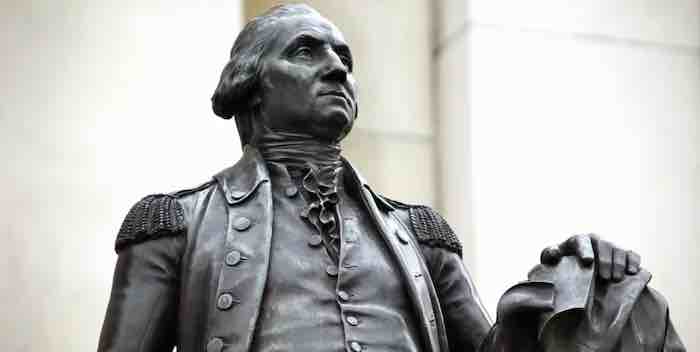



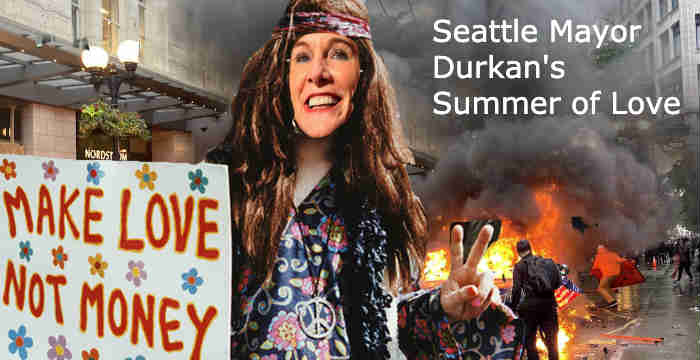

 Centinel2012