Saddam Thought America Would Turn to Iraq for Help Against the Terrorists


debriefing-president

Former CIA Agent John Nixon, the man who interrogated Saddam Hussein and briefed Bush Jr. and Dick Chaney, reveals how intelligence got everything dead wrong in Iraq. He goes into when he was summoned to give a detailed presentation to George W. Bush at the Oval Office back in 2007. He states that Vice President Dick Cheney made a bad joke, “You sure Saddam didn’t say where he put those vials of anthrax?” It was not very appropriate given the fact that America had lost more than 4,000 troops. He goes into how Saddam thought Iraq and America would become closer because he had suppressed the terrorists, and Iraq was not run by religious zealots.

“Iraq is not a terrorist nation,” Saddam said. “We did not have a relationship with [Osama] bin Laden, and did not have weapons of mass destruction… and were not a threat to our neighbors. But the American President [George W Bush] said Iraq wanted to attack his daddy and said we had ‘weapons of mass destruction.’”

Nixon also noted that Saddam warned that revolution comes with hot summers in the Middle East:

“Next summer, when it is hot, they might revolt against you. The summer of 1958 got a little hot. In the 1960s, when it was hot, we had a revolution. You might tell that to President Bush!”

Interesting read, pulling back the curtain to catch a glimpse of reality.


Here’s How Your State Ranks On Credit Card Debt Per Household

Tyler Durden's picture

As parents all around the country wake up this morning and instantly regret adding $1,000’s of dollars to their credit cards over the holidays (at a 30% interest rate nonetheless) so that little Johnny could have the latest iPad, gaming console and sneakers, here is a list of the states where consumers have racked up the most revolving debt.

Ironically, when color coded based on political preference, with the notable exception of Alaska, Democratic-leaning states seem to carry higher credit card debt balances than conservative states.  Imagine that, conservatives expect their government to run budgets the way they run their own households.

Credit Debt by State


Meanwhile, as MarketWatch points out, in the worst states it would take the average family over a year and a half to pay off their credit debt if they contributed 15% of their median income to debt repayment.  But who wants to pay down credit card debt anyway?  We can’t very well have economic growth if people are unwilling to borrow all the way up to the point that they can no longer afford the minimum payment…right, Janet?

Credit Cards


According to ValuPenguin, millennials carry an average credit card balance of $5,800 while, shockingly, even those American’s past retirement age are carrying credit card balances over $6,000 well into their 70’s. 

Credit Debt By Age


And, of course, the more you make the more you borrow…because why not?

Credit Debt by Income


Meanwhile, Experian’s State of Credit 2016 report highlights the top/bottom 10 cities in the United States based on credit score.  Minnesota and Wisconsin absolutely dominate that the top 10 list while California, Texas and Louisiana account for 8 out of the 10 worst cities.

Credit Ratings


Oh well, at least little Johnny will love the new Xbox and sneakers for at least a week and it made for a great Facebook pic!

Putin Mocks Democrats, Exchanges Holiday Greetings and Hopes for Successful Negotiations in 2017 with President-elect Trump


Source: Rogue Money Vladimir Putin said today about Hillary and Dems: “In my opinion, it is humiliating. One must be able to lose with dignity.” So true! — Donald J. Trump (@realDonaldT…

Source: Putin Mocks Democrats, Exchanges Holiday Greetings and Hopes for Successful Negotiations in 2017 with President-elect Trump

trump-standing-in-gap411221112112111111121111111111111211111121111112111111111111111

Indian government now confiscating private jewelry, gold during home raids


)Source: Natural News, by J.D. HeyesIf you’re an Indian citizen, it is best not to try to hoard gold, jewelry and other valuables, as the government will swoop in and seize it.As noted by Mish Talk, global financial repression is beginning to accelerate, and it is being led by the Asian giant, India. The government recently declared large denomination bills to be illegal to hold, and now it is targeting privately-held gold.But the government is not simply targeting gold bars and/or bullion; authorities are raiding homes and are even taking possession of jewelry, with no questions asked or answered.Here’s some background on what’s taking place:The global elite has determined that the surest way to control the masses is through control over their personal finances. If the masses can horde cash and valuables, then they can’t be bullied or controlled by the globalist elite. So in order to accomplish this, physical currently will have to be made illegal to possess or otherwise taken away from the masses and out of circulation completely. Natural News founder/editor Mike Adams, the Health Ranger, has a great piece explaining all of this.The next step forward by the globalists to control personal assetsMish Talk shares another piece of important background information. It essentially notes that there is “cash chaos” in India, where 86 percent of the money in circulation has been withdrawn. On Nov. 8, Indian Prime Minister Narendra Modi stunned the nation when he announced that 500-rupee ($7.30) and 1,000-rupee notes, which are about 85 percent of the money supply, would no longer be legal tender, effective immediately. “As one might imagine, chaos ensued,” the site noted. “And it continues.”Modi’s decision sparked outrage and angst, especially among the pundit class. Writing in Bloomberg View, columnist Mihir Sharma lamented the currency-pulling, noting that while the country’s gross domestic product grew at a mighty 7.3 percent, that wouldn’t translate into improved economic conditions for most Indians.What’s more, he noted that Modi could not backtrack on his decision to demonetize nearly all privately-held cash, because it remains politically popular.The government sold the demonetization policy as the best way to essentially attack the rich (sound familiar?), and to use it as a “’surgical strike on black money’—the illicit piles of cash many rich Indians have accumulated out of sight of the taxman,” Sharma wrote.But it has become clear since then the policy is anything but surgical. Rather, it appears to be just another step forward by the globalists to control personal assets, which can, of course, be instantly taken via electronic theft by government agencies if/when it becomes necessary.

Source: Indian government now confiscating private jewelry, gold during home raids

gargoille

As Obama accomplished policy goals, his party floundered


From the Associated Press By LISA LERER WASHINGTON (AP) — In boasting about his tenure in the White House, President Barack Obama often cites numbers like these: 15 million new jobs, a 4.9 percent …

Source: As Obama accomplished policy goals, his party floundered

trump-drain-the-swamp1211111111111121111111111111111111111121111111111111111111111111121111211111112

Letter from Jesus about Christmas — Fellowship of the Minds


It has come to my attention that many of you are upset that folks are taking my name out of the season. How I personally feel about this celebration can probably be most easily understood by those …

Source: Letter from Jesus about Christmas — Fellowship of the Minds

baptism_of_christ_jekel111

Happy Birthday, Jesus! — Fellowship of the Minds


Luke 2:8-12 Now there were shepherds in that region living in the fields and keeping the night watch over their flock. The angel of the Lord appeared to them and the glory of the Lord shone around …

Source: Happy Birthday, Jesus! — Fellowship of the Minds

baptism_of_christ_jekel11

How Americans Spent Their Money In The Last 75 Years (In 1 Simple Chart)


Tyler Durden's picture

Consumer spending makes up a large percentage of the United States economy. We all have bills to pay and mouths to feed, but where do Americans spend their money? Here is a breakdown of how Americans spent their money in the last 75 years…

In the chart above, spending is broken into 12 categories: Reading, alcohol, tobacco, education, personal care, miscellaneous, recreation & entertainment, healthcare, clothing, food, transportation and housing. Each category is further broken down into spending by year, from 1941 to 2014, and each category is given a unique color. The data were collected from the Bureau of Labor Statistics. The data is adjusted for inflation and measures median spending of all Americans.

Unsurprisingly, housing expenses have almost always been the largest area of spending in America for over 70 years. The only exception is 1941, when spending on food averaged $8,311, whereas spending on housing came to $7,537. However, in 1941 the government included alcohol in the food spending category, which inflates the food spending data for that year. In the other years, alcohol was given its own category. In every other year measured, spending on housing outpaced every other category.

Another interesting trend is the downward slope of spending on clothing. Americans spent the most on clothing in 1961 for an average of $4,157. In every year measured since 1961, spending on clothing fell, even when accounting for inflation.

At the same time, Americans began spending more on education, transportation and healthcare. Spending on education has increased far more than any other category, jumping from $242 in 1941 to $1,236 in 2014. Education spending increased at a particularly fast rate between 1984 and 1994 and onward. While spending on healthcare increased between 1941 and 2014, overall spending dipped between 1973 and 1984, but then began rising rapidly thereafter.

Between 1941 and 2014 Americans spent money on most of the same things, with a few changes. Housing has persisted as a large area of spending for Americans, as has the food category. However, spending on food and clothing has fallen when adjusting for inflation while spending on education and healthcare has risen quickly.

Source: HowMuch.net

The Radical Jesus: How Would The Baby In A Manger Fare In The American Police State?


Tyler Durden's picture

Submitted by John Whitehead via The Rutherford Institute,

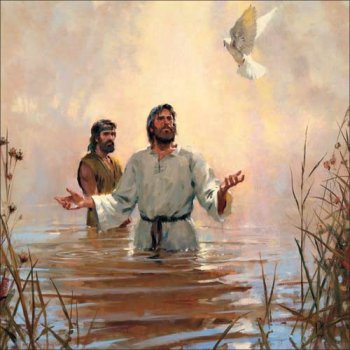
 baptism_of_christ_jekel

“Jesus is too much for us. The church’s later treatment of the gospels is one long effort to rescue Jesus from ‘extremism.’”—author Gary Wills, What Jesus Meant

Jesus was good. He was caring. He had powerful, profound things to say – things that would change how we view people, alter government policies and change the world. He went around helping the poor. And when confronted by those in authority, he did not shy away from speaking truth to power.

Jesus was born into a police state not unlike the growing menace of the American police state.

But what if Jesus, the revered preacher, teacher, radical and prophet, had been born 2,000 years later? How would Jesus’ life have been different had he be born and raised in the American police state?

Consider the following if you will.

The Christmas narrative of a baby born in a manger is a familiar one.

The Roman Empire, a police state in its own right, had ordered that a census be conducted. Joseph and his pregnant wife Mary traveled to the little town of Bethlehem so that they could be counted. There being no room for the couple at any of the inns, they stayed in a stable, where Mary gave birth to a baby boy. That boy, Jesus, would grow up to undermine the political and religious establishment of his day and was eventually crucified as a warning to others not to challenge the powers-that-be.

However, had Jesus been born in the year 2016…

Rather than traveling to Bethlehem for a census, Jesus’ parents would have been mailed a 28-page American Community Survey, a mandatory government questionnaire documenting their habits, household inhabitants, work schedule, how many toilets are in your home, etc. The penalty for not responding to this invasive survey can go as high as $5,000.

Instead of being born in a manger, Jesus might have been born at home. Rather than wise men and shepherds bringing gifts, however, the baby’s parents might have been forced to ward off visits from state social workers intent on prosecuting them for the home birth. One couple in Washington had all three of their children removed after social services objected to the two youngest being birthed in an unassisted home delivery.

Had Jesus been born in a hospital, his blood and DNA would have been taken without his parents’ knowledge or consent and entered into a government biobank. While most states require newborn screening, a growing number are holding onto that genetic material long-term for research, analysis and purposes yet to be disclosed.

Then again, had his parents been undocumented immigrants, they and the newborn baby might have been shuffled to a profit-driven, private prison for illegals where they would have been turned into cheap, forced laborers for corporations such as Starbucks, Microsoft, Walmart, and Victoria’s Secret. There’s quite a lot of money to be made from imprisoning immigrants, especially when taxpayers are footing the bill.

From the time he was old enough to attend school, Jesus would have been drilled in lessons of compliance and obedience to government authorities, while learning little about his own rights. Had he been daring enough to speak out against injustice while still in school, he might have found himself tasered or beaten by a school resource officer, or at the very least suspended under a school zero tolerance policy that punishes minor infractions as harshly as more serious offenses.

Had Jesus disappeared for a few hours let alone days as a 12-year-old, his parents would have been handcuffed, arrested and jailed for parental negligence. Parents across the country have been arrested for far less “offenses” such as allowing their children to walk to the park unaccompanied and play in their front yard alone.

Rather than disappearing from the history books from his early teenaged years to adulthood, Jesus’ movements and personal data—including his biometrics—would have been documented, tracked, monitored and filed by governmental agencies and corporations such as Google and Microsoft. Incredibly, 95 percent of school districts share their student records with outside companies that are contracted to manage data, which they then use to market products to us.

From the moment Jesus made contact with an “extremist” such as John the Baptist, he would have been flagged for surveillance because of his association with a prominent activist, peaceful or otherwise. Since 9/11, the FBI has actively carried out surveillance and intelligence-gathering operations on a broad range of activist groups, from animal rights groups to poverty relief, anti-war groups and other such “extremist” organizations.

Jesus’ anti-government views would certainly have resulted in him being labeled a domestic extremist. Law enforcement agencies are being trained to recognize signs of anti-government extremism during interactions with potential extremists who share a “belief in the approaching collapse of government and the economy.”

While traveling from community to community, Jesus might have been reported to government officials as “suspicious” under the Department of Homeland Security’s “See Something, Say Something” programs. Many states, including New York, are providing individuals with phone apps that allow them to take photos of suspicious activity and report them to their state Intelligence Center, where they are reviewed and forwarded to law-enforcement agencies.

Rather than being permitted to live as an itinerant preacher, Jesus might have found himself threatened with arrest for daring to live off the grid or sleeping outside. In fact, the number of cities that have resorted to criminalizing homelessness by enacting bans on camping, sleeping in vehicles, loitering and begging in public has doubled.

Viewed by the government as a dissident and potential threat to its power, Jesus might have had government spies planted among his followers to monitor his activities, report on his movements, and entrap him into breaking the law. Such Judases today—called informants—often receive hefty paychecks from the government for their treachery.

Had Jesus used the internet to spread his radical message of peace and love, he might have found his blog posts infiltrated by government spies attempting to undermine his integrity, discredit him or plant incriminating information online about him. At the very least, he would have had his website hacked and his email monitored.

Had Jesus attempted to feed large crowds of people, he would have been threatened with arrest for violating various ordinances prohibiting the distribution of food without a permit. Florida officials arrested a 90-year-old man for feeding the homeless on a public beach.

Had Jesus spoken publicly about his 40 days in the desert and his conversations with the devil, he might have been labeled mentally ill and detained in a psych ward against his will for a mandatory involuntary psychiatric hold with no access to family or friends. One Virginia man was arrested, strip searched, handcuffed to a table, diagnosed as having “mental health issues,” and locked up for five days in a mental health facility against his will apparently because of his slurred speech and unsteady gait.

Without a doubt, had Jesus attempted to overturn tables in a Jewish temple and rage against the materialism of religious institutions, he would have been charged with a hate crime. Currently, 45 states and the federal government have hate crime laws on the books.

Rather than having armed guards capture Jesus in a public place, government officials would have ordered that a SWAT team carry out a raid on Jesus and his followers, complete with flash-bang grenades and military equipment. There are upwards of 80,000 such SWAT team raids carried out every year, many on unsuspecting Americans who have no defense against such government invaders, even when such raids are done in error.

Instead of being detained by Roman guards, Jesus might have been made to “disappear” into a secret government detention center where he would have been interrogated, tortured and subjected to all manner of abuses. Chicago police “disappeared” more than 7,000 people into a secret, off-the-books interrogation warehouse at Homan Square.

Charged with treason and labeled a domestic terrorist, Jesus might have been sentenced to a life-term in a private prison where he would have been forced to provide slave labor for corporations or put to death by way of the electric chair or a lethal mixture of drugs.

Either way, whether Jesus had been born in our modern age or his own, he still would have died at the hands of a police state. Indeed, as I show in my book Battlefield America: The War on the American People, what Jesus and other activists suffered in their day is happening to those who choose to speak truth to power today.

Thus, we are faced with a choice: remain silent in the face of evil or speak out against it. As Nobel Prize-winning author Albert Camus proclaimed:

Perhaps we cannot prevent this world from being a world in which children are tortured. But we can reduce the number of tortured children. And if you don’t help us, who else in the world can help us do this?

Donald Trump Signals Willingness to Engage Arab Israeli Peace Effort…


This tweet from President-elect Donald Trump directly implies his willingness to lean into the problem: And President-Elect Donald Trump is not alone carrying optimism:

Source: Donald Trump Signals Willingness to Engage Arab Israeli Peace Effort…

trump-lions