Senator Lindsey Graham appears on Fox News with Maria Bartiromo to discuss the democrat plan for a bill to block President Trump’s national security declaration for border security. Senator Graham anticipates any resolution or bill will not survive a veto from the president.
Senator Graham has high praise for the foreign policy of President Trump as it pertains to Venezuela and Syria. The comments on Syria are enlightening.
Secretary of State Mike Pompeo appears on Fox News Sunday with swamp gatekeeper Chris Wallace. Topics include: the ongoing unrest in Venezuela and the upcoming summit in Hanoi, Vietnam, between President Trump and North Korean chairman Kim Jong-un.
The US Supreme Court ruled UNANIMOUSLY (9-0) that the Constitution’s ban on Excessive Fineswithin the Eighth Amendment, is being reported incorrectly that this is a case against these outrageous Civil Asset Forfeitures – SORRY – Not True! This is a case that can be distinguished EASILY from a Civil Asset Forfeiture because here there was a crime to which Timbs plead guilty. In Austin v. United States, 509 U. S. 602 (1993), however, the Court held that civil in rem forfeitures fall within the Clause’s protection when they are at least partially punitive. Therefore, the confiscation of Timbs’ car was a blend of Civil Asset Forfeiture and a fine making it punitive.
There was no evidence that the car was used in a crime and he had purchased the car with money that traced to insurance – not a crime. So do not get you hopes up that this is changing any Civil Asset Forfeiture. In such cases the action is In Rem so they are not accusing you of a crime nor is it a pure fine. They are claiming that the money is guilty – not you. They have confiscated money because a dog smelled marijuana on your bag so they get to take everything from you. Because they are not charging you with some crime, it is NOT punitive. In this case, it is punitive because Timbs plead guilty to a crime.
However, the ruling effectively means states and local municipalities cannot use fines as a mechanism for raising revenue, something many local governments do. I remember when my father took a local judgeship in Cinnaminson NJ . The politicians told him they want him to fine everyone the maximum. This was back in the 1960s. My father refused and quit. Governments use fines to raise revenue for decades. It has never been about protecting the public. It is always about lining their own pockets. In this respect, the Timbs v Indiana decision is important. There have been studies that show governments seize property more from the poor communities knowing that they lack the understanding of the law and there are no lawyers willing to defend them when they cannot get paid. These studies show that 65% of civil assets forfeiture target the poor.
The hope going around is that Supreme Court’s decision will make it easier to fight such seizures under Civil Asset Forfeiture. Ginsburg noted that the Supreme Court has, at the federal level, found civil forfeiture actions are covered by the Excessive Fines Clause“when they are at least partially punitive.” With incorporation of the Excessive Fines Clause at the state level, the same standard should now apply in the state context too.
The entire proposition for civil asset forfeiture is based upon the ancient tradition of ‘deodand’ which is derived from the Latin phrase ‘deo dandum,’ and means “given to God.” In ancient times, the object that caused the death of someone was forefeited to pay for their funeral. The King of England, in desperate need of money, replaced God with himself. The Supreme Court upheld Civil Asset Forfeiture in 1974 writing:
At common law the value of an inanimate object directly or indirectly causing the accidental death of a [416 U.S. 663, 681] King’s subject was forfeited to the Crown as a deodand. 16 The origins of the deodand are traceable to Biblical 17 and pre-Judeo-Christian practices, which reflected the view that the instrument of death was accused and that religious expiation was required. See O. Holmes, The Common Law, c. 1 (1881). The value of the instrument was forfeited to the King, in the belief that the King would provide the money for Masses to be said for the good of the dead man’s soul, or insure that the deodand was put to charitable uses. 1 W. Blackstone, Commentaries *300. 18 When application of the deodand to religious or eleemosynary purposes ceased, and the deodand became a source of Crown revenue, the institution was justified as a penalty for carelessness.
The real argument has yet to be made that the King merely usurped the position of God for money and that violates the First Amendment prohibiting any law be written that violates religion and this the practice could not have survived the American Revolution.
The case is Timbs v. Indiana and it held a fairly obvious holding that the Eighth Amendment applies to the states as well through the Fourteen Amendment which was created following the Civil War, which was in part over State’s right that was centered on the Slavery issue because removing slaves was really economically undermining the Southern Economy. Thus, the Civil War was really over this issue of State Rights and were they really entitled to separate from the Union.
The Supreme Court Justice I held the most respect for was Justice Scalia because he was a strict constructionist and often ruled against the government. In a famous response to a letter, he wrote: “I cannot imagine that such a question could ever reach the Supreme Court. To begin with, the answer is clear. If there was any constitutional issue resolved by the Civil War, it is that there is no right to secede.”
Indeed, Scalia was really talking about the fact that Congress then passed the Fourteenth Amendment which held that really no State had any rights that were contrary to the Federal Constitution. The Fourteen Amendment held in the NEGATIVE that there were any separate State right to the contrary of the Constitution and then Congress passed the Fourteenth Amendmentwhich clearly held that all the rights, privileges, and immunities contained in the Federal Constitution applied to the states as well.
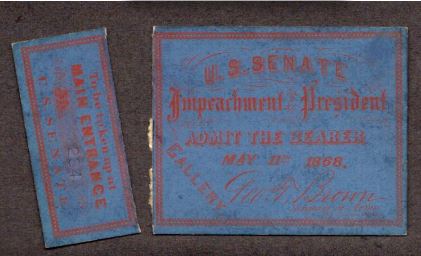
This Amendment was actually created by extortion. It was ratified in 1868 against the opposition of the succeeding President Andrew Johnson following Lincoln’s assassination. Johnson was a southerner and former slave owner who Congress even brought impeachment against because he objected to how the Northern States were treating the Southern States. The extortion took place that the Southern States were denied a right to representation in Congress UNLESS they agreed to the both the Thirteenth & Fourteenth Amendments.
Since then, there have been many cases that step by step held that each and every right, privilege, and immunity applied to the States through this Amendment. Therefore, it should be no surprise that the decision on this holding alone had to be unanimous.
Fourteenth Amendment
Section 1.
All persons born or naturalized in the United States, and subject to the jurisdiction thereof, are citizens of the United States and of the state wherein they reside. No state shall make or enforce any law which shall abridge the privileges or immunities of citizens of the United States; nor shall any state deprive any person of life, liberty, or property, without due process of law; nor deny to any person within its jurisdiction the equal protection of the laws.
…
Section 5.
The Congress shall have power to enforce, by appropriate legislation, the provisions of this article.
The case, Timbs v. Indiana, started with a lawsuit from Tyson Timbs, who pleaded guilty in Indiana to drug dealing and conspiracy to commit theft. After he pleaded guilty, the courts ordered him to forfeit a Land Rover SUV, valued at $42,000, that Timbs had bought with his dad’s life insurance policy. Timbs argued that the seizure was essentially an excessive fine, because it was more than four times the $10,000 maximum fine he could see from his drug conviction under state law. That was the legal question and it involved then the question of whether the Eigth Amendment applied to the States.
A trial court and the Court of Appeals of Indiana sided with Timbs, but the Indiana Supreme Court ruled that the Eighth Amendment doesn’t apply to the states. The US Supreme Court overturned the Indiana Supreme Court’s decision which was self-serving.
Justice Ruth Bader Ginsburg, adds another layer of legal protection for property rights since she delivered the opinion of the Court, in which ROBERTS, C. J., and BREYER, ALITO, SOTOMAYOR, KAGAN, GORSUCH, and KAVANAUGH, JJ., joined. However, GORSUCH, J., filed a concurring opinion. THOMAS, J., filed an opinion concurring in the judgment.
Justice Thomas concurred in the Judgment but stated he disagreed with how the court arrived at that judgment.
“I agree with the Court that the Fourteenth Amendment makes the Eighth Amendment’s prohibition on excessive fines fully applicable to the States. But I cannot agree with the route the Court takes to reach this conclusion. Instead of reading the Fourteenth Amendment’s Due Process Clause to encompass a substantive right that has nothing to do with “process,” I would hold that the right to be free from excessive fines is one of the “privileges or immunities of citizens of the United States” protected by the Fourteenth Amendment.”
JUSTICE GORSUCH, issued only a concurring opinion which is different from concurring in the Judgment.
The majority faithfully applies our precedent and, based on a wealth of historical evidence, concludes that the Fourteenth Amendment incorporates the Eighth Amendment’s Excessive Fines Clause against the States. I agree with that conclusion. As an original matter, I acknowledge, the appropriate vehicle for incorporation may well be the Fourteenth Amendment’s Privileges or Immunities Clause, rather than, as this Court has long assumed, the Due Process Clause.
Indiana attempted to claim that Civil Asset Forfeiture is not protected by the Eighth Amendment. Justice Ginsberg wrote for the Court:
As a fallback, Indiana argues that the Excessive Fines Clause cannot be incorporated if it applies to civil in rem forfeitures. We disagree. In considering whether the Fourteenth Amendment incorporates a protection contained in the Bill of Rights, we ask whether the right guaranteed—not each and every particular application of that right—is fundamental or deeply rooted. Indiana’s suggestion to the contrary is inconsistent with the approach we have taken in cases concerning novel applications of rights already deemed incorporated. For example, in Packingham v. North Carolina, 582 U. S. ___ (2017), we held that a North Carolina statute prohibiting registered sex offenders from accessing certain commonplace social media websites violated the First Amendment right to freedom of speech. In reaching this conclusion, we noted that the First Amendment’s Free Speech Clause was “applicable to the States under the Due Process Clause of the Fourteenth Amendment.” Id., at ___ (slip op., at 1). We did not, however, inquire whether the Free Speech Clause’s application specifically to social media websites was fundamental or deeply rooted. See also, e.g., Riley v. California, 573 U. S. 373 (2014) (holding, without separately considering incorporation, that States’ warrantless search of digital information stored on cell phones ordinarily violates the Fourth Amendment). Similarly here, regardless of whether application of the Excessive Fines Clause to civil in rem forfeitures is itself fundamental or deeply rooted, our conclusion that the Clause is incorporated remains unchanged.
With Justice Samuel A. Alito writing for the majority in McDonald v. Chicago (2010) reasoned that rights that are “fundamental to the Nation’s scheme of ordered liberty” or that are “deeply rooted in this Nation’s history and tradition” are appropriately applied to the states through the Fourteenth Amendment.
The Court held: “Exorbitant tolls undermine other constitutional liberties,” Ginsburg wrote. “Excessive fines can be used, for example, to retaliate against or chill the speech of political enemies.” She added, “Even absent a political motive, fines may be employed ‘in a measure out of accord with the penal goals of retribution and deterrence,’ for ‘fines are a source of revenue,’ while other forms of punishment ‘cost a State money.’”
Because Timbs was not a pure civil forfeiture case, we have not overturned civil forfeiture laws, where police can seize a person’s property without even proving the person was guilty of a crime. They will easily distinguish this saying this is not a fine as in the case of Timbs.
The new proposal in Illinois is for the state to transfer its assets so that they are owned, not by the people, but by the state employees. These proposals will never solve the problem because no one will look at the issue long-term. If they hand ownership to state employees they still run out of money. Who then fixes the infrastructure? The final step will be to hand the tax collectors to the pensions. Then we have civil war — state employees v the people
COMMENT #1: Hey Marty, I’ve never written you in this vein, but (always extremely talented) rich guys saying “Let the chips fall, free market capitalism” are gonna get washed away by this wave and we both know it. When the mass of people don’t even own a vegetable plot despite working their rears off for the dream, you know socialism is here however bad (Marxist) it is. If “capitalism” can’t offer a life (a living wage and a damn plot to park your ass on, not mountains of debt and stress, unless you happen to be born with a certain set of Republican talents) then “capitalism” is out however great it really and truly is. I will never mention politics again but revert to philosophy which is where we really live, and the only thing I really know anyway.
RF
COMMENT#2: Are you blind, Mr. Armstrong?
Don’t you see, that wealth equality is going out of hands?
It cannot be, that a 8 people control (Oxfam 2017) as much wealth as 50% of earth’s population and it get’s more extreme each year. All life is one and it is a responsibility of the heart to share. Capitalism has failed as the majority is not benefitting anymore from it.
REPLY: You are confusing capitalism with oligarchies. Disposable income has been declining because of taxes. Under Marxism, we pay between 300 and 800 times more than previous historical periods of taxes. The Roman Empire had taxes that would rise from 1% to 7% — not 50%+. ALLRepublics collapse into oligarchies because once one person pretends to represent many, they will NEVER put the interests of the many before themself. The lack of term limits means these politicians need money to sustain their position and therein allows the oligarchy to grow with power and influence.
CAPITALISM is the freedom to decide your own fate — not that oligarchies get to own everything. Under a Greek Democracy, only the head of the household voted. They were the Congressman representing everyone in that house. Under SOCIALISM, income taxes were invented meaning every person had to account to the government for what they earned. Women, who didn’t previously vote, suddenly were entitled to vote because they were being held accountable for their individual earnings and government began passing laws to protect people which then dictated things such as abortion or whatever.
So do not confuse an oligarchy with capitalism. They’re on opposite sides of the table.
As for the disparity in wealth, I volunteered in Washington to convert Social Security to a wealth fund during the ’90s. The Democrats would not vote for it because they wanted to change the fund manager when they came into power. The wealth disparity is NOT created by income but by investment. The government regulations restrict investments for the private citizen. The reason there are hedge funds offshore is very simple. We are over-regulated, so a fund manager who complies with the SEC goes to jail with the CFTC. You cannot hire a fund manager to make the decisions for you, so you have to decide between all the various investments yourself. Hedge fund managers make all those decisions but they cannot raise money domestically.
Multiple media outlets are reporting that North Korean Chairman Kim Jong-un has departed Pyongyang en route to Hanoi Vietnam by train. It’s approximately a two day train ride for the journey. The summit with President Trump is scheduled for February 27th and 28th.
SEOUL (Reuters) – North Korea on Sunday confirmed for the first time that its leader Kim Jong Un will hold a second summit with U.S. President Donald Trump, days ahead of the high-stakes nuclear meeting set to take place in Vietnam’s capital of Hanoi.
Kim left Pyongyang by train on Saturday afternoon for the Feb. 27-28 summit accompanied by senior North Korean officials, North Korea’s official KCNA news agency said.
The delegation with Kim includes top North Korean officials who took part in last year’s expanded summit talks between Kim and Trump in Singapore, including top envoy to the U.S. Kim Yong Chol, vice chairman of the central committee of North Korea’s Workers’ Party Ri Su Yong, and foreign minister Ri Yong Ho.
The North Korean leader’s sister Kim Yo Jong, who was also seen aiding him in Singapore, is traveling with Kim as well.
Other senior North Korean officials, such as his de facto chief of staff Kim Chang Son and Kim Hyok Chol, negotiations counterpart to U.S. envoy Stephen Biegun, were already in Hanoi to prepare for the summit. (read more)
The 2019 Outlook Report covers the world. The Report will be priced at $1200 and will address the major markets. We will let everyone know as soon as it is available.
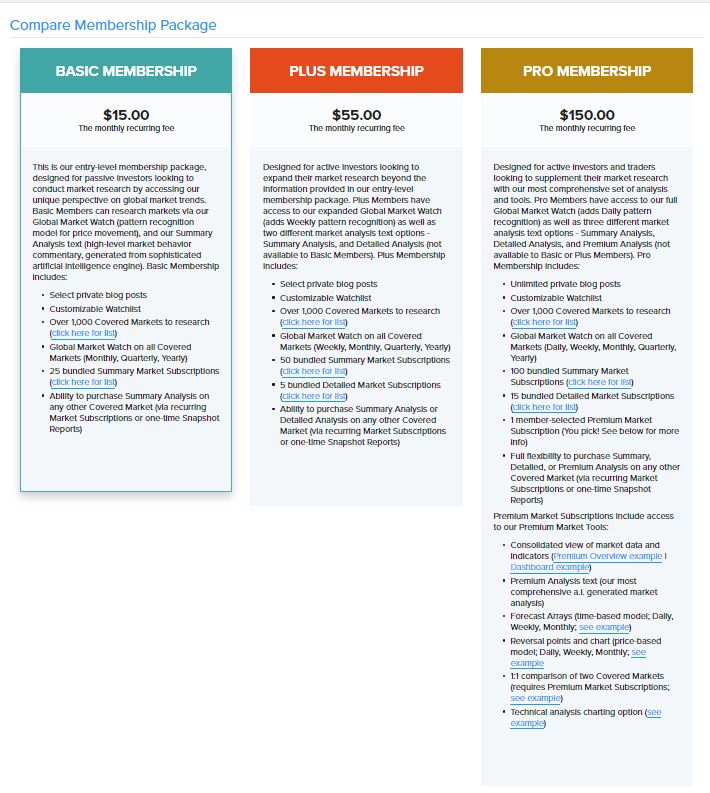
We have created three separate membership options for the Socrates Platform(www.Ask-Socrates.com) which are intended for three separate audiences. First, we have the BASIC Membership service at $15 per month which is intended for the average person who is interested in the broader term with respect to trends and not interested in short-term trading back and forth. Then we have the Plus Membership which provides short-term forecasting for the investor. The third level is the Pro Membership where reversals and arrays are available to access on over 1,000 markets worldwide (requires Premium Market Subscription or Snapshot Report). This is intended for active traders rather than investors who tend to be more position oriented (see comparison).
Then on top of all of this, we have our Institutional Level of service which includes hedging models among other information. While we try to target a version for everyone, it is difficult. The main goal has been to bring the ONLY FULLY FUNCTIONING Artificial Intelligence computer in the world focused on financial markets and global economy, proven over time, to the general public. This is free of personal bias. All of the market analysis (with exception of private blog post commentary) is written by the computer – not analysts. This inspires confidence for everyone knows there is no hidden agenda and there is no conflict of interest. The computer does not own property, mines, manufacture, and beside the fact that it cannot be bribed, it has not national patronage either.
I personally apologize for doing just one blog on Friday for the Pro Version. It is just that there are specific Reversals given so it is not designed to a general investor – we will create a broader view version over the weekend after closings. This is the difference between the three versions of the Socrates Platform, and corresponding private blog posts that are tailored to the three different groups of people we are servicing.
WE HAVE NOT YET COMPLETED THE NEW RELEASE OF SOCRATES
We are still working to finalize various aspects, including adding some additional features and forecasting modules over time. When we are finished with this initial rollout, we will make the formal announcement. Thank you.
Today in presidential history is a day when the import of consequence doesn’t surface until historians apply hindsight. However, those who carry the longest-lens are enjoying these moments in history…. We make with our support of Trump such a sound as all history from these days forward are forced to note, even if they despise us in the writing of it. And when we are gone, our beneficiaries will sing of these deeds in forbidden songs while tending the flickering flame of liberty; for we few lived in the era of Trump.
[Transcript] Oval Office – PRESIDENT TRUMP: Thank you very much. It’s a great honor to be with the Vice Premier of China, a very highly respected man in China. And we’re negotiating trade and the trade agreement. And we have many representatives from China and — as you’d know, and most of you know who they are — many representatives from the United States.
I think we’re getting along very well. Ultimately, I think the biggest decisions and some even smaller decisions will be made by President Xi and myself. And we expect to have a meeting sometime in the not-too-distant future.
And I can only say talks are going along well, but we’re going to have to see what happens. I think there’ll be some points that this group won’t agree on because maybe they’re not supposed to agree on, allowed to agree on. And I think President Xi and I will work out the final points, perhaps. And perhaps not.
So I just want to say, Mr. Vice Premier, it’s a great honor to have you.
VICE PREMIER LIU: Thank you.
PRESIDENT TRUMP: And we thank you very much.
VICE PREMIER LIU: Thank you.
PRESIDENT TRUMP: Would you like to say something?
VICE PREMIER LIU: Okay. Thank you very, very much, Mr. President. It’s a great honor to meet you. I came here — first I bring a message from our President. If you don’t mind, I ask the interpreter to read the letter to you.
PRESIDENT TRUMP: Thank you. Please.
So, you can hear fine? You’ll speak for them (inaudible).
INTERPRETER: Okay. Message from President Xi Jinping to President Donald J. Trump:
Mr. President,
As China and the U.S. are holding another round of high-level economic and trade talks, I entrust Vice Premier Liu He to be my Special Envoy and ask him to bring you my warm greetings and best regards.
Not too long ago, you sent to me a special letter of festive greetings, together with the lovely video made for me and my wife by your grandchildren on the Chinese Lunar New Year. We enjoyed the performance greatly and were happy to see that the little ones have kept improving in their Chinese. We watched the video more than once and feel that we must (inaudible) for these adorable grandchildren of yours.
I’m also pleased to note that, to follow through on what has been agreed upon between the two of us in Argentina, our economic teams have, since lately, engaged in intensive consultations and made significant progress. This has been well received in both our countries and in the wider international community. It is my hope that our two sides will continue to work together in the spirit of mutual respect and win-win cooperation and could redouble our efforts so as to meet each other halfway and reach an agreement that works for our mutual benefit.
Mr. President, I stand ready to be in close touch with you through various means. Please let me know if you have any specific thought in mind.
To conclude, my wife Peng Liyuan and I wish to extend our season’s greetings to you, Melania, and your family. May you all enjoy happiness and success in the Year of the Pig.
PRESIDENT TRUMP: Thank you very much. That’s very nice. Say “Thank you very much”; I would really appreciate if you would just give my warmest regards.
The video he’s talking about is a video made by Ivanka and Jared, and it’s — their children speak fluent Chinese, even though they’re very young. They were taught, at a very young age, Chinese. And when President Xi met Arabella, who’s the oldest, he said this was like perfect Chinese from a — at the time, it was 5-year old — from a 5-year old girl from Beijing. And I thought that was nice. And they actually made a little video that they sent to President Xi.
And if you want, we could even give them — I’m sure the press wouldn’t like to see the video but — (laughter) — if you would, just in case you would, I think it would be fine. If you’d like to do that, Jared, you could just give it to a few of the people. But it was — I thought it was a very nice thing. And it shows a great friendship between the two countries. And that was really just a “Happy New Year” wish that was given in Chinese by Arabella — mostly by Arabella and her two brothers. So I think it was — I think it’s good. I wouldn’t mind if you gave it.
We’re having very good talks. There’s a chance that something very exciting could happen. This is a deal that would be signed by me. I’ve been in touch with Congress. I’ve been telling many of the people in Congress exactly where we are. We’re, right now, getting a 25 percent tariff on $50 billion worth of goods coming in — mostly technology and high technology.
We’re getting a 10 percent tariff on $200 billion worth of goods. The 10 percent goes up as of March 1st. It goes to a 25 percent number. So we’d be getting 25 percent on $250 billion. And there’s about $267 billion that’s un-tariffed, untouched, which we’ll discuss later.
But if we could make a deal, we wouldn’t have to bother with that discussion. So we’ll see what happens. But we’ve had very good talks. As you know, Mr. Lighthizer has done a great job. But it’s only a great job, Bob, if you get it finished, right?
AMBASSADOR LIGHTHIZER: Yes, sir.
PRESIDENT TRUMP: And if it’s a deal that’s a good deal for both.
AMBASSADOR LIGHTHIZER: Yes, sir.
PRESIDENT TRUMP: And, Steve, great. But it’s only great if you get it done.
Wilbur, Sonny — Sonny doesn’t care; he just wants a lot of products being bought from the farmers. Is that right, Sonny? That’s what you care about. Sonny is more interested in the farmers than he is any other aspect.
But Larry Kudlow, Mr. Ambassador — the longest-serving governor in the history of the country, as you know. And now he’s ambassador to China. But he was the Governor of Iowa for 24 years, right?
AMBASSADOR BRANSTAD: Twenty- — well, I would have been, except you appointed me as ambassador. (Laughter.)
PRESIDENT TRUMP: Okay, but you were still the longest —
AMBASSADOR BRANSTAD: Twenty-two years and four months, yeah.
PRESIDENT TRUMP: It’s the longest-serving governor in the history of our country. I believe —
AMBASSADOR BRANSTAD: That’s right. That’s right.
PRESIDENT TRUMP: — (inaudible) from the time. And you’ve done a great job as governor and you’re doing a great job as the ambassador to China.
And I might tell the story that when the ambassador was a young man from Iowa, he was in China. And he was dealing with people from China — both in Iowa and in China. And he met a man who was a young man, and he is now the head of China — President Xi. And he said to his wife — he came home — and this was how many years ago, Mr. Ambassador?
AMBASSADOR BRANSTAD: Well, 1970 — 1985 is when he came to Iowa.
PRESIDENT TRUMP: Right, but —
AMBASSADOR BRANSTAD: 1985.
PRESIDENT TRUMP: — you met him in 1978 or so, right?
AMBASSADOR BRANSTAD: I went to China in ’84, and then he was in Iowa in ’85.
PRESIDENT TRUMP: So he met him, and he came home and he told his wife, “I just met the next President of China.” And they say, “How would you know?” He said, “Because the competence of this man is so enormous that I believe he’s going to be the next President of China.” And years go by, and he became the next President of China. And they like each other.
So when it came time to picking an ambassador from China, I say, “I think I have the right guy. He happens to be governor of the great state of Iowa.” And you have done a fantastic job. But I thought that story was incredible.
So, many years ago, he said that he knows who the next President of China is going to be. I thought — I just think it’s a great story. And his wife confirms it fully, so that’s good.
So I just want to thank everybody for being here. We’re going to have discussions right now. We’re talking. And again, I think we’re making a lot of progress. I think there’s a very, very good chance that a deal could be made. We’ll be meeting at some point with President Xi — assuming we go further along the line, Bob. Could you say a couple of words to that as to the potential of a meeting — whether or not we will (inaudible)?
AMBASSADOR LIGHTHIZER: We’ve made progress on some very important structural issues and some progress on purchases. We have a few very, very big hurdles that we still have to face, but if we make — if we continue to make progress, that would be a great outcome, and I think the Vice Premier agrees with that.
VICE PREMIER LIU: Yes, we too have made great progress.
PRESIDENT TRUMP: Made great progress. I think we have made great progress. Steve Mnuchin, what would you say?
SECRETARY MNUCHIN: I would just add that the Vice Premier and his team have agreed to extend their trip for two days, so we will be meeting all day tomorrow and into Sunday so we can continue on a very important — this is — the ambassador has done a very good job at documenting multiple MOUs that will be binding and enforceable and cover all different types of industries.
If we can successfully conclude this, this will be very good for U.S. business and finally allowing China to open up to U.S. business.
PRESIDENT TRUMP: Why do you bother putting it in a form of a letter of intent or whatever you want to call it? To me, it’s a waste of time.
SECRETARY MNUCHIN: Well, we want to make sure. These are very important issues. There’s hundreds of issues that we’re dealing with — everything from financial services to currency, to forced technology transfer, to aircraft, to express shipping, to different industries. So these are very complicated issues that the ambassador —
PRESIDENT TRUMP: Currency manipulation — a very important subject which a lot people didn’t even think in terms of.
SECRETARY MNUCHIN: Yes. And that’s one of the areas, Mr. President, we actually concluded and reached an agreement — one of the strongest agreements ever on currency. But we have a lot of work to do over the next two days on many issues.
PRESIDENT TRUMP: Have you discussed and reached a final agreement on currency?
AMBASSADOR LIGHTHIZER: We have on currency, but we have a lot more work to do over the next two days.
PRESIDENT TRUMP: To stabilize currencies.
Okay. Wilbur Ross.
SECRETARY ROSS: I’m very encouraged by what’s going on. I think that the tariff situation is an important one, that this could be a good substitute for it if we can fill in more of the blanks. But there’s a lot more to be done, as everybody has said. So it’s a little early for champagne.
PRESIDENT TRUMP: No, I agree with that.
Secretary, go ahead. For the farmers, (inaudible).
SECRETARY PERDUE: I think the work that’s being done on both sides is very, very important. And I’m happy to hear the progress, obviously. I think everybody understands, Mr. President, this deal will be consummated — if there is a deal — by you and President Xi. And we understand that.
Obviously, you have some great negotiators on your side, as does the Vice Premier, in that regard. There are a lot of details to work through, but ultimately you and President Xi are going to have to really do the deal.
PRESIDENT TRUMP: I think we’re doing very well with regard to farmers and the buying of products from our farmers at a certain point. They’ve already made a big commitment to do that. But this will be a very, very substantial farm deal. This will be the biggest farm deal ever made, if you think about it. I don’t think anything will be close, because it’s China. So hopefully, if we arrive at a deal, they’ll be buying lots of every form of farm product.
Mr. Ambassador, would you say something, if you’d like?
AMBASSADOR BRANSTAD: Well, I think this is probably a very historic time. And these are the two biggest economies in the world. And if these difficult structural issues can get worked out, I think it will be tremendously beneficial not only to China and the United States, but to the whole world economy.
So I know people have been working very hard. We’ve had many, many sessions, both in Beijing and here. And I appreciate the hard work and the diligence that’s going on.
PRESIDENT TRUMP: Thank you. Yeah, it’s going very well.
Peter, would you like to say something? This is a gentleman that loves tariffs, by the way. He’s like me. He and I — he loves tariffs. Peter, go ahead.
MR. NAVARRO: I agree with you, sir. Tariffs are simple and they’re enforceable.
PRESIDENT TRUMP: Right. Right. Okay. That’s all you have to say? But it’s — it’s true.
MR. NAVARRO: I wish the team luck.
PRESIDENT TRUMP: Good. They’re doing a good job.
Larry.
MR. KUDLOW: I’ll just echo. And, you know, a good deal that is enforceable — that’s so important to the United States and to you. But if you get a good deal and we can reduce these barriers, I think it will be good for growth and prosperity for the U.S. and for China, sir.
PRESIDENT TRUMP: I think the relationship has been very good. That’s what I will say, more than anything else. As to whether we make a deal or not, who knows? But I think we have a good chance. But I think the relationship is outstanding. I think the relationship that we have now with China is better than it’s ever been. And that’s being — you know, making a big statement. Our relationship, the President — the President’s relationship with me, President Xi’s relationship with me — I think that it’s the strongest it’s ever been.
One of the things that’s so important to me is the fentanyl. And President Xi has agreed to criminalize the sale of fentanyl. Right now, it’s not a criminal product because I guess they call it “industrial,” or they call it something. But it’s not a criminal product. And China has much tougher laws than we do in this country on drugs, so they don’t have a big drug problem in China. They have a thing called the death penalty.
And China has much tougher laws than we do. But they’ve agreed to criminalize the sale of fentanyl, including the sale of fentanyl to the United States. And that is a tremendous thing because, as you know, most of it, if not all of it, comes from China. That would be a tremendous thing, in terms of our war on drugs.
So I very much appreciate that. And that’s another thing we’ll be finalizing, hopefully, at the meeting that we have.
So subject to where they are — and we’re going to have a meeting now — but subject to where they are, we will be having at least an additional meeting. And then, ultimately, we’ll have a meeting with myself and President Xi to discuss the final terms and things that haven’t been agreed to. But I think a lot of those things have been agreed to, but they want he and I to agree to them in a final form. But the fentanyl is so important to us. The criminalization of fentanyl is so important to us, and we appreciate that.
I want to just thank everybody for being with us. Mr. Vice Premier, I want to thank you very much. Their trip is being extended, as Steve said. Their trip is being extended by two days, unexpectedly, because they are making great progress. So they’ll be here for an extra couple of days.
So what would that include? That would be Sunday, Monday? Or —
AMBASSADOR LIGHTHIZER: It will be all day Saturday and all day Sunday.
PRESIDENT TRUMP: All day Sunday. So they’ll be leaving on Sunday night and Monday morning.
So, great progress being made. Let’s see what happens. Thank you all very much. I appreciate it.
Q Mr. President, do you expect to extend the deadline because of the progress here? Or will you still stick with March 1st?
PRESIDENT TRUMP: Well, I set the deadline of March 1st, and right now it’s at 10 percent. And I think that if — I mean, you can tell this to President Xi — I think — and if I see progress being made, substantial progress being made, it would not be inappropriate to extend that deadline — keep it at 10 percent, instead of raising it to 25 percent. And I would be inclined to doing that. I haven’t even spoken to my people about it. Most people assume it’ll just kick in automatically — the 25 percent. But I’m the one that said it, and I think it was a reasonable period of time.
But we’re covering things that we didn’t even know we’d be covering. We’re going very deep into the trade, and covering items that a lot of people wanted to cover and nobody thought we’d ever get to. But we have a one-time shot at making a great deal for both countries. And so we are going to give it.
So it depends on where we are. If we’re doing well — Jeff, if we’re doing very well on the negotiation, I could see extending that. And I don’t think it would have to be a long-term extension because I would imagine that if it took, Steve, another month or so or less —
SECRETARY MNUCHIN: Yeah, I think our expectation is to conclude this quickly. And if we get to the point, over the next few days, of making progress, recommending a meeting for you and President Xi in March.
PRESIDENT TRUMP: Yeah. So dependent on how they do over the next few days, I would certainly consider that. Okay?
Q Is drawing down U.S. troops a consideration? Is drawing down U.S. troops a consideration in your upcoming summit with North Korean Kim Jong Un? And —
PRESIDENT TRUMP: No, it’s not. No. That was not a consideration. That’s not — that is not one of the things on the table.
Q What is on the table?
PRESIDENT TRUMP: Oh, you really want me to discuss that now?
Q I do.
PRESIDENT TRUMP: Everything is on the table. Everything.
Q Mr. President, do have any concerns about the Labor Secretary tampering with the Jeffrey Epstein case?
PRESIDENT TRUMP: I really don’t know too much about it. I know he’s done a great job as Labor Secretary. And that seems like a long time ago. But I know he’s been a fantastic Labor Secretary. That’s all I can really tell you about. That’s all I know about.
Q What about the charges against Bob Kraft? He’s a friend of yours.
PRESIDENT TRUMP: Well, it’s very sad. I was very surprised to see it. He’s proclaimed his innocence totally, and — but I’m very surprised to see it.
Q Have you spoken with Bill Barr about the release of the Mueller report? Have you spoken with him about that?
PRESIDENT TRUMP: No, I have not. No.
Q You’ve said nothing to him about it?
PRESIDENT TRUMP: I have not.
Q Do you expect to?
PRESIDENT TRUMP: At some point, I guess I’ll be talking about it. But you know the nice part? There was no collusion. There was no obstruction. There was no anything. So that’s the nice part. There was no phone calls, no nothing. We have a — I won a race. You know why I won the race? Because I was a better candidate than she was. And it had nothing to do with Russia, and everybody knows it’s a hoax. It’s one of the greatest hoaxes ever perpetrated on this country.
So I look forward to seeing the report. If it’s an honest report, it will say that. If it’s not an honest report, it won’t.
Yeah, go ahead.
Q You’ve been at this and your teams have been at this trade deal for a long time.
PRESIDENT TRUMP: Yeah, well, it’s not a long time when you consider it’s probably the biggest deal ever made.
Q It seems like it’s getting close to the finish line. At this point, when you boil it all down, do you believe it’s more likely that a deal does happen or a deal doesn’t happen?
PRESIDENT TRUMP: Well, I think I can speak for the United States — the question is an interesting one. Is it more likely that a deal happens or doesn’t happen? Speaking for the United States, I would say it’s probably more likely that a deal does happen. But that doesn’t mean it’s going to happen.
Speaking for China, if you’d like to add — answer that question, you can. But I would say that it’s more likely that a deal will happen. The fact that they’re staying — and this is a very high delegation. This is a man who is revered all throughout China, as the Vice Premier. So the fact that they’re willing to stay for a quite a bit longer period — doubling up the time — that means something. I think there’s a good chance that it happens.
Go ahead. Would you like to answer that question?
Q Mr. President —
PRESIDENT TRUMP: Wait. Would you like to answer that question?
VICE PREMIER LIU: Thank you, Mr. President. May I speak Chinese instead of English?
PRESIDENT TRUMP: Yes, please. Speak Chinese and you — you’ll speak louder.
VICE PREMIER LIU: Okay.
PRESIDENT TRUMP: They can’t hear you.
TRANSLATOR: I will.
VICE PREMIER LIU: (As interpreted.) So from China, we believe it is that —
PRESIDENT TRUMP: You have to speak louder. I’m sorry.
VICE PREMIER LIU: (As interpreted.) From China, we believe that is very likely that it will happen and we hope that ultimately we’ll have a deal. And the Chinese side is ready to ready to make our utmost effort.
PRESIDENT TRUMP: I think we both feel that way. I think we both feel that there’s a very good chance that the deal will happen.
Q Mr. President, on troops in Syria, why are you reversing course?
PRESIDENT TRUMP: I’m not reversing course. I have done something that nobody else has been able to do. In another short period of time, like hours — you’ll be hearing “hours and days” — you’ll be hearing about the caliphate. It will — it’s 100 percent defeated. Nobody has been able to say that. That doesn’t mean there aren’t some very bad people walking around and strapping on bombs and all of these things. But we’ve done a job that nobody else has been able to do.
I heard Lindsey Graham this morning congratulating me on having defeated the cal- — you know, the caliphate. And, frankly, I’m getting a lot of congratulations.
At the same time, we can leave a small force along with others in the force — whether it’s NATO troops or whoever it might be — so that it doesn’t start up again. And I’m okay — it’s a very small, tiny fraction of the people that we have. And a lot of people like that idea and I’m open to ideas.
But the 2,500 people that we’ve had there will be going to different parts of the world. They may be going over to Iraq, where we have a very powerful base — a base that cost billions of dollars to build, frankly, and that we’ll be using. But we have had tremendous success in defeating the caliphate.
And now everybody is admitting I did more in the last three or four weeks than people have done in years. And it’s been very successful, but we want to make sure it stays that way.
Yes. Please.
Q Tech transfers — going back to the trade deal — we’ve heard that you haven’t made a whole lot of progress on the tech transfers —
PRESIDENT TRUMP: Do you want to talk about the transfers? Tech —
Q Does that still have to be part of the deal —
PRESIDENT TRUMP: Yeah, I’ll let Bob answer that. Go ahead, Bob.
Q Thanks.
AMBASSADOR LIGHTHIZER: The answer is, yes. It’s one of the structural issues. It has to be done properly. I mean, we’ve made a lot of progress. So whoever told you we weren’t just didn’t know what they’re talking about.
Q Mr. President, why haven’t you condemned the North — the North Carolina election fraud? This is a big story. The Republican candidate is calling for a new election. Why have you not condemned that, given you’ve condemned other kinds of voter fraud?
PRESIDENT TRUMP: Well, I condemn any election fraud. And when I look at what’s happened in California with the votes, when I look at what happened — as you know, there was just a case where they found a million fraudulent votes. When I look at what’s happened in Texas —
Q There haven’t been any cases (inaudible) —
PRESIDENT TRUMP: Excuse me. Excuse me. When I look at what’s happened in Texas. When I look at that catastrophe that took place in Florida where the Republican candidates kept getting less and less and less and less. And fortunately, Rick Scott and Ron ended up winning their election, but it was disgraceful what happened there.
So I look at a lot of different places all over the country. I condemn any voter fraud of any kind, whether it’s Democrat or Republican — or when you look at some of the things that happened in California, in particular. When you look at what’s happened in Texas with all of those votes that they recently found were not exactly properly done, I condemn all of it. And that includes North Carolina, if anything — you know, I guess they’re going to be doing a final report. But I’d like to see the final report. But any form of election fraud, I condemn.
Q Mr. President, when do you want to have that meeting with President Xi? And do expect to have that at Mar-a-Lago?
PRESIDENT TRUMP: Probably at Mar-a-Lago. Probably fairly soon, during the month of March. Bob, do you have a date? Steve, do you have a date?
SECRETARY MNUCHIN: We’re planning it with your schedule, Mr. President.
PRESIDENT TRUMP: Okay, so there — we have two schedules. And we’ll be planning that with the schedule.
Q Do you have any concerns about Michael Cohen’s testimony before Congress this week?
PRESIDENT TRUMP: No. No. No.
[Crosstalk.]
PRESIDENT TRUMP: It’s lawyer-client, but, you know — he’s taking his own chances.
Q Where do things stand with Huawei and ZTE? Would you still consider a ban of Chinese technology?
PRESIDENT TRUMP: Well, ZTE paid a big fine of $1.2 billion, which nobody has ever even heard of before. And we want everybody to compete. And I guess it will be somewhat of a subject that we’re talking about here, Bob. We’ll be talking about it. We may or may not include that in this deal.
Q Include what?
Q Would you drop criminal charges?
PRESIDENT TRUMP: The Huawei and ZTE.
Q Would you drop criminal charges against Huawei as part of this deal?
PRESIDENT TRUMP: We’re going to be discussing all of that during the course of the next couple of weeks. And we’ll be talking to the U.S. Attorneys. We’ll be talking to the Attorney General. But we’ll be making that decision. Right now it’s not something that we’re discussing.
Q Do you think that (inaudible) Republicans will stick with you on the — on your emergency declaration and vote against the joint resolution?
PRESIDENT TRUMP: Oh, I think they’ll stick. Yeah. Everybody knows we need border security. We need a wall. I think it’s a very bad subject for the Democrats. We need a wall.
We’ve apprehended more people than we have in many, many years. “Apprehended,” meaning we’ve gotten. With the wall, we wouldn’t even have to apprehend them if we had the proper structure. It’s costing us a lot of money with the military; we have a lot of military there. We have tremendous border control and border security there.
We have — I’ll tell you what, the people of border security, people of ICE, the law enforcement, generally speaking, have done an incredible job at the border. We have caravans heading up and we’re able to head out the caravans. We’ve done a great job. But if we had the wall, it would be much easier. And, frankly, it would be a job that would be perfecto. And it would cost actually, ultimately, a lot less money.
Q So you don’t think that the joint resolution —
Q Mr. President —
PRESIDENT TRUMP: What?
Q Okay, I have question from China Daily. I — you –
PRESIDENT TRUMP: China Daily.
Q — you tweeted yesterday that the U.S. would not block out, currently, more advanced technology in terms of 5Gs, 6Gs. What do you mean?
PRESIDENT TRUMP: Well, I’d like to have all companies be able to compete. I don’t want to artificially block people out based on excuses or based on security. I don’t want to have a security problem.
Q Including Huawei?
PRESIDENT TRUMP: Wait. I’m talking about everybody, really — including. But I’m talking about everybody. I don’t want to use artificial blocking. We want to have great 5G. Ultimately, that’s going to morph into 6G. And probably 6G will be obsolete in about two months, the way it’s going — you know, the way that whole world moves. But 6G, at some point in the future, will be obsolete.
But I want to have competition with China. Fair competition. I don’t want to block out anybody if we can help it. Now if there’s going to be a security reason or something, then we have no choice, but that is one of the things we’ll be discussing today. We want to have open competition. We’ve always done very well in open competition.
Go ahead.
Q Mr. President, your officials mentioned that was a deal on currency. Can you explain to us what that was?
PRESIDENT TRUMP: Well, we’ll let you know at the appropriate time, but we have a deal on currency and currency manipulation.
Yes.
Q Will you definitively veto that resolution that was introduced today that would block your national emergency if it passes?
PRESIDENT TRUMP: On the wall?
Q Yes.
PRESIDENT TRUMP: Will I veto it? 100 percent. 100 percent. And I don’t think it survives a veto; we have too many smart people that want border security, so I can’t imagine it could survive a veto. But I will veto it, yes.
Q Mr. President, last year you had dropped all U.S. assistance to Pakistan because of terrorists coming from there.
PRESIDENT TRUMP: No, I stopped paying Pakistan the $1.3 billion that we were paying them. In the meantime, we may set up some meetings with Pakistan. Pakistan was very taking very strong advantage of the United States under other Presidents and we were paying Pakistan $1.3 billion a year. I ended that payment to Pakistan because they weren’t helping us in a way that they should have.
And honestly, we’ve had — we’ve developed a much better relationship with Pakistan over the last short period of time than we had. But I did; I ended the payment. We were paying Pakistan $1.3 billion a year. I ended that about nine months ago. A lot of people don’t know that, but I ended it nine months ago.
Q But terrorists are still coming from Pakistan, attacking in Afghanistan and India (inaudible).
PRESIDENT TRUMP: But what are you talking about? What are you — what are you trying to refer to? You’ll have to speak up. I can’t hear you.
Q Terrorists coming from Pakistan have attacked Indian forces in Kashmir.
PRESIDENT TRUMP: That’s right. No, it’s a terrible thing going on right now between Pakistan and India. It’s a very, very bad situation, and it’s a very dangerous situation between the two countries. And we would like to see it stop. A lot of people were just killed and we want to see it stopped. We’re very much involved in that. Yes, if that’s what you’re referring to.
Q People in India are seeking right to self-defense —
PRESIDENT TRUMP: No, India is looking at something very strong. And, I mean, India just lost almost 50 people and — with an attack, so I can understand that also. But we’re talking and a lot of people are talking, but it is a very, very delicate balance going on right now. There’s a lot of problems between India and Pakistan because of what just happened in Kashmir.
Are you talking about Kashmir?
Q Yeah.
PRESIDENT TRUMP: In Kashmir, it’s very dangerous. Yes, please.
Q Mr. President, on Huawei, sir, just one quick follow-up: Are you planning an executive order on Huawei?
PRESIDENT TRUMP: Well, we’re not doing anything right now. We may or may not put that in the trade agreement. We may be discussing it, but we’d only do that in conjunction with the Attorney General of the United States because that is a matter that is outside of what we’re doing. So we do that with the Attorney General, if we do anything. And I guess there’s a question as to whether or not that’s being included in the agreement.
Yeah, go ahead.
Q Mr. President, we haven’t gotten your response yet to Amazon pulling out of New York City, your home city —
PRESIDENT TRUMP: I think it’s a big loss to New York City. I think it’s a big loss. I think it’s a — if you look at the deal, the deal was not a great deal from the standpoint of — they could’ve made a better deal than that, a much better deal. But still, I think it’s a loss for New York City.
And the $3 billion wasn’t a check; it was a form of taxes over a period of time that now they’ll never see because, you know, they were going to take in a lot of jobs; they were going to take in a lot taxes. So I think it’s a big loss for New York City. It’s the kind of thinking that our country is going to, on the Left, on the radical Left. But ultimately, it’s not good for jobs and it’s not good for the economy.
But I think it was a big loss for New York City. I come from New York City. I love New York City. I think it was big loss for New York City.
Yes, sir.
Q Mr. President, when were you briefed, sir, on the Coast Guard member who was arrested for threatening Democrats and other members of the media?
PRESIDENT TRUMP: I’m actually getting a very final briefing and a very complete briefing in about two hours after this.
Q And do you have any thoughts on this man —
PRESIDENT TRUMP: I think it’s a shame.
Q — who went after members of the media?
PRESIDENT TRUMP: Yeah. I think it’s a very sad thing, I mean, when a thing like that happens. And I’ve expressed that, but I’m actually a very complete briefing in about two hours.
Q Do you think that you bear any responsibility for moderating your language when it comes to that?
PRESIDENT TRUMP: No, I don’t. I think my language is very nice.
Yes.
Q From People’s Daily China —
PRESIDENT TRUMP: From China. From China.
Q Trade conflict have been one year. Now negotiation is going on. So what’s your — what do you think?
PRESIDENT TRUMP: Who are you with in China?
Q People’s Daily China newspaper.
PRESIDENT TRUMP: People’s Daily.
Q Yeah. And then what do you think — that cooperation is still the good solution between the two —
PRESIDENT TRUMP: Great cooperation.
Q Yeah.
PRESIDENT TRUMP: We have great cooperation, both ways, with China. And a lot of good things are happening. I mean, I think you see that. So many people, every day, “They are going to make a deal; they aren’t going to make a deal.” They don’t know. They have no idea. It’s fake news. You know, it’s one of those things.
Do they have fake news in China? I think so. (Laughter.)
But it’s a question: Are they going to make a deal? Aren’t they? I think we have a very good chance of making a deal. But both parties want to make it a meaningful deal. We don’t want to make a deal that doesn’t — I can speak for the Vice Premier, I can speak for President Xi, I can speak for myself: Both parties want to make this a real deal and we want to make it a meaningful deal, not a deal that’s done and doesn’t mean anything.
We want to make this a deal that’s going to last for many, many years, and a deal that’s going to be good for both countries. But we want to make it meaningful.
Now, with that being said, China has the advantage of having many years of tremendous success at the expense of the United States, so they understand that. And I never blamed China for that; I blamed our past leaders. Our leaders have done a lousy job with trade. Our country lost $800 billion last year with trade, generally. Eight hundred billion dollars.
So the Vice Premier understands that. So this same agreement should have been made 20 years ago, not now. Because, for 20 years, the United States has been really taken advantage of. And I’m not blaming China, but we should’ve done the same thing to them. But we didn’t do that. We had Presidents that didn’t do their job. You want to know the truth? We had Presidents that did not do their job.
Yeah, go ahead.
Q Will the MOUs be a long-term deal? How long would your MOUs stay in place?
PRESIDENT TRUMP: I think the MOU is going to be very short-term — no. I — we expect to go into — I don’t like MOUs because they don’t mean anything. To me, they don’t mean anything. I think you’re better off just going into a document. I was never a fan of an MOU.
AMBASSADOR LIGHTHIZER: An MOU is a contract. It’s the way trade agreements are generally used. People refer to it like it’s a term sheet. It’s not a term sheet. It’s an actual contract between the two parties. A memorandum of understanding is a binding agreement between two people. And that’s what we’re talking about. It’s detailed; it covers everything in great detail. It’s just called a memorandum of understanding. That’s a legal term. It’s a contract.
Q And would you think that would be a very long-term deal, sir?
VICE PREMIER LIU: Yes. Yes. Yes. (Inaudible.) Yes.
AMBASSADOR LIGHTHIZER: Contracts last while they last. There’s no term. They last while they last.
PRESIDENT TRUMP: By the way, I disagree. I think that a memorandum of understanding is not a contract to the extent that we want. We’re going to have — we’re doing a memorandum of understanding that will be put into a final contract, I assume. But, to me, the final contract is really the thing, Bob — and I think you mean that, too — is really the thing that means something.
A memorandum of understanding is exactly that: It’s a memorandum of what our understanding is. But, to me, the contract is — the real question is, Bob, so we do a memorandum of understanding, which, frankly, you could do or not do. I don’t care if you do it or not. To me, it doesn’t mean very much. But if you do a memorandum of — how long will it take to put that into a final, binding contract?
AMBASSADOR LIGHTHIZER: From now on, we’re not using the word “memorandum of understanding” anymore. We’re going to the term “trade agreement.” All right?
VICE PREMIER LIU: Okay.
PRESIDENT TRUMP: Right.
AMBASSADOR LIGHTHIZER: No more. We’ll never use the term again.
PRESIDENT TRUMP: Good.
AMBASSADOR LIGHTHIZER: We’ll have the same document. It’s going to be called a “trade agreement.” We’re never going to use “MOU” again.
PRESIDENT TRUMP: Are they going to put that into another agreement?
AMBASSADOR LIGHTHIZER: It’ll — what we’ll have will be a trade agreement that, if we have — we have major hurdles. I don’t want to put the cart in front of the horse. Assuming you decide on an agreement, it’ll signed by the two people. It’ll be a trade agreement between the United States and China. We’re not going to use (inaudible) —
PRESIDENT TRUMP: Good. Good. I like that much better. I like that term much better.
AMBASSADOR LIGHTHIZER: Do you agree with that?
VICE PREMIER LIU: Okay. I agree. I fully agree.
PRESIDENT TRUMP: I don’t — I wouldn’t go into a memorandum. I would go right into a trade agreement. Either you’re going to make a deal, or you’re not. To have these other agreements doesn’t mean anything —
AMBASSADOR LIGHTHIZER: We’re never using that word again.
PRESIDENT TRUMP: — because they’re not that meaningful, in my opinion. But anyway, I like that much better.
Q Mr. President, what do you think needs to be done after your meeting with Lynne Patton on NYCHA?
PRESIDENT TRUMP: On what?
Q Are you going to be meeting with Lynne Patton of the New York City Housing Authority?
PRESIDENT TRUMP: Yeah, Lynne Patton is great. And I can tell you, the New York City Housing Authority — the Mayor of New York has done a terrible job with public housing. We’re trying to help them, but the Mayor of the City of New York has done a terrible job with respect to public housing. We’re getting reports back, and it’s a disgrace how badly New York City handles its public housing.
Q Do you have any thoughts on Bill de Blasio heading to Iowa?
PRESIDENT TRUMP: Well, I think he has to learn how to run New York City before he starts running the country because he hasn’t done a very good job — including, by the way, with Amazon.
Q On North Korea, your own administration officials say that Kim Jong Un has not actually decided yet whether he wants to denuclearize. So how can you meet with him if he doesn’t even want to get the goal that you want?
PRESIDENT TRUMP: We have had such a great relationship, and China has helped us a lot with North Korea and with Kim Jong Un since I got to office.
If I were not elected President, you would have been in a war with North Korea. We now have a situation where the relationships are good — where there has been no nuclear testing, no missiles, no rockets. We got our hostages back. And we have many of the remains back, and coming back rapidly — the remains of our great warriors from many, many years ago. And the families are so thrilled and so happy. We’ve had a great relationship.
The Singapore was a tremendous success. Only the fake news likes to portray it otherwise. We would’ve gone — we would’ve been — we would have literally been in a war with North Korea, in my opinion, had I not been elected.
Okay. Thank you very much everybody.
Q (Inaudible.)
PRESIDENT TRUMP: Thank you. We’ll see how it goes. I think it will be successful.
Q Do you think Steve King should run again for Congress?
PRESIDENT TRUMP: I can’t hear you. You have to speak up.
Q Do you think Steve King should run again for Congress? He said he’d run.
PRESIDENT TRUMP: You know, I don’t know anything about the situation. When did he announce that?
Q He said — today, he said he wanted to run.
PRESIDENT TRUMP: I have not seen it. He hasn’t told me anything. So we’ll have to take a look.
Q Are you still in touch with him?
PRESIDENT TRUMP: I haven’t spoken to him in a long time, no. I haven’t spoken — I have not been involved in that.
I have created this site to help people have fun in the kitchen. I write about enjoying life both in and out of my kitchen. Life is short! Make the most of it and enjoy!
This is a library of News Events not reported by the Main Stream Media documenting & connecting the dots on How the Obama Marxist Liberal agenda is destroying America








 Centinel2012