Secretary of State Mike Pompeo U.N. Press Conference (Video and Transcript)…


Secretary of State Mike Pompeo delivers remarks to the media following his presentation to the U.N. surrounding ongoing issues with Iran, the failed JCPOA and the updated U.S. sanction policy.

.

[Transcript] SECRETARY POMPEO: Good afternoon, everyone. We had a productive Security Council meeting where the United States made clear that Iran’s ballistic missile activity is out of control and that they are defying the UN Security Council 2231 in numerous ways.

Iran has been testing – on a testing spree and a proliferation spree and this must come to an end. We want to work with all members of the Security Council to reimpose tougher restrictions on the Iranian ballistic missiles. The restrictions that were in place under UNSCR 1929 are the place that the world needs to be today. This threat is real and upon us. We clearly see that the JCPOA didn’t succeed in stopping this malign activity. This Security Council has a responsibility to protect citizens in the Middle East, Americans traveling through the Middle East, Europeans who are now at risk from Iranian missiles, and we called upon every member of the Security Council to undertake actions that would achieve that.

With that, I’m happy to take a couple of questions.

MR PALLADINO: Let’s start with CBS, Pam Falk.

QUESTION: Thank you. Thank you very much, Mr. Secretary. It’s Pamela Falk from CBS. Do you envision any additional sanctions on either Iran or on the European Union given the fact that the SPV, according to Iran’s chief of staff of the president, is about to go into effect in two or three weeks, meaning avoiding U.S. sanctions given what you said today about the proliferation?

SECRETARY POMPEO: Sure. So I never get out in front of decisions that we make about sanctions. We have to evaluate the facts as they present themselves. But we’ve been unambiguous with respect to those things that are permissible and those that are not. Should it be the case that the Europeans develop an SPV, we’ll look at it. There are humanitarian exemptions in the sanctions that have been put in place for foodstuffs and medicine. If the activity that is undertaken is consistent with that, we obviously won’t emplace sanctions. But to the extent that there are violations of our sanctions, we intend to enforce them with great rigor against any party who is a participant in those violations.

MR PALLADINO: (Inaudible) BBC.

QUESTION: Right here. Right here. Thank you, Secretary. BBC. Good afternoon.

SECRETARY POMPEO: (Off-mike.)

QUESTION: Secretary, you heard your European allies expressing their continued support for JCPOA. You also – even the French ambassador talking about how pressure and sanctions might not change a dynamic much alone. If you’re here exactly where we are one year from now, another 2231 meeting where your sanctions haven’t changed the behavior of the Iranian regime, they are still adhering to the deal, and their missile activity or regional activity is (inaudible) less as where we are, what is next? I ask that because Mr. Hook standing here just two weeks ago talked about military option, and many of your critics are saying you’re basically repeating the Iraq playbook and that this is all a pretense for war. What is the next step if your sanctions do not work a year from now?

SECRETARY POMPEO: So back to first principles. The first thing that didn’t work was the JCPOA. All the ballistic missile activity, save for the last two that I spoke about today, occurred during the JCPOA. So if you’re looking for an agreement that was unable to contain assassination efforts in Europe, the establishment of an equivalent of Lebanese Hizballah on the cusp of being achieved in Yemen, malign activity in Iraq by the Iranians, the missile activity to which we were debating today – if you’re looking for bad activity, this all occurred during the JCPOA. So if you’re looking for a failed agreement, I got a good one for you.

Now it’s time for this Security Council to get serious about this real risk from proliferation from the Iranian regime. And it is our determination to do everything we can, everything within – as the President says, everything we can to make sure that we do the right thing. We’re going to exert American leadership to build a coalition – and you heard today, you heard 11 members of the Security Council join the United States in expressing their concerns about the Iranian missile proliferation. We’re going to work with a coalition to build out a set of responses that deliver deterrence against Iran and its continued proliferation of ballistic missiles and ballistic missile systems that have the potential to carry nuclear warheads.

MR PALLADINO: Fox News, Adam Shaw, please.

QUESTION: Mr. Secretary, Adam Shaw, Fox News. We saw a lot of support for the JCPOA from the European countries today. We also saw a lot of criticism of Iran’s destabilizing activities. Are you getting any sense that European countries are beginning to come around to your way of thinking on Iran?

SECRETARY POMPEO: So I’ll let the European countries speak for themselves with respect to where they are, but this much is clear: We have a different view on the JCPOA, as we should – or we’re not ambiguous when I speak with my European counterparts. We’re very clear about that. They view it as the linchpin. I view it as a disaster and I think President Trump does as well.

Now the challenge is this: We continue to see the Islamic Republic of Iran behaving in ways that are inconsistent with keeping people safe all around the world, and we need to figure out how together we can build out a coalition to push back against that. There are lots of places that can occur. It can occur while the JCPOA is still in effect, that is, while they’re still inside of it. But make no mistake, American leadership is determined to work not only with the Europeans – we think of Germany, France, and Britain, but many other European countries who share our concerns as well, countries throughout the Middle East, Asia, Africa all joining with the United States under our leadership to – first, as a first step, acknowledge the risk that Iran presents and then set up a response that will ultimately deter them.

MR PALLADINO: Last question. Al Jazeera, James Bays.

QUESTION: Mr. Secretary, James Bays from Al Jazeera.

SECRETARY POMPEO: Yes, sir.

QUESTION: You were today in the chair that’s normally occupied by Ambassador Haley. She said in an interview the – about responsibility for the death of Jamal Khashoggi, she said, “It was the Saudi Government, and MBS is the head of the Saudi Government. So they are all responsible and they don’t get a pass.” Do you agree that Mohammed bin Salman is responsible?

SECRETARY POMPEO: So I think Ambassador Haley said something that’s very consistent with what President Trump and I have both said, which is that we have already held accountable a large number of persons who were responsible for the heinous murder of Jamal Khashoggi, that we will continue to investigate and take the facts where they lead, and get to a place where we hold those responsible accountable. We’ll do that.

At the same time, and I didn’t hear these remarks by Ambassador Haley, but I’m confident that she would share my view that America’s interests in the region are important. And our partnership with the Kingdom of Saudi Arabia is an important one. It has delivered American security in important ways in President Trump’s first two years in office, and we intend to continue to work with the Kingdom of Saudi Arabia to keep America safe.

QUESTION: (Inaudible.)

SECRETARY POMPEO: Thank you all.

(link)
President Trump Invites Nancy Pelosi and Chuck Schumer to Discuss Border Security…


President Donald Trump invites the media to stick around and watch as he highlights the resistance between his administration and democrats on border security.

Democrat leader Nancy Pelosi and Senator Chuck Schumer are very uncomfortable allowing the media to hear their resistance discussion.

Canada Grants Bail to Huawei Chief Financial Officer Meng Wanzhou…


The CFO of Huawei has been released on bail pending her extradition hearing to the United States. Ms. Meng will have to wear and ankle monitor and travel with security agents until her next hearing on February 6th.

(Via NBC) A Vancouver judge set a $10 million CAD bail ($7.5 million U.S.) for Huawei Chief Financial Officer Meng Wanzhou Tuesday, capping a week of increasing trade tensions and strong market reactions around the dispute between the Department of Justice and one of China’s largest hardware companies.

The United States had asked the Vancouver court to deny bail for Meng, whose father is a billionaire and a founder of Huawei, calling her a flight risk. Canada has been expected to extradite Meng to the United States over charges that the company improperly took payments from Iran in violation of sanctions against the country.

Meng’s next moves will be closely watched, but it is likely with her corporate and family connections that she will be able to make bail. The $10 million CAD includes $7 million CAD cash and $3 million CAD more from five or more guarantors, presented by Meng and her attorney’s as sureties that she would remain in the country.

As conditions of the bail agreement, Meng must surrender her passports, wear a GPS tracking device and be accompanied by security detail whenever she leaves her residence.

“We have every confidence that the Canadian and U.S. legal systems will reach a just conclusion in the following proceedings,” Huawei said in a statement following the bail hearing. “As we have stressed all along, Huawei complies with all applicable laws and regulations in the countries and regions where we operate, including export control and sanction laws of the UN, U.S. and EU.”  (read more)

President Trump Signs HR 390 and Delivers Remarks to the Media…


President Trump signs H.R. 390: The “Iraq and Syria Genocide Relief and Accountability Act of 2018,” which authorizes assistance to entities engaged in aiding individuals and communities in Iraq or Syria who are being, or are likely to be, targeted for genocide, crimes against humanity, or war crimes.

After signing the bill [@03:00] President Trump took questions from the media.

Panda Plays: China Lowers Auto Trade Tariffs – The Dance Continues….


Early this morning China transmitted and interesting tweet position that was/is a transparent display of their panda mask. In essence the panda play was a call for team USA to drop the zero-sum outlook and seek a win/win. Given the historic nature of Chinese negotiations the tweet was rather funny. However, it does highlight the dance.

Additionally, a few hours later President Trump tweeted about ongoing U.S-China trade discussions and something to watch for:

Moments ago we received the first indications of Chairman Xi’s panda play:

(Via Wall Street Journal) China agreed to reduce tariffs on U.S. autos to 15%, down from 40% currently, during a phone call with U.S. officials that opened the latest round of trade talks aimed at settling a trade dispute festering between the world’s two largest economic powers, according to a person familiar with the matter.

Chinese Vice Premier Liu He informed Treasury Secretary Steven Mnuchin and U.S. Trade Representative Robert Lighthizer of the move in a phone call late Monday, according to the person. It wasn’t clear when the change would take effect, but Washington is pushing Beijing to make concessions as soon as possible.  (read more)

Here’s the precursor tweet from China.  For those who are interested in following the dance, it is important to note this message was transmitted *after* the phone call between Premier Liu, Secretary Mnuchin and USTR Lighthizer.

Obviously those who follow standard negotiation tactics from China will note the transparent panda mask message behind this tweet.  China doesn’t do win/win, they never have.  Historically Beijing has no concept of win/win negotiations where each party gains a benefit; it is not part of their DNA strain to even fathom such an approach.  For China the negotiation strategy is simple: if it doesn’t benefit China, it is not done. Period.

China requesting a win/win is simply the dragon putting on a cunning panda mask and messaging to enhance their position through the utility of their purchased Wall Street multinational allies inside the U.S. [People like CoC President Tom Donohue]

However, here’s where it gets really interesting….. and also how we can reconcile the 25 minute lead-off discussion from Chairman Xi at the G20 dinner in Buenos Aires.

President Donald Trump outmaneuvered Chairman Xi and the ruling Chinese communist party over North Korea. Through a well executed -and profoundly unorthodox- strategy, President Trump severed the influence of Beijing over Kim Jong-un.

President Trump did not confront Chairman Xi on this directly, instead he led China down a path where Trump controlled all the options.  Now that the Korean relationship is moving toward reunification there is no way for China to put their influence back into play.

South Korea’s Moon Jae-in and North Korea’s Kim Jong-un are essentially united.

This was all done by President Trump smartly taking a unique approach and removing the Beijing influence.

President Trump then communicated directly with Kim Jong-un; and that meant no turning back.  As a direct result China lost their primary geopolitical weapon against U.S. economic policy.

Many people saw what happened in North Korea; and most recognized Trump had established a paradigm shift in the trilateral relationship; however, few expanded their review of Trump’s DPRK strategy to contemplate: what he achieved was only one phase toward the president’s primary objective – a full and comprehensive U.S-China reset.

The geopolitical and economic confrontation with China is President Trump’s legacy initiative.  This is his signature objective; everything else is less-than.

Chairman Xi has now witnessed the cunning strategy of his adversary.  China can no longer underestimate the strategy.  It is critical to understand how incredibly out-played China was over the North Korean issue.  President Trump neutered decades of Chinese duplicity.  Chairman Xi, and by extension, communist China, was outmatched.

Simultaneously, Chairman Xi got a taste of his own medicine.  In the DPRK contest President Trump mirrored the panda mask approach.  Trump praised Xi to a level that his approach was routinely criticized by U.S. media as over indulgent; but that criticism didn’t matter – it actually played directly into Trump’s strategy.

Chairman Xi could not initially fathom an opponent that would use criticism as a weapon and allow the appearance of domestic weakness as an international strategy.  Beijing was caught off guard, and Xi allowed his perspective of Trump to be clouded by historic standards therein.  Additionally, Chairman Xi watched as POTUS initiated trade conflicts with his own allies over steel, aluminum, soft-wood lumber, and even washing machines.

As Xi looked out his window, surely Trump was bluffing against South Korea, Japan, the EU (writ large), Canada and Mexico…. but Trump doesn’t bluff.  If Trump was willing to walk through the firestorm of western allied criticism (over his trade policy) what would this same person do in trade conflict against a geopolitical foe?

Trump walked away from TPP. Trump walked away from the Paris Treaty.  Trump walked away from the G7 communique in Canada.  Trump walked away from the G20 climate communique in Buenos Aires.  Hell, Trump withstood the firestorm of criticism over Kashoggi and leveraged Saudi Arabia into increased OPEC oil production which hurts all of China’s strategic allies (Russia, Iran, Venezuela etc).

How do you think Chairman Xi reflected upon the mounting demands from an economic adversary (Trump) knowing what Xi was witnessing from this independent Trump toward his own economic allies? See the scale of shifting perspective?

Not only is this U.S. president willing to go to the trade mattresses, he was willing to go to these damned mattresses while simultaneously executing a DPRK strategy that removed the primary arrow from Panda’s quiver.

Chairman Xi, and his economic council of advisors writ large, have to accept that President Trump -through his eagle talon action- actually wants the conflict with China, while he simultaneously praises them in public.

Hundreds of years worth of China’s well-honed cunning negotiation strategy is being used against them.

Do they feel rucky?

The First BREXIT – 260AD


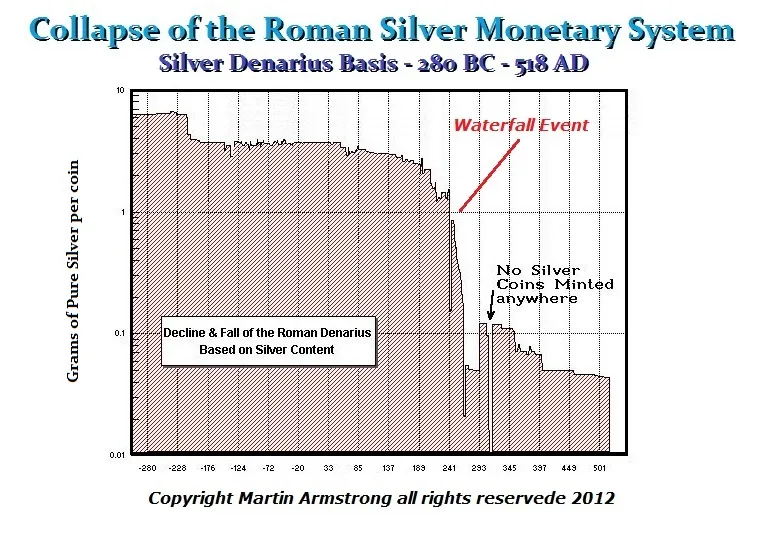
QUESTION: Mr. Armstrong, thank you for your excellent commentary. Could you comment on the monetary system in Britain during the period following Rome’s waterfall event? I would be especially interested in the period following the capture of Valerian I through the 9th century.

MG

Postumus AU Aureus as Hercules - R

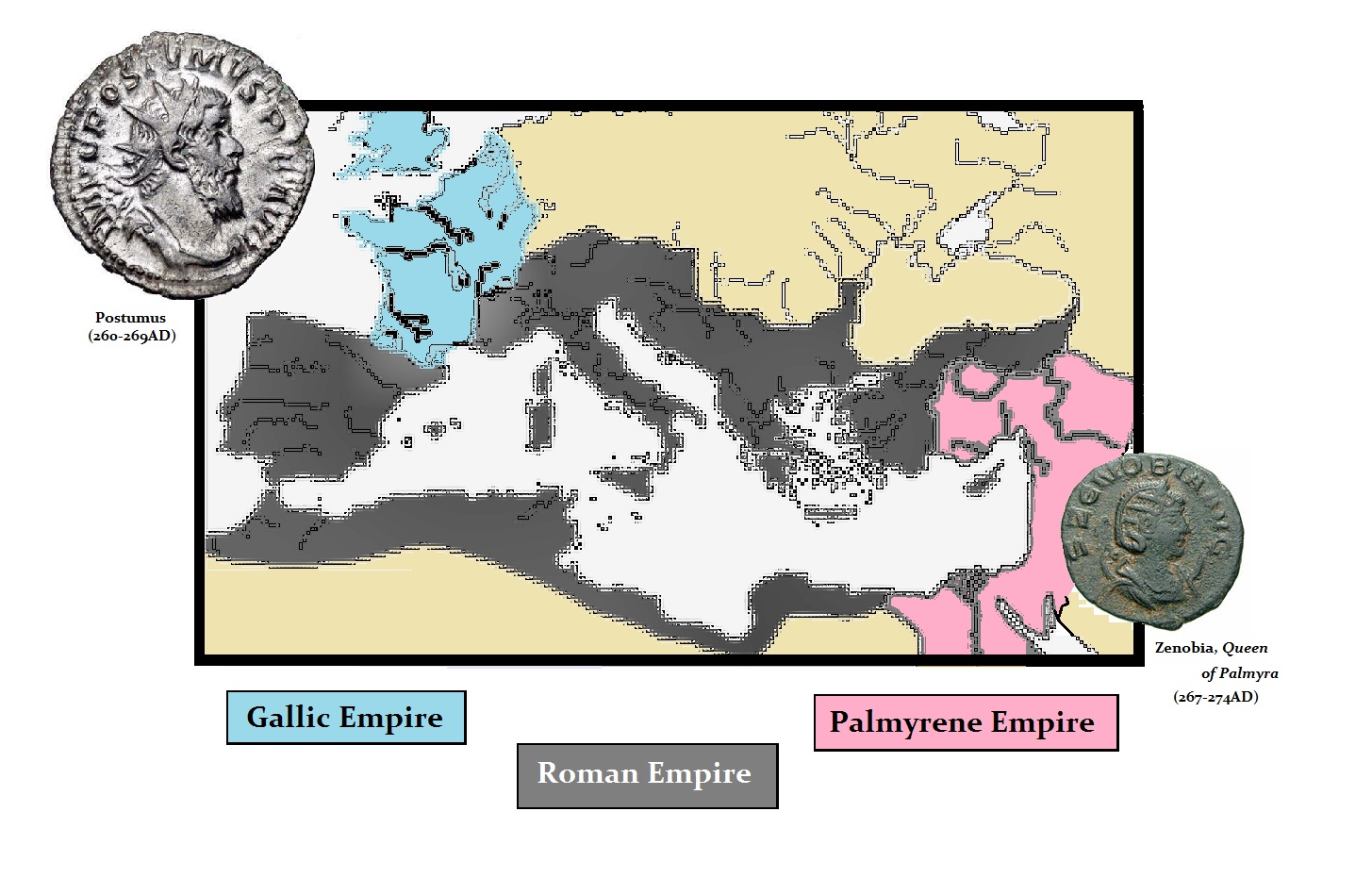
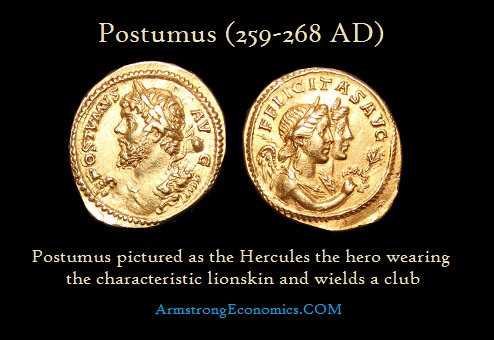
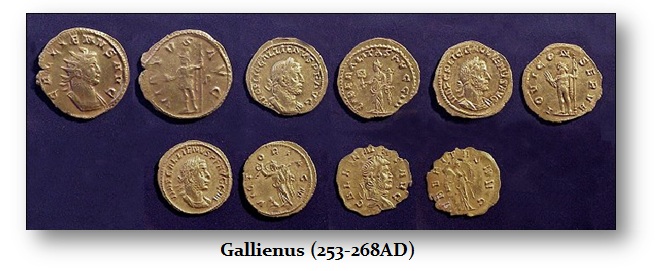
ANSWER: I suspect that the purpose of your inquiry is the loose history taught in Britain that there was a usurper in Britain by the name of Carausius (287-293AD). Effectively, there was a previous usurpation which was really a separatist movement you can call ancient BREXIT. That was led by Postumus (260-268AD) who made his move for power upon the capture of Valerian in 260AD. Interestingly, there we 34 intervals of 51.6 years from 260 that brought us to 2014/2015 for the rise of BREXIT. At least cyclically, it was on time and this was just one component that the computer attributed to the success of the BREXIT referendum.

Image result for Constantius I gold medallion

I have written the full account of the rise of the next attempted usurpation by Carausius. While the first separatist movement failed when Postumus’s successor Tetricus I surrendered in 273AD ending the Gallic Empire, the next usurpation came into play 14 years later in 287AD with Carausius. This attempt at a separatist movement was ended by the father of Constantine the GreatConstantius I Chlorus. This is a medallion showing him entering London.


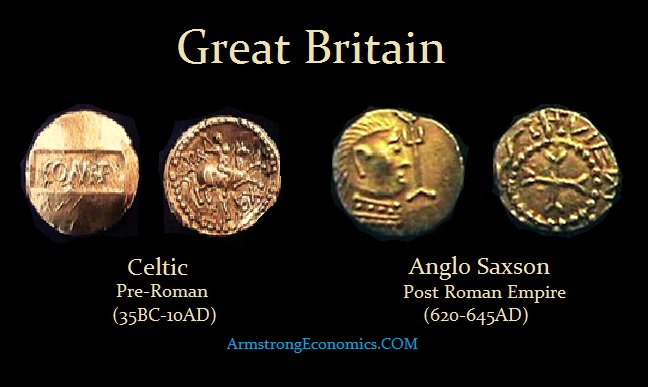
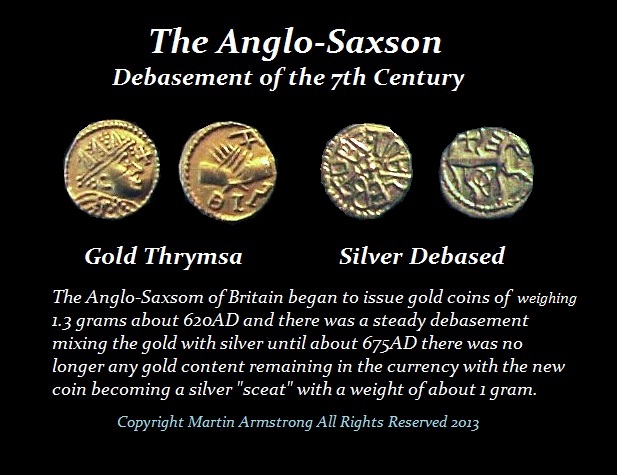
After the fall of Rome, we see gold Thrymsa appear in Britain around 620AD. There begins a debasement process and by 675AD what use to be gold vanishes and is replaced with silver. We see a brief political issue of gold under Offa(757-796). Other than that issue, gold does not reappear again until Henry III in 1257.