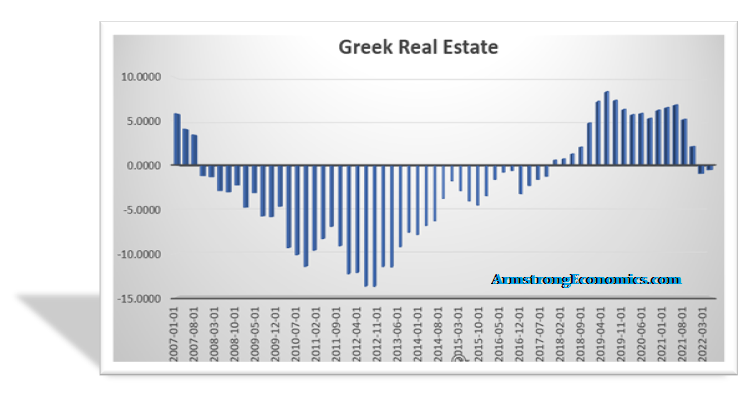
QUESTION: Dear Sir, Hello from Europe and a hopeful new year. In WW2 in Athens, people were exchanging their apartments for a few liters of olive oil, hence real estate went really down. The short question that you can answer even with a yes or no: If this year’s aggressivity in terms of war actions will rise, what happens? Will real estate fall on the first stage and then – due to governmental actions – will rise again? It is a bit confusing while I am trying to understand the mechanism… economy is not simple at all. Thank you. SM
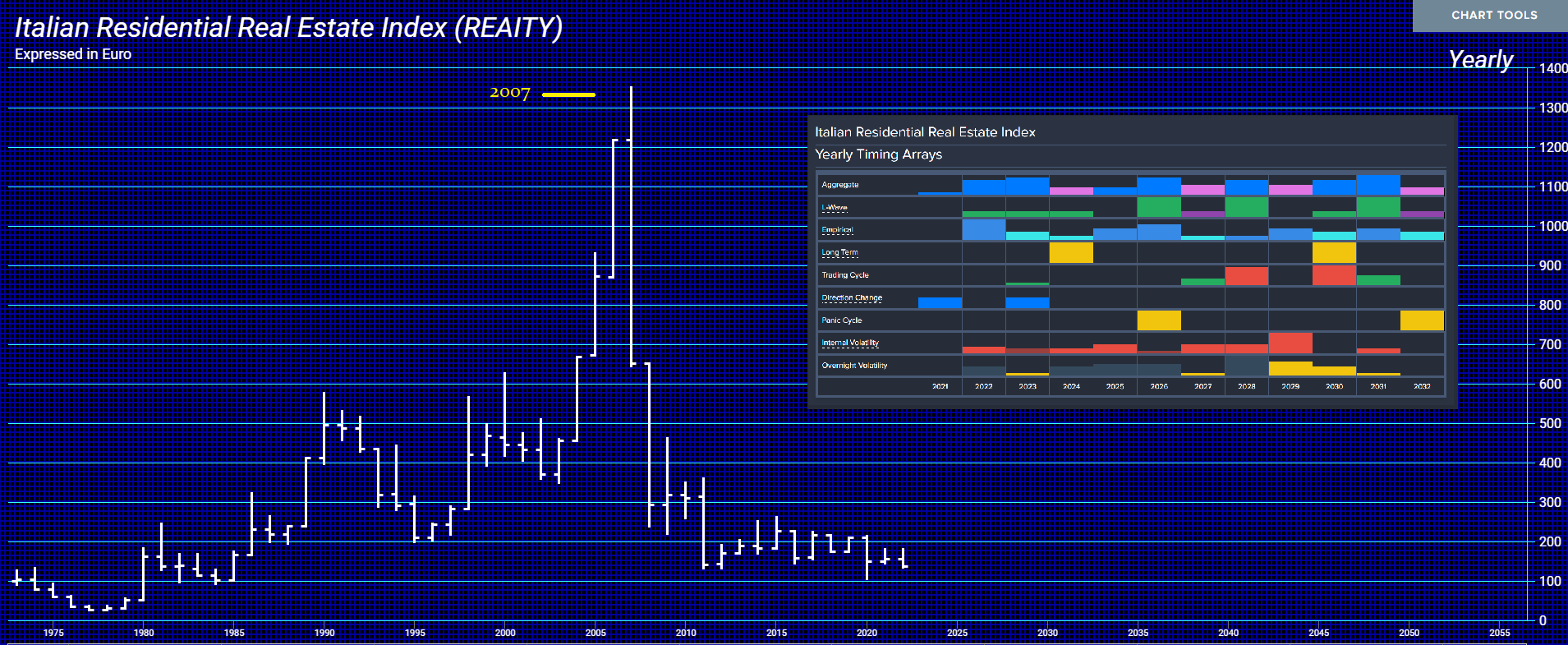
ANSWER: The real truth about real estate and war, declines the closer you get to the action. When we look at our models for European real estate, it clearly shows 2023 as a directional change and it appears to be heading into a Panic Cycle for 2027. Our leaders project like we should all go charge into Russia and defeat it in a matter of weeks or just days. Besides the fact that they never discuss that civilian deaths are twice as high as military, they also never talk about how the net worth of everyone in Europe will decline. Your house will decline in value for (1) people are not interested in buying a new home in times of uncertainty, and (2) interest rates will rise sharply due to inflation which is also part of the war cycle.
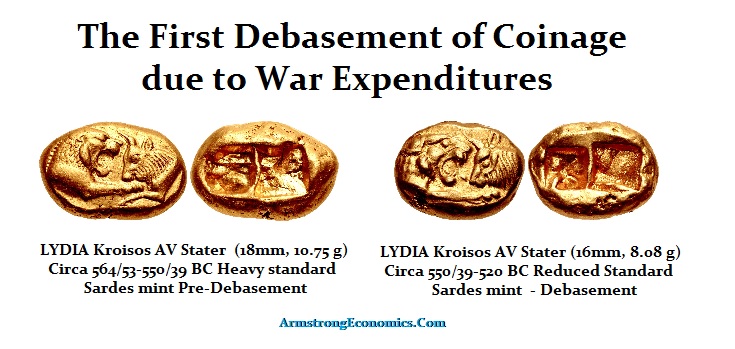
Lydia, in modern Turkey where coins were invented, shows the impact of war. It was Lydia v Person (Cyrus the Great) and we see the very first debasement in recorded history which accompanies war. The coinage was debased showing roughly a 25% devaluation in the purchasing power during the 6th century BC.
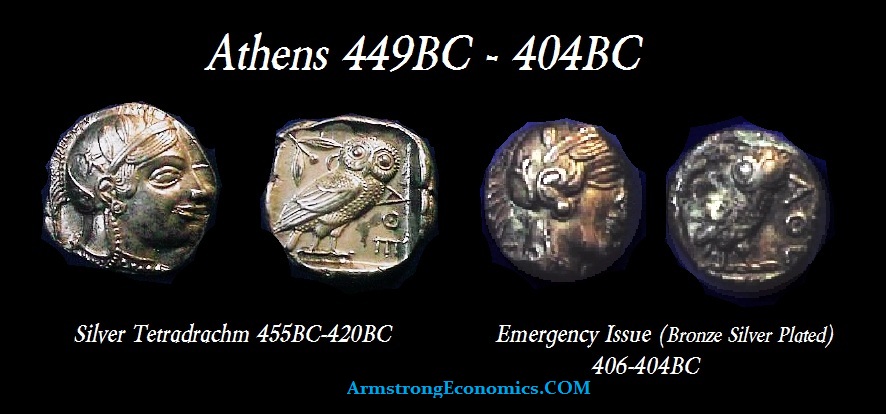
The Peloponnesian War in Greece saw the Athenian Owl reduced from silver to bronze and just silver plated. We find the same trend in Rome. There is NEVER any exception to this rule.
Beware, as the West insists upon expanding this war, you are sacrificing all your life savings in real estate for the political nonsense of our leaders in Europe as a whole. They are true war criminals. They could settle this in a day. Just honor the Minsk Agreement.
QUESTION: Hi AE…so gov’t “money” (fiat currency) will become just some abstract floating measurement of value, an electronic entry in an electronic account in the cybersphere. As these various so-called gov’ts become less reliable, even between themselves, do you see the possibility of them simply skipping their phony currencies, & trading directly in gold. Russia could ship a specific quantity of crude to China, for a specific amount of gold bars. Your argument about the impracticality of a gold-backed currency makes sense, but what about large transactions being settled in gold?
HS
ANSWER: The entire problem that people do not grasp with regard to any return to a gold standard is that if the money supply is FIXED in any way, that necessitates the collapse of SOCIALISM. The two are directly linked. Politicians only know how to run with deficits. Vote for me and I will give you this or that!
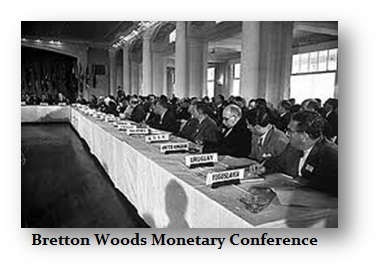
The Bretton Woods gold standard collapsed because they FIXED the price of gold at $35, but they continued to print money far beyond the supply of gold at that fixed price. In addition, you have a business cycle. There will be times when no matter what the money might be, there will be boom times when the value of money declines and the asset values rise.
This argument over gold v fiat is absolutely just nonsense. The wealth of any nation is the productive capacity of its people. For centuries, the business cycle has existed and that is the entire cause for the “inflation” in assets when money declines in value, and then the “deflation” in assets with the value of money rises. Arguing over what we use for money will NEVER stop the business cycle.
The cycle is also in part driven by all governments. It becomes a drug of power that is abused. It would not matter what we use for money right now, they want to create World War III so they can default, and escape from the abuse of this Marxism that they have turned into a system of borrowing every year with no intention of paying anything back. But we have reached the confrontation between Keynesianism where central banks are expected to prevent inflation by rising interest rates, but that has no impact on the government which has become the biggest borrower in the system.
We are going BUST not because of the money we use, but because of the abuse of power in government which has always existed since ancient times.
Trust me. Forget gold standards. They will never work because all governments act only in their own self-interest. You should have learned that with COVID. They will never admit any mistake EVER! It is far better to keep gold on our side of the table and we can then use it as a hedge against governments. They are seeking to move to digital currencies ONLY so they can track when you hired the 16-year-old girl next door to babysit for you so they can go after her for the government’s 50% share.
Even Bitcoin is fiat. There is no backing. People have dived headfirst into cryptocurrency on the entire proposition that they are limited. All they have done is proven my point. Money, historically, has been everything from seashells and cattle to bronze, silver, and gold. Of all the various forms of money, only bronze and cattle had any real commodity value based on utility.
The Egyptians really invented paper money for the farmers would deposit their grain and receive a receipt which was a bearer instrument used in trade. They also used raw metal, not coins, and traded based on weight, as it stated in the Bible. Here is a piece of pottery from Egypt recording a complaint about taxes written in Greek. It stated the sum amounted to a total of 90 talents of silver with 15 talents of tax on the transfer of land – 16.6%.
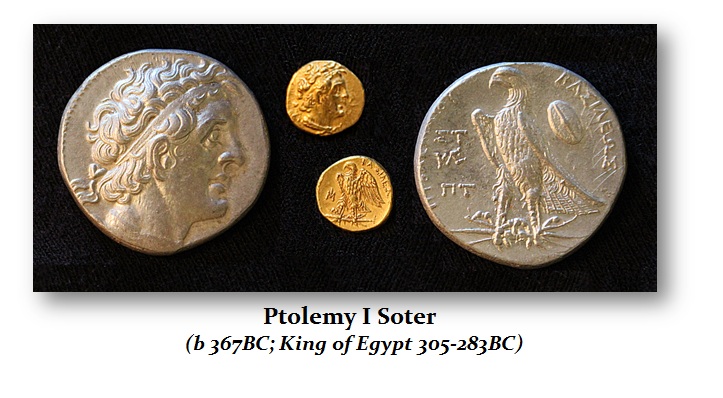
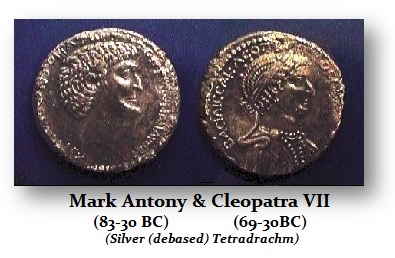
For thousands of years, Egypt had no coins until it was conquered by Alexander the Great, and upon his death, his general Ptolemy I (305/304 – 282 BC) took the throne and it was his Greek line from which Cleopatra VIII came – not Egyptian.
Our system is starting to implode. Never in the history of human civilization have governments demanded taxes on income requiring reporting every year. This was the gift of Karl Marx. Just as this Egyptian tax on the transfer of land, we see that property taxes and a form of sales tax were the norms.
The American Constitution was intended to give thenational government greater power to raise revenue because the previous Articles of Confederation had been a fiscal disaster. Nevertheless, most people remained fearful of taxation by governments. Indirect taxes were to be the way to secure our liberty from tyrannical governments. It was generally understood that indirect taxes meant taxes on consumption like a retail sales tax and/or excise taxes on imports. It was believed that indirect taxes did not lend themselves to abuse by tyrannical governments. Consequently, the general belief was that “direct taxes” has to be taken off the table. Incomes taxes, throwing out the window of all the wisdom of the ages, were imposed by the new age of Marxism in 1913.
Our computer warns that 2025 will be the turning point in Marxism.
The Federal Reserve raised the benchmark by 25 bps, as expected. The Fed fully understands that the manipulation of the CPI is a necessary aspect both for containing government benefits and understating inflation also results in high tax revenues. The market loves hope, and as a result, they focused on the warning that we’ll be in restrictive territory for just a bit longer. Most still believe that there will be a slowdown in inflation just ahead.
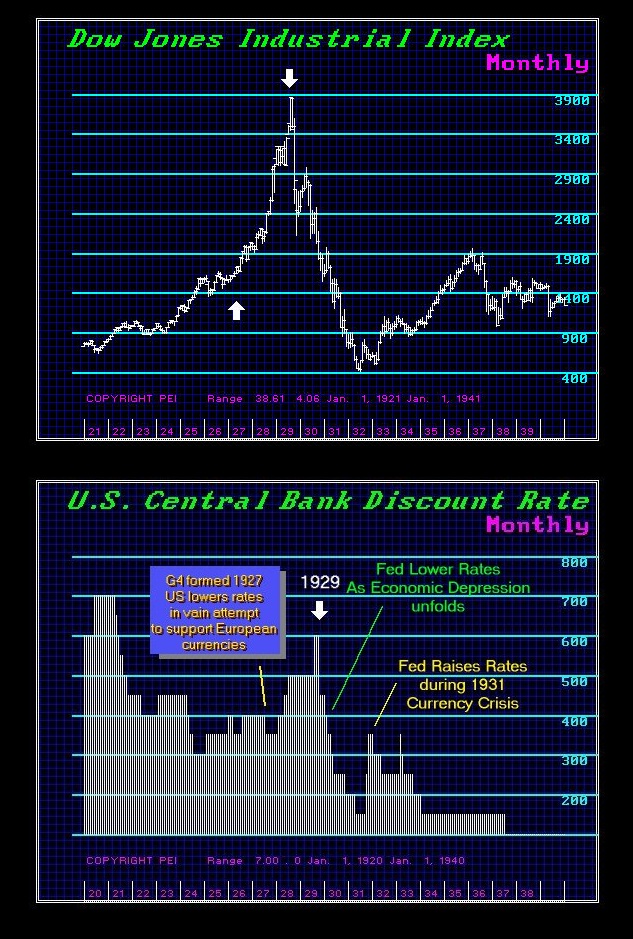
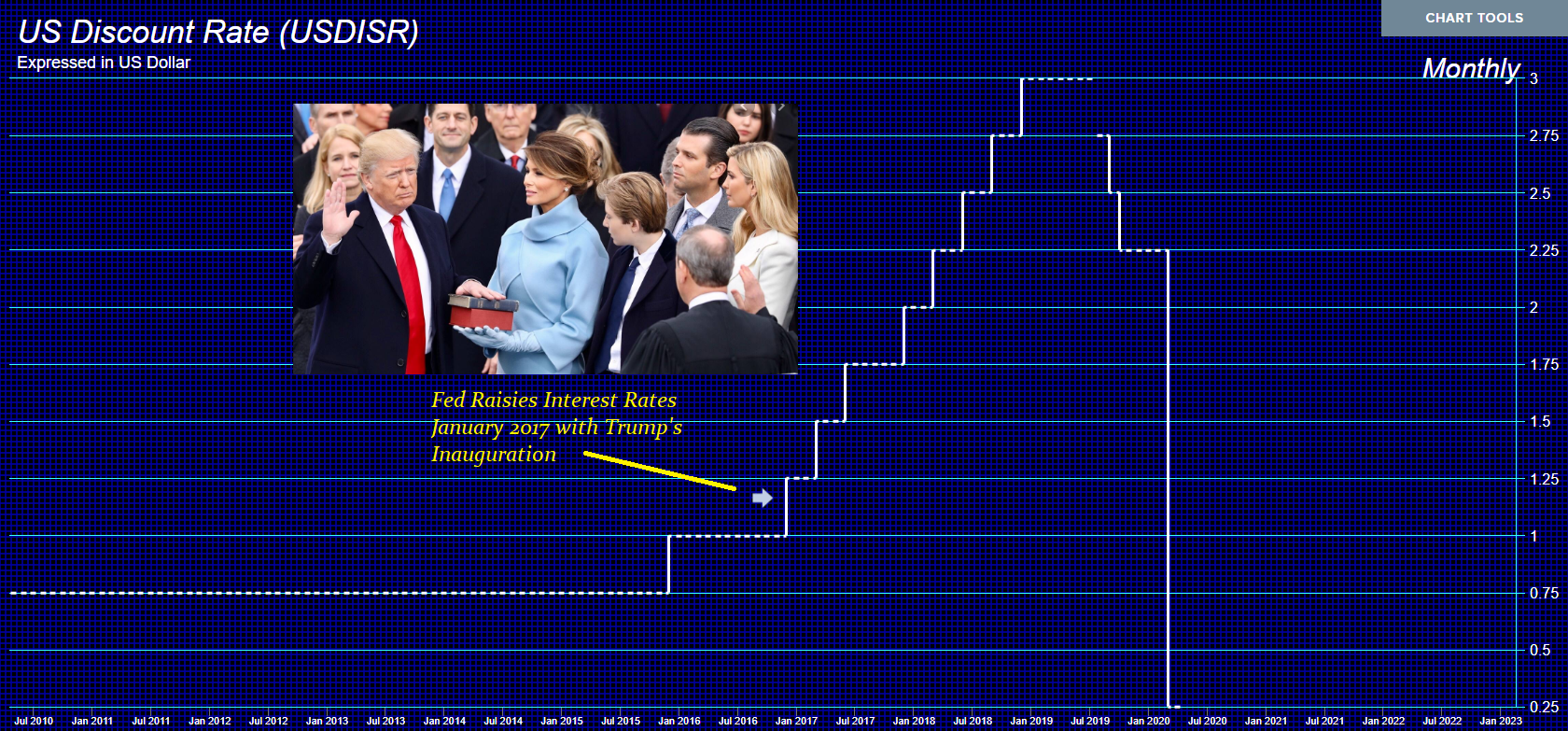
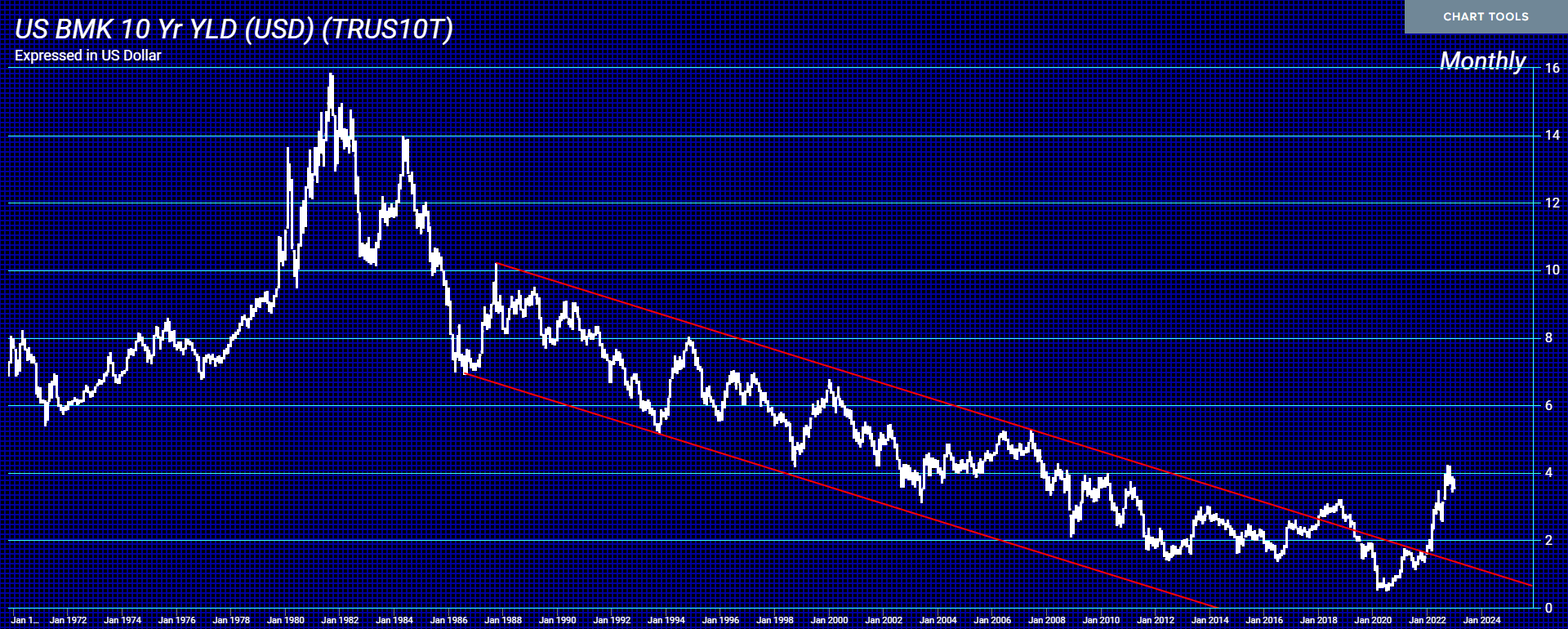
The Fed’s cautionary commentary saying that the “disinflation process” has started triggered shares to jump ending up 1%. This shows how insane the analysis had become that they cheer a recession and think that lower interest rates are bullish for the stock market. Obviously, they just listen to the talking heads on TV and have never bothered to look at reality. When interest rates decline, so has the stock market. Interest rates rose for the entire Trump Rally, and they crashed during the Great Recession of 2007-2009. For the life of me, I just shake my head when the talking heads cheer lower rates and spread doom and gloom with higher rates.
There are some who are claiming that the revision of the CPI is to help the Federal Reserve stop fighting inflation. This is typical for Americans who only watch the Fed and nothing else. The formula for the CPI has been routinely altered. Real Estate used to be included but when that was rising too much, they replaced that with rents. When rents started rising, they replaced them with controlled rents.
This is NOT about helping the Fed to lower rates or stop raising rates as the majority seem to be touting. Powell is not that stupid and this will have ZERO impact on Fed decisions going forward. This is all about government spending which is a far greater problem than worrying about the pressure on the Fed. Virtually EVERY government program is automatically INDEXED to CPI. Thus, agencies’ budgets are automatically increased each year based on the CPI. Your taxes are indexed to the CPI. By reducing the CPI, they collect more taxes! There is NOBODY in Congress or at the Bureau of Labor Statistics that gives the Fed a second thought.
Even if we look at inflation using the pre-1980 formulas, the CPI is approaching 10%! When we calculate inflation by eliminating everything that is really irrelevant and focusing on food, energy, transportation, and taxation, which they do not consider at all, the reality of our number came in at 32% for 2022. That is a far cry from the official number. This is simply calculated by Socrates from an unbiased perspective.
What a new wonderful world the Biden Administration has created. Thank you, COVID & the Russian Sanctions. The largest increase we found was obvious fuel between gasoline and diesel used in trucking and homes averaging 65%+ Turning to basic food, eggs were up nearly 50%, flour rose by 25%, cooking oil 23%, butter was up 35%, Chicken by 14%, and Rice by 18%. If we throw in toothpicks, paperclips, etc, then the more we can include the lower the inflation rate. We do not include rent or real estate. Our number is far more accurate to the daily living expenses than the near 10% level of the government. They also do not include sales taxes. The national average rise in rental rates was 7.8%, in Florida it was 8.5%, and in NYC 1.5% when controlled.
When I would buy a desktop IBM XT during the 1980s, it was always about $7,000 for a top-of-the-line. Today, that cost has come down significantly. Obviously, we do not buy computers every week. Should that really be part of a formula? The BLS has made so many revisions to the CPI over the decades it is really a political tool these days.
Back in the ’90s, our staff was dissecting every statistic. We discovered that they were overstating economic growth because they counted government employees twice. The total all personal income, and then government spending. I called the head of the BLS and asked surely this had to be backed out somewhere for hiring government employees to increase GDP rather than the private sector. They reviewed it and finally just said – no comment.
The idea that this latest revision of using one year as a weight instead of two will allow the Fed to stop tightening is really the rantings of people who only look at the Fed for everything as their guidance. There is a lot more incentive behind this revision and the Fed was not a consideration.
Posted originally on the CTH on January 18, 2023 | Sundance
There is something predictable about Main Street economics, eventually what you see around you overwhelms the great pretending. CTH has been outlining the state of the consumer economy in great detail for quite a while, and though it is difficult to note when the outcomes will surface, eventually they do surface. [Reminder Here]
CONTEXT. CTH outlined the moment when the purchasing power of the U.S. middle class actually began contracting. It was March and April of 2021 when that Rubicon was crossed. We saw it in the second and third quarter data from 2021, but few were willing to admit.
What changed in those two months back in ’21 was a dramatic drop in the “unit sales” of stuff within the consumer economy. The drop in unit sales was hidden because it happened simultaneously with the first wave of massive spike in prices. Prices rose so fast the sales data was giving an artificial impression of sales growth, but in the background the actual unit sales dropped. Those analysts correcting and adjusting historic data to ‘inflation adjusted terms’ are now noticing.
Additionally, and not coincidentally – because the metrics are connected, you will note this line from the Wall Street Journal review of the producer price index. “The producer-price index, which generally reflects supply conditions in the economy, rose 6.2% in December from a year earlier, the Labor Department said Wednesday, the slowest annual pace since March 2021.” In essence, the current rate of wholesale price increase on materials is now returning to the rate of price increase that happened in the period when prices spiked. Again, this is predictable.
Inflation is the measure of the ‘rate’ of price increase over time. March and April of 2021 were the beginning of the first inflationary spike.
Driven almost entirely by the supply side shock from Biden energy policy, in the subsequent 20 months the rate of price increase skyrocketed, peaked August 2022, and now the rate of increase starts returning. This does not mean price declines; this means the rate of growth in the price increase is lessening.
This is a cyclical outcome.
After 20 months of dropping unit sales, a result of massive price increases; and as the rate of inflation now starts to moderate created by the cyclical nature of it; what we now see is the inability of the price increases to continue hiding the drop in unit sales. [Background pdf Data] Total retail sales data is now exposed and that’s why we will see this increasing story about negative sales data as the inflation cycle plateaus.
(Via Wall Street Journal) – Retail spending fell in December at the sharpest pace of 2022, marking a dismal end to the holiday shopping season as rising interest rates, still-high inflation and concerns about a slowing economy pinched American consumers.
Purchases at stores, restaurants and online, declined a seasonally adjusted 1.1% in December from the prior month, the Commerce Department said Wednesday. Sales were also revised lower in November and have fallen three of the past four months.
The decline in retail spending late last year adds to signs that the U.S. economy is slowing. Hiring and wage growth eased in December, U.S. commerce with the rest of the world declined significantly in November, and existing-home sales have fallen for 10 straight months. The Federal Reserve said Wednesday that industrial production slumped in December, led by weakness in the manufacturing industry.
S&P Global downgraded its estimate for fourth-quarter economic growth by a half percentage point to a 2.3% annual rate after Wednesday’s data releases. Economists surveyed by The Wall Street Journal this month expect higher interest rates to tip the U.S. economy into a recession in the coming year.
“The lag impact of elevated inflation weighs heavily on U.S. households, it’s very clear that the median American consumer is still reeling from the loss of wages in inflation-adjusted terms,” said Joseph Brusuelas, chief economist at RSM US LLP. “We’re moving towards what I would expect to be a mild recession in 2023,” he added. (read more)
When the Baghdad Bob economic pretenders say, “mild recession,” anticipate something more akin to a mild nuclear meltdown, something with breadlines and soup kitchens.
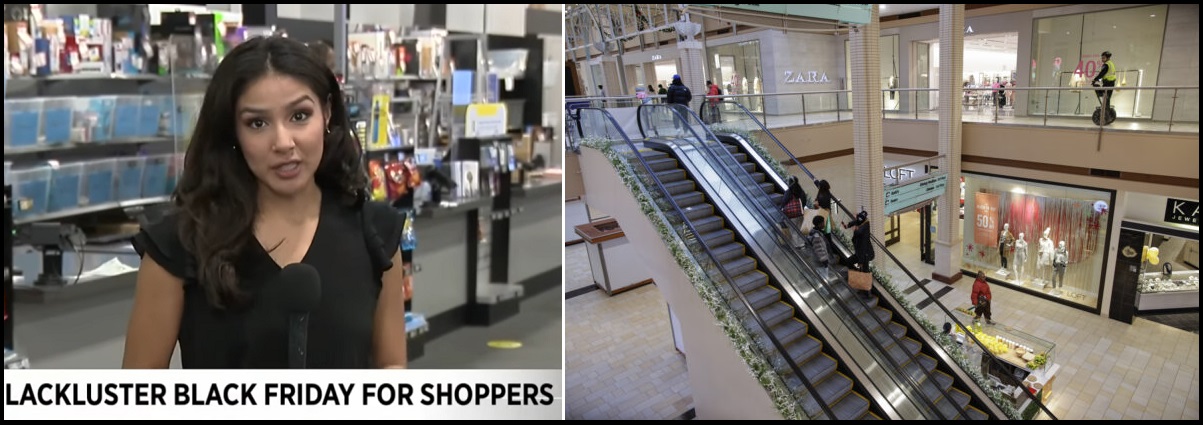
Now, you must keep in mind that almost every financial media outlet used the same Retail Federation talking point about anticipating an 8% increase in holiday sales last year. [Reminder] Apparently, collective pretenses must be maintained. Meanwhile, news crews and camera crews were having a desperate time finding any holiday shopping to use as background footage for the claims that sales were strong. Here we are in January and the pretending has hit reality.
Negative retail sales in November and December when prices are roughly +10% over the prior year, means the unit sales collapse was far more dramatic…. Far more.
Trying to survive policy driven price increases in housing costs, energy costs, electricity costs, home heating, food and fuel costs has forced consumers to reevaluate purchasing decisions. Consumer demand for non-essential items has collapsed, and Americans are dig deep into their savings just to sustain unavoidable expenses. Eventually, pretending this is not happening is going to run into the wall of reality.
On one hand the leaders of large multinationals must pretend everything is splendid; after all, the only acceptable position they can articulate is to support interest rates being raised because demand is just too darned high…. pretending. But on the other hand – those same suppliers and multinationals are furiously trying to calculate how to avoid being stuck with billions worth of unsold inventory and idle industrial equipment.
Posted originally on the CTH on January 17, 2023 | sundance
There has always been a general shaping and interpretation surrounding economic news, specifically as it relates to the impact of pricing on consumers and corporations. However, against the backdrop of supply side inflation, the financial gaslighting from the Wall Street Journal stands out at the top.
Without pretending, and looking directly at the Main Street reality, CTH has outlined inflation as a matter of monetary and energy policy. From that standpoint the timing and scale of price increases (inflation measured over time) was predictable. Our current status is an inflationary plateau, where prices remain high but stabilize for likely two quarters.
What the Wall Street Journal outlines as a “shopper rebellion against high prices” is complete hogwash. Notice in the construct of the narrative, the demand side (consumers) is identified as the cause of diminished revenue & profits for corporations. They continue pretending that inflation was not driven by energy costs.
(WSJ) – […] Many companies raised their prices substantially last year to offset higher fuel costs and higher prices for ingredients, parts and labor. As fuel prices have dropped and pandemic supply-chain snarls have eased, some of those costs have come down.
That is a good sign for the economy. It suggests that some inflation in the past year resulted from extreme supply-demand imbalances brought on by the pandemic and the war in Ukraine and which are now fading.
Notice the transparent lack of mentioning ‘energy policy’ as the inflation driver.
[…] The study, by economists at the Federal Reserve Bank of Kansas City, found that higher markups—the gap between what a firm charges and what it costs to produce an item—were a major driver of inflation in 2021.
They concluded that companies in some cases were raising prices in 2021 in anticipation of future cost pressures, rather than because of market power or outsize demand. Andrew Glover, a senior economist at the Federal Reserve Bank of Kansas City who was involved in the study, doesn’t expect prices to fall this year, he said, but he anticipates that the pace of increase will continue to slow.
Inflation is the rate of increase over time. We have experienced two years of massive price increases. Yes, the rate of those increases will moderate, this is the plateau, but the price will never drop. The current prices are a direct result of fixed energy policy.
[…] Unit sales of food and beverages fell 3% last year, but on a dollar basis they rose 10%. That showed consumers were willing to pay higher prices for groceries but bought fewer items.
[…] “People need to eat,” said Krishnakumar Davey, a president at IRI. Shoppers are nonetheless buying less when possible and, in many cases, buying less expensive versions of necessities such as toilet paper and laundry detergent. (read more)
Meanwhile the Fed is worried that wages will be forced to increase. Here is the real worry for the Wall Street Journal, “If consumers believe high prices will persist, they could seek bigger raises, and businesses, seeing higher labor costs, could continue raising prices.” Yes, workers, forward inflation is your fault.
Government policy drives up prices, but workers needing wage increases to pay for those higher prices… well, that is not acceptable to the government, comrade proles.
Sometimes you need to look behind the curtain before you understand the real trend. It is true that Federal Reserve officials are committed to fighting inflation and expect higher interest rates to remain in place until more progress is made, according to minutes released from the central bank’s December meeting. Also what has been reported is that at that meeting, policymakers expressed the importance of keeping the restrictive policy in place while inflation holds unacceptably high.
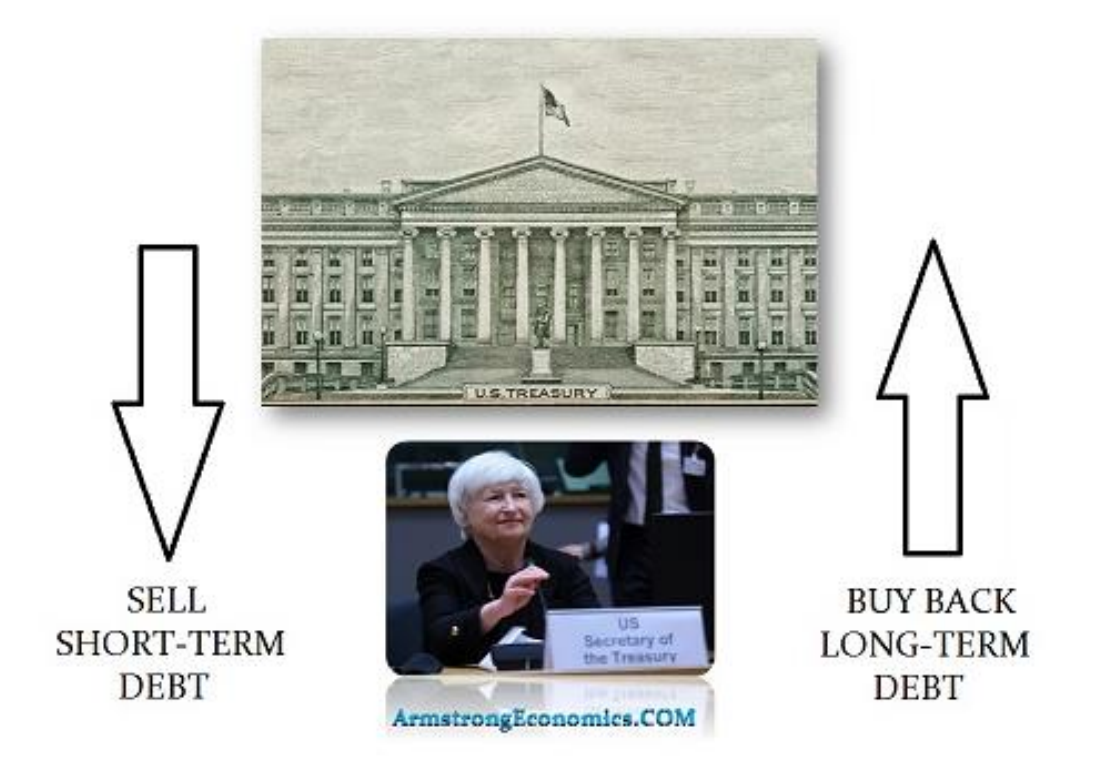
Now let’s look behind the curtail for just a peek. War ALWAYS impacts interest rates and they traditionally rise in periods of such conflict. After Europe kept rates NEGATIVE from 2014, that means every bond they sold for 8 years is now losing money. This was the bond crisis in London and then you had Janet Yellen come out and revealed the real silent worry.
Yellen came out and proposed that the Treasury buy in long-term debt and swap it for short-term. Some were out there claiming the Treasury was competing with the Fed as a second central bank. That just illustrated how much they do not understand what is going on or even how the monetary system works. The proposal was NOT another QE. The Treasury cannot create money as can the Fed. She was talking about a SWAP because the long-term debt is in crisis mode with the coming war. Smart players want to swap long-term for the short-term.
China has been dumping bonds since late 2021 as Biden has been claiming the US will defend Taiwan. I can confirm that under EVERY possible military play, the US will lose. I have reported this before. The US cannot defeat China – PERIOD! With China now selling off US debt and shifting to gold, they are seeking to insulate themselves from any Western currency since Biden violated every international law to impose sanctions on Russia. China elected Xi Jinping because Pelosi when to Taiwan just before the election confirming that we are headed to war.
Against this backdrop, the Fed CANNOT lower interest rates. This is NOT 100% about inflation anymore. The Fed realizes that the Biden Administration is determined to create World War III. As we are heading into a war they must adopt a war posture as well. Hence, interest rates will remain firm because not just inflation driven by shortages, but by the fact that the long-term liquidation continues, and lowering interest rates would now cause a capital crisis when staring war in the eyes.
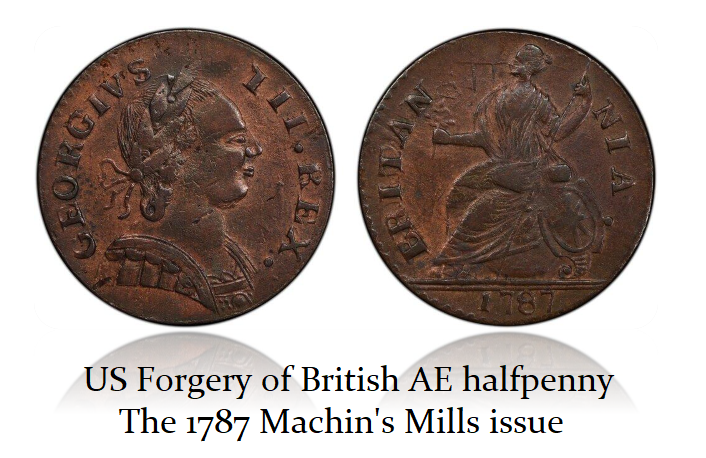
During the reign of King George III (1760–1820) the first issue of halfpennies actually was not issued until 10 years after his accession to the throne in 1770. Consequently, the vast number of halfpennies in circulation were actually all counterfeits. Indeed, counterfeiting became rampant at first because there was a coin shortage. In 1771, it was declared that counterfeiting copper coins were to be a serious crime. Nevertheless, this really made no difference. Over the course of the next twenty years, the majority of copper coins in circulation were forgeries. Even in the American Colonies, a favorite pastime was to counterfeit British halfpennies.
Coppers of this type are thought to have been minted from mid-1787 through 1788 and probably into 1789. Interestingly, it appears Thomas Machin first produced halfpence dated to the contemporary year as well as examples backdated to 1778. As the mints in Connecticut, New Jersey, and Vermont failed, their equipment ended up at Machin’s Mills. Along with imitation British halfpence, Machin’s Mills also produced illegal Connecticut coppers and some legal Vermont Coppers, with most of their Vermont coins being struck over counterfeit Irish halfpence. The illegal coining operation continued at Machin’s Mills until around early 1790, which was longer than any of the legal mints in New England.
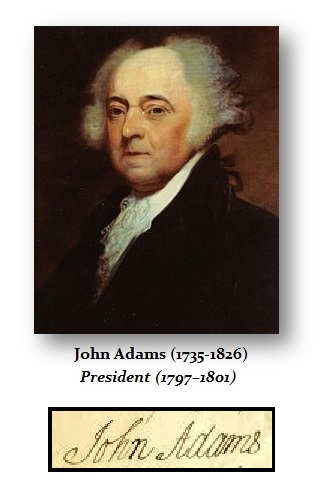
“There is a vast sum in Circulation here of base Copper: to the amount of Several hundreds of thousands of Pounds. very lately these half Pence are refused every where: I suppose in Consequence of some Concerted Scheme. and it is supposed that they will be all purchased for a trifle and Sent to the United States where they will pass for good metal, and consequently our Simple Country men be cheated of an immense sum.2 The Board of Treasury, may be ordered with out the avowed Interposition of Congress, to give the alarm to our Citizens. and the seperate States would do well to prohibit this false Money from being paid or received.3
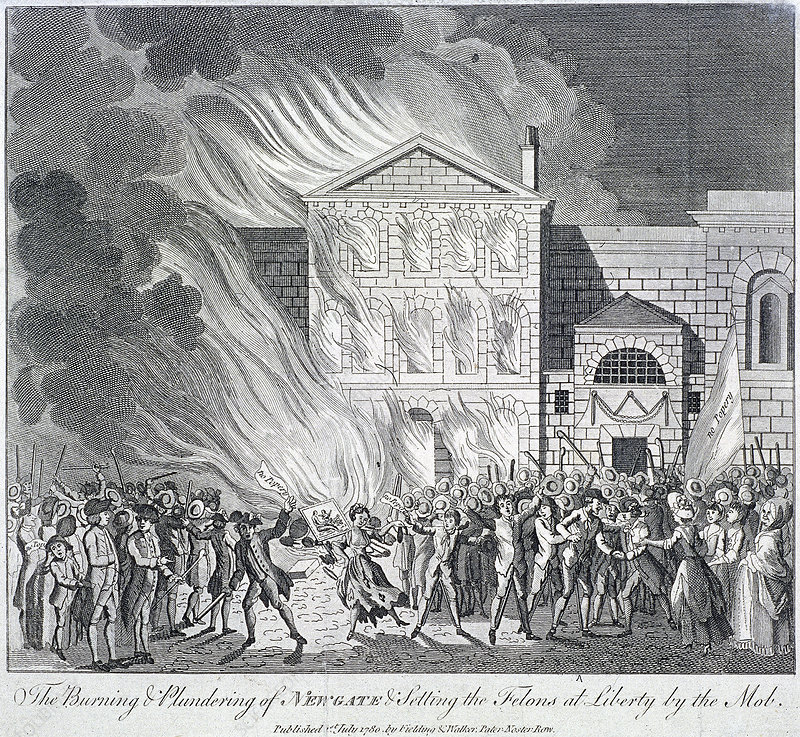
There was religious tension in Britain that still lingers to this day against Catholics. The Gordon Riots of 1780 took place over several days instigated by the anti-Catholic sentiment that again erupted with the passage of the Papists Act of 1778. That was an attempt to reduce official discrimination against British Catholics with the first legislation of the Popery Act of 1698. At the time, Lord George Gordon was the head of the Protestant Association. He argued that the law would enable Catholics to join the British Army and once in they would then use the army to plot treason. The protest became the excuse to burn people’s possessions, engaged in widespread rioting and looting, and they even used the opportunity to attack both Newgate Prison and the Bank of England. This was by far the most destructive riot in the history of London.
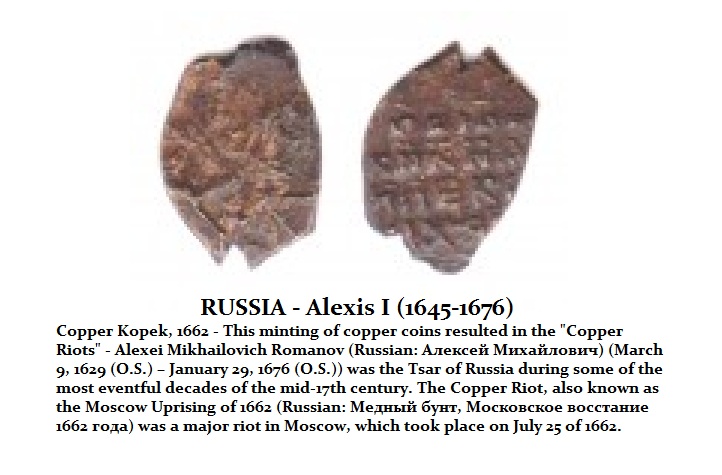
From the mid-1600s, the world money supply was increased largely with copper coins. Russia, in particular, began to overvalue the copper coins. Money is always fiat for its value is typically dictated by the government. Overvaluing copper as in the 17th and 18th centuries, led to the same trend of overvaluing silver during the 19th century. The result of this monetary manipulation by the Russian government led to what became known as the Copper Riots of 1662.
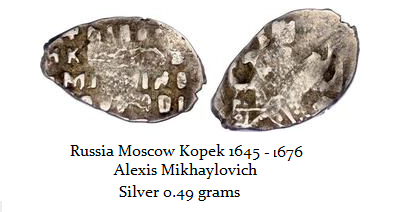
The Russian government began producing copper coins and monetizing them to be of equal value to silver Kopek currency with an average weight of about half of a gram to meet expenses during the mini-Ice Age. The effort failed and silver vanished from circulation as people began hoarding them causing the entire economy to collapse. The copper money was naturally devalued in purchasing power and then there were widespread counterfeiting operations since the official value of the copper coinage became far in excess of the cost of production. The economy collapsed into a deflationary black hole as businesses shut down and unemployment rose dramatically. This erupted into what has become known as the Copper Riots of 1662.
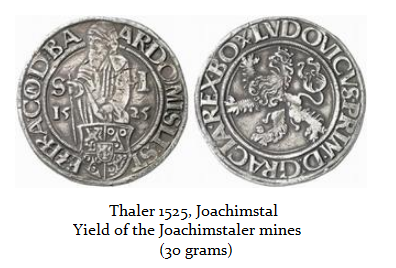
The German bankers, the Fuggers, emerged as the leading Augsburg merchant-banker, who then provided loans to local rulers secured with the silver produce of their mines. The discovery of vast silver mines eventually led to the development in 1525 of the one-ounce silver coin that was the thaler from which we derive the name “dollar” as the alternative to the British pound after the American Revolution. The Joachimsthaler of the Kingdom of Bohemia was therefore the first thaler ideally with a weight of 31 grams or one troy ounce.
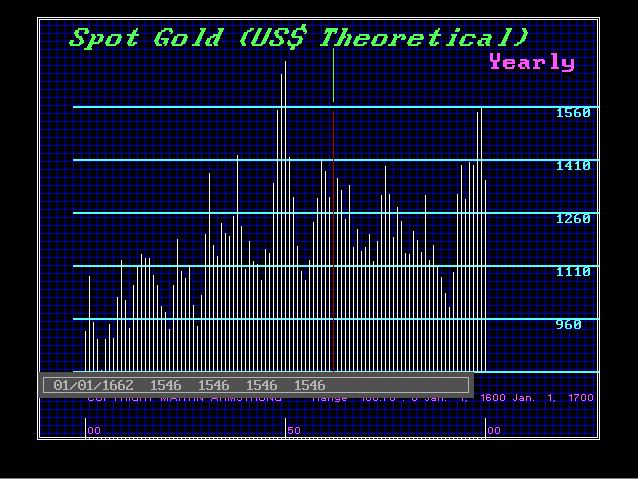
As the silver mines were declining, the decline in the supply of silver led to the rise of copper coinage during the next century. This was not an isolated incident confined to Russia. There was a shortage of precious metals going into 1662. It was most profound in Russia. Nevertheless, the price of gold rose sharply from the low of 1655 in a 7-year bull market. This also reflected the deflationary atmosphere that was emerging thanks also to the mini-Ice Age which was peaking during the 17th century yet would last well into the mid-19th century.
It was Spain’s silver mine known as the great red Cerro Rico or ‘Rich Hill’ that towered over the city of Potosí in Bolivia. It had been mined since 1545 by drafted armies of natives. The great silver boom of c1575-1635 was when Potosí alone produced nearly half the world’s silver. But the mine’s yield was starting to decline. By 1678, native workers became scarce and the output of the mines began to dwindle. This was the royal mint that produced vast amounts of ‘pieces of eight’, which became the precursor of the American dollar. The shortage of labor ended up being augmented by purchasing African slaves from the Dutch who were buying them under the pretense that they were the spoils of war, which had been the justification for slaves from ancient times.
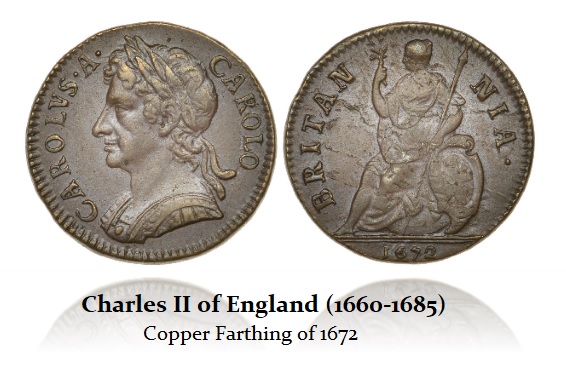
As the quantity of new silver in the world monetary system was declining, we begin to see the rise of copper coinage make its first appearance under James I of England (1603-1625). Due to a shortage of small coins, James I authorized John Harrington to issue tin-coated bronze farthings in 1613, and three main types were minted – the last being a slightly larger copper farthing without the tin coating. The first halfpenny was introduced in 1672 by Charles II (1660-1685). Charles II issued some copper halfpennies and farthings in 1672 for a single year but issued farthings again in 1873. The next issue of a farthing was struck in a tin but during 1684 and 1685.
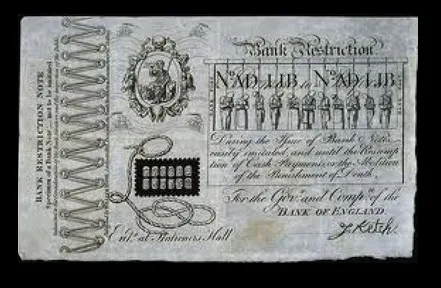
However, in 1694 the Bank of England was established to raise money for King William III’s war against France. The Bank started to issue notes in return for deposits. Therefore, the money supply for the first time began to include paper currency. By 1695 the first fraud took place. The authorities prosecuted Daniel Perrismore for forging sixty £100 notes. This incident caused the Bank of England to introduce a watermark in the paper to prevent such fraud. This was further enhanced by making counterfeiting subjected to the death penalty as a felony resulting in the confiscation of all your wealth and throwing your family out of the street as well. Pictured here, is a protest imitation note. The law was being prosecuted on the mere possession of a forged note. The complaint here was that these one-pound notes were easily forged and innocent people were duped, thereby committing a felony by mere possession. They were being hanged with no proof that they created the forgery – merely that they possessed one. This was creating an incentive not to even accept the notes in transactions.
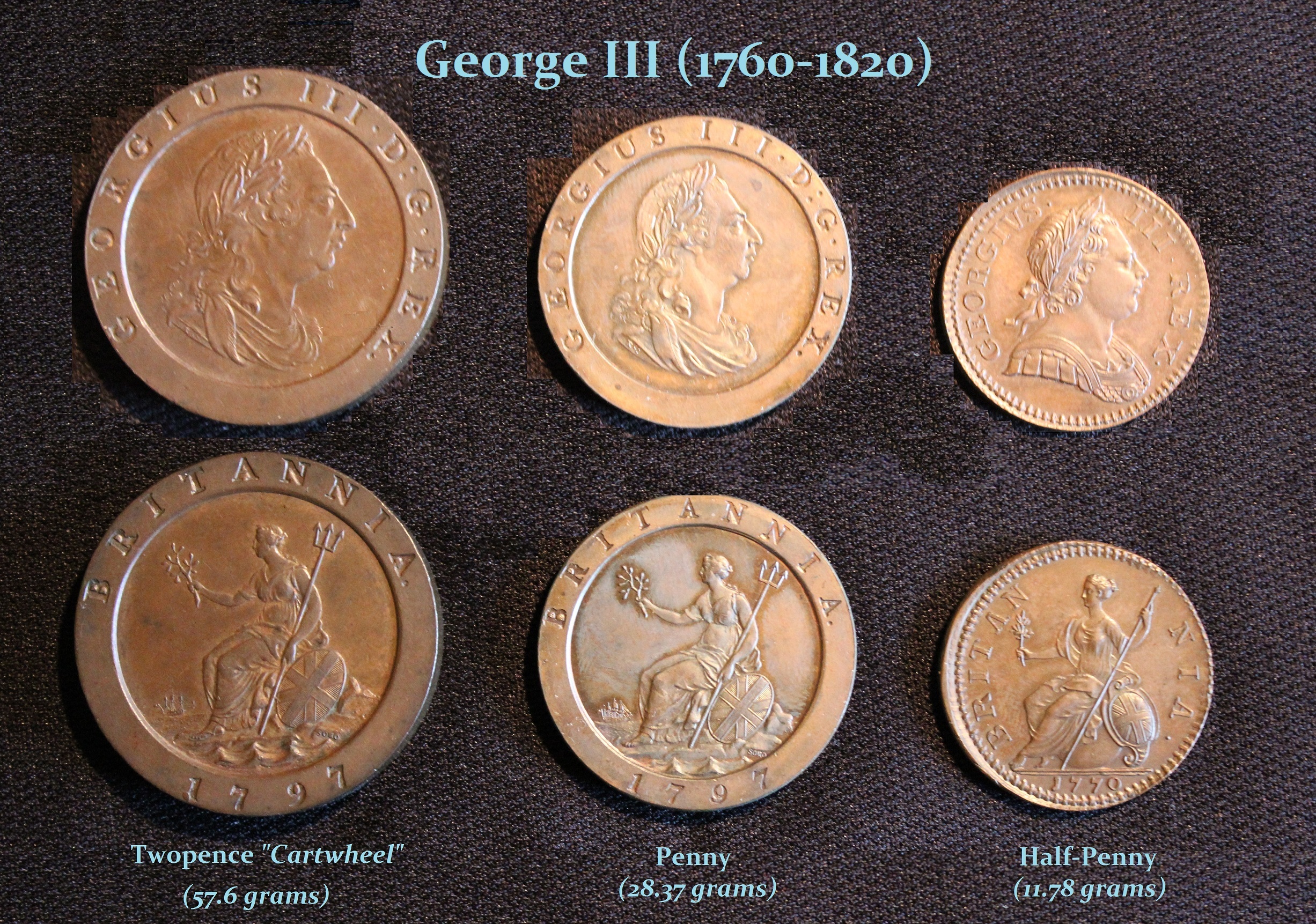
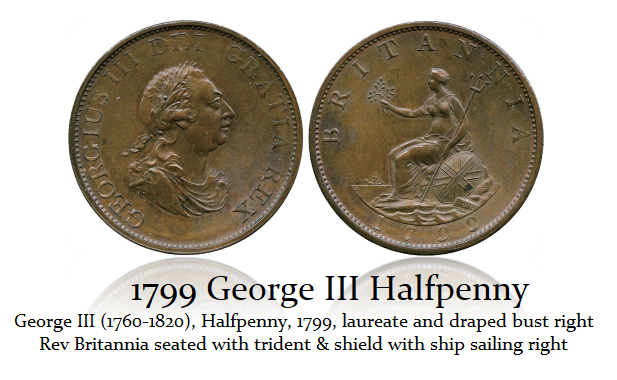
George I, II, and III all issued copper halfpennies. George III’s halfpennies were dated 1770 to 1772. The economic hard times no doubt contributed to the riots of 1780. After those events, at Newgate Prison in March 1782 a female alleged counterfeiter of halfpennies was hanged. She was then fixed to a stake and burned before the debtor’s door at Newgate prison in London as a further example of not to counterfeit.
In a letter to Lord Hawkesbury on April 14th, 1789, Matthew Boulton, who is considered the Grandfather of modern coinage, commented
“In the course of my journeys, I observe that I receive upon average two-thirds counterfeit halfpence for change at toll-gates, etc., and I believe the evil is daily increasing, as the spurious money is carried into circulation by the lowest class of manufacturers, who pay with it the principal part of the wages of the poor people they employ”.
Boulton’s contract in 1797 to produce the Cartwheel pennies and twopences, thwarting the counterfeiters, did not extend to producing the halfpenny, though Boulton had expected that it would, and had prepared patterns of the appropriate size and weight in accordance with his ideas on the intrinsic value of copper coins. The reason the government gave for the omission of the denomination from the contract was that a large number of de facto halfpennies (including tokens and fakes) would be driven out of circulation and Boulton would be unable to produce enough coins to meet the demand that would ensue.
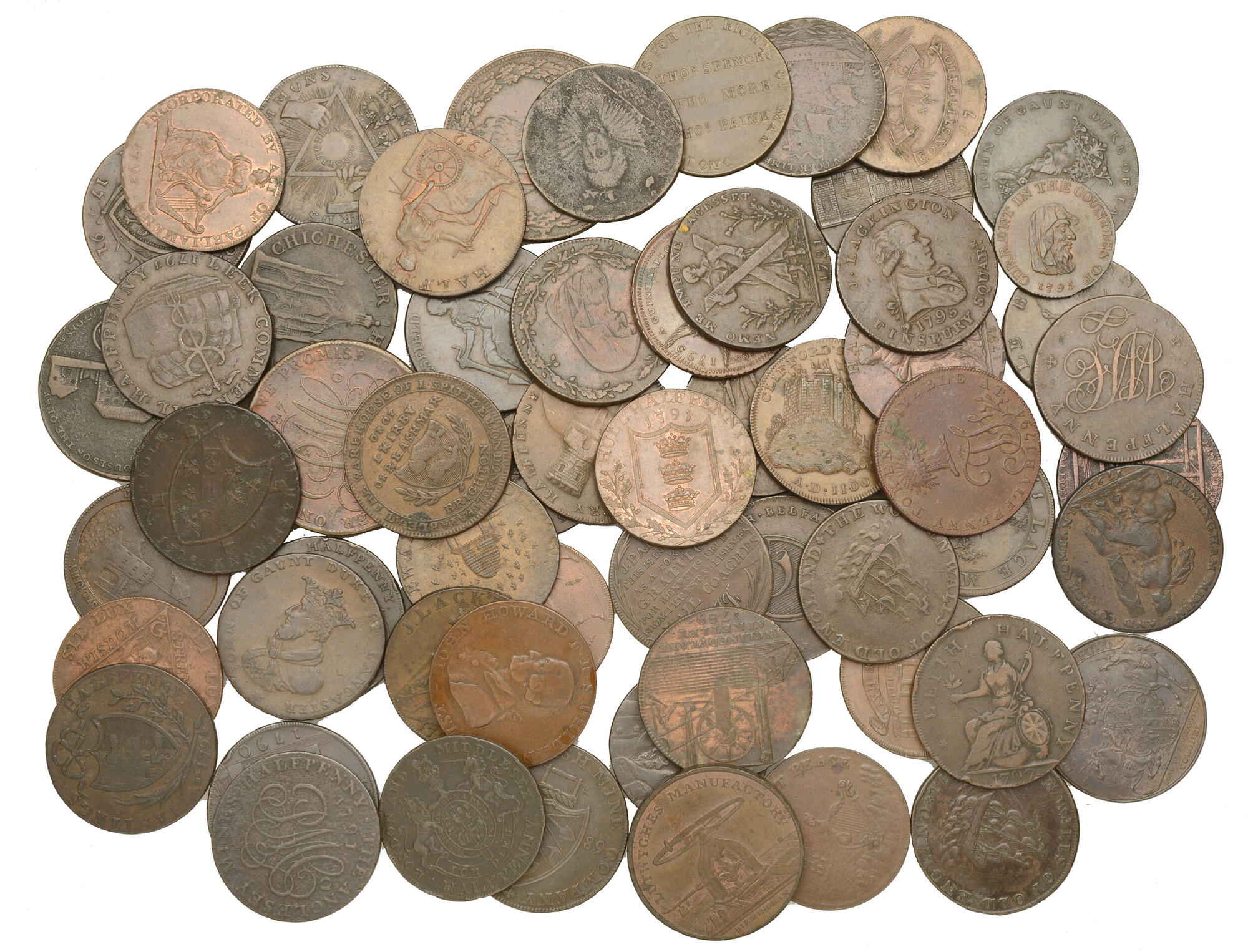
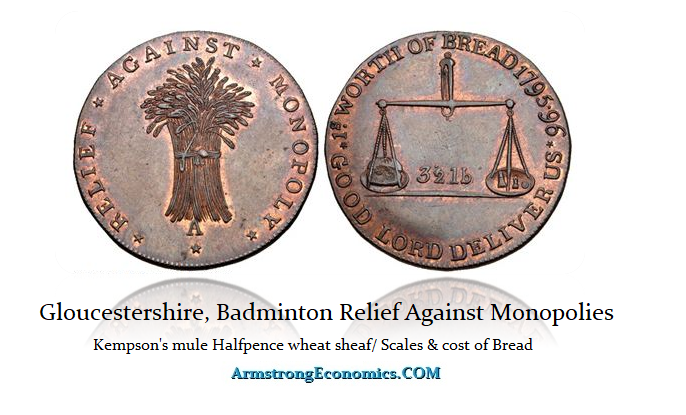
To avoid being hung for counterfeiting and burned at the stake, there was a multitude of halfpenny tokens. Many were of a political nature as this one complaining about the cost of bread. The government yielded to the private halfpenny tokens which became the majority of the small change. The overall public demand for legal halfpennies soon forced the government to change its mind, and in 1798 a contract was issued to Boulton for him to produce halfpennies and farthings dated 1799.
Interestingly, it was also at this time when inflation sent the price of copper rising, and consequently, the weight of the coins was reduced slightly, which resulted in them not being as popular as expected. In 1806 a further 427.5 tons of copper was struck into halfpennies by Boulton, but the price of copper had risen again and the weight was even less than the 1799 issue. This time, however, there was no unfavorable reaction from the public, so perhaps the national obsession with “intrinsic value” had run its course.
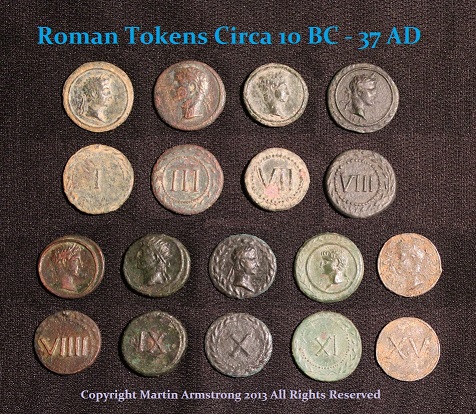
This was a very curious period where private money dominated the money supply for halfpennies. There are other periods where this has emerged in history primarily due to the shortage of real official money. One of the earliest such periods was during the reign of the Roman Emperor Tiberius (14-37AD).
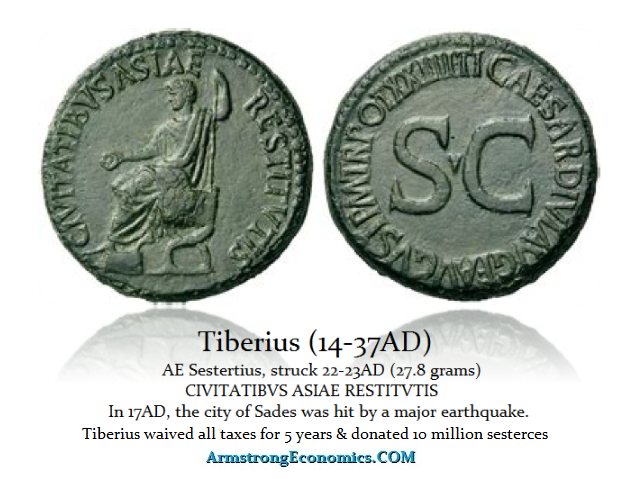
Tiberius was legendary to be a frugal emperor. His deliberate contraction in creating new money led to the Financial Panic of 33AD. As far as Quantitative Easing, that too was nothing new. Tiberius offered loans INTEREST-FREE, but they had a limitation of three years. This was to prevent people from being forced to sell their estates further depressing land values.
There was a major earthquake in Asia, modern Turkey, and this was so devastating, he issued coins stating they were for the relief of Asia. He also waived all taxes in the region for 5 years – something our modern-day politicians would never dream of.
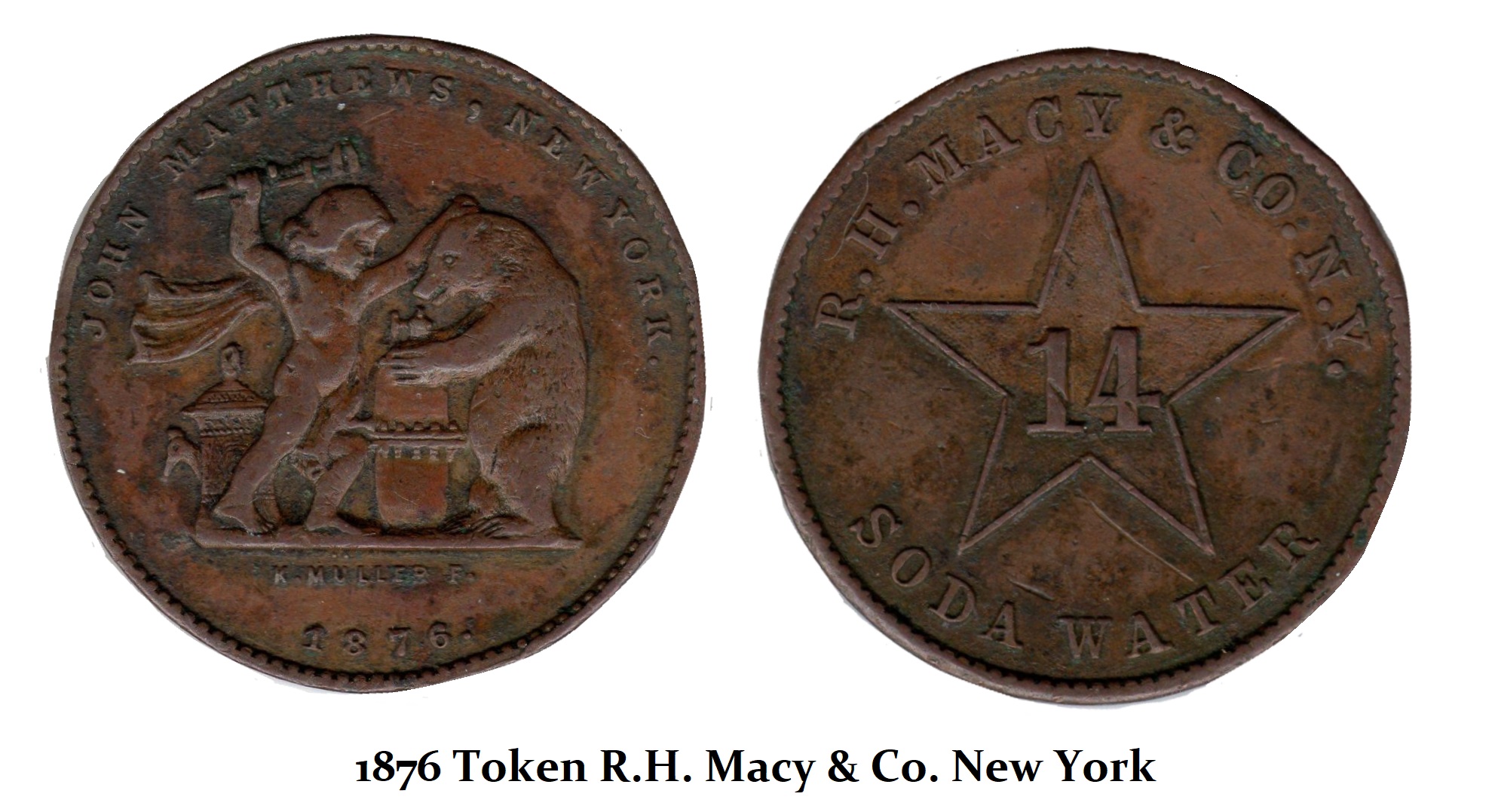
The lesson from history reveals that at times there emerges the acceptance of private money. During the 1870s, we also see private tokens circulating as money in the United States. Collectors call them the Hard Times Tokens. The very same thing took place during the American Civil War.
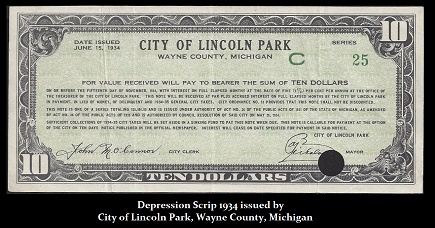
During the Great Depression, the shortage of money led to more than 200 cities issuing their own paper currency. As long as everyone in town accepted it, these Depressions Scrips enable people to work and to be paid locally when there was simply not enough federal money to go around.
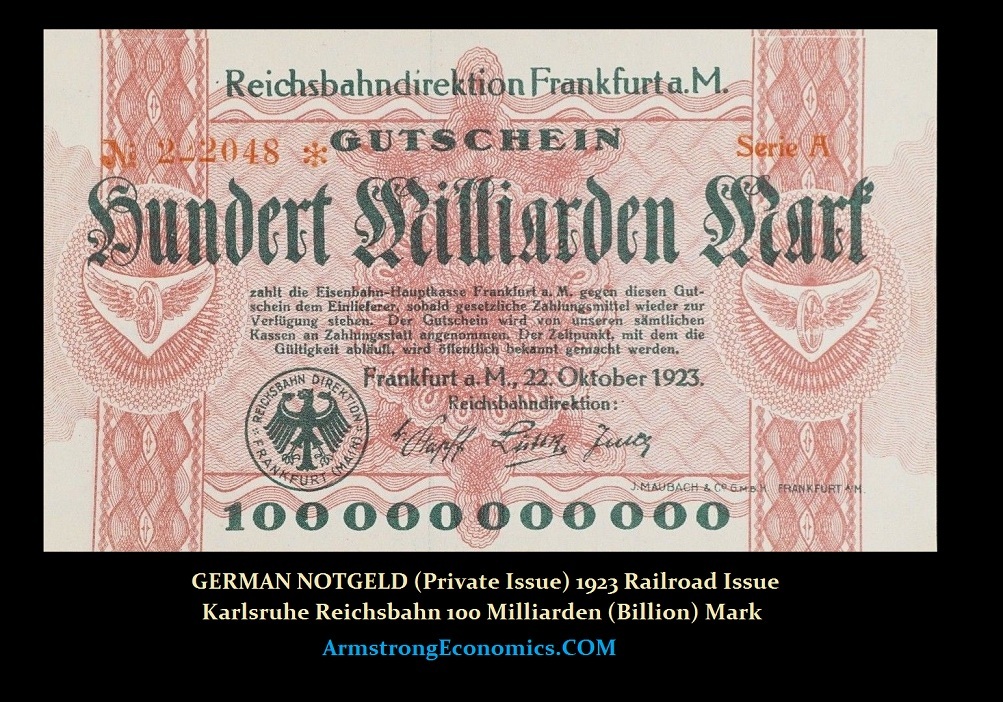
During the Hyperinflation in Germany of the 1920s, there again we see private currency being printed known as NOTGELD. Therefore, in the end, when the confidence in government declines, society is compelled to return to a barter-based society and that is when we begin to see private forms of money take hold.
Our Independent Inflation model has calculated that the combined rate for everything from food to transportation came in at 32% for 2022. That is a far cry from the official number. This is simply calculated by Socrates from an unbiased perspective. Thank you, COVID & the Russian Sanctions. What a new wonderful world the Biden Administration has created.
I have created this site to help people have fun in the kitchen. I write about enjoying life both in and out of my kitchen. Life is short! Make the most of it and enjoy!
This is a library of News Events not reported by the Main Stream Media documenting & connecting the dots on How the Obama Marxist Liberal agenda is destroying America











 Centinel2012