European Banks Lending in USA Rather than Europe?


European banks have been lending in the United States quiet aggressively because (1) the economy is doing good so there is a demand for loans contrary to Europe, and (2) the behind the curtain view that the euro will decline and the dollar will rise. During the first half of 2017, European banks have lent about $53 billion in US dollars taking the currency risk which they have benefited from as the euro declines. According to Bloomberg, Europeans’ combined market share in the United States rose to nearly 24%.

The concern of some has been that the loans are going into leverage structures once again. In total, banks and other companies issued $494 billion in new leveraged loans 2017, which has been the largest amount since 2011. The European banks at the top of the list are the British Barclays Bank, which bought Lehman Brothers Holdings’ US businesses after the collapse. Barclay’s now controls more than 6% of the market for new loans and is the third largest leveraged loan arranger in the US this year. Barclay’s is also big in issuing credit cards in the United States. The second on that list is Credit Suisse Group AG. Then we have Deutsche Bank, which on the one hand wants to withdraw from US markets, has also been looking at lending in dollars for the same reason of gaining on the currency in the face of a collapsing euro. We see similar policies being adopted in the British HSBC, Swiss UBS, French BNP Paribas, Dutch ING Groep and Credit Agricole.
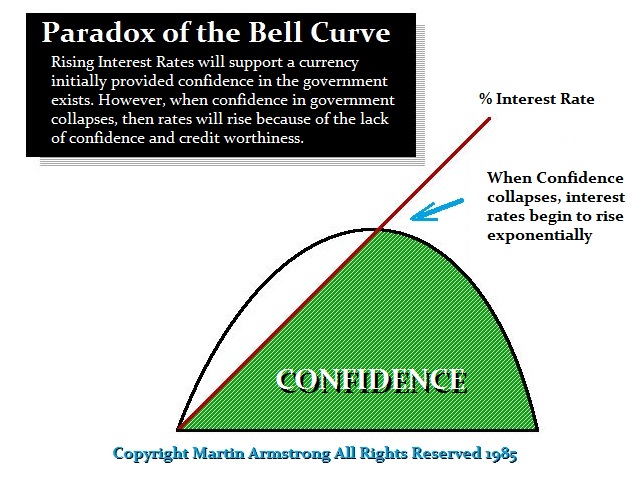
While many believe that as major central banks continue to push ahead with monetary policy normalization of raising interest rates, they wrongly think that raising rates will hurt the credit market and create a downturn. What they fail to grasp is that rates can rise with no impact provided the economy is expanding, but rates can also rise because there is no demand and government is forced to keep offering higher rates to find buyers of their debt in the real world. It all depends upon what people believe. This is why low rates in Europe have FAILED to stimulate demand when people lack confidence in the future, they will NOT borrow at any rate. Expectations of profit MUST exceed the level of interest rate before people will borrow. They function differently than governments which are addicted to debt and borrows all the time with no cyclical expectation

World Trade & Who Needs the Flash Cards?


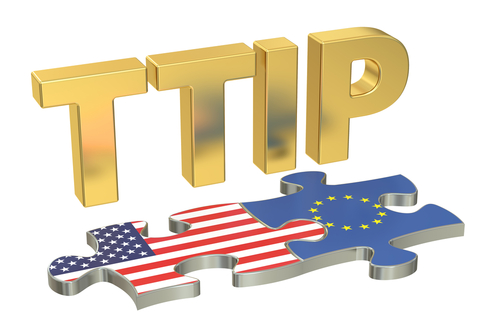
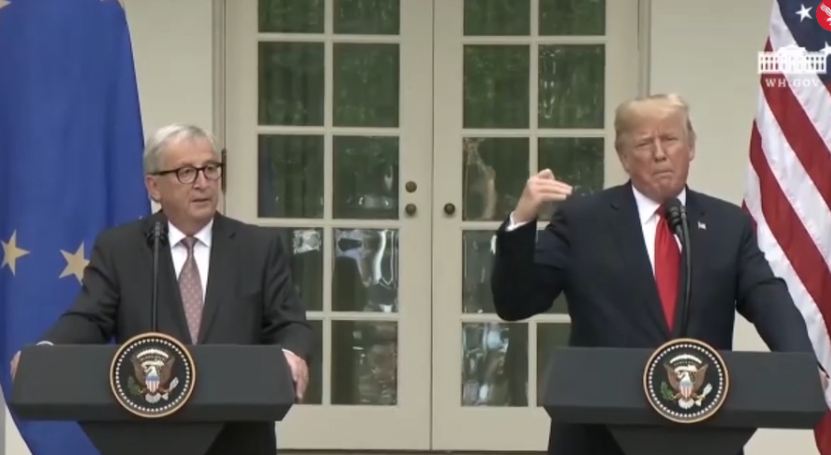
The Independent reported that an EU Official said that Juncker used ‘‘brightly coloured, simple flashcards” to explain trade to Trump during the meeting. The EU official said ‘each card had at most three figures about a specific topic. While these remarks are deeply offensive, what they really reveal is how much EU officials prefer to promote propaganda as well and create their own FAKE NEWS to distract people from reality. It has been Europe that delayed the TTIP deal and made it completely unworkable. What they are NOT explaining to people is that there is another MAJOR PROBLEM with the EU structure being exposed by trade negotiations and why Britain who run as fast away as possible.

All 28 EU countries have a common external tariff, which is collected by the national customs authorities. This is then paid into the EU budget. This tariff produces around €20 billion euros per year. Now enters the great disparity of economics. Germany produces 25%+ of that tariff – some €5 billion. It was true that the goal of the EU was to eliminate tariffs and champion free trade among member states as takes place in the USA. This is where we get this slogan of the “single market” for the more than 500 million EU citizens.

That all sounds very nice. The dirt is always found swept under the rug. Creating a “single market” was beneficial primarily for Germany who has an export-economic model. Germany’s car business is its lifeblood. It survives by selling cars to the world. So naturally, the euro was a dream come true for Germany. The euro and single-market eliminated FOREX risk for its customers and German producers which would result in more sales. That was a win-win for Germany, as the sales pitch went.

However, the creation of a single government has introduced a lot more problems that nobody bothered to consider. Germany clearly dominates the foreign trade of the EU. It exports to the world beyond the EU. Without Germany, the EU would flounder and be saddled with trade deficits. However, now we introduce the EU government. Suddenly, Germany cannot conclude its own trade treaties outside the EU. Everything must be negotiated by Brussels through the customs union.

Now we begin to look beyond mere currency. I have warned that one-size does not fit all as people had expected would emerge from creating a federalized EU. The second largest player in the EU is France. Because of crazy unions and socialism that has dominated France, the French are not the bastion of production and instead have a perpetual foreign trade deficit. Its socialistic policies have produced chronic protectionist policy that results in higher wages and higher costs of production that are simply uncompetitive even within the EU. Therefore, France is always at odds with Germany when it comes to trade deals for the EU.

In actual negotiations under the Obama Administration on the TTIP deal with the EU, the process dragged on from 2013 to 2017. Each of the 28 member states had their own protectionist issues. This delayed negotiations endlessly and it demonstrated that the EU structure really did not work. Each country wanted its own deal, but it had to negotiate collectively. So France could prevent Germany and likewise other members could block France. This is the reality of what President Trump walked into. The audacity that Juncker had to explain trade to Trump with flash cards was probably the most arrogant statement I have ever read from a government that is clueless. Trying to negotiate trade with the EU when its own 28 member states fight with each other is impossible. Already, Trump offered to eliminate all tariffs. Germany licked its lips. France said NO WAY!!!! Who needs the flashcards?

The only possible tactic that Trump could take to break this deadlock was to threaten wholesale tariffs. The Europe-wide tariffs were the only possible way to deal with the situation that probably still will not lead to some universal commitment to real free trade on either side of the Atlantic. It is Europe that is burdened with protectionism that has for decades put up a significant renaissance against free trade.

Trump’s favorite slogan, “America First,” has gained all the headlines and people PRESUME he is starting some protectionist war. In reality, there is NO free trade whatsoever and this issue of trade is like someone who punches you in the face, but the police charge you with assault for hitting the person in retaliation and ignores any evidence that they hit you first. TTIP was a complex mess and by no means would it actually create free trade. It was all about protectionism simply labeled free trade. The EU structure is hopeless. It wants to pretend it is a “single market” but it cannot negotiate any trade deal because it is 28 members who have to unanimously agree and that took 4 years to reach TTIP and a complete mess.

Of course, the media generally at large just like to bash Trump. Why bother explaining the real nightmare of tariffs and duties which are merely tariffs in sheep’s clothing.

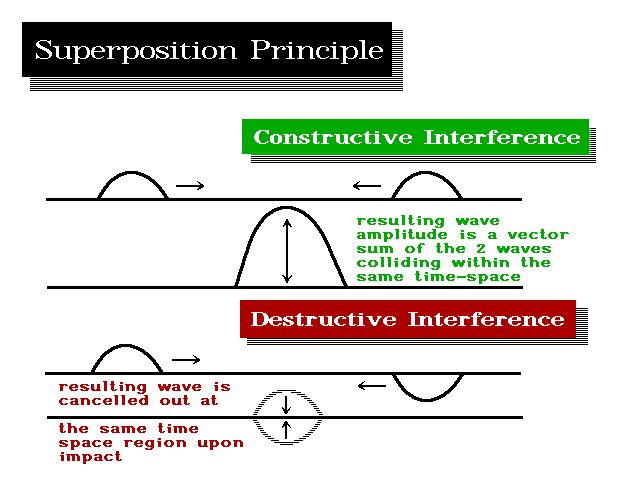
What is a Superposition Event


Socrates wrote about a Rare Superposition Event took place last week in the Dow. They can take place at all levels of time and can be on a closing basis or on an intraday basis. This is the 43rd such event on the weekly level in the Dow since 1914. You can read more about them in our Research section.

D’oh Canada…


Canada is on the cusp of instituting a national carbon tax.  Against push-back from normal Canadians in Ontario who are against the insufferable proposal, Liberal Minister of Environment Catherine McKenna explains how it will work.  WATCH:


[Data Link]


Australian Drought Getting Really Bad & the Tilt of the Earth


Farmers in South Australia have been forced to feed sheep with onions that were rejected for commercial sale due to a shortage of feed. Besides the energy output of the sun declining, we also have the changes in the earth’s wobble to contend with. The Northern Hemisphere’s last ice age ended about 20,000 years ago, and most evidence had indicated that the ice age in the Southern Hemisphere ended about 2,000 years later.

There have been new findings come from a detailed examination of an ice core sample taken from the West Antarctic Ice Sheet Divide for the first time. Previously, the ice cores were taken from the East where the ice is thickest. This new area of the ice is more than 2 miles deep and covers 68,000 years. They have only completed about half so far in the analysis. One meter of ice covers one year, but at greater depths, the annual layers are compressed to centimeters. Evidence of greater warming periods was revealed in layers associated with 18,000 to 22,000 years ago. This is known as the “deglaciation” period and corresponds to the last big climate change. Obviously, that is well before civilization. This real science reveals how our climate system actually functions and it is cyclical in accordance with the laws of physics. Changes in Earth’s orbit changes on the scale of thousands of years. Nevertheless, as the Earth changes its tilt, some regions that were cold become warm and others that were warm become cold. This tends to be a more consistent process that is emerging.

West Antarctica is separated from East Antarctica by a major mountain range. East Antarctica has a substantially higher elevation and tends to be much colder, though there is recent evidence that it too is warming rather rapidly. There is clear warming in Western Antarctica in the past decades. The new data obtained from the ice cores confirm that Western Antarctica’s climate is more strongly influenced by regional conditions in the Southern Ocean than East Antarctica has been. The warming in Western Antarctica 20,000 years ago is not explained by a change in the sun’s intensity. What appears to impact the poles more so has been the wobble of the Earth. It is the wobble which changes how the sun’s energy is distributed over the planet. As the Earth tilts, it not merely warms the ice sheet, but also warms the Southern Ocean that surrounds Antarctica.

Currently, the axial tilt is in the middle of its range. The third and final of the Milankovitch Cycles is Earth’s precession. Precession is the Earth’s slow wobble as it spins on an axis. Nonetheless, the axial tilt, the second of the three Milankovitch Cycles, is the inclination of the Earth’s axis in relation to its plane of orbit around the Sun. Therefore, the oscillations in the degree of Earth’s axial tilt occur on a periodicity of 41,000 years. The tilt does not sound like much moving from 21.5 to 24.5 degrees. However, at this time the Earth’s axial tilt is about 23.5 degrees. As a result, this provides us with our seasons. Interestingly enough, since there are periodic variations of this angle, the severity of the Earth’s seasons changes dramatically. When we have less of an axial tilt, then the Sun’s solar radiation is more evenly distributed between winter and summer. However, less tilt also increases the difference in radiation receipts between the equatorial and polar regions.

The Earth appears to react significantly to a very small degree shift of axial tilt. This will promote the growth of ice sheets. There is a response due to a warmer winter, in which warmer air would be able to hold more moisture, and thus produce a greater amount of snowfall building up the glaciers. Additionally, summer temperatures would be cooler which in turn results in less melting of the winter’s accumulation.

Therefore, we do not have a single source that we can attribute to climate change. It appears to emerge as a combination of the energy output of the sun, the wobble of the earth, and the sudden rise in volcanic activity. The problem gets really back when all three converge

The IMF’s SDR & Monetary Reform – Another Crazy Idea?


QUESTION: Hi Martin,
I am a long time reader of your blog and a big fan of the tools that you have developed for investors. Thanks for all that you do and I wanted to reach out and ask about your opinion of the thesis that ——-  outlines for the IMF implementing SDRs as world money during the next downturn? This type of scenario seems to make sense considering the current balance sheets of central banks and the current lack of demand for EU debt.
Nicky

ANSWER: I was in a discussion about that back in the 1980s (see the response from the White House rejecting SDRs). That was a day before the IMF became so corrupt. That was rejected countless times. The entire problem still stems from the cross-currency borrowing by nations. Even if the emerging markets borrowed in SDRs instead of US dollars, it really would not alter the world money system nor prevent a crash at the hand of a Sovereign Debt Crisis. What it would do is simply relieve the dollar marginally. The problem would emerge on how do you manage such a system. As long as governments issue debt, then once they issue that debt in ANY currency other than their own, RISK enters the game.

Even if we switched the reserve currency from the dollar to the SDR, the ONLY way to enforce it would be to restrict currency. For example, I could issue a bond in Japanese yen for years and sell it to you in Canada without it being approved by the Japanese Ministry of Finance. China still has currency controls where its people have to ask permission to send money out of the country. The only way to enforce an EXCLUSIVE SDR reserve currency would be for all debt to be denominated in SDRs. However, then every country would still have the risk of their currency fluctuating against the SDR.

The only way to practically reduce the risk is to prohibit governments from issuing debt in any currency but their own. That introduces yet another problem. Many pensions bought emerging market debt to get the higher yield, but they did so because they issued that debt in dollars to attract foreign buyers. As the dollar rises and rates rise, the value of emerging market debt declines and the risk of default rises as the US dollar rallies.

So you see, if we are really talking about revising the world monetary system, it is going to be far more complicated than simply replacing the dollar with SDR, gold, or clamshells as they issued during currency crisis of 1933.