Posted originally on Dec 10, 2025 by Martin Armstrong |
Germany granted itself legal permission to use AI technology to aggressively monitorthe entire population in real-time. The Berlin House of Representatives passed amendments to the General Security and Public Order Act (ASOG) that grants government access to citizens’ personal data by any means necessary, including forcibly entering their private homes.
Interior Senator Iris Spranger (SPD) declared the new laws necessary to fight terrorism in the digital age. German investigators may now legally hack IT systems, but if remote access is unavailable, authorities may “secretly enter and search premises” a suspect’s personal residence to confiscate their digital devices. The government does not need to notify citizens that they are under investigation before entering their homes without warning.
Germany will equip public spaces with advanced surveillance technology. The cell tower query will be expanded to enable the government to access data from all private mobile phones. Network operators must be able to tell the government the movement and location of all citizens. License plate scanners will be installed throughout the nation, and that data will be sent to a centralized database.
Deutschland has finally achieved official “1984” status—the nation is implementing unmanned drones to monitor the population.
All personal data may be used for “training and testing of artificial intelligence systems.” Authorities have free rein to steal data from publicly accessible websites to collect biometric comparisons of faces and voices. The government will implement automated facial recognition software that enables it to identify citizens immediately. The database will tie into the nationwide surveillance platform.
You are being watched. Civil liberties do not exist. Freedom is merely an illusion; your likeness—face, voice, movement, finances, family–exists in an ever-expanding government database that may be used however the government sees fit.
Posted originally on CTH on December 9, 2025 | Sundance
President Trump sat down for an extensive interview with Dasha Burns of Politico. Despite the ideological outlook of Politico, the interview itself was remarkably absent of combative antagonism. The result is a good review of the current positions of President Trump as they relate to the rest of the world.
The Ukraine-Russia conflict is the immediate issue that is discussed within the interview. President Trump answers some direct questions about who is currently most responsible for continuing the conflict and is asked his opinion directly on Ukraine not holding elections.
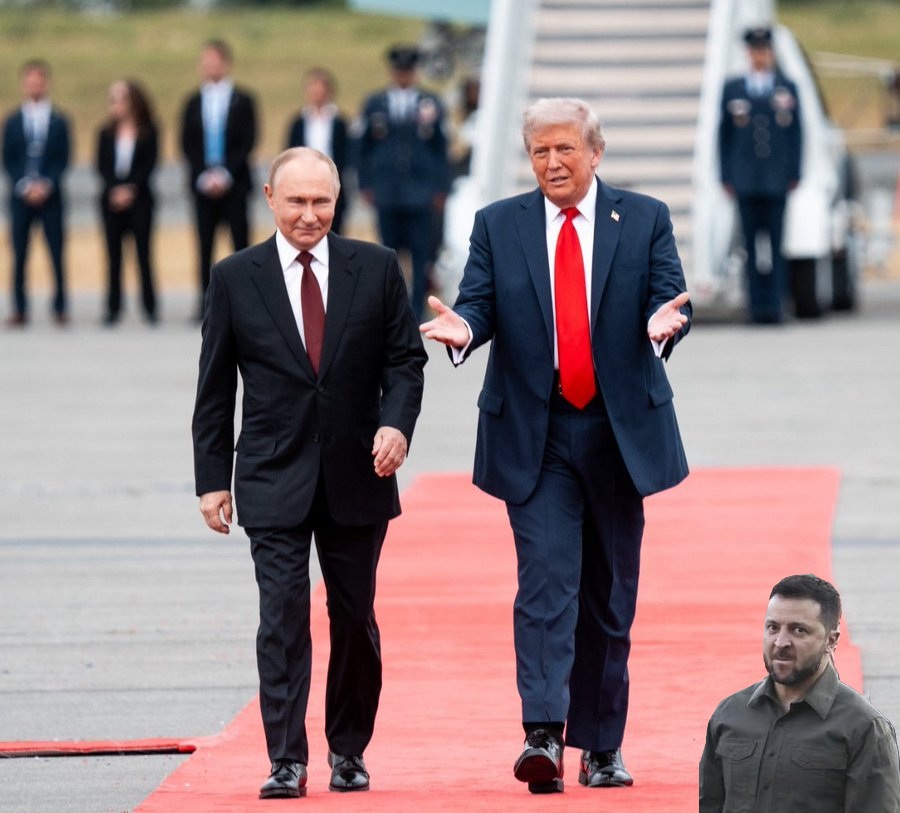
President Trump notes Russian President Vladimir Putin is in the strongest position within the conflict and carries the strongest leverage into any ceasefire negotiations. Trump also frames the need for the bloodshed to end with a much greater sense of urgency than any of the EU leaders or Zelenskyy. Additionally sharing the opinion that Ukraine needs to have an election to showcase the will of the Ukrainian people in the leadership of Volodymyr Zelenskyy. WATCH:
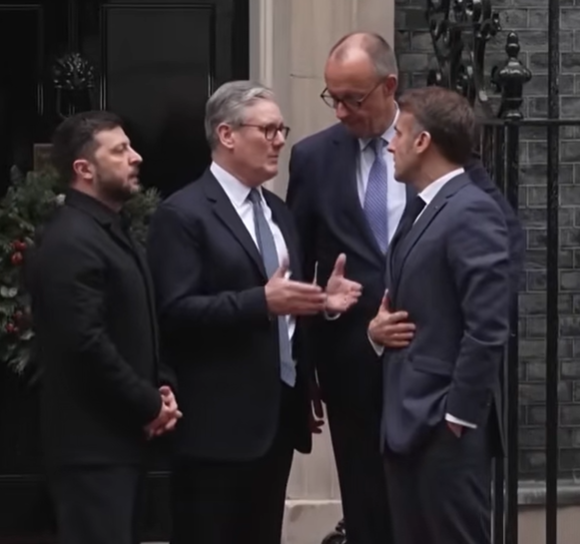
Yesterday, Ukraine President Volodymr Zelenskyy traveled to London to meet with British PM Keir Starmer, German Chancellor Friedrich Merz and French President Emmanuel Macron.
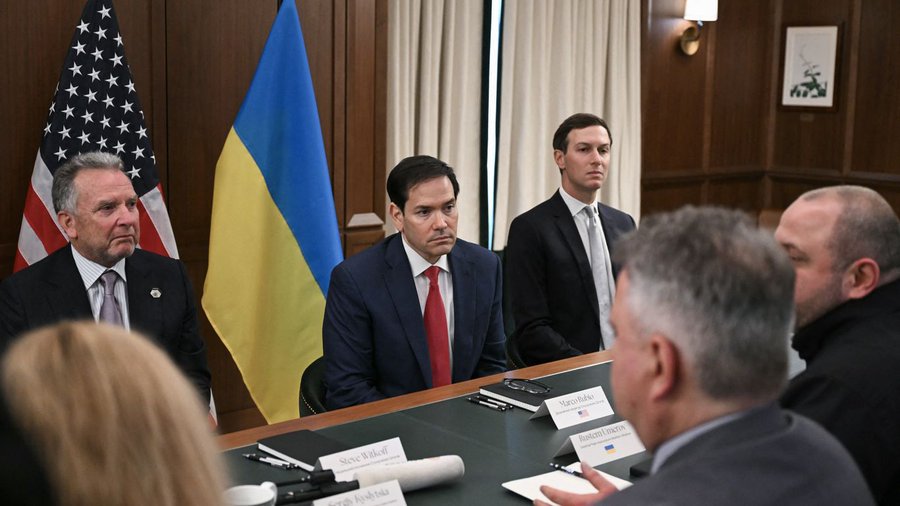
As expected, part of the Zelenskyy meeting with the “coalition of the willing” included a briefing by Ukraine negotiator Rustem Umerov, the secretary of Ukraine’s National Security and Defense Council, who held detailed consultations for three days last week in Miami with Trump’s envoys Steve Witkoff and Jared Kushner.
President Zelenskyy then departed London traveling with his media entourage to Brussels for the next round of discussions with the European Union stakeholders, financiers and politicians. During the trip Zelenskyy told his media stenographers, “Under our laws, under international law — and under moral law — we have no right to give anything away. That is what we are fighting for.”
The U.K, France and Germany support Zelenskyy’s position that he is not going to concede any territory to the Russian Federation, specifically the 30% of the Donbas area in Eastern Ukraine currently at the heart of the physical conflict.
The 30% issue surrounds the Donetsk region in Ukraine, which includes the cities of Kramatorsk and Sloviansk. Russia is currently pushing deep into fortified Ukraine resistance in this region with a population of around 100,000. Zelenskyy claims losing this area would allow Putin to invade the Dnipropetrovsk, Zaporizhzhia and Kharkiv regions.
Historically, this Donbas area was part of a brutal long-term Ukraine civil war between the pro-Russia eastern Ukrainian citizens and the pro-EU western aligned Ukrainian army. Russia’s current position is for Ukraine to cede the entire Donbas to Russia as part of the ceasefire agreement, or Russia will continue forward conflict military operations until successful.
Seeing things through the pragmatic prism of inevitability, President Trump’s view appears to be that this Donbas area will be lost to Russia one way or the other. So, the best scenario to stop the killing is for Ukraine to give up this territory as part of the ceasefire terms. Zelenskyy, with support of the EU, France, Germany and U.K says a firm “no.”
Politico reports that Zelenskyy said in August of this year “it would take Russia four-years to fully occupy the Donbas,” subsequently a lot of killing would take place during this process. President Trump is trying to stop the brutal “killing” part of that dynamic by getting the negotiation to the point of concession, but the EU team view any land area concession as positive affirmation for Russia to continue threatening Europe.
♦ On the ‘Security Guarantee‘ issue, this is where a quagmire is presented by European leaders.
From a pragmatic standpoint a European demilitarized zone, stood up and supported by EU military forces would appear to be the best solution. However, the “coalition of the willing” say they are willing to put security troops into Ukraine, but only if the USA will defend them if attacked by Russia. In essence, quasi-NATO forces on a non-NATO country, that if attacked would draw the entirety of NATO into the conflict, including the United States.
The U.K, France, Germany and EU Commission want a security structure similar to NATO for Ukraine that legally binds the United States to defend their interests if the ceasefire does not hold. President Trump has rejected this construct as yet another way for Europe to pull the U.S into a conflict zone that is not in our vital national security interests.
The ceasefire proposal structured by Trump, Witkoff and Kushner – seemingly supported by Russia, does not permit Ukraine to join NATO; however, EU membership is entirely up to the EU and people of Ukraine to decide. If Ukraine joins the EU, then EU forces alone should provide the security guarantee, not NATO which includes the U.S. and Canada.
(Washington Post) […] Zelensky said Ukraine will not surrender its territory in the eastern Donbas region — not to hasten peace talks, not to satisfy Washington’s push for compromise and not under pressure from Moscow’s continuing military onslaught.
Ukraine and Europe have insisted that a ceasefire be declared along current battle lines, but Russia has refused. Putin has claimed, illegally, to have annexed four entire regions of Ukraine (in addition to Crimea, which Russia seized in 2014) — far more territory than his military forces have been able to occupy.
Some Ukrainian officials held out hope that the negotiations could still bear fruit.
The proposal “is closer to be doable for Ukraine, but not easy and not finished,” said a senior Ukrainian official familiar with recent discussions, who spoke on the condition of anonymity because they were not authorized to comment publicly. (read more)
President Zelenskyy, whose term in office has long expired, departed London with his EU media entourage heading to Brussels. The collective group is trying to figure out how to keep America tied to their stakeholder interests in Ukraine.
The European leaders are manufacturing a construct that is not supported by the vast majority of the citizens within the EU, even within Ukraine itself. Meanwhile back in the USA, congress (House and Senate majorities) supports the position of Ukraine and the EU against the interests of President Trump and the voting majority.
There are trillions at stake.
The ruling class is supporting Zelenskyy, while the killing of the non-ruling class continues on the fields of Ukraine.
Posted originally on CTH on December 8, 2025 | Sundance
Following three days of negotiations in Florida (Thur, Fri, Sat) between President Trump emissaries Steve Witkoff and Jared Kushner, and Ukraine emissaries Rustem Umierov and Andrii Hnatov, the group then held a 2-hour phone call with Ukraine President Volodymyr Zelenskyy.
No substantial progress was reported. However, military officials Umierov and Hnatov then flew to meet Zelenskyy in London where French President Emmanuel Macron, British Prime Minister Keir Starmer and German Chancellor Friedrich Merz are assembled to discuss alternatives to ending the conflict.
Starmer, Macron and Merz form the core of the “coalition of the willing,” an EU group who have unilaterally proclaimed they were willing to send the military of the U.K, France and Germany into Ukraine so long as President Trump would backstop their troops with promises of U.S. intervention if things went badly. Trump would not make that commitment.
Zelenskyy Inc, Macron, Starmer and Merz do not want to end the proxy fight against Russia. Together with the EU leadership of NATO, the coalition of the willing want to retain the conflict. However, the problem for the four leaders is that without strong USA support, the citizens of their EU countries will rise up against them.
Even with NATO missiles and transferred technological assistance, they ultimately need the American military in order to ensure Putin doesn’t squish them. President Trump wants the proxy war to end – loggerheads are reached.
Russian President Vladimir Putin does not seem to be paying too much attention to the bureaucratic speeches and instead is continuing forward advancement [SEE HERE] to secure the territory in Ukraine with or without a negotiated settlement.
The Russian Federation has presented its terms; the Russian terms for cessation are known; the rest is up to the EU, NATO, USA and Ukraine to work out.
At this point the problem is over-talking and FUBAR, or, well, a typically European situation. So, Putin keeps going, more Ukraine troops are killed, while Putin awaits the endless conversations that he predicted would result in more endless conversations. To be fair, Putin’s cold approach appears to be a mostly accurate interpretation of what he expected.
ZELENSKYY – “In recent days, representatives of Ukraine held substantive discussions with envoys of the US President – and now National Security and Defence Council Secretary Rustem Umierov and Chief of the General Staff Andrii Hnatov are en route to Europe. I expect detailed information from them on everything that was said to the American envoys in Moscow, and on the nuances the Americans are prepared to modify in negotiations with us and with the Russians.” (link)
By my count in the past two weeks, Witkoff and Kushner have spent nine days in direct all-day negotiations with various Ukraine officials from various institutions of Zelenskyy’s government, with a one-day trip to Moscow sandwiched between them. Yet, western media continually proclaim the U.S. delegation of Kushner and Witkoff are ignoring the Ukrainians.
This is what I call the ‘paralysis of analysis’, or the part of every negotiation where things get so granular in detail that the larger objective is lost.
While the Ukraine team argues about whether a creek or a railroad track should determine the current point of conflict, another 250 Ukrainian soldiers have their limbs torn from their bodies and lie dead in the mud. Today they will meet in London to argue over telephone pole ownership, while another battalion is fed to the meat grinder.
CNN frames a narrative that President Trump is unsympathetic and frustrated with Zelenskyy:
(VIA CNN) – […] Trump criticized Zelensky on Sunday after talks between US and Ukrainian negotiators over the weekend in Miami ended with unresolved questions over security guarantees, territorial issues and continued concern that the US proposal tilts in Russia’s favor.
“We’ve been speaking to [Russian] President [Vladimir] Putin and we’ve been speaking to Ukrainian leaders, including… President Zelensky, and I have to say that I’m a little bit disappointed that President Zelensky hasn’t yet read the proposal, that was as of a few hours ago,” Trump said. (more)
President Trump is reviewing the issue through the prism of “hours” because he knows that as each hour passes that’s more dead young men…. And FOR WHAT?
Meanwhile, Volodymyr Zelenskyy is traveling around Europe stopping for tea and crumpets with Macron, Starmer and Merz in London today. Think about the upside-down priorities here.
Bread and Circuses – With Servants Patiently Waiting (Dec 6, 2025)
Posted originally on CTH on December 1, 2025 | Sundance
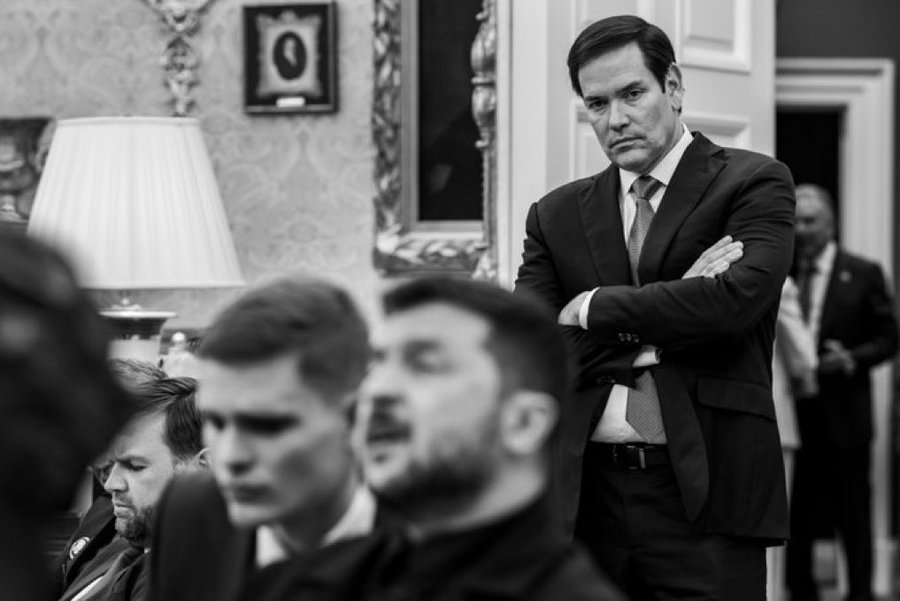
On Sunday, Secretary of State Marco Rubio, Trump emissaries Steve Witkoff and Jared Kushner met with the Ukraine negotiating team in Florida to further discuss acceptable terms for a broader ceasefire and end to the war.
Still trying to recover from corruption charges against his senior presidential team, Volodymyr Zelenskyy was not at the talks. Instead, the Ukraine delegation was led by State Security Council Secretary Rustem Umerov, while Zelenskyy went to Paris for an emotional support session with Emmanuel Macron.
Secretary Rubio and Secretary Umerov spoke before and after their 5-hour negotiation session. Secretary Rubio emphasized the main topic as securing the long-term future of Ukraine both from a security position and from an economic prosperity position.
This state security aspect comes as the Ukraine delegation is facing pressure to accept, they will lose most -if not all- of the Donbas region to Russia. “The end goal is obviously not just the end of the war. Obviously, that’s central and fundamental,” Rubio said. “It’s also about securing an end to the war that leaves Ukraine sovereign and independent and with an opportunity at real prosperity.”
In better-than-expected news, the EU is now saying they will not comply with any removal of sanctions against Russia. If the U.S-Russia and Ukraine work out a negotiated settlement that permits legal or economic relief for Vladimir Putin, the European Union will not agree and will instead make up their own decision on the issues.
Europe is holding this position as a threat, because President Trump is not fully consulting with them on all the granular details. However, this is the type of threat that is exactly beneficial to what appears to be the long-term strategy of Trump.
If Europe refuses to remove sanctions or legal threats against Russia, but the U.S. negotiates the removal of U.S treasury and financial sanctions against Russia, then the Europeans have chosen to stay behind the locked door of economic benefit. More than two-thirds of the world does not participate in the sanctions at all.
If Europe and Canada continue blacklisting Russia, the U.S-Russia energy development program gains exclusive benefits to Trump, Putin and other allies like Mohammed bin Salmon (Saudi Arabia), ASEAN nations and even Japan.
In very practical terms, someone like Viktor Orban (Hungary) would like nothing more than to violate ongoing Brussels sanctions against Russia, and as a consequence create a fracture point for European Union exit.
In practical terms, what would this look like? Well, the entire world would have lower energy prices, lower oil and natural gas prices, and lower gasoline prices by big margins. Meanwhile, Europe would have a massive disparity in their much higher energy costs – likely double the rest of the world. Think about the ramifications. Hungary, Georgia, Montenegro, and Serbia with 50% lower prices on gasoline and electricity than the EU. lolol It would be funny.
Unfortunately, with this in mind I find the EU threats hollow. As soon as the U.S-Russia-Ukraine work out a peace and security agreement, Europe will comply with whatever terms are negotiated for Russia. Failure to do so only isolates the Europeans and will create a problem amid their collective mindsets.
(Via Axios) Negotiations between the U.S. and Ukraine on Sunday focused on where the de facto border with Russia would be drawn under a peace deal, two Ukrainian officials tell Axios. They described the five-hour meeting as “difficult” and “intense,” but productive.
Why it matters: Russian President Vladimir Putin — who’s expected to meet with President Trump’s envoy on Tuesday — insists Russia won’t stop until it controls the entire Donbas region in eastern Ukraine.
After an hour in a wider format, the meeting narrowed to three officials from each side — with the line of territorial control virtually the only issue discussed, according to the two Ukrainian officials.
On the U.S. side were Witkoff, Secretary of State Marco Rubio and Trump’s adviser and son-in-law Jared Kushner. The Ukrainian side was represented by national security adviser Rustem Umerov, military chief of staff Gen. Andrii Hnatov and deputy head of military intelligence Vadym Skibitskyi.
After the talks with their teams ended, Umerov held another one-on-one meeting with Witkoff. Umerov then called Ukrainian President Volodymyr Zelensky to brief him on the talks.
“It was intense but not negative. We really appreciate serious U.S. engagement. Our position is that we have to make everything to help U.S. succeed without losing our country and preventing another aggression from happening,” one of the Ukrainian officials wrote to Axios after the meeting.
Between the lines: Ukrainian President Volodymyr Zelensky had wanted to discuss territory directly with Trump, but Trump said he’d only meet Zelensky or Putin again once a deal is close.
Umerov is expected to meet Zelensky in Paris on Monday and give him a more detailed report about the negotiations, Ukrainian officials say.
Witkoff plans to depart for Moscow on Monday and meet Putin on Tuesday.
“The main question is where the Russians stand and if their intentions are real. Let’s see what Witkoff brings from Moscow,” a Ukrainian official said. (more)
Posted originally on CTH on November 14, 2025 | Sundance
President Donald Trump gave U.S. Trade Representative, Ambassador Jamieson Greer, all the tools and leverage needed to bring the Swiss govt to a substantive trade agreement. The pressure was too much to bear, so Switzerland quickly negotiated a deal.
In the background President Trump’s global trade reset has been seriously damaging for the Swiss industrial economy. The EU overall, Germany specifically and China, have stopped purchasing precision Swiss industrial machinery.
It’s not the direct tariffs against Swiss precision machinery itself that created the pressure, but rather the tariffs against nations who purchased the Swiss precision machinery.
China was a big purchaser of the Swiss machinery, until Beijing stole enough intellectual property to develop their own precision machining capacity. Slowly China didn’t need Switzerland.
Germany and the EU economy then began to contract as the Trump tariffs bit hard against their exports to the USA.
Simultaneously, Chinese EV production started replacing more expensive European EV production, and the tooling purchases within the auto industry began contracting within Switzerland.
As things unfolded, the forecast for the future of the Swiss economy started to become very clear; their precision industrial exports were going to continue contracting. Something needed to change, and fast.
Ambassador Jamieson Greer announces a major free trade agreement with Switzerland {SEE HERE} and the White House provides a fact sheet {SEE HERE}. A joint statement is then released:
Today, the United States of America (United States), the Swiss Confederation (Switzerland), and the Principality of Liechtenstein (Liechtenstein) (collectively, Participants) express through this Framework their intention to negotiate an Agreement on Fair, Balanced, and Reciprocal Trade (Agreement). Through the Agreement, the Participants intend to create a dynamic and balanced trading relationship on a reciprocal and mutually advantageous basis, with a view toward creating good, high-paying jobs and economic growth in their markets. The Participants share a desire to make trade fairer, easier, and more substantial. The Participants further share a desire to foster secure and resilient supply chains and a conducive business environment to attract high-quality and trusted investment. Switzerland intends to take action to balance its trade with the United States, including by purchasing U.S. goods, facilitating investment in the United States, and removing tariff and non-tariff barriers for U.S. goods. The Participants intend to immediately begin negotiations of the Agreement with the aim to make significant progress, and if possible conclude the Agreement, by the first quarter of 2026, subject to their respective domestic processes.
The Participants intend for the negotiations of the Agreement to focus on the following key areas:
Investment, Commercial Considerations, and Opportunities
Switzerland and Liechtenstein support the increase of foreign direct investment by Swiss and Liechtenstein enterprises into the United States.
Switzerland intends to encourage and facilitate at least $200 billion of investment into the United States, across all 50 states, over the next five years, to create manufacturing and research and development jobs. Liechtenstein intends to encourage and facilitate at least $300 million of investment into the
United States and increase by 50 percent over the next five years the number of jobs created by its private sector in the United States. Switzerland and Liechtenstein intend to encourage and facilitate one third of these investments by the end of 2026. The United States intends to determine, in its application of reciprocal tariffs, if Switzerland and Liechtenstein have taken appropriate steps to encourage and facilitate these investments and associated job creation. If needed, the Participants intend to jointly discuss the steps taken to encourage and facilitate such investment and job creation and determine additional measures for investment promotion and facilitation.
The Participants intend to encourage their enterprises to promote and develop training and apprenticeship programs, including Registered Apprenticeship programs, for U.S. workers in key high-growth sectors in the United States, taking into account their current and future investments.
The Participants intend to cooperate on this issue.
Switzerland and Liechtenstein intend to work together with the United States on addressing potential distortions of bilateral trade and investment arising from industrial subsidies or actions of state-owned enterprises.
The Participants intend to create the best possible environment to encourage and facilitate cross-border investments and job creation.
2. Tariffs
Recognizing the Treaty of 29 March 1923 between Switzerland and Liechtenstein on Accession of the Principality of Liechtenstein to the Swiss Customs Area, the United States intends to apply the same tariff treatment to both Switzerland and Liechtenstein.
Switzerland and Liechtenstein intend to improve market access for U.S. goods, through the application of zero duties on all U.S. industrial goods, U.S. seafood, and certain U.S. agricultural goods, and through the application of tariff rate quotas for a number of other U.S. agricultural goods.
The United States intends to apply the higher of either the U.S. most-favored-nation (MFN) tariff rate or a tariff rate of 15 percent, comprised of the MFN tariff and a reciprocal tariff, on originating goods of Switzerland and Liechtenstein and to apply only the U.S. MFN tariff rate on certain products listed in the “Potential Tariff Adjustments for Aligned Partners” Annex to Executive Order 14346 (Modifying the Scope of Reciprocal Tariffs and Establishing Procedures for Implementing Trade and Security Agreements).
The United States intends to promptly ensure that the MFN tariff and the tariff imposed pursuant to Section 232 of the Trade Expansion Act of 1962 (Section 232) do not exceed 15 percent for originating pharmaceutical goods and semiconductors of Switzerland and Liechtenstein subject to Section 232 tariffs. The United States intends to positively consider the effect of the Agreement on national security, including when taking action under Section 232.
The Participants intend for the benefits of the Agreement to accrue predominantly to the Participants. If the Participants determine that the benefits are not accruing predominantly to the Participants, the Participants may modify the Agreement with rules of origin necessary to achieve that objective.
The Participants intend to cooperate, where relevant, on matters relating to transshipment and circumvention practices, in accordance with their respective domestic laws and regulations.
3. Non-Tariff Barriers and Related Matters
The United States and Switzerland each intend to accord to conformity assessment bodies located in the territory of the other treatment no less favorable than they accord to conformity assessment bodies located in their own respective territories. Treatment under this paragraph includes procedures, criteria, fees, and other conditions relating to accrediting, approving, licensing, or otherwise recognizing conformity assessment bodies.
The Participants intend to apply the World Trade Organization (WTO) Decision of the Technical Barriers to Trade Committee on Principles for the Development of International Standards, Guides and Recommendations (2000) to determine relevant international standards within the meaning of Articles 2 and 5 and Annex 3 of the WTO Agreement on Technical Barriers to Trade, and intend to negotiate provisions clarifying this understanding.
With respect to automobiles, Switzerland intends to work with the United States to facilitate the recognition of Federal Motor Vehicle Safety Standards.
The Participants intend to advance cooperation in mutually agreed strategic sectors, including medical devices. Switzerland intends to facilitate the acceptance of medical devices cleared or approved by the U.S. Food and Drug Administration.
The United States acknowledges the efforts made by Switzerland to facilitate trade in beef and beef products. Switzerland intends to work with the United States to address specific measures that restrict market access for U.S. poultry and poultry products, strengthening opportunities for U.S. agricultural exports in Switzerland. The United States and Switzerland intend to cooperate on streamlining sanitary requirements for labelling and certificates, particularly for beef, bison, and dairy products.
The Participants intend to discuss robust commitments related to intellectual property rights protection and enforcement, including transparent and fair treatment of geographical indications.
The Participants intend to continue to provide an open and competitive environment for service suppliers. Accordingly, Switzerland and Liechtenstein intend to consider opportunities to provide service suppliers additional access to their markets.
The Participants intend to increase their cooperation on labor-related trade issues, and work to address forced labor, including forced child labor, and the worst forms of child labor in supply chains. Switzerland and Liechtenstein intend to continue to protect internationally recognized labor rights. Switzerland and Liechtenstein intend to continue to adopt and implement high levels of environmental protections, effectively enforce their respective environmental laws, and work together with the United States on trade-related environmental measures, including those that may affect trade between each of them and the United States.
The Participants intend to negotiate commitments on good regulatory practices to ensure greater transparency, predictability, and participation throughout the regulatory lifecycle.
With a view to achieving greater reciprocal benefits from participation in their procurement markets, the Participants reaffirm their commitments under the WTO plurilateral Agreement on Government Procurement and their other binding international procurement obligations, and intend to clarify that states that are not party to these agreements do not benefit from non-discriminatory treatment in procurement at the central governmental level covered by such agreements, including through further implementation measures in their respective national procurement frameworks, if necessary.
The United States and Switzerland intend to foster the use of technology solutions that allow for full pre-arrival processing, paperless trade, and digitalized customs procedures.
4. Digital Trade and Technology
Switzerland and Liechtenstein intend to continue to refrain from imposing digital services taxes.
The Participants intend to facilitate trusted cross-border data flows and address data localization requirements, taking into account legitimate public policy objectives.
The Participants intend to explore mechanisms that promote interoperability between their respective privacy frameworks with a view to facilitating secure cross-border transfers of data.
The Participants intend to refrain from imposing customs duties on electronic transmissions and to support the multilateral adoption of a permanent moratorium on customs duties on electronic transmissions at the WTO.
5. Economic Security
The Participants intend to strengthen their cooperation on economic security, including on addressing non-market policies of third countries.
The Participants recognize that the effective enforcement of economic and trade sanctions serves the Participants’ shared interests. The Participants intend to strengthen existing cooperation with regard to U.S. export controls and sanctions.
Switzerland and Liechtenstein intend to cooperate with the United States on matters related to the review of inbound investment, including on the basis of national security.
Switzerland and Liechtenstein intend to work cooperatively with the United States to secure supply chains and improve supply chain resilience in sectors of shared interest.
The Participants intend to coordinate the timing of their respective domestic processes for the entry into force and implementation of the Agreement.
This document does not constitute a legally binding instrument creating or affecting any rights or obligations under international law. {SOURCE}
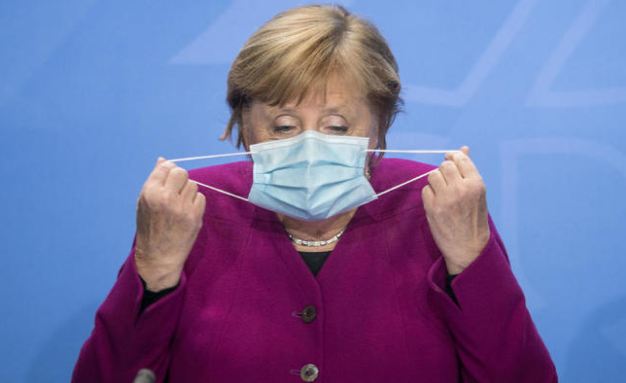
Former German Chancellor Angela Merkel was the first person to admit that the Minsk Agreement was a ploy to buy time to help Ukraine build its military. The Western powers never intended to honor the Minsk Agreement or any of their peace deals with Russia. Yet, Angela Merkel believes there is a bigger culprit behind Russian aggression—COVID-19.
“We couldn’t meet anymore” because Putin was “afraid of the coronavirus pandemic.” Merkel’s theory: “If you can’t meet, if you can’t discuss your differences face to face, you won’t find new compromises.” In a recent interview, Merkel plainly states, “Corona is the main reason” why Russia attacked Ukraine.
Merkel also stated in a separate interview that she has been a political “scapegoat” for escalating Russian aggression. People blame Merkel, unfairly, I will add, for continuing to purchase Russian oil at that time. She has been attacked for failing to boost Germany’s defense during her tenure. The public believes that Germany used the Minsk Agreement to appease Putin, but Merkel herself admitted the deal was to boost Ukraine.
Not only is she blaming COVID, but Merkel is blaming Poland and the Baltic States for preventing the European Union from establishing direct contact with Russia. She mentions that these EU nations were also keen on importing Russian energy, because politicians were unwilling to sabotage the energy sector before Brussels had complete control over the EU bloc.
“In my opinion, it was necessary to try to resolve conflicts with Russia peacefully. At the same time, we also strengthened the principle of deterrence… At the 2014 NATO summit in Wales, a goal was set for all countries to spend two percent of their gross domestic product on defense. I recognize that the energy with which this was advanced was limited,” the former chancellor said.
This war began in 2014, long before the pandemic. Putin invaded as a direct response to the Minsk Agreement hoax, and in reality, Merkel knows the truth. “But I don’t believe that when he came to power in 2000, he was already planning to attack Ukraine one day. Rather, it is a development in which we in the West must also ask ourselves whether we have always done everything right,” the former chancellor noted in a separate interview. True. Putin did not enter politics with the intent of restoring the Soviet Union. The entire reason Yeltsin handed Putin the reins of power was to prevent Russia from being overtaken by the hardliner oligarchs who DO want to see a USSR revival.
Merkel has gone off the rails in her interviews since leaving office. Her frankness is refreshing for those of us who understand the long con game these neocons have been playing–Merkel cannot bite her tongue to conceal the Plot to Seize Russia.
Posted originally on CTH on October 7, 2025 | Sundance
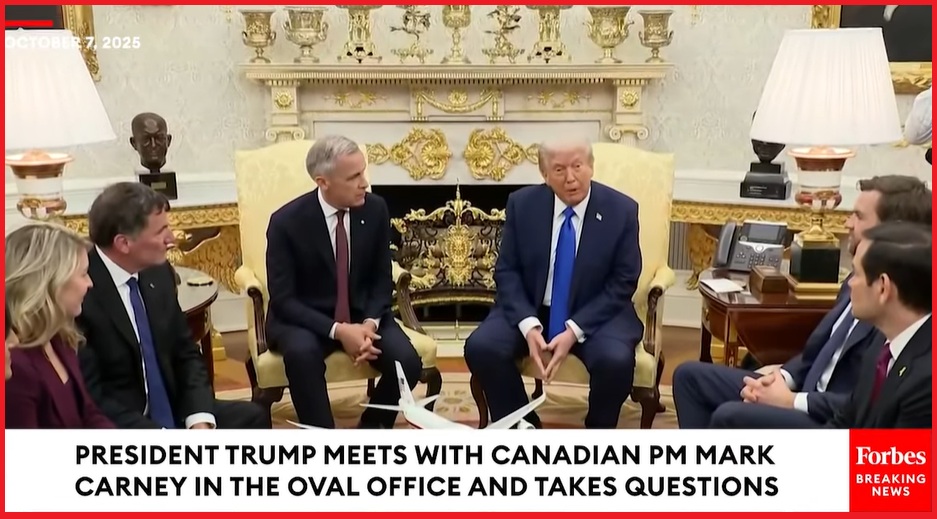
Canadian Prime Minister Mark Carney travels to the U.S. for a White House meeting with President Trump. The two leaders hold a press availability prior to entering negotiations. WATCH:
Posted originally on Oct 7, 2025 by Martin Armstrong |
COMMENT #1: Hi Martin,
Macron is totally cornered tonight, and 62% of the French people are now demanding his resignation. With all the panic cycles showing up in multiple markets in 3 weeks only, may God help us if the petit Napoleon doesn’t take us into war with his other European parasite friends to avoid losing power after their failed policies, and humiliation as the most hated president in history. Unbearable for such a narcissistic character.
Best wishes from France.
PH
COMMENT#2: Mr. Armstrong,
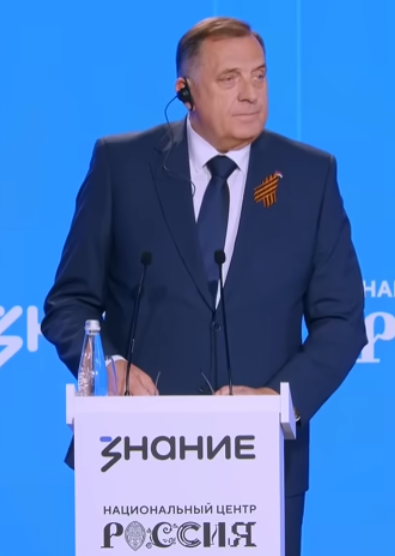
Thank you for doing podcasts in Croatia and Serbia. You are being heard. The president, Milorad Dodik, a Bosnian Serb, who is the 8th President of the Republika Srpska, is now publicly saying what you have been warning about: that this war with Russia is because the EU is in trouble. I know if I ask, you cannot confirm or deny. But it appears that you may be advising countries in the Balkans. I certainly hope so. Dodik has publicly stated that the political situation in European countries is deteriorating, and their economies are in recession. Dodik warned that the EU is a trap. “The Balkan countries should not join the EU. It’s a trap. By the time we join the European Union, it will disappear, and it is already disappearing.”
Thank you so much for your efforts. You are the only person who truly deserves a Peace Prize.
VR
REPLY: If you are blind, you can still see that once the EU was created, like a small businessman seeks to expand his business, that same human instinct takes place among politicians, but the difference is they constantly seek more and more power directed against the people. Even German Chancellor Friedrich Merz called for “putting sticks in the wheels of Brussels” in order to regain Berlin’s influence. Merz wants to give part of the EU’s powers to national governments. He has stressed that it is necessary to stop Brussels’ interference “in people’s daily lives” in the person of European Commission President Ursula von der Leyen.
“Now we have to put a stick in the wheels of this machine in Brussels,” the German chancellor said, addressing business leaders.
Merz also criticizes von der Leyen for proposals to expand the EU budget, introduce new taxes, and for the protracted negotiations on trade agreements. He has insisted on reviewing the role of Brussels in defense planning. Merz has actually said that the EU has “gone too far” and that this situation “can no longer continue.”
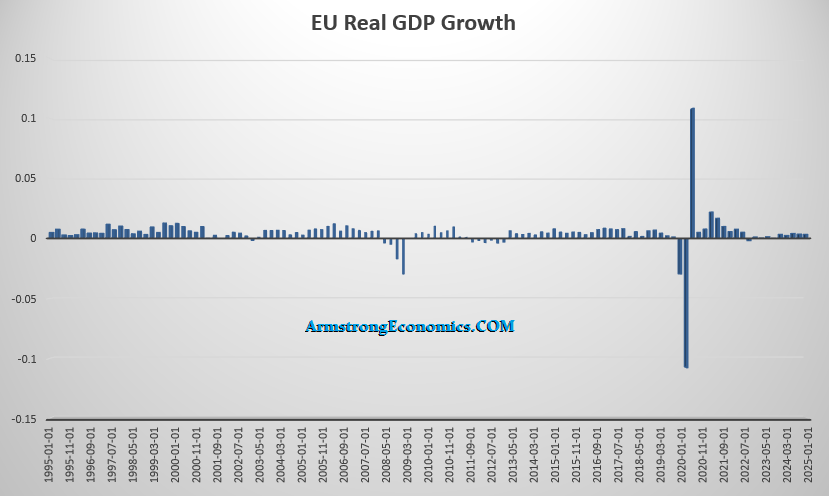
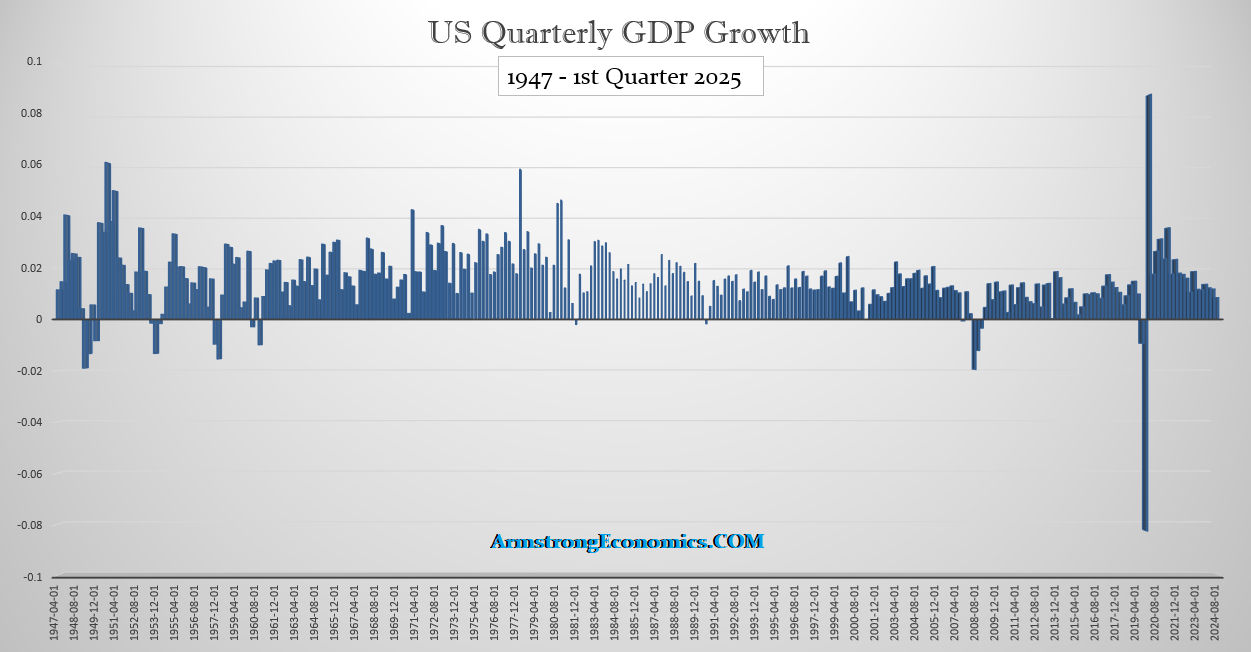
Poland has also expressed similar problems with Ursula’s administration of the EU. She has really wiped out the European economy by using insane climate control to the migrant crisis. A mere glance at the GDP of Europe in comparison to that of the United States reveals how it has significantly suppressed economic growth, pushing the EU to the brink of collapse.
This is the official data taken from the Federal Reserve. This is why we even have a NO-CONFIDENCE VOTE on Ursula this week. I was in a meeting in Berlin and had to run to the next meeting in Rome. These climate change policies have led to the cancellation of short-term flights. There was only one direct flight in the morning. I had to rent a private jet to make the next meeting. I have NEVER in over 40 years been compelled to do that.
Since the 1995 Dayton Peace Agreement, Bosnia and Herzegovina has functioned as a decentralized, multiethnic state divided into two entities: the Federation of Bosnia and Herzegovina and Republika Srpska. Ukraine should have been divided along ethnic lines. But NATO and the NEOCONS have been using Ukraine as their sacrifice on their Neocon altar to bring down Russia.
The Balkans can’t look to the future because they are forever hostages to the past. Even the Baltic states face the same issue with Kallas of Estonia, who insists that Russia is too large and must be broken up. The EU hates Dodik because he is pro-Russia.
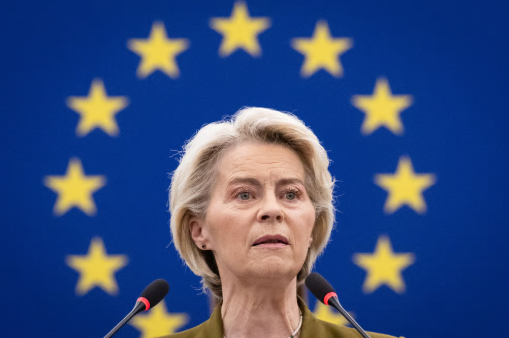
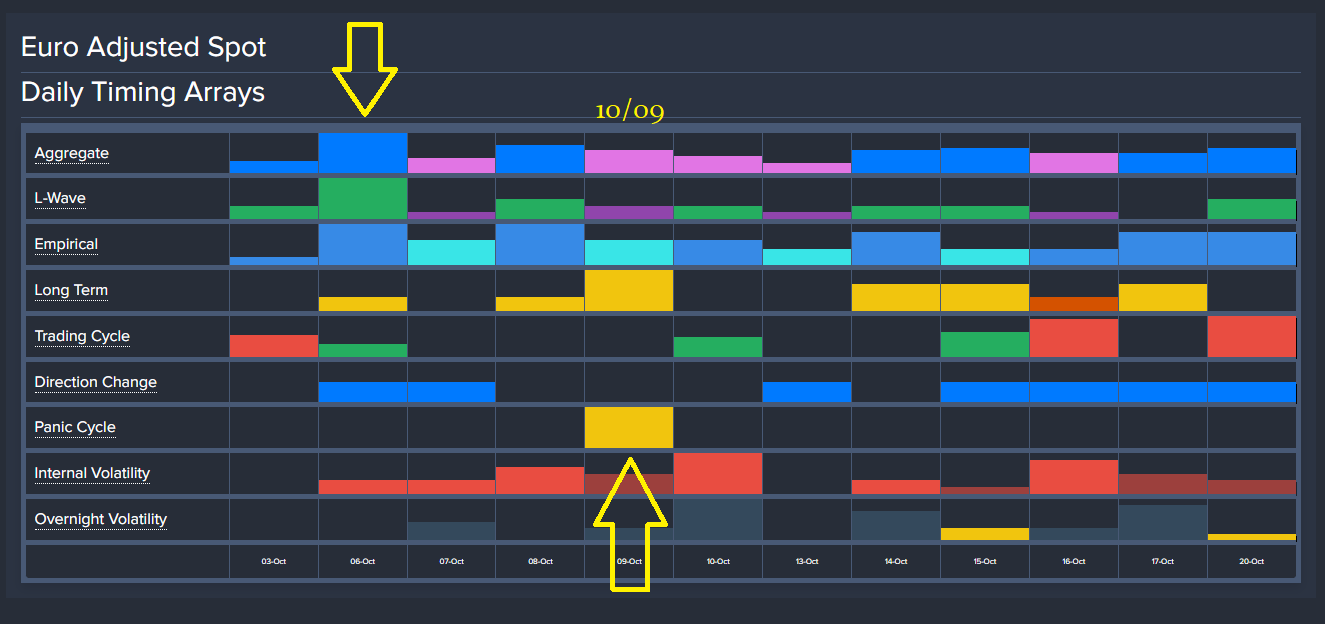
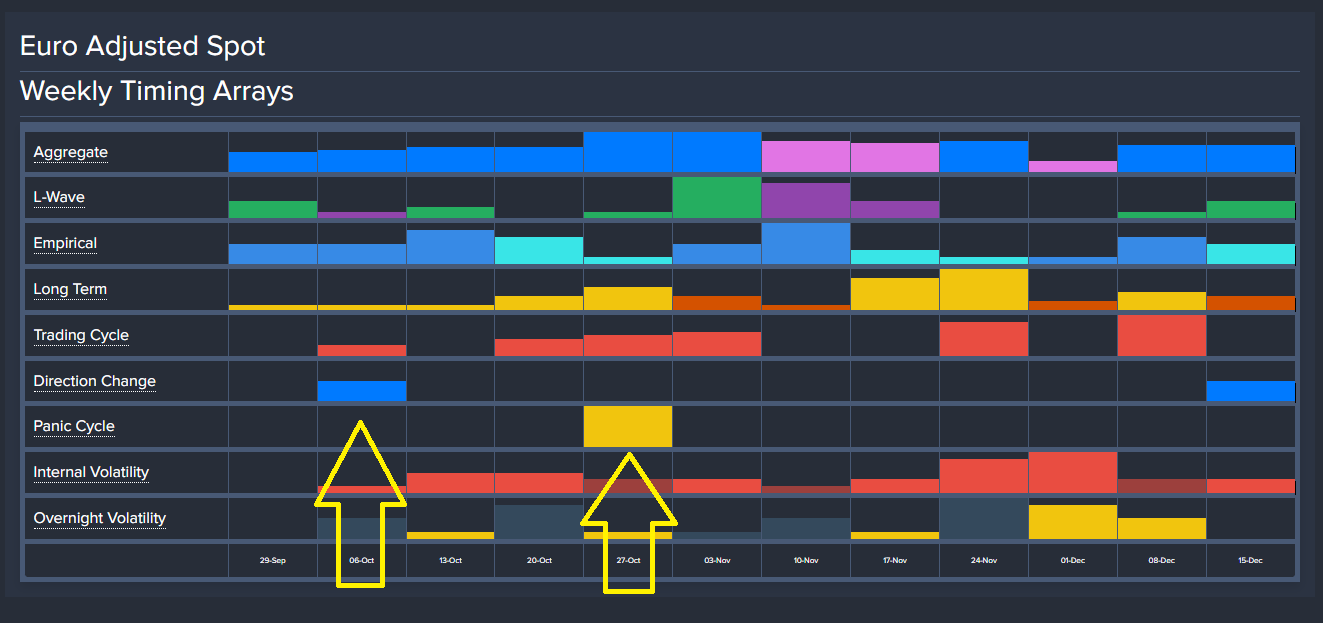
This week, the European Parliament is scheduled to hold two no-confidence votes against European Commission President Ursula von der Leyen on Thursday, October 9, 2025, at 12:00 PM CEST. These votes follow a joint debate held on Monday, October 6, 2025, at 5:00 PM CEST. What is fascinating is how the computer picks up these events from the economic patterns. He had a Panic Cycle for the 9th – the day of the vote.
The motions have been introduced by two political groups: the anti-leftist “Patriots for Europe” and the left-wing group “The Left.” The Patriots for Europe criticize Ursula von der Leyen’s green policies and response to illegal migration, while The Left condemns the EU’s inaction on Gaza. Both groups also oppose Ursula’s trade policies, particularly a tariff deal with the U.S. and a proposed EU-Mercosur agreement, which they argue harms farmers and the environment.
Most expect the motions will fail and Ursula will maintain the European tyranny. A two-thirds majority is required to pass a no-confidence motion in the European Parliament, and such a majority is not anticipated. Centrist parties, including the European People’s Party (EPP), Socialists and Democrats (S&D), and Renew Europe, are expected to support Ursula to the detriment of Europe. They will ensure that Ursula von der Leyen will retain her position and allow Europe to fulill is destiny.
Despite the expected outcome, these motions highlight growing political polarization within the European Parliament and reflect broader dissatisfaction with von der Leyen’s leadership. However, the computer does NOT show such clear sailing. This week was to be a Directional Change, and we have a Panic Cycle that is showing up around the world in various markets, especially during the Week of October 27th.
I have created this site to help people have fun in the kitchen. I write about enjoying life both in and out of my kitchen. Life is short! Make the most of it and enjoy!
This is a library of News Events not reported by the Main Stream Media documenting & connecting the dots on How the Obama Marxist Liberal agenda is destroying America










 Centinel2012