Obama Quietly Signs The “Countering Disinformation And Propaganda Act” Into Law


Tyler Durden's picture

Late on Friday, with the US population embracing the upcoming holidays and oblivious of most news emerging from the administration, Obama quietly signed into law the 2017 National Defense Authorization Act (NDAA) which authorizes $611 billion for the military in 2017.

In a statement, Obama said that:

 Today, I have signed into law S. 2943, the “National Defense Authorization Act for Fiscal Year 2017.” This Act authorizes fiscal year 2017 appropriations principally for the Department of Defense and for Department of Energy national security programs, provides vital benefits for military personnel and their families, and includes authorities to facilitate ongoing operations around the globe. It continues many critical authorizations necessary to ensure that we are able to sustain our momentum in countering the threat posed by the Islamic State of Iraq and the Levant and to reassure our European allies, as well as many new authorizations that, among other things, provide the Departments of Defense and Energy more flexibility in countering cyber-attacks and our adversaries’ use of unmanned aerial vehicles.”

Much of the balance of Obama’s statement blamed the GOP for Guantanamo’s continued operation and warned that “unless the Congress changes course, it will be judged harshly by history,” Obama said. Obama also said Congress failed to use the bill to reduce wasteful overhead (like perhaps massive F-35 cost overruns?) or modernize military health care, which he said would exacerbate budget pressures facing the military in the years ahead.

 But while the passage of the NDAA – and the funding of the US military – was hardly a surprise, the biggest news is what was buried deep inside the provisions of the Defense Authortization Act.

Recall that as we reported in early June, “a bill to implement the U.S.’ very own de facto Ministry of Truth had been quietly introduced in Congress. As with any legislation attempting to dodge the public spotlight the Countering Foreign Propaganda and Disinformation Act of 2016 marks a further curtailment of press freedom and another avenue to stultify avenues of accurate information. Introduced by Congressmen Adam Kinzinger and Ted Lieu, H.R. 5181 seeks a “whole-government approach without the bureaucratic restrictions” to counter “foreign disinformation and manipulation,” which they believe threaten the world’s “security and stability.”

Also called the Countering Information Warfare Act of 2016 (S. 2692), when introduced in March by Sen. Rob Portman, the legislation represents a dramatic return to Cold War-era government propaganda battles. “These countries spend vast sums of money on advanced broadcast and digital media capabilities, targeted campaigns, funding of foreign political movements, and other efforts to influence key audiences and populations,” Portman explained, adding that while the U.S. spends a relatively small amount on its Voice of America, the Kremlin provides enormous funding for its news organization, RT.

“Surprisingly,” Portman continued, “there is currently no single U.S. governmental agency or department charged with the national level development, integration and synchronization of whole-of-government strategies to counter foreign propaganda and disinformation.”

Long before the “fake news” meme became a daily topic of extensive conversation on such discredited mainstream portals as CNN and WaPo, H.R. 5181 would task the Secretary of State with coordinating the Secretary of Defense, the Director of National Intelligence, and the Broadcasting Board of Governors to “establish a Center for Information Analysis and Response,” which will pinpoint sources of disinformation, analyze data, and — in true dystopic manner — ‘develop and disseminate’ “fact-based narratives” to counter effrontery propaganda.

In short, long before “fake news” became a major media topic, the US government was already planning its legally-backed crackdown on anything it would eventually label “fake news.”

* * *

Fast forward to December 8, when the “Countering Disinformation and Propaganda Act” passed in the Senate, quietly inserted inside the 2017 National Defense Authorization Act (NDAA) Conference Report.

And now, following Friday’s Obama signing of the NDAA on Friday evening, the Countering Disinformation and Propaganda Act is now law.

* * *

Here is the full statement issued by the generously funded Senator Rob Portman (R- Ohio) on the singing into law of a bill that further chips away at press liberties in the US, and which sets the stage for future which hunts and website shutdowns, purely as a result of an accusation that any one media outlet or site is considered as a source of “disinformation and propaganda” and is shut down by the government.

President Signs Portman-Murphy Counter-Propaganda Bill into Law

Portman-Murphy Bill Promotes Coordinated Strategy to Defend America, Allies Against Propaganda and Disinformation from Russia, China & Others

U.S. Senators Rob Portman (R-OH) and Chris Murphy (D-CT) today announced that their Countering Disinformation and Propaganda Act – legislation designed to help American allies counter foreign government propaganda from Russia, China, and other nations has been signed into law as part of the FY 2017 National Defense Authorization Act (NDAA) Conference Report. The bipartisan bill, which was introduced by Senators Portman and Murphy in March, will improve the ability of the United States to counter foreign propaganda and disinformation from our enemies by establishing an interagency center housed at the State Department to coordinate and synchronize counter-propaganda efforts throughout the U.S. government. To support these efforts, the bill also creates a grant program for NGOs, think tanks, civil society and other experts outside government who are engaged in counter-propaganda related work. This will better leverage existing expertise and empower our allies overseas to defend themselves from foreign manipulation. It will also help foster a free and vibrant press and civil society overseas, which is critical to ensuring our allies have access to truthful information and inoculating people against foreign propaganda campaigns.

“Our enemies are using foreign propaganda and disinformation against us and our allies, and so far the U.S. government has been asleep at the wheel,” Portman said. “But today, the United States has taken a critical step towards confronting the extensive, and destabilizing, foreign propaganda and disinformation operations being waged against us by our enemies overseas. With this bill now law, we are finally signaling that enough is enough; the United States will no longer sit on the sidelines. We are going to confront this threat head-on. I am confident that, with the help of this bipartisan bill, the disinformation and propaganda used against us, our allies, and our interests will fail.”

The use of propaganda to undermine democracy has hit a new low. But now we are finally in a position to confront this threat head on and get out the truth. By building up independent, objective journalism in places like eastern Europe, we can start to fight back by exposing these fake narratives and empowering local communities to protect themselves,” said Murphy. “I’m proud that our bill was signed into law, and I look forward to working with Senator Portman to make sure these tools and new resources are effectively used to get out the truth.”

NOTE: The bipartisan Countering Disinformation and Propaganda Act is organized around two main priorities to help achieve the goal of combatting the constantly evolving threat of foreign disinformation from our enemies:

  • The first priority is developing a whole-of-government strategy for countering THE foreign propaganda and disinformation being wages against us and our allies by our enemies. The bill would increase the authority, resources, and mandate of the Global Engagement Center to include state actors like Russia and China as well as non-state actors. The Center will be led by the State Department, but with the active senior level participation of the Department of Defense, USAID, the Broadcasting Board of Governors, the Intelligence Community, and other relevant agencies. The Center will develop, integrate, and synchronize whole-of-government initiatives to expose and counter foreign disinformation operations by our enemies and proactively advance fact-based narratives that support U.S. allies and interests.
  • Second, the legislation seeks to leverage expertise from outside government to create more adaptive and responsive U.S. strategy options. The legislation establishes a fund to help train local journalists and provide grants and contracts to NGOs, civil society organizations, think tanks, private sector companies, media organizations, and other experts outside the U.S. government with experience in identifying and analyzing the latest trends in foreign government disinformation techniques. This fund will complement and support the Center’s role by integrating capabilities and expertise available outside the U.S. government into the strategy-making process. It will also empower a decentralized network of private sector experts and integrate their expertise into the strategy-making process.

* * *

And so, with the likes of WaPo having already primed the general public to equate “Russian Propaganda” with “fake news” (despite admitting after the fact their own report was essentially “fake“), while the US media has indoctrinated the public to assume that any information which is not in compliance with the official government narrative, or dares to criticize the establishment, is also “fake news” and thus falls under the “Russian propaganda” umbrella, the scene is now set for the US government to legally crack down on every media outlet that the government deems to be “foreign propaganda.”

Just like that, the US Ministry of Truth is officially born.

This Is How The US Government Destroys The Lives Of Patriotic Whistle-blowers


Tyler Durden's picture

Submitted by Mike Krieger via Liberty Blitzkrieg blog,

We live in a time and within a culture where the best amongst us are thrown in jail, demonized or destroyed, while the worst are celebrated, promoted and enriched. Nothing more clearly crystalizes this sad state of affairs than the U.S. government’s ruthless war on whistleblowers who expose severe constitutional violations by those in power. This war knows no political affiliation, and has be waged with equal vigor by the administrations of George W. Bush and Barack H. Obama.

Earlier this morning, I read one of the most enlightening articles on the subject to-date. It was published back in May, and should be read by every single American citizen. We need to admit to ourselves what we have become before we can make changes.

What follows are excerpts from the Guardian piece, How the Pentagon Punished NSA Whistleblowers, but you should really take the time to read the entire thing.

 If you want to know why Snowden did it, and the way he did it, you have to know the stories of two other men.

The first is Thomas Drake, who blew the whistle on the very same NSA activities 10 years before Snowden did. Drake was a much higher-ranking NSA official than Snowden, and he obeyed US whistleblower laws, raising his concerns through official channels. And he got crushed.

Drake was fired, arrested at dawn by gun-wielding FBI agents, stripped of his security clearance, charged with crimes that could have sent him to prison for the rest of his life, and all but ruined financially and professionally. The only job he could find afterwards was working in an Apple store in suburban Washington, where he remains today. Adding insult to injury, his warnings about the dangers of the NSA’s surveillance program were largely ignored.

But there is another man whose story has never been told before, who is speaking out publicly for the first time here. His name is John Crane, and he was a senior official in the Department of Defense who fought to provide fair treatment for whistleblowers such as Thomas Drake – until Crane himself was forced out of his job and became a whistleblower as well.

His testimony reveals a crucial new chapter in the Snowden story – and Crane’s failed battle to protect earlier whistleblowers should now make it very clear that Snowden had good reasons to go public with his revelations.

During dozens of hours of interviews, Crane told me how senior Defense Department officials repeatedly broke the law to persecute Drake. First, he alleged, they revealed Drake’s identity to the Justice Department; then they withheld (and perhaps destroyed) evidence after Drake was indicted; finally, they lied about all this to a federal judge.

“Name one whistleblower from the intelligence community whose disclosures led to real change – overturning laws, ending policies – who didn’t face retaliation as a result. The protections just aren’t there,” Snowden told the Guardian this week. “The sad reality of today’s policies is that going to the inspector general with evidence of truly serious wrongdoing is often a mistake. Going to the press involves serious risks, but at least you’ve got a chance.”

“None of the lawful whistleblowers who tried to expose the government’s warrantless surveillance – and Drake was far from the only one who tried – had any success,” Devine told me. “They came forward and made their charges, but the government just said, ‘They’re lying, they’re paranoid, we’re not doing those things.’ And the whistleblowers couldn’t prove their case because the government had classified all the evidence. Whereas Snowden took the evidence with him, so when the government issued its usual denials, he could produce document after document showing that they were lying. That is civil disobedience whistleblowing.”

Crane’s testimony is not simply a clue to Snowden’s motivations and methods: if his allegations are confirmed in court, they could put current and former senior Pentagon officials in jail. (Official investigations are quietly under way.)

But Crane’s account has even larger ramifications: it repudiates the position on Snowden taken by Barack Obama and Hillary Clinton – who both maintain that Snowden should have raised his concerns through official channels because US whistleblower law would have protected him…

Within weeks of the September 11 attacks, Drake was assigned to prepare the NSA’s postmortem on the disaster. Congress, the news media and the public were demanding answers: what had gone wrong at the NSA and other federal agencies to allow Osama bin Laden’s operatives to conduct such a devastating attack?

As Drake interviewed NSA colleagues and scoured the agency’s records, he came across information that horrified him. It appeared that the NSA – even before September 11 – had secretly revised its scope of operations to expand its powers.

Since its inception, the NSA had been strictly forbidden from eavesdropping on domestic communications. Drake’s investigation persuaded him that the NSA was now violating this restriction by collecting information on communications within as well as outside of the United States. And it was doing so without obtaining legally required court orders.

Drake’s descent into a nightmare of persecution at the hands of his own government began innocently. Having uncovered evidence of apparently illegal behaviour, he did what his military training and US whistleblower law instructed: he reported the information up the chain of command. Beginning in early 2002, he shared his concerns first with a small number of high-ranking NSA officials, then with the appropriate members of Congress and staff at the oversight committees of the US Senate and House of Representatives.

Drake spent countless hours in these sessions but eventually came to the conclusion that no one in a position of authority wanted to hear what he was saying. When he told his boss, Baginski, that the NSA’s expanded surveillance following 9/11 seemed legally dubious, she reportedly told him to drop the issue: the White House had ruled otherwise.

John Crane first heard about Thomas Drake when Crane and his colleagues at the Pentagon’s Office of the Inspector General received a whistleblower complaint in September 2002. The complaint alleged that the NSA was backing an approach to electronic surveillance that was both financially and constitutionally irresponsible. The complaint was signed by three former NSA officials, William Binney, Kirk Wiebe and Edward Loomis, and a former senior Congressional staffer, Diane Roark. Drake also endorsed the complaint – but because he, unlike the other four, had not yet retired from government service, he asked that his name be kept anonymous, even in a document that was supposed to be treated confidentially within the government.

Binney, Wiebe, Loomis and Roark shared Drake’s concerns about the constitutional implications of warrantless mass surveillance, but their complaint focused on two other issues.

The first was financial. The whistleblowers contended that the NSA’s surveillance programme, codenamed Trailblazer, was a shameful waste of $3.8 billion – it had been more effective at channelling taxpayer dollars to corporate contractors than at protecting the homeland.

Of course it was.

Second, the whistleblowers warned that Trailblazer actually made the US less secure. They acknowledged that Trailblazer had vastly expanded the amount of electronic communications NSA collected. But this avalanche of raw data was too much – it left NSA’s analysts struggling to distinguish the vital from the trivial and thus liable to miss key clues.

Drake had discovered a shocking example while researching his postmortem report on the September 11 attacks. Months beforehand, the NSA had come into possession of a telephone number in San Diego that was used by two of the hijackers who later crashed planes into the World Trade Center. But the NSA did not act on this finding.

As Drake later told the NSA expert James Bamford, the NSA intercepted seven phone calls between this San Diego phone number and an al-Qaida “safe house” in Yemen. Drake found a record of the seven calls buried in an NSA database.

US officials had long known that the Yemen safe house was the operational hub through which Bin Laden, from a cave in Afghanistan, ordered attacks. Seven phone calls to such a hub from the same phone number was obviously suspicious. Yet the NSA took no action – the information had apparently been overlooked.

Incredible.

 The Bush administration’s mass surveillance efforts were partly exposed in December 2005, when the New York Times published a front page article by reporters James Risen and Eric Lichtblau, which revealed that the NSA was monitoring international phone calls and emails of some people in the US without obtaining warrants.

Eight years later, that story would be dwarfed by Snowden’s revelations. But at the time, the Bush White House was furious – and they were determined to find and punish whoever had leaked the details to the New York Times.

According to Crane, his superiors inside the Pentagon’s Inspector General’s office were eager to help. Henry Shelley, the general counsel – the office’s top lawyer – urged that the IG office should tell the FBI agents investigating the Times leak about Drake and the other NSA whistleblowers.

This Shelley character is a particularly heinous cretin in this entire saga.

 After all, the NSA whistleblowers’ recent complaint had objected to the same surveillance practices described in the Times article – which made them logical suspects in the leak. Crane objected strenuously. Informing anyone – much less FBI investigators – of a whistleblower’s name was illegal.

After debating the matter at a formal meeting in the personal office of the inspector general, Shelley and Crane continued arguing in the hallway outside. “I reached into my breast pocket and pulled out my copy of the Whistleblower Protection Act,” Crane recalled. “I was concerned that Henry was violating the law. Our voices weren’t raised, but the conversation was, I would say, very intense and agitated. Henry [replied] that he was the general counsel, the general counsel was in charge of handling things with the Justice Department and he would do things his way.”

There the disagreement between Crane and Shelley stalled. Or so it seemed until 18 months later. On the morning of 26 July, 2007, FBI agents with guns drawn stormed the houses of Binney, Wiebe, Loomis and Roark. Binney was towelling off after a shower when agents accosted him; he and his wife suddenly found themselves with guns aimed directly between their eyes, the retired NSA man recalled.

Crane smelled a rat. The investigation that his staff had conducted into the whistleblowers’ complaint had been highly classified: very few people could have known their names, and they would have been inside the IG’s office. After the raids, Crane confronted Shelley and demanded to know whether the IG’s office had given the names to the FBI. Shelley refused to discuss the matter, Crane says.

The battle soon escalated. Four months later, FBI agents stormed Drake’s house in an early morning raid, as his family watched in shock.

After Drake was indicted in 2010, his lawyers filed a Freedom of Information Act request to obtain documents related to the investigation Crane’s office had conducted into the claims of the NSA whistleblowers. According to Crane, he was ordered by his superiors in the IG’s office to delay releasing any documents – which could have exonerated Drake – until after the trial, which was expected to take place later in 2010.

Crane alleges that he was ordered to do so by Shelley and Lynne Halbrooks – who had recently been named the principal deputy inspector general (in other words, the second-highest ranking official in the IG’s office). Crane protested but lost this skirmish as well. (Halbrooks did not respond to repeated requests for an interview.)

Crane was at once alarmed and revolted. The complaint from Drake’s lawyers seemed to confirm his suspicion that someone in the IG’s office had illegally fingered Drake to the FBI. Worse, the indictment filed against Drake had unmistakable similarities to the confidential testimony Drake had given to Crane’s staff – suggesting that someone in the IG’s office had not simply given Drake’s name to the FBI, but shared his entire testimony, an utter violation of law.

Drake’s complaint demanded investigation, Crane told Halbrooks. But Halbrooks, joined by Shelley, allegedly rejected Crane’s demand. She added that Crane wasn’t being a “good team player” and if he didn’t shape up, she would make life difficult for him.

But there was even worse to come. As Drake’s trial approached in the spring of 2011, Crane knew that the law required the IG’s office to answer the retaliation complaint filed by Drake’s lawyers. But, Crane says, Shelley now informed him it would be impossible to respond – because the relevant documents had been destroyedLower level staff “fucked up”, Crane said Shelley told him: they had shredded the documents in a supposedly routine purge of the IG’s vast stores of confidential material.

Crane could not believe his ears. “I told Henry that destruction of documents under such circumstances was, as he knew, a very serious matter and could lead to the inspector general being accused of obstructing a criminal investigation.” Shelley replied, according to Crane, that it didn’t have to be a problem if everyone was a good team player.

On 15 February, 2011, Shelley and Halbrooks sent the judge in the Drake case a letter that repeated the excuse given to Crane: the requested documents had been destroyed, by mistake, during a routine purge. This routine purge, the letter assured Judge Richard D Bennett, took place before Drake was indicted.

“Lynne and Henry had frozen me out by then, so I had no input into their letter to Judge Bennett,” Crane said. “So they ended up lying to a judge in a criminal case, which of course is a crime.”

With Drake adamantly resisting prosecutors’ pressure to make a plea deal – “I won’t bargain with the truth,” he declared – the government eventually withdrew most of its charges against him. Afterwards, the judge blasted the government’s conduct. It was “extraordinary”, he said, that the government barged into Drake’s home, indicted him, but then dropped the case on the eve of trial as if it wasn’t a big deal after all. “I find that unconscionable,” Bennett added. “Unconscionable. It is at the very root of what this country was founded on … It was one of the most fundamental things in the bill of rights, that this country was not to be exposed to people knocking on the door with government authority and coming into their homes.”

We are now becoming a police state,” Diane Roark said in a 2014 television interview. Referring to herself and the other NSA whistleblowers, she added, “We are the canaries in the coal mine. We never did anything wrong. All we did was oppose this programme. And for that, they just ran over us.”

“They’re saying, ‘We’re doing this to protect you,’” Roark’s fellow whistleblower William Binney told me. “I will tell you that that’s exactly what the Nazis said in Special Order 48 in 1933 – we’re doing this to protect you. And that’s how they got rid of all of their political opponents.”

These are strong statements – comparing the actions of the US government to Nazi Germany, warning of an emerging “police state” – so it’s worth remembering who made them. The NSA whistleblowers were not leftwing peace nuts. They had spent their professional lives inside the US intelligence apparatus – devoted, they thought, to the protection of the homeland and defence of the constitution.

They were political conservatives, highly educated, respectful of evidence, careful with words. And they were saying, on the basis of personal experience, that the US government was being run by people who were willing to break the law and bend the state’s awesome powers to their own ends. They were saying that laws and technologies had secretly been put in place that threatened to overturn the democratic governance Americans took for granted and shrink their liberties to a vanishing point. And they were saying that something needed to be done about all this before it was too late.

Let’s all make a resolution to do whatever we can to alter this situation and restore constitutional values to the land. Let’s also give thanks to all the incredibly courageous American patriots who have been relentlessly and despicably persecuted by their government.

Governments and Corporate Media Conspire With Facebook to Censor Anti-Establishment Speech


This is the end of Free Speech in Western Civilization.

Geopolitics, Globalization, And World Order: Part 1


Tyler Durden's picture

Submitted by Federico Pieraccini via Strategic-Culture.org,

Understanding the objectives and logic that accompany the expansion of nations or empires is always of paramount importance in helping one draw lessons for the future

In this series of four articles I intend to lay a very detailed but easily understandable foundation for describing the mechanisms that drive great powers. To succeed, one must analyze the geopolitical theories that over more than a century have contributed to shaping the relationship between Washington and other world powers. Secondly, it is important to expound on how Washington’s main geopolitical opponents (China, Russia and Iran) have over the years been arranging a way to put a stop to the intrusive and overbearing actions of Washington. Finally, it is important to take note of the possibly significant changes in American foreign policy doctrine that have been occurring over the last twenty years, especially how the new Trump administration intends to change course by redefining priorities and objectives.

The first analysis will therefore focus on the international order, globalization, geopolitical theories, their translations into modern concepts, and what controlling a country’s sovereignty means.

Before examining geopolitical theories, it is important to understand the effects of globalization and the changing international order it entails, a direct consequence of US strategy that seeks to control every aspect of the economic, political and cultural decisions made by foreign countries, usually applying military means to achieve this objective.

Globalization and the International Order

It is important to first define the international order among nations before and after the collapse of the Berlin wall, especially focusing on the consequences of existing in a globalized world.

For the first half of the twentieth century the world found itself fighting two world wars, then, during the Cold War, lasting from 1945 to 1989, the balance of power maintained by the US and USSR held the prospect of a third world war at bay. With the dissolution of the USSR, the United States, the only remaining world superpower, thought it could aspire to absolute domination over the globe, as was famously expressed through the Project for A New American Century. Putting aside for a moment perpetual wars, one of the key strategies towards fulfilling this objective was the so-called experiment of globalization, applied especially in trade, economics and finance, all of course driven by American interests.

Having achieved victory in the Cold War over its socialist rival, the world went from a capitalist system to a turbo-charged capitalist system. US corporations, thanks to this model of world globalized economy, have experienced untold riches, such as Apple and other IT corporations generating amounts of cash flow equivalent to that of small countries.

Banks and US financial institutions such as Wall Street incrementally increased their already considerable influence over foreign nations thanks to the rise of computer technology, automation and accounting deceptions such as derivatives, just to give one example. The FED implemented policies that took advantage of the role of the dollar in the globalized economy (the dollar is the premier world reserve currency). Over the years this has caused economic crises of all kinds all over the world, defrauding the entire economic system, consisting of schemes such as being able to print money at will, allowing for the financing massive wars, even going so far as lowering interest rates to 0% to keep banks and big corporations from failing – all a repudiation of the most basic rules of capitalism. All this was made possible because the US being the sole world power after 1989, allowing Washington to write the rules of the game in its favor.

Since the fall of the Berlin Wall, Wall Street, Big Oil and military corporations, health-care providers, the insurance and agricultural industries slowly replaced national governments, managing to dictate agendas and priorities. A political form of globalization has led to an expropriation of national sovereignty in Europe, with the creation of the Euro and the Lisbon Treaty signed by all EU nations in 2007.

Globalization has forced the concept of sovereign states directed by their citizens to be replaced with an international superstructure led by the United States, driving away even more citizens from the decision-making process. The European Union, and in particular the European Commission (not elected, but appointed), is unpopular not only for the decisions it has taken but also for the perception that it is an imposter making important decisions without ever having been elected.

Basically, with the end of the USSR, the international order went from a relationship between states made up of citizens to a relationship between international superstructures (NATO, UN, IMF, WTO, World Bank, EU) and citizens, with the weight of the balance of power decisively in favor of the globalists with the economic burden resting on the people.

The international order and globalization are therefore to be interpreted according to the logic of Washington, always looking for new ways to dominate the globe, preserving its role of world superpower.

It is also for this reason that it is important to understand some geopolitical theories that underlie US strategic decisions in the pursuit of world domination. These theories are some of the most important with which Washington has, over the last 70 years, tried to pursue total domination of the planet.

MacKinder + Spykman + Mahan = World Domination

Heartland

The first geopolitical theory is the so-called Heartland theory, drawn up in 1904 by English geographer Sir Halford Mackinder. The basic principle was the following:

Heartland or Heartlands (literally: the Heart of the Earth) is a name that was given to the central zone of the Eurasian continent, corresponding roughly to Russia and the neighboring provinces, by Sir Halford Mackinder, the English geographer and author of Democratic Ideals and Reality; the Heartlands of the theory was submitted to the Royal Geographical Society in 1904.

The Heartland was described by Mackinder as the area bounded to the west by the Volga, the Yangtze River to the east, from the Arctic to the north and south from the western Himalayas. At the time, this area was almost entirely controlled by the Russian Empire.

For Mackinder, who based his theory on the geopolitical opposition between land and sea, Heartland was the “heart” button of all the earth civilization, because logistically unapproachable by any thalassocracy. Hence the phrase that sums up the whole concept of Mackinder’s geopolitics: ‘Who controls East Europe commands the Heartland: Who controls the Heartland commands the World-Island: Who controls the World-Island commands the world’».

In terms of countries, the Heartland consists mainly of Russia, Kazakhstan, Afghanistan, Mongolia, the Central Asian countries, and parts of Iran, China, Belarus and Ukraine.

Rimland

The second geopolitical theory, another important lodestar for US foreign policy, was developed in the 1930s by the American Nicholas J. Spykman, also a student of geography as well as a scholar of MacKinder’s theory. Spykman, thanks to advancing naval technology, added to the definition of the Heartland theory the Rimland theory. The Rimland is divided into four main areas: Europe, North Africa, Middle East and Asia.

 For ‘world island’ it means the Eurasian region, ranging from Western Europe to the Far East. If for Mackinder the Tsarist empire represents the aforesaid area-pin, Spykman instead focuses on the area around Heartland, i.e. Rimland, recognizing it as a strategic point of great importance. The Rimland is characterized by the presence of rich countries, technologically advanced, with great availability of resources and easy access to the seas. Its size at the same time makes sea and land attacked by both sides. On the other hand this means that its dual nature as a possible mediating zone between the two world powers: the United States and Russia. The greatest threat from the geopolitical point of view lies in the union between Heartland and Rimland under one power».

The Rimland essentially consists of Europe (including eastern Europe), Turkey, the Middle East, the Gulf States, India, Pakistan, Southeast Asia (Brunei, Cambodia, Laos, Malaysia, Myanmar, the Philippines*, Thailand, Vietnam) and Japan.

As one can see from observing a map, the United States is not physically close to either the Rimland or the Heartland. They are both on the other side of two 6,000-mile oceans. The US is undeniably protected in this way, almost impervious to attack, with an abundance of resources and powerful allies in Europe. These are all characteristics that have favored the rise of the American superpower throughout the twentieth century.

But world domination is a different matter and, given the geographical location of the US compared to the Heartland and Rimland, first requires a large capacity to project power. Of course with two oceans in between, it is naval power through which power has been conveyed, especially in the early part of the last century.

Mahan and Maritime Power

The third geopolitical theory is based on the importance given to maritime (or naval) power. The author of this theory, propounded towards the end of 1800, was US Admiral Alfred Thayer Mahan.

 Mahan was a ‘precursor’ to international organizations. He assumed that through a union between the United States and Britain, being two maritime powers, they could unite to share the conquest of the seas. The key concept is that ‘the maritime powers are united in opposition to those continental.’ Mahan explains the concept of naval doctrine, which is the policy that states pursue in the maritime and military arenas. In order for a state to have a naval doctrine, it must possess a substantial navy, as well as of course access to the sea, adequate projection capability, adequate means, and have strategic objectives to be protected (such as security zones exposed to risk)».

As one can easily understand, these three doctrines are central to controlling the whole world. Dominating the Heartland is possible thanks to the control of the Rimland, and in order to conquer the Rimland it is necessary to control shipping routes and dominate the seas, relying upon the Mahan theory of maritime supremacy.

In this sense, seas and oceans of great geographic importance are those that encircle the Rimland: The East and South China Seas, the Philippine Sea, the Gulf of Thailand, the Celebes Sea, the Java Sea, the Andaman Sea, the Indian Ocean, the Arabian Sea, the Gulf of Aden, the Red Sea, and finally the Mediterranean.

In particular, straits such as Malacca, between Indonesia and Malaysia, or the Suez Canal, are of strategic importance due to their role as a transit route and connection between all the seas adjacent to the so-called Rimland.

A bit of history. Route to global domination

It was Hitler’s Germany during World War II that tried to put into practice the theory of geopolitics MacKinder was describing, managing to seize the Heartland but ultimately amounting to nothing with the final victory of the Red Army, who rebuffed and destroyed the Nazis.

After the end of World War II, the United States placed the Soviet Union in its crosshairs, with the intention of conquering the Heartland and thereby dominating the world. Alternatively, Plan B was to prevent other nations from teaming together to dominate the Heartland. This explains the historical conflicts between the US and Iran and between Russia and China, the three most important nations composing the Heartland.

Russia, since Tsarist times and throughout the Soviet period to today, has always been in the crosshairs of the United States, given its geographical location central to the Heartland.

Iran also constitutes a valuable piece of the ‘Heart of the World’, which was gifted to the Anglo-Americans courtesy the Pahlavi monarchy lending itself to the American plan to conquer the heart of the land. It was only after the 1979 revolution, which ousted the Pahlavi monarchy and installed an Islamic Republic, that Tehran became an enemy of Washington.

The reason why Afghanistan was invaded and Ukraine destabilized, and why the Belarusian leadership is hated almost as much as is the Russian one, is the same, namely, the geographical positions of these countries in composing the Heartland compels the US to conquer them as part of its grand strategy to dominate the world through the control of the Heartland.

The Republic of China, another constituent part of the Heartland theory, was during the Cold War the great Asian pivot thanks to Kissinger’s policy aimed at curbing the USSR and preventing the birth of a possible alliance between Tehran, Moscow and Beijing that would dominate the Heartland, especially in the late 1980s. The United States, instead of directly attacking China, used it against the Soviet Union. Washington’s primary goal, as well as to expand its influence everywhere, was to prevent any kind of alliance that would control the Heartland, specially preventing any alliance or understanding between Moscow and Beijing; but this will be very well explained in my third analysis on how Eurasia reunited to reject the American global empire.

Control of a nation

Historically, control of a nation takes place through military power that allows for a variety of impositions. Also, culture is part of the process of conquering a nation. Today, other than militarily, it is mainly economic power that determines the national sovereignty of a nation. In the modern world, especially in the last three decades, if you control the economy of a nation, you control the rulers of that nation. The dollar and neoliberal experiments like globalization are basically the two most powerful and invasive American tools to employ against geopolitical opponents. The application of military force is no longer the sole means of conquering and occupying a country. Obligating the use of a foreign currency for trade or limiting military supplies from a single source, and impeding strategic decisions in the energy sector, are ways the globalist elites are able to dominate a foreign country, taking control over its policies. The European Union and the NATO-member countries are good examples of what artificially independent nations look like, because they are in reality fully dispossessed of strategic choices in the areas mentioned. Washington decides and the vassals obey.

It is not always possible to employ military power as in the Middle East, or to stage a color revolution as in Ukraine. Big and significant nations like Russia, India, China and Iran are virtually impossible to control militarily, leaving only the financial option available. In this sense, the role of central banks and the de-dollarization process are a core strategic interest for these countries as a way of maintaining their full sovereignty. In going in this direction, they deliver a dramatic blow to US aspirations for a global empire.

The next article will focus on how the United States has tried to implement these strategies, and how these strategies have changed over the last seventy years, especially over the last two decades.

Here Are The Countries Where Millennials Will Have To Work Until They Die


Tyler Durden's picture

It turns out there is a downside to spending 120% of your annual income every year from the time you graduate college until that day you turn 40 and finally realize that you’re getting old and have absolutely no liquid assets and no hopes of ever retiring.  While the above strategy seemingly makes sense to our elitist, Ivy League-educated central planners at the Fed who have waged a nearly decade-long war on saving (because how can we have economic growth if people aren’t willing to lever their income 5x and spend every dollar they make?), the roughly 19% of Americans who are over the age of 65 and are still forced to work are probably wishing they could go back and do things slightly differently.

As Bloomberg points out, the percentage of 65 years olds working in the U.S. today is higher than at any point going back to at least 1965.

Millennials


Unfortunately, this looks to be a record that millennials are destined to beat.  As we recently pointed out (see “Most Millennials Have Less Than $1,000 In Savings, Live Paycheck-to-Paycheck“), the majority of millennials are living paycheck to paycheck.

A recent survey of millennials by HowMuch.net found that 51.8% of those aged 18-34 have less than $1,000 held between bank accounts and cash savings.

As Visual Capitalist’s Jeff Desjardins notes, this echoes previous data we’ve seen – not just on millennials, but Americans in general. For example, we know that 14% of Americans have “negative” wealth. We also know that 62% of Americans don’t have emergency savings that could cover a $1,000 hospital visit or a $500 car repair.

Taking that into consideration, here’s a deeper dive into the more recent millennial data…

Courtesy of: Visual Capitalist


Meanwhile, as a testament to their strong work ethic, a study by ManpowerGroup recently found that roughly 30% of millennials envisioned taking an “extended break” from work at some point in their careers to “relax/travel/vacation” while another ~20% said they’d take a break to “pursue a life dream or hobby.”  Sure, why not?  If everything goes horribly wrong then taxpayers will be waiting to payoff your student loans for you…so no worries.

Millennials


And, unless you thought this was just a phenomenon limited to America’s snowflakes, turns out millennials all over the world have very little confidence in their ability to save.

Millennials


Well, at least we’re

KOMMONSENTSJANE – HOW WILL WE REDUCE THE DEBT?


There is no doubt that we have a very serious problem facing us especially with the boomers retiring.

kommonsentsjane's avatarkommonsentsjane

Image result for free photos of piggy banks

With the advent of the inauguration and all of the talk of saving money by trying to reduce the costs of planes, one thing PE Trump needs to also set up is a “piggy bank” to pay off the debt.  Hannity talks about the penny plan.  Will PE Trump set up a plan to also reduce our debt?

kommonsentsjane

View original post

Dear Liberals, Democrats and Cultural Marxists


Who Screwed Western Civilization? | Lauren Southern and Stefan Molyneux Who Screwed Western Civilization? | Lauren Southern and Stefan Molyneux


Benjamin Netanyahu – Christmas Message to Christians Around The World…


Israeli Prime Minister Benjamin Netanyahu has a Christmas message for his “Christian brothers and sisters” around the world:

Source: Benjamin Netanyahu – Christmas Message to Christians Around The World…

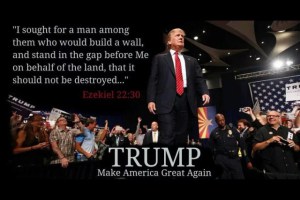
Trump should tell the UN to lay off or get DE-funded from the US

trump-standing-in-gap411221112112111111121111111111111211111121111112111111111

President Obama’s Parting Shot Against Israel – U.N. Security Council Resolution Against Israeli Settlements…


(Via Reuters) The Obama administration on Friday allowed the U.N. Security Council to adopt a resolution demanding an end to Israeli settlements, defying pressure from U.S. President-elect Donald T…

Source: President Obama’s Parting Shot Against Israel – U.N. Security Council Resolution Against Israeli Settlements…

That A Hole Obama still has 4 weeks to screw up more things what a sore loser he is!

trump-standing-in-gap41122111211211111112111111111111121111112111111211111111