KOMMONSENTSJANE – REAL FAKE NEWS – CNN NEWS FEED.


Looks about right to me … lol

kommonsentsjane's avatarkommonsentsjane

Trump to CNN: ‘You Are Fake News’

After Trump criticized CNN for its recent report on Russia and him,  CNN could ask a question. Trump stated, “Your organization is terrible. … Don’t be rude. No, I’m not going to give you a question. … You are fake news.”

Later in the press conference, Trump did take a question from CNN reporter Jeremy Diamond.

image001

kommonsentsjane

View original post

Is Secession a Solution to Cultural War?


Letting California go might stop a civil war so it would be better than trying to fix their problems.

California, Nestle and Decentralization


Local control is the only way to keep free!

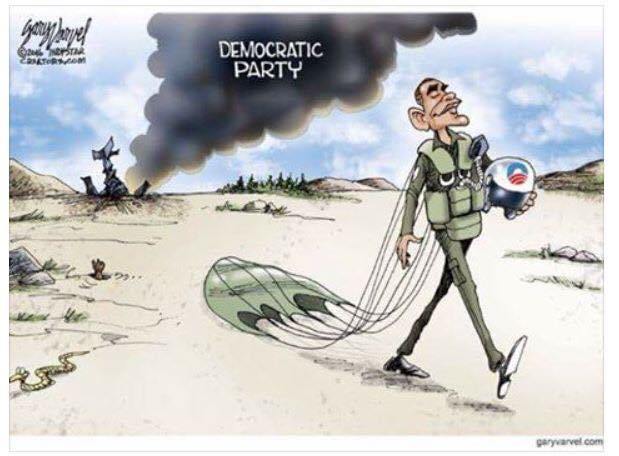
DNC Votes Today For Future of Democrat Party…


Today in Atlanta 447 members of the Democrat National Committee will meet to vote on the next Chairperson for the DNC.  The two top candidates are Representative Keith Ellison and former Labor Secr…

Source: DNC Votes Today For Future of Democrat Party…

democrat-party-01

Yes we can? Petition launched for Obama 2017 French presidential campaign


What an ass Obama is this is beyond belief, actual I hope its not true but then knowing Obama it could be.

RUSH: This Is Why Trump Refers To CNN As ‘FAKE NEWS’


Rush almost never gets it wrong and this is no exception.

‘FAKE NEWS’ MEDIA OUTLETS CNN, NYT, BUZZFEED NOT INVITED TO WHITE HOUSE PRESSER


Fake News is the method of choice of the liberal press!

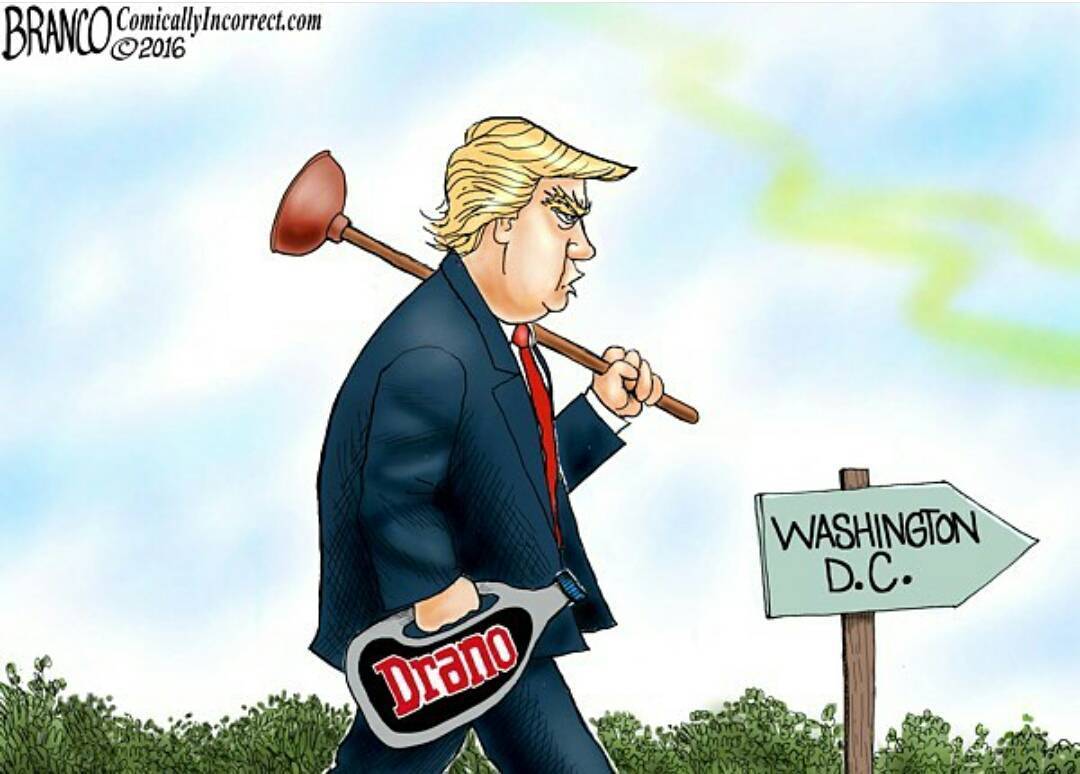
President Trump Begins Dismantling The Regulatory and Administrative State…


Upon leaving CPAC, today President Trump took another step to dismantle the choking network of regulations that strangles economic growth, impedes business and weakens the overall economy. Today bu…

Source: President Trump Begins Dismantling The Regulatory and Administrative State…

trump-36

Data Fraud At Chinese Province Suggests Local GDP Numbers As Much As 20% “Overcooked”


Tyler Durden's picture

One month ago, in delightful, if anticipated, confirmation that much if not all of China’s data has been cooked and fabricated as so many skeptics suspected, we reported that according to the People’s Daily, the rust-belt province of Liaoning had admitted to fabricating fiscal numbers from 2011 to 2014. The fabricated economic data was meant to show a state of economic strength with fiscal revenues inflated by at least 20%, and some other economic data were also false, the paper said, without specifying categories.In short, the fabrication opened a hornet’s nest: if one Chinese was doing it, then why not all, and by how much was the real data off?

But why manipulate the numbers to paint a rosier picture? For obvious reasons: the data were made up “because officials wanted to advance their careers.” The fraud misled the central government’s judgment of Liaoning’s economic status, he said, citing a report from the National Audit Office in 2016.

Yet while it was this confirmation of data fraud was gratifying, what was absent was the scale of the fraud, as having the real and fake numbers would provide a useful rule of thumb into just how cooked all of China’s books are, not just those in Liaoning. Conveniently, today we got the answer courtesy of the FT, which reported that the economic output of the province in question shrank by 23% in nominal terms last year, according to official statistics, showing the extent to which officials had previously exaggerated performance in China’s struggling rust-belt.

The sudden drop in provincial gross domestic product is only partly due to a fall in the real economy: in inflation adjusted terms, GDP fell by 2.5 per cent according to the national statistics bureau. The rest was undoing the book cooking: “The main reason for the decline, analysts say, was officials’ attempts to undo the effects of previous over-reporting.”

Further evidence of data fabrication can be seen in Liaoning’s fixed-asset investment figures, which fell 64 per cent in 2016. China International Capital Corporation, a partly state-owned investment bank, said the drop in investment raised doubts about previous years’ figures.

The Lianoing scandal also appears to have convinced even those not overly skeptical, that no Chinese data can be trusted going forward.

“The sharp decline was not only a result of economic downturn but also reflected the correction of its previously inflated data,” wrote CICC last week.

“Liaoning have had stark issues with their data over the past few years. Does that mean other provinces do too? That’s definitely the case — provincial GDP is always higher than national GDP,” said Jonas Short, head of China research at NSBO, an investment bank.

It gets more ironic: the current Premier Li Keqiang was the top official in Liaoning from 2004 to 2007, and once decried GDP data as “man-made” and therefore unreliable. Instead, he preferred three indicators of industrial activity: electricity consumption, railway cargo volume and loans extended by banks. However, such indicators are less relevant to measuring China’s economic output now that the dominance of traditional industries is fading.

While it is still too early to extrapolate, if all of China’s data is “overcooked” by 20%, assuming the country’s debt statistics are reliable, it would mean that instead of 300% as per the IIF’s latest estimate, China’s real debt/GDP is roughly 375%, and fast approaching the world record holder, Japan, which remains untouchable at 400%. The implications for the global economy and capital markets – once a bubble of this magnitude bursts – hardly need elaboration.

Here’s What Happens When Trump Finds Culprit Behind Flynn Intel Leaks


Tyler Durden's picture

Submitted by Ronn Blitzer via LawNews.com,

Information leaks from within the federal government led to the revelation that now-former National Security Adviser Michael Flynn spoke to the Russian ambassador about U.S. sanctions against his country soon after President Obama announced them. Flynn’s communication has led to speculation that he may have broken the law by talking to a foreign government about a dispute without U.S. authority. He was asked to resign after word got out that he lied to Vice President Mike Pence when he insisted that he didn’t discuss the sanctions with the ambassador.

But to President Donald Trump, the big story is that we know the story. Flynn was caught by U.S. intelligence officials after they wiretapped his communications with the ambassador. They also made transcripts of the conversations, but it wasn’t until that information mysteriously found its way to the Washington Post that anyone knew about it. On Twitter and in public statements, Trump has railed against the leaks, which the Post has only attributed to “current and former U.S. officials,” and heads will roll if he learns who’s behind them. As it turns out, the law is on his side. However, these leaks are notoriously hard to prosecute and are rarely pursued. But, if there are, here’s what could happen to the culprits.

First, there’s the prohibition against disclosure of classified information. This is the obvious one, since any publication of classified material to an unauthorized party is illegal. Under the Espionage Act, 18 U.S.C. § 798, a person guilty of this can end up in prison for 10 years and face a fine. If the leaks involved classified information that was sent to members of the press, the source could end up behind bars if they’re caught. Opponents of Hillary Clinton argued that she violated this with her handling of emails on a private server, but the FBI determined they did not have a strong enough case to prosecute. As LawNewz.com contributor Philip Holloway wrote, the information regarding Flynn’s wiretapped phone calls is Signals Intelligence (SIGINT), which is highly classified, so if one of the “current and former U.S. officials” is identified, they could be in trouble.

The form of the leaks could also determine whether additional charges appropriate. If information was merely spoken to a reporter, that’s one thing, but if actual files or physical materials were transferred, then 18 U.S.C. § 641 could kick in. That law says that anyone who steals or provides for another person’s use “any record, voucher, money, or thing of value of the United States or of any department or agency” is guilty of a crime. If a source of a government leak turned over a physical record, they could face 10 years in prison and a fine for it.

In addition to laws against revealing certain information, if the President discovers a source behind a leak, they could face additional charges if they lie about it. Besides perjury, which applies to anyone who lies under oath, false statements or covering up material facts in a federal investigation, either by the Department of Justice of Congress, can lead to five years in prison.

However, one thing to keep in mind is how rare these type of prosecutions are.  Of all prior administrations, President Obama was the most aggressive when it came to prosecuting leakers. According to a report from the Committee to Protect Journalists, six government employees, plus two contracts including Edward Snowden, were the targets of felony criminal prosecutions for leaking information. Prior to Obama, there were only three such prosecutions in history! And the prosecutions themselves are no easy task. For example, Jeffrey Sterling, a former CIA employee, was charged under the Espionage Act and it took the feds five years to get a conviction. Sterling was sentenced to 3 1/2 years behind bars. The case involved a seven year legal fight over whether James Risen, a New York Times reporter, would be forced to identify his confidential sources and testify.

Of course, none of this matters if Trump doesn’t discover any of the sources behind the leaks. Lately, that seems to be the only information not getting out of the White House