Posted originally on Jul 15, 2025 by Martin Armstrong |
The Ukraine Recovery Conference 2025 (URC) on July 10-11 in Rome concluded with joint agreements to provide Ukraine with 3.55 billion euros for reconstruction. “We received a clear message from Ukraine’s friends and partners: they are ready to invest in our recovery,” Oleksii Kuleba, Deputy Prime Minister for the Restoration of Ukraine and Minister for the Development of Communities and Territories stated. There is false hope that Ukraine will exist after this prolonged conflict.
The Ministry approved of five agreements worth over 370 million euros during this conference. The Italian Foreign Ministry agreed to offer 100% insurance coverage for banks on export loans up to 1.5 billion euros. If a bank lends money to support exports to Ukraine but the borrower fails to repay, the government-backed institution will take the loss. The claim is that the guarantee will safeguard Italian companies so that they may continue exporting goods and services to Ukraine. Ukrainian buyers will also have access to credit, and with the 100% insurance guarantee, banks may lower credit standards to otherwise risky borrowers. The potential for fraud is enormous. Worse, the Italian government and therefore the Italian people will be on the hook for 1.5 billion euros amid a highly unstable environment where repayment is not guaranteed.
The European Union and development banks also signed 10 agreements worth 929.3 million euros at the Rome conference. The World Bank through in $200 million as well for good measure. “Rebuilding Ukraine is not just about our country. It’s also about your countries, your companies, your technology, your jobs,” Zelensky said. Quite contrary as these government programs are selling out domestic policy in favor of a foreign government. The people do not benefit in any meaningful way as Europe has never relied on Ukraine for trade. Europe was more beholden to Russia before this ongoing war, which is precisely why they are experiencing a worsening energy crisis.
We need a Marshall Plan-style approach, and we should develop it together,” Zelensky stated, referring to the $13 billion (over $150 billion today) deal that the US granted to 16 European nations after World War II. The scale cannot be compared. The United States needed to stabilize Europe after the war to ensure that capital could continue to flow back to the States. No one is relying on Ukrainian capital. The US was also attempting to quell the spread of communism during this time and had a plethora of motives for assistance, none of which were purely charitable.
Western leaders are sacrificing countless funds for a nation that was never a strategic partner prior to the war. They believe the true jewel will be conquering Russia, whereas Ukraine is merely their stepping stone to enter the resource-rich, unconquerable land. Countless issues could be avoided if decision makers used history as their guide.
Posted originally on Jul 14, 2025 by Martin Armstrong
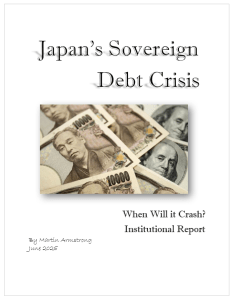
The world’s largest pension fund, the Government Pension Investment Fund (GPIF) of Japan, reported a $61.1 billion loss for the first quarter of the year. Half of the fund’s $1.5 trillion assets under management (AUM) are within overseas markets, and although susceptible to currency fluctuations, the true problem lies in the fund’s other 50% of its portfolio—government bonds split 25% domestically and 25% foreign.
Any pension fund that holds government debt in size and thinks it will return to normal is delusional, as I mentioned back in 2021. They have faith that yields will recover when that is simply not the case. The entire idea of pensions has been set around the average 8 % return in interest rates, but it has been pension funds that are primarily the cause of lower interest rates, not the central banks. The number of pension funds out there created a bid for long‑term bonds.
Japan has the highest debt-to-GDP ratio among advanced economies. The Bank of Japan owns over 50% of JGBs, making it the largest single holder, which has created a rigged market. Yields have been artificially lowered, and capital allocation has been distorted for years. Pension funds, banks, and insurance companies have been locked into JGBs, not because they want yield, but because regulation and policy have given them no choice.
As for Japanese pensions, the large aging population and shrinking workforce have led to fewer taxpayers capable of supporting this growing demographic. GPIF began moving into foreign assets to escape the BOJ’s doomed policy of negative interest rate,s but it is trapped overall. Japan looks to GPIF as a sign of economic confidence, and these losses are a warning.
Socrates has issued bearish long-term outlooks on the Japanese bond market and warns of sovereign debt crises that will directly impact pension systems. Japanese Government Bonds (JGBs) pay absolutely nothing, and yet GPIF is required to hold a portion. When there is no buyer left, the burden will fall on the Bank of Japan, and that is simply unsustainable. As the computer has warned, the sovereign debt crisis will begin in Japan before spreading like a contagion.
Posted originally on CTH on July 13, 2025 | Sundance
Senator Lindsey Graham and Senator Richard Blumental appear on CBS with the always dramatic Margaret Brennan to discuss what President Trump is going to do against Russia and President Vladimir Putin tomorrow. Senator Lindsey Graham is very happy with the plans President Trump will outline tomorrow; very happy.
The action appears to center around the confiscation of Russian assets, Russian central bank reserves held in European bonds. The money belongs to the people of Russia in the form of bonds previously purchased by Russia using a system that many nations follow, including all those nations who buy U.S. treasuries.
If the USA or Europe end up confiscating those funds, the only thing this action would prove is that the western financial system cannot be trusted. Many Nations are already reluctant, some fleeing from EU/U.S treasuries as a result of this threat, and we are seeing changes in the bond rates as a result. Senator Graham doesn’t care about the strategic financial interests of the USA, he’s more concerned about fighting Russia regardless of long-term ramifications. WATCH:
[TRANSCRIPT] – MARGARET BRENNAN: Good morning, and welcome to Face the Nation. We have a lot to get to this morning. So, let’s begin with Senator Lindsey Graham in Clemson, South Carolina, and Senator Richard Blumenthal in Bridgeport, Connecticut. They both just returned from Europe, where they met with Ukrainian President Zelensky. Good morning to you both, Senators.
SENATOR RICHARD BLUMENTHAL: Good morning.
SENATOR LINDSEY GRAHAM: Good Morning.
MARGARET BRENNAN: Senator Graham, I want to start with you. Russia is escalating. They’re not ending this war in Ukraine. NATO’s Secretary General is going to be here, in Washington, this week and will be meeting with President Trump, who is, according to our reporting, considering fresh funding for Ukraine. That would be the first time since he’s taken office. What do you know about what is coming?
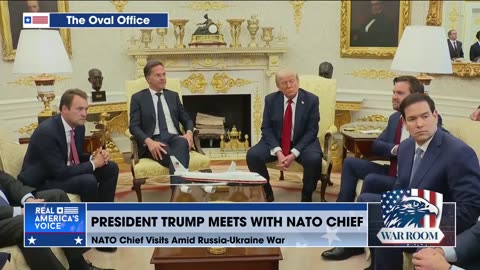
SEN. GRAHAM: Well, I don’t want to get ahead of the President, but I’m having dinner, along with Senator Blumenthal and other senators, with Secretary General Mark Rutte, tomorrow night. A turning point regarding Russia’s invasion of Ukraine is coming. For months, President Trump has tried to entice Putin to the peace table. He’s put tariffs against countries that allow fentanyl to come in our country. Other bad behavior. He’s left the door open regarding Russia. That door is about to close. Dick and I have got 85 co-sponsors in the United States Senate for congressional sanctions with a sledgehammer available to President Trump to go after Putin’s economy, and all those countries who prop up the Putin war machine. China, India, and Brazil buy oil and petroleum products and other goods from Russia. That’s the money Putin uses to prosecute the war. And this congressional package that we’re looking at would give President Trump the ability to impose 500% tariffs on any country that helps Russia, and props up Putin’s war machine. He can dial it up or down. He can go to 0%, to 500%. He has maximum flexibility. But we’re going after the people who keep Putin in business and additional sanctions on Russia itself. This is truly a sledgehammer available to President Trump to end this war.
MARGARET BRENNAN: Senator Blumenthal, on those sanctions, the President said he expects the Senate to pass this measure you put together. And he described being able to terminate it as totally at my option. It, very respectfully, lets the President do whatever he wants, and decide whether or not to exercise it. I know that has raised some concerns among your fellow Democrats, like Senators Kane and Senator Coons. How do you assure them that this is as tough as you promise?
SEN. BLUMENTHAL: This has to be a critical moment for these sanctions and bringing down this sledgehammer at this moment was emphasized by all of the European allies who were at the meeting that Senator Graham and I attended in Europe. They are absolutely in solidarity. One after another, in that closed-door setting, expressed the view that the sanctions have to be tough and rigorous to change behavior. And so, the waiver language that we will have in this bill is very much alike the provisions that have existed in past, similar measures that give the President the ability to act in the national security, but also provide congressional oversight. And, I think that kind of assurance to my Democratic colleagues is very important. But, what is most important, I think, at this moment, is our unity. Senator Graham and I, Republican and Democrat, coming together, the European leaders with diverse views, also in unity. And we want to make use of the seized assets, again, in a unified way. I think a multi-faceted approach here is the only way to bring Putin to the table, because he’s a thug. He understands only force.
MARGARET BRENNAN: Just to follow up on that, the- the seized assets. There’s what, $300 billion in Europe. There’s about $5 billion here, in the United States. Do you get the sense that the President is going to be willing to tap that, and that the European leaders are going to be willing to seize and use that money?
SEN. BLUMENTHAL: Part of the plan that I think will be sought in this meeting involving the Secretary General is for Ukraine to be given assets by NATO and their purchasing those military assets from the United States. But the seized property, the seized assets from Russia, can be accessed by the Europeans. They are devising a plan to do it, at least for a part of those assets, billions of dollars, and the interest that is derived from them. Very, very important resources for Ukraine. And the $5 billion that the United States has also could be accessed, and I think it’s time to do it.
MARGARET BRENNAN: And we’ll be talking to one of the congressmen who put together that law to be able to seize those assets later in the program. Senator Graham, I want to ask you on the battlefield, and when it comes to weapons. CBS’ Jim Laporta has learned a recent defense intelligence assessment shows Ukraine’s shortfall in artillery and in drones will lead to marked Russian territorial gains in 2026, with Russia gaining seven to one firepower superiority by this winter. How can you get them what they need if Congress will not approve, in the House, any new funding? Is it what Senator Blumenthal just laid out?
SEN. GRAHAM: Well, just stay tuned for tomorrow’s announcement. The idea of America selling weapons to help Ukraine is very much in play. We’ve given Ukraine a lot. We give them the money, we give them military aid. We now have a minerals agreement with Ukraine that’s worth trillions of dollars. So, I don’t want to get ahead of the President, but stay tuned about seized assets. The Europeans want to limit the interest on the assets to go to Ukraine. Secretary Bessent wants to go further. Stay tuned about a plan to go after the seized assets more aggressively. Stay tuned for a plan where America will begin to sell to our European allies tremendous amounts of weapons that can benefit Ukraine. Putin has calculated that we would get tired, and Europe would get weary. He made a huge mistake. NATO is bigger and stronger, and we’re more committed to ever to make sure he does not take Ukraine by force. So, Congress is on the verge of passing the most consequential sanction package in the history of the- of the country. It will give President Trump tools he doesn’t have today, a literal sledgehammer. And the big offenders here is China, India, and Brazil. India buys oil from Russia cheap and resells it. That’s despicable. I’ve talked to President Trump. He said last week, it’s time to move. He’s tried to entice Putin to the table. But my goal is to end this war, and the only way you’re going to end this war is to get people who prop up Putin make them choose between the American economy and helping Putin. And you can only have one negotiator, and that’s going to be President Trump, with maximum flexibility to end this war. China, India, and Brazil, you’re about to get hurt big time if you keep helping Putin.
MARGARET BRENNAN: But Senator, respectfully, the President’s rhetoric has changed this week on Russia. He is making clear his patience is very thin. But, he’s got, right now, at his fingertips, just short of $4 billion in presidential drawdown authority. He doesn’t need to ask Congress. He doesn’t need to ask the Europeans for that money. He’s got it if he wants to tap it. Wouldn’t it be a stronger sign if he just sent those weapons or surged them?
SEN. GRAHAM: Well, the $4 billion and not nearly enough. I expect him to exercise that draw-down authority. But the game, regarding Putin’s invasion of Russia, is about to change. I expect, in the coming days, you will see weapons flowing at a record level to help Ukraine defend themselves. I expect, in the coming days, that there will be tariffs and sanctions available to President Trump he has never had before. I expect, in the coming days, more support from Europe regarding the efforts to help Ukraine. Putin made a miscalculation here. For six months, President Trump tried to entice Putin to the table. The attacks have gone up, not down. One of the biggest miscalculations Putin has made is to play Trump. And you just watch, in the coming days and weeks, there’s going to be a massive effort to get Putin to the table. And to those who are helping him, China, buying cheap Russian oil and having no accountability, those days are about over.
MARGARET BRENNAN: Senator Blumenthal, on- on Ukraine, North Korea has been sending troops, as you know, to fight for Russia in Ukraine. Russia’s top diplomat was just meeting with Kim Jong Un. We know that the missile technology Russia is providing them is, sort of, their payment for sending bodies to fight. Is that going to make a measurable difference in the North Korean nuclear program? Is there more of a threat today to the US because of it?
SEN. BLUMENTHAL: The threat of cooperation on that score in sending missile technology to North Korea, as well as support for Iran, that potentially could come from Russia, is a major piece of evidence why we need to be strong with our allies against this axis. It still exists. The success against Iran’s nuclear program ought not to make us complacent about the dangers of proliferating nuclear arms. And, absolutely, yes, we should be coming down stronger, not only on Russia but North Korea, and our plan has to be to deter this kind of nuclear arms cooperation, which is why our working with our allies is so important. As they went around the room, these are the major European leaders, all of them, assembled together last Thursday in Rome, thanking us for being there, Senator Graham and myself, and General Kellogg, representing Trump. This moment of unity must be seized, and the timing is absolutely critical. President Zelensky has been robust and stalwart, but his people are being killed by bombs and drones. Children kidnapped. We need to, really, express the strength of the United States, because only strength can get Putin to the table.
MARGARET BRENNAN: Senator Graham, on another topic here, you have been an advocate for the allies of the United States who were left behind in Afghanistan following that chaotic 2021 withdrawal by the last administration. On Friday, the State Department laid off the personnel in the department that helps place those refugees and other allies in the United States. Two sources with direct knowledge told CBS that there are about 1,400 Afghan allies with connections to the Pentagon, with connections to US intelligence, and they’re stuck there. They don’t know what’s happening next. Can you stop them from being sent back to the Taliban?
SEN. GRAHAM: Yeah, I don’t think there’s any desire by anybody to send people who helped us in Afghanistan back to the Taliban control. That’s not going to happen. As to trimming up the State Department, if you’re telling me we can’t reduce the number of people working in the State Department and still run it effectively, I don’t buy that. We can do both.
MARGARET BRENNAN: Well, there are some questions about who’s going to actually help prevent them from going back to Afghanistan, which is why I was asking you that if you’re going to advocate on their behalf. Senator Blumenthal, you sit on the Judiciary Committee, I believe. CBS has reported yesterday that the Attorney General, Pam Bondi, fired 20 DOJ employees who worked on the classified documents cases and the January 6 investigations. There are more firings expected. These are career officers and lawyers who don’t pick their assignments. They’re handed out to them. Is there anything that Congress can do to protect some of these civil servants?
SEN. BLUMENTHAL: Margaret, that’s a really important question, because Pam Bondi has so politicized, and weaponized the Department of Justice and now firing these career professionals who have devoted their lives to the Department of Justice, it’s only one facet of the continuing politicization. And, yes, Congress ought to be investigating. The Judiciary Committee ought to begin, right away, its inquiry. But, I’m calling for an Inspector General investigation, not only of these firings, but also of the dropping of a prosecution into the Utah physician who was mid-trial on charges of conspiracy, fraud against the government, in connection with a COVID vaccine scheme, apparently, at the behest of politicians who were deeply angry about the MAGA issue there. And, I believe strongly that now Congress must investigate
MARGARET BRENNAN: Senator Graham, do you want to quickly respond to those allegations of politicized handling up at the Justice Department?
SEN. GRAHAM: Yeah, y’all missed a lot. The Justice Department was used to destroy President Trump, his family, and tried to change the election by bringing a bunch of B-S charges against him for years. We’re going to clean that mess up. As to Pam Bondi, I have all the confidence in the world she will do her job. And if somebody has been terminated, they have rights under civil service law to say it was wrongfully done. But, I’m almost amused at the idea that people are now suddenly worried about politicization of the Justice Department, while everybody sat quiet for all those years. Literally, the Justice Department, under Biden, tried to change the election by prosecuting Trump based on a bunch of B-S.
MARGARET BRENNAN: Well, there are mass firings, which is why I was asking you about them, sir. Senators, thank you for joining us for a bipartisan interview, up until that last section. Appreciate it. Face the Nation will be back in a minute. Stay with us.
I have created this site to help people have fun in the kitchen. I write about enjoying life both in and out of my kitchen. Life is short! Make the most of it and enjoy!
This is a library of News Events not reported by the Main Stream Media documenting & connecting the dots on How the Obama Marxist Liberal agenda is destroying America







 Centinel2012