Cycle v Free Will


QUESTION: Dear Mr. Armstrong,
You have said that everything has its own cycle and that somehow everything is connected to pi. To me this seems to fit nicely within a deterministic framework. Hence I am curious what your thoughts are on the subject of free will. Could you please elaborate?
Regards, E

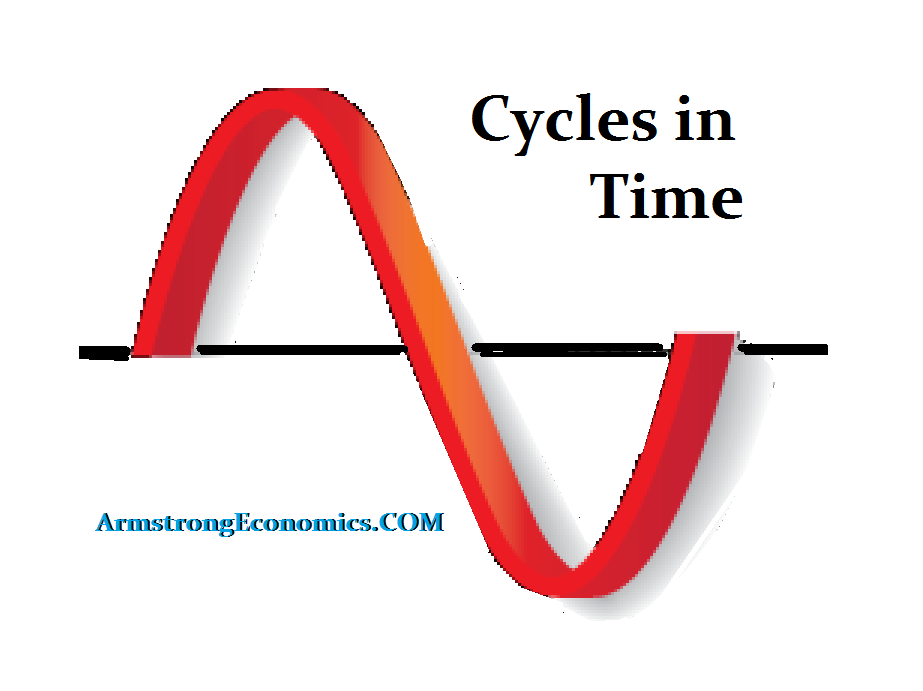
ANSWER: We all have our individual free will. Society in a collective state produces the business cycle. As we move through life, we mature and change our thinking based upon experience. This is why there are always Democrats and Republicans. There are some who understand the business cycle and move with it, and others who act in a herd instinct. There is a difference between the individual and the collective cycle which we can call the business cycle.

Next Financial Crisis – Stocks, Currency or Bonds?


QUESTION: Hi Martin! Would you please clarify the difference between an economic collapse and the currency crisis? Are they one and the same?
In one of the pro-private blogs you mentioned a collapse in government debt before the slingshot move. Would that mean that my pension investment plan may disappear before the currency crisis and the slingshot move you have been talking about?

I just would like to know while I have time to pay off my home.
Thank you for all you do for us common folk.

Thank you

B

ANSWER: The volatility that surrounds a financial crisis depends upon the origin of the sector. When there is a crisis in confidence in the private sector, corporations or banks, the capital shifts and sells private assets and runs into government securities (bonds/notes), which we call the “Flight to Quality” that typically is used only in this context.
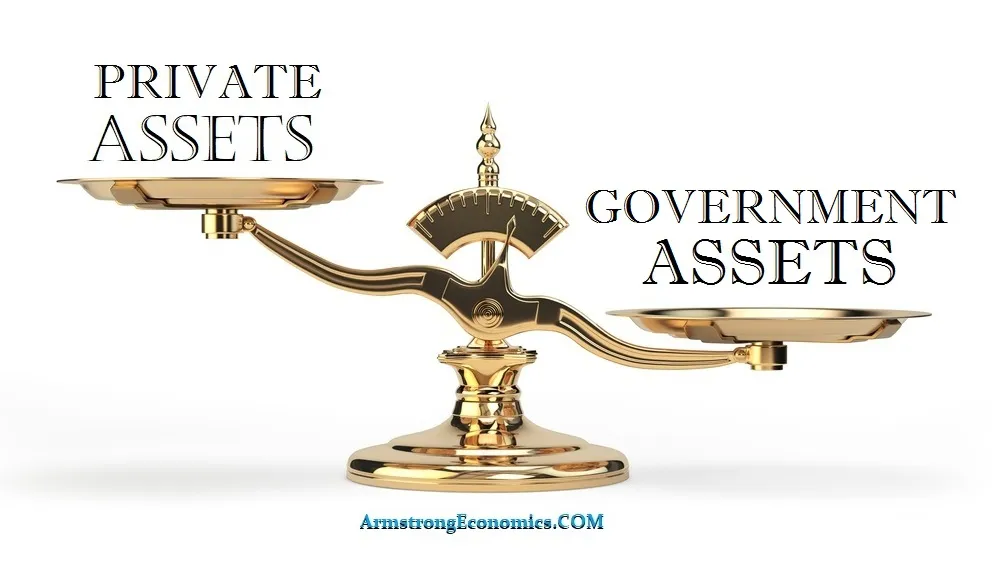
However, when capital realizes that the risk is on the government side, the Flight to Quality reverses and capital seeks the safety of the private sector. The decline in confidence in government will manifest in two primary manners. First, because capital responds in anticipation, we can find that markets move first based upon the perceived risk.
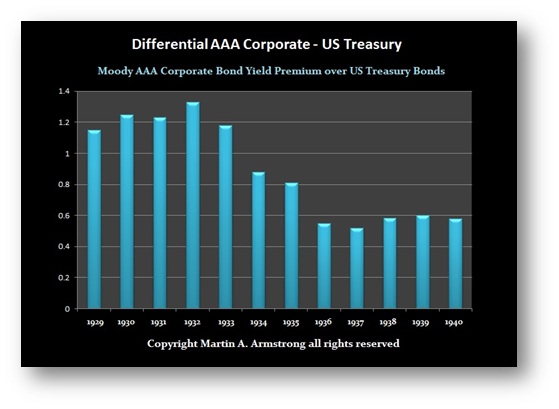
The spread between AAA Corporate bonds and those of the United States, initially rose in premium over the government when the perception was confined to the stock market crash. That dipped slightly in 1931 as all the foreign debt was going into default. It turned back up going into the final low in 1932. The Dow did drop nearly 50% at that time. The Dow closed 1931 at 77.90 and then fell to 40.56 in July 1932 for the low. Percentage-wise, that was a substantial decline in 7 months.
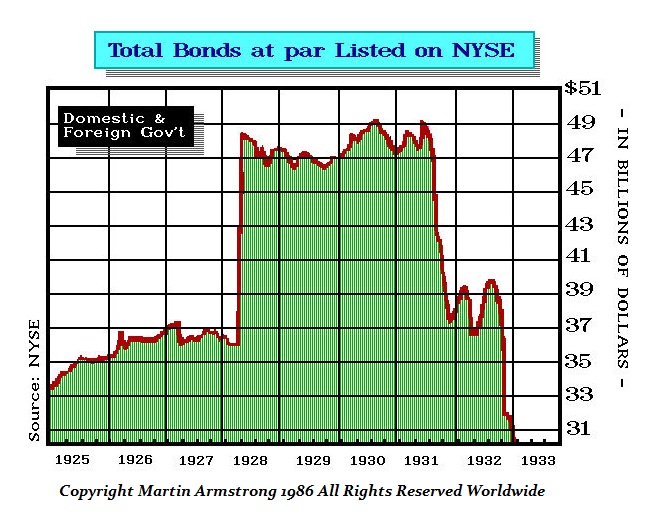
There were numerous foreign bonds that were trading on the New York Stock Exchange. When the Sovereign Debt Default of 1931 took place, the perception shifted to the point that it was then expected that the United States would default in some way because everyone else did. Then you see the spread between AAA corporate debt in the USA declined sharply against the federal debt levels.
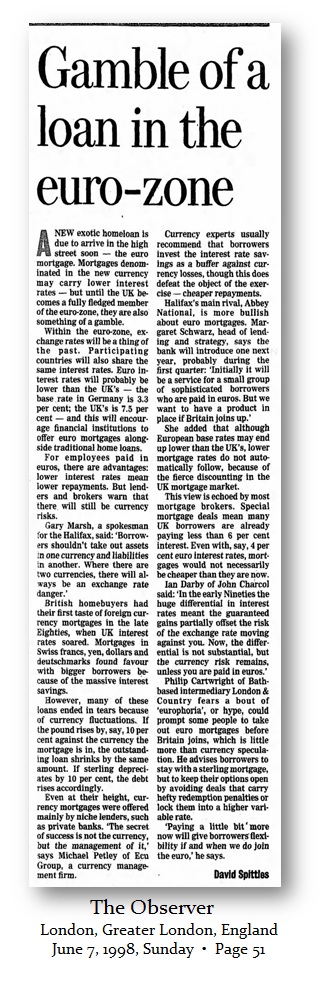
Now enters the nonsense of creating the euro. The promise was that creating the euro would make companies more competitive because there would be no more currency risk and they would all pay the same interest rates pointing to the dollar as a misrepresentation. The Observer in London, England, wrote on June 7th, 1998 (id/Page 51), “Within the euro-zone, exchange rates will be a thing of the past. Participating countries will also share the same interest rates. Euro interest rates will probably be lower than the UK’s – the base rate in Germany is 3.3 per cent; the UK’s is 7.5 per cent…”

The fallacy of the entire euro project was the intentional lies that were spun just to sell the euro. Creating the euro was in effect a means of fixing the exchange rate as if they had returned to the days of Bretton Woods. However, even under Bretton Woods, despite the fact that the currencies were fixed, the volatility simply transferred to the debt market.

Under the Eurozone, Greece and others began to issue debt like it was going out of style because they were taking advantage of the stupidity of investors willing to buy debt believing that everyone would pay the same interest rates simply because they used the same currency.

There are many states that peg their currency to the US dollar. That does NOTmean that they will pay the same interest rates as the US government. That was NEVER true under Bretton Woods and within the United States, each of the 50 states pays according to its own credit risk.

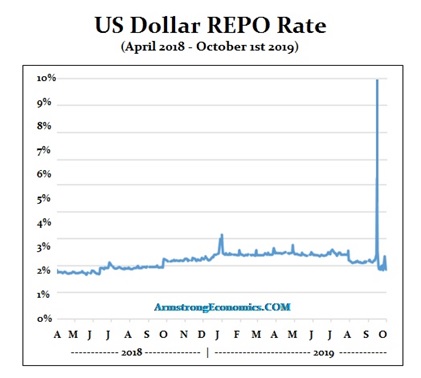
Hence, the crisis we face will be felt in the debt markets FIRST, which is why we have the Repo Crisisthat people are not paying attention to anymore. Therefore, your question of a collapse in government debt before the slingshot move means that “my pension investment plan may disappear before the currency crisis and the slingshot move you have been talking about.” It all depends upon the country you live in.

If you are in the United States, the debt crisis begins OUTSIDE the United States so the US market is the last to go into a bond crisis.

Online v Brick & Mortar


QUESTION: Sir,

My daughter works at a brick and mortar pet smart store as a 33 hour per week employee. She told my wife that PetSmart bought the online pet food store chewy.com ie their online competition. What’s also interesting is that they are focusing on non-online activities such as training and semi non-online activists like pet adoptions. That’s in line with your retail store’s comment.

I just checked the hospital bankruptcies. I can’t find a complete source to check for yearly closings. It seems though that 2019 was a banner year with the periphery having a good showing.

In the physician arena, the radiology services are being outsourced on the internet with Indian based sources. In this editorial, it seems that primary care physicians are also being outsourced.

Keep up the good work

DK

ANSWER: The trend in retail is moving toward online. Shopping malls across America are slowly dying. Many are spending money and adding restaurants to attract people in hopes they will buy something in person v online. I have explained many times that the economy has always evolved, as Schumpeter put it, in waves of Creative Destruction.

For those in the retail trade, you must consider providing services not attainable online. You must look at your competition. Move into areas where you need not compete with the online world of impersonal service. The cycle will eventually flip back but you are probably looking at post-2032. For now, immediately look to refocus the distinction between online and local touch and feel businesses or services. You can buy the dog food online, but the puppy can’t be put in a box and sent via FedEx.


Big Bang v REPO


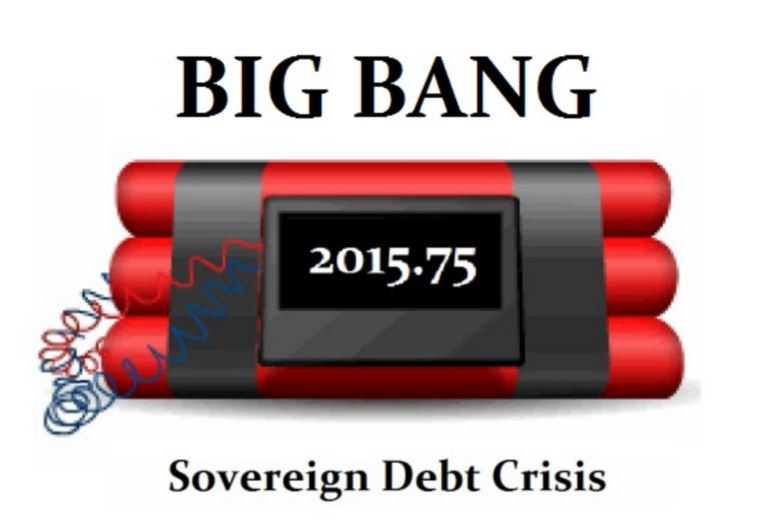
QUESTION: Mr. Armstrong; I can see your warning about Big Bang and the bonds markets would crash after 2015.75 going into the bottom of your business cycle on January 18, 2020. However, it seems that the negative interest rates have created your bond crash not in price but in participation. There is no viable bond market outside the United States with small exceptions of Britain, Canada, Australia, and New Zealand. Is there any way to come back from this destruction? Do you see the bond markets ever reviving or is this destruction permanent?

HC

ANSWER: If there was a free market, then you would have witnessed the bonds crash price and interest rates rise as people perceived risk. The introduction of negative interest rates which began in late 2014 going into 2015.75 and Quantitative Easing, shifted the risk from the free market to the central banks. This is what I mean that they are now TRAPPED! If interest rates rise, their portfolios crash in value (price). Such an outcome would raise the question of will the private sector return to the government bond markets when they see there is a rising risk factor? Our model shows that this will not be the case. In other words, the Sovereign Debt Crisis has taken place and to prevent the PRICE crash, the central banks became the buyer to hold interest rates down and bond prices up.

Some would think that the forecast was wrong simply because the prices have not crashed. We have had the Bank of Japan saying they will buy government bonds on an unlimited basis. This is NOT a free market. It has “crashed” from the perspective of participation.


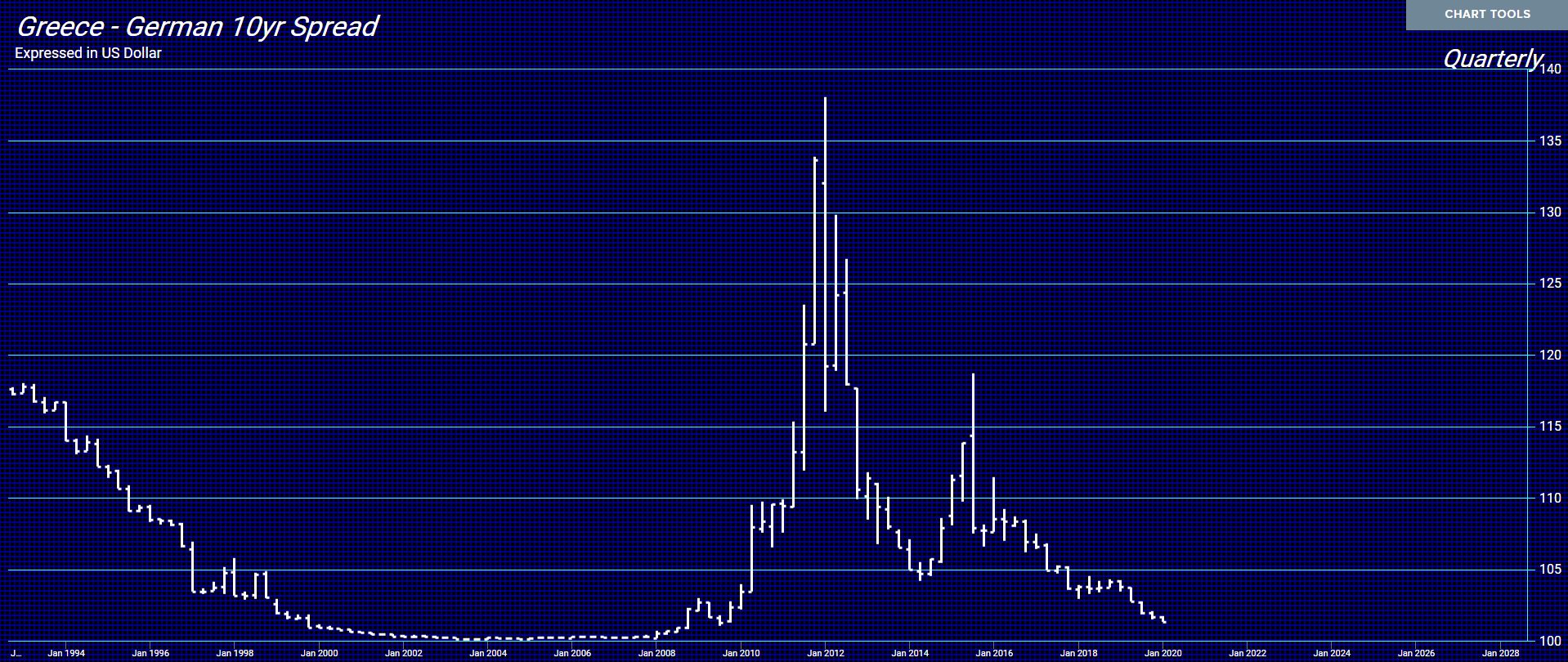
It is like the creation of the Euro. Yes, it effectively eliminated the volatility in the currency markets between the Eurozone members. However, it really only transferred the volatility from the currency market to the spreads between the bond markets of member states. Obviously, Greece and Germany both use the Euro. The volatility which would have been reflected in the currency simply moved to the bond markets.

Now we have a serious crisis that has shifted from the bond markets exclusively to the central banks. This is now part of the crisis unfolding in the REPO Market. There does not appear to be any recovery on the horizon. Politicians are undermining the confidence in government, to begin with, and that will influence bond buyers.


Can Interest Rates Rise when Central Banks are the Only Market Maker?


QUESTION: How can interest rates can rise when central banks are the only market maker, & pension funds FORCED to buy gov.debt by their statutes?

but why is the REPO crisis starting in the US where rates are WAY higher than in japan & Europe?
you would expect this crisis to start somewhere in European debt markets/ instruments…why isn’t all the capital that is fleeing to the US not financing REPOs?
thank you

CB


ANSWER: This is laid out in the Repo Crisis Report (an update goes out this week). Central Banks do not control long-term rates. They set the short-term rate such as Fed Funds and Discount Rate. That is what Quantitative Easing was all about. The central banks began to BUY the long-term debt in hopes of “influencing” the long-term rates by reducing the supply of government long-term debt and in theory then the free market would have been willing to buy private long-term debt such as mortgages. That failed because banks had no confidence in the real estate market and were loaded to the gills with real estate debt which people were defaulting on.

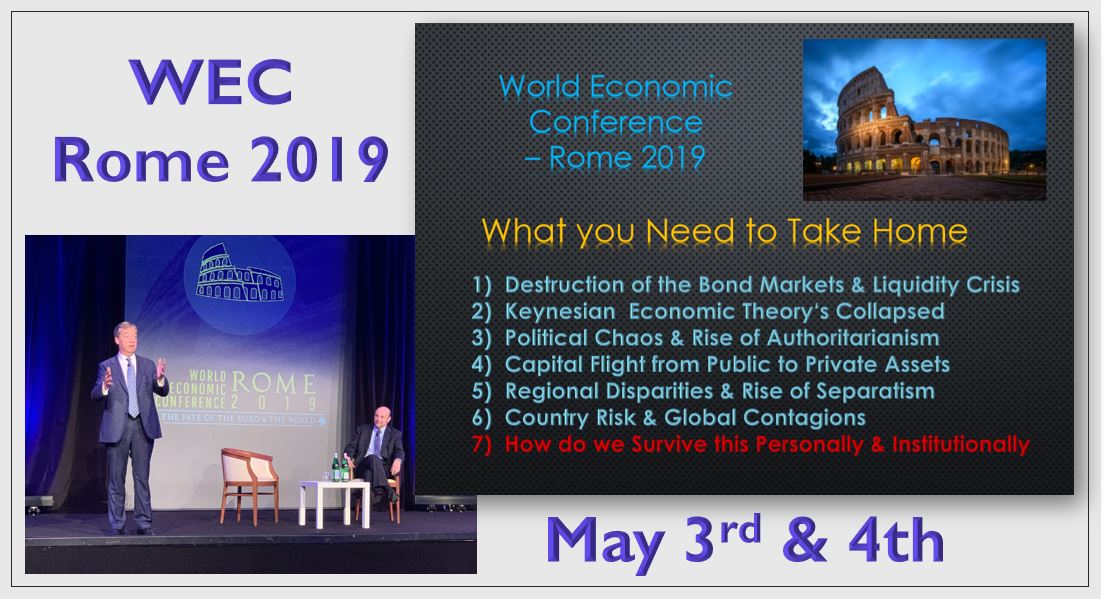
The Repo Crisis has begun in the states BECAUSE this is the only viable free market to speak of. Both Japan and Europe have destroyed the bond markets. The Repo Crisis is the manifestation of our forecast that we would enter a liquidity crisis by September 2019. We listed that as one of the major points to take homes from the May World Economic Conference in Rome.

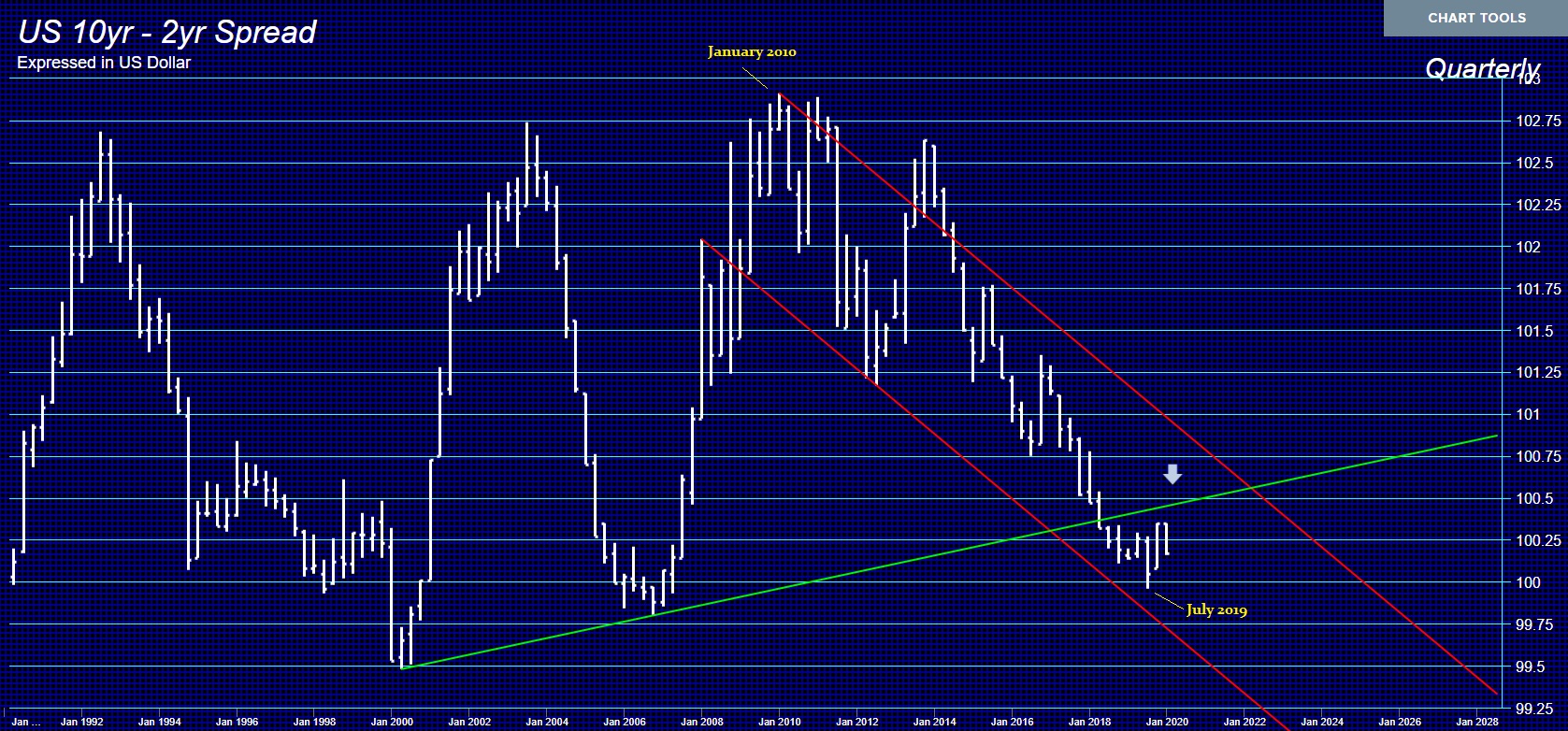
The Repo Crisis is a liquidity crisis because of the collapse in confidence. Banks are unwilling to lend to each other because they are deeply concerned about a crisis in the international banking sector. The Fed was lowering short-term rates into August 2019 because the yield curve inverted on the 10yr-2yr during the 3rd quarter of 2019. Then the Repo Crisis hit on September 17th. That forced the Fed to stop its intended policy to lower rates for the Free Market dictated otherwise.

The image that central banks are in control is an illusion. They too are subject to the Free Market. They are not in control of interest rates as they like to make everyone believe. If that were true, then there would have been no Repo Crisis to start with.

3rd Edition Manipulating the World Economic Goes to Print This Week


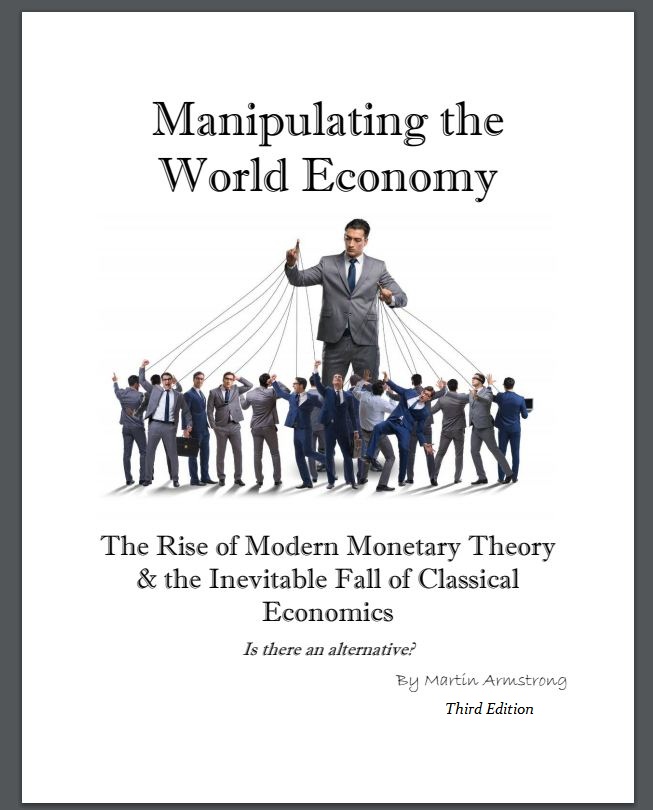
We have received many inquiries about the 3rd edition. We have added some text and an index. It is going to print this week. With respect to those asking if we can reserve a copy or those asking if they can buy a quantity at a discount to redistribute, we do not get involved in selling the books. It really is a big project having to handle shipping even internationally.

Amazon picks up the books directly from the printer. So they do not even come to us in the process. With respect to selling quantities, we would have to make an inquiry of the printer if they can even make independent shipments and if so what would be the minimum quantity.

All we know is that there were people who bought multiple copies from Amazon. A number of people purchased multiples to send to third parties based upon emails we received were usually friends or politicians. There was a group that sought to purchase one for every member of Congress but there were not enough left to accomplish that goal.

We will make inquires of the printer to see if they could make individual shipments. I would suspect it would be probably a minimum lot of 20 books. We will let everyone know.

With respect to autographed copies, I will always be glad to do that at conferences only

Armstrong Ted Talk


Armstrong Interview Paris, France


Me verses Socrates


One of the more fascinating things is when people try to challenge me as an analyst and pretend it is a personal confrontation to try to prove me wrong personally. I have stated many times, whenever I have had a personal opinion that has been counter to Socrates, it is me who has always been wrong. As humans, we simply do not always see everything. We miss things taking place around the world or maybe too focused on one personal perspective.

Socrates writes over 1,000 reports e4ach day covering global stocks, bonds, commodities, real estate, and interest rates. These are ALL entirely written by the computer – NOT me. There is no human interaction. This is entirely Socrates. I find it so funny when people try to say of Armstrong will be wrong or whatever for they fail to understand this is the next evolution in the analysis. The greatest error in all analysis is human bias and the failure to see things from an objectives viewpoint.


Here is a Demo of Socrates so you can see – this is not me writing all of these reports.

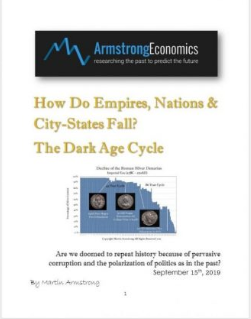
How Empires Die


This is a special report which includes for the first time “The Dark Age Cycle” which looks into how do empires die. Sometimes they just collapse, yet at other times, civilization also collapses and moves into a Dark Age. This report distinguishes all the historical changes which have taken place and the rise and fall of Empires, Nations, and City-States. This dives into the monetary system and how it was reconstructed in order to ascertain the cycles that are so important to understand.

This report dives into global contagions and illustrates that while people have suddenly seen the economy as global today, it has always been that way. This analysis covers modern financial panics in addition to ancient and draws the analysis and common themes that undermine society. It would be nice if we learned as a society from past mistakes as most of us do on a personal level. Every parent warns their child not to touch the flame of a candle. No matter how often we are warned, everyone still was compelled to see for ourselves.

Society lacks that evolution from experience. Hence, collectively we keep sticking our finger into flame expecting somehow a different result. Worse yet, with every financial crisis, nobody ever asks has this taken place before? Was there a solution that previously worked?

Perhaps this is just why history must repeat. We can only learn from our past mistakes on a personal individual level. Society collectively seems incapable of ever retaining such knowledge. Thus, those of us who can see the trend is compelled to watch others repeat the same mistakes over and over again.