The Rise in Agriculture for the Next ECM


The Fall Army Worm (FAW; Spodoptera frugiperda) is a crop-eating pest that was first detected in China back in January 2019. It has now spread across China’s southern border and currently impacts about 8,500 hectares (127,000 mu) of grain production in Yunnan, Guangxi, Guangdong, Guizhou, Hunan, and Hainan provinces. Officially, Chinese authorities have employed an emergency action plan to monitor and respond to the pest. FAW has no natural predators in China and its presence may result in lower production and crop quality of corn, rice, wheat, sorghum, sugarcane, cotton, soybean, and peanuts among other cash crops. Experts warn that there is a high probability that the pest will spread across all of China’s grain production area within the next 12 months.

This is obviously a contributing factor to what the computer is projecting for agriculture. Keep in mind that the patterns the computer identifies come from the price movements. We have wheat prices back to 1259. Clearly, the projections it makes are all inclusive of weather and disease, for everything unfolds in a cycle.

Endless Cycle of Corruption


QUESTION: I read your articles on Capital flows regularly and I appreciate how you interlace different concepts together.
Where is the money?

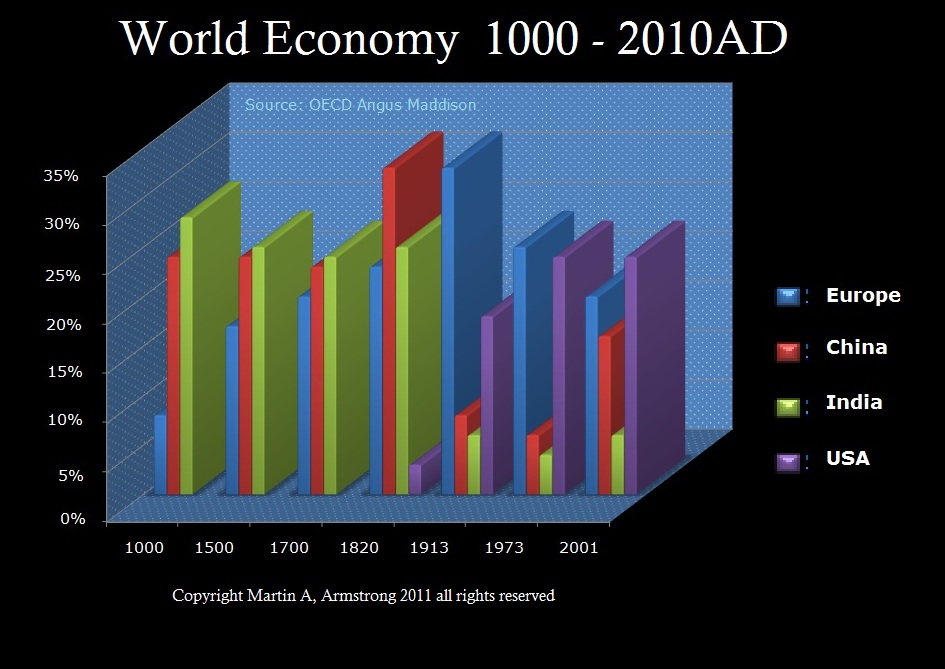
European rulers essentially drained the Asia/Africa of their resources in the last 400-500 years. With all of it piped into Europe, it should have sustained the population for way more time than what we see.

Did it get utilized or was it financially mismanaged or lost in wars? Was it a population mismanagement or an governance issue? If the Asia/Africa don’t have the resources…Europe doesn’t have it? Where is it?

– PR

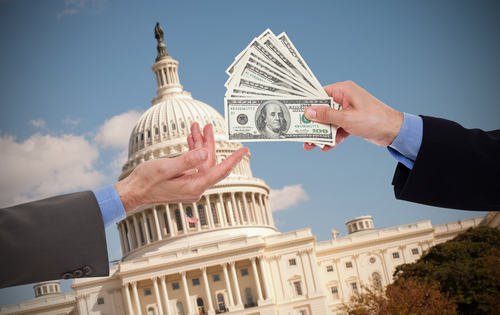
ANSWER: It always seems to be mismanagement more than anything. The downside of a “representative” form of government (Republic) is that those who “represent” the people as their full-time career are subject to bribes. A Democracy is more direct insofar as the career people in government are the bureaucrats who are subject to review by the people. As long as they are not career politicians, then they will perform more of a check and balance against the corruption that always takes place in every type of political system. Career politicians accept money from lobbyists BECAUSE they continually need funds to run in the next election. It is an endless cycle of corruption.

Interest Rate & Currency Pegs


QUESTION: Martin,

I went over three blogs this morning (both public and private); they are The FED Between a Rock & a Hard Place, Manipulating interest rates & Public vs Private Interest Rates. A common theme of the FED possibly pegging interest rates and inflation. My question is: If the FED is induced to peg rates at artificially low levels and the traditional method of combating inflation is raising rates, something must give, so are metals and commodities getting ready for “prime time?”

CF

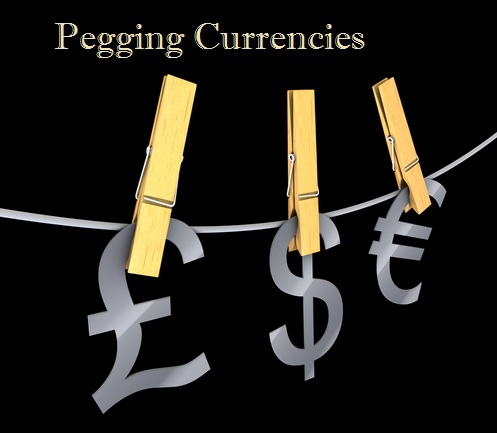
ANSWER: Behind the curtain the system of pegging rates, as I have stated, is viewed substantially differently than QE. The rates on the U.S. debt will be pegged, but not the Fed funds rates. They will be able to raise rates to the marketplace, but the bonds will be “pegged” like the Swiss attempted to “peg” the franc/euro.

This is a hybrid interest rate system that would eventually collapse as all pegs do. But it will allow, initially, for a bifurcation of rates.

They REALLY REALLY REALLY REALLY REALLY do not want me to talk about this publicly.

This is feeding into what we see coming for the next wave. They realize QE has failed. They cannot allow rates to rise as it would blow out the budgets.

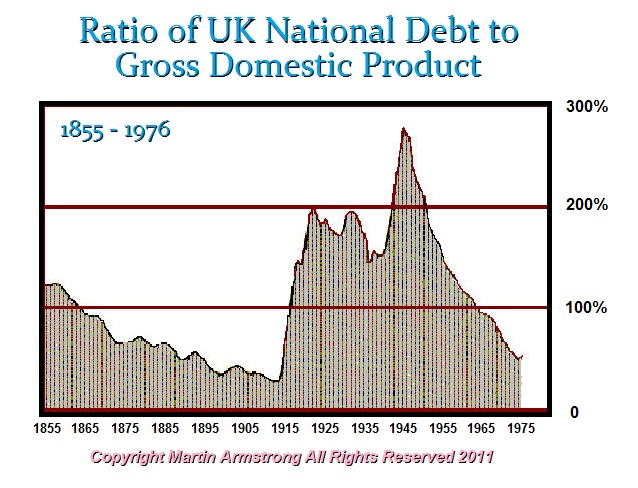
This is not a long-term solution. The interest rate peg collapsed in 1951 due to Korean War inflation

Public v Private Interest Rates & Sovereign Debt Crisis


QUESTION: Dear Martin I have a question for the blog. There has been forecasts for a sovereign debt crisis but recently you have discussed how various governments may manipulate govt bond interest rates down as has happened in Europe and Japan. If Europe and Japan are anything to go by then this could go on for some time. If govts are successful in this, does this mean that there may not be a sovereign debt crisis?

ANSWER: The Sovereign Debt Crisis involves crossing the line where the private sector no longer trusts government debt. We have begun to cross that lines in Europe and Japan where the central banks are buying the debt in bulk. There have even been German auctions of bonds where there was no big.

Yes, the central banks can artificially keep government interest rates low, but that is only possible when they are the buyers.

We are experiencing already interest rates rising in the peripheral governments where their central banks do not engage in QE – namely emerging markets. We will witness private rates rise for that is a free market. However, from the government side of the table, the Sovereign Debt Crisis among the developed countries engaging in QE has unfolded as NO BID. They can artificially keep rates low ONLY because the central banks buy the debt – nobody in the private sector would buy 10 years paper at 1% to 3% when they need 8% to break even in pension funds.

Also, pay attention to the state/provincial debt where they do not have the ability to buy their own nonsense. The manipulation of rates will be at the federal level, not in the state/provincial and municipal levels of government.

So, pay attention to the bifurcation in rates that is unfolding between PUBIC v PRIVATE.


The Fed is Between a Rock & a Hard Place


QUESTION: Dear Mr Armstrong,
Not sure if I am understanding it correctly. Is the FED currently between a rock and a hard place? The FED is not able to cut rates (implement QE) due to the current pending/ongoing crisis of the US pensions, and they cannot raise interest rates as it’s going to cause more USD liquidity stress. However, rates are still going to rise as they have lost control of the interest rates. May I know is it possible for them to change the rules and allow pension funds to invest in the equity markets like how the Japanese are doing it so that they can achieve the higher returns for the pensions as well as hoping to keep interest rates as low as possible? Then this will be part of the energy (funds) pushing US equity markets to all-time highs?

Appreciate the daily education.

Warmest Regards,
MC

ANSWER: The Fed realizes that QE has been a complete failure. What they are looking at is the 1942-1951 period when the Treasury ordered the Fed to create a peg and support the bond market at benchmark rates of interest thereby installing caps. This is slightly different than QE which buys in debt on a wholesale basis. The Fed may try the peg and this will result in a bifurcation of interest rates where private sector rates will rise and public rates will become fixed even on the 2 to 10-year paper. I believe they will come under pressure to try to prevent the national debts from exploding, which will introduce yet another crisis of inflation. By trying to peg the rates, when the market smells a rat, they will end up in a position of having to monetize the entire debt. We have some very interesting times ahead.