Posted originally on the CTH on February 5, 2023 | Sundance
Axios is positioning this announcement as FTX asking for political donations to be returned. However, the request is realistically from the FTX debtors.
(Via Axios) – Bankrupt crypto exchange FTX is sending notices to former donor recipients asking for the donated funds to be returned, the company said in a press release Sunday.
Why it matters: Former FTX CEO Sam Bankman-Fried and FTX Digital Markets Co-CEO Ryan Salame were two of the largest political donors during the last election cycle. Now the company’s debtors want the money back.
Bankman-Fried primarily backed Democrats and was the party’s second-largest donor last cycle with around $37 million in contributions.
Salame’s $19 million to Republicans made him the party’s 10th largest donor.
The big picture: FTX’s debtors are confidentially contacting “political figures, political action funds and other recipients of contributions or other payments.” (more)
Additionally, the Twitter Account “Unusual Whales” which tracks and researches financial transactions, has published the first list I have seen that makes it easy to see who FTX donated to. The list IS HERE and is alphabetized.
Posted originally on the CTH on February 5, 2023 | Sundance
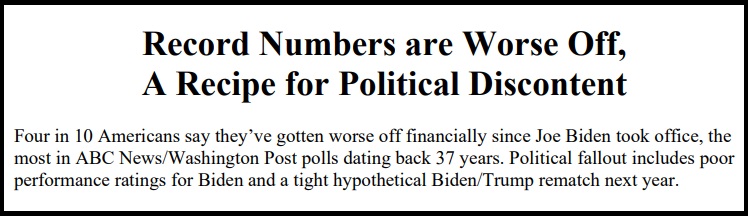
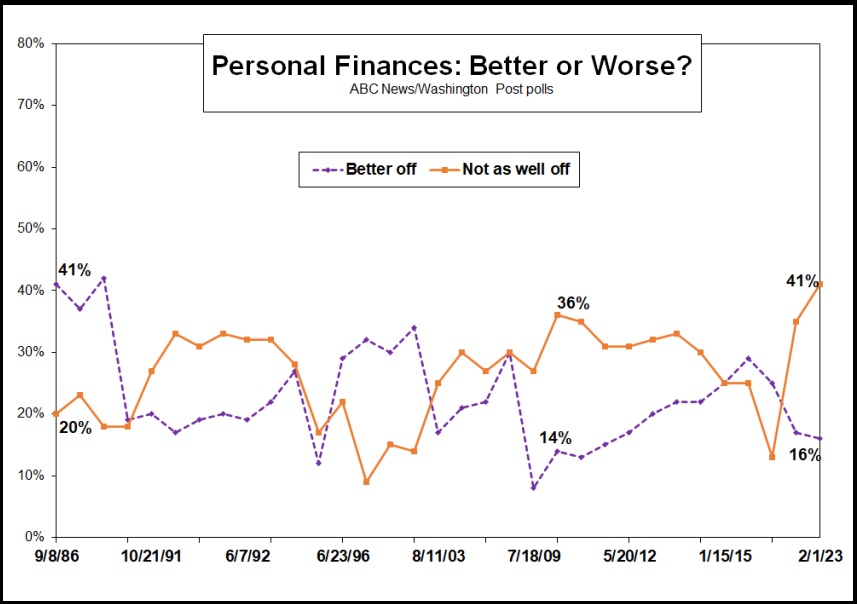
According to the latest ABC/WaPo polling [Full pdf Here], 41% of Americans say they are worse off financially under Joe Biden. That is the highest negative response to the question in the 37-year history of ABC polling.
Yet we are supposed to believe voters suffering under the worst financial outlooks in 40-years rewarded Joe Biden just two months ago with support for his Democrat Party and candidates? Something is just not adding up.
Posted originally on the CTH on February 5, 2023 | Sundance
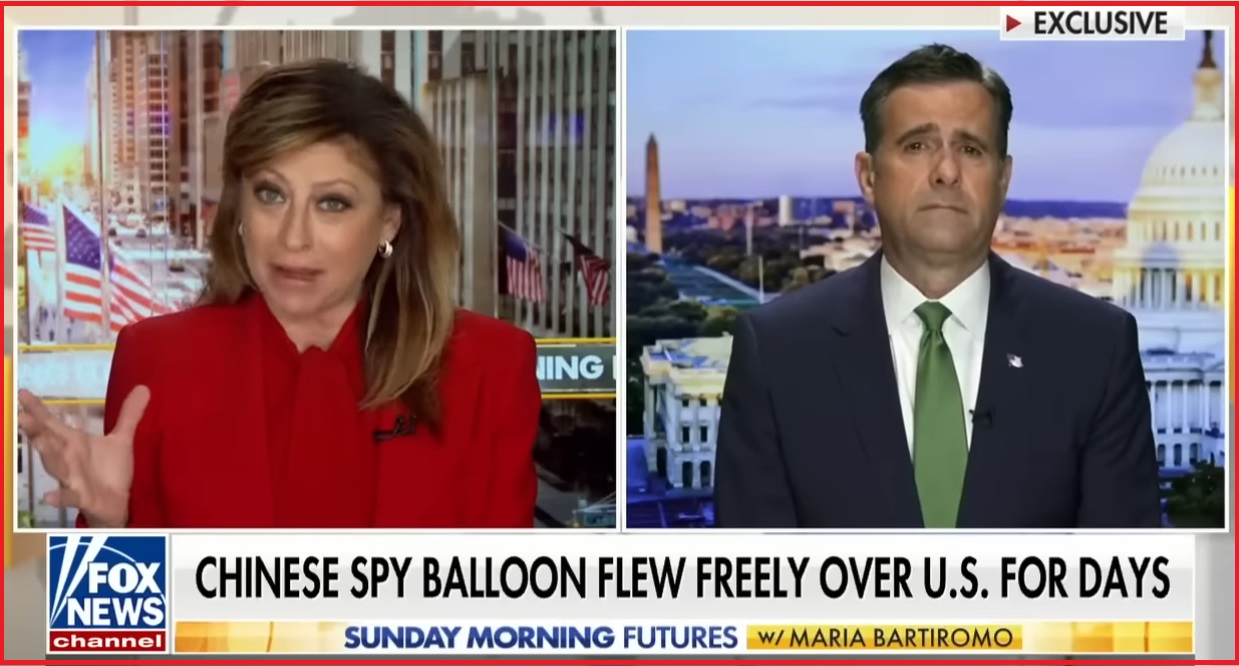
The more I see how much attention was exhausted focusuing on the Chinese balloon, the more I am inclined to believe the attention was manufactured by internal deep state operatives.
Secretary of State Anthony Blinken cancelled his trip to China over the spy balloon issue, and beyond the general cancellation, he also cancelled a rare meeting with Chairman Xi. Xi never almost never meets with foreign ministers, only Presidents and Prime Ministers. So, what gives? Did the intelligence community expose the balloon crossing to stop the Xi/Blinken meeting? I don’t know, but something is fishy.
Former Director of National Intelligence (DNI) John Ratcliffe gives his .02 cents. Ratcliffe takes the position that it was an intended spy and surveillance operation by China, and it was successful. WATCH:
Posted originally on the CTH on February 5, 2023 | Sundance
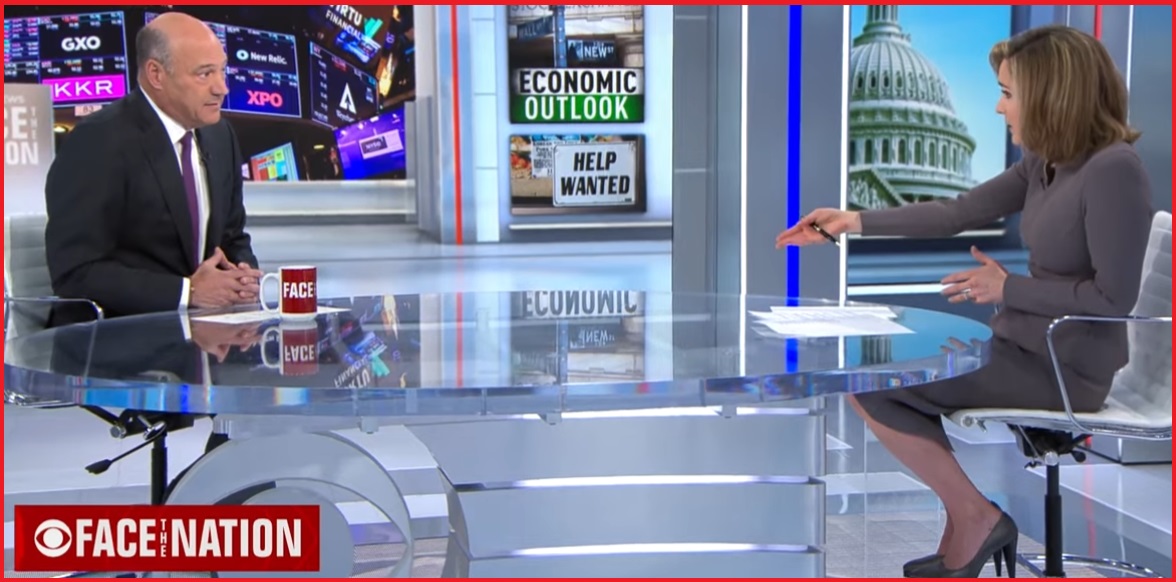
This is one of those interviews where you don’t have to take my word for what is being said, Gary Cohn and Margaret Brennan are gleeful about the January jobs report and the overall return of the U.S. economy to a service driven system with low wages. Seriously, this is them celebrating out loud.
In order to calm the Wall Street apoplexy about his election victory, President Trump selected Gary Cohn to be an economic advisor early in the administration. However, it was also no surprise that President Trump did not follow Cohn’s advice, and quickly dispatched him after Cohn protested. In this interview the worldview of Cohn is typically globalist, multinational and Wall St centric.
Talking about the January jobs report, Cohn literally gets everything wrong from the position of Main Street USA. Cohn also celebrates what he calls the “renormalization of the new economy.” Continuing with his thought process Cohn states, “A lot of the jobs that we saw were jobs in the service industry, the service, the industries coming back very strong because we’re starting to see the economy go back to what we historically think of the economy,” he said. This is exactly how Wall Street, and the multinationals look at the U.S. economy.
The next part that both Cohn and Margaret Brennan celebrate is even more sunlight. “The interesting thing about last month’s unemployment numbers is we brought people back to work, but we did not have to entice them with pay,” Cohn stated. “So, the monthly, the month over month number in wage gains was 30 basis points. The prior month was 40 basis points. So, we’re seeing we’re getting people back into the labor force for a lower wage than we were prior to this,” he said. With higher prices (inflation) crushing the middle-class and service workers, the multinationals Cohn represents are celebrating that they don’t have to pay workers higher wages. WATCH:
[Transcript] – MARGARET BRENNAN: So 517,000 new jobs, but a lot of companies, particularly in tech, are announcing layoffs. So exactly where’s the economy headed?
GARY COHN: So, it’s interesting. We did see the 500,000 plus new jobs, which was quite surprising, I think, to many of us. But I think what we’re actually seeing here is a renormalization of the new economy. A lot of the jobs that we saw were jobs in the service industry, the service, the industries coming back very strong because we’re starting to see the economy go back to what we historically think of the economy. For the first time, we’ve seen occupancy rates in offices in major cities over 50%. When you see occupancy rates go up, you need the service sector to work. Think about people going back into the office. They need parking attendants. They need people to work in the buildings. They need security. They need people to clean the buildings. People stop for coffee when they go into the buildings. They go out to lunch. They go to bars. For the- for that to happen, you need the service sectors to come back to work. So the 120,000 service sector employees that came back to work, that 100% correlates with people going back to what is the new normal. It may not be five days a week in the office, but it’s enough days in the week in the office where you need the service sector to come back to work. The interesting thing about last month’s unemployment numbers is we brought people back to work, but we did not have to entice them with pay. So the monthly, the month over month number in wage gains was 30 basis points. The prior month was 40 basis points. So we’re seeing we’re getting people back into the labor force for a lower wage than we were prior to this.
MARGARET BRENNAN: And that’s a little bit hopeful for you on the inflation front.
GARY COHN: Yeah, and I think this is natural. I think what we’ve seen is, after all the stimulus that was put in the system over the last three months, people are running out of the stimulus money. We saw that in the fourth quarter of last year. We saw consumer spending slow down. We saw debit balances on credit cards go up. We started to see delinquencies go up. And you know what happened? People actually did the right thing and they went back to work. They’re engaged and they reenter the workforce. And I think we saw a lot of that in the January numbers.
MARGARET BRENNAN: So these more positive signs have led Bank of America, for example, to say recession still in the cards, but not until after March. I wonder what your thoughts are on that. And as CEOs warned about borrowing costs going up as a result of the Fed hiking. They are tightening belts. So how far off is this recession?
GARY COHN: Well, we’ve got a couple of phenomena going on. Interest rates have been going up, so borrowing costs have been going up for companies. On the flip side, the dollar has been weakening. So the multinational corporations in the United States who repatriate earnings from offshore, those repatriated earnings have become more valuable. I think the people that have been really worried about a recession in the first and second quarter of this year, I think after what we’ve seen this week with both Chairman Powell’s announcements and the data in unemployment, I think that recession is off the table for Q and one in Q2 of this year. You know, we’re going to get another employment report before the next Fed meeting and we’ll see where the economy’s going. But it does feel like we’re in relatively good shape here. The question is going to be how does the Federal Reserve handle what’s going on in the economy? Are we going to continue to have to increase wages to draw people back in the labor force, or are people coming back in the labor force because they need to? And we’re not going to have wage inflation if that happens. The Federal Reserve is actually in a very good place.
MARGARET BRENNAN: Let me ask you about something the Fed chair said this week. He said Congress has to lift this debt ceiling. I’m throwing one of the things that could screw up your- your rosy prediction at you. He said no one should assume that the Fed can protect the economy from the consequences of failing to act in a timely manner. He’s warning he’s not making plans for a default. You’re on your own if it happens.
GARY COHN: Yes.
MARGARET BRENNAN: Should there be a plan for the Fed to step in? I mean, I know legally it’s in question here, but I talk to people on Capitol Hill who say Wall Street is not taking this seriously enough. The politics are really bad around the debt ceiling.
GARY COHN: The politics are very bad. You know, the one thing is every American, every American is holding the US government to raise the debt ceiling. The full faith and credit of the US dollar and the US dollar being the reserve currency is imperative to our economic well-being as a country. We ultimately have to get the debt ceiling raised. That said, what’s going on here is not something out of the ordinary. If you look at debt ceiling raises over the last 40 or 50 years, no matter which party is in the minority, about 50% of the time, debt ceiling raises come with some amendments attached- attached to them from the other party. So this is quite an. Normal, the process that we’re going through.
MARGARET BRENNAN: You don’t sound overly concerned.
GARY COHN: Like I’m always concerned when we’re dealing with debt ceiling, but I have a feeling that we will get there in the end when we have no other choice. You had this- you had the speaker here last week and he felt confident that we would get there when we had no other choice. The speaker met with the president of the United States this week. The two of them came out of the meeting relatively confident. I feel they both understand there is no choice. In the end of the day, we have to raise the debt ceiling. The question is, can the Republicans get something in the legislation, attach the debt ceiling legislation that they want that they feel like is a win and the Democrats are willing to give it to? Historically, that is what’s happened numerous times.
MARGARET BRENNAN: Yeah. And the risk there is real. I want to ask you as well about China. Mark Warner was here with us last week and he said technology competition with China is the biggest issue of our time. He’s worried about things that- like your company does IBM, in terms of quantum computing. Is enough being done to keep America competitive on that front?
GARY COHN: Well, we’re starting you know, if you look at where we’ve been this year, you know, we passed the CHIPS Act in the United States, which, you know, is- is- is something that’s not a normal motion for us in the United States for the federal government to pick and choose–
MARGARET BRENNAN: To subsidize.
GARY COHN: –an industry, and and to subsidize. It really is not a normal action- is an action that, you know, historically I probably not would have been have supportive. I was extremely supportive of the CHIPS Act, we at IBM was extremely supportive of the CHIPS Act. If we learned nothing else from the pandemic, we learned that there are certain goods that are necessity goods for this country to have, and we are overly reliant on places like China. And if we don’t find ways to change the manufacturing system in the supply chain and move it back to the United States where we can take care of ourselves, we have made a catastrophic miscalculation. Chips are one of those areas where we cannot depend on the rest of the world and run our manufacturing business and continue to grow our economy. Pharmaceuticals is another area where we really have to move that industry and that manufacturing back to the United States. So I think we really have to evaluate what are the most crucial and sensitive businesses or industries that we cannot live within the United States. And we’re going to have to make real investments in those here in this country.
MARGARET BRENNAN: And we’ll keep talking about it with legislators. Have to figure out how to pass some of those laws. We’re going to take a quick break. And when we come back, we’ll be talking with four members of the freshman class and the 118th Congress.
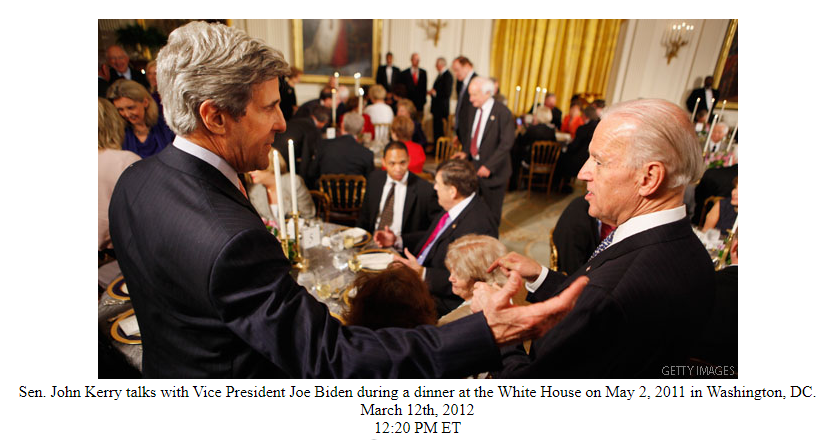
Only in America where we have Democratic politicians preaching about the greed of the rich at a $10,000.00 a plate campaign fund-raising event held at John Kerry’s home. Yes it was $10,000 to get in.
Posted originally on the conservative tree house on February 4, 2023 | Sundance
Perhaps I am wrong, but the tone, disposition and presentation of this monologue by U.K. News pundit Neil Oliver, suggests to me that he is under pressure or threat due to his open commentary supporting a resistance uprising against the ruling class.
Within his weekly outline, there is a notable change in tone from Mr. Oliver as he outlines those voices that have been targeted by censorship, deplatforming and ongoing threats by western aligned media doing the bidding of their government overlords. Perhaps Mr. Oliver has finally found himself in the crosshairs of the system which will not permit public dissent. WATCH:
.
It was not part of their blood, It came to them very late, With long arrears to make good, When the Saxon began to hate.
They were not easily moved, They were icy — willing to wait Till every count should be proved, Ere the Saxon began to hate.
Their voices were even and low. Their eyes were level and straight. There was neither sign nor show When the Saxon began to hate.
It was not preached to the crowd. It was not taught by the state. No man spoke it aloud When the Saxon began to hate.
It was not suddently bred. It will not swiftly abate. Through the chilled years ahead, When Time shall count from the date That the Saxon began to hate.
Posted originally on the CTH on February 4, 2023 | Sundance
The Bureau of Labor Statistics (BLS) published a jobs report yesterday [DATA LINK] that has stunned the professional financial class. However, those who have followed the BLS data assemblies were laughing – not surprised. Eventually, if this continues, the BLS pretzel logic will start using terms like “eleventy.”
Throughout 2022, the BLS modified the underlying data they used to assemble their jobs reporting. The latest release shows that 517,000 jobs were gained in the labor market, despite every other economic indicator showing we are in an economy of contraction. The question becomes, why the disconnect?
There are two surveys that make up the BLS reporting. The Household survey is conducted by calling people and just asking if they are employed. The Payroll survey is conducted by reviewing large and medium businesses, no small businesses are included, and that plays a role in the disconnect.
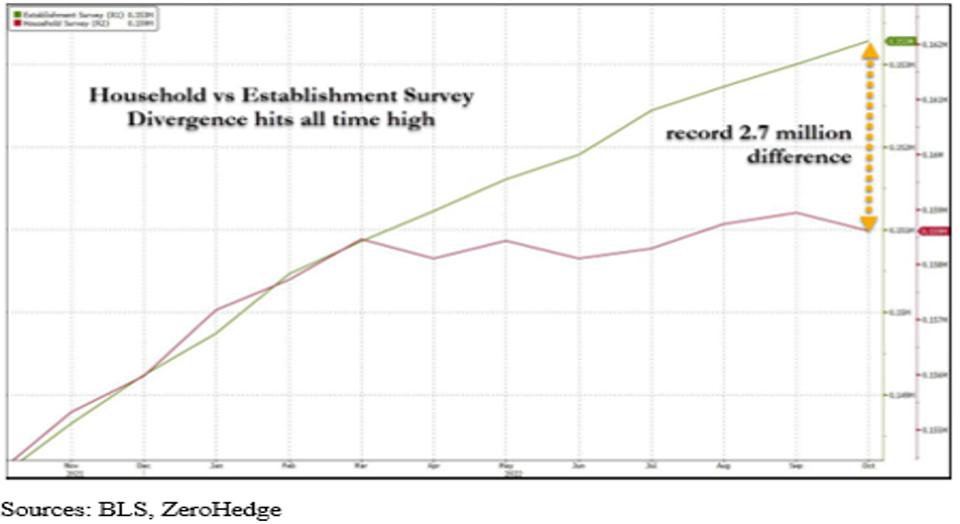
Since the spring of last year, the two surveys have completely disconnected from each other. The household survey finds a net gain of 12,000 jobs in the last three quarters; the Payroll survey shows gains of 2.7 million jobs during the same time.
ZeroHedge did a good dive on the issue (SEE HERE), and their analysis reports, “[…] the number of full-time workers in March 2022 was 132.587 million. Fast forward to January 2023 when it was 132.577: that’s right: total US full-time workers declined by 10K over a period of 10 months. Meanwhile, part-time workers soared from 25.908 million to 27.400 million, an increase of 1.492 million! So at least we know where the bulk of the increase in US labor came from in the past year: virtually no full-time jobs, and all part-time.”
Additionally, Forbes dove into the data (SEE HERE) and reached a similar conclusion, the BLS data is all nonsense covered in statistical noise.
Forbes – […] “The Payroll Survey shows employment growth of nearly 2.7 million jobs between March and November. The Household Survey, over the same period, shows 12,000. Something is seriously wrong! The headline number that is broadcast in the media is the Payroll Survey, so if it is incorrect and the Household Survey is accurate, then the “hot” jobs market, which the Fed uses to justify its rate increases, is really a “cold” jobs market.
Looking at the recent past, the two surveys were in sync until March, when the Payroll Survey took off. Some of the issue could revolve around the small business birth/death assumptions. Since the Payroll Survey doesn’t sample small businesses, the Bureau of Labor Statistics (BLS) adds a number based on a time trend, and they even seasonally adjust this data. Over that March to November period, the Birth/Death model added 1.3 million jobs. This appears strange to any observer of economic trends, which tells us that business is contracting, not expanding. Even if the Birth/Death add-on is eliminated, the discrepancy is still 1.36 million jobs between the two surveys.” (read more)
Representative Alexandria Ocasio-Cortez (AOC) was showcasing how the term “hopping mad” originated today during a theatrical performance about her friend Ilhan Omar being removed from her seat on the House Foreign Affairs Committee. WATCH:
.
When she gets done with that dramatic bouncing routine, she’s still as goofy as Hank “tippy Guam” Johnson.
Posted originally on the CTH on February 2, 2023 | Sundance
This is so critically important to the understanding of the core, central element where the globalism atom splits and the resulting destruction begins, that I must pause all personal recovery efforts -immediately- and explain. This is an incredible example of where corporations and government merge. This is the atom split. This is the root, the nub, the place where “trillions at stake” takes context.
Strong HatTip to Gateway Pundit for this exceptional video and example {Direct Rumble Link Here}. The understanding comes via a Canadian dairy farmer, who, like thousands of other farmers around the world, is a private business under government control. This example is about dairy, specifically milk, however, the underlying premise goes much further.
This is modern corporatism, the nexus of govt intervention, regulations and the multinational exploitation of industry. This is also the globalist example that shows how the concepts of “capitalism” and “free markets” have been destroyed. First, watch the video:
What you are witnessing in that video is something we have talked about at length for years.
Influential people, politicians (rules) and corporate leaders (profits), both with vested financial interests in the process, have sold a narrative that global manufacturing, global sourcing, and global production is the inherent way of the future. The same voices claimed the American economy was/is consigned to become a “service-driven economy.”
What was always missed in these discussions is that advocates selling this global-economy message have a vested financial and ideological interest in convincing the information consumer it is all just a natural outcome of economic progress.
It’s not.
It’s not natural at all. It is a process that is entirely controlled, promoted and utilized by large conglomerates, lobbyists, purchased politicians and massive multinational corporations.
To understand who opposes President Trump, Jair Bolsonaro, or any economic nationalist, specifically because of the economic leverage against multinational corporations their policy creates, it becomes important to understand the objectives of the global and financial elite who run and operate the institutions. The Big Club.
Understanding how trillions of trade dollars influence geopolitical policy we begin to understand the three-decade global financial construct they seek to protect. That is, global financial exploitation of national markets.
FOUR BASIC ELEMENTS:
♦Multinational corporations purchase controlling interests in various national outputs (harvests and raw materials), and ancillary industries, of developed industrial western nations. {example}
♦The Multinational Corporations making the purchases are underwritten by massive global financial institutions, multinational banks. (*note* in China it is the communist government underwriting the purchase)
♦The Multinational Banks and the Multinational Corporations then utilize lobbying interests to manipulate the internal political policy of the targeted nation state(s).
♦With control over the targeted national industry or interest, the multinationals then leverage export of the national asset (exfiltration) through trade agreements structured to the benefit of lesser developed nation states – where they have previously established a proactive financial footprint.
For three decades economic “globalism” has advanced, quickly. Everyone accepts this statement, yet few actually stop to ask who and what are behind this – and why?
Every element of global economic trade is controlled and exploited by massive institutions, multinational banks and multinational corporations.
Institutions like the World Trade Organization (WTO), World Bank and International Monetary Fund (IMF), control trillions of dollars in economic activity. Underneath that economic activity there are people who hold the reins of power over the outcomes. These individuals and groups are the stakeholders in direct opposition to principles of America-First national economics.
The modern financial constructs of these entities have been established over the course of the past three decades. When you understand how they manipulate the economic system of individual nations you begin to understand why they are so fundamentally opposed to President Trump.
In the Western World, separate from communist control perspectives (ie. China), “Global markets” are a modern myth; nothing more than a talking point meant to keep people satiated with sound bites they might find familiar; but the truth is ‘global markets’ have been destroyed over the past three decades by multinational corporations who control the products formerly contained within global markets. This is the function of the World Economic Forum.
The same is true for “Commodities Markets.” The multinational trade and economic system, run by corporations and multinational banks, now controls the product outputs of independent nations. The free market economic system has been usurped by entities who create what is best described as ‘controlled markets’.
Bulletpoint #1:♦ Multinational corporations purchase controlling interests in various national elements of developed industrial western nations.
This is perhaps the most challenging to understand. In essence, thanks specifically to the way the World Trade Organization (WTO) was established in 1995, national companies expanded their influence into multiple nations, across a myriad of industries and economic sectors (energy, agriculture, raw earth minerals, etc.).
This is the basic underpinning of national companies becoming multinational corporations.
Think of these multinational corporations as global entities now powerful enough to reach into multiple nations -simultaneously- and purchase controlling interests in a single economic commodity.
A historic reference point might be the original multinational enterprise, energy via oil production. (Exxon, Mobil, BP, etc.)
However, in the modern global world, it’s not just oil; the resource and product procurement extend to virtually every possible commodity and industry. From the very visible (wheat/corn) to the obscure (small minerals, and even flowers).
Bulletpoint #2 ♦ The Multinational Corporations making the purchases are underwritten by massive global financial institutions, multinational banks.
During the past several decades national companies merged. The largest lemon producer company in Brazil, merges with the largest lemon company in Mexico, merges with the largest lemon company in Argentina, merges with the largest lemon company in the U.S., etc. etc. National companies, formerly of one nation, become “continental” companies with control over an entire continent of nations.
…. or it could be over several continents or even the entire world market of Lemon/Widget production. These are now multinational corporations. They hold interests in specific segments (this example lemons) across a broad variety of individual nations.
National laws on Monopoly building are not the same in all nations. Most are not as structured as the U.S.A or other more developed nations (with more laws). During the acquisition phase, when encountering a highly developed nation with monopoly laws, the process of an umbrella corporation might be needed to purchase the targeted interests within a specific nation. The example of Monsanto applies here.
Bulletpoint #3 ♦The Multinational Banks and the Multinational Corporations then utilize lobbying interests to manipulate the internal political policy of the targeted nation state(s).
In underdeveloped countries the process of buying a political outcome is called bribery. Within the United States we call it lobbying. The process is exactly the same.
With control of the majority of actual lemons the multinational corporation now holds a different set of financial values than a local farmer or national market. This is why commodities exchanges are essentially dead. In the aggregate the mercantile exchange is no longer a free or supply-based market; it is now a controlled market exploited by mega-sized multinational corporations.
Instead of the traditional ‘supply/demand’ equation determining prices, the corporations look to see what nations can afford what prices. The supply of the controlled product is then distributed to the country according to their ability to afford the price. This is essentially the bastardized and politicized function of the World Trade Organization (WTO). This is also how the corporations controlling WTO policy maximize profits.
Back to the lemons. A corporation might hold the rights to the majority of the lemon production in Brazil, Argentina and California/Florida. The price the U.S. consumer pays for the lemons is directed by the amount of inventory (distribution) the controlling corporation allows in the U.S.
If the U.S. lemon harvest is abundant, the controlling interests will export the product to keep the U.S. consumer spending at peak or optimal price. A U.S. customer might pay $2 for a lemon, a Mexican customer might pay .50¢, and a Canadian $1.25.
The bottom line issue is the national supply (in this example ‘harvest/yield’) is not driving the national price because the supply is now controlled by massive multinational corporations.
The mistake people often make is calling this a “global commodity” process. In the modern era this “global commodity” phrase is particularly nonsense.
A true global commodity is a process of individual nations harvesting/creating a similar product and bringing that product to a global market. Individual nations each independently engaged in creating a similar product.
Under modern globalism this process no longer takes place. It’s a complete fraud. Massive multinational corporations control the majority of production inside each nation and therefore control the global product market and price. It is a controlled system.
EXAMPLE: Part of the lobbying in the food industry is to advocate for the expansion of U.S. taxpayer benefits to underwrite the costs of the domestic food products they control. By lobbying DC these multinational corporations get congress and policy-makers to expand the basis of who can use EBT and SNAP benefits (state reimbursement rates).
Expanding the federal subsidy for food purchases is part of the corporate profit dynamic.
With increased taxpayer subsidies, the food price controllers can charge more domestically and export more of the product internationally. Taxes, via subsidies, go into their profit margins. The corporations then use a portion of those enhanced profits in contributions to the politicians. It’s a circle of money.
In highly developed nations this multinational corporate process requires the corporation to purchase the domestic political process (as above) with individual nations allowing the exploitation in varying degrees. As such, the corporate lobbyists pay hundreds of millions to politicians for changes in policies and regulations; one sector, one product, or one industry at a time.
These are specialized lobbyists.
EXAMPLE: The Committee on Foreign Investment in the United States (CFIUS)
CFIUS is an inter-agency committee authorized to review transactions that could result in control of a U.S. business by a foreign person (“covered transactions”), in order to determine the effect of such transactions on the national security of the United States.
CFIUS operates pursuant to section 721 of the Defense Production Act of 1950, as amended by the Foreign Investment and National Security Act of 2007 (FINSA) (section 721) and as implemented by Executive Order 11858, as amended, and regulations at 31 C.F.R. Part 800.
The CFIUS process has been the subject of significant reforms over the past several years. These include numerous improvements in internal CFIUS procedures, enactment of FINSA in July 2007, amendment of Executive Order 11858 in January 2008, revision of the CFIUS regulations in November 2008, and publication of guidance on CFIUS’s national security considerations in December 2008 (more)
Bulletpoint #4 ♦ With control over the targeted national industry or interest, the multinationals then leverage export of the national asset (exfiltration) through trade agreements structured to the benefit of lesser developed nation states – where they have previously established a proactive financial footprint.
The process of charging the U.S. consumer more for a product, that under normal national market conditions would cost less, is a process called exfiltration of wealth. This is the basic premise, the cornerstone, behind the catchphrase ‘globalism‘.
It is never discussed.
To control the market price some contracted product may even be secured and shipped with the intent to allow it to sit idle (or rot). This is where the dumping of the milk comes into play. None of this is a market driven outcome. All of this is being controlled by guiding hands of politicians, rule makers, and the partnership with the private sector corporations.
It’s all about controlling the price and maximizing the profit equation. We are discussing food and agricultural production, but the issue (the process of control) covers far more than just food, farming and Ag in general. It’s everything folks. Everything.
To gain the same $1 profit a widget multinational might have to sell 20 widgets in El-Salvador (.25¢ each), or two widgets in the U.S. ($2.50/each).
Think of the process like the historic reference of OPEC (Organization of Petroleum Exporting Countries). Only in the modern era massive corporations are playing the role of OPEC and it’s not oil being controlled, thanks to the WTO it’s almost everything.
Again, this is highlighted in the example of taxpayers subsidizing the food sector (EBT, SNAP etc.), the multinational corporations can charge domestic U.S. consumers more.
Ex. more beef is exported, red meat prices remain high at the grocery store, but subsidized U.S. consumers can better afford the high prices.
Of course, if you are not receiving food payment assistance (middle-class) you can’t eat the steaks because you can’t afford them. (Not accidentally, it’s the same scheme in the ObamaCare healthcare system)
Agriculturally, multinational corporate Monsanto says: ‘all your harvests are belong to us‘. Contract with us, or you lose because we can control the market price of your end product.
The downside is that once you sign that contract, you agree to terms that are entirely created by the financial interests of the larger corporation, not your farm. Additionally, the rule makers (govt), are working hand in glove with the corporations who control the outcome.
The multinational agriculture lobby is massive. We willingly feed the world as part of the system; but you as a grocery customer pay more per unit at the grocery store because domestic supply no longer determines domestic price.
Within the agriculture community the (feed-the-world) production export factor also drives the need for labor. Labor is a cost. The multinational corps have a vested interest in low labor costs. Ergo, open border policies. (ie. willingly purchased republicans not supporting border wall etc.).
This corrupt economic manipulation/exploitation applies over multiple sectors, and even in the sub-sector of an industry like steel. China/India purchases the raw material, coking coal, then sells the finished good (rolled steel) back to the global market at a discount. Or it could be rubber, or concrete, or plastic, or frozen chicken parts etc.
The ‘America First’ Trump-Trade Doctrine upsets the entire construct of this multinational export/control dynamic. Team Trump focus exclusively on bilateral trade deals, with specific trade agreements targeted toward individual nations (not national corporations).
‘America-First’ is also specific policy at a granular product level looking out for the national interests of the United States, U.S. workers, U.S. companies and U.S. consumers.
Under President Trump’s Trade positions, balanced and fair trade with strong regulatory control over national assets, exfiltration of U.S. national wealth is essentially stopped.
This puts many current multinational corporations, globalists who previously took a stake-hold in the U.S. economy with intention to export the wealth, in a position of holding contracted interest of an asset they can no longer exploit.
Perhaps now we understand better how massive multi-billion multinational corporations and institutions are aligned against President Trump. In essence, Donald Trump is the anti-WEF weapon of the American people.
They will even organize a western corporate war against Russia to stop anyone from blocking their financial goals.
I have created this site to help people have fun in the kitchen. I write about enjoying life both in and out of my kitchen. Life is short! Make the most of it and enjoy!
This is a library of News Events not reported by the Main Stream Media documenting & connecting the dots on How the Obama Marxist Liberal agenda is destroying America










 Centinel2012