Ben Bergquam: “Illegal Aliens Have Infiltrated Everything And The Only People That Want Them To Stay Here Are People That Abuse Them For Cheap Labor”


Posted originally on Rumble By Bannon’s War Room on: July 7, 2025, at 10:00 pm EST

Steve Bannon: “There Can’t Be Amnesty, Everyone Here Illegally Must Go Home”


Posted originally on Rumble By Bannon’s War Room on: July 7, 2025, at 9:00 pm EST

Ancient Rome’s Migrant Crisis


Posted originally on Jul 8, 2025 by Martin Armstrong 

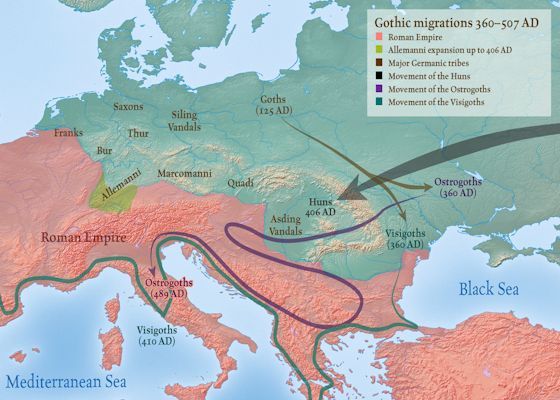
GothMigration

The globalists refuse to declare the migrant crisis an “invasion,” but we have history’s guidance to show us what happens when an unsustainable number of people enter a nation. The Goths, a non-military group considered migrants, are a perfect example. These men, women, and children sought refuge within the Roman Empire. This was not an invading army but rather a fleeing population seeking safety from the Huns. The Goths, long-time foes of the Romans, appealed to be admitted to Roman territory due to the threat they faced and needed to seek asylum. This event led to significant consequences and marked a turning point in the history of the Roman Empire.

The great Gothic migration involved hundreds of thousands of men, women, and children. While, to some degree, the growing unrest in the East pushed them southward, there is also little doubt that the border defenses of the Roman Empire had also been seriously weakened by the political instability and economic pressures that were building within Rome itself. Of course, the rumor of great plunder and riches available in Roman territory acted like a magnet much in the same way as the rumors of streets paved in gold in America prompted great European migrations during the 19th and early 20th centuries or the outdated stereotype of the American Dream.

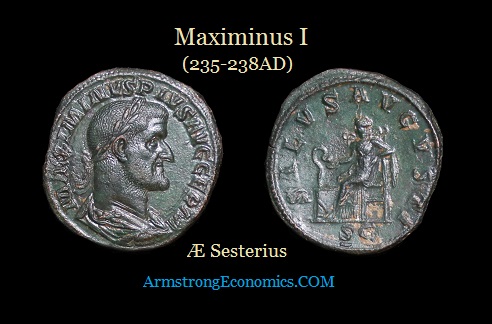
Maximinus I 235 238AD AE Sesterius R

By 238 AD, the Gothic position was so threatening to the Roman Empire that Emperor Maximinus was forced to pay them vast amounts of tribute, similar to how countries currently pay all expenses for migrants. While his aim may have been to buy time, this demonstrated weakness on the part of the Romans, who were still in the middle of internal political struggles for power. Internal imperial rivalries ultimately defeated Maximinis. Within less than four years thereafter, the Goths began a series of raids along the Danube.

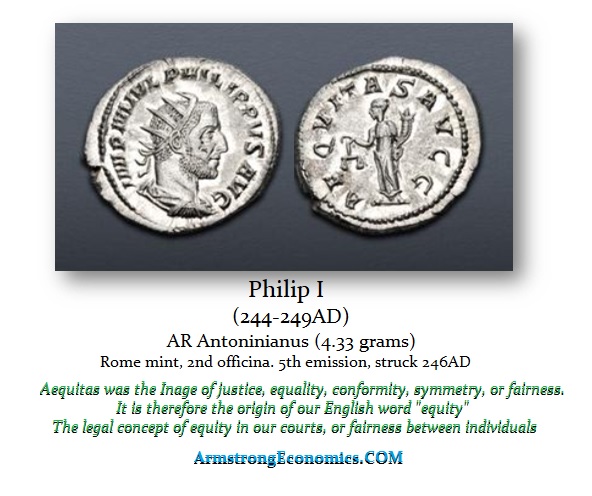
PHILIP I AR Antoniniany Aequitas

A decade later and Philip I attempted to quell the influx of migrants, but died while battling his successor, Trajan Decius. Rome was simply decaying gradually from internal struggles, which weakened the economy and constantly pitted one legion against another in a struggle for power. We see internal struggles today throughout the West as politics continue to divide the people. The Romans did not consider the Goths to be a force that would threaten the entire Empire, but rather more as a barbarian force looking for plunder rather than power.

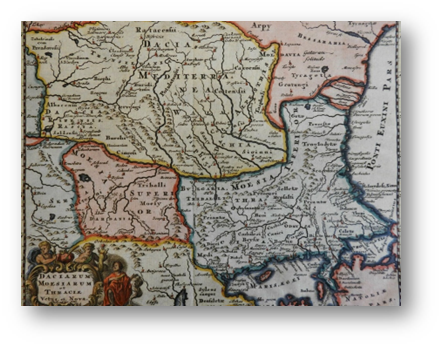
Dacia Map

Trajanus Decius declared the Goths an enemy and attempted to force them out of the empire, only for the masses to return a year later. The Goths were prepared this time and formed several strategic alliances with enemies, such as the Dacian Carpi. This led to a full-scale invasion, and the Roman Empire suddenly found itself besieged as war raged on in Moesia, Dacia, and even in Thrace, while the main body of the Gothic invasion was preparing a descent into the region of the Black Sea.

After many battles, the Goths emerged as the new masters of the entire Danube territory, all the way to the Black Sea. Trebonianus Gallus emerged as the new Emperor who could do nothing to reverse the Empire’s humiliating defeat. The Goths now turned to Illyricum and Thrace, burning and plundering their way across the region. By 253 AD, the Goths set sail along the Black Sea, headed straight for Asia Minor, which was wide open and waiting to be plundered.

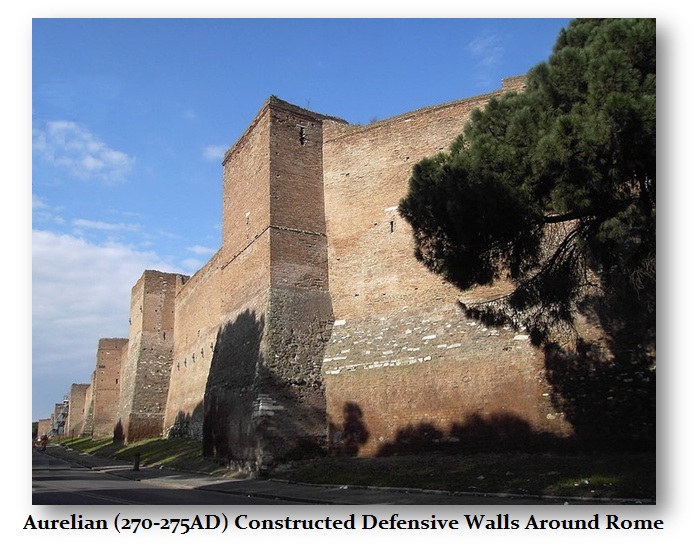
Aurelian Walls 2

The Roman Empire was declining until Emperor Aurelian came to power and began restorative efforts, including anti-immigration policies. He not merely launched defensive measures, he moved on the offensive against the Goths and demolished them through a series of battles. The Goths were driven out of the Balkans and into Dacia. Aurelian also greatly restored the Black Sea defenses, which helped those regions rebuild their economies as well. However, Aurelian failed to pursue the barbarians into the Roman province of Dacia, pulling back and establishing the new border once again along the natural border as originally defined by Augustus – the Danube.

Aurelian Gold Bust

Aurelian’s decision to redraw the borders left Dacia in the hands of the Carpi and the Goths. Once the Goths were contained, they began to divide into two distinct groups – Ostrogothic and Visigothic kingdoms. These groups would evolve into powerful states that would ultimately bring down the Roman Empire in the West.

Those in favor of the Gothic migration stated that the newcomers would increase tax revenue and benefit the Roman economy. It was a humanitarian crisis and Rome’s responsibility to solve. Instead, the unsustainable influx of Gothic refugees contributed to the eventual fall of the Western Roman Empire. The event marked a turning point in Roman history and was part of a period in which the Roman Empire nearly collapsed under the combined pressures of invasion, civil war, plague, and economic depression. History always repeats.

Could Bitcoin Replace the Dollar?


Posted originally on Jul 7, 2025 by Martin Armstrong 

Bitcoins

People continue to ask if Bitcoin will replace the dollar. They believe that the recent surge in Bitcoin indicates that it will topple the USD as the world’s reserve currency, but that is merely propaganda. You must understand that Bitcoin is simply a trading vehicle, not a currency. I cannot stress that point enough. My opinion has been unpopular, and clients have walked away due to my stance on crypto. That’s fine, as I am not in this for the money. I can only adequately inform my clients of the unbiased truth and hope that those willing to listen will heed the computer’s warnings.

To begin with, there is much speculation about the founder(s) — Satoshi Nakamoto – who created Bitcoin (BTC) on June 3, 2009. The mystery person or group (or government agency) has been MIA since 2011. Yet 1 million Bitcoins remain in their original account, untouched. His wallet is estimated to be worth over $81 billion at the time of this writing, and if this is indeed an individual, he or she is one of the top 15 richest people in the world. They have never moved a fraction of a BTC from their account. So, one wallet contains 5% of all mined bitcoin. Will this person or entity perpetually hold?

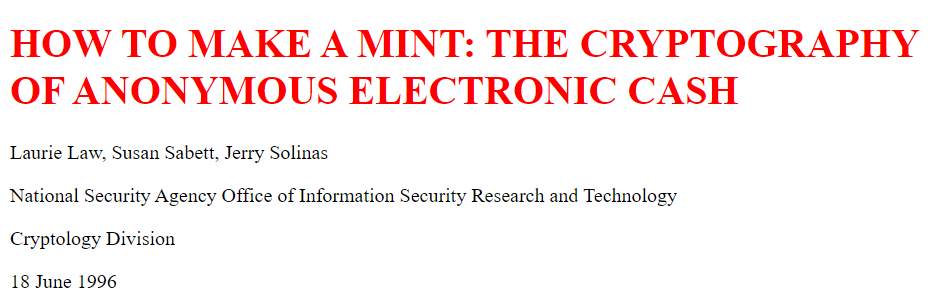
They expect us to believe some mysterious Japanese man created the blockchain technology and simply evaded all world governments. They claim Bitcoin is an anti-government vehicle, but it is a bureaucrat’s dream because it allows them to track where funds are coming from and going. In 1996, the US government released a white paper entitled, “How to make a mint: the cryptography of anonymous electronic cash.” Released by the National Security Agency Office of Information Security Research and Technology, this document explains how a government agency could create something like Bitcoin or another cryptocurrency. They had been attempting to create one for years and then magically Bitcoin came on the scene.

I encourage anyone interested in crypto to read my article regarding this study. Blockchain was created with surveillance at the top of mind.

HowtoMakeaMint2

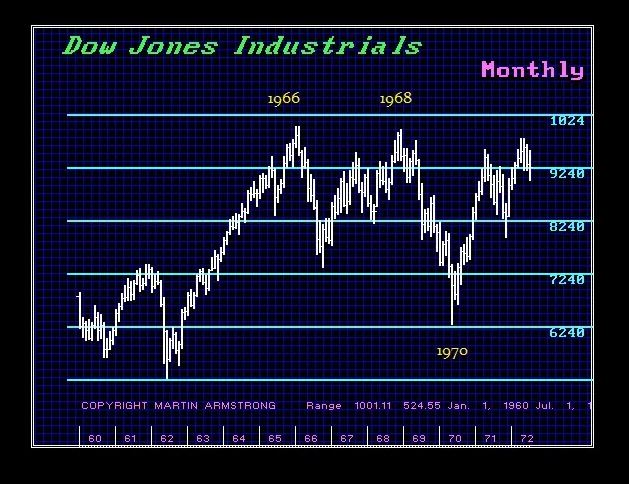
Bitcoin’s price is akin to the problem that existed when the bubble burst in 1966 with mutual funds because they were listed back then. The value can change at a volatility rate of 10x that of the dollar, making it a highly dangerous instrument as a store of wealth. It is solely a trading vehicle until they weigh it and the value is changed.

1966Crash D
DJIND M 1966 1968 1970

In 1966, investors bid the mutual funds up beyond net asset value, so during the crash, people lost everything when they thought it was a secure investment. The net underlying assets may have dropped 20%, but they paid 20% over the net asset value and then sold at 50% of the net asset value. Many mutual funds crashed 70-90%, whereas the Dow drop was 26.5%. Ever since mutual funds have no longer been allowed to be listed. You go in and out at net asset value. Bitcoin must change its structure, or it will never become a valid currency with a stable store of value, which is supposed to be the whole point. It is just an asset class of high volatility.

I have not been bullish on digital currency, as it’s a trading vehicle no different than any other commodity or stock. Sure, a profit could be made, and many have had great success. We do include Bitcoin in our models, and those subscribed to Socrates will see that our arrays are picking up on Bitcoin next year.

Bitcoin is a trading vehicle that is no different from wheat or cattle. It is NOT a store of wealth, as it fluctuates like everything else. It rises and falls no different than any other trading instrument. It is not a “store” of value maintaining some constant value to park your money. We need to get realistic here. The concept of Bitcoin replacing the dollar fails to comprehend what makes something the world’s reserve currency. I will write a piece explaining that aspect since it is crucial to understand.

Elon Musk Announces The Creation of a Third Party


Posted originally on CTH on July 5, 2025 | Sundance

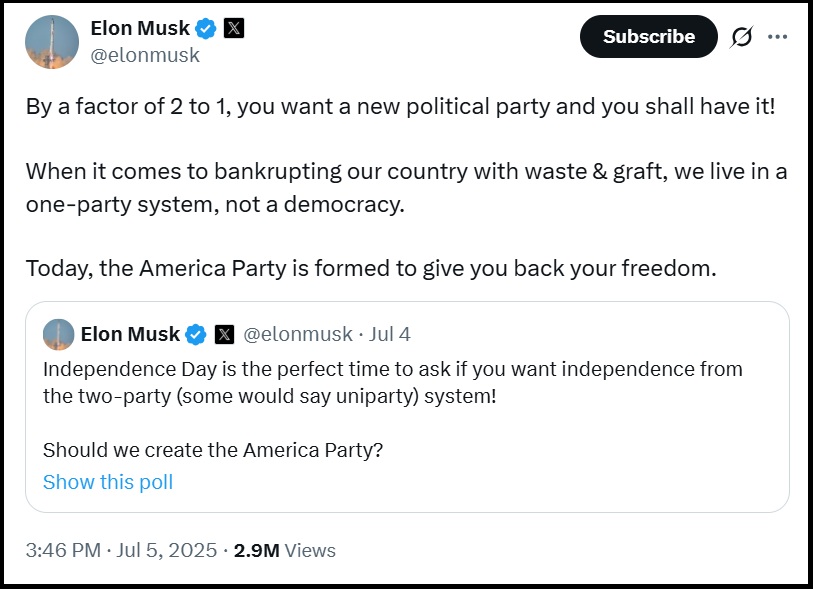
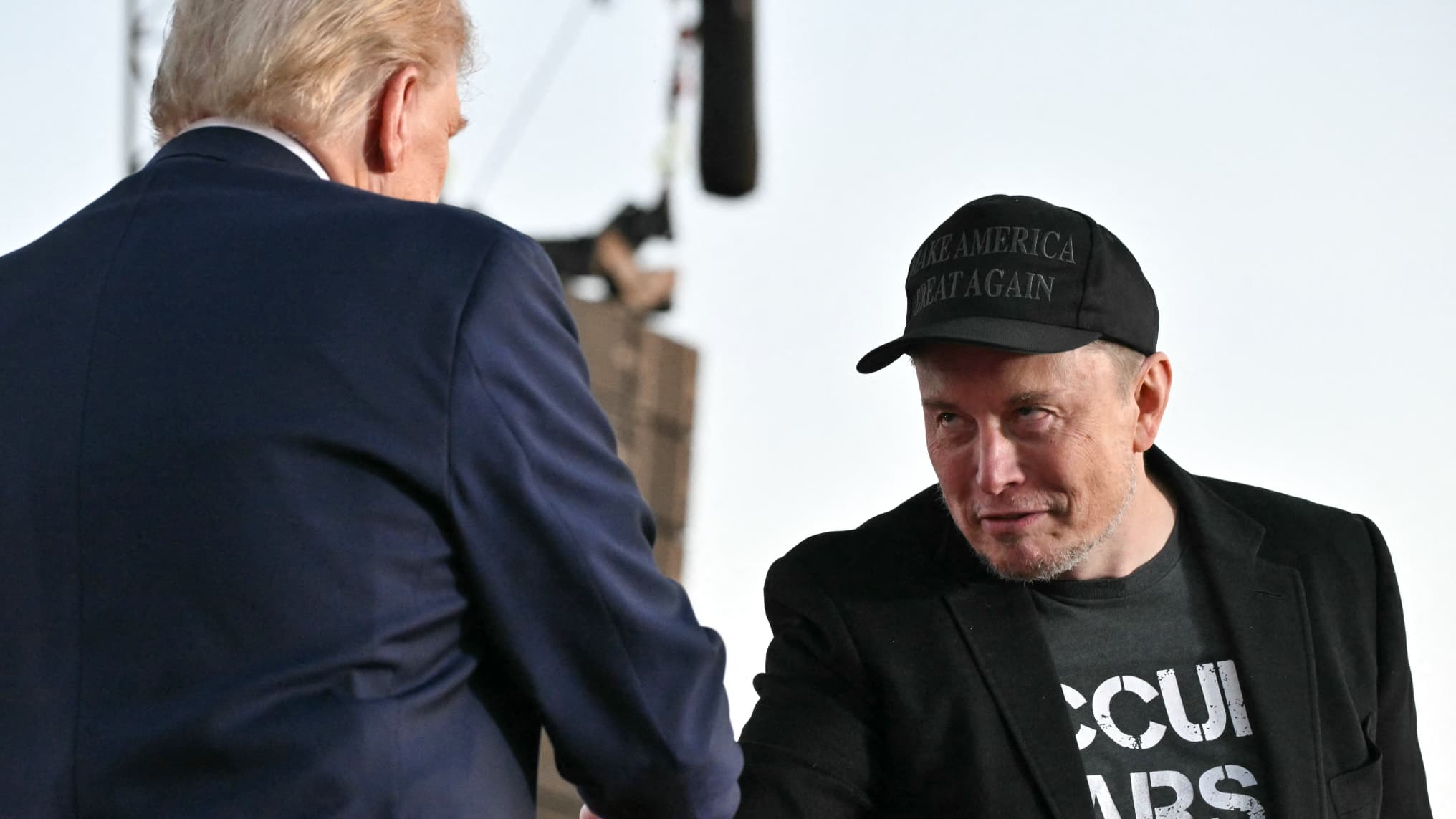
Elon Musk, the richest man with visions of grandeur, has announced the creation of a new political party, “The America Party”.

[SOURCE]

With President Donald Trump capturing the overwhelming majority of middle-America within the new MAGA movement; essentially taking over the Republican party apparatus, I would consider that Musk’s assembly will likely be a collection of never-trumpers, alligator emojis and disgruntled former Republicans.

The impact is undetermined, but the assembly itself was entirely predictable.

Watch Larry Ellison.

When the Drones are Coming, They Turn Off the Internet


Posted originally on CTH on July 5, 2025 | Sundance 

Some thoughts on what I would call ‘modern warfare’ for citizen preppers.  Some of this experience may pertain to urban areas, some perhaps pertinent overall.

Dimitri’s wife is grabbing her purse to go to the grocery store, when he casually says “it’s 5:45.” She just as ordinarily replies, “I’ve got cash.”  Dimitri sees the slightly puzzled look on my face and flippantly notes, “they turn off the internet at six thirty now,” shrugs, and goes back to reading his paper.

Perhaps similar to London life during the blitz. Various municipal govts coordinated the shut down of lights and people wait. Others got about doing what they needed to do, sirens notwithstanding.

There is a familiar life amid modern drone warfare, and with the similar control of electricity comes the need to add internet.

When the drones are coming they turn off the internet.

As I contemplate the contrasts in social resilience, my most familiar reference point is life after a hurricane.  In Florida when we are dealing with the aftermath of a hurricane, no power, no water, no internet, etc., you adapt to life without modern technological conveniences.

If you’ve ever lived amid the aftermath of natural disasters, you understand the need for a plan and quick adaptation. Do it a few times and adaption becomes ordinary. Horrible in ways, yes; awkward, certainly. But you take things in stride; overcome, figure out the optimal solution and keep moving.  However, not everyone is prepared to consider a disruption an ‘inconvenience’ and many people who need consistency to retain stability end up in panic.  I think long term readers well understand the reference.

As Dimitri goes back to the paper my mind shifts to stuff I’ve heard in bits and pieces but never given context before.

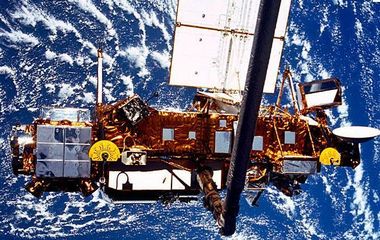
I think about this U.S. ‘Space Force’ thing, and now realize there are people who have gamed out modern warfare more than we discuss as a western technological society.

My mind also thinks about those reports I read a few years ago about various western govt offices concerned about the ability of Russia to target U.S. satellites.  Suddenly I realize cell phone and telecommunication is not their concern.

There’s no internet; the problem is bigger than a temporary outage of Uber. I wonder how the commercial air traffic between Kazan, Moscow and St Petersburg is not disrupted.  Old school stuff applies. Meanwhile, the kids, lots of them are playing outside as kids do – apparently life amid modern drone warfare is resilient.  No one is staring at the sky.

It is very odd to see how quickly a non-technology driven society can adapt to no electricity and no internet as an ordinary part of daily life.  An entire nation just figures out the optimal solution, in part because their time between analog and digital has been short.  Russians have a totally different context of dependency.

I’m also starting to realize how the flexibility within a non-technological society is an asset in modern warfare.  Turn off the internet in New York, Chicago, Los Angeles or any major metropolitan area – how would life be impacted?

I can only imagine the reactions from a generation who has never known life without wi-fi.

It would be a very good intellectual exercise to think carefully about what your life would be like without cell phone coverage or internet services.  There are more than a few people who have never learned to read a clock with hands.

In Russia when the drones are coming they turn off the internet and sometimes the electricity.  Stores stay open; people do the ordinary things people do, the trains still run, the busses stay on schedule and you can still get a hot coffee and a sandwich just about anywhere, albeit sans Starbucks.  Private taxis, Uber equivalents, switch seamlessly to line up at pick-up points without issue. Try to duplicate that rapid on/off precision in Boston, Miami or St Louis… see my point?

Then extend those thoughts to Paris, Frankfurt, Warsaw or Helsinki.  Dimitri is thinking about ordering a pizza, while I’m starting to realize why NATO countries are going bananas.

Can Russia beat Europe in modern warfare?

Well, turn off the electricity, turn off the internet and see what happens to social society in Prague, Rome or any region in Europe when the sirens start.  Yeah, NATO is going bananas as Putin’s best non-discussed weapon just looms quietly.

Putin’s strongest weapon is essentially a social infrastructure akin to a nation full of people who can live in the aftermath of a hurricane without needing a digital screen to provide directions to the next six hours of their life.

Again, somewhere, in some office complex deep in the bowels of some agency or bureaucracy, someone has ran models of this and yet I cannot find a reference anywhere to ordinary people talking about it.

In the glovebox of every taxi in Russia you will find a paper map; when was the last time you saw one in the USA?

When the drones come, they always turn off the internet and sometimes the electricity.

How would we deal with that…

Think about it.

“We Lit Up The Senate” Mike Davis Takes Victory Lap On Defeating AI Amnesty 99-1


Posted originally on Rumble By Bannon’s War Room on: July 1, 2025, at 2:00 pm EST

WARROOM ACTION: Mike Davis On The 99 To 1 Senate Vote Stopping Big Tech AI Amnesty


Posted originally on Rumble By Bannon’s War Room on: July 1, 2025, at 1:00 pm EST

Beall: “The American People Do Not Want To See A Freebie For The Tech Industry To Do Whatever They Want”


Posted originally on Rumble By Bannon’s War Room on: June 30, 2025, at 4:00 pm EST

ALLEN: Majority of Trump-Voters Reject the AI Moratorium


Posted originally on Rumble By Bannon’s War Room on: June 30, 2025, at 4:00 pm EST