Dark Enlightenment – The True Reason Behind the Musk v Trump Clash?


Posted originally on Jun 9, 2025 by Martin Armstrong 

CarlYarvin

There is a conspiracy theory that the feud between Elon Musk and Donald Trump is directly related to the AI provision in the Big Beautiful Bill. Looking back at Peter Thiel and J.D. Vance, Vance had no political experience before Thiel funded his ascension into the Senate after funding his entry into venture capitalism. Both Thiel and Musk urged Trump to select Vance as his VP candidate, and many believe this was to propel the so-called PayPal mafia into politics. The three men are also strongly associated with Curtis Yarvin (pictured above), the mastermind behind the Dark MAGA, Dark Enlightenment movement.

Now, the media claims Musk turned on Trump because he is enraged by the EV tax cuts and subsidies. Yet, only six months ago, Musk was on Capitol Hill arguing for the abolishment of EV tax credits. “Take away the subsidies. It will only help Tesla. Also, remove subsidies from all industries!” Musk posted on his platform, X, on July 16, 2024. Musk had been offloading his White House duties in recent weeks and this over-the-top public feud seems fabricated.
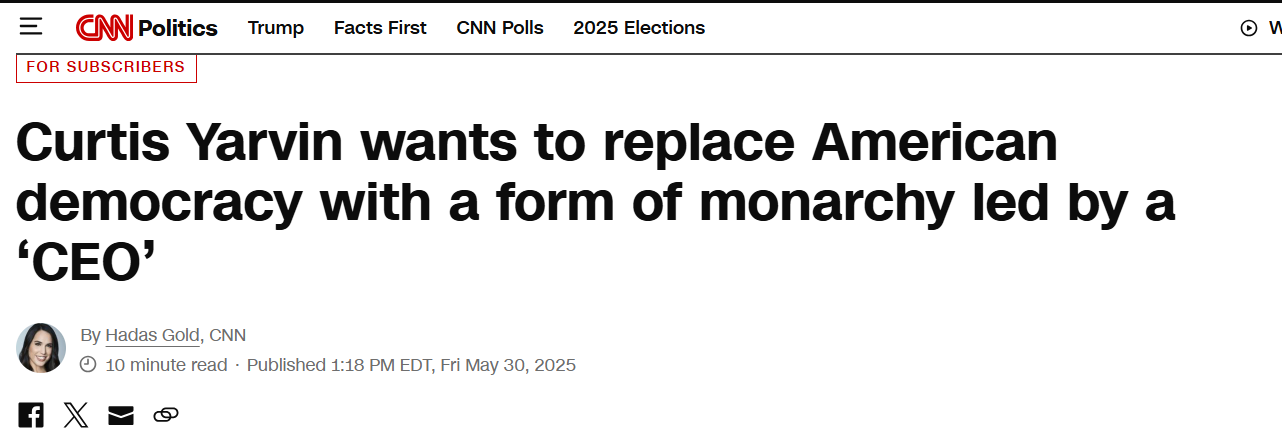
CNNCurtisYarvin

In comes a potential conspiracy of “Dark MAGA” or “Dark Enlightenment.” Curtis Yarvin, a former programmer turned blogger, has long argued that American democracy is irreparable and should be replaced by a corporate-run monarchy led by Big Tech. Yarvin sees democracy not as civilization’s peak but as its degeneration—a system that obscures real power, which he claims is held by a “Cathedral” of media, academia, and bureaucracies that spread progressive ideologies. Yarvin calls his views “the Dark Enlightenment” or “neo-reaction” and firmly believes that the ideal government would resemble a feudal state or a tech corporation with centralized power.

Yarvin wrote “An Open Letter to Open-Minded Progressives” in 2008, which outlines his viewpoints. There is a ton of information he put forth on his substack, Grey Mirror. He believes that the tech elite should rule as they are the only ones intelligent enough to fix our failed society. The R.A.G.E. strategy is to ” Retire All Government Employees and replace them with private corporations under a complete dictatorship run by a “national CEO,” or what’s called a dictator. Yarvin describes his approach as “a humane alternative to genocide.”

CNN reported on Yarvin’s views, as did Politico, Timethe New York Times, The New Yorker, and every other big media agency. His views are not a conspiracy, but whether or not the tech elite has adopted these views is unknown; he has met with numerous members of the Trump Administration, including J.D. Vance. Yarvin has said he is “coaching” Theil, according to Time Magazine, and he even called him a “friend” in an interview with the Hoover Institution.

YarvinPolitico

Yarvin was invited as a guest to Trump’s Coronation Ball in January 2025. In a follow-up interview with Politico, Yarvin stated that Trump’s first administration basically did not achieve anything for its supporters as opposed to its lobbyists. I’m not talking to the high strategic command or whatever, but just my impression from my connections among low- and mid-level people is that they’ve figured some things out.” He said that Congress, not the president, truly runs the nation. “Actually, if the White House didn’t exist, America would still work.”

He also said that the Federal Reserve should be under the executive branch:

“It’s clearly not part of the legislative branch, it’s clearly not part of the judicial branch, so it’s clearly part of the executive branch. And because the Fed actually controls the monetary system, I can order it to mint the trillion-dollar coin, or more to the point, I can basically order the Fed to buy assets. And because I can order the Fed to buy assets, I can order the Fed to buy notes issued by new institutions.

That allows me to basically come face to face with two very clear facts. One is that the U.S. doesn’t really have an executive branch — it has a legislative branch, and it has an administrative branch, which is basically managed not by a monarchical president, but by an oligarchical Congress.”

Washington has been briefed on the Dark Enlightenment movement. The concept itself is not a conspiracy, as Yarvin and others do believe that a corporate-run dystopia is the future. Steve Bannon, as reported by the New York Times, explained that a number of tech elites were on the government’s watchlist:

“I asked him if he saw the same deep-level philosophical tension I did. “A tension?” he asked. “I would almost argue it’s an unbridgeable gap.”

He named a roster of major figures on the tech right whom he saw as enemies: Mr. Andreessen, Mark Zuckerberg, Jeff Bezos, the neomonarchist writer Mr. Yarvin and Balaji Srinivasan, an investor and technologist who promotes the idea of network states, new countries run on blockchain.

Mr. Bannon accused the tech barons of promoting “technofeudalism” and “transhumanism” — bending human life into technologized and unnatural new forms. “This thing is all tied together,” he said. “They have a very well thought through philosophy and a very well thought through set of ideas, and they’re trying to implement that. And to me, everybody’s afraid, everybody’s scared because of their power.”

Before he entered the White House, Vance spoke favorably of Curtis Yarvin. “There’s this guy Curtis Yarvin, who has written about some of these things,” Vance said on a podcast in 2021, adding: “I think Trump is going to run again in 2024 [and] I think that what Trump should do, if I was giving him one piece of advice: Fire every single midlevel bureaucrat, every civil servant in the administrative state, replace them with our people.”
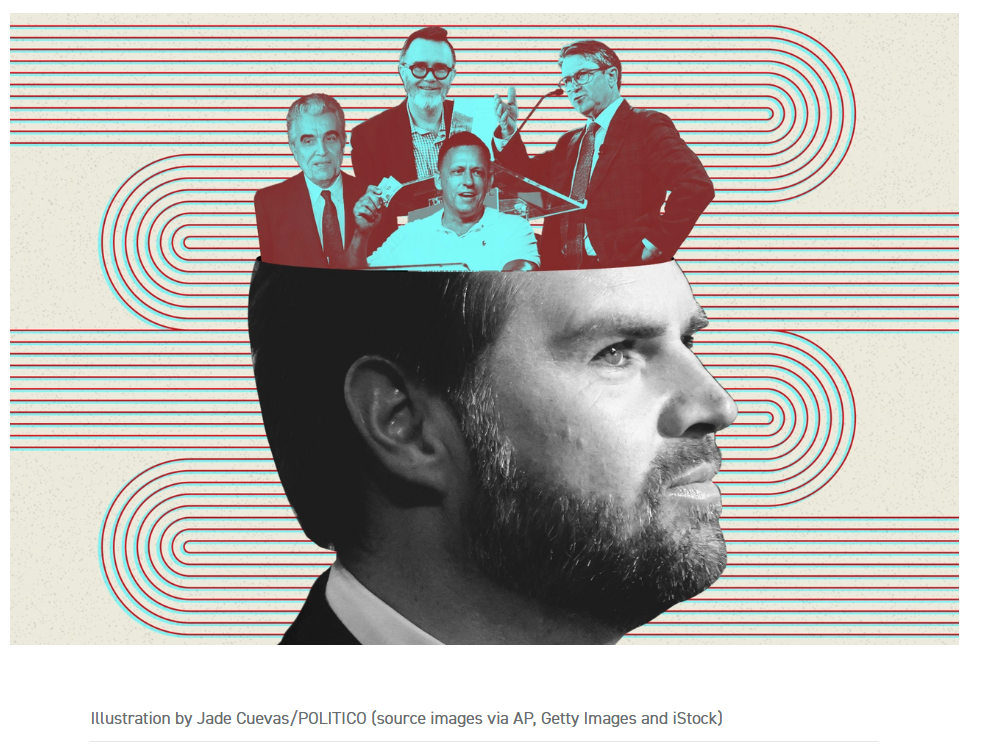
VanceThielBigTech

Vance is certainly plugged in with the tech elite. Why did Elon Musk turn on Trump? I will avoid the more elaborate, far-fetched conspiracy theories (such as the Black Eye Club) and focus on what we know—the PayPal Mafia exists, as does the Dark Enlightenment theory. Musk is now calling for Trump to be impeached for a third time. Are the tech elite hoping to install Vance to the head position of POTUS? Time will tell the true plan, but this elaborate feud between Trump and Musk is too sudden not to raise suspicions.


“He Was Picked So He Could Be A Money Printer For SpaceX” Caroline Wren On How Pulled NASA Nomination Broke Elon Musk


Posted originally on Rumble By Bannon’s War Room on: June 6, 2025, at 7:00 pm EST

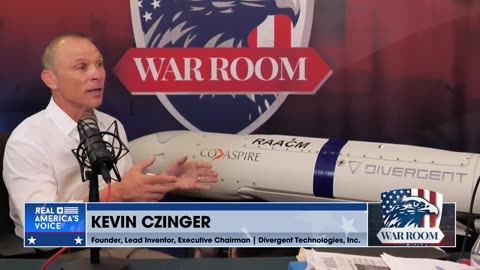
SENSE OF URGENCY: Kevin Czinger Calls On Washington To Act On Industrialization Of A.I.


Posted originally on Rumble By Bannon’s War Room on: June 5, 2025, at 8:00 pm EST

“Each Factory And Each Machine Is For Multiple Industries” Kevin Czinger Discusses Revolutionary A.I. Development


Posted originally on Rumble By Bannon’s War Room on: June 5, 2025, at 8:00 pm EST

“It Doesn’t Take Place In 15 Months It Takes Place In 15 Hours” Kevin Czinger On The Power Of A.I. In Advanced Manufacturing


Posted originally on Rumble By Bannon’s War Room on: June 5, 2025, at 9:00 pm EST

“Using A.I. We Generated The Most Advanced Design Possible” Kevin Czinger Brings A Cruise Missile To The WarRoom


Posted originally on Rumble By Bannon’s War Room on: June 5, 2025, at 9:00 pm EST

Humanity Doomed? | EP #262 | Artificial Intelligence Is Getting Dangerous | Royce White


Posted originally on Rumble By Bannon’s War Room on: June 4, 2025, at 8:00 pm EST

Incoming US Centralized Federal Government Database — When Data Becomes Power


Posted originally on Jun 4, 2025 by Martin Armstrong 

PlanatirData

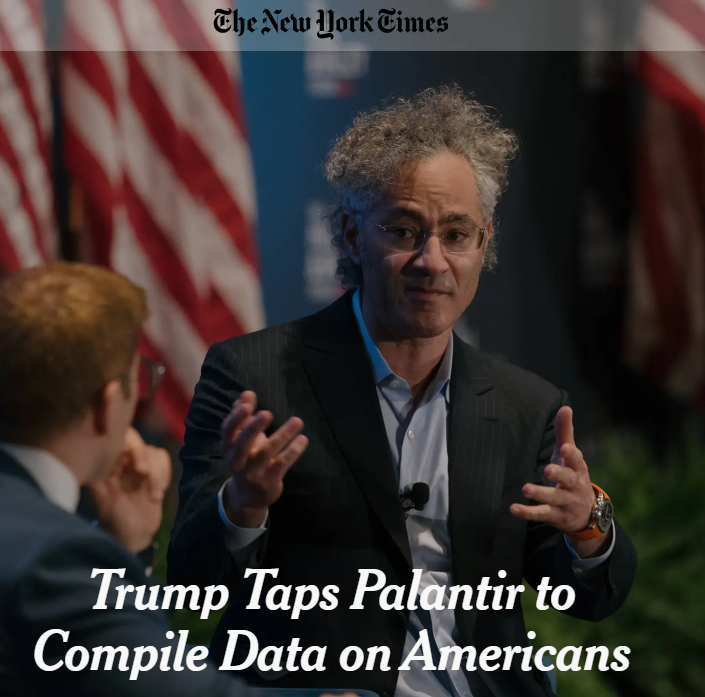
If you were unfamiliar with the American analytics company Palanatir Technologies, prepare to hear about it on every news channel in the coming months. Donald Trump secured the presidency twice because he was the anti-establishment candidate. The White House has tasked Planatir with developing an extensive centralized federal database to house the personal data of every American citizen.

In March 2025, Donald Trump signed an “Information Silos” executive order focused on “removing unnecessary barriers to federal employees accessing government data and promoting inter‑agency data sharing are important steps toward eliminating bureaucratic duplication and inefficiency.”

ThielMusk

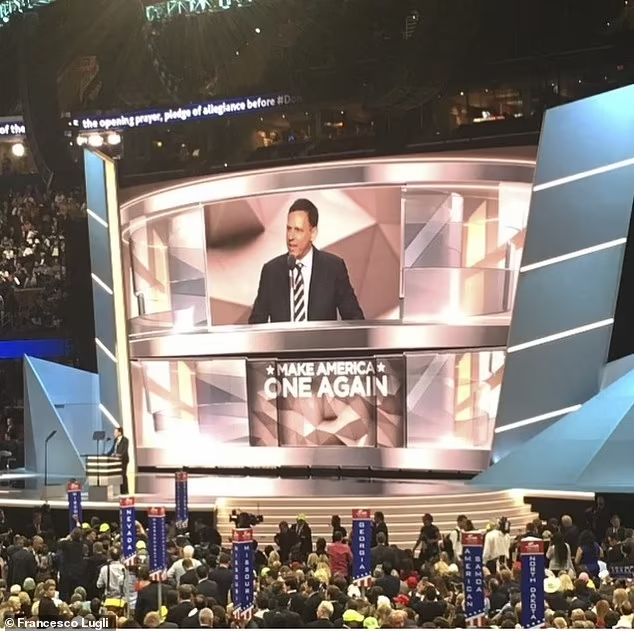
Planatir was a clear choice. At least three DOGE employees formerly worked at Palantir, and co-founder Peter Thiel has supported both Trump and Vance on the campaign trail. Peter Thiel, who also co-founded PayPal with Elon Musk, donated around $1.5 million to Trump during his 2016 Presidential campaign. Thiel spoke at the 2016 Republican National Convention and joined Trump’s transition team after he won. Thiel did not contribute to the Trump campaign in 2020 and stated he wanted to remain neutral by declining to back any political candidate in 2024 financially.

J.D. Vance would not be in his current position without Peter Thiel. Thiel spent $15 million helping JD Vance secure his Senate seat in the 2022 election. The two men met in 2011 after Thiel gave a speech at Yale Law School and developed a close friendship, with Thiel becoming a mentor to Vance and guiding him as he transitioned from law to venture capital. First, Thiel secured Vance a seat at Mithril Capital, another firm he co-founded. Vance went on to launch his own firm called Narya Capital, and Thiel heavily invested in his project. Thiel provided the doorway for Vance to reach key players in Silicon Valley who would go on to fund his political aspirations.

Thiel2016

Going further, Peter Thiel introduced J.D. Vance to Donald Trump in 2021 at a meeting in Mar-a-Lago. Trump went on to support Vance’s 2022 Ohio Senate run, and as we know, tapped him on the shoulder two years later to run beside him as vice president.

Palantir has received $113 million in government contracts since Trump and Vance entered the White House. The Department of Defense awarded Palantir an additional $795 million last week. The company experienced a 45% YoY increase in government revenue in the first quarter of 2025 alone. The stock itself rose over 80% since Trump and Vance took office.

The Internal Revenue Service (IRS), Social Security Administration, and the Department of Education have already begun working with Palantir engineers to develop the most extensive federal database in US history. Social security numbers, medical claims, tax filings, bank information, immigration records, education records, debt—every piece of information that various agencies have collected on American citizens will be transferred tothe coming centralized database.

The agency has long worked with the US government. Former President Joe Biden awarded the company a contract during COVID through the Defense Department and Centers for Disease Control and Prevention to track vaccine distribution.

Alex Karp, the other founder of Plantir, said his company was focused on “the finding of hidden things” within massive databases. One can imagine the patterns that the government will seek from the American public. Yes, the government already has everyone’s data, but this centralized database will yield tremendous power and grant the government the ability to easily and instantaneously access every single trace of data their various agencies have compiled on US citizens.

The New York Times reported that Palantir employees are urging the company to reconsider this contract as they are worried it will damage the company’s reputation.

“We act as a data processor, not a data controller,” a spokesperson for Palantir said. “Our software and services are used under direction from the organisations that license our products: these organisations define what can and cannot be done with their data; they control the Palantir accounts in which analysis is conducted.” Essentially, the firm is stating that they merely compile the data that the government provides to them.

Government databases are routinely hacked. The threat of abuse is massive. India, Brazil, Estonia, and Pakistan are among the other nations that have compiled centralized databases on their citizens; however, no comparison has garnered more attention than China’s National Citizen Identity Information Center (NCIIC).

Digital ID 2

China boasts the most comprehensive and extensive citizen database in the world, containing data on over 1.3 billion citizens. The government has instant access to the lives of its citizens. Healthcare, education, legal information, banking—any and every possible pinch of data that could be gathered goes into the database. China has also collected biometric data from its citizens, including fingerprints, and in some instances, voice samples and facial scans have been recorded. The NCIIC is directly tied to China’s infamous Social Credit System, whereby the government assigns a score to each citizen based on their behavior.

The government could easily create digital IDs based on this centralized database. The United States has never defaulted on or canceled its currency. But what would happen if it became necessary to avoid a collapse? CBDC.

This initiative has sparked significant backlash among Trump’s supporters, who believed he was against government overreach. DOGE helped streamline government functions and reduce excessive waste. Some believe the database will help government agencies perform their tasks more efficiently, unaware of the sheer power this system will contain. Donald Trump is the President of the United States—he is the establishment now. The true regime change and restructuring of the system will not come until after 2032. In the meantime, Americans are now at risk of living under a dystopian surveillance state where their every action is monitored and tracked. It remains to be seen what “patterns” the new system will be seeking, but rest assured that personal capital will be of major interest to the US government as its debt rises.

Canada Has no Gold Reserves – They Sold Them.


Posted originally on Jun 4, 2025 by Martin Armstrong 

MAA 400 Ounce C

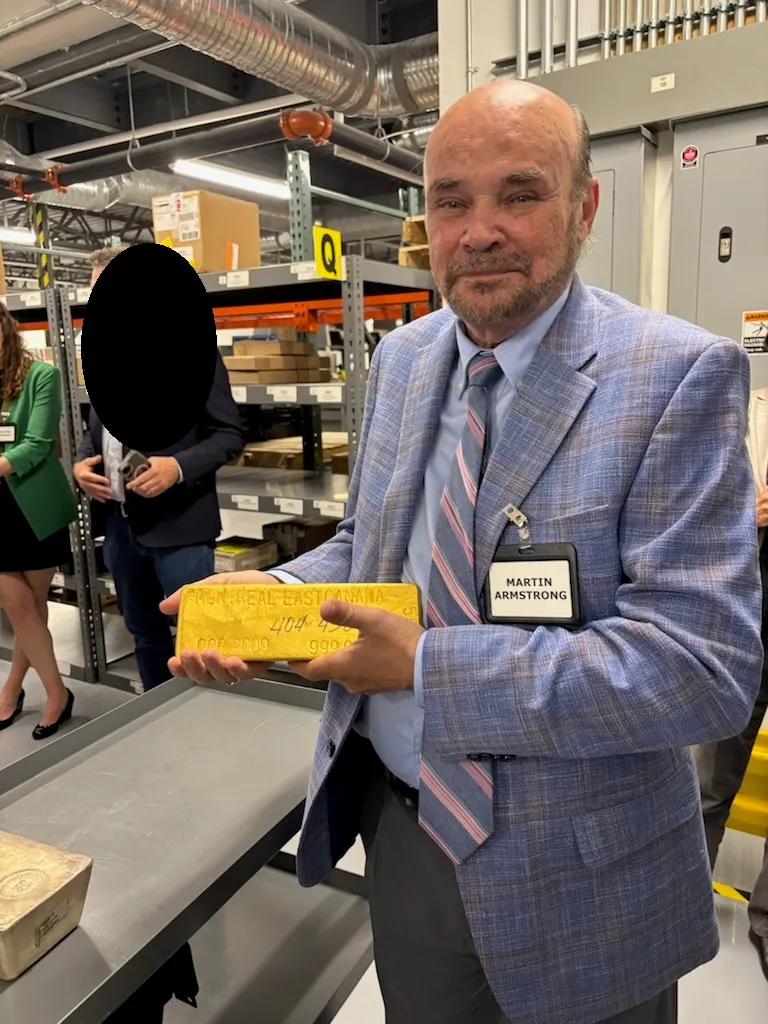
Holding a 400 oz Gold Bar – Central Bank Standard

QUESTION: Hello Martin – Here in Canada, we have a vexing question – why no Gold Reserves at BofC? USA has a date with destiny aka Ft Knox Audit that Trump and Bessent
seemed engaged on this file but are preoccupied lately with a litany of distractions, I’m 74 with health issues surfacing, which rearrange one’s priorities – many millions of Boomers
in same boat – but that’s the price you knew was coming

jw

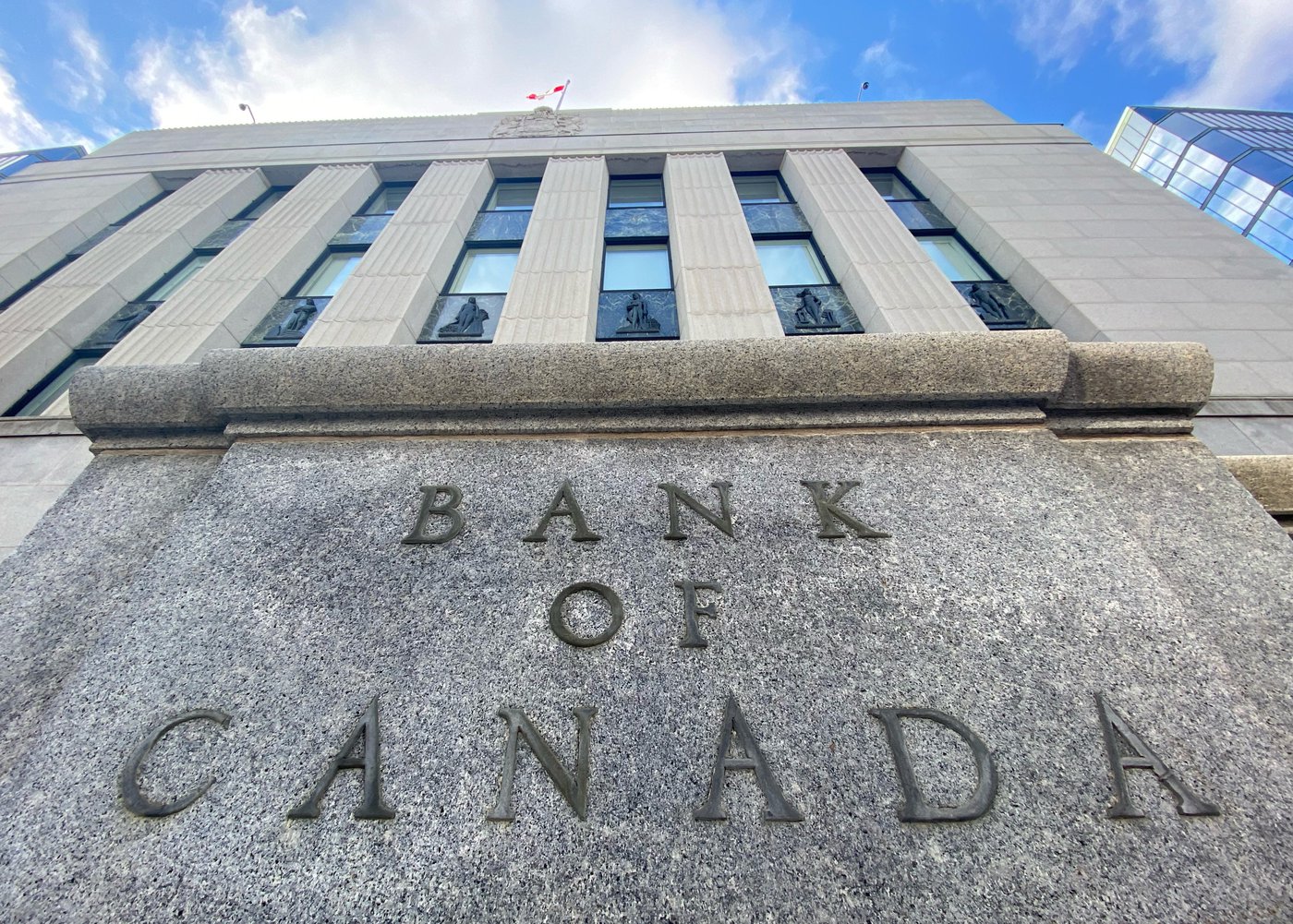
The Bank of Canada building

ANSWER: Canada’s lack of significant gold reserves is the result of a deliberate policy decision spanning several decades, primarily driven by the following reasons:

Storage & Security Costs: Holding physical gold requires secure vaults and insurance, incurring ongoing expenses.

Opportunity Cost: Gold pays no interest or dividends. The Bank of Canada (BoC) decided it could achieve better returns by holding interest-bearing assets like foreign government bonds (US Treasuries, German Bunds, etc.) and deposits.

The Shift to More Liquid Assets: The BoC prioritized holding foreign exchange reserves (primarily US dollars, euros, yen, etc.), which are highly liquid and easily used for direct intervention in currency markets to stabilize the Canadian dollar (CAD).


Canada began the process of gradually selling off its gold in the 1980s, when gold rallied to $875 on January 21, 1980, and then began a 19-year decline to $250. Canada significantly accelerated its gold sales during the 1990s and early 2000s under the leadership of Finance Minister Paul Martin and Governor Gordon Thiessen, aiming to optimize reserve asset management. By 2016, Canada sold its last significant holdings. As of today, Canada’s official gold reserves are reported as zero tonnes (or negligible amounts – e.g., 77 ounces reported in 2022, worth a trivial sum relative to total reserves). In essence, Canada decided that the costs and lack of yield associated with holding large gold reserves outweighed the traditional benefits. They opted instead to hold foreign currencies and bonds that are easier to use for market intervention and generate income, relying on the strength of the Canadian economy itself to support the value of its currency.

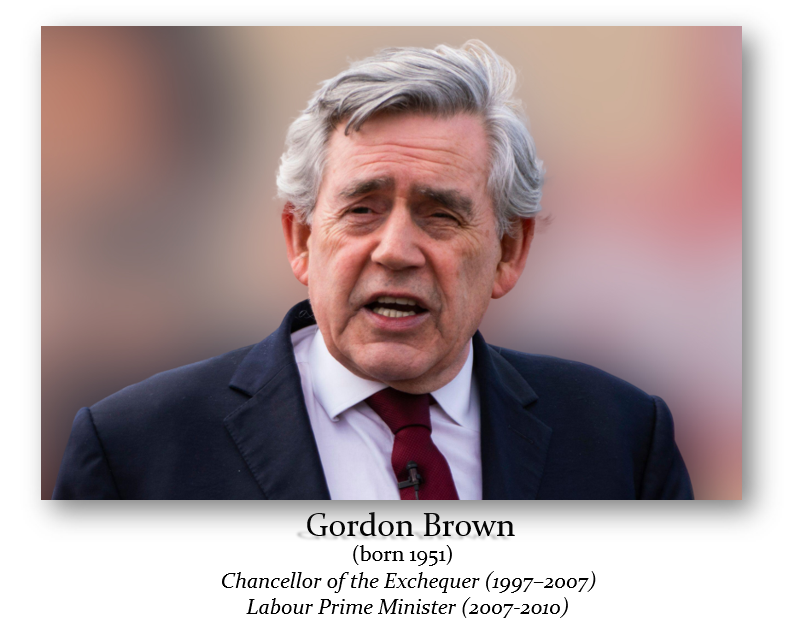
Brown Gordom PM 2007 2010

Gordon Brown, as Labour Chancellor of the Exchequer (1997-2007), authorized the sale of a very significant portion (roughly half) of the UK’s gold reserves. He was a member of the Labour Party, which viewed gold as a rich man’s toy. He sold approximately 395 tonnes of gold. The sales took place between July 1999 and March 2002. This represented about 58% of the UK’s total gold reserves at the time (which were around 715 tonnes before the sales). After the sales, the UK’s reserves stood at about 310 tonnes, where they remain today. The sales occurred during a period when the gold price was near a 20-year low, averaging around $275 per ounce. Shortly after the sales concluded, the gold price began a historic bull run, rising dramatically over the next decade to peak over $1,900 per ounce in 2011. This timing led to massive criticism that the UK sold at the absolute bottom of the market, potentially losing billions of pounds in potential value. The period is often referred to as the “Brown Bottom” in financial circles. Brown was ignorant of how markets function. He announced in advance the strategy to sell its gold reserves, so the market held back, anticipating a greater supply. The proceeds were invested in foreign currency and government bonds. While these assets generated interest income, the capital appreciation of gold vastly outstripped the returns on those bonds over the following years.

The head of the Bank of Canada during the main phase of Canada’s gold reserve sell-off (mid-to-late 1990s) was Gordon Thiessen (born 1938). He served as Governor from February 1, 1994, to January 31, 2001. Thiessen spent his entire career within the Bank of Canada, joining in 1963.  However, it was his predecessor, John Crow (1987-1994), who began reducing its gold reserves significantly in the 1980s. While the Bank of Canada managed the sales operationally, the ultimate decision to sell the gold rested with the Government of Canada (specifically, the Minister of Finance and the Department of Finance). The Bank acted as the government’s agent in this matter.

New York Times Suddenly Concerned About Palantir Data Compilation and Building of Surveillance State


Posted originally on CTH on May 30, 2025 | Sundance

The New York Times (think DHS embeds) are not concerned about the building of a surveillance state using cross-reference artificial intelligence systems into various government agencies; no, the New York Times (think DHS embeds) are concerned it is President Trump triggering the building of the process, and the parameters therein.

I have outlined this seemingly inevitable construct with great granular detail, that is creating the surveillance state for almost a year. Culminating in a December 2024 recap [SEE HERE] along with my position in January of this year [SEE HERE].  I do not like it, but I understand the arguments behind it.

[New York Times] – In March, President Trump signed an executive order calling for the federal government to share data across agencies, raising questions over whether he might compile a master list of personal information on Americans that could give him untold surveillance power.

Mr. Trump has not publicly talked about the effort since. But behind the scenes, officials have quietly put technological building blocks into place to enable his plan. In particular, they have turned to one company: Palantir, the data analysis and technology firm.

The Trump administration has expanded Palantir’s work across the federal government in recent months. The company has received more than $113 million in federal government spending since Mr. Trump took office, according to public records, including additional funds from existing contracts as well as new contracts with the Department of Homeland Security and the Pentagon. (This does not include a $795 million contract that the Department of Defense awarded the company last week, which has not been spent.)

Representatives of Palantir are also speaking to at least two other agencies — the Social Security Administration and the Internal Revenue Service — about buying its technology, according to six government officials and Palantir employees with knowledge of the discussions.

The push has put a key Palantir product called Foundry into at least four federal agencies, including D.H.S. and the Health and Human Services Department. Widely adopting Foundry, which organizes and analyzes data, paves the way for Mr. Trump to easily merge information from different agencies, the government officials said.

Creating detailed portraits of Americans based on government data is not just a pipe dream. The Trump administration has already sought access to hundreds of data points on citizens and others through government databases.

[…] Palantir’s selection as a chief vendor for the project was driven by Elon Musk’s Department of Government Efficiency, according to the government officials. At least three DOGE members formerly worked at Palantir, while two others had worked at companies funded by Peter Thiel, an investor and a founder of Palantir. (read more)

Every element of the U.S. surveillance state is contingent upon selling the ‘security’ message.  With a comprehensive and interconnected database of identity for all Americans: •it makes illegal alien captures and deportations more efficient; •it makes eliminating fraud and abuse in the entitlement programs more substantial; •it can make voting more secure, and •it could protect the identity of Americans from theft and exploitation.

Peter Thiel (Palantir), Elon Musk (xAI, SpaceX), Larry Ellison (Oracle), David Sacks and a host of mutually aligned artificial intelligence builders stand to benefit financially from a technologically efficient Surveillance State. Their companies and their AI software products are the targeting tools within the DHS surveillance system itself.

Do not be misled by their ownership of different companies within this construct, they are all mutually allied; factually, they are all friends in the same tech sector.

The tools created by Palantir et al, are multifunctional. They can be used by the Pentagon and CIA for military application, and they can be used by DNI, DHS, FBI and TSA for domestic application.

Just as the Patriot Act redefined “terror threats” to begin sweeping 360 degrees, so too are the tools of the surveillance state designed for both foreign and domestic application.

There is no way to avoid being the target of a weapon once that weapon is created. However, unlike the mutually assured destruction within the nuclear analogy, there will be no threat of mutual application within the surveillance bomb.  There are going to be castes or tiers of people not subjected to the outcome of detonation; therein lies my biggest point against it.

There are going to be tiers of people who are not subjected to the rules of the Surveillance State. There are going to be tiers of people, powerful, influential, some intensely rich people, to whom the application of the surveillance does not exist.

I have already seen this ‘tiered’ system starting to come into place. I have witnessed firsthand the outcomes of the software being deployed within the design of their building.  I have witnessed real identities masked by the system as an outcome of their status. Facial recognition programs that black out search results based on arbitrary definitions and determinations of those who control the surveillance application.

Inside the surveillance system, supported by the policy team behind President Trump, there will be classes of people. Just as we defined “essential workers” within the COVID-19 pandemic. This essential group will be classed based on their administrative value to the government operators who control the mechanics of outcomes; perhaps “essential administrators.” This is a natural outcome of the mindset behind “continuity of government,” the baseline for the Patriot Act creation.

I have traveled throughout the East and West to gain perspective on what makes us different; what makes Americans different.  What I can assert with clarity is that if we lose the Liberty argument then the ideological representatives behind Barack Obama will have succeeded, the fundamental transformation will be irreversible.

While the Declaration of Independence is long regarded as the greatest written declaration of purpose, the latter created Bill of Rights, the first Ten original amendments to the U.S. Constitution, is just as important. The first declared our intent; the second defined how our founders intended to retain the intent during our collective assembly. Together they outline what set the course to make America great.

This frames the cornerstone of my viewpoints on all of the characters in politics.  It is not a matter of debate that on these core issues of Liberty and the concerns around the Surveillance State will impact us all.  Everything else is a downstream consequence.

If the system is unavoidable, then what underpins my opposition?  Well, the tiered system of constitutional protections only for particular categories of personage must be rebuked.  On this matter there cannot be compromise, because every outcome that impedes our way of life is a derivative of this value, “all men are created equal.”

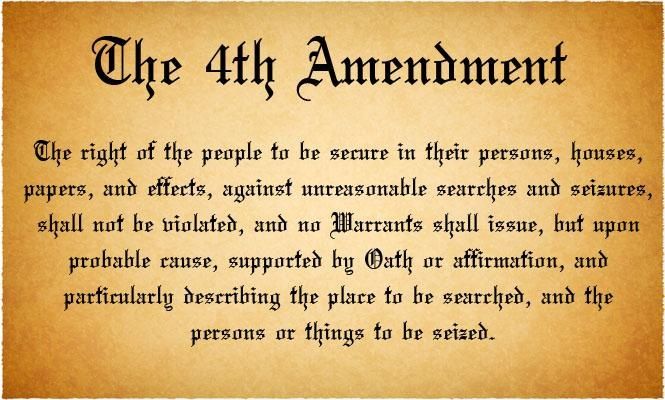
What is the value of national security, when the liberty that secures the values of America is destroyed in the process? Either the Fourth Amendment means something, or it does not!