Frontrunning: December 13


Tyler Durden's picture
  • Trump Picks Exxon Chief for State Amid Concerns (Reuters)
  • Buoyant Markets Pose New Challenge for the Fed (WSJ)
  • Tweeter-in-Chief Trump Faces Test After Yellen’s Rate Decision (BBG)
  • Trump Dissing Daily Intelligence Briefing Worsens Rift With CIA (BBG)
  • SWIFT confirms new cyber thefts, hacking tactics (Reuters)
  • UniCredit share issue lifts banks before Fed meeting (Reuters)
  • Senate Republican leader backs investigation into Russian hacking (Reuters)
  • U.S. intelligence officials say Russian hacks ‘prioritized’ Democrats (WaPo)
  • Merkel, Hollande back extending sanctions on Russia over Ukraine (Reuters)
  • Billionaire’s Son Not Interested in Taking Over Father’s $91 Billion Business (BBG)
  • Japan’s Asahi Buys Eastern Europe Brewing Assets From AB InBev (WSJ)
  • Coverup at French Nuclear Supplier Sparks Global Review (WSJ)
  • Netanyahu says Israel ‘mightier’ as first F-35 fighter jets arrive (Reuters)
  • China’s Sinopec Weighs Takeover Of Gulf Keystone (Reuters)
  • How the Wealthy Avoid Paying Hong Kong Property Tax to Save Millions (BBG)
  • Iran to build nuclear marine propulsion after U.S. ‘violation’ of deal (Reuters)
  • After China’s Hubris, It’s Trump’s Turn (WSJ)
  • OPEC Pumped at Record High as Cartel Agreed Output Cut (WSJ)
  • OPEC Deal to Create Oil-Supply Deficit Next Half, IEA Says (IEA)
  • GOP Leaders Join Call for Probe of Russian Hacking (WSJ)
  • Drinking, drug use largely down among U.S. teens in 2016 (Reuters)


Overnight Media Digest

WSJ

– President-elect Donald Trump will name Exxon Mobil Chief Executive Rex Tillerson as his secretary of state, a transition official said. http://on.wsj.com/2hrXfG8

– Momentum to pursue investigations into alleged Russian hacking in the U.S. presidential election picked up steam Monday, with the Senate’s top Republican joining Democrats, the White House and other GOP leaders in calls for a probe. http://on.wsj.com/2hrXh0I

– The Syrian regime has gained control of almost all of Aleppo, according to the government and an opposition monitoring group, as a proposal for the safe passage of all rebels from the city awaits approval from Russia, the regime’s main military backer. http://on.wsj.com/2hrSHzE

– Donald Trump’s attacks on F-35 fighter jet costs shed light on the ballooning expense and delays of big military programs, but experts say there are limits to what he will be able to do as president to fix them. http://on.wsj.com/2hrXuAZ

– Sumner Redstone’s National Amusements is pulling its support for a merger of CBS and Viacom, which would have reunited the two media firms amid an increasingly challenging landscape. http://on.wsj.com/2hrUp3K

– Microsoft Corp co-founder Bill Gates said he and other business leaders are launching a $1 billion clean-technology fund that will start investing next year in companies developing low-cost, low-carbon technologies. http://on.wsj.com/2hrWexS

– Aetna Inc executives on Monday jousted with Justice Department lawyers over the health insurer’s reasons for sharply cutting its participation in Affordable Care Act exchanges, a potentially important issue in the antitrust trial over Aetna’s proposed merger with Humana Inc. http://on.wsj.com/2hrXIIl

– Antony Jenkins, the former chief executive of Barclays, has joined the board of Blockchain, a London-based startup that provides services related to bitcoin and cryptocurrencies. http://on.wsj.com/2hrUjZV

– Blackstone is exploring a new infrastructure investing business at a time when more money than ever is being committed to funds that aim to invest in ports, pipelines and other public works. http://on.wsj.com/2hrVzMX

– Alphabet Inc’s Google completed a deal with Cuba to place computer servers on the island to speed Google services there, a pact that officials hurried to complete before President Barack Obama leaves office next month. http://on.wsj.com/2hrTgct


FT

– Senior International Monetary Fund officials rejected claims that the organisation is seeking to impose more austerity on Greece. Director of the IMF’s European department Poul Thomsen and the fund’s Chief Economist Maurice Obstfeld said in a blog post that their main worries are that Greece is pursuing policies that are “unfriendly to growth” and that country’s debt is “highly unsustainable.”

– The European Union and the United States have imposed sanctions on senior Congolese security and intelligence officials following a violent suppression of anti-government protests in September in which dozens of people died. EU diplomats said the move is also meant to act as a deterrent ahead of big demonstrations planned for Monday next week against President Joseph Kabila’s refusal to step down despite his second and final term ending that day.

– Sumner Redstone and daughter Shari scrapped Viacom-CBS merger plans amid disagreements about the valuation and management of both media companies. The companies were unable to agree on a valuation for Viacom, owner of Paramount Pictures and MTV.

– Prudential Financial said it would reimburse any customers concerned they were charged for policies they did not ask for as it reviews how Wells Fargo had sold the coverage. Prudential’s move came after three of its former employees alleged in a lawsuit that low-income Wells customers, mainly with Hispanic surnames, had been signed up for policies without their consent.


NYT

– President-elect Donald Trump settled on Rex Tillerson, the chief executive of Exxon Mobil, to be his secretary of state, transition officials said. In naming him, the president-elect is dismissing bipartisan concerns that Tillerson, the globe-trotting leader of an energy giant, has a too-cozy relationship with Vladimir Putin, the president of Russia. http://nyti.ms/2gBx7vh

– Christine Lagarde, the managing director of the International Monetary Fund, went on trial in Paris on Monday, facing criminal charges that when she was France’s finance minister, her negligence resulted in the misuse of hundreds of millions of euros in public money. http://nyti.ms/2gU8KFj

– A business tax overhaul championed by a Berkeley professor could advance President-elect Donald Trump’s job-creation agenda without tariffs or presidential deal-making. http://nyti.ms/2guYJx5

– President-elect Donald Trump said on Monday that the cost of building the military’s next-generation fighter jet, the F-35 Joint Strike Fighter, had spiraled “out of control”, and he vowed to save billions of dollars on military programs once he enters office next month. http://nyti.ms/2hyji0y

– In a sign of widening fallout from Wells Fargo’s sales scandal, Prudential Financial Inc said it was suspending sales of its life insurance policies through Wells Fargo & Co until it completed an investigation into the bank’s sales tactics. http://nyti.ms/2gG5jnP

– Donald Trump officially asked Goldman Sachs Group Inc President and Chief Operating Officer Gary Cohn to serve as director of his National Economic Council, removing a crucial impediment for Goldman’s next generation of leaders. http://nyti.ms/2gBHXBf

– Boeing Co announced a $16.6 billion deal to sell planes to Iran, which for decades had been economically blacklisted by the United States. The company instead chose to emphasize how many jobs the sale would support. http://nyti.ms/2hodXWi

– Bill Gates, co-founder of Microsoft Corp, has started a fund to invest in energy research to reduce the causes of climate change, work that would build on efforts that may be threatened by a Trump administration. http://nyti.ms/2hyjjBN


Canada

THE GLOBE AND MAIL

** The federal government has unveiled a series of measures aimed at curtailing Canada’s booming underground market in fentanyl, just as the death toll climbs and more communities sound the alarm about illicit drugs. tgam.ca/2gGAsHI

** Canadian Prime Minister Justin Trudeau acknowledged Monday that people lobby him at Liberal Party cash-for-access fundraisers, but said he ultimately makes up his own mind on what is good for Canada. It is the first time he has admitted that government business is being discussed at partisan Liberal money-raising events. tgam.ca/2hr5S3B

** Canadian Finance Minister Bill Morneau has agreed to remove controversial changes to the Bank Act from his latest budget bill in response to strong objections from Quebec and some senators. tgam.ca/2hIjuGH

NATIONAL POST

** The New Democratic Party said they want the Liberals to turn their party’s ethics guidelines into law, after Prime Minister Justin Trudeau admitted on Monday that people attending Liberal Party fundraising events bend his ear about “things that are important to them.” bit.ly/2hsHbEd

** The Bank of Montreal is the latest Canadian bank seeking a settlement with regulators after discovering some retail fund clients were charged “excess” fees over a period of years. bit.ly/2hhLUuf (Compiled by Kanishka Singh in Bengaluru)


Britain

The Times

* A DNA analysis company Oxford Nanopore has raised £100 million ($126.77 million) in a private placing, giving it a valuation of £1.25 billion ($1.58 billion). The investment will cement the company’s status in Europe as one of just a handful of biotech unicorns, private, fast-growing companies valued at more than a billion dollars or pounds. http://bit.ly/2hxw6V1

The Guardian

* Lloyds Banking Group Plc is failing to meet “fee-free” guidelines for millions of its basic bank accounts, which are typically held by people on low incomes, according to data published by the Treasury. http://bit.ly/2hxvsH5

* Households in Britain face further pressure from rising inflation as experts predicted a surge in petrol prices following an agreement by oil producers to cut global output. http://bit.ly/2hxz6R8

The Telegraph

* Barclays Plc has sold-off its retail banking operations in Europe with a deal to offload its French consumer businesses to private equity firm AnaCap. http://bit.ly/2hxEnYY

* Brexit minister David Davis met on Monday with representatives of Britain’s leading automotive businesses including Jaguar Land Rover and Ford Motor Co on what the future holds for the sector which directly employs 170,000 in the United Kingdom in manufacturing and supports more than 800,000 jobs. http://bit.ly/2hxyICb

Sky News

* British Culture Minister Matt Hancock has said that the government will be “scrupulously fair and impartial” in its handling of 21st Century Fox Inc’s takeover bid for Sky Plc, the owner of Sky News. http://bit.ly/2hxxSWr

* Post Office workers in Britain are to stage five days of strikes in the week leading up to Christmas. The strike next week follows a dispute with management over job losses, the closure of a final salary pension scheme and branches being shut. http://bit.ly/2hxzgIk

The Independent

* Sky shareholders have demanded a higher takeover price from Rupert Murdoch’s Fox and reassurances over the independence of the media mogul’s son. Fox tabled a £10.75 ($13.63) per share offer on Friday, valuing Sky at £18.5 billion ($23.45 billion). http://ind.pn/2hxtS88

* The online fashion retailer Asos Plc will hire an extra 1,500 people over the next three years as it plans to expand its London operation. http://ind.pn/2hxoHF8
India’s Gold Confiscation & Turkey’s War on Currency


modi

QUESTION: Marty; You have been emphasizing not to buy gold bullion but US gold coins such as the $20. You have said that the last time they confiscated gold coin collections were exempt. With the drastic action in India, and the war on currency in Turkey, is this why you have said stocks and collectibles are a safer bet?

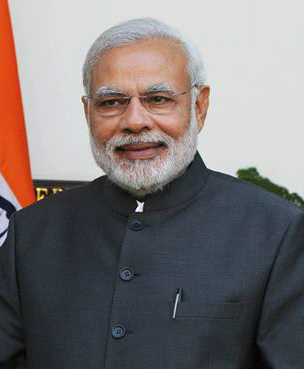
ANSWER:There are no safe bets. However, we are in the collapse of socialism. The left is always the most dangerous because they see themselves as victims. Narendra Damodardas Modi is proving to be a very dangerous radical who is extremely misguided. His demonetization of the currency was carried out without even asking the Reserve Bank. His BJP party advocates social conservatism and a foreign policy centered on nationalist principles. Generally, Modi has focused on a largely neoliberal economic policy prioritizing globalization and economic growth over social welfare. In sum, he is subjugating the people to his goal of globalization.

China and Russia saw their revolutions from the left led by the youth. India is trying to eradicate the underground economy. They first eliminated cash, which is preventing small businesses from paying employees. Unemployment will now soar. They are now attacking gold and this is all about creating a forced above ground economy so it can be regulated and taxed. People are reduced to using rice for money.

turkish-lira-1960-2015

Turkey is doing the same thing. Recep Tayyip Erdoğan has begun his war on foreign currency because the Turkish lira is being devastated in international markets. His dream of recreating the Ottoman Empire will fail. He has lost the confidence of the people as well as the world. He is saying anyone who has $1 bills is a traitor. He is telling the population to convert their foreign currency to Turkish lira out of patriotism.

Lobbying Moves into High Gear Against Fed Rate Hike


reserve-bank-india-rbi

The lobbying is off and running is super-high gear to stop the Fed from raising rates once again. Governments all over the world have a very myopic view and focused only on the next quarter, or the next election. The Reserve Bank of India also fears that the US Fed’s impending interest rise would affect the external value of the rupee. Again the IMF behind the curtain is on its needs. Any depreciation of the rupee as a result of capital outflows would only worsen the balance of payments for India and expose the insane policies of Modi who did not even consult the RBI before demonetizing the currency.

Anyone with half a brain in economics knows that the worst thin you can do to create a depression is cause the velocity of money to decline. If people hoard and do not spend, the economy implodes. Modi is trying to end the cash economy, but he has ensured unemployment will now soar because small businesses cannot pay their people.Expect at least another 400,000 people to lose their jobs and people are forced to use rice as money.

Additionally, a rate hike in USA will send the rupee down and that will be feeding inflation due to rise in prices of imported commodities. Inflationary expectations are real keeping food prices high posing a threat to domestic price stability and external value of rupee. The RBI declined to lower rates looking at the prospects that the USA may raise rates so high rates are necessary to try to stem the outflow of capital.

McDonalds Leaves EU for Britain


mcdonalds

The EU is just insane. They cannot comprehend how to run an economy. The abuse on taxation assessments in the EU has led to McDonalds relocating its international headquarters from Luxembourg to the UK. The U.S. fast food chain announced last week that a new holding company was being established in the UK, where most of the licensing fees would come from stores outside the U.S. McDonalds is restructuring to save costs and the EU taxation is just anti-business.

Goldman President Gary Cohn Accepts NEC Director Role


Tyler Durden's picture

As reported last week, Trump had offered Goldman Sachs president and COO the job of his top economic advisor, as Director of the National Economic Council Director. Moments ago CNBC reported that, as expected, Cohn has accepted the role.

From CNBC:

  Goldman Sachs executive Gary Cohn is expected to accept the directorship of the National Economic Council “at any moment,” a source told CNBC on Monday.

President-elect Donald Trump last week offered the key economic advisor position to Cohn, Goldman’s 56-year-old president and chief operating officer, sources told NBC News. Cohn has been at Goldman for 25 years and previously worked in commodities.

Cohn taking the post would add to Trump’s administration another veteran of the powerful firm he bashed during his campaign. Trump Treasury secretary pick Steven Mnuchin and senior advisor Steve Bannon also worked at Goldman Sachs, which Trump repeatedly attacked on the campaign trail.

He cited Goldman as evidence that corporate and financial interests have influence over politicians and criticized former opponent Sen. Ted Cruz for taking a loan from the firm.

The National Economic Council, which Cohn would lead, is meant to “coordinate policy-making for domestic and international issues, to coordinate economic policy advice for the president, to ensure that policy decisions and programs are consistent with the president’s economic goals, and to monitor implementation of the president’s economic policy agenda,” according to the office’s website.

 While we have no reason to doubt Cohn’ patriotism, we are confident that another motivating factor was the ability to sell some his $210 million or so in Goldman shares tax free, saving approximately $80 million in taxes simply for becoming officially a part of the US administration, instead of merely running the country from the shadows.

‘Century’ Bond Collapse Continues As Belgian 2116s Crash 30% From Highs


Tyler Durden's picture

While all the headlines have been about 10Y Treasury yields breaking above 2.50% briefly for the first time since September 2014, the bigger news for the world of bond traders is the utter bloodbath in ultra-long duration European bonds.


10Y Treasury yields broke above 2.50% this morning…


But while US 10Y Bonds have lost around 7% of their value fromn the August highs, it is the ultra-long duration bonds issued by various European nations over the summer that are collapsing…


Now back below its issuance price. The question

China Flies Nuclear Bomber Above South China Sea In Response To “Ignorant Child” Trump


Tyler Durden's picture

As reported earlier, China lobbed its diplomatic reaction to Trump’s Sunday interview, in which the President-elect hinted he would use the “One China” policy as a bargaining chip in negotiations with China to extract futures trade concessions.

China responded and expressed “serious concern”, warning Donald Trump that the two countries will have “nothing to discuss” if the US president-elect’s incoming administration decides to discard the four-decade old “One China” policy.

“Adherence to the One China policy is the political bedrock for development of [bilateral] relations,” Geng Shuang, a foreign ministry spokesman, said on Monday. If it is compromised or disrupted, the sound and steady growth of the China-U.S. relationship as well as bilateral cooperation in major fields would be out of the question.”

“We urge the new [US] leadership to recognise the sensitivity of the Taiwan question and to deal with it in a prudent manner,” Geng added. “Upholding the One China policy was America’s promise and we want them to fulfil this promise.”

As China’s CCTV tweeted, a sampling of the Chinese popular reaction to Trump’s comments was less than enthusiastic.

However, realizing that for Trump it may need to escalate beyond mere words, shortly prior to today’s latest escalation, China flew a long-range nuclear-capable bomber outside China for the first time since President-elect Donald Trump spoke with the president of Taiwan, two US officials told Fox News. The dramatic show of force was meant to send a message to the new administration, according to the officials. It marks the second time Beijing flew bombers in the region since Trump was elected.

The Chinese H-6 bomber flew along the disputed “Nine-Dash line” Thursday, which surrounds the South China Sea and dozens of disputed Chinese islands, many claimed by other countries in the region.

The Pentagon was alerted to the Chinese flight Friday. It was the first long-range flight of a Chinese bomber along the U-shaped line of demarcation since March 2015, according to the officials.  Over the summer, Chinese bombers flew over the South China Sea and the contested islands, but they did not fly nearly as far as this one, the officials said.

At various points in recent long-range flights, Chinese fighter jets provided escorts to the single Chinese bomber.

In recent days, U.S. intelligence satellites have spotted components for the Chinese version of the SA-21 surface-to-air missile system at the port of Jieyang, in southeast China, where officials say China has made similar military shipments in the past to its islands in the South China Sea.

Just as concerning for the Pentagon, China has been seen by American intelligence satellites preparing to ship more advanced surface-to-air missiles to its contested islands in the South China Sea.

 In February, Fox News first reported that China had deployed an advanced surface-to-air missile system, the HQ-9, to Woody Island, a contested island in the Paracel Island chain in the South China Sea, also claimed by Taiwan and Vietnam.

The HQ-9 is based on the Russian S-300 missile system and has a range of roughly 125 miles.

The Chinese SA-21 system, based on the more advanced Russian S-400, is a more capable missile system than the HQ-9.

It wasn’t just military posturing however: having largely ignored Trump’s verbal outbursts so far, today Chinese state media went on the offensive after Trump’s latest remarks, slamming the US president-elect for being “as ignorant as a child in terms of foreign policy” the SCMP reported.

Beijing added it would have no reason to “put peace above using force to take back Taiwan” if Trump abandoned the policy, which recognises Taiwan as part of China, stated the editorial in the Global Times, which is published by the People’s Daily.

And with these two responses, China has almost certainly assured further escalation from Trump, who is not known for leaving a heated back-and-forth such as this one, especially with such a prominent opponent, without getting some benefit from the exchange and without being able to claim the upper hand, especially coming from the position as leader of the world’s most powerful nation.

Eurozone Day Of Reckoning Coming Soon: Showdown Between Italy And Germany Looms


Tyler Durden's picture

Submitted by Michale Shedlock via MishTalk.com,

The eurozone cannot survive without Italy. The serious problem at the moment is the Eurozone also cannot survive with Italy.

Two of Italy’s three largest parties are anti-Euro. The only party in Italy that does support the euro is ex-prime minister Matteo Renzi’s Democratic Party. And with Renzi gone, there’s a huge risk the party splinters.

Regardless, there are no likely scenarios that can keep things from flying apart according Wolfgang Münchau. I believe his analysis is solid.

one-day

Münchau makes a detailed case why the eurozone is doomed in Italy Poses a Huge Threat to the Euro and Union.

He lists five ways the Eurozone can stay intact. However, none of them stands up to close scrutiny.

  1. Italy and Germany could converge. To do this, Italy would need to undertake economic reforms to clean up the justice system and the public administration, cut taxes and invest in productivity-increasing technologies. Germany would need to run a higher fiscal deficit.
  2. The northern European states accept large fiscal transfers to the south.
  3. The EU creates a federal political authority with powers to raise taxes in order to transfer income from high to low-income earners.
  4. The ECB finds a way to bankroll Italian public and private debt indefinitely.
  5. Italy’s government will forever continue to support euro membership.

Only one of those five conditions may be sufficient for Italy to remain a member of the euro. The problem is that each one is extremely improbable. And I cannot think of a sixth one,” says Münchau.

However, the consensus opinion is that Italy will not leave the Eurozone because the deck is stacked against that event.

The Italy won’t leave rationale looks like this:

  • The Five Star Movement (M5S) would have to get into power, but the new technocrat government’s first mission is to rig the rules so that does not happen.
  • Even if M5S wins the lower parliament, it still may not control the senate.
  • Even if M5S takes complete control of parliament, it would have to change the constitution.
  • Changing the constitution without a super majority would require a vote.

The problem with the above thesis is there is only one party that wants to keep the Euro and coalitions will form if for no other reason than people are fed up.

Showdown with Germany

According to Münchau

 The next Italian prime minister will need to explain to the next German chancellor, presumably Angela Merkel, that her choice will not be between a political union or no political union, but between a political union or Italy’s withdrawal from the euro.

Would it even be Merkel’s choice to make? I think not, it would take a German constitutional change. And nNot only would Germany have to go along, so would every other nation in the Eurozone.

German politicians would not agree, and even if they would, it’s likely Italy would never present the demand, at least as implied above.

Italy will simply hold a referendum. That would be the demand. By then it would likely be too late.

Biggest Default in History

 The latter would imply the biggest default in history. The German banking system would be in danger of collapsing, and Europe’s biggest economy would lose all the competitiveness gains so painstakingly accumulated over the past 15 years.

It has been the historic failure of consecutive Italian prime ministers to avoid this necessary confrontation, and to think that staying off the radar screen constitutes a viable strategy.

What about point number 5?

I addressed that long ago, and I am still waiting the inevitable.

Let’s flashback to November 23, 2011, to my statement Eventually, Will Come a Time When ….

  Eventually, there will come a time when a populist office-seeker will stand before the voters, hold up a copy of the EU treaty and (correctly) declare all the “bail out” debt foisted on their country to be null and void. That person will be elected.

China Hits Back: Warns Trump “Nothing To Discuss” If “One China” Policy Ends


Tyler Durden's picture

On Sunday morning, Trump reignited the diplomatic spat with China when during an interview with Chris Wallace on Fox News Sunday the President-elect said that his support for the “One China” policy which has underpinned U.S. behavior toward Taiwan since the 1970s,  will hinge on cutting a better deal on trade, in other words it will be a “barter chip” to extract future concessions from Beijing.

“I fully understand the ‘one China’ policy, but I don’t know why we have to be bound by a ‘one China’ policy unless we make a deal with China having to do with other things, including trade.”

As the FT noted, Trump’s remarks dramatically raised the stakes with Beijing just a week after he broke diplomatic precedent by accepting a phone call from Taiwan’s leader, Tsai Ying-wen. Both incidents have tested the Chinese government’s diplomatic patience.

Predictably, overnight China responded and expressed “serious concern” on Monday after U.S. President-elect Donald Trump said the United States did not necessarily have to stick to its long-held stance that Taiwan is part of “one China”, calling it the basis for relations. Beijing warned Donald Trump that the two countries will have “nothing to discuss” if the US president-elect’s incoming administration decides to discard the four-decade old “One China” policy.

“Adherence to the One China policy is the political bedrock for development of [bilateral] relations,” Geng Shuang, a foreign ministry spokesman, said on Monday. If it is compromised or disrupted, the sound and steady growth of the China-U.S. relationship as well as bilateral cooperation in major fields would be out of the question.”

He added that “the China-U.S. relationship has global and strategic significance. This not only concerns the happiness of both countries and their people, it concerns the peace, stability, development and prosperity of the Asia Pacific (region) and internationally.”

“We urge the new [US] leadership to recognise the sensitivity of the Taiwan question and to deal with it in a prudent manner,” Geng added. “Upholding the One China policy was America’s promise and we want them to fulfil this promise.”

The statement is a marked escalation by China. Beijing policymakers initially had a more subdued response after Trump departed from diplomatic convention earlier this month and spoke by phone with Taiwan’s president. Now things are getting more serious: the official Xinhua News Agency warned that world peace hinges on close and friendly ties between the U.S. and China.

“For China, there is no balancing of trade and Taiwan,” said Wang Tao, head of China economic research at UBS AG in Hong Kong. “Taiwan is considered the utmost core interest of China, not for bargaining.”

Earlier on Monday, a stinging editorial in the Global Times, offshoot of the official People’s Daily, urged Mr Trump to “listen clearly, the One China policy cannot be traded”. “China needs to wage resolute struggle against [Mr Trump],” it added, warning the president-elect that China “cannot be bullied easily”.

Last week the Chinese government lodged an official protest over the call with Ms Tsai but was otherwise restrained, urging the incoming administration to respect principles that have guided Sino-US relations since diplomatic ties were formally re-established in 1979.

As a result of the growing diplomatic confronation, Chinese markets were hit with the Shanghai Composite Index sinking 2.5% on Monday, the yuan fell toward an eight-year low and Chinese government bonds tumbled. Analysts cited Trump’s comments on the One-China policy amonga long list of reasons for the selloff. Taiwan’s benchmark Taiex index slipped 0.5% on Monday.

“The fundamental assumption in Sino-US bilateral relations has always been that there can be tensions, there can be friction, but no one makes a sudden move,” said Yanmei Xie at Gavekal Dragonomics, a Beijing consultancy. “Right now that paradigm is in doubt.”

In his remarks on Sunday, Trump suggested the One China policy could in fact be treated as a bargaining chip, rather than as the bedrock of relations between the world’s two largest economies, however China disagrees.  The Global Times warned of severe consequences if the incoming US administration dispensed with the one China policy. In that case, the paper asked, “why should the Chinese government prioritise ‘peaceful reunification’ [with Taiwan] over ‘reunification by force’?”

Quoted by the FT, Shen Dingli, professor of international relations at Fudan University in Shanghai, said “Trump’s position is you can trade anything”, adding that the One China policy was often ambiguous. “We keep open trade ties with Taiwan even though we don’t recognise them and even though the US sells arms to them.”

According to Mr Trump, “other things” could include currency policy, Beijing’s military build-up in the South China Sea and improved co-operation in containing North Korea.

“Look, we’re being hurt very badly by China with [currency] devaluation, with taxing us heavy at the borders when we don’t tax them, and building a massive fortress in the middle of the South China Sea,” Trump said. “And frankly, they’re not helping us at all with North Korea.”

China’s currency, the renminbi, strengthened by 30% against the dollar in the decade to 2014, but has since lost about 15 per cent of its value against the greenback. Ironically, instead of actively devaluing its currency as Trump claims, in recent years the PBOC has been propping up the renminbi’s value to prevent an accelerate in capital outflows from China.

Global Bond Rout Returns With A Vengeance, Sending 10Y Yields To Highest In Over Two Years


Tyler Durden's picture

The global bond rout returned with a bang, sending 10Y US Treasury yields as much as six basis points higher to 2.53%, the highest level in over two years. The selloff happened as oil prices surged by more than 5% following Saturday’s agreement by NOPEC nations agreed to slash production, leading to rising inflation pressures. At last check, the 10Y was trading at 2.505%, up from 2.462% at Friday and on track for its highest close since September 2014, according to Tradeweb.

“There’s been some pretty decent cheapening across global bond markets,” said Craig Collins, managing director of rates trading at Bank of Montreal in London. The spike in oil prices since OPEC announced a cut in output has led to further cheapening, while in Europe “you had the ECB last week, all contributing to the steepening that we’ve seen.”

Japanese bond yields jumped, while Eurozone bonds were weaker across the board, too, with the yield on 10-year German debt up 0.05 percentage point at 0.392%. Germany’s yield curve, as measured by the spread between two- and 30-year bonds reached the steepest since 2014, based on closing prices, while a similar gauge for Japan widened for a fifth day. U.K. 10-year yields climbed three basis points to 1.48 percent, while those on similar-maturity bunds also added four basis points, to 0.40 percent

Even that bastion of negative rates, Switzerland, saw yields spike, fast approaching the psychological 0% barrier.

“It does seem to be oil-driven, but clearly the bearish sentiment around fixed income prevails,” Mitul Patel, head of interest rates at Henderson Global Investors, told Reuters.

Another fundamental catalyst behind the bond weakness remains uncertainty over Trump’s policies: the rise in oil process adds to a general selloff in government bonds that gathered pace following the election of Donald Trump in November. Investors expect Mr. Trump’s policies of cutting taxes and increasing infrastructure spending to lead to higher growth and inflation. Those policies may also encourage the U.S. Federal Reserve to raise interest rates at a faster clip than previously expected, which would likely hit bonds. The Fed is expected to raise interest rates at its meeting this week for the first time in a year.

Treasurys registered their largest five-week gain in yields for six years on Friday after investors sold. The Treasury bond market will face a further test this week with a series of debt auctions. Sales of three-year notes and 10-year notes are scheduled for later Monday, followed by an auction of bonds with 30-year maturities on Tuesday. That will increase the supply of bonds at the end of the year, a period when some investors are reluctant to put money to work and many have grown wary of rising yields.

Adding to the pressure, hedge funds and other large speculators raised bearish bets on 10-year Treasuries to the highest in almost two years last week, more than doubling them to a net 228,604 contracts, according to the latest Commodity Futures Trading Commission data.

Technical analysts believe that a sustained break in Treasury yields above 2.5% would open up an attempt at 3% according to Imre Speizer from Westpac Banking Corp. Forecasters in a Bloomberg survey see German bund yields climbing to 0.6 percent by end-2017. That said, both JPM and Goldman have warned that 10Y yields approaching or rising above 2.75% is where the equity rally will fizzle as tighter financial conditions from rising rates will overcome the favorable equity momentum. That level is now just 25 bps away and may be hit in the coming days.