American voters responded to the fraudulent impeachment effort in a big financial way for President Trump in the fourth quarter. The campaign announced a massive $46 million influx which doesn’t count the amount raised by the RNC.
WASHINGTON (Reuters) – President Donald Trump’s re-election campaign raised $46 million in the fourth quarter of 2019, a major haul that was boosted by a surge of donations in the wake of the Democrats’ impeachment bid, a senior campaign official said on Thursday.
[…] The Trump campaign begins the 2020 re-election year with cash on hand of $102.7 million, the official told Reuters, an amount that will help his bid to compete in more states beyond those that carried him to his improbable victory in 2016.
Speaking on condition of anonymity, the official said the campaign felt that Trump’s strong fundraising was a direct result of his decision to keep his campaign apparatus alive after taking office in January 2017.
He filed for re-election shortly after assuming office, allowing the campaign to keep functioning, a break from the tradition of winding it down after the election.
The $46 million for the fourth quarter was the amount raised only by the Trump re-election campaign. Trump and Vice President Mike Pence typically headline fundraising events that benefit both the campaign and the Republican National Committee. (read more)
Trump re-election campaign raises $46 million in fourth quarter
President Donald Trump’s re-election campaign raised $46 million in the fourth quarter of 2019, a major haul that was boosted by a surge of donations in the wake of the Democrats’ impeachmen…
Biggest number in Trump fundraising haul is $102.7Mcash-on-hand.
Most ever by a re-election at this point.
Plus, since Trump Victory funds our massive field program thru RNC, the President’s campaign will be flush with cash to execute the game plan & expand the map.#Winning
COMMENT: Judge Jackson & the Lack of Judicial Impartiality
Martin in this very illuminating post you say:
“Clearly, the most dangerous flaw appears to be intentional – Congress appoints judges not lawyers”.
You’ve missed an important point here.
At the time of the founding most judges were “appointed” by the people; through elections!
Yes, with the federal courts it doesn’t work that way. But, with the inferior courts at the state and local level it still does; though the right has been assailed and so somewhat curtailed.
Still, it is estimated some 50,000 judge-ships are subject to the ballot; a power, like so many others, fully squandered by the American people.
The implications of an electorate organized to exercise these powers would have serious implications at the federal level just the same and these facts should not be forgotten or dismissed.
H
REPLY: Yes, the state and local levels are varied. My discussion was confined to federal, which is what Ben Franklin was opposed to. There are many regions in the state and local level where the judges are elected by the people. This too I see as wrong for they are still being sponsored by the Republican or Democratic Party and are declared as members. This still intertwines politics and does not eliminate the problem of bias.
I believe that Franklin was correct. The judges should NOT stand for election for that will transform the law into just the will of the majority. There was a case Nix v. Williams, 467 U.S. 431 (1984) which resulted in changing our constitutional rights because politically they demanded that a black guy be found guilty for killing a white 10-year-old girl. The police could not simply transport him after his lawyer got him to self-surrender. The lawyer warned the police not to question him on the way to the jail. They did any way. The officers began a conversation with respondent that ultimately resulted in his making incriminating statements and directing the officers to the child’s body.
A federal court in a habeas corpus proceeding found that the police had obtained respondent’s incriminating statements through interrogation in violation of his Sixth Amendment right to counsel. Brewer v. Williams,430 U. S. 387. They had to put him on trial again using evidence concerning the body’s location. Legally, that should have never been allowed. But because this was a black man who had mental problems and a 10-year-old white girl, the thought of letting him walk was just politically unacceptable. The court thus created a rule known as the Inevitable Discovery Rule meaning that it was irrelevant that he showed the police where the body was buried, because the court ruled that they would have eventually found the body.
The impact of that political decision is that police really do not need a search warrant today, they merely have to sweep an unconstitutional illegal search and seizure under the table and rule that had they obtained a search warrant, they would have inevitably found the same evidence.
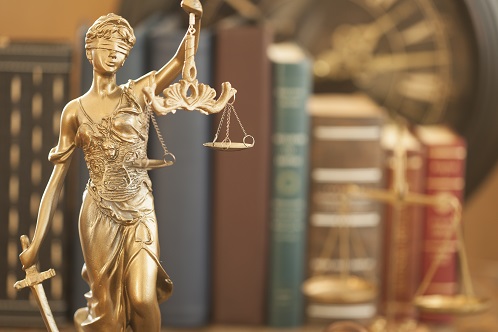
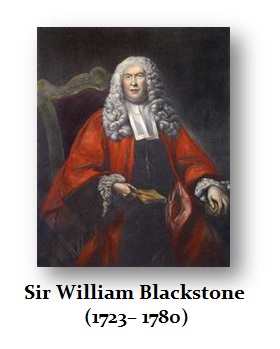
This is the problem when you mix politics with law. In order to make sure that this one black guy was punished, the entire society had to be stripped of our absolute right against illegal search and seizure. If the government wants you, you have no Constitutional rights whatsoever. Law has become the justification for legal persecution. Sir William Blackstone, upon whose seminal legal work was to found the foundation of American law, wrote: It is better that ten guilty persons escape than that one innocent suffer. That is the way the law is supposed to work. When you mix politics with judges, there is no rule of law that remains. The statue of justice is supposed to be blind symbolizing impartiality. That is merely fiction – like once upon a time.
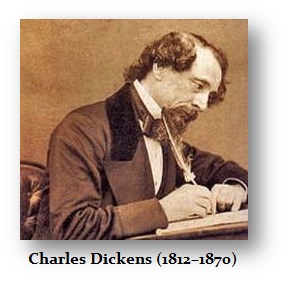
The corruption of the Rule of Law was always an English past time, which the Americans inherited and greatly improved upon. The idea of justice is merely a fictional dream. Charles Dickens wrote in his introduction to Bleak House;
“This is the Court of Chancery ..• Suffer any wrong that can be done you, rather than come here!”
QUESTION: This is the year of the Rat. It has often been the year of economic change. Do you realize the next year will be 2032?
any comment?
ANSWER: The year of the Rat is interesting. Yes, it seems to align closely with change, but not always that year. Often it has been the year before. The year of the Rat is 2020 and 2032, which is curious indeed. The year 1924 was really the beginning to the economic boom in the USA. 1936 was the year before the peak and crash in 1937. The year 1948 was the year before the first round of devaluations in Bretton Woods. The year 1960 was when JFK was headed to the White House. The year 1972 really began set in motion the floating exchange rate after Nixon closed the gold window in August 1971. Then 1984 was the year before the Plaza Accord and the birth of G5. The next target was 1996, one year before the 1997 Asian Currency Crisis. Of course, 2008 was the Crash that changed everything. Here we have 2020 and then 2032. We are showing major changes unfolding on these targets
The 2020 Davos economic conference will be a little more important to watch this year (as it was in 2017) due to the completed U.S. Trade Agreements (S Korea, Japan, Mexico, Canada, and China) and the predicted focus for the Trump administration to pivot from Asia to the EU and U.K. for the next critical phase of the ‘America-First’ global trade reset.
As a result of the recent U.K. election, pending Brexit, a favorable $7.5 billion WTO ruling and USTR Lighthizer’s new $2.4 billion EU targeted tariff program, the administration has significant advantages going into a trade discussion with the EU in 2020.
Team USA has the world’s strongest economy, the largest market, legally bolstered tariff authority and a quiver full of powerful economic arrows.
Meanwhile Team EU has: (1) the UK leaving; (2) severe drops in German industrial manufacturing; (3) a shrinking French economy; (4) yellow-vests in the streets; and (5) demands for greater economic autonomy from many key member states.
Overlay Germany, France and Italy large economy challenges such as: their promise to meet NATO obligations – and their attachment to the strangling Paris Climate Treaty, and the EU’s collective economic position is precarious at best.
WHITE HOUSE – Today, President Donald J. Trump announced the Presidential Delegation that will attend the World Economic Forum in Davos-Klosters, Switzerland, from January 20 to January 24, 2020.
The Honorable Steven Mnuchin, Secretary of the Treasury, will lead the delegation.
Members of the Presidential Delegation:
1. The Honorable Steven Mnuchin, Secretary of the Treasury (Lead)
2. The Honorable Wilbur Ross, Secretary of Commerce
3. The Honorable Eugene Scalia, Secretary of Labor
4. The Honorable Elaine Chao, Secretary of Transportation
5. The Honorable Robert Lighthizer, United States Trade Representative
6. The Honorable Keith Krach, Under Secretary for Growth, Energy and the Environment, Department of State
7. The Honorable Ivanka Trump, Assistant to the President and Advisor to the President
8. The Honorable Jared Kushner, Assistant to the President and Senior Advisor to the President
9. The Honorable Christopher Liddell, Assistant to the President and Deputy Chief of Staff for Policy Coordination.
In the aftermath of National Security Council usurper Lt. Col. Vindman helping to orchestrate a joint DoD, CIA and State Dept soft-coup against President Trump, several pointed questions were asked about why the NSC was allowed to undermine the office they were created to support.
In response to those questions, newly appointed National Security Advisor Robert O’Brien announce the White House was in an ongoing process to reduce the size of the NSC.
A follow-up article within the Washington Times highlights the downsizing so far.
WASHINGTON DC – The White House National Security Council staff is being downsized sharply in a bid to improve efficiency within the policy coordinating body by consolidating positions and cutting staff.
A second, unspoken thrust of the overhaul is a hoped-for end to what many critics see as a string of politically damaging, unauthorized disclosures of sensitive information. Leaks of President Trump’s conversations with foreign leaders and other damaging disclosures likely originated with anti-Trump officials in the White House who stayed over from the Obama administration, according to several current and former White House officials.
White House National Security Adviser Robert C. O’Brien is leading the NSC reform effort. He revealed in a recent interview with The Washington Times that 40 to 45 NSC staff officials were sent back in recent months to the agencies where they originally worked, with more likely to be moved out. (continue reading)
At the time of a Tuesday evening Fox News interview Secretary of State Mike Pompeo was affirming his trip to Ukraine was still planned. However, by the time Pompeo woke up on Wednesday morning those plans were cancelled…. Perhaps someone told the secretary he needed to stay-attached to the crisis he helped inspire?
WASHINGTON (Reuters) – U.S. Secretary of State Mike Pompeo on Wednesday postponed a trip to Ukraine so he could focus on the situation in Iraq after demonstrators attacked the U.S. embassy.
Supporters of Iranian-backed Iraqi paramilitary groups stormed the U.S. embassy’s perimeter and hurled rocks in two days of protests. They withdrew on Wednesday after Washington dispatched extra troops and threatened reprisals against Tehran.
Pompeo postponed his trip to Ukraine, Belarus, Kazakhstan, Uzbekistan, and Cyprus “due to the need for the Secretary to be in Washington, D.C., to continue monitoring the ongoing situation in Iraq and ensure the safety and security of Americans in the Middle East,” State Department spokeswoman Morgan Ortagus said in a statement.
On Tuesday evening Pompeo had told Fox News the Ukraine trip was still on… (read more)
Incredible. Continuing a legacy of transparency and availability the People’s Presidentstops to hold an impromptu presser upon arrival for the Mar-a-Lago New Year’s eve celebration. [Video and Transcript Below]
Dressed in formal attire with our stunning First Lady Melania Trump beside him, President Trump responds to a variety of media questions. WATCH:
.
[Transcript] THE PRESIDENT: Hello, everybody. Happy New Year. Happy New Year. We’re going to have a great year, I predict. I think it’s going to be a fantastic year. We had the best economic year, I think, in our country’s history. And I think we’re really set for additional growth and jobs and everything else. It’ll be great.
Kevin?
Q What do you want the American people to know, Mr. President, about how you’re handling the situation in Iraq, as it relates to Iran?
THE PRESIDENT: Well, I think it’s been handled very well. The Marines came in. We had some great warriors come in and do a fantastic job. And they were there instantaneously, as soon as we heard. I used the word “immediately”; they came immediately. And it’s in great shape, as you know. This will not be a Benghazi. Benghazi should never have happened. This will never, ever be a Benghazi.
But we have some of our greatest warriors there. They got in there very quickly. As soon as we saw there was a potential for problem, they got in, and there was no problem whatsoever.
I also want to thank the Iraqi government. They really stepped up. I spoke to the Prime Minister today. I thanked him. But they stepped up very nicely.
Q Mr. President, do you foresee going to war with Iran?
THE PRESIDENT: I don’t think that would be a good idea for Iran. It wouldn’t last very long. Do I want to? No. I want to have peace. I like peace. And Iran should want peace more than anybody. So I don’t see that happening. No, I don’t think Iran would want that to happen. It would go very quickly.
Q Mr. President, can you — what is your message tonight for — what is your message tonight for North Korea?
THE PRESIDENT: Well, we’ll see. I have a very good relationship with Kim Jong Un. I know he’s sending out certain messages about Christmas presents, and I hope his Christmas present is a beautiful vase. That’s what I’d like — a vase —
Q Do you think it will be, sir?
THE PRESIDENT: — as opposed to something else. I don’t know. I — look, he likes me; I like him. We get along. He’s representing his country. I’m representing my country. We have to do what we have to do.
But he did sign a contract. He did sign an agreement, talking about denuclearization. And that was signed. Number-one sentence: denuclearization. That was done in Singapore. And I think he’s a man of his word. So we’re going to find out, but I think he’s a man of his word.
Q I know it’s a night of celebration, Mr. President, but are you spoiling for a political fight in January, with the impeachment?
THE PRESIDENT: Well, the impeachment thing is a hoax. It’s a big, fat hoax. We had, I guess, 196 to nothing, with the Republicans. We had three Democrats come over. One actually joined our party, as you know — which is, I think, a record. I don’t think that’s been done before, in terms of somebody coming in like that on a vote like that. But he joined our party — from New Jersey. He’s going to be fantastic.
And, no, I think — I look forward to it. I mean, we’ll see. We have absolutely — we did nothing wrong. All you have to do is read the transcripts. If you read the transcripts — or you could also do something else. You could go see or speak to the President of Ukraine. And the President of Ukraine said, loudly and boldly — and I appreciate his statement — he said it many times: There was no pressure. The foreign minister of Ukraine said there was absolutely no pressure, and that’s the whole case right there. There was no pressure whatsoever.
I do say two things: We have to check corruption, and we also have to find out why is it that the United States is always giving foreign countries money. And Germany and France and all of Europe — they’re not doing much. In fact, they’re not doing anything, relative to this. Why is it always the United States? I’ve been asking you those questions and making those statements for a long time to everybody standing here. Nobody ever mentions that.
That was part of it. In fact, that’s in the transcript also. I talk about — a very good woman, to be honest with you — Chancellor Merkel. But I said, “Where is Chancellor Merkel? Where is President Macron of France? Why aren’t they putting up money? Why is it always the United States?” Nobody ever covers that, but that’s a big factor. So I think that’s going to go very quick. I think it’s going to go very easy.
We have tremendous — and, you know, I have to say this — we have tremendous Republican support. What the Democrats did in the House was a disgrace. What they did — how unfair it was. We didn’t get lawyers. We didn’t have witnesses. We didn’t do anything. And still, we got 100 percent of the Republican votes. And it was bipartisan, because we got three Democrats.
So I think the impeachment thing — I call it “impeachment light.” It’s a disgrace. And Nancy Pelosi should be ashamed of herself. She’s a highly overrated person. I know her well; she’s highly overrated.
Q (Inaudible) about vaping?
THE PRESIDENT: Vaping is coming out. We’re just going to be announcing it very shortly. Some people already know about what we’re doing. We have to protect our families. At the same time, it’s a big industry. We want to protect the industry.
And, as you know, we’ll be taking it off — the flavors — for a period of time — certain flavors. We’re going to protect our families. We’re going to protect our children. And we’re going to protect the industry. Hopefully, if everything is safe, they’re going to be going very quickly back onto the market.
So the flavors will come off. They’re going to be checked. We want to make it — people have died from this. They’ve died from vaping. We think we understand why. But we’re doing a very exhaustive examination, and hopefully everything will be back on the market very, very shortly.
Look, vaping can be good from the standpoint — you look at the e-cigarettes — you stop smoking. If you can stop smoking, that’s a big advantage.
So we think we’re going to get it back onto the market very, very quickly, but we have to protect the children. We have to protect the families. At the same time, we have a very big industry. It’s become a very big industry. We’re going to take care of the industry.
Q Do you want there to be a trial in the Senate? Or do you want there not to be a trial in the Senate?
THE PRESIDENT: I don’t really care. It doesn’t matter. As far as I’m concerned, I’d be very happy with the trial because we did nothing wrong. We didn’t even have a witness, and we won 196 to nothing. Okay? We didn’t have a witness. That was all the Democrats’ witness.
Look, Adam Schiff is a corrupt politician. He’s corrupt. He got up — he made a speech, said something I never said. And when I released the transcript — which is absolutely a perfect, totally appropriate conversation with a very good man, a very good President — I hear he’s doing a great job. But a big reason he got elected was corruption. There’s tremendous corruption.
But the other thing — and, again, I ask: Why aren’t other countries — Germany, France, and others — why aren’t they putting up money like we put up? And I’ve asked that question for a long time not only about Ukraine, about a lot of other places.
I was able to get, recently, at NATO — and you have to speak to Secretary General Stoltenberg — $530 billion additionally, over a very short period of time; $130 billion immediately. He has never seen anything like that. That’s NATO.
This is something different. Those countries should be putting up money. They should also be giving to Ukraine.
All right, one more question. Go ahead.
Q (Inaudible) China trade.
THE PRESIDENT: On trade? We’re very excited about trade. The China deal will be signed probably on January 15th. We put out a notice today. And I’ll be going, at some point, to Beijing, to be with President Xi. We have a great relationship. And we’ll be doing something reciprocal.
But I think, more importantly, we’ll be starting negotiations very soon on phase two. And I think phase two can be complete. A lot of people said, “Well, are you going to have phase two, or phase two and phase three?” I think we’ll have phase two. I think that should complete it. But we’ll be starting those negotiations very soon.
I want to thank everybody. I want you to have a great year. Look, you’re honorable people. You have to stay honorable. If you’re honorable, I’m going to win the election by a lot. If you’re not honorable, I’m just going to win the election by a little. So I’d rather have you be honorable, okay?
Q How about Mrs. Trump’s New Year’s resolution? Melania?
Q What is your resolution?
MRS. TRUMP: Happy New Year.
Q Happy New Year. How about your New Year’s resolution?
Q What is your resolution?
Q What’s your goal for the New Year?
MRS. TRUMP: Peace on the world.
THE PRESIDENT: Peace is right. But I’m — I’m not sure you’re supposed to say resolutions out loud, okay? So we don’t want to — I don’t want to say what my resolution is because I think we jinx it, all right?
But I can tell you, we have a good re- — we really have a good resolution, and it’s a resolution for our country. We love our country. Our country has never done better than it’s doing right now.
We have the best unemployment numbers. We have the best employment numbers. Almost 160 million people are working. African American, Asian American, Hispanic American — they have the best numbers in the history of our country. We’re very happy. And we rebuilt our military. We cut taxes down — the lowest in history, biggest tax cut ever. We’re doing great. Our country is really the talk of the world. Everybody is talking about it.
First, the explanation from former CIA Director, current U.S. Secretary of State, Mike Pompeo:
.
Does this “escalation” have a familiar feel about it?
Let’s review the timeline:
A joint U.S. DoD, CIA and State Department effort initiated the background for an impeachment effort against U.S. President Donald Trump.
♦ A DoD Lt. Colonel named Alexander Vindman (Defense Dept.) sends false information to CIA operative Eric Ciaramella (CIA)…. that kick-starts a manipulated anonymous whistle-blower complaint through congress and the intelligence inspector general… which precedes a litany of U.S. foreign service operatives (State Dept.) testifying against President Trump.
Despite the known compromise and his certain inability to do his job, the National Security Staffer, Lt. Col. Vindman, is not removed from his position inside the White House National Security Council by Joint Chief’s Chairman Mark Milley.
♦ At the same time Vindman’s activity hits the headlines, U.S. Secretary of Navy Richard Spencer extorts the White House over President Trump’s decision to grant clemency for U.S. Navy SEAL Eddie Gallagher. Spencer offers to drop the Trident review for Gallagher if President Trump backs away from the issue.
After public exposure of the extortion, Defense Secretary Mark Esper is forced to fire Navy Secretary Richard Spencer. Using Spencer’s firing as the starting point, a contingent of former flag officers mount a mass-media campaign against President Trump. Joint Chief’s Chairman Mark Milley remains silent.
[NOTE: President Trump has an administration-wide military policy of allowing field commanders to make decisions closer to combat operations. Offensive military engagement requires Commander-in-Chief approval, defensive operations do not.]
♦ U.S. officials and a coalition of Afghanistan tribal leaders representing the Taliban in Afghanistan announce a joint cease-fire as terms of U.S. withdrawal are discussed.
♦ On the same day the U.S-Afghanistan ceasefire agreement is announced, Secretary Pompeo, Secretary Esper and JCS Mark Milley travel to Mar-a-Lago to brief President Trump on a range of new airstrikes carried out in Eastern Syria and Western Iraq as retaliation for an Iranian proxy militia attack against a U.S. base in Kirkuk, Iraq, that killed an “American contractor”.
A U.S. civilian contractor was killed and several service members and Iraqi personnel injured Friday in a rocket attack on a base in Iraq, military officials said.
The attack on the base in Kirkuk occurred Friday morning, said Combined Joint Task Force Operation Inherent Resolve, which is tasked with fighting the Islamic State group in Iraq and Syria. The base is hosting coalition troops, the military said in a statement. – Kirkuk is in the northeastern part of the country, south of Erbil. (LINK)
.
President Trump is silent for three days as Secretary Pompeo, Secretary Esper and JCS Milley inform the media of new issues in/around Iraq.
The evidence of Iranian involvement against the Kirkuk base is a located abandoned truck with unfired rockets -with Iranian labels- located near the origination of the attack.
♦ The U.S. response to the airbase attack takes place 300+ miles from the Kirkuk incident. Secretary Pompeo calls the retaliatory strikes “defensive” operations against Iranian -back proxy militias.
The Department of Defense took offensive actions in defense of our personnel and interests in Iraq by launching F-15 Strike Eagles against five targets associated with Kata’ib Hezbollah, which is an Iranian-sponsored Shiite militia group. The targets we attacked included three targets in Western Iraq and two targets in Eastern Syria that were either command and control facilities or weapons caches for Kata’ib Hezbollah.
♦ Iranian-inspired proxies inside Iraq then use the U.S. retaliatory strikes to mount a protest against the U.S. embassy in/around the “green zone” in Iraq. Chaos ensues. U.S. troops are dispatched to reinforce the massive embassy compound.
♦ As a result of the increased risk and hostility to U.S. interests in/around the U.S. embassy in Iraq; and as a result of escalating friction caused by the original Iranian-militia attack; and as a result of the two U.S. air strikes in response to that initial attack; and out of an abundance of caution that our U.S. embassy in Iraq does not turn into another Benghazi-like outcome; we are now sending 4,000 more U.S. troops into Iraq.
All of this, we are told, is the result of rockets fired into an airbase in Kirkuk by “Iranian” militia; who our intelligence services identified from an abandoned truck and un-fired missiles with Iranian stickers.
Earlier today, via Tweet, President Trump announced the ‘phase-one’ agreement between the U.S. and China will be signed January 15, 2020.
As U.S. Trade Representative Robert Lighthizer previously stated this very challenging agreement will be the first-ever attempted trade deal between a state-run economy and a free-market economy. It will take time to see if communist China will actually follow-through on the terms and conditions.
Ambassador Lighthizer noted the principle challenge is generating an enforceable set of standards -within a written agreement- between a totally controlled communist economic system (China) and a free-market system (USA). No other nation has ever tried, and there is no preexisting trade agreement to facilitate a mapping. What Lighthizer was/is constructing will be what all nations will start to use going forward. This is historic stuff.
.
Arguably, next to President Trump, USTR Lighthizer is one of the most consequential members of the administration. What he was/is constructing, with the guidance of President Trump, is going to influence generations of Americans.
.
[Transcript] MARGARET BRENNAN: This week, the U.S. and China agreed on the first phase of a trade deal that would roll back some American tariffs. It’s expected to be signed in early January. We’re joined now by the U.S. Trade Representative, Robert Lighthizer, the top negotiator in those talks with Chinese officials. Good to have you here.
U.S. TRADE REPRESENTATIVE ROBERT LIGHTHIZER: Thank you for having me, MARGARET.
MARGARET BRENNAN: It’s huge to have the two largest economies in the world cool off some of these tensions that have been rattling the global economy. But I want to get to some of the details here. China says still needs to be proofread, still needs to be translated. Is you being here today a sign this is done, this deal’s not falling apart?
AMB. LIGHTHIZER: So first of all, this is done. This is something that happens in every agreement. There’s a translation period. There are some scrubs. This is totally done. Absolutely. But can I make one point? Because I think it’s really important. Friday was probably the most momentous day in trade history ever. That day we submitted the USMCA, the Mexico-Canada Agreement with bipartisan support and support of business, labor, agriculture. We actually introduced that into the House and the Senate on this, which is about 1.4 trillion dollars worth of the economy- I mean of- of trade. And then in addition to this, which is about 600 billion, so that’s literally about half of total trade were announced on the same day. It was extremely momentous and indicative of where we’re going, what this president has accomplished.
MARGARET BRENNAN: Well, that is significant and I do want to get to the USMCA. But because the China deal just happened–
AMB. LIGHTHIZER: Right.
MARGARET BRENNAN: –and we know so little about it, I’d like to get some more detail from you. You said this is set.
AMB. LIGHTHIZER: Yes.
MARGARET BRENNAN: You expect the signing in early January still.
AMB. LIGHTHIZER: Right.
MARGARET BRENNAN: What gives President Trump the confidence to say China’s going to go out and buy $50 billion worth of agricultural goods because Beijing hasn’t said that number?
AMB. LIGHTHIZER: First of all- let me say first of all, I would say this. When we look at this agreement, we have to look at where we are. We have an American system, and we have a Chinese system. And we’re trying to figure out a way to have these two become integrated. That’s what’s in our interest. A phase one deal does the following: one, it keeps in place three hundred and eighty billion dollars worth of tariffs to defend, protect U.S. technology. So that’s one part of it. Another part of it is very important structural changes. This is not about just agricultural and other purchases, although I’ll get to that in a second. It’s very important. It has IP. It has- it has–
MARGARET BRENNAN: Intellectual property–
AMB. LIGHTHIZER: –technology. It has- it has currency. It has financial services. There’s a lot of very- the next thing is, it’s- it’s enforceable. There’s an enforcement provision that lasts 90 days- it takes 90 days and you get real, real enforcement. The United States can then take an action if China doesn’t keep its commitments–
MARGARET BRENNAN: Put the tariffs back on?
AMB. LIGHTHIZER: Well, you would take a proportionate reaction like we do in every other trade agreement. So that’s what we expect. And finally, we’ll- we’ll find out whether this works or not. We have an enforcement mechanism. But ultimately, whether this whole agreement works is going to be determined by who’s making the decisions in China, not in the United States. If the hardliners are making the decisions, we’re going to get one outcome. If- if the reformers are making the decisions, which is what we hope, then we’re going to get another outcome. This is a- the way to think about this deal, is this is a first step in trying to integrate two very different systems to the benefit of both of us.
MARGARET BRENNAN: But that $50 billion number, is that in writing?
AMB. LIGHTHIZER: Absolutely. So- so here’s what’s in writing. We- we have a list that will go manufacturing, agriculture, services, energy and the like. There’ll be a total for each one of those. Overall, it’s a minimum of 200 billion dollars. Keep in mind, by the second year, we will just about double exports of goods to China, if this- if this agreement is in place. Double exports. We had about 128 billion dollars in 2017. We’re going to go up at least by a hundred, probably a little over one hundred. And in terms of the agriculture numbers, what we have are specific breakdowns by products and we have a commitment for 40 to 50 billion dollars in sales. You could think of it as 80 to 100 billion dollars in new sales for agriculture over the course of the next two years. Just massive numbers.
MARGARET BRENNAN: And that is important in no small part because also this is a key political constituency for President Trump going into the election, to take some pain off of American farmers who’ve been feeling it pretty strongly. I mean, the USDA projects that the soybean market won’t recover, I think til 2026 because of the damage that has been done to it.
AMB. LIGHTHIZER: Listen–
MARGARET BRENNAN: Is that- how much of that, that political calculus, factored into the agreement to do this in phases? Because you didn’t want to do it in phases.
AMB. LIGHTHIZER: Well, it was MARGARET–
MARGARET BRENNAN: The Chinese did.
AMB. LIGHTHIZER: It was always going to be in phases. The question was, how big was the first phase? Anyone who thinks you’re going to take their system and our system that have- that have worked in a very unbalanced way for the United States and in- in one stroke of the pen change all of that is foolish. The president is not foolish. He’s very smart. The question was, how big- how big was the first phase going to be? This is going to take years. We’re not going to resolve these differences very quickly. On the agriculture point, that’s a good point. Let me say this. If you look at American agriculture in between USMCA, which is Canada and Mexico, China, Japan, Korea, we have rewritten the rules in favor of American agriculture on more than half, 56 percent, of all of our exports from agriculture. This, over the course of the last year, what this president has accomplished in this area, is remarkable. And you’re already- any one of these deals would have been monstrous. And the fact that we have all of them together–
MARGARET BRENNAN: Right.
AMB. LIGHTHIZER: –is- is great for agriculture.
MARGARET BRENNAN: I just want to button up on China, though, because the promise here was to do the things that American businesses have been complaining about for years–
AMB. LIGHTHIZER: Absolutely.
MARGARET BRENNAN: Not just the intellectual property theft, but subsidizing corporations in China in an unfair way for Americans. Cybertheft. None of that’s here.
AMB. LIGHTHIZER: Well–
MARGARET BRENNAN: That’s phase two. When do you start negotiating that?
AMB. LIGHTHIZER: So let me say first of all–
MARGARET BRENNAN: Is there a date?
AMB. LIGHTHIZER: Let’s talk about what’s here rather than what’s not here.
MARGARET BRENNAN: But that’s huge.
AMB. LIGHTHIZER: Absolute rules on–
MARGARET BRENNAN: That’s what President Trump said this whole trade war was starting on.
AMB. LIGHTHIZER: Look at tech- tech transfer is huge. That’s what’s in the 301 report. Look, we had a plan that- the president came up with a plan. We’ve been following it for two and a half years. We are right where we hope to be. Tech transfer, real commitments, IP, real specific commitments. I mean, this agreement is 86 pages long of detail. Agricultural barriers removed in many cases, financial services opening, currency. This is a real structural change. Is it going to solve all the problems? No. Did we expect it to? No. Absolutely not.
MARGARET BRENNAN: Do- the president said those talks in to start immediately, though. Do you have a date?
AMB. LIGHTHIZER: We don’t have a date, no. What we have to do is get this- we have to get the- the final translations worked out, the formalities. We’re going to sign this agreement. But I’ll tell you this. The second Phase 2 is going to be determined also by how we implement phase one. Phase one is going to be implemented right to the- right down to every detail.
MARGARET BRENNAN: I want to–
AMB. LIGHTHIZER: It really is a remarkable agreement, but it’s not going to solve all the problems.
MARGARET BRENNAN: Well, we need to take a short break. We’ll be back with US Trade Representative Lighthizer in a moment.
*COMMERCIAL*
MARGARET BRENNAN: Welcome back to Face the Nation and our conversation with US Trade representative Robert Lighthizer. Let’s talk about the other agreement. The House is set, Democratic controlled House, is set to vote on the USMCA, the free trade deal with Mexico and Canada that’s been rewritten. This is a win for the president to get this through, but Nanc- Speaker Pelosi and her caucus did have some last minute maneuvers here. Speaker Pelosi is quoted as saying we ate their lunch when it comes to the Trump administration.
AMB. LIGHTHIZER: So–
MARGARET BRENNAN: How do you respond to that?
AMB. LIGHTHIZER: We had a great–
MARGARET BRENNAN: You made some concessions to labor here. That was not insignificant and it did irk some Republicans.
AMB. LIGHTHIZER: So- so- so let me- let me make a point about that. We had an election and the Democrats won the House, number one. Number two, it was always my plan and I was criticized for this, as you know, it was always my plan that this should be a Trump trade policy. And a Trump trade policy is going to get a lot of Democratic support. Remember, most of these working people voted for the president of the United States. These are- these are not his enemies. So what did we concede on? We conceded on biologics. Yes. That was a move away from what I wanted, for sure. But labor enforcement? There’s nothing about being against labor enforcement that’s Republican. The president wants Mexico to enforce its labor laws. He doesn’t want American manufacturing workers to have to compete with people who are- who are operating in- in- in very difficult conditions. So there’s–
MARGARET BRENNAN: But you don’t think there’s a political cost because Republican senators were annoyed to be cut out of this last phase?
AMB. LIGHTHIZER: Look it there are- there are always process issues. This bill is better now with the exception of biologics, which is a big exception. With the exception of biologics, it’s more enforceable and it’s better for American workers and American manufacturers and agriculture workers than it was before. For sure.
MARGARET BRENNAN: Mr. Lighthizer, Thank you very much for joining us.
President Trump responds to the domestic and foreign alignment of provocations.
President Trump doesn’t have too many options here. However, he’s a much more cunning adversary than the Deep State has faced previously. Strategically a good decision to head-off those carrying the banners in the war parade. Secretary Pompeo, Secretary Asper, Joint Chiefs’ Milley have an alignment of domestic interests well organized.
Resounding applause will be heard from The State Department, the Pentagon, the CIA, Nikki Haley, Marco Rubio, Lindsey Graham, John Bolton, Tom Cotton, Adam Kinzinger, Mark Levin, Mitt Romney and a host of well positioned senators, soon to be jurists….
The domestic warning was akin to ‘we can create a Benghazi, watch‘. POTUS takes the energy from the threat, uses a little judo adding his own energy, and controls the outcome.
“Happy New Year” is akin to “Relax, I got this“…. So now we watch.
I have created this site to help people have fun in the kitchen. I write about enjoying life both in and out of my kitchen. Life is short! Make the most of it and enjoy!
This is a library of News Events not reported by the Main Stream Media documenting & connecting the dots on How the Obama Marxist Liberal agenda is destroying America


 Brad Parscale – Text TRUMP to 88022
cash-on-hand.
258 Events/Rallies